
• ABOUT
  • RESOURCES
  • PODCAST
  • BOOKS
  • BLOG
  • SUPPORTERS
  • QFA Financial Advice
  • CONTACT

Economic Rockstar

Connecting Brilliant Minds in Economics and Finance

070: Chronis Lalas on Prospect Theory and ‘Making a Behavioral Economist’

January 28, 2016 by Frank

http://traffic.libsyn.com/economicrockstar/070_Chronis_Lalas__Update.mp3
Play in New WindowDownload

070: Chronis Lalas on Prospect Theory and ‘Making a Behavioral Economist’

Chronis Lalas is an aspiring Behavioral Economist who is researching and publishing about the applications of chronis lalasBehavioral Economics in the real world. Chronis is a recent graduate of the University of Macedonia, Greece with a BA in Economics.
Chronis blogs at The Newbie Economist and aspires to be a behavioral economist that will optimize Fortune 500 corporations’ marketing campaigns through analyzing their existing customers’ behavior.

He aims to bring a fresh perspective to traditional economics by optimizing in consumer behavior analysis and brand management. As a young economist, his vision is to inspire students and the young generation to take on Behavioral Economics. His work has been published, amongst others, in the Online Political and Economic Newspaper The European Sting.

Economists:

In this interview, Chronis mentions: George Lowenstein, Dilip Soman, Leigh Caldwell, Yoram Bauman, Steve Keen and Dan Ariely.

Economics:

In this interview, Chronis mentions: behavioral economics, prospect theory, confirmation bias, loss aversion, financial crisis, capital controls, austerity, nudge and utility theory.

Who Chronis Would Love to Collaborate with:

Dan Ariely, Rory Sutherland of Ogilvy and Nir Eyal.

In this episode you will learn:

  • what is Prospect Theory.
  • about the infamous Prospect Theory graph.
  • about loss aversion and how Prospect Theory differs to Bernoulli’s Utility Theory.
  • how Prospect Theory is observed in Greece post the financial crisis.
  • about the reciprocity shown by TOMS shoes in Thessaloniki.
  • what makes consumers buy.
  • how consumer behavior can be influenced by manipulating their subconscious through a creatively built environment.
  • How playing French music influences the purchase of French wine.
  • How the names of products and how they are pronounced can change the way consumers think about the product.
  • why and how companies should consider a brand name for their product or service so as to maintain long-term customer loyalty.
  • about the plans that Chronis is undertaking including his behavioral economics comic.

Prospect Theory Paper and Graph:

  • Kahneman, D. and Tversky, A. (1979). Prospect Theory: An Analysis of Decision under Risk. Econometrica, 47(2), pp. 263-291.

Books:

  • Thinking, Fast and Slow by Kahneman and Tversky
  • Predictably Irrational by Dan Ariely
  • Nudge by Thaler and Sunstein
  • Misbehaving by Richard Thaler
  • Hooked: How to Build Habit-Forming Products by Nir Eyal
  • Why We Buy: The Science of Shopping by Paco Underhill
  • Decoded: The Science Behind Why We Buy by Phil Barden

Blog:

  • www.nirandfar.com by Nir Eyal
  • www.behavioraleconomics.com by Alain Samson
  • www.thebehaviouraleconomicslab.co.uk

Links:

  • Episode 067 of the Economic Rockstar podcast with Leigh Caldwell 
  • Behavioral Economics in Action by Dilip Soman 
  • The Behavioral Economics Guide 2015

Research:

  • North, A. C. The Effect of Background Music on the Taste of Wine.
  • North, A. C., Hargreaves, D. C. and McKendrick, J. (1997). In-store music affects product choice. Nature
  • Maglio, S. J., Rabaglia, C. D., Feder, M. A., Krehm, M. and Trope, Y. (2014). Vowel Sounds in Words Affect Mental Construal and Shift Preferences for Targets. Journal of Experimental Psychology: General.

Where to Find Chronis:

  • Website: The Newbie Economist
  • Email: chronis@lalas.info

Credits:

  • Parisian Kevin MacLeod (incompetech.com)
    Licensed under Creative Commons: By Attribution 3.0 License
    http://creativecommons.org/licenses/by/3.0/
http://traffic.libsyn.com/economicrockstar/070_Chronis_Lalas.mp3

Podcast: Play in new window | Download

067: Leigh Caldwell on Cognitive Economics and the Mathematics of Behavioral Economics

January 3, 2016 by Frank

http://traffic.libsyn.com/economicrockstar/067_Leigh_Caldwell_Final.mp3
Play in New WindowDownload

067: Leigh Caldwell on Cognitive Economics and the Mathematics of Behavioral Economics

leigh caldwellLeigh Caldwell is a behavioural economist based in London.

Leigh, together with Elina Halonen, runs the Irrational Agency, which takes the latest scientific discoveries in psychology and behavioural economics, blends it with their hands-on experience of marketing and business, and turns them into powerful, incisive market research techniques.

In 2012, Leigh condensed his experience in pricing and the marketing of several of his businesses into a new book The Psychology of Price: How to use price to increase demand, profit and customer satisfaction.

Leigh is co-founder of the London Behavioural Economics Network, writes for the Pricing Revolution and the Knowing and Making blogs, and regularly features as an economics commentator on BBC News, Radio 4, Research Magazine and other media.

My own background is all about intellectual challenge. I went to university early as a teenager. I studied maths and physics. I was always into pushing myself intellectually and finding the next challenge to take on – Leigh Caldwell

Economists: 

In this interview, Leigh mentions: Elina Halonen, Dan Ariely and George Lowenstein.

Economics:

In this interview, Leigh mentions: Behavioral economics, experimental economics, lab experiments, demand curve, equilibrium, utility, mathematics, rationality, nudge, choice architecture, cognitive economics, reference pricing model, anchoring, hyperbolic discounting, heuristics, neuroeconomics, Nudge Unit, organ donation, tax collection, productivity, GDP and unemployment.

In this episode you will learn:

  • why Leigh help co-found the London Behavioural Economics Network (LBEN).
  • the importance of academics and practitioners working together to further the discipline of economics.
  • why finding the sweet-spot between controlled experiments and realism is difficult yet important.
  • what cognitive economics is and how different it is the behavioral economics.
  • whether big data could influence an individuals consumption behaviors.
  • about the need to use the mathematics of computer science in behavioral economics.
  • why we shouldn’t use the current maths of economics to explain human behavior.
  • why a lack of mathematics is holding back the discipline of behavioral economics.
  • why mathematics is essential for theorising and modelling economics, especially behavioural economics.
  • about the paradox of self-awareness in cognitive economics when faced with choices.
  • how a consumers relationship with a material object is a unique experience and how putting a price on the good can ruin this experience.
  • why charging a higher price for your product or service would generate higher profits in a perceived perfectly competitive market.
  • whether the 99p or 99 cent pricing strategy works.
  • about the reference pricing model and why charging $39 for a product is better than charging $34 for the same product.
  • about the importance of setting prices when considering how numbers are spoken, i.e. numbers with more syllables are received to be more expensive than those with fewer syllables. 
  • how Leigh uses the findings in academic papers to make money for his business.
  • how Leigh uses economic conferences to network, to find out about the latest research and to discover the new academic societies that have been established.
  • about Leigh’s goal for 2016 to start a Cognitive Economics Society.
  • about the advice Leigh would give the UK government to apply cognitive and behavioral economics to deal with some aspects of social life.
  • how the UK government changed people’s behaviour about paying their taxes on time.
  • about the productivity challenge the UK government is facing today and what can be done about it.
  • about the current research Leigh is undertaking regarding where our preferences come from.

Conferences:

  • Judgement and Decision Making Conference
  • American Economics Association Conference

Books:

  • The Psychology of Price: How to use price to increase demand, profit and customer satisfaction by Leigh Caldwell.
  • Predictably Irrational by Dan Ariely.
  • Basic Instinct by Pete Luhn
  • Nudge by Richard Thaler
  • Thinking, Fast and Slow by Kahneman and Tversky

http://traffic.libsyn.com/economicrockstar/067_Leigh_Caldwell_Final.mp3

Podcast: Play in new window | Download
050: Dan Ariely on Irrational Behavior and the Importance of Our Environment When Making Decisions

September 16, 2015 by Frank

http://traffic.libsyn.com/economicrockstar/050_Dan_Ariely_Final.mp3
Play in New WindowDownload

050: Dan Ariely on Irrational Behavior and the Importance of Our Environment When Making Decisions

Dan Ariely is Professor of Psychology & Behavioral Economics at Duke University in North Carolina. Dan’s interests spanDan Ariely a wide range of behaviors, and his sometimes unusual experiments are consistently interesting, amusing and informative, demonstrating profound ideas that fly in the face of common wisdom.

In addition to appointments at the Fuqua School of Business, the Center for Cognitive Neuroscience, the Department of Economics, and the School of Medicine at Duke University, Dan is also a founding member of the Center for Advanced Hindsight.

Dan is the author of the New York Times bestsellers Predictably Irrational, The Upside of Irrationality, and The Honest Truth About Dishonesty and his latest book Irrationally Yours is now available.

Dan has received numerous honors and awards in medicine, psychology and economics.

Dan received a B.A in Psychology from Tel Aviv University, an M.A and PhD in Cognitive Psychology from University of North Carolina and another PhD in Business Administration from Duke University.

Influencer:

Professor Hanan Frenk, Tel Aviv University

Economists:

In this interview, Dan mentions: Brian Wansink. 

Psychologists:

In this interview, Dan mentions: Mike Norton and Elizabeth Dunn.

Economics:

In this interview, Dan mentions and discusses: Tragedy of the Commons, behavioral economics, public goods, pricing, decision-making, choice architecture, Ulysses Contract, happiness, asymmetric dominance effect and choice.

Takeaway:

“Think about your environment and always experiment” – Dan Ariely

Click To Tweet

In this episode, you will learn:

  • about Dan Ariely’s traumatic experience resulting in severe burns.
  • how Dan Ariely found his love for psychology and behavioral economics.
  • why Dan will not be teaching his Irrational Behavior course on Coursera.
  • the problems with MOOCs like Coursera and why it is making the wrong choice regarding its open platform system.
  • why Dan was turned down for his first book – a cookbook and what advice he was given by a publisher.
  • why we as humans make very costly mistakes and what we can do about it.
  • how people eat more than they realise and how experiments in economics have shown this.
  • why we are bad at doing things that makes us happy.
  • the most common mistake companies make when making decisions or processing information.
  • how companies can avoid making mistakes.
  • if anger is a good or bad emotion.
  • the most surprising finding from Dan Ariely’s research.
  • the most surprising question put to Ask Ariely.
  • how to get poor people in Kenya to save.
  • how your environment matters when making decisions.

Quotes by Dan Ariely in Episode 50 of the Economic Rockstar Podcast:

“Choice architecture is this idea that our environment influences how we make decisions” – Dan Ariely

Click To Tweet

“In the process of trying to not make any mistakes, companies create environments that punish risk and therefore punish ingenuity and growth” – Dan Ariely

“Tim is a very interesting character and he is experimenting on himself. We have to realize that his experiments have the validity that they work very well for him” – Dan Ariely

On Coursera:

“I think we do need rules for trolls. I think that pricing is a very good mechanism for some things and I’m not sure it’s a mechanism for all for all things like this. The reality is that Coursera probably over samples from the people on the tail of the distribution in terms of mental stability.” – Dan Ariely

Books:

  • Predictably Irrational by Dan Ariely
  • The Upside of Irrationality by Dan Ariely
  • The Honest Truth About Dishonesty by Dan Ariely
  • Irrationally Yours by Dan Ariely
  • The 4 Hour Chef by Tim Ferriss
  • Happy Money: The Science of Smarter Spending by Elizabeth Dunn and Michael Norton

Resources Mentioned by Dan Ariely:

  • Kitchen Safe: www.thekitchensafe.com
  • Coursera: www.coursera.org

Where to Find Dan Ariely:

  • Website: www.danariely.com
  • Twitter: @danariely
  • LinkedIn: Dan Ariely
  • Ted: www.ted.com

Transcript:

The full transcript of this episode with Dan Ariely will be available shortly.

Thanks for Listening!

Thanks so much for joining me again this week. Have some feedback you’d like to share? Leave a note in the comment section below!

If you enjoyed this episode, please share it using the social media buttons you see at the bottom of the post.

Also, please leave an honest review for the Economic Rockstar Podcast on iTunes! Ratings and reviews are extremely helpful and greatly appreciated! They do matter in the rankings of the show, and I read each and every one of them.

http://traffic.libsyn.com/economicrockstar/050_Dan_Ariely_Final.mp3

Podcast: Play in new window | Download

047: Victor Ricciardi on The Psychology of Financial Planning and Investing

August 27, 2015 by Frank

http://traffic.libsyn.com/economicrockstar/047_Victor_Ricciardi_Final.mp3
Play in New WindowDownload

047: Victor Ricciardi on The Psychology of Financial Planning and Investing

Victor Ricciardi is Finance Professor at Goucher College, Baltimore, Maryland where he teaches courses in Victor Ricciardipersonal financial planning, corporate finance, investments, behavioral finance, and the psychology of money.

Victor is the Coordinator of Behavioral & Experimental Research for the Social Science Research Network also known as SSRN.

Victor is the current Editor for seven SSRN eJournals including Behavioral & Experimental Finance, History of Finance, and Behavioral & Experimental Economics.

He received his PhD from Golden Gate University and his MBA from St. John’s University.

Victor’s current book Investor Behavior: The Psychology of Financial Planning and Investing with co-editor Kent Baker is now available and has 30 chapters on emerging research in behavioral finance.

In this episode, you will learn:

  • the difference between Behavioral Economics and Behavioral Finance.
  • the rational approach to investing and whether it exists.
  • what bounded rationality really means.
  • if companies help you make decisions for their own personal benefit.
  • how framing can be a powerful tool to help customers make decisions.
  • the importance of financial literacy at different stages of your life.
  • the similarities between behavioral economics and marketing.
  • the future of Behavioral Economics and Behavioral Finance.
  • how your mood, good or bad, can influence your buying behaviour and increase risk-taking.
  • about the importance of studying the subconscious mind in finance or neurofinance.
  • why people generally do not take losses, known as loss aversion.
  • why Victor disagreed with the traditional views of economics and decided to study behavioral finance.
  • how and why some governments are using behavioural finance and economics techniques to nudge us to make better financial decisions in our lives.
  • how status quo bias makes it harder for employees to opt out of an automatically enrolled savings retirement plan.
  • how mounting student debt and high youth unemployment in the US could make it difficult to service pensions leading to a pension ‘ponzi’ scheme or a crisis.
  • why Victor Ricciardi believes that there should have been a law designed to make retirement planning easier for the employee.
  • what you should do when investing so as to manage bull and bear market cycles.

Economics:

In this interview, Victor mentions and discusses: behavioral Economics, Behavioral Finance, rational, bounded rationality, heuristics, framing, annuity puzzle, investment, consumption, self-control bias, nudging, consumer behavior, mutual returns, savings, investments, neurofinance, risk tolerance, over-confidence, loss aversion, nudging, status quo bias, retirement planning and wage inflation.

Economists:

In this interview, Victor mentions and discusses: Richard Peterson, Douglas Rice, Daniel Kahnemann, Amos Tversky, Robert Olson, Richard Thaler and Hersh Shefrin.

Influencers:

William Sharpe, Harry Markovicz, Terence Odean, Robert Olsen, Dan Ariely, Mair Stockman, Hersch Shefrin and John Nofsinger.

Quotes by Victor Ricciardi in Episode 047 of the Economic Rockstar Podcast:

Behavioural Finance is the notion of integrating psychology with finance. So you’re looking at some major themes where people are not only rational but they make decisions based on emotions. – Victor Ricciardi

Risk tolerance is the maximum amount of risk a person is willing to take in their overall portfolio or risky asset. Typically, people are either very conservative risk-takers, they’re average or they’re very aggressive. The component of risk tolerance that’s related to it is known as ‘Risk Perception’, in which our feelings and emotions will increase or have an impact on our overall risk tolerance. – Victor Ricciardi

Takeaway:

Meet with a financial planner and get a financial plan done. In terms of investing, try to understand what type of investor you are and come with an asset allocation that you are comfortable with. Rebalance your portfolio on a year basis which allows you to stay within your risk tolerance. – Victor Ricciardi

Recommend Resources:

  • Twitter

Recommend Books:

  • Investor Behavior: The Psychology of Financial Planning and Investing by Victor Ricciardi and Kent Baker
  • The Psychology of Investing by Jon Nofsinger
  • Irrationally Yours by Dan Ariely
  • Predictably Irrational by Dan Ariely
  • Misbehaving by Richard Thaler

Where to Find Victor Ricciardi:

  • Twitter
  • Goucher College
http://traffic.libsyn.com/economicrockstar/047_Victor_Ricciardi_Final.mp3

Podcast: Play in new window | Download
045: Jon Manning on the Art of Pricing and How Economic Theory Has Got Pricing All Wrong

August 13, 2015 by Frank

http://traffic.libsyn.com/economicrockstar/045_Jon_Manning_Final.mp3
Play in New WindowDownload

045: Jon Manning on the Art of Pricing and How Economic Theory Has Got Pricing All Wrong

Jon Manning is the Founder and Principal Consultant of Sans Prix and has over two decades of Pricing experiencejon manning in a wide variety of industries.

Since establishing Sans Prix, Jon (and his associates) have generated millions of dollars in incremental revenue for clients in places such as the UK, USA, India, and Australia.

Increasingly in demand as both a speaker and educator, Jon has spoken at many conferences, workshops, webinars and educational institutions across the Asia-Pacific, the Middle East and the United Kingdom.

In 2011, Jon and Greg Eyres established Pricing Prophets, the world’s first and only online pricing advisory service where clients can ask a panel of global pricing experts and thought-leaders what price to charge for a product or service and why.

Jon holds a Bachelor of Business (Applied Economics) from Deakin University (Australia), a Graduate Diploma of Business (Management) from Monash University (Australia) and a Master of Arts (European Studies), from The University of West London. He is a member of the Australian Institute of Management and the Professional Pricing Society.

In this episode, you will learn:

  • why Jon believes pricing is more of an a art than a science.
  • why pricing is based on human behavior that no scientific model can predict.
  • why there’s no such thing as Adam Smith’s Invisible Hand.
  • that 70% to 80% of companies use cost-based methods to set prices and few use a value-based method.
  • why customers don’t care about companies who use cost-based pricing and prefer companies that use value-based pricing methods.
  • why the best pricing strategy for a company is a value-based method.
  • the trials and tribulations of the pricing strategy adopted by Netflix and how it affected its share price.
  • how a $40 fine for returning a DVD late led to the founding of Netflix.
  • if the best strategy for companies to announce price increases to its customers is to do so a few years in advance.
  • how behavioral economics is opening up a minefield of exploration in pricing.
  • how Apple used anchoring techniques to sell their iWatch by offering a $10,000 iWatch. It makes the mainstream iWatch appear to be value for money.
  • how a $100 omelette was used by a restaurant to act as a decoy so it can influence your decision to pay for high-end or expensive goods.
  • how Goldilock Pricing helps a company, like Starbucks and Harvey Norman, sell more of a middle tiered product as it helps customers make decisions to buy.
  • how Starbucks found the that most of their customers have inelastic demand and decided to increase prices despite a recession in the US.
  • how the internet has changed the pricing model by offering freemium products and services and 30-Day money back guarantees.
  • if there are myths to pricing for companies.
  • how companies like Apple and Amazon price discriminate in order to capture market share and drive revenues upward.
  • how more and more companies are adopting dynamic pricing when selling into different markets.
  • the education pricing model in Ireland, Australia and the US.
  • about MOOCs and how it could have an impact on the future education model.
  • about Gaelic Football and how its players do not get paid unlike other sports.
  • how football games are using dynamic pricing models to charge for tickets based on opposition and weather.
  • that a 1% improvement in price leads to a 10% improvement in operating profit.
  • about the Banksy Experiment in New York where many passers-by failed to pick up an original for $60 that would otherwise fetch for $10,000 in an auction house.
  • how classical violinist Joshua Bell earned $26 in tips playing his $3.5 million violin but played to a packed audience for $100 per ticket the night before.
  • the 2 Golden Rules to Pricing.
  • about the ‘Pay What You Want’ model as followed by Radiohead and Jon Bon Jovi’s Soul Kitchen.

Economics:

In this interview, Jon mentions and discusses: pricing, the Invisible Hand, behavioral economics, heuristics, anchoring effects, framing, Extremeness Aversion, Goldilocks Pricing, demand, elasticity, elastic demand, inelastic demand, pricing architecture, consumer surplus, monopoly, price discrimination, dynamic pricing, marginal pricing and behavioral economics.

Economists:

In this interview, Jon mentions and discusses: Adam Smith, Dan Ariely, John H. Cochrane and Paul Samuelson.

Influencers:

Behavioral economists and marketers.

Quotes by Jon Manning in Episode 045 of the Economic Rockstar Podcast:

What they teach you in economics about pricing is true in theory but it’s irrelevant in practice – Jon Manning

Click To Tweet

I know why there is interest in price elasticity but I sort of think it’s a bit like the abominable snowman – Jon Manning.

Click To Tweet

There’s no formula to calculate the consumer surplus. You hear a lot of economists talk about the consumer surplus, which in the business community is known as leaving money on the table – Jon Manning.

There’s very few revolutionary monopolies around these days – Jon Manning.

Click To Tweet

There’s one thing that’s not a myth and that is you get what you pay for – Jon Manning.

Click To Tweet

The 2 Golden Rules to Pricing:

Rule #1: All value is subjective.

Value is in the eye of the customer. No matter what price you put onto something, at the end of the day, the customer is the single point of failure and if they don’t see value at the price you’ve attached to the product, they’re not going to buy. The ‘Pay What You Want’ pricing model is the purest form of value-based pricing since the customer can decide to pay for the product or service by attaching a value to it.

Rule #2: All value is contextual.

By placing a product or service in a certain context, people’s perceptions of its value change. A product placed in a high-end, up-market setting is more likely to command a higher price, whereas the exact same product placed in a low value setting or environment may only demand a smaller price. Joshua Bell and Banksy showed this golden rule of pricing in their experiments.

Companies Mentioned in this Episode Regarding their Pricing Methods:

Ryanair, EasyJet, Amazon, Apple, Uber, Starbucks, Harvey Norman and Netflix.

Recommended Books:

  • Meatonomics by David Simon
  • Priceless: The Myth of Fair Value (and How to Take Advantage of It) by William Poundstone
  • Information Rules: A Strategic Guide to the Network Economy by Carl Shapiro and Hal Varian
  • Pricing and Revenue Optimisation by Robert Phillips
  • Misbehaving by Richard Thaler
  • Butterfly Economics: A New General Theory of Social and Economic Behavior by Paul Omerod
  • New Ideas from Dead Economists by Todd G. Buchholz
  • The CEO of the Sofa by P. J. O’Rourke
  • Eat the Rich: A Treatise on Economics by PJ O’Rourke

Internet Resource:

  • 77 Inspirational Pricing Pages

Where to Find Jon Manning:

  • Sans Prix
  • Pricing Prophets
  • Twitter

http://traffic.libsyn.com/economicrockstar/045_Jon_Manning_Final.mp3

Podcast: Play in new window | Download

037: Noah Smith on Austrian Theory Being a ‘Bad Joke’, Heterodox Models and Efficient Markets

June 18, 2015 by Frank

http://traffic.libsyn.com/economicrockstar/037_Noah_Smith.mp3
Play in New WindowDownload

037: Noah Smith on Austrian Theory Being a ‘Bad Joke’, Heterodox Models and Efficient Markets

Noah Smith is Assistant Professor of Finance at Stony Brook University, New York where he is also a member of the Center for Behavioral Noah SmithFinance research team. Noah’s research Interests include Experimental Finance, Behavioral Finance and Macroeconomics Noah was panel discussant for the Institute for New Economic Thinking Task Force and has received numerous research awards and fellowships. 

Noah is a regular contributor to Bloomberg View where he writes extensively on economics and finance related topics. He also writes at his fantastic economics blog Noahpinion.

Noah received his PhD in economics from the University of Michigan, graduating in 2012. His dissertation examined expectation formation in financial markets. Noah majored in physics as an undergraduate at Stanford University, and spent three years working in Japan, where he still returns from time to time to do research.

Everyone who meets in the public sphere, unless you’re extremely dry and technical, is going to piss people off. Econ is one of those fields where everyone has their own opinion and position and their models that they like. Traditionally, it was this very closed discipline. Econ was for economists and they didn’t often interface with the outside world except through official policy advice and the occasional op-ed. People start talking in the public sphere and I think that disturbs a lot of people. So all the blogs are bad boys really – Noah Smith.

Economics:

GDP, inflation, Central Bank, consumption, microeconomics, macroeconomics, behavioral economics, DSGE, game theory, decision theory, supply, demand, time series, interest rates, linear regression, forecasting, Quantitative Easing, money, gold, Federal Reserve, efficient markets hypothesis, extrapolative expectations, hedge funds, adverse selection, random walk, fat tails and volatility.

Economists:

Paul Samuelson, Brad DeLong, Steve Keen, Greg Mankiw, John H. Cochrane, Jack Schwager, Josh Angrist, Steve Pischke, Ed Phelps, Robert Lucas, Ed Prescott, Paul Volcker, Ludwig von Mises, Friedrich Hayek, Hyman Minsky, Andrei Schleifer, Alok Kumar, Kelly Schuh,  Jonathan Burke, Burton Malkiel, Marcus Brunnermeier, Mark Thoma, Tyler Cowen and Alex Tabarrok.

Find out:

  • whether economists suffer from ‘Physics Envy’.
  • if we should remove mathematics from economics.
  • how math took over economics.
  • if there is a connection between economics and physics.
  • how economics is becoming a more data-driven field.
  • about the micro foundations to macro theory and why these models don’t work.
  • why theory and math-focused economics papers are waning in the academic publishing field.
  • how to approach teaching micro and macro when the theoretical models may not explain much.
  • about whether Economics is moving away from the orthodox method of teaching toward a heterodox method.
  • about the difference between Heterodox and Orthodox teaching in Economics.
  • why Noah considers Austrian Economics to be a bad joke.
  • where Noah falls within the economic spectrum.
  • why Noah believes that heterodox economics is not the future.
  • Noah’s recommended economics blogs to follow.
  • why the Efficient Market Hypothesis is a good starting model for finance students to understand.
  • and much much more

Physics Envy and the Mathematisation of Economics:

At one point economics was a literary discipline. It was philosophical. It was people writing down verbal description of how they thought things worked. Then people started writing down equations. At first it was just a couple of people doing it who were obscure and then, with Paul Samuelson, they really started putting everything in terms of equations and mathematising everything. It was at that point people started to mention that economists had ‘Physics Envy’ because physicists write everything in equations. Maybe that was true as Samuelson had also studied Physics. This was probably a misnomer.

There were new mathematical tools and people were just trying to apply them to things. Math really took over economics and the style of math they did was sometimes similar to physics. Mathematicians are very rigorous. They start with axioms and they have this really formal proof structure. A physicists approach to working with equations is a lot more ad hoc and informal. So in economics, you see both styles. Noah doesn’t think there’s a lot of connection between economics and physics. He also doesn’t believe there is any particular pieces of math in economics that were inspired by physics.

Math helps you organise your thoughts. It makes your economic theory more internally consistent because math always has to work out perfectly and all the logic has to work out. But in practice it rarely does that. What usually happens is that people usually end up sticking in the assumptions they need to get the conclusions they want to see in the theories. So there’s essentially no discipline provided by math on theory, but math is useful when you want to get actual numbers.

Economics is becoming a more and more data-driven field. Now that we have information technology, we have so much data. We have macro data and industry-level data that we can keep track of with electronic records. Government can easily keep track of statistics on all kinds of variables on the economy. We have a lot more financial data. It is easier to get people surveyed so you have a lot more survey data. So you have huge amounts of data that is easily transferable and easily manipulatable in statistics programs. Economists are basically rolling in data. What we’ve seen from that is that data and empirics has become so much central  to the economics field in recent years. The number of published papers that are data and empiric-focused has soared, whereas the percent that is just theory and math-focused has gone down in the last twenty years.

On Teaching Micro and Macro When Theoretical Models Fail:

Economics is not data-free. You can use data to help you teach. But in terms of giving students a hands-on thing where they can predict some outcome something, well for lower-level students, there’s not much you can do. But for upper-level students there are some things you can do with linear regression that help you make a prediction or forecast. Certainly with graduate-level students you can do things with time series econometrics. Then you can have them make forecasts and see how well their forecasts come out. There’s things you can do but it doesn’t work as beautifully as it does in Physics – Noah Smith

Noah Smith on Why He Considers Austrian Economics to be a Bad Joke and Why Heterodox Economics is Not the Future:

The idea that economics is substantially divided between the orthodox and the heterodox is wrong. That’s just not the way it is. There’s only a very few people in the world who call themselves heterodox. For any science you’re going to get some people somewhere who are doing something totally different. There’s probably somebody out there using physics models that look nothing like quantum mechanics or Newton’s Laws or any of the core physics models we think of as real physics. There’s probably someone out there doing some model of a type you and I never heard of and will never hear of. And that’s basically what the heterodox economics guys are.

The people who call themselves heterodox in economics, include some people who are nakedly political. All they really are is political, well I could say hacks but they’re not paid by parties, but they’re trying to make economics into a politicised discipline. So, the most prominent group of these is people who call themselves Austrians.

There were these guys, called the Austrians, who wrote some ideas down. All of those ideas were later taken up by the mathematical economists and put into math language. Most were tested in some way. They were developed further on. But then what happened was there was a tribe of people who declared that all the mathematical economics was bullshit and that what we had to do was pay attention to the wisdom of the ‘Old Masters’. So they spend a lot of time reading the old wisdom of Mises and Hayek and those guys. And the only way this group could survive when economics itself had moved on was to take donations from political people who agree with their politics.

So they politicise themselves in order to survive. And in the wilderness where they deserve to be, their method of analysis they use are a joke. A lot of mainstream normal economics might also be a joke but the Austrian stuff is definitely a joke. And the problem is with the addition of politics to the mix, it really becomes a bad joke.

Most of what they do is advocating through their version of free markets or advocating for various conservative policies and politics. And that’s what they spend most of their time doing. It’s clear that what they really want to do is just turn economics into a mouthpiece for conservative ideas.

I haven’t spent hundreds of hours reading Mises because that would be robbing me of many many valuable hours of my life-span and I’m mortal and my life-span is ticking away and I can’t spend my time reading Mises. I’ve read a little bit. It was obviously silly. It was like reading Jacques Derrida.

It’s so dense and confusing and self-referential and full of neologisms and just, frankly, badly written that what it descends into this infinite recursion where you have people who read the ‘Old Master’ and write some interpretation of the ‘Old Master’ and then someone reads what that person wrote and mis-interprets that and then writes their own interpretation of that. Then you just have this infinite recurring commentary where nobody really knows what the hell anyone else is talking about and they all just sort of talk about their own distorted, twisted perception of what these other people talk about. It gives no insight and no understanding. People ‘parrot’ the words of the ‘Old Masters’ without understanding what the ‘Old Masters ‘ were necessarily meant or what those ideas would even imply.

If you criticise the ‘Old Masters’ or criticise this paradigm of relying on the ‘Old Masters’, They say “Oh, you have to go read everything the ‘Old Masters’ wrote before you are qualified to comment on this. How dare you comment on this when you haven’t read this and this and this. I’ve spent time reading this.” What do you say to that. That’s not scientific. That’s scholastic.

Sometimes you look at Minsky and you look at Hayek and you say these guys aren’t saying such different things after all actually. But the thing is you have the right-wingers in the modern day who think that Hayek and Mises are gods and left-wing guys who think Minsky is a god and they fight like cats and dogs.

The mere fact of these kind of battles is one thing that convinces me that so-called heterodox economics is not the future at all.

Austrians have a lot of blogs. They have a big mouth-piece; much bigger than their academic footprint. Austrians took a huge hit in 2011 and 2012. Those are absolute critical years for this sort of ‘pop-Austrianism’ that has become very popular on sites like zerohedge. All the Austrians are saying is the Fed is printing all this money doing Quantitative Easing. There’s going to be big inflation. And this never happened. That was like a thunderbolt that really discredited Austrians. They were saying things were going to happen by gold now. There was a gold bubble and gold is quite a bit off its peak. A lot of people lost some of their savings on that. People are not happy to lose their savings. If you bought gold collectibles in 2011, well you were a sad puppy when it crashed. That’s God’s punishment. That’s the market’s punishment anyway. It’s the markets punishment for making bets on silliness.

Where does Noah Fall within the Economic Spectrum:

I really don’t know. I suspect something that would look like demand is responsible for most recessions. And I suspect something that they call a limit cycle is going on where something in a boom actually causes a bust to become more likely. So booms lead to busts. Austrians said that, absolutely. The ‘Old Masters’ definitely said that and Minsky said that too – Noah Smith

Recommended Blogs:

  • Economists’ View by Mark Thoma
  • Marginal Revolution by Tyler Cowen and Alex Tabarrok
  • Grasping Reality by Brad DeLong

Recommended Book:

  • The Myth of the Rational Market by Justin Fox
http://traffic.libsyn.com/economicrockstar/037_Noah_Smith.mp3

Podcast: Play in new window | Download
032: Joe Gladstone on the ‘Pay What You Want’ Pricing Model and Using Big Data to Understand You Better

May 14, 2015 by Frank

http://traffic.libsyn.com/economicrockstar/032_Joe_Gladstone_Final.mp3
Play in New WindowDownload

032: Joe Gladstone on the ‘Pay What You Want’ Pricing Model and Using Big Data to Understand You Better

Joe Gladstone is an academic researcher and consultant based at the University of Cambridge, where heJoe Gladstone applies insights from behavioral economics and psychological research to better understand consumer behaviour.

Joe partners with some of the world’s largest corporations, such as Twitter, Bupa and Visa, as well as government departments, to tackle challenges that deal with behaviour change.

Joe’s views on consumer behaviour have been featured in the BBC, Forbes, The Huffington Post and other media outlets.

Joe is founder of BE-events and BE-Recruit.  He received his Masters from Oxford University and his Phd from Cambridge University, and has been awarded a range of competitive grants and prizes.

Find Out:

  • about the link between the discipline of psychology and economics.
  • why Joe decided to do postgraduate research in behavioral economics.
  • how advances in technology, especially in social media, can help behavioral scientists understand human behaviour better.
  • why you do not know how much you spend on coffee.
  • how Joe has identified the relationship between psychology and money.
  • how Joe has used the ‘My Personality’ app to predict your personality from what you like.
  • how companies can use ‘Big Data’ to target messages directly to you.
  • why people are willing to pay for services that they could otherwise get for free.
  • if TIDAL will disrupt the online music industry by taking control of their own music.
  • if Spotify risks losing out to TIDAL.
  • how important is the price of zero?
  • how the ‘Pay What You Want’ pricing model defies classical economic theory.
  • why people pay even if they are given the option to take the product for free.
  • how Radiohead made more in sales when offering their album on a ‘Pay What You Want’ basis.
  • if the ‘Pay What You Want’ model is sustainable for a business in the long run?
  • how Jon Bon Jovi has successfully implemented the ‘Pay What You Want’ model in his Soul Kitchen restaurant in New Jersey.
  • how sitting with strangers to eat in Soul Kitchen can ‘nudge’ diners to pay more than what they were initially willing to pay.
  • about Joe’s passion for financial literacy and financial empowerment.
  • if you can become immune to nudging by having a deeper understanding of it.
  • if knowledge prevents you from being nudged.
  • about behavioral economics events that could be going on in your area with BE-events.org.
  • how Joe maximises his time by outsourcing his work on oDesk.
  • how to get girls in less-developed and poor countries to go to school.
  • how Joe built up a name for himself on LinkedIn by connecting with the main people in the banking sector and offering his services on a no cost basis.
  • what the five personality traits known as OCEAN stands for.

Economists Joe Would Love to Collaborate With:

Professor Dean Karlan of Yale University and Professor John List of University of Chicago.

Economists:

In this interview, Joe mentions: 

Daniel Kahneman, Amos Tversky, Cass Sunstein, Dean Karlan (Poverty Action), David Hagmann, George Loewenstein, Craig Fox (The Behavioral Science and Policy Association), John List and The Behavioural Insights Team in the UK.

Economics:

In this interview, Joe mentions and discusses:

Behavioral economics, experimental economics, factor analysis, microeconomics, poverty, banking, micro-finance, decision making, nudge, nudging, pricing, demand, supply, randomised control trials, field experiments and multi-variate testing.

The ‘Pay What You Want’ pricing model is a great example of where the Classical economic theory doesn’t do a great job of explaining real world behavior – Joe Gladstone.

Resources:

  • Upwork (formally oDesk)
  • Leadpages

Books:

  • The Behavioral Foundations of Public Policy by Eldar Shafir

Papers:

  • Warning: You Are About to be Nudged by David Hagmann and George Loewenstein.

Where to find Joe:

  • Website: www.joegladstone.com
  • BE-events.org
  • BE-recruit.com
  • LinkedIn: Joe Gladstone
http://traffic.libsyn.com/economicrockstar/032_Joe_Gladstone_Final.mp3

Podcast: Play in new window | Download
024: Greg Davies on Behavioral Finance and Controlling Your Emotions When Making Trading Decisions

March 19, 2015 by Frank

http://traffic.libsyn.com/economicrockstar/024_Greg_Davies.mp3
Play in New WindowDownload

024: Greg Davies on Behavioral Finance and Controlling Your Emotions When Making Trading Decisions

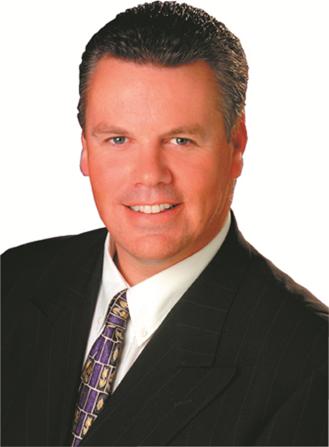
Greg Davies is Managing Director and Head of Behavioral Finance at Barclays.  He joined the firm in December 2006 to develop and implement commercial applications drawing on behavioural portfolio theory, the psychology of judgment and decision making, and decision sciences.

Today Greg leads a global team of behavioural and quantitative finance specialists, and is responsible for the design and global implementation of Barclays’ Investment Philosophy.

Greg is an Associate Fellow at Oxford University’s Saïd Business School and his first (co-authored) book, ‘Behavioral Investment Management: An Efficient Alternative to Modern Portfolio Theory’, was published in January 2012.

He is co-curator and co-creator of Open Outcry – a reality opera based on the stock market trading floor.

Greg has authored papers in multiple academic disciplines, presents at academic and industry conferences, and is a frequent media commentator on Behavioural Finance.  He is an Editorial Board Member of the Journal of Behavioural and Experimental Finance.

Greg studied at the University of Cape Town and obtained a degree in Economics, Philosophy and Finance. He followed this with an MPhil in Economics and a PhD in Decision Theory and Behavioural Finance from the University of Cambridge.

Economic Themes:

In this interview, Greg mentions and discusses:

Behavioral economics, behavioral finance, rationality, irrational behavior, heuristics, cognitive biases, system 1, system 2, homo economicus, trade-off, home bias, familiarity bias, risk, return, portfolio, efficient frontier, stochastic model, trading floor, noise, herding, bubbles, booms, bust, returns, standard deviation, deterministic model, decision theory, expected utility theory, mean variance and portfolio theory.

Economists:

In this interview, Greg mentions:

Danial Kahneman, Amos Tversky, Terence Odean, Warren Buffet, Charlie Munger and Harry Markowitz.

Influencers:

Jon Elster and Amos Tversky.

Advice:

Be multi-disciplinary. Look for links between fields. Be continuously curious.

Keep learning. Stay curious. Say ‘yes’ to things that are outside your comfort zone.

Find out:

  • what is Behavioral Economics/Finance
  • the disconnection between economics and psychology.
  • how Kahneman and Tversky were ‘swimming up-stream’ to bring common sense to economics.
  • why viewing the world through biases is harmful to behavioral finance.
  • why the ever-increasing list of biases may not be good for the behavioral finance field.
  • about System 1 and System 2 as popularised by Daniel Kahneman.
  • why it’s good to allow emotions to part of the portfolio decision-making process.
  • how to acquire the emotional comfort you need for your long-term financial objectives.
  • how to buy emotional insurance for your long-term investment portfolio.
  • how to avoid costly short-term emotional mistakes.
  • how psychometric tests can extract measures of financial personality.
  • why a set of nudges are designed to help high net-worth individuals to make better decisions.
  • how to build a tailored portfolio to meet your clients needs.
  • why you should consider including expected anxiety into your portfolio building along with risk and return.
  • what an opera experiment has to do with replicating the open outcry system of a trading floor.
  • how music can control your emotions while trading markets.
  • how Barclays Capital are improving the understanding of their clients by turning the lens on themselves.

Behavioral economics is the combination of finance theory and behavioral psychology. It’s about trying to understand how people actually do go about making financial decisions and, as a result, how we might make them better financial decisions.

Problems with Biases in Behavioral Finance:

  • Biases are only often biases if you view them through the lens of what economic theory very narrowly and mathematically deems to be rational.
  • There’s nothing irrational about having the need for a  short-term immediate emotional comfort.
  • A lot of deviations from narrow economic thinking are not irrational at all. They are perfectly reasonable. It is just that other people are bringing other objectives to bear on the decision.
  • The other problem is the tendency to look at the world through a list of biases.

Classical Finance would typically remove irrational behavior from its theories and models. However, the position of Behavioral Finance is much more subtle. As humans, we need emotional comfort. We need to be comfortable with the decisions we make and with the portfolio we hold. There is nothing irrational about that.

You need to find a way of not switching off your emotions but utilising them effectively – Greg Davies

Click To Tweet

Emotions are actually a very good source of information for us if we use them in a thoughtful way – Greg Davies

Resources:

Farnam Street by Shane Parish 

Recommended Books:

  • Thinking Fast and Slow by Daniel Kahneman
  • Explaining Social Behavior: More Nuts and Bolts for the Social Sciences by Jon Elster
  • Behavioral Investment Management: An Efficient Alternative to Modern Portfolio Theory by Greg Davies

Where To Find Greg Davies:

  • Website: Investment Philosophy 
  • Twitter: @GregBDavies
http://traffic.libsyn.com/economicrockstar/024_Greg_Davies.mp3

Podcast: Play in new window | Download
021: Paul Dolan on the Economics of Happiness

February 26, 2015 by Frank

http://traffic.libsyn.com/economicrockstar/021_Paul_Dolan.mp3
Play in New WindowDownload

021: Paul Dolan on the Economics of Happiness

Paul Dolan is an internationally renowned expert on happiness, behaviour and public policy. He is currently a Professor of Behavioural Science in the Department of Social Policy at the London School of Economics and Political Science.

Paul has previously held academic posts at York, Newcastle, Sheffield and Imperial and he has been a visiting scholar at Princeton University, working with Daniel Kahneman.

Professor Dolan has over 100 peer-reviewed publications which cover many topics including behavioural science, subjective wellbeing, equity in health and health valuation.

Paul is currently a Member of the World Economic Forum Panel on Behavioural Science, the Chief Academic Advisor on Economic Appraisal for the UK Government’s Economic Service. He is also a member of National Academy of Sciences Panel on Wellbeing and of the Measuring National Wellbeing Advisory Forum for the Office for National Statistics in the UK.

Paul is the author of ‘Happiness by Design’.

Economic Themes:

In this interview, Paul mentions and discusses:  behavioral economics, happiness, nudging, trade-off, pleasure-purpose principle, production function, utility models, causal relationships, priming effects, System 1, System 2

Economists:

In this interview, Paul mentions: Daniel Kahneman, Amos Tversky, Irving Fischer and Gregory Mankiw.

“2,500 years of ethical discourse hasn’t resolved the question what is the source of happiness” – Paul Dolan

Find Out:

  • how Paul evolved from a health economist to a behavioral economist.
  • how many years of your life would you be willing to give up to avoid being anxious or being down.
  • if Aristotle and other philosophers are right in saying that happiness can only be defined on a death-bed when reflecting upon your life.
  • how to create a pleasure-purpose balance that’s right for you.
  • how you can use the production function process to produce happiness.
  • what is this production process that makes us happy.
  • if money makes you happier.
  • how happiness studies influence policy decision-making.
  • about the limitations to happiness research and what can be done to make better research.
  • what nudging is.
  • how nudging by policy-makers can make you happier.
  • about the morality of nudging.
  • how supermarkets can nudge you into buying their breads and cakes.
  • why self-help books are a waste of money as they try to change your mindset.
  • why Paul’s book, ‘Happiness By Design’ will help you to change what you do.
  • about Paul’s ‘3 Pillars of Happiness’ – Deciding, Designing and Doing.
  • how designing your life to make things simple and easy can help you achieve your goals.
  • about the essence of mindfulness.
  • why people who are easily distracted are more likely to be less happy.
  • if your phone can make you unhappy and what you should do about it.
  • why Paul is a ‘Happy Hammer’ (West Ham fan) despite never winning the league.
  • how the power of ‘hope’ can make you happy by allowing your imagination run freely.

Pleasure-Purpose Principle

Alongside pleasure sits purpose. Happy lives are ones that have a good balance between experiences that are pleasurable on the one hand and purposeful on the other. You need to find out the right balance between pleasure and purpose that is right for you.

The creation of happiness is like a product function of a firm. A firm uses inputs, puts them through a production process to create outputs.  A person can equally use inputs like money, marriage, sex, jobs and watching television that are stimuli and we can convert them into happiness by a production process.

What is that production process? According to Paul this production process is called ‘Attention’. Attention is the ‘glue’ that keeps our lives together in terms of behaviour and happiness. The answer to the question ‘Does money make you happier?’ depends on how much attention you pay it.

“Most of economic modelling is based on looking at what people do, not what people say”

Challenges with Happiness Economics: “A lot of what we think we know comes from making inferences from associations. We need to to do more research and field experiments where we look at the causal impact of interventions on people’s happiness.”

You can beg, borrow and steal money, but you’re never going to get time that’s lost – Paul Dolan

Click To Tweet

Lost happiness is lost forever – Prof Paul Dolan

Click To Tweet

Nudging

Nudging can sometimes be overt and sometimes covert. It can take the form of financial incentives or below-conscious stimuli such as sounds, tastes and smells. The latter is known as priming effects.

According to Paul Dolan, the definition of a successful nudge is one where people, who are being nudged toward a particular direction with the expectation that they would be better-off, become happier as a result of being nudged.

Policy-makers assume after a nudge that people are better off, but research hasn’t captured the after-effects of these nudges to find out if they are indeed better off. Paul is all for designing nudges that make people happier, not by how he judges how they should be happier but according to what large datasets tell him what affects people’s happiness.

Listen to Paul’s 3 Pillars of Happiness: Deciding, Designing and Doing 

The Essence of Mindfulness: “We’re generally happier when we’re paying attention to what we’re doing and who we’re doing it with – living in the moment” – Paul Dolan.

“When you’re switching activities, your brain is using energy and it makes you more tired and less happy” – Paul Dolan.

“Being a football fan is a bit like faith. You can’t really change it once you’ve got it” – Paul Dolan.

Recommended Book:

  • Happiness By Design by Professor Paul Dolan

Where To Find Paul Dolan:

  • Twitter: @profpauldolan
  • Website: www.pauldolan.co.uk
  • Website: London School of Economics
http://traffic.libsyn.com/economicrockstar/021_Paul_Dolan.mp3

Podcast: Play in new window | Download

006: Andrew Heaton on Using Comedy to Explain Economic Concepts

November 20, 2014 by Frank

http://traffic.libsyn.com/economicrockstar/006_Andrew_Heaton.mp3
Play in New WindowDownload

006: Andrew Heaton on Using Comedy to Explain Economic Concepts

Andrew Heaton

Andrew Heaton is a comedian, writer and political satirist. He is the presenter of the witty and entertaining economics podcast, EconPop and has a Masters degree in International Politics. Andrew has been featured in a Bollywood movie, plays a lead role in the sitcom Cap South and has been voted best new comedian of 2013 in New York. Andrew hails from Oklahoma, is an Officer to a Prince and plays the Ukelele to enhance the mood of his friends’ amorous endeavors.

Economic Themes:

In this interview, Andrew mentions and discusses: wheat quotas, comparative advantage, protectionism, relative and actual growth, free markets and limited government, Austrian Theory of Monetary Creation, supply and demand, signalling, subjective value, negative externalities, tariffs and import duty, protectionism, corporation tax, scarce resources, population, abundance of resources, the Great Depression, US deficit, unintended consequences, behavioral economics and risk aversion.

Economists and Economic Schools:

In this interview, Andrew mentions: the Chicago School, the Austrian School, Libertarianism, Adam Smith, Milton Friedman, Freidrich Hayek, John Maynard Keynes, Murray Rothbard, Frédéric Bastiat, Thomas Malthus, Gene Epstein, Steven Horwitz,

Andrew’s Influencers:

Gene Epstein and Milton Friedman.

Podcasts:

EconPop is hosted by Andrew, who is joined by economist Steven Horwitz and professor of literature Paul Cantor.

In this episode, you will learn:

  • how Andrew became interested in economics while studying abroad in Scotland.
  • what parallels Andrew draws between politics, economics and comedy.
  • what economists and school of thought Andrew draws inspiration from to carve out his own views.
  • where and from whom Andrew gets his inspiration for his anecdotal writings on economics concepts.
  • how economic concepts is in abundance in life and can be found in the many movies we may have watched.
  • what qualities Andrew believes makes a successful person.
  • about Andrew being an Officer to Prince Leonard of Hutt River.
  • what comparative advantage is and how Andrew explains it in an unusual but light-hearted way.
  • why Andrew believes we will never run out of resources and why we should not worry about scarcity.

Advice:

‘If you’re gonna have a lot of activities that you are doing, you need to be mentally organised and very good at prioritising.’

‘To supercharge your day, when you are getting to your tasks, do the one you hate most first… the rest of your day is a cinch.’

‘With books, the trick is you just write a thousand words a night… your subconscious mind works on it and when you sit down the following night it’s a little bit easier.  You have a full novel in two and half months.’

Personal Habits:

  • Andrew works extremely hard to get things done. He has blended comedy with economics to allow this dismal science to become enjoyable or entertaining.
  • Andrew believes that having the right mentor is hugely beneficial and such a relationship allows him to learn and focus on reaching small milestones. This has worked out favorably well for Andrew in the field of economics where he developed a strong set of opinions on some theoretical aspects of economics. By expanding his knowledge-base through economics books and the many discussions with his mentor, Gene Epstein, Andrew has opened new doors and created new opportunities that otherwise may not have been attainable. His love of economics, particularly the Austrian and Chicago Schools and libertarianism, has given Andrew a lot of material to work on for his comedic performances onstage, online and in books.
  • Andrew writes quite frequently and believes that constant writing will have a payoff in terms of the publication of a book.
  • Andrew writes ‘common sense economics for people who need to learn about common sense economics’ – Gene Epstein

    Click To Tweet

  • Andrew plays the ukelele but, unfortunately, it wasn’t ‘tuned’ correctly for him to give us a treat on this podcast. So, as an homage to Andrew, I changed the outro music theme of Economic Rockstar to one that uses a ukelele. I hope you enjoy it!

Takeaway:

On Economics and Comedy:

Economics is a dismal science, so if you can make it funny it sweetens it – Andrew Heaton

Click To Tweet

On Humor and Economic Differences:

‘When you start arguing with somebody your adrenaline level shoots up.  Just on a biochemical level, you become much less able to hear what they are saying because you are taking a defensive posture.  Conversely, when you’re laughing, you produce endorphins.  And, if I can make you laugh, for a moment you are willing to listen to me – just for a moment.’

On Human Innovation Outpacing Declining Resources:

“We didn’t end the Stone Age because we ran out of stones”. – Andrew Heaton

Click To Tweet

Recommended Books:

  • Laughter Is Better Than Communism by Andrew Heaton
  • Frank Got Abducted by Andrew Heaton
  • Re-Boot Grandpa by Andrew Heaton (coming soon in 2016)
  • Speech Trap Werewolf by Andrew Heaton (coming soon)
  • The Conscience of a Conservative by Barry Goldwater
  • Parliament of Whores: A Lone Humorist Attempts to Explain the Entire U.S.  Government by P.J. O’Rourke
  • Free To Choose by Milton Friedman and Rose Friedman
  • Life at the Bottom: The Worldview That Makes the Underclass by Theodore Dairymple
  • Economics In One Lesson by Henry Hazlitt
  • Nudge: Improving Decisions About Health, Wealth and Happiness by Richard H. Thaler and Cass R. Sunstein

Favorite Internet Resources:

  • Evernote

Where To Find Andrew Heaton:

  • Website: MightyHeaton
  • Twitter: @MightyHeaton

Contact Andrew and start a campaign if you would like him to create a ‘Mighty Heaton’ doll!

http://traffic.libsyn.com/economicrockstar/006_Andrew_Heaton.mp3

Podcast: Play in new window | Download
Frank Conway

Frank Conway is founder of Economic Rockstar and lecturer of economics, finance and statistics. Read More…

View My Blog Posts

Youtube Sub

Become a Patron of the Economic Rockstar Podcast

patreon

Ireland’s Economy by the Numbers

Leaving Cert Economics: Ireland’s Economy  Click here to download a workbook on Ireland’s Economy so that you can add your own notes. [Original size] Ireland’s Economy by fconway

Categories

Subscribe and Never Miss An Episode

itunes-logo

Recent Posts

  • Ireland’s Economy by the Numbers April 8, 2019
  • 174: Wendy Carlin on The Core Project, Capitalism, Democracy and Normative Statements February 13, 2019
  • 173: Stephen Wright on Core Econ as a Learning Resource for Mainstream Economics January 28, 2019
  • 172: Best of 2018 Part 2: From the Great Depression to Futurism; Institutions, Individualism, Cooperation and Reciprocity January 22, 2019
  • 171: Best of 2018 Part 1 January 3, 2019

Copyright © 2026 · Podcast Pro Theme on Genesis Framework · WordPress · Log in

This website uses cookies to improve your experience. We'll assume you're ok with this, but you can opt-out if you wish. Accept Reject Read More
Privacy Policy

Privacy Overview

This website uses cookies to improve your experience while you navigate through the website. Out of these, the cookies that are categorized as necessary are stored on your browser as they are essential for the working of basic functionalities of the website. We also use third-party cookies that help us analyze and understand how you use this website. These cookies will be stored in your browser only with your consent. You also have the option to opt-out of these cookies. But opting out of some of these cookies may affect your browsing experience.
Necessary
Always Enabled
Necessary cookies are absolutely essential for the website to function properly. This category only includes cookies that ensures basic functionalities and security features of the website. These cookies do not store any personal information.
Non-necessary
Any cookies that may not be particularly necessary for the website to function and is used specifically to collect user personal data via analytics, ads, other embedded contents are termed as non-necessary cookies. It is mandatory to procure user consent prior to running these cookies on your website.
SAVE & ACCEPT