• ABOUT
  • RESOURCES
  • PODCAST
  • BOOKS
  • BLOG
  • SUPPORTERS
  • QFA Financial Advice
  • CONTACT

Economic Rockstar

Connecting Brilliant Minds in Economics and Finance

028: Alice Louise Kassens on Nudging Students to Study Economics and Why Mainstream Media Should Publish Research on Mental Health

April 16, 2015 by Frank

http://traffic.libsyn.com/economicrockstar/028_Alice_Louise_Kassens.mp3
Play in New WindowDownload

028: Alice Louise Kassens on Nudging Students to Study Economics and Why Mainstream Media Should Publish Research on Mental Health

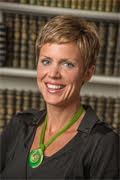
Dr. Alice Louise Kassens is an Economics Professor at Roanoke College and has already built a notable
reputation in her profession.
Alice is the current recipient of Roanoke’s John S. Shannon Professorship in Economics, which honors and supports a faculty member who is an outstanding teacher and accomplished scholar and who is thoroughly committed to enriching the lives of Roanoke students.

Dr Kassens’ work at Roanoke includes creating and maintaining an economics program blog and a biannual newsletter, Roanomics. She also serves as the faculty advisor for the College’s Economics Club.

Alice’s areas of expertise include labor and health economics. She has won several awards and fellowships, and her work has been published in numerous academic journals.

Alice is one of three economists who won Cengage Learning’s 2013 Economist Educators Best in Class Award for her method of teaching using Twitter.

Dr Kassens is president of the Virginia Association of Economics, has recently been appointed by Governor McAuliffe to his Joint Advisory Board of Economists, is a senior analyst for the Institute for Policy and Opinion Research and is a Referee for the Journal of Economic  Education, the Journal of Economics and Finance Education, and the National Council on Undergraduate Research.

Alice is the author of Changing Perceptions and Waistlines – A Bayesian and Behavioral Approach and is known as the ‘Running Economist’ not because of her busy lifestyle but because she is a competitive runner.

Alice earned her bachelor’s degree from the College of William and Mary and her Ph.D. from North Carolina State University.

Personal Habits:

  • Running, swimming and looking after her five dogs and an 18 year old cat!

Economic Themes:

In this interview, Alice mentions and discusses: 

Supply-side and demand-side of the housing market, primary research methods, sample selection bias, surveys, employment, unemployment, the Great Recession and regression discontinuity design models.

Economists:

In this interview, Alice mentions: 

Milton Friedman, Thomas Sowell, William Rogers, Mark V. Pauly, Alvin Headen, Yana van der Meulen Rodgers, Luther Lawson, Dean Baker and Jadrian Wooten.

Takeaway:

Do a little something everyday, even if it’s as simple as downloading a dataset, making an outline for a paper, talking to a colleague about a project. Do something small and all of it adds up overtime.

Find out:

  • how Alice’s secrets to increasing an economics class size.
  • how Alice uses social media to encourage students to learn economics more effectively.
  • how Twitter can be used to remove the limitations to classroom-specific learning.
  • how Dr. Kassens collects data for the Consumer Sentiment Report for Virginia.
  • how to remove sample selection bias when collecting primary data.
  • how to analyse unobservables using observed data.
  • about the benefits of small-class sizes for learning.
  • which economist Dr. Kassens would love to collaborate with.
  • how being an athlete helped with a career decision to become a health economist.
  • why Dr. Kassens wrote a report on gender disparities in health care in Papa New Guinea.
  • about the gender disparity in depression levels upon losing a job.
  • whether men or women respond better to losing their jobs by continuing to job search.
  • if people lose their job because they were depressed or are they depressed because they’re unemployed?
  • how Dr. Kassens’ research can help people with depression if the media can report her findings to the masses.
  • if people reduce their expectations to live longer once they are diagnosed with Type II diabetes.
  • if obese people who are diagnosed with Type II diabetes respond by losing weight.
  • how writing a blog makes you accountable for what you do and helps you get things done.
  • the importance of why organisations should make their data freely accessible to academics.

Nudging Students to Study Economics at Roanoke College

  • Running Economist Blog.
  • Twitter Feeds.
  • Roanonomics Newsletter.
  • Economics Club.
  • Economics Reading Group.
  • Economics Study Trip.
  • Create a sense of community among Economic Students.
  • Working with Advanced Placement Teachers at High School.
  • Inviting High School students to Roanoke College Campus.

Dr. Kassens offers her best students the opportunity to teach economics weekly at the local Patrick Henry High School in Roanoke to help teach Mr. Hartman’s Advanced Placement Economics course. This is part of Dr. Kassens’ Service Learning Independent Study in which participating seniors are awarded academic credit for meeting the course requirements. Students teach the economics lesson plan of the day and sometimes run simulations, do group-work or show movies or tv programs like House of Cards, extracting economic concepts and themes from them. This helps reinforce the learning process both for the economic seniors and for the High School students.

To fulfil a whole credit, Dr. Kassens’ students are required to write reflective pieces based on a number of questions such as ‘What did you learn about yourself?’, ‘How do you think you’re helping the community?’ and ‘What challenges did you face?’. Dr. Kassens has identified research which shows that employers need students to be able to articulate what they learned and why their independent study or internship was important, not that they actually did one.

The Service Learning Independent Study at Roanoke College fulfils such a need. Not only does it give students the opportunity to gain invaluable experience but also prepares the student to be self-motivated, confident and above-all being able to demonstrate, in an articulate fashion, to potential employers what they have gained from such an experience.

This program is a win-win both for the senior at Roanoke College and the student at Patrick Henry High School. The senior, who is at this stage studying intermediate micro and macro, will go over principles of economics to teach the High School students. This only reinforces the learning process and makes them a more accomplished student. By reinforcing the material of principle micro and macro, the student can create a solid foundation to build upon, which will become invaluable at intermediate level economics.

Using Twitter in the Classroom to Teach Economics

Dr. Kassens uses Twitter as part of her assignments for her Principles of Micro and Macro classes. Students are given 10 different tasks to fulfil during this semester-long assignment in which they need to write and articulate an economic-related tweet based on the pre-assigned guidelines. For example, students are required to tweet about economic policy as outlined in the State of the Union address by the US President. Following this, students must then comment on or answer a question made by a fellow student. The hashtag #kassensecon122 must be used in order to keep the conversation going and for ease of tracking the students work. This can be challenging due to the limitation of articulating a tweet of up to 140 characters in length.

The students also helped Dr. Kassens in the development of a rubric so they knew how they were going to be graded. It was a short but well-defined rubric, which was important as it allowed Dr. Kassens to be responsive leading to a fast turn-around in grading results. This was considered vital since “the goal was to improve their writing”. Using Twitter to improve writing skills may, at first, appear a failed experiment but it is surprisingly “difficult to put into 140 characters something meaningful that’s going to score well on the rubric because they can’t use funny abbreviations”.

[Tweeting your way to improved writing, reflection, and community by Dr. Alice Louise Kassens]

The rubric was therefore important so that students could get feedback quickly allowing them to make improvements in their next assignment. Finding topics that Dr. Kassens believes her students would find interesting was also important. Dr. Kassens reached out to other economists on Twitter, some she didn’t know personally such as Dean Baker, and asked them to engage with her students by asking  a question. Once students answered this question, Dr. Kassens sent the answers back to the economist.

The benefits Dr. Kassens found with using Twitter in assessing economics was that students’ writing skills improved as evidenced by how the rubric scoring went but “it also broke down these barriers that you have with a classroom so that they could beyond the classroom walls and interact with well-known economists”.

The semester-long project at Roanoke College is worth 20 to 25% of the students’ final grade. However, Dr. Kassens found it interesting that half of her students did not have a Twitter account. She had believed that most young kids use Twitter. This statistic seemed consistent for each of the three semesters in which the assignment was delivered. Consequently, the first week of the semester was devoted to setting up an account, informing students of how to use Twitter and sending out ‘practice’ tweets that reflects an economic argument, concept or point-of-view within 140 characters.

Using Twitter to sharpen critical thinking and writing skills by Dr. Alice Louise Kassens

Favorite Internet Resource:

  • SAS: Visual Analytics for UN Comtrade

Recommended Book:

  • Keynes Hayek: The Clash that Defined Modern Economics by Nicholas Washout
  • Economic Facts and Fallacies by Thomas Sowell
  • How to Write A Lot: A Practical Guide to Productive Academic Writing by Paul J. Silvia
  • Changing Perceptions and Waistlines – A Bayesian and Behavioral Approach by Alice Kassens

Where to Find Alice Kassens:

  • Website: The Running Economist
  • Twitter: @RnningEconomist 
http://traffic.libsyn.com/economicrockstar/028_Alice_Louise_Kassens.mp3

Podcast: Play in new window | Download

  • facebook
  • linkedin
  • twitter
  • google+
  • pinterest

027: Craig Medico on How Economics Saved My Career, How I’m Embracing Technology in the Classroom and Why I’m off to Wrestling School

April 8, 2015 by Frank

http://traffic.libsyn.com/economicrockstar/027_Craig_Medico.mp3
Play in New WindowDownload

027: Craig Medico on How Economics Saved My Career, Using Technology in the Classroom and Why I’m off to Wrestling School

Craig Medico is an Economics and History educator in New York with 11 years ofCraig Medico classroom experience. Craig is doing amazing things to get young people to understand and become interested in economics.

He is the author of No Bull Review – Macroeconomics and Microeconomics: For use with the AP Macroeconomics and AP Microeconomics Exams (2012) and No Bull Review – Macroeconomics and Microeconomics: Top 10 Guide (2014). 

Craig is the developer of several best-selling iPhone test prep apps from Study By App, LLC, including Economics AP (2010), Economics AP Free (2011), and Economics Flashcard Review (2011). 

In 2010, he contributed to WNYC Radio/Public Radio International’s morning news program The Takeaway. 

Craig is the Macroeconomics instructor for the Junior State of America summer school at Princeton University and teaches Advanced Placement Economics at Paul D. Schreiber High School in Port Washington, New York.

He recently completed an economics educator study tour of Peru with the Global Economic Education Alliance in association with the University of Colorado-Colorado Springs and the Peruvian University of Applied Sciences.

In his spare time, Craig records and produces educational music videos for The Social Studs.

Economic Themes:

In this interview, Craig mentions and discusses: Teaching economics, Advanced Placement program, opportunity costs, supply and demand and the Philips Curve.

Economists:

In this interview, Craig mentions: 

John Brock.

Find out:

  • about Craig Medico’s education trip to Peru.
  • about the class distinction in Peru and how it is upsetting the quality of education for the poor.
  • the answer to this problem: 2 + 2 x 2 + 2 Tweet me https://twitter.com/Econ_Rockstar
  • how technology can be so beneficial to learning.
  • how Peruvian kids are excited about the country’s economic future.
  • how a trip to Peru will become part of Craig’s lessons at High School.
  • about Craig’s opinions about using technology in education.
  • why Craig embraces technology in education both for himself and for his students.
  • if there is a disruptive technology that exists that could compromise the traditional bricks-and-mortar way of education.
  • what upset Craig when he saw a mother and son at a donut shop.
  • how economics saved Craig’s career.
  • how idiot-proofing economics allowed Craig to master the concepts.
  • about Craig’s philosophy in his teaching methods and how it helps students to learn effectively.
  • about the Advanced Placement programs in the United States and how to earn college credit.
  • about Craig’s philosophy which is based on the thoughts of Roman Emperor Marcus Aurelius.
  • who are George Washing-tone and Abrajamz Lincoln and what are they teaching kids?
  • why Craig Medico transforms into Mr Medi-KO and why he’s off to wrestling school.
  • about the technological challenges facing all schools today.
  • about some of the apps you can use to create educational content.

Defining Moment:

Craig self-proclaimed that he “was actually an economic moron up to about 12 years ago”.

Craig was originally a World History instructor and his school wanted to offer an Advanced Placement program. In order to keep his job, Craig had to “figure out economics. So, in a desperate attempt to keep my job  that year, I’d to figure out how to make economics work for me. I’d to figure out a way to idiot-proof the content of the curriculum since I was a complete economic idiot.”

“I was pretty much in my students’ shoes moments before trying to teach them and I used that to my advantage. I knew what it was to be like in their shoes.”

“When you teach something, you reinforce the material for yourself and perhaps take the most important step toward mastery of that content”.

Affirmation/Philosophy:

It’s important to reserve some quite time for myself each day. I try to workout a few days each week even if it’s for 30 minutes. It helps clear the mind. It helps me feel good and if you feel good you look good.

I have this 3 hour window every morning where my mind feels extra sharp and this is where my creative ideas typically originate. Ultimately the goal is just to be a happy person. Be happy with what I do everyday.

“The happiness of your life depends on the quality of your thoughts” – Roman Emperor Marcus Aurelius.

Influencers:

My students influenced Craig the most when it came to writing the books and apps.

“When it comes to developing material for the classroom, my influencers are Metallica, KISS, Aerosmith and the Rolling Stones. I used to view each lesson as a performance – like a rock show.”

Takeaway:

No matter how old you are or where you are in life, always be an active learner. There’s nothing more rewarding than learning new ideas, new activities, taking on new hobbies. And then once you learn something, become a teacher. Share it with the people around you.

About the Use of Technology in Education:

I love it. I don’t think it necessarily replaces the classroom experience. But it supplements it in such a great way. I view the online stuff as just another way of diversifying how we learn.

MOOCs are the big thing in education right now. To take a class with 80,000 other students – how cool is that? And do it on your own terms, do it at low or no cost.

“I got into technology because it’s fun. It’s so much fun to put the websites together and the apps, the books and the videos on YouTube. I do it to keep things interesting for me. If I taught the classes the same way every single year I would end up in a huge rut. My goal is to constantly improve and be as great as a teacher as I can for my students.”

“I think human interaction is very important. Especially in the workplace where we still have to deal with human beings. We’ve gotta create students who can handle that down the line.”

Tools Educators Can Use to Help with Teaching:

  • Powerpoint: Allows diagrams to show movement such as changes to curves.
  • Twitter
  • Snapchat
  • Apps:
    • Explain Everything – Used to make YouTube videos.
    • AppShed – create your own apps or get students to create their own.
    • Socrative – Socrative lets teachers engage and assess their students with educational activities on tablets, laptops and smartphones.
    • studybyapp – provides an intuitive web-based platform that enables you to build apps that fit your needs.

Education in Peru: A Tale of Two Standards but a Key Determinant to Long-Term Economic Growth

A recent trip by Craig Medico and 11 other educators from the USA was organised by the Global Economic Education Alliance in partnership with Dr. John Brock, Director of the Center for Economic Education at the University of Colorado, Colorado Springs (UCCS) and Claudia Sicoli, Director of the Centro de Educación Económica de la Universidad Peruana de Ciencias Aplicadas (UPC) in Lima, Peru.

Mr. Medico embarked on a tour of Peru’s educational system as well as experiencing some of the economic development that has been going on in Peru over the last few decades. This trip was a great opportunity both for Peru and the USA to forge an education alliance and to open up a teacher-exchange in the future and to improve the education system in both places.

Craig visited wealthy private schools, middle-class private schools and poor public schools, as well as meeting with students at the local university. He, along with the other educators met with representatives of the Central Bank of Peru and the ministry of education.

Craig found a lot of challenges and inequities throughout Peru’s educational system. A visit to one upper-class private school in Lima was an ‘eye-popping experience’. This was a trophy school that epitomised the trappings of wealth and symbolized the success of Peru’s economy. “It resembled more of a country club than a school – large outdoor swimming pools, soccer fields, lots  of open space. Lots of technology in the classroom, every student had their own computer”.

The construction of new buildings on the grounds of this private school confirmed its continued and rapid expansion and is analogous to the determination of Peru to be the best in attaining educational standards. Students are granted a lot of academic freedom through project-based learning. “Most of the instructors are foreign that would come in from overseas and teach for a couple of years. They seem to be high-level teachers.”

It was a totally different story for a poor public school outside Lima. “That school was surrounded by dirt and dilapidated housing. I didn’t see a single computer in a classroom. The closest thing was a dusty broken TV set that didn’t work anymore. The students seemed very unengaged and many were confused. I observed one teacher who was teaching students completely incorrect information.”

In that particular lesson, students were working in groups to understand bar graphs. Their prop were wooden boards with nails sticking out from them and they were creating bar graphs with rubber bands. Craig is shocked at how this school has fallen behind in standards, particularly failing to embrace technology due to the lack of funding it receives. 

“Many struggle through it and I’m thinking, WOW, this is a great example of where technology, like an interactive white-board, would greatly enhance these kids’ classroom experience.”

The thing that struck Craig the most, in addition to the technology, was the teacher’s approach to teaching math. She wasn’t teaching math using the ‘Order of Operations’ – the PEMDAS Rules that are applied to learning in 3rd and 4th Grade. She was just solving problems on the board left to right. Craig was so concerned about a math problem that was being solved incorrectly by the teacher at this point that he imagined mistakes and incorrect information being taught at other schools, not only in Peru, but also in the US.

Craig interacted with kids from a Middle School in Cusco, Peru who where so excited about their country’s economy and what it means for them. When they asked Craig and the other educators about their personal thoughts, Craig, in true economic fashion, highlighted the key underlying strengths and benefits that are determining factors to a successful economy: the valuable inputs and factors of production, property rights are better protected, buildings and infrastructure is being built to accommodate growth and sustain future economic development.

However, Craig gravitated toward education being the number one catalyst for maintaining a healthy, vibrant and opportunistic economy, which is a reflection of his true-calling as a passionate and dedicated educator. “Improving education and human capital is going to be the main determinant as to whether Peru is going to be a true economic powerhouse over the longer term.”

Craig is an champion and a hero, not just in the wrestling ring, but in the classroom. His passion and dedication exudes and shines through his continued and dynamic approach to making learning (and teaching) fun and accessible. Craig is an early adopter of the use of technology and social media in the classroom, which embraces the needs of both student and teacher. His students are extremely lucky to have a teacher so dedicated to giving it all and I sincerely hope they realise this. It seems that he has unlocked the true meaning of life: help others and find happiness in the things you do each day.

Recommended Books:

  • No Bull Review – Macroeconomics and Microeconomics: For use with the AP Macroeconomics and AP Microeconomics Exams (2012) by Craig Medico.
  • No Bull Review – Macroeconomics and Microeconomics: Top 10 Guide (2014) by Craig Medico.
  • The Stoic Philosophy of Seneca: Essays and Letters by Lucius Annaeus Seneca

Apps by Craig Medico:

  • Economics AP Free
  • Economics AP
  • Economics Flashcards

All three apps by Mr Medico can be found on the iTunes store but here is a link that will take you to his website showing the apps on the right of the homepage.

Where To Find Craig Medico:

  • Website: www.mrmedico.info
  • Twitter: @mrmedicoinfo
  • email: cmedico@gmail.com
  • YouTube: SocialStudsRock 
http://traffic.libsyn.com/economicrockstar/027_Craig_Medico.mp3

Podcast: Play in new window | Download
  • facebook
  • linkedin
  • twitter
  • google+
  • pinterest

Frank Conway

Frank Conway is founder of Economic Rockstar and lecturer of economics, finance and statistics. Read More…

View My Blog Posts

Youtube Sub

Become a Patron of the Economic Rockstar Podcast

patreon

Ireland’s Economy by the Numbers

Leaving Cert Economics: Ireland’s Economy  Click here to download a workbook on Ireland’s Economy so that you can add your own notes. [Original size] Ireland’s Economy by fconway

Categories

Subscribe and Never Miss An Episode

itunes-logo

Recent Posts

  • Ireland’s Economy by the Numbers April 8, 2019
  • 174: Wendy Carlin on The Core Project, Capitalism, Democracy and Normative Statements February 13, 2019
  • 173: Stephen Wright on Core Econ as a Learning Resource for Mainstream Economics January 28, 2019
  • 172: Best of 2018 Part 2: From the Great Depression to Futurism; Institutions, Individualism, Cooperation and Reciprocity January 22, 2019
  • 171: Best of 2018 Part 1 January 3, 2019

Copyright © 2026 · Podcast Pro Theme on Genesis Framework · WordPress · Log in

This website uses cookies to improve your experience. We'll assume you're ok with this, but you can opt-out if you wish. Accept Reject Read More
Privacy Policy

Privacy Overview

This website uses cookies to improve your experience while you navigate through the website. Out of these, the cookies that are categorized as necessary are stored on your browser as they are essential for the working of basic functionalities of the website. We also use third-party cookies that help us analyze and understand how you use this website. These cookies will be stored in your browser only with your consent. You also have the option to opt-out of these cookies. But opting out of some of these cookies may affect your browsing experience.
Necessary
Always Enabled
Necessary cookies are absolutely essential for the website to function properly. This category only includes cookies that ensures basic functionalities and security features of the website. These cookies do not store any personal information.
Non-necessary
Any cookies that may not be particularly necessary for the website to function and is used specifically to collect user personal data via analytics, ads, other embedded contents are termed as non-necessary cookies. It is mandatory to procure user consent prior to running these cookies on your website.
SAVE & ACCEPT