• ABOUT
  • RESOURCES
  • PODCAST
  • BOOKS
  • BLOG
  • SUPPORTERS
  • QFA Financial Advice
  • CONTACT

Economic Rockstar

Connecting Brilliant Minds in Economics and Finance

129: Sarah Skwire on the Sensibility of Literature for Economic Thinking
February 23, 2018 by Frank

http://traffic.libsyn.com/economicrockstar/129_Sarah_Skwire_Final.mp3
Play in New WindowDownload

129: Sarah Skwire on the Sensibility of Literature for Economic Thinking

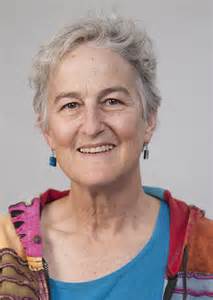
is a Senior Fellow at Liberty Fund, a non-profit educational foundation, and the co-author of the college writing textbook, Writing with a Thesis, which is in its 12th edition.

Sarah has published a range of academic articles on subjects from Shakespeare to zombies and the broken window fallacy, and her work has appeared in journals as varied as Literature and Medicine, The George Herbert Journal, and The Journal of Economic Behavior and Organization.

Sarah writes a regular column for the Freeman Online and blogs for the Fraser Institute and Bleeding Heart Libertarians.

Sarah’s work on literature and economics has also appeared in Newsweek, The Freeman and in Cato Unbound, and she is an occasional lecturer for IHS, SFL, and other organizations. Her poetry has appeared, among other places, in Standpoint, The New Criterion, and The Vocabula Review.

Sarah graduated with honors in English from Wesleyan University, and earned a MA and PhD in English from the University of Chicago.

Books:

  • Red Plenty by Francis Spufford
  • High Wages by Dorothy Wipple
  • Emma McChesney & Co. by Edna Ferber
  • The Home-Maker by Dorothy Canfield
  • The Grapes of Wrath by John Steinbeck
  • Emma by Jane Austin
  • East of the Sun West of the Moon 
  • The Wealth of Nations by Adam Smith

Patreon

If you’re a fan of the podcast and would like to show your support in anyway, please check out my Patreon page at patreon.com/economicrockstar where you can sign up for any of the awards for as little as $1 a month or you can simply follow me on the Economic Rockstar Facebook page or on Twitter or simply recommend the show to a friend, especially if they have never had the opportunity to study economics.

http://traffic.libsyn.com/economicrockstar/129_Sarah_Skwire_Final.mp3

Podcast: Play in new window | Download

  • facebook
  • linkedin
  • twitter
  • google+
  • pinterest

128: Sarah Smith on the Economics of Charitable Giving and Gender Roles in Economics

February 16, 2018 by Frank

http://traffic.libsyn.com/economicrockstar/128_Sarah_Smith_Final.mp3
Play in New WindowDownload

128: Sarah Smith on the Economics of Charitable Giving and Gender Roles in Economics

Sarah Smith is Professor of Economics and Head of the Department of Economics at the University of Bristol. Her research interests are in applied micro – specifically consumer behaviour and public economics.

Sarah has worked on pensions, saving and retirement and welfare policy and her main focus now is the economics of not-for-profit organisations.

Professor Smith has been working with a number of charity organisations (JustGiving, Charities Aid Foundation, Remember a Charity, Big Lottery) to understand what motivates individuals to give and how donations respond to different economic and non-economic incentives.   

Sarah is a research associate at the Institute for Fiscal Studies, where she started her career and at the Centre for Economic Policy Research. Sarah has also worked at HM Treasury, the Financial Services Authority and the London School of Economics.

Sarah received her PhD from University College, London and an MSc Economics from the London School of Economics and Political Science.

Patreon

If you’re a fan of the podcast and would like to show your support in anyway, please check out my Patreon page at patreon.com/economicrockstar where you can sign up for any of the awards for as little as $1 a month or you can simply follow me on the Economic Rockstar Facebook page or on Twitter or simply recommend the show to a friend, especially if they have never had the opportunity to study economics.

http://traffic.libsyn.com/economicrockstar/128_Sarah_Smith_Final.mp3

Podcast: Play in new window | Download

  • facebook
  • linkedin
  • twitter
  • google+
  • pinterest

081: Julie Nelson on the Importance of Ecology in Economics and the Misconception of Gender Roles in the Economy

April 14, 2016 by Frank

http://traffic.libsyn.com/economicrockstar/081_Julie_Nelson.mp3
Play in New WindowDownload

081: Julie Nelson on the Importance of Ecology in Economics and the Misconception of Gender Roles in the Economy

Julie Nelson is Professor of Economics at University of Massachusetts Boston and Senior Research Fellow at Global Development and Environment Institute, Tufts University, also in the USA.Julie Nelson Economic Rockstar

Julie’s research areas include feminist economics, ecological economics, the philosophy and methodology of economics, ethics and economics, the teaching of economics, and the empirical study of individual and household behavior.

Professor Nelson has also served as a Research Economist at the U.S. Bureau of Labor Statistics and a Visiting Associate Professor at Harvard University amongst others.

Julie is the author of Economics for Humans and author, co-author, or co-editor of several other books including Beyond Economic Man: Feminist Theory and Economics.

She has also authored numerous articles in journals ranging from Econometrica, the American Economic Review, and the Journal of Political Economy, to Signs: Journal of Women in Culture and Society, Feminist Economics, and Ecological Economics.

Professor Nelson earned a B.A. degree in Economics from St. Olaf College and an M.A. and Ph.D. in Economics from the University of Wisconsin, Madison, USA.

Julie, along with Mark Maier, runs the website introducingeconomics.org

Economics:

In this episode, Julie mentions: statistical inference, bias, production function, land, labor, capital, resource maintenance, feminist economics, care, GDP, Pigouvian tax, carbon, welfare gains, negative externality and Kyoto Agreement.

Economists:

In this episode, Julie mentions: John Stuart Mill, Gary Becker and Amartya Sen.

Quotes by Julie in Episode 81:

“Math gives you internal consistency. It does not give you objectivity and reliability.” – Julie Nelson

Click To Tweet

“Most economic textbooks tell you there are three basic economic activities… production, distribution and consumption. We added one at the beginning and what we called ‘resource maintenance’. That is, how are you ever going to produce anything if you don’t have the resources and if you haven’t taken care of them and sustained them in a way that they’ll be productive in the future” – Julie Nelson

“No one would be so silly to try to address an economic problem without looking at its social, ethical, physical and political dimensions. But later economists didn’t remember those cautions of Mills and just ran with the math aspect of it.” – Julie Nelson

“There’s still a long way to go to think of gender in an intelligent and equitable way.” – Julie Nelson

Click To Tweet

Takeaway:

“Be careful about what you believe that economists are telling you.” – Julie Nelson

“Wherever we are in our life whether we’re at work in a business or at home or bringing our whole selves with us. We don’t just bring parts of ourselves. So if you want to be an ethical person anywhere, we need to do that when we’re at work.” – Julie Nelson

Books:

  • Men are from Mars. Women are from Venus by John Gray
  • ECONned: How Unenlightened Self Interest Undermined Democracy and Corrupted Capitalism by Yves Smith
  • The Shareholder Value Myth by Lynn Stout

Links:

  • www.julieanelson.com
http://traffic.libsyn.com/economicrockstar/081_Julie_Nelson.mp3

Podcast: Play in new window | Download

  • facebook
  • linkedin
  • twitter
  • google+
  • pinterest

075: Kate Bahn on Monopsony in the Market for Teachers and the Economics of Retirement

March 3, 2016 by Frank

http://traffic.libsyn.com/economicrockstar/075_Kate_Bahn.mp3
Play in New WindowDownload

075: Kate Bahn on Monopsony in the Market for Teachers and the Economics of Retirement

Kate Bahn is an economist at the Center for American Progress in Washington, D.C.Kate Bahn Economic Rockstar 2

Kate is also the co-founder and managing editor of Lady Economist, an amazing blog with rich content on how economics impacts women and girls.

Kate’s economics writing has been featured in the Guardian, the Nation, the Chronicle of Higher Education and Good Magazine among others.

She is also an active member of the International Association for Feminist Economics.

Kate received her PhD in Economics from the New School for Social Research, where she also worked as a researcher for the Schwartz Center for Economic Policy Analysis.

Kate’s scholarly research includes labor economics, gender in the economy, caring labor, and retirement.

Influencers:

Julie Nelson and Nancy Folbre

Economics:

In this episode, Kate mentions and discusses: monopsony, rents, labor markets, deadweight loss, retirement and risk aversion.

Economists:

In this episode, Kate mentions and discusses: Justin Wolfers, Nancy Folbre, Marina Adshade, Julie Nelson, Joan Robinson and Mesude Kongar 

In this episode you will learn:

  • what is a monopsony market
  • why early-career teachers leave their profession within the first five years.
  • about the International Association for Feminist Economics.
  • about the economics of retirement.
  • whether women are more risk averse than men or whether it is gender-stereotyping.
  • which US President should be removed from a US bill and what female should replace him.
  • and much more.

Research by Kate Bahn:

  • Bahn, Kate. (2015, July 17). Monopsony in Caring Labor: Job Search Models with Care as a Job Characteristic. Annual Conference of the International Association of Feminist Economics.
  • Bahn, Kate. (2013, July 10). Monopsony in Caring Labor: Estimating Labor Supply Elasticity of Teachers. Annual Conference of the International Association of Feminist Economics.
  • Bahn, Kate. (2013, January 5). Early Career Teachers and Gender Effects of Labor Market Decisions: Duration Analysis of the Beginning Teacher Longitudinal Study. Panel of the International Association of Feminist Economics at the American Social Science Academy Annual Conference.
  • Ghilarducci, Teresa, Saad-Lessler, Joelle, & Bahn, Kate. “Are U.S. Workers Ready for Retirement?” Journal of Pension Benefits. Winter (2015).

Other Writings:

Joseph Stiglitz taught me how to date by Kate Bahn

Books:

  • Invisible Heart by Nancy Folbre
  • Feminism, Objectivity and Economics by Julie Nelson
  • Angry Grad by Leah Bell

Podcast Episodes:

  • Leah Bell
  • Nancy Folbre
  • Marina Adshade

Papers:

  • Barber, R and T. Odean, (2001). Boys Will be Boys: Gender, Overconfidence, and Common Stock Investment. The Quarterly Journal of Economics, pg: 261- 292.

Conference:

  • International Association for Feminist Economics (IAFFE)

Where to Find Kate:

  • Twitter: @LipstickEcon
  • Website: www.ladyeconomist.com
  • Centre for American Progress
  • International Association for Feminist Economics

http://traffic.libsyn.com/economicrockstar/075_Kate_Bahn.mp3

Podcast: Play in new window | Download
  • facebook
  • linkedin
  • twitter
  • google+
  • pinterest

The Breadwinner: Pavarna – A Heroine to All Girls Symbolizing Self-Empowerment and the Fight Against Oppression and Inequality

August 26, 2015 by Frank

Pavarna - A Heroine to All Girls Symbolizing

Recently, I met up with Dr. Shanta Devarajan and his wife Dr. Nancy Benjamin in Waterford City on their recent trip to Ireland. Shanta is MENA Chief Economist at the World Bank and Nancy is Senior Economist also at the World Bank.

I arranged to meet up with Shanta after interviewing him on the Economic Rockstar podcast when he informed me of his trip. Shanta and Nancy were travelling by coach from Cork City to Kilkenny City and were making a 1-hour stop in Waterford City. It was a beautiful day in August and the sun was shining and the temperature was such that we decided to sit outside for lunch at The Granary Cafe.

Shanta and Nancy both had a Chicken and Bacon Caesar wrap with Shanta deciding on an Americano and Nancy on a bottle of still water. I personally went for a fruit scone and an Americano. While relaxing outdoors, we were greeted by the soothing shelther of a sapling and comforted by a genial gentle breeze.

This differed to my previous remote meeting with Shanta, which took place on a Skype call – he in his office in Washington DC at 4pm EST and me in my home in Portlaw, Co. Waterford at 9pm Irish time. It was an audio-only interview so we didn’t see each other. The conversation flowed but within the realm and restrictions of economic themes.

Our conversation at The Granary Cafe was quite mixed. We spoke about economics (of course!), the Economic Rockstar podcast, some guest recommendations for the show by Shanta (Patrick Honohan and Chris Blattman) and about Irish animation studio Cartoon Saloon. Yes, you read that correctly – Cartoon Saloon!

The Breadwinner symbolWhy did three economists have a conversation about Cartoon Saloon? Well, we found out that we are all in some way connected to Cartoon Saloon – or more accurately the story behind their animated film ‘The Breadwinner’ (being produced by Aircraft Pictures, Cartoon Saloon and Melusine Productions).

My brother, multi-award winning animator, Rory Conway is employed by Cartoon Saloon and is part of the animation team behind this feature-length film. Angelina Jolie Pitt is Executive Director and her production company Jolie Pas Productions will join forces with Cartoon Saloon to make this a super-awesome and award-winning team.

Both Shanta and Nancy were on their way to Kilkenny City and visiting the beautiful and awe-inspiring Kilkenny Castle. For the summer of 2015, Rory was artist-in-residence at Kilkenny Castle where he showcased Cartoon Saloon’s recent feature length movie ‘Song of the Sea’. Shanta and Nancy met Rory there, where he divulged everything about this movie from idea generation to character design.

Okay! The connection hasn’t be fully made just yet. Shanta, Nancy, myself, Rory, Cartoon Saloon, The Breadwinner, Angelina Jolie Pitt and economics? I understand if you’re confused right now, but allow me to explain.

During our conversation, we chatted about The Breadwinner (written by Deborah Ellis), a story about a young girl from Afghanistan who must disguise herself as a boy in order to earn money for her family. Nancy had mentioned the work done by an investigative journalist who had discovered the lives of young Afghan women after they had lived and behaved as young boys during their childhood and adolescence. Nancy explained how families with only girls and no boys would feel a sense of shame and embarrassment in society. This social stigma is typically avoided when a girl from the same family is chosen to dress-up and behave as a boy. The girl has her hair cut short and takes on a male name.

Digging a bit deeper on the internet about this phenomenon, I came across the term ‘Bacha Posh’ to describe these Afghan girls living as boys. Jenny Nordberg, investigative journalist, was the first to use Bacha Posh to describe these girls since this practice didn’t even have a name. Jenny’s breaking story in The New York Times revealed this practice to the rest of the world and subsequent dedicated research by her culminated into a fascinating and must-read book titled ‘The Underground Girls of Kabul’. Jenny Nordberg reveals so much about these girls during and after their livelihood as boys. She exposes gender inequality, powerlessness and resistance.

Dressing these girls as boys is not to deceive society. But the belief is that a Bacha Posh, as she becomes known, will bring some ‘fortune’ to her mother in a later pregnancy where it is hoped that a boy will be born. A Bacha Posh does not take on the role of a boy or a girl, but has some intermediate status. She will not cook and clean (like all males) and she can attend school and work (unlike all females). The remaining females in her family can be escorted by her – a task strictly reserved for males. These girls performed better in all aspects of education than other girls in society due to their schooling opportunities.

A Bacha Posh must revert back to her female ‘status’ once she reaches puberty or when she marries. However, the sense of empowerment, the freedom, the rights and the opportunities enjoyed by these young girls and women is too invaluable to give up. Having an experience of what should be a right to all women is a difficult thing to give up – being replaced with a life of oppression, zero rights and a slave-like existence.

The 5 years of research and interviews that Jenny Nordberg conducted to investigate the lives of Bacha Posh have shown that the reversal of social status experienced by these women can lead to irreversible psychological effects. They must take on the persona of the traditional Afghan woman and displace the once coerced mannerisms of a boy and all the ‘social fortunes’ that came with their ‘male-like’ status. Also, the sense of freedom and opportunity provided to these women shines light on the inequality that exists at a basic human level. Such controversial treatment of women in Afghanistan has led to a surge of activity in women’s rights movements there.

Novelists like Deborah Ellis, investigative journalists and authors like Jenny Nordberg, women’s rights activists like Angelina Jolie Pitt and animation studios like Cartoon Saloon are a powerful force when they shine light on the oppression and restrictions faced by Afghan women. They educate us through facts, imagery, art, visual expression, color, sound and a theme that many feel they could possibly relate to – a struggle against oppression and an authoritative regime, and the fight for survival and self-empowerment.

The Breadwinner

The people behind The Breadwinner, are setting themselves up to be an impressive and potent combination that could possibly re-write the history books in Afghanistan and for women’s rights everywhere. The Breadwinner depicts the life of a Bacha Posh in such a compelling way – a story of oppression and self-empowerment. A story of Parvana, “a young girl living under the Taliban regime in Afghanistan, who must disguise herself as a boy and become the breadwinner of the family when her father is unfairly imprisoned”. The Breadwinner also celebrates the culture, history and beauty of Afghanistan.

It’s amazing how a conversation over a cup of coffee could result in an urge to write this post and how people are somewhat connected by a story – a story of Parvana, the protagonist in The Breadwinner and a symbol of survival, hope, and empowerment through imagination.

Young girls everywhere, even those in developed countries like Ireland, the UK and the US, should read Parvana’s story and watch the movie upon its release. They should take away from it the themes of oppression and self-empowerment.

Parvana must be your heroine, symbolizing the determination and the willingness to succeed in a world lacking opportunity. You must reflect upon their own position in society, in school, in your home and in the media. When someone says that you should not hold a hammer, learn computer coding, play in the mud or open up an old computer and mess with the memory board because ‘you are a girl’, then think of Parvana and all the young girls and women like Parvana today and in the past who have fought for equal rights. Stand up for your rights, empower yourself with imagination and dream of your goals, irrespective of what anyone says, and strive toward making your dreams a reality.

The Breadwinner will win an Oscar once released in 2017. But the greatest accolade that will be bestowed on all involved in the creation of this film will be the knowledge that they will empower women, not only in Afghanistan but throughout the world, giving them strength to fight for their rights and equality. You’ve read it here first on Economic Rockstar – The Breadwinner will be a deserved winner of the Nobel Peace Prize and Jenny Nordberg deserves her place as an individual recipient of the Peace Prize too. Just like Malala Yousafzai, the 2014 Nobel Peace Prize recipient who is fighting for girls’ right to education in Pakistan and beyond, and who suffered an attack on her life by Taliban gunmen in doing so, Pavarna will be the fictional heroine of the oppression suffered by girls in Afghanistan and beyond.

Oh, by the way, a group of people can win the Nobel Peace Prize. Don’t believe me? Check out episode 036 of the Economic Rockstar podcast with Professor Jason Shogren who was a member of the Intergovernmental Panel on Climate Change (IPCC),  joint recipients of the Nobel Peace Prize in 2007 along with Al Gore.

Links:

Jenny Nordberg: www.bachaposh.com

Deborah Ellis: www.deborahellis.com

Cartoon Saloon: www.cartoonsaloon.ie

Economic Rockstar: www.economicrockstar.com

Books:

The Underground Girls of Kabul: In search of a hidden resistance in Afghanistan by Jenny Nordberg

Read an excerpt from Jenny’s award-winning book here.

The Breadwinner by Deborah Ellis


  • facebook
  • linkedin
  • twitter
  • google+
  • pinterest

044: Nancy Folbre on Feminist Economics and the Care Economy

August 6, 2015 by Frank

http://traffic.libsyn.com/economicrockstar/044_Nancy_Folbre_Final1.mp3
Play in New WindowDownload

044: Nancy Folbre on Feminist Economics and the Care Economy

Nancy Folbre is a recently retired Professor of Economics at the University of Massachusetts, Amherst andNancy Folbrecurrently directs a research program of gender and care work at the Political Economy Research Institute.

Professor Folbre’s research focuses on the interface between feminist theory and political economy, with a particular focus on the work of caring for others.

Nancy was elected president of the International Association for Feminist Economics (IAFFE) in 2002, has been an associate editor of the Journal Feminist Economics since 1995, and is also an editorial assistant of the Journal of Women, Politics & Policy.

Nancy is recipient of a MacArthur Fellowship, and she has consulted for the United Nations Human Development Office, the World Bank and other organizations.

Professor Folbre has also written extensively on the social organization of time, namely the time allotted to care for children and the elderly and how family policies and social institutions limit the choices people can make between paid and unpaid work.

She is a contributor to the New York Times Economix blog.

Nancy’s book ‘Saving State U‘ (New Press, 2010) makes a case for strengthening public support for higher education in the United States.

Other recent books include ‘Greed, Lust, and Gender: A History of Economic Ideas’ (Oxford University Press, 2009) and ‘Valuing Children: Rethinking the Economics of the Family’ (Harvard University Press, 2008).

Nancy received a B.A. in philosophy from the University of Texas at Austin in 1971, an M.A. in Latin American studies from UT Austin in 1973, and a Ph.D. in economics from the University of Massachusetts, Amherst in 1979.

In this episode, you will learn:

  • why Nancy Folbre decided to study economics.
  • how the household is very much like the market economy.
  • about feminist household economics.
  • what the underlying principles and foundation to feminist economics.
  • why we should see unpaid work as part of the economy.
  • how the state and the market has reinforced the patriarchal system.
  • why the capitalist system, ironically, has downside effects on women today despite the benefits it provides.
  • why we should adopt the Scandinavian model of paternal responsibility.
  • about the unmeasured ‘Care Economy’ where people perform unpaid work.
  • about the opportunity cost to care work.
  • why Replacement Cost is a better proxy from a National Accounting perspective for measuring the size of the Care Economy.
  • why people are intrinsically motivated to care and that money is not an issue.
  • why Nancy Folbre strongly believes that we should think carefully about how we reward care work.
  • about the ‘Care Penalty’ and why we shouldn’t take advantage of the care workers motivation to work in the care industry.
  • about the societal pressures on a man who decides to stay at home and be the care giver.
  • why we should be providing a better account of the costs and benefits of raising kids.
  • if women have a ‘wage-penalty’ as they are, in most cases, the care-giver.
  • whether we can capture the value spent by parents caring for their children.
  • if intrinsic values of happiness lead to economic benefits for household.
  • if children of developed and less-developed countries are treated differently by their parents in terms of their perception of value.
  • about the rapid decline in fertility rates in India, Asia and Latin America.
  • why self-interest was always described in gender terms and why it was always permissible for men to be self-interested than women.
  • if having more women involved in economics and the economy would lead to better outcomes.

Economists:

In this interview, Nancy mentions and discusses: Gary Becker, Shoshana Grossbard, Friedrich Engels and Adam Smith.

Economics:

In this interview, Nancy mentions and discusses: feminist economics, market choice, economics of the household, altruism, rationality, interdependent utility, collective bargaining, choice, efficiency, inequality, incentives, opportunity cost, replacement cost, free market, Invisible Hand and happiness.

Quotes by Professor Folbre in Episode 044 of the Economic Rockstar Podcast:

Work can be very productive and create value for society even if it’s unpaid – Nancy Folbre

Click To Tweet

“Definitions of femininity and masculinity are changing in a positive way” – Nancy Folbre

Click To Tweet

“Smith had a lot of confidence in the pursuit of individual self-interest” – Nancy Folbre

Click To Tweet

Many people have taken Smith’s praise of the free market as an endorsement of selfish behavior, that it doesn’t matter if you think only of yourself because in a market economy we can be confident that everything will turn out just fine.  What I argue in the Invisible Heart is that’s really incorrect. The market economy really depends to a very great extent on a sense of commitment and obligation to other people of trust and reciprocity and concern for the welfare of others. That affects overall economic organisation and success in some pretty profound ways – Nancy Folbre

“We need to change the way we think about work and about value” – Nancy Folbre

Click To Tweet

Leading happy and worthwhile lives is kinda the point of the whole economic enterprise and sometimes we lose sight of that. And there’s certainly a lot of evidence that what makes people happy is good human relationships, having close ties with family and friends and community. If we appreciated that a little bit more fully, we could organise our economic system a lot more successfully – Nancy Folbre

“I think Feminist Economics is a part of the whole heterodox challenge to the mainstream economics, and I fell good about that” – Nancy Folbre

Recommended Books:

  • Valuing Children: Rethinking the Economics of the Family by Nancy Folbre
  • Greed, Lust, and Gender: A History of Economic Ideas by Nancy Folbre
  • Saving State U by Nancy Folbre
  • The Invisible Heart by Nancy Folbre
  • The Condition of the Working-Class in England in 1844 by Friedrich Engels
  • The Invisible Hand by Adam Smith

Blog:

  • Care Talk by Nancy Folbre

Conference:

  • International Association for Feminist Economics

http://traffic.libsyn.com/economicrockstar/044_Nancy_Folbre_Final1.mp3

Podcast: Play in new window | Download

  • facebook
  • linkedin
  • twitter
  • google+
  • pinterest

Frank Conway

Frank Conway is founder of Economic Rockstar and lecturer of economics, finance and statistics. Read More…

View My Blog Posts

Youtube Sub

Become a Patron of the Economic Rockstar Podcast

patreon

Ireland’s Economy by the Numbers

Leaving Cert Economics: Ireland’s Economy  Click here to download a workbook on Ireland’s Economy so that you can add your own notes. [Original size] Ireland’s Economy by fconway

Categories

Subscribe and Never Miss An Episode

itunes-logo

Recent Posts

  • Ireland’s Economy by the Numbers April 8, 2019
  • 174: Wendy Carlin on The Core Project, Capitalism, Democracy and Normative Statements February 13, 2019
  • 173: Stephen Wright on Core Econ as a Learning Resource for Mainstream Economics January 28, 2019
  • 172: Best of 2018 Part 2: From the Great Depression to Futurism; Institutions, Individualism, Cooperation and Reciprocity January 22, 2019
  • 171: Best of 2018 Part 1 January 3, 2019

Copyright © 2026 · Podcast Pro Theme on Genesis Framework · WordPress · Log in

This website uses cookies to improve your experience. We'll assume you're ok with this, but you can opt-out if you wish. Accept Reject Read More
Privacy Policy

Privacy Overview

This website uses cookies to improve your experience while you navigate through the website. Out of these, the cookies that are categorized as necessary are stored on your browser as they are essential for the working of basic functionalities of the website. We also use third-party cookies that help us analyze and understand how you use this website. These cookies will be stored in your browser only with your consent. You also have the option to opt-out of these cookies. But opting out of some of these cookies may affect your browsing experience.
Necessary
Always Enabled
Necessary cookies are absolutely essential for the website to function properly. This category only includes cookies that ensures basic functionalities and security features of the website. These cookies do not store any personal information.
Non-necessary
Any cookies that may not be particularly necessary for the website to function and is used specifically to collect user personal data via analytics, ads, other embedded contents are termed as non-necessary cookies. It is mandatory to procure user consent prior to running these cookies on your website.
SAVE & ACCEPT