• ABOUT
  • RESOURCES
  • PODCAST
  • BOOKS
  • BLOG
  • SUPPORTERS
  • QFA Financial Advice
  • CONTACT

Economic Rockstar

Connecting Brilliant Minds in Economics and Finance

121: Doug McKee and Edward O’Neill on Teach Better and Using Technology in the Classroom
January 30, 2017 by Frank

http://traffic.libsyn.com/economicrockstar/121_Doug_and_Edward_Final.mp3
Play in New WindowDownload

121: Doug McKee and Edward O’Neill on Teach Better and Using Technology in the Classroom


Douglas McKee is a senior lecturer at the Department of Economics at Cornell University. Dr McKee teaches Econometrics, Probability and Statistics and has previously taught at Yale.

Doug’s research interests include Development Economics, Labor Economics, Health Economics and Structural Estimation

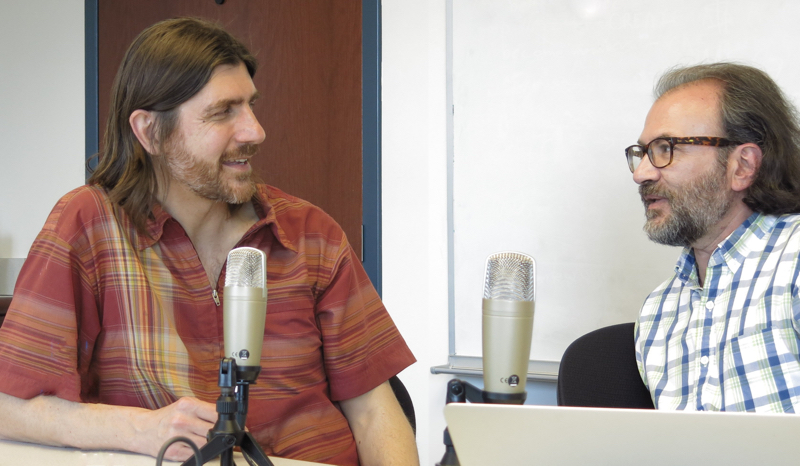
Edward O’Neill consults and serves to solve teaching & learning problems for professors, and supports academic and other projects with learning design and technology services.

Both Doug and Edward cohost the ‘Teach Better’ podcast focusing on expert-level university teaching & pedagogy.

You can check out the podcast over at teachbetter.co and on iTunes where there are currently 45 amazing episodes on teaching in the classroom and the education system.

Resources:

  • Panopto – the Lecture Capture System
  • i>clicker Buy the i>clicker from Amazon
  • Google Hangouts
  • Camtasia

Links:

  • Teach Better Podcast
  • Educause – helping higher education elevate the impact of IT
  • Mayer, R. E. and Moreno, R. (2003). Nine Ways to Reduce Cognitive Load in Multimedia Learning. Educational Psychologist, 38(1), 43–52.
  • Professor Jonathan Holloway
  • Carla M. Horwitz, Yale Child Study Centre 

Writing Tips:

  • Write the first sentence first. Brain storm. Organise, cull and finally edit. Write everyday – Doug McKee.
  • Always Be Done (the ABD method) – Edward O’Neill.

Recommended Books:

  • Brain-Based Design Thinking by Edward O’Neill
  • Dune by Frank Herbert
  • What the Best College Students Do by Ken Bain
  • Building Expertise: Cognitive Methods for Training and Performance Improvement by Ruth Colvin Clarke

http://traffic.libsyn.com/economicrockstar/121_Doug_and_Edward_Final.mp3

Podcast: Play in new window | Download

  • facebook
  • linkedin
  • twitter
  • google+
  • pinterest

091: The Age of Em by Robin Hanson

June 23, 2016 by Frank

http://traffic.libsyn.com/economicrockstar/091_Age_of_Em_Final.mp3
Play in New WindowDownload

091: The Age of Em by Robin Hanson

This is Robin Hanson’s second appearance on the Economic Rockstar podcast. I previously spoke to Robin about his work in episode 073. If you find this interview interesting, check out the other episode. You’ll love it.

This is the Book Review from Amazon:

“Robots may one day rule the world, but what is a robot-ruled Earth like?

Many think the first truly smart robots will be brain emulations or “ems.” Scan a human brain, then run a model with the same connections on a fast computer, and you have a robot brain, but recognizably human.

Train an em to do some job and copy it a million times: an army of workers is at your disposal. When they can be made cheaply, within perhaps a century, ems will displace humans in most jobs. In this new economic era, the world economy may double in size every few weeks.

Some say we can’t know the future, especially following such a disruptive new technology, but Professor Robin Hanson sets out to prove them wrong. Applying decades of expertise in physics, computer science, and economics, he uses standard theories to paint a detailed picture of a world dominated by ems.

While human lives don’t change greatly in the em era, em lives are as different from ours as our lives are from those of our farmer and forager ancestors. Ems make us question common assumptions of moral progress, because they reject many of the values we hold dear.

Read about em mind speeds, body sizes, job training and career paths, energy use and cooling infrastructure, virtual reality, aging and retirement, death and immortality, security, wealth inequality, religion, teleportation, identity, cities, politics, law, war, status, friendship and love.

This book shows you just how strange your descendants may be, though ems are no stranger than we would appear to our ancestors. To most ems, it seems good to be an em.”

Click here to win a copy of Robin Hanson’s book:

Create your own user feedback survey

Book:

The Age of Em: Work, Love and Life when Robots Rule the Earth

Links:

  • Podcast episode 073: Robin Hanson on The Age of Em and How Brain Emulations Will Double Economic Growth Every Month
  • The Age of Em
  • www.overcomingbias.com


http://traffic.libsyn.com/economicrockstar/091_Age_of_Em_Final.mp3

Podcast: Play in new window | Download

  • facebook
  • linkedin
  • twitter
  • google+
  • pinterest

078: Arnold Kling on the Hidden Story of How Markets Work, the Mortgage Crisis and How We Pay for Health Care

March 24, 2016 by Frank

http://traffic.libsyn.com/economicrockstar/078_Arnold_Kling_.mp3
Play in New WindowDownload

078: Arnold Kling on the Hidden Story of How Markets Work, the Mortgage Crisis and How We Pay for Health Care

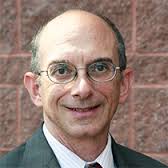
Arnold Kling is a Mercatus Center–affiliated senior scholar at George Mason University and a member of the arnold kling economic rockstarFinancial Markets Working Group.

Arnold specializes in housing-finance policy, financial institutions, macroeconomics, and the inside workings of America’s federal financial institutions. He also is an adjunct scholar at the Cato Institute in Washington, DC.

Arnold has testified before Congress on the collapse of Fannie Mae and Freddie Mac

He has authored five books, including Crisis of Abundance: Rethinking How We Pay for Health Care and Invisible Wealth: The Hidden Story of How Markets Work.

Arnold has published articles in the Economist, the Wall Street Journal, the New York Times, the Atlantic, and Forbes, among others, and he blogs at arnoldkling.com/blog/.

Previously, Arnold served as a senior economist at Freddie Mac and a staff economist on the Board of Governors of the Federal Reserve System.

He started Homefair, one of the first commercial websites on the Internet.

Arnold Kling received his PhD in economics from Massachusetts Institute of Technology.

“If you want to live a good lifestyle, you can find hobbies and interests that don’t cost very much. So it’s not hard to enjoy life. But if you want to make yourself miserable, watch politics.” – Arnold Kling

Economics:

In this episode, Arnold mentions and discusses: information rules, economic information, marginal cost of information, advertising, versioning, bundling, Austrian economics, risk measurement, capital, tax, mortgage-backed securities, loans, bubbles, crashes, excess leverage, marked-to-market, economics of health care, labor, capital, land, institutions.

Economists:

In this episode, Arnold mentions and discusses: Hal Varian, Carl Shapiro, Brad deLong, Tyler Cowen, Paul Krugman, Paul Volker, Douglass North, Robin Hanson, Bryan Caplan, James Buchanan, Adam Smith, F. A. Hayek and Robert Solow.

In this episode you will learn:

  • about Moore’s Law and what it means for the economy.
  • why economists are being lured into the world of start-ups and tech companies.
  • about the power of freemium and why companies need to build up trust to create a loyal customer base.
  • the difference between versioning and bundling.
  • what the future holds for the accessing information online.
  • about Arnold’s company online Homefair and how it was one of the first internet companies.
  • what really went on behind closed doors at Fannie Mae and Freddie Mac that resulted in their demise.
  • why Fannie Mae and Freddie Mac were bailed out.
  • how changing the culture at Freddie Mac caused its collapse.
  • about the state of health care in America today.
  • how Americans are to pay for the higher costs of health care.
  • about the fibre-bubble in the 1990s.
  • why we are richer today than a couple of hundred years ago.
  • why ideas are the foundation to economic growth and prosperity.
  • why nations like Cuba and North Korea are poor (bad institutions).
  • about the work being done at George Mason University.

Where to Find Arnold Kling:

  • www.arnoldkling.com/blog/

Books:

  • Crisis of Abundance: Rethinking How We Pay for Health Care by Arnold Kling
  • Invisible Wealth: The Hidden Story of How Markets Work by Arnold Kling
  • Information Rules: A Strategic Guide to the Network Economy by Carl Shapiro and Hal Varian
  • The Revolt of the Public and the Crisis of Authority in the New Millennium by Martin Gurri

Links: 

  • 23andMe: www.23andme.com
    • View reports on over 100 health conditions and traits
    • Find out about your inherited risk factors and how you might respond to certain medications
    • Discover your lineage and find DNA relatives
http://traffic.libsyn.com/economicrockstar/078_Arnold_Kling_.mp3

Podcast: Play in new window | Download
  • facebook
  • linkedin
  • twitter
  • google+
  • pinterest

052: Alex Tabarrok on Globalisation, Bounty Hunters and Leveraging Online Education

October 1, 2015 by Frank

http://traffic.libsyn.com/economicrockstar/Alex_Tabbarrok__Final.mp3
Play in New WindowDownload

052: Alex Tabarrok on Globalisation, Bounty Hunters and Leveraging Online Education

Alex Tabarrok is Associate Professor of Economics at George Mason University and co-founder (with Tyler Cowen) of Marginal Revolution University, an online platform for learning economics.Alex Tabarrok

Alex is Senior Fellow and former Research Director for The Independent Institute, Assistant Editor of The Independent Review, Bartley J. Madden Chair in Economics at the Mercatus Center and Director of the Center for Study of Public Choice.

Alex is the author or editor of a number of books including the introductory economics textbooks, Modern Principles, The Voluntary City and Changing the Guard: Private Prisons and the Control of Crime.

Alex is a TED speaker with over 640,000 views of his TED talk, How Ideas Trump Crises.

Alex received his Ph.D. in economics from George Mason University, and he has taught at the University of Virginia and Ball State University.

“I hope to be teaching long after I’m dead” – Alex Tabarrok

Click To Tweet

In this episode, you will learn:

  • how to ensure that criminals turn up of trial and to reduce the possibility of them becoming a fugitive.
  • how bounty hunters are more successful than the police in catching criminals.
  • why bounty hunters and bail bondsmen are the most best for the taxpayer.
  • why bounty hunters invited Alex Tabarrok to join them in a bounty hunting.
  • why a mother’s signature on a bail bond is the most effective way of making sure a criminal repays its  due.
  • how effective are the police in deterring crime.
  • how a police strike in Montreal in 1967 resulted in an spike in crime.
  • how the terror alert level results in an increase in police presence and results in a decrease in local crime.
  • whether we should reward the police for reducing crime and the problems that could arise from this reward system.
  • about the use of value-added tests for identifying teacher quality.
  • whether the best teachers have a positive impact on the future earnings of their students.
  • if a country can have a welfare state and open borders.
  • how the next generation of immigrants revert to the average of their adopted country including crime.
  • why immigrants to the United States are the most entrepreneurial.
  • why Alex co-founded Marginal Revolution University.
  • what Marginal Revolution University is about and who it’s for.
  • how to leverage the best teachers and leverage their experience.
  • how teaching will evolve into a format that’s similar to how plays evolved into movies with leading actors being paid millions of dollars and the production being created just once.
  • how artificial intelligence and computer adaptive learning programmes will be the next wave of teaching and learning.
  • what is the ideal length for a recorded educational video.
  • why universities will have to adapt to online technologies.
  • why parents and politicians want colleges to use online technologies.

Immigrants have lower crime rates, but the children of immigrants have about average crime rates. It’s unfortunate that the immigrants adopt our ways. They assimilate to American crime rates – Alex Tabarrok

Personal Habits:

I love doing what I do and that removes a lot of barriers. It gets you up in the mornings – Alex Tabarrok

Takeaway:

“Economics is fun. Economics brings in these world histories, things about climate, geography and history” – Alex Tabarrok

Economics:

In this interview, Alex mentions: crime, incentives, causality, elasticity, Baumol’s Cost Disease, rewards, redistribution, welfare, taxes, entrepreneurship, human capital, globalisation, public goods, free trade, structural unemployment and trade.

Economists:

In this interview, Alex mentions: Tyler Cowen, Greg Mankiw, Paul Krugman, Eric Callan, John Click, Milton Freidamn, John Nash, Bryan Caplan, Robin Hanson, Joseph Schumpeter, Adam Smith, David Hume and Richard Cantillon.

“This is a cliche, but Adam Smith really is great” – Alex Tabarrok

Click To Tweet

Ted:

  • How Ideas Trump Crises by Alex Tabarrok
  • Comment: Solving Crises Through Innovation and Ideas or Creating Problems Through Marginalisation and Displacement by Frank Conway

My TED talk is 75% of my entire teaching. So that 15 minute talk has been seen by so many people that that’s the majority – the big majority of all my teaching in my life. – Alex Tabarrok

Podcasts:

  • EconPop

Books:

  • Economics in One Lesson by Henry Hazlitt
  • The Armchair Economist by Stephen Lansberg
  • Freakonomics by Steven  D. Levitt and Stephen J. Dubnar
  • An Economist Gets Lunch: New Rules for Everyday Foodies by Tyler Cowen
  • The Undercover Economist by Tim Hartford
  • The Undercover Economist Strikes Back by Tim Hartford
  • The Case Against Education by Bryan Caplan (coming soon)
  • The Age of Em by Robin Hanson 
  • Trekonomics by Manu Saadia

    http://traffic.libsyn.com/economicrockstar/Alex_Tabbarrok__Final.mp3

    Podcast: Play in new window | Download
    • facebook
    • linkedin
    • twitter
    • google+
    • pinterest

    042: Parviz Parvizi on Clammr, Coffee, Coase and the Economy of Iran

    July 23, 2015 by Frank

    http://traffic.libsyn.com/economicrockstar/042_Parviz_Parvizi_Final.mp3
    Play in New WindowDownload

    042: Parviz Parvizi on Clammr, Coffee, Coase and the Economy of Iran

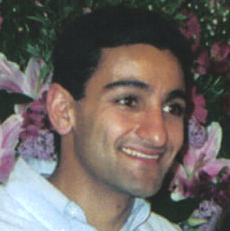
    Parviz Parvizi is co-founder of Clammr, a mobile app and platform making audio more social and viral. Users areParviz Parvizi on the Economic Rockstar podcast calling Clammr, which features snack-sized audio clips of 18 seconds or less, the “Instagram of Audio” and “Audio Twitter”.

    Previously, Parviz worked at McKinsey & Company, Goldman Sachs, the Federal Communications Commission, and O’Melveny & Myers.

    He has advised top 5 global media companies and mobile carriers on strategy and growth. He was a founder of McKinsey’s iConsumer research initiative on digital consumer behavior, authoring 3 of the firm’s 10 most-downloaded media sector knowledge documents.

    Parviz was a Olin Law & Economics Fellow at Yale Law School. At Cornell he majored in economics and served as President of the Cornell Economics Society while an undergraduate.

    Parviz holds a JD from Yale Law School and AB from Cornell.

    Economics:

    In this interview, Parviz mentions and discusses: development economics, poverty, transitional economies, microeconomics, exports, auction markets, transaction costs, fair trade, taxes, theory of specialisation, Coase theorem, theory of the firm, property rights, bargaining power, market prices, transaction costs, fair trade, economic growth, consumption, productivity, autarky,

    Economists

    In this interview, Parviz mentions and discusses: Friedrich Hayek, Adam Smith,David Ricardo, Ronald Coase and Steven Dubnar, 

    Favorite Economists:

    • Adam Smith and Ronald Coase

    Clammr as featured on Economic Rockstar

    Find Out:

    • about Clammr, the amazingly new app that shares an 18-second audio clip just like an audio tweet.
    • about Parviz Parvizi’s journey from Iran to the US.
    • how Parviz Parvizi got his name.
    • how there are 4 hours of audio-only time each day for people and how Clammr can accommodate your needs.
    • about the motivation behind the creation of Clammr and how Parviz and his co-founder solved a problem.
    • how Clammr was built up from the beginning at zero cost.
    • what Clammr found out about podcasting.
    • the difficulties of growing and monetising a podcast and how Clammr is helping podcasters to solve these challenges.
    • about the social aspect of Clammr and how you can share audio snippets to your friends, colleagues and audience.
    • if Clammr will adopt a monetization model similar to YouTube.
    • how Clammr’s ‘Hear More’ button can potentially lead to a paid transaction for users.
    • about the opportunities that exist for users of Clammr in the education sector.
    • how teachers can use Clammr in assessments and how students can collaborate to give their audio response in a mashup-like answer.
    • how Clammr could be the new route for a musician to become known, just like the way Justin Bieber made it using YouTube.
    • how being an early adopter of a new platform can lead to a large following.
    • about the sensation that is PewDiePie on YouTube and his degree in Industrial Economics.
    • about Parviz’s work in the Tanzania and Ethiopia coffee trade market.
    • about the challenges faced by African coffee growers and how Parviz solved this problem.
    • Parviz’s views on the recent US-Iran deal.
    • how the US-Iran deal may have economic limitations due to Iran’s economy being 70% state-dominated.
    • about the benefits of an export-oriented market economy.
    • about the benefits of a knowledge economy.
    • how democracy and economic growth could improve if marginalised groups in society are helped.

    Quotes by Parviz in Episode 042 of the Economic Rockstar Podcast:

    • Clammr is really trying to address the challenge of discovery and social sharing in audio – Parviz Parvizi

      Click To Tweet

    • You build a more sustainable business if the way you get paid is a way in which all parties involved actually get value – Parviz Parvizi

    Advice:

    • Don’t sell yourself short in terms of where you’re aiming and don’t think that your starting point has to define your ending point – Parviz Parvizi

    • Even if you’re aren’t getting access to the very best schools, it doesn’t actually take that much time to catch up with hard work – Parviz Parvizi

    • Aim high and exposing yourself to people, institutions and places of incredibly high standards is a great way to push yourself even if initially you’re kind of a failure”– Parviz Parvizi

    • Entrepreneuship is a constant battle of wills – Parviz Parvizi

      Click To Tweet

    Recommended Books:

    • The Elements of Style by Strunk and White
    • Wealth of Nations by Adam Smith
    • The Holy Bible

    The Next Decade of Podcasting:

    • What’s in store for the next decade of podcasting and radio? Check out this great post.
    • Clammr releases Future Podcasting 2015 Report on SlideShare.
    • The Future of Podcasting by Parviz Parvizi.

    Where to Find Parviz Parvizi:

    • Twitter: @ClammrClammr App on Economic Rockstar
    • Clammr: @Parviz
    • Facebook: Clammr

    Links for the Clammr App:

    • Download Clammr for iPhone/iPad in the App Store or by visiting Clammr.
    • For Android use the web-based publisher to upload files and for a basic listening experience.
    • Workshop and update videos.
    http://traffic.libsyn.com/economicrockstar/042_Parviz_Parvizi_Final.mp3

    Podcast: Play in new window | Download

    • facebook
    • linkedin
    • twitter
    • google+
    • pinterest

    027: Craig Medico on How Economics Saved My Career, How I’m Embracing Technology in the Classroom and Why I’m off to Wrestling School

    April 8, 2015 by Frank

    http://traffic.libsyn.com/economicrockstar/027_Craig_Medico.mp3
    Play in New WindowDownload

    027: Craig Medico on How Economics Saved My Career, Using Technology in the Classroom and Why I’m off to Wrestling School

    Craig Medico is an Economics and History educator in New York with 11 years ofCraig Medico classroom experience. Craig is doing amazing things to get young people to understand and become interested in economics.

    He is the author of No Bull Review – Macroeconomics and Microeconomics: For use with the AP Macroeconomics and AP Microeconomics Exams (2012) and No Bull Review – Macroeconomics and Microeconomics: Top 10 Guide (2014). 

    Craig is the developer of several best-selling iPhone test prep apps from Study By App, LLC, including Economics AP (2010), Economics AP Free (2011), and Economics Flashcard Review (2011). 

    In 2010, he contributed to WNYC Radio/Public Radio International’s morning news program The Takeaway. 

    Craig is the Macroeconomics instructor for the Junior State of America summer school at Princeton University and teaches Advanced Placement Economics at Paul D. Schreiber High School in Port Washington, New York.

    He recently completed an economics educator study tour of Peru with the Global Economic Education Alliance in association with the University of Colorado-Colorado Springs and the Peruvian University of Applied Sciences.

    In his spare time, Craig records and produces educational music videos for The Social Studs.

    Economic Themes:

    In this interview, Craig mentions and discusses: Teaching economics, Advanced Placement program, opportunity costs, supply and demand and the Philips Curve.

    Economists:

    In this interview, Craig mentions: 

    John Brock.

    Find out:

    • about Craig Medico’s education trip to Peru.
    • about the class distinction in Peru and how it is upsetting the quality of education for the poor.
    • the answer to this problem: 2 + 2 x 2 + 2 Tweet me https://twitter.com/Econ_Rockstar
    • how technology can be so beneficial to learning.
    • how Peruvian kids are excited about the country’s economic future.
    • how a trip to Peru will become part of Craig’s lessons at High School.
    • about Craig’s opinions about using technology in education.
    • why Craig embraces technology in education both for himself and for his students.
    • if there is a disruptive technology that exists that could compromise the traditional bricks-and-mortar way of education.
    • what upset Craig when he saw a mother and son at a donut shop.
    • how economics saved Craig’s career.
    • how idiot-proofing economics allowed Craig to master the concepts.
    • about Craig’s philosophy in his teaching methods and how it helps students to learn effectively.
    • about the Advanced Placement programs in the United States and how to earn college credit.
    • about Craig’s philosophy which is based on the thoughts of Roman Emperor Marcus Aurelius.
    • who are George Washing-tone and Abrajamz Lincoln and what are they teaching kids?
    • why Craig Medico transforms into Mr Medi-KO and why he’s off to wrestling school.
    • about the technological challenges facing all schools today.
    • about some of the apps you can use to create educational content.

    Defining Moment:

    Craig self-proclaimed that he “was actually an economic moron up to about 12 years ago”.

    Craig was originally a World History instructor and his school wanted to offer an Advanced Placement program. In order to keep his job, Craig had to “figure out economics. So, in a desperate attempt to keep my job  that year, I’d to figure out how to make economics work for me. I’d to figure out a way to idiot-proof the content of the curriculum since I was a complete economic idiot.”

    “I was pretty much in my students’ shoes moments before trying to teach them and I used that to my advantage. I knew what it was to be like in their shoes.”

    “When you teach something, you reinforce the material for yourself and perhaps take the most important step toward mastery of that content”.

    Affirmation/Philosophy:

    It’s important to reserve some quite time for myself each day. I try to workout a few days each week even if it’s for 30 minutes. It helps clear the mind. It helps me feel good and if you feel good you look good.

    I have this 3 hour window every morning where my mind feels extra sharp and this is where my creative ideas typically originate. Ultimately the goal is just to be a happy person. Be happy with what I do everyday.

    “The happiness of your life depends on the quality of your thoughts” – Roman Emperor Marcus Aurelius.

    Influencers:

    My students influenced Craig the most when it came to writing the books and apps.

    “When it comes to developing material for the classroom, my influencers are Metallica, KISS, Aerosmith and the Rolling Stones. I used to view each lesson as a performance – like a rock show.”

    Takeaway:

    No matter how old you are or where you are in life, always be an active learner. There’s nothing more rewarding than learning new ideas, new activities, taking on new hobbies. And then once you learn something, become a teacher. Share it with the people around you.

    About the Use of Technology in Education:

    I love it. I don’t think it necessarily replaces the classroom experience. But it supplements it in such a great way. I view the online stuff as just another way of diversifying how we learn.

    MOOCs are the big thing in education right now. To take a class with 80,000 other students – how cool is that? And do it on your own terms, do it at low or no cost.

    “I got into technology because it’s fun. It’s so much fun to put the websites together and the apps, the books and the videos on YouTube. I do it to keep things interesting for me. If I taught the classes the same way every single year I would end up in a huge rut. My goal is to constantly improve and be as great as a teacher as I can for my students.”

    “I think human interaction is very important. Especially in the workplace where we still have to deal with human beings. We’ve gotta create students who can handle that down the line.”

    Tools Educators Can Use to Help with Teaching:

    • Powerpoint: Allows diagrams to show movement such as changes to curves.
    • Twitter
    • Snapchat
    • Apps:
      • Explain Everything – Used to make YouTube videos.
      • AppShed – create your own apps or get students to create their own.
      • Socrative – Socrative lets teachers engage and assess their students with educational activities on tablets, laptops and smartphones.
      • studybyapp – provides an intuitive web-based platform that enables you to build apps that fit your needs.

    Education in Peru: A Tale of Two Standards but a Key Determinant to Long-Term Economic Growth

    A recent trip by Craig Medico and 11 other educators from the USA was organised by the Global Economic Education Alliance in partnership with Dr. John Brock, Director of the Center for Economic Education at the University of Colorado, Colorado Springs (UCCS) and Claudia Sicoli, Director of the Centro de Educación Económica de la Universidad Peruana de Ciencias Aplicadas (UPC) in Lima, Peru.

    Mr. Medico embarked on a tour of Peru’s educational system as well as experiencing some of the economic development that has been going on in Peru over the last few decades. This trip was a great opportunity both for Peru and the USA to forge an education alliance and to open up a teacher-exchange in the future and to improve the education system in both places.

    Craig visited wealthy private schools, middle-class private schools and poor public schools, as well as meeting with students at the local university. He, along with the other educators met with representatives of the Central Bank of Peru and the ministry of education.

    Craig found a lot of challenges and inequities throughout Peru’s educational system. A visit to one upper-class private school in Lima was an ‘eye-popping experience’. This was a trophy school that epitomised the trappings of wealth and symbolized the success of Peru’s economy. “It resembled more of a country club than a school – large outdoor swimming pools, soccer fields, lots  of open space. Lots of technology in the classroom, every student had their own computer”.

    The construction of new buildings on the grounds of this private school confirmed its continued and rapid expansion and is analogous to the determination of Peru to be the best in attaining educational standards. Students are granted a lot of academic freedom through project-based learning. “Most of the instructors are foreign that would come in from overseas and teach for a couple of years. They seem to be high-level teachers.”

    It was a totally different story for a poor public school outside Lima. “That school was surrounded by dirt and dilapidated housing. I didn’t see a single computer in a classroom. The closest thing was a dusty broken TV set that didn’t work anymore. The students seemed very unengaged and many were confused. I observed one teacher who was teaching students completely incorrect information.”

    In that particular lesson, students were working in groups to understand bar graphs. Their prop were wooden boards with nails sticking out from them and they were creating bar graphs with rubber bands. Craig is shocked at how this school has fallen behind in standards, particularly failing to embrace technology due to the lack of funding it receives. 

    “Many struggle through it and I’m thinking, WOW, this is a great example of where technology, like an interactive white-board, would greatly enhance these kids’ classroom experience.”

    The thing that struck Craig the most, in addition to the technology, was the teacher’s approach to teaching math. She wasn’t teaching math using the ‘Order of Operations’ – the PEMDAS Rules that are applied to learning in 3rd and 4th Grade. She was just solving problems on the board left to right. Craig was so concerned about a math problem that was being solved incorrectly by the teacher at this point that he imagined mistakes and incorrect information being taught at other schools, not only in Peru, but also in the US.

    Craig interacted with kids from a Middle School in Cusco, Peru who where so excited about their country’s economy and what it means for them. When they asked Craig and the other educators about their personal thoughts, Craig, in true economic fashion, highlighted the key underlying strengths and benefits that are determining factors to a successful economy: the valuable inputs and factors of production, property rights are better protected, buildings and infrastructure is being built to accommodate growth and sustain future economic development.

    However, Craig gravitated toward education being the number one catalyst for maintaining a healthy, vibrant and opportunistic economy, which is a reflection of his true-calling as a passionate and dedicated educator. “Improving education and human capital is going to be the main determinant as to whether Peru is going to be a true economic powerhouse over the longer term.”

    Craig is an champion and a hero, not just in the wrestling ring, but in the classroom. His passion and dedication exudes and shines through his continued and dynamic approach to making learning (and teaching) fun and accessible. Craig is an early adopter of the use of technology and social media in the classroom, which embraces the needs of both student and teacher. His students are extremely lucky to have a teacher so dedicated to giving it all and I sincerely hope they realise this. It seems that he has unlocked the true meaning of life: help others and find happiness in the things you do each day.

    Recommended Books:

    • No Bull Review – Macroeconomics and Microeconomics: For use with the AP Macroeconomics and AP Microeconomics Exams (2012) by Craig Medico.
    • No Bull Review – Macroeconomics and Microeconomics: Top 10 Guide (2014) by Craig Medico.
    • The Stoic Philosophy of Seneca: Essays and Letters by Lucius Annaeus Seneca

    Apps by Craig Medico:

    • Economics AP Free
    • Economics AP
    • Economics Flashcards

    All three apps by Mr Medico can be found on the iTunes store but here is a link that will take you to his website showing the apps on the right of the homepage.

    Where To Find Craig Medico:

    • Website: www.mrmedico.info
    • Twitter: @mrmedicoinfo
    • email: cmedico@gmail.com
    • YouTube: SocialStudsRock 
    http://traffic.libsyn.com/economicrockstar/027_Craig_Medico.mp3

    Podcast: Play in new window | Download

    • facebook
    • linkedin
    • twitter
    • google+
    • pinterest

    Frank Conway

    Frank Conway is founder of Economic Rockstar and lecturer of economics, finance and statistics. Read More…

    View My Blog Posts

    Youtube Sub

    Become a Patron of the Economic Rockstar Podcast

    patreon

    Ireland’s Economy by the Numbers

    Leaving Cert Economics: Ireland’s Economy  Click here to download a workbook on Ireland’s Economy so that you can add your own notes. [Original size] Ireland’s Economy by fconway

    Categories

    Subscribe and Never Miss An Episode

    itunes-logo

    Recent Posts

    • Ireland’s Economy by the Numbers April 8, 2019
    • 174: Wendy Carlin on The Core Project, Capitalism, Democracy and Normative Statements February 13, 2019
    • 173: Stephen Wright on Core Econ as a Learning Resource for Mainstream Economics January 28, 2019
    • 172: Best of 2018 Part 2: From the Great Depression to Futurism; Institutions, Individualism, Cooperation and Reciprocity January 22, 2019
    • 171: Best of 2018 Part 1 January 3, 2019

    Copyright © 2026 · Podcast Pro Theme on Genesis Framework · WordPress · Log in

    This website uses cookies to improve your experience. We'll assume you're ok with this, but you can opt-out if you wish. Accept Reject Read More
    Privacy Policy

    Privacy Overview

    This website uses cookies to improve your experience while you navigate through the website. Out of these, the cookies that are categorized as necessary are stored on your browser as they are essential for the working of basic functionalities of the website. We also use third-party cookies that help us analyze and understand how you use this website. These cookies will be stored in your browser only with your consent. You also have the option to opt-out of these cookies. But opting out of some of these cookies may affect your browsing experience.
    Necessary
    Always Enabled
    Necessary cookies are absolutely essential for the website to function properly. This category only includes cookies that ensures basic functionalities and security features of the website. These cookies do not store any personal information.
    Non-necessary
    Any cookies that may not be particularly necessary for the website to function and is used specifically to collect user personal data via analytics, ads, other embedded contents are termed as non-necessary cookies. It is mandatory to procure user consent prior to running these cookies on your website.
    SAVE & ACCEPT