112: Stuti Khemani on Making Politics Work for Development and Using Creativity and the Arts to Make Better Policy Decisions
Stuti Khemani is a Senior Economist in the Development Research Group of The World Bank. She joined through 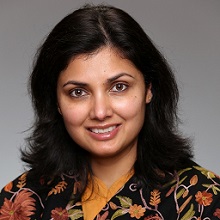 the Young Professionals Program after obtaining a PhD in Economics from the Massachusetts Institute of Technology.
Dr. Khemani’s area of research is the political economy of public policy choices, and institutional reforms for development.
Her work is published in leading economics and political science journals, such as the American Economic Journal, Journal of Development Economics and American Political Science Review.
Stuti has studied the impact of electoral politics on fiscal policy and intergovernmental fiscal relations; drawn policy implications for the design of institutions to promote fiscal responsibility; and analyzed political constraints to efficient allocation of resources for health and education services.
She is also the lead author of the forthcoming Policy Research Report ‘Making Politics Work for Development: Harnessing Transparency and Citizen Engagement’.
Her research and advisory work spans a diverse range of countries, including Benin, China, India, the Philippines, Nigeria, Tanzania and Uganda.
More and more I’m fascinated by the world around me and with people currently living in the world.
In this episode you will learn:
- why working in policy is important.
- about the basic need for freedom and and the freedom to choose government.
- about the Dictator’s Dilemma.
- what makes a successful autocratic government.
- whether culture plays a significant role in a successful government and economy.
- how leader selection and sanction can create better government.
- the importance of art and creativity in policy-making.
- and much much more.
Papers:
Making politics work for development : harnessing transparency and citizen engagement.
The World Development Report 2016: Digital Dividends
Making Autocracy Work by Timothy Besley and Masayuki Kudamatsu
Writing Tips:
- “Write short sentences. My natural instinct is write long convoluted sentence. Now I discipline myself to edit and re-write and to make every sentence as short as possible.”
- “Write to intuition. Not to use mystifying language or jargon. I try to think through how I would say it to my brother who works at Google and knows nothing about economics and then write it.”
People Mentioned in this Episode:
Books:
- Middle March by George Elliot
- Three Chinese Poets by Vikram Seth
- Casual Vacancy by J. K. Rowling


Podcast: Play in new window | Download
 058: Morten Jerven on Poor Numbers and Why Economists Get It Wrong With Africa
 048: Steve Hanke on Currency Boards, Moral Hazard and the Benefits of Privatization
 046: Shanta Devarajan on The World Bank, Quiet Corruption, Government Failure and Comparative Advantage in the MENA Region
 085: Michael Roberts on Understanding Karl Marx and His Thinking on Capitalism
 142: Niels Kaastrup-Larsen on Time, Diversification and Asset Allocation in Trend Following Strategies
 053: Helena Norberg-Hodge on Localisation, Trade Treaties and the Economics of Happiness
 038: Leah Bell on Being an Angry Grad and Setting Yourself Up for a Life of Success
 091: The Age of Em by Robin Hanson
 024: Greg Davies on Behavioral Finance and Controlling Your Emotions When Making Trading Decisions