• ABOUT
  • RESOURCES
  • PODCAST
  • BOOKS
  • BLOG
  • SUPPORTERS
  • QFA Financial Advice
  • CONTACT

Economic Rockstar

Connecting Brilliant Minds in Economics and Finance

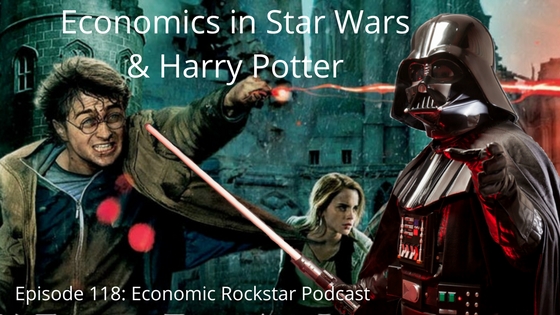
118: Zachary Feinstein on Systemic Risk and Economics in Star Wars and Harry Potter

December 30, 2016 by Frank

http://traffic.libsyn.com/economicrockstar/118_Zachery_Feinstein_Final.mp3
Play in New WindowDownload

118: Zachary Feinstein on Systemic Risk and Economics in Star Wars and Harry Potter

Zachary Feinstein is Professor joined the Preston M. Green Department of Electrical & Systems Engineering at Washington University in St. Louis in 2014.

While earning a doctorate at Princeton University, Zachary supervised the senior thesis-writing group and assisted in teaching several courses.

Previously, he conducted research at Hunan University in China and was an intern at Millennium Partners LP and Lehman Brothers Inc., both in New York City.

Professor Feinstein works in the broad fields of operations research and financial engineering and he heads The Operations Research and Financial Engineering Laboratory Washington University.

His research focus has been on the applications of set-optimization to financial risk measurement, with projects studying and defining dynamic risk measures in markets with transaction costs and measures of systemic risk.

You can find Professor Feinstein’s work on Star Wars and more at www.fictionomics.com.

On Systemic Crises and Contagion:

“This is something that comes up very regularly in modern economic history. And really it’s something that we talk about it for a year after the crisis and then we forget to think that this is a problem. So by bringing it up in Star Wars and by bringing it up in Harry Potter we can keep this in the public consciousness.” Professor Zachary Feinstein.

Economics:

In this episode, Zachary discusses and mentions: systemic risk, contagion, world GDP, Gross World Product, Gross Galactic Product (GGP), interstellar travel, economic stagnation, financial deregulation, resources, scarcity, bailout, bank failures, TARP, moral hazard and the Glass-Steagall Act.

In this Episode, you will Learn:

  • about the petition to White House to build the Death Star.
  • how the Death Star would cost $193 quintillion to build and World GDP is $70 trillion.
  • about how Professor Feinstein used the Manhattan Project to build the first Atomic Bomb as a proxy to calculate the cost of the second Death Star.
  • why people would go back to authoritarian rule like The First Order (economic depression).
  • how economic growth is linked to population growth.
  • what happens in a systemic crisis if it’s generated by currency exchanges.
  • the Economic System in the Star Wars Galaxy.
  • the systemic risk imposed by the Gringotts Bank in the Harry Potter series.
  • and much much more.

Movies/TV Series Mentioned in this Episode:

  • The Clone Wars
  • Rogue One
  • Star Wars: The Force Awakens
  • Star Wars: The Empire Strikes Back
  • Star Wars: Return of the Jedi
  • Harry Potter and the Cursed Child
  • Lord of The Rings: The Fellowship of the Ring
  • Game of Thrones
  • Sharknado
  • Back to the Future
  • Doctor Who

Writing Tips:

Just write it down. Get something on page and then afterward you can mark it up in red as much as you want. Don’t worry about getting the right sentence down, just get something on the page and then move it all around. Mark it up. Completely delete it if you want. But once it’s on the page, it’s much easier to move forward than worrying about the perfect sentence to start – Professor Zachary Feinstein.

Academic Papers:

  • Feinstein, Z. (2015). It’s a Trap: Emperor Palpatine’s Poison Pill. Washington University.
  • Other academic papers by Professor Zachery Feinstein.

Links:

  • Petition to White House to build the Death Star
  • Rogue One and Building the Death Star by Zachary Feinstein
  • Thoughts on the Operational Costs of the Death Star by Zachary Feinstein
  • The economics of Star Wars: How the Empire collapses by Erika Ebsworth-Goold
  • Harry Potter and the Goblin Bank of Gringotts by Zachary Feinstein
  • Harry Potter and the Economic Catastrophe: The Rise of Voldemort by Zachary Feinstein
  • Sharknado: The Deficit Spending We Need by Zachary Feinstein

Books:

  • Foundation by Isaac Asimov
  • Foundation and Empire by Isaac Asimov
  • Second Foundation by Isaac Asimov
  • Anathem byNeal Stephenson
  • Cryptomicon by Neal Stephenson
  • The Diamond Age by Neal Stephenson
  • Harry Potter and the Cursed Child by J. K. Rowling

http://traffic.libsyn.com/economicrockstar/118_Zachery_Feinstein_Final.mp3

Podcast: Play in new window | Download

087: Asgeir B. Torfason on the Economy of Iceland and Explaining Negative Cashflows in Banks

May 26, 2016 by Frank

http://traffic.libsyn.com/economicrockstar/087_Asgeir_Torfason_Final.mp3
Play in New WindowDownload

087: Asgeir B. Torfason on the Economy of Iceland and Explaining Negative Cashflows in Banks

Asgeir B. Torfason is Assistant Professor in the School of Business at the University of Iceland where he teaches asgeir torfasonFinance, Accounting and Financial Statement Analysis. Asgeir is also Postdoc Research Fellow, as well as an Assistant Professor at Gothenburg Research Institute.

Asgeir defended his PhD at Gothenburg University in May 2014 with dissertation: Cash Flow Accounting in Banks – A study of practice.

His research combines bank management, finance theory, monetary economics and accounting studies.

Previous research has focused on asset values and long-term investment in real estate, a field where Asgeir has extensive practical experience, covering the Nordics as VP for a REIT listed on NYSE.

Prior to that he worked in university management after getting an MBA from Norwegian Business School in Oslo, and studied earlier Philosophy and Economics in Iceland.

Economics:

In this episode, Asgeir mentions: Iceland’s economy, IT bubble, Tulip Mania, banks, capital controls, devaluation, tourism, resources, trade, cashflows, assets, liabilities, revenue, equity, income statements, bankruptcy, lending, negative cashflows, money multiplier, reserve requirement, central banks, quantitative easing, swap lines and housing bubbles.

Economists:

In this episode, Asgeir mentions: Joseph Schumpeter, John Maynard Keynes, Hyman Minsky, Perry G Mehrling, 

Links:

  • Economics of Money andBanking, Part One by Perry G Mehrling
  • Economics of Money andBanking, Part Two by Perry G Mehrling
  • Money View by Institute for New Economic Thinking
  • Katharina Pistor, Professor of Law at Columbia Law School

Papers:

  • The difference between cash flows in banks and non-financial firms by Asgeir B. Torfason
  • Methods for Making Sense of Cash Flow in Banks by Asgeir B. Torfason
  • Cash flow accounting in banks – a study of practice (PhD) by Asgeir B. Torfason

Books:

  • The New Lombard Street: How the Fed Became the Dealer of Last Resort by Perry Mehrling
  • Lombard Street-A Description of the Money Market by Walter Bagehot
  • Manias, Panics and Crashes: A History of Financial Crises, Sixth Edition by Charles P. Kindleberger
  • The Economic Consequences of the Peace by John Maynard Keynes

Where to Find Asgeir:

  • Twitter:  @asgeirbt
  • About.me
http://traffic.libsyn.com/economicrockstar/087_Asgeir_Torfason_Final.mp3

Podcast: Play in new window | Download
085: Michael Roberts on Understanding Karl Marx and His Thinking on Capitalism

May 12, 2016 by Frank

http://traffic.libsyn.com/economicrockstar/085_Michael_Roberts_Final_.mp3
Play in New WindowDownload

085: Michael Roberts on Understanding Karl Marx and His Thinking on Capitalism

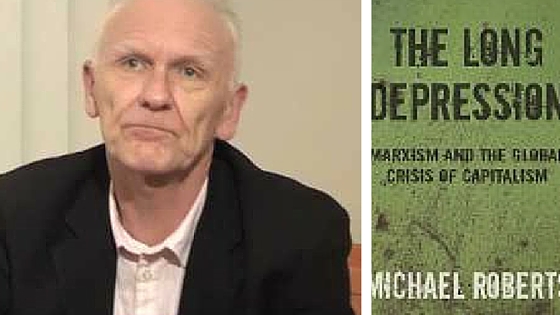
Michael Roberts

Michael Roberts has worked as an economist for over 30 years in the City of London. He is author of The Great Recession: Profit cycles, economic crisis A Marxist View and The Long Depression: Marxism and the Global Crisis of Capitalism.

Economics:

In this episode, Michael mentions: Marxism, capitalism, Austrian economics, GDP, multinationals, inflation, printing of money, booms, busts, profitability, recession, depression, inequality, wealth, means of production, private property, competition, externalities, unintended consequences, bailout, austerity and unemployment.

Economists:

In this episode, Michael mentions: Karl Marx, Friedrich Hayek, Adam Smith, John Maynard Keynes, Brad DeLong and Paul Mattick.

Links:

  • www.thenextrecession.wordpress.com by Michael Roberts

Books:

  • The Great Recession: Profit cycles, economic crisis A Marxist View by Michael Roberts
  • The Long Depression: Marxism and the Global Crisis of Capitalism by Michael Roberts
  • The Communist Manifesto by Karl Marx and Friedrich Engels
  • Capital by Karl Marx
  • Business As Usual by Paul Mattick
  • Waiting for Godot by Samuel Beckett


http://traffic.libsyn.com/economicrockstar/085_Michael_Roberts_Final_.mp3

Podcast: Play in new window | Download

Frank Conway

Frank Conway is founder of Economic Rockstar and lecturer of economics, finance and statistics. Read More…

View My Blog Posts

Youtube Sub

Become a Patron of the Economic Rockstar Podcast

patreon

Ireland’s Economy by the Numbers

Leaving Cert Economics: Ireland’s Economy  Click here to download a workbook on Ireland’s Economy so that you can add your own notes. [Original size] Ireland’s Economy by fconway

Categories

Subscribe and Never Miss An Episode

itunes-logo

Recent Posts

  • Ireland’s Economy by the Numbers April 8, 2019
  • 174: Wendy Carlin on The Core Project, Capitalism, Democracy and Normative Statements February 13, 2019
  • 173: Stephen Wright on Core Econ as a Learning Resource for Mainstream Economics January 28, 2019
  • 172: Best of 2018 Part 2: From the Great Depression to Futurism; Institutions, Individualism, Cooperation and Reciprocity January 22, 2019
  • 171: Best of 2018 Part 1 January 3, 2019

Copyright © 2026 · Podcast Pro Theme on Genesis Framework · WordPress · Log in

This website uses cookies to improve your experience. We'll assume you're ok with this, but you can opt-out if you wish. Accept Reject Read More
Privacy Policy

Privacy Overview

This website uses cookies to improve your experience while you navigate through the website. Out of these, the cookies that are categorized as necessary are stored on your browser as they are essential for the working of basic functionalities of the website. We also use third-party cookies that help us analyze and understand how you use this website. These cookies will be stored in your browser only with your consent. You also have the option to opt-out of these cookies. But opting out of some of these cookies may affect your browsing experience.
Necessary
Always Enabled
Necessary cookies are absolutely essential for the website to function properly. This category only includes cookies that ensures basic functionalities and security features of the website. These cookies do not store any personal information.
Non-necessary
Any cookies that may not be particularly necessary for the website to function and is used specifically to collect user personal data via analytics, ads, other embedded contents are termed as non-necessary cookies. It is mandatory to procure user consent prior to running these cookies on your website.
SAVE & ACCEPT