• ABOUT
  • RESOURCES
  • PODCAST
  • BOOKS
  • BLOG
  • SUPPORTERS
  • QFA Financial Advice
  • CONTACT

Economic Rockstar

Connecting Brilliant Minds in Economics and Finance

166: Naomi Brockwell on Bitcoins, Blockchain and ICOs
November 16, 2018 by Frank

http://traffic.libsyn.com/economicrockstar/166_Naomi_Brockwell_Final.mp3
Play in New WindowDownload

166: Naomi Brockwell on Bitcoins, Blockchain and ICOs


Links:

  • Episode 009: Naomi Brockwell (Bitcoin Girl) on Bitcoins, Liberty, Government and Fiat Currency
  • www.naomibrockwell.com
  • MIT Media Lab
  • Coinbase
  • Gemini
  • Kraken
  • Charlie Lee (Litecoin)
  • Vitalik Buterin (Ethereum)
  • Litecoin
  • Ethereum
  • Z-Cash
  • Monero

Patreon

If you’re a fan of the podcast and would like to show your support in anyway, please check out my Patreon page at www.patreon.com/economicrockstar where you can sign up for any of the awards for as little as $1 a month or you can simply follow me on Instagram, the Economic Rockstar Facebook page or on Twitter or simply recommend the show to a friend, especially if they have never had the opportunity to study economics.

http://traffic.libsyn.com/economicrockstar/166_Naomi_Brockwell_Final.mp3

Podcast: Play in new window | Download
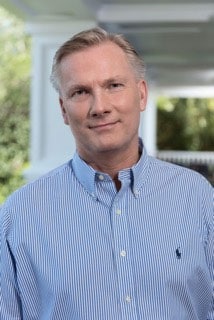
142: Niels Kaastrup-Larsen on Time, Diversification and Asset Allocation in Trend Following Strategies

June 2, 2018 by Frank

http://traffic.libsyn.com/economicrockstar/142_Niels_Kaastrup_Larsen_Final.mp3
Play in New WindowDownload

Niels Kaastrup-Larsen is Managing Director (Europe) of Dunn Capital.

He is the founder and host of the podcast Top Traders Unplugged and also hosts the CME Group’s podcast Managed Futures.

Check out a previous episode with Niels over at www.economicrockstar.com/niels

A Gift from Niels to All Economic Rockstar Listeners:

How to Master Managed Futures: Even if you’ve never traded before by Niels Kaastrup-Larsen and Katy Kaminski

In this episode, Niels mentions:

  • Katy Kaminski
  • Hari Krishnan
  • Dunn Capital
  • David Druz
  • Professor John Virgil Lintner
  • 40 Act Fund
  • UCITS Fund

Reading:

  • Why Robust Trading Strategies are more Volatile by Niels Kaastrup-Larsen

Books:

  • How to Master Managed Futures: Even if you’ve never traded before by Niels Kaastrup-Larsen and Katy Kaminski
  • Skin in the Game: Hidden Asymmetries in Daily Life by Nassim Nicholas Taleb
http://traffic.libsyn.com/economicrockstar/142_Niels_Kaastrup_Larsen_Final.mp3

Podcast: Play in new window | Download
137: Rakesh Ramachandran on Crypto Economics and How Knowledge of Austrian Economics Created His Blockchain Company QBRICS

April 21, 2018 by Frank

http://traffic.libsyn.com/economicrockstar/137_Rakesh_Ramachandran_Final.mp3
Play in New WindowDownload

137: Rakesh Ramachandran on Crypto Economics and How Knowledge of Austrian Economics Created His Blockchain Company QBRICS

Rakesh Ramachandran in co-founder and CEO of QBRICS, an enterpreise blockchain platform company.

Rakesh is self-thought in economics and created QBRICS based on his readings of Austrian economics.

He is a long-time listener to the podcast and I’m thrilled to to share this conversation with you.

In this episode Rakesh mentions and discusses:

  • QBRICS
  • Cryptocurrency
  • Blockchain technology
  • Problems with cryptocurrency – volatility which limits transactions and a pure technology problem.
  • Scarcity in economics and why cryptos are better that fiat currencies.
  • FEMA – Foreign Exchange Management Act (India)
  • Venezuela’s cryptocurrency Petro 
  • Quantum Resistance Encryption Method 
  • General Data Protection Regulation (GDPR) 

Books:

  • The Bhagavad Gita
  • The General Theory of Employment, Interest and Money by John Maynard Keynes
  • The Wealth of Nations by Adam Smith
  • Human Action by Ludwig von Mises
  • Tractatus Logico-Philosophicus by Ludwig von Wittgenstein
  • Boyhood Days by Rabindranath Tagore
  • Kalidasa – sanskrit poet

Patreon

If you’re a fan of the podcast and would like to show your support in anyway, please check out my Patreon page at www.patreon.com/economicrockstar where you can sign up for any of the awards for as little as $1 a month or you can simply follow me on the Economic Rockstar Facebook page or on Twitter or simply recommend the show to a friend, especially if they have never had the opportunity to study economics.

http://traffic.libsyn.com/economicrockstar/137_Rakesh_Ramachandran_Final.mp3

Podcast: Play in new window | Download

125: Eugene Fama on the Efficient Market Hypothesis, the Feds Fund Rate, Bitcoin and Daily Routines

January 25, 2018 by Frank

http://traffic.libsyn.com/economicrockstar/125_Eugene_Fama__Final.mp3
Play in New WindowDownload

125: Eugene Fama on the Efficient Market Hypothesis, the Feds Fund Rate, Bitcoin and Daily Routines

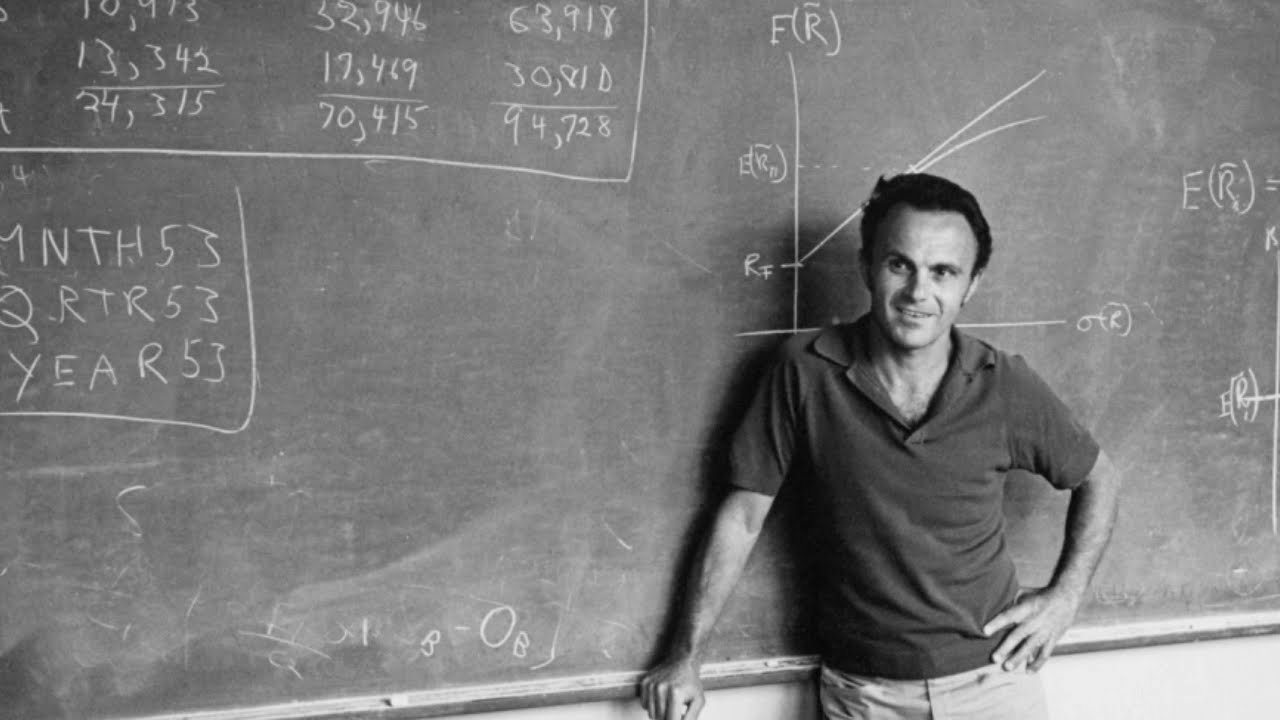
Eugene Fama Economic Rockstar

“I went into academics because I didn’t want to go into anything that would affect my sports life.” – Professor Eugene Fama

Eugene F. Fama is Professor of Finance at the University of Chicago Booth School of Business. Professor Fama was awarded the 2013 Nobel laureate in economic sciences and is widely recognized as the “father of modern finance.”

Professor Fama’s research is well known in both the academic and investment communities. He is strongly identified with research on markets, particularly the efficient markets hypothesis. He focuses much of his research on the relation between risk and expected return and its implications for portfolio management. His work has transformed the way finance is viewed and conducted.

Eugene is a prolific author, having written two books and published more than 100 articles in academic journals. He is among the most cited researchers in economics.

In addition to the Nobel Prize in Economic Sciences, Professor Fama was the first elected fellow of the American Finance Association in 2001. He is also a fellow of the Econometric Society and the American Academy of Arts and Sciences. He was the first recipient of three major prizes in finance: the Deutsche Bank Prize in Financial Economics (2005), the Morgan Stanley American Finance Association Award for Excellence in Finance (2007), and the Onassis Prize in finance (2009).

Professor Fama was awarded doctor of law degrees by the University of Rochester and DePaul University, a doctor honoris causa by the Catholic University of Leuven, Belgium, and a doctor of science honoris causa by Tufts University.

Eugene is chairman of the Center for Research in Security Prices at Chicago Booth, which was founded 40 years ago to create the finest tools for tracking, measuring, and analyzing securities data. He is also an advisory editor of the Journal of Financial Economics.

Professor Fama earned a bachelor’s degree from Tufts University in 1960, followed by an MBA and PhD from the University of Chicago Graduate School of Business (now the Booth School) in 1964. He joined the GSB faculty in 1963.

Economists:

In this episode, Professor Fama mentions: Gary Becker, Vernon Smith, John Cochrane,Robert Shiller, Campbell Harvey,  John Campbell, Narasimhan Jagadeesh, Sheridan Titman, Cliff Asness, Louis Bachlier, Paul Samuelson, Benoit Mandlebrot, Robert C. Merton, Fischer Black, Myron Scholes, Merton Miller, Harry Roberts and Kenneth French.

Economics:

In this episode, Professor Fama mentions: EMH, anomalies, Momentum Effect, January Effect, Options Pricing Model, Price Earnings Ratio, Federal Reserve, Fed Funds Rate, reserves, reserve requirements, lending mechanism, quantitative easing, economic activity, bitcoin, speculation, medium of exchange, Ripple and blockchain.

Professor Fama’s Mentors:

  • Merton Miller, Harry Roberts and Benoit Mandelbrot.

Individuals were very important to me especially Merton Miller and Harry Roberts. And Benoit too. – Professor Fama

Find out:

  • How studying economics in the 1960s differs to present day.
  • What is EMH and how it relates to the random walk and the submartingale process.
  • The beginning of mathematics in economics in the 1960s.
  • Independent, identically distributed  – a more restrictive view of EMH.
  • How prices and returns are so noisy that it is difficult to identify stock-picking skills.
  • About stock market anomalies.
  • What is the problem in academics?
  • About the Federal Funds Rate.
  • Does the Federal Reserve Bank or the market control the Fed Funds Rate?
  • If there is a lending channel.
  • Do we need a Federal Reserve bank?
  • About Professor Fama’s views on Quantitative Easing (QE).
  • About Professor Fama’s hobbies and how he uses them to regain balance in his life as an economist.
  • Why Eugene Fama went into academics.
  • Find out about Eugene’s daily routines.
  • About Bitcoin.

On the Problem in Academics:

“There is a problem in academics. Everybody wants to publish papers. That’s the way they advance and get tenure and get higher salaries. They also get noticed on Wall Street for doing it. So there’s an incentive to dredge the data and come with things that will be attention-grabbing but won’t necessarily be there in new data and aren’t the basis for new strategies.” – Professor Fama

Eugene Fama Economic Rockstar

On Theoretical Models

“Robustness is the name of the game. All scientific theories have anomalies otherwise they’re not theories, they’re reality.”

“All science is you propose models, you test them and you come up with some stuff that says that says this works pretty well and then you come with other stuff that says well it doesn’t work very well on this particular so called anomaly. And so you either tweak the model to incorporate that or you just accept it as one of the shortcomings of the model. That’s why you called them models.”

“You have to be careful. It has to be systematic empirical work. You can’t just go work with anecdotes. Anecdotes are not empirical work.”

On the Fed:

“What goes on when you go to work for the Fed or you get onto the Board or whatever, it’s the invasion of the Body Snatchers. Whatever you thought before becomes irrelevant and you buy the party line or you buy the line that says they have a lot of power.”

“I don’t there ever was a lending channel but there certainly isn’t one now.”

“The main job of the Fed is to control inflation. Unfortunately, in the current regime they can’t do that.”

On Bitcoin:

  • I’m suspicious about it as a unit of account because it has such an uncertain value. Monetary theory basically says that you want a unit of account that has a certain value.
  • It’s just like paper currency. If no body is willing to use it, it becomes valueless.

Thanks to Conor Murray for the question on Bitcoin!

On Writing:

  1. There’s no easy way to do it. I do a lot of writing with Kenneth French. We always re-write these papers that we put out at least twenty or thirty times front to back. And you struggle over every word and you try to say stuff as simply as possible because by saying it simply you reach more people than saying it in a more complex way.
  2. Work on it. Really read it. Get other people to read it and get their reactions.
  3. Organize how you present stuff. You want a brief introduction. Most papers tend to have long introductions. Get right into the guts and keep it as simple as possible for as long as possible so that you lose the fewest number of people.

Movies:

  • Invasion of the Body Snatchers
  • Equilibrium


Patreon

If you’re a fan of the podcast and would like to show your support in anyway, please check out my Patreon page at patreon.com/economicrockstar where you can sign up for any of the awards for as little as $1 a month or you can simply follow me on the Economic Rockstar Facebook page or on Twitter or simply recommend the show to a friend, especially if they have never had the opportunity to study economics.


http://traffic.libsyn.com/economicrockstar/125_Eugene_Fama__Final.mp3

Podcast: Play in new window | Download

048: Steve Hanke on Currency Boards, Moral Hazard and the Benefits of Privatization

September 3, 2015 by Frank

http://traffic.libsyn.com/economicrockstar/048_Steve_Hanke_Final.mp3
Play in New WindowDownload

048: Steve Hanke on Currency Boards, Moral Hazard and the Benefits of Privatization

Steve Hanke is a Professor of Applied Economics, specializing in currency boards. He is Co-Director of the Institutesteve hanke for Applied Economics, Global Health, and the Study of Business Enterprise at The Johns Hopkins University in Baltimore.

Steve is a Senior Fellow and Director of the Troubled Currencies Project at the Cato Institute in Washington, D.C. and a member of the Charter Council of the Society of Economic Measurement and the Financial Advisory Council of the United Arab Emirates.

Previously, Professor Hanke was a Senior Economist on President Reagan’s Council of Economic Advisers and was also an Advisor to the Presidents of Bulgaria, Venezuela, and Indonesia.

He played an important role in establishing new currency regimes in Argentina, Estonia, Bulgaria, Bosnia-Herzegovina, Ecuador, Lithuania, and Montenegro. Professor Hanke has also advised the governments of many other countries, including Albania, Kazakhstan and Yugoslavia.

In 1998, Steve was named one of the twenty-five most influential people in the world by World Trade Magazine.

Professor Hanke is a well-known currency and commodity trader and serves as Chairman of Hanke-Guttridge Capital Management, LLC.

Steve Hanke’s most recent books are Zimbabwe: Hyperinflation to Growth (2008) and A Blueprint for a Safe, Sound Georgian Lari (2010).

Influencers:

Friedrich Hayek, Kenneth Boulding of the University of Colorado  and Bob Mundell

Economics:

In this interview, Steve mentions and discusses: currency boards, monetary policy, inflation, hyper-inflation, interest rates, currency reserves, optimum currency area, common currency, fiscal policy, moral hazard, eurozone, ECB, the World Bank, property rights, investment, central bank, dollarisation, interventionist policy, privatisation, hedging, Chicago Mercantile Exchange, futures contract and bitcoin.

Economists:

In this interview, Steve mentions and discusses: Kirk Schuller, Milton Friedman, Friedrich Hayek, Adam Smith, Robert Mundell and Kenneth Boulding.

There have only been 56 hyper-inflations in world history and I think I’ve stopped more of them than any living economist – Professor Steve Hanke

In this episode, you will learn:

  • what is a currency board and the reason why a country should resort to one.
  • about Bulgaria’s currency crisis in 1997, how hyper-inflation hit 142 percent per month and what Steve Hanke did to solve the problem.
  • the successful use of currency boards in Bulgaria in 1997 to significantly reduce inflation and interest rates.
  • why Bulgaria has one of the lowest fiscal deficits of any country.
  • about Yugoslavia’s hyper-inflation of 313 million percent in 1994.
  • why Montenegro dumped the Yugolsav Dinar for the Deutschmark during Slobodan Milosevic’s presidency of Yugoslavia.
  • how Montenegro will join the euro currency without having to do a currency changeover.
  • if it makes sense to leave a currency board to join a monetary union and giving up fiscal autonomy.
  • why it’s best for Bulgaria to stay outside the eurozone due to the issue of moral hazard.
  • why Greece ran up a fiscal deficit of 12.7% of GDP when the Maastricht Treaty stated a strict adherence to a maximum level of 3%.
  • about the Greek bailout of $472 billion and how it amounts to almost $43,000 for every man, woman and child in Greece.
  • how a currency board removes the moral hazard of a unified currency area by financing spending with current taxes or the private bond market.
  • if Greece should abandon the euro and set up a currency board and pegging their currency with the euro.
  • how a Greek currency board would operate if Greece left the eurozone.
  • about the success of the Hong Kong currency board and how it operates without a central bank.
  • if we are heading toward a one world currency.
  • why most small countries should abandon their currency and anchor it to the euro, dollar, yen or yuan.
  • whether Greece should sell off its ports, lands and other property to private investors just as Hayek proposed and Ronald Reagan did in the US in the 1980s.
  • about Ronald Reagan’s privatisation programme in the US in the early 1980s.
  • about the Bureaucratic Rule of Two and why privatisation is an optimal outcome for government, enterprise and society.
  • what Hayek was like as a person and what he thought of Ronald Reagan, The Intellectual.
  • about candling in the old days when grading eggs for futures contracts.

On Currency Boards:

A currency board system is a system in which you issue a domestic currency, which is anchored to a sound currency at a fixed exchange rate that’s fully convertible. The local currency is backed up with a 100% anchor currency’s reserves. So the local currency really becomes a clone of whatever the anchor currency happens to be.

The currency board is not allowed to emit credit to the government. If the government needs money for fiscal expansion, the only way to get this finance (in the form of your local currency) is to take hard currency in (like the euro) and exchange it for the local currency. Bulgaria has been doing this since 1997. The government cannot sell bonds to raise finance. They convert the euro (previously the Deutschmark) into their local currency, the lev, and can then carry out fiscal stimulus. Consequently, Bulgaria has one of the lowest fiscal deficits in Europe.

On Bulgaria and Why It Should Not Join the Eurozone:

“With the currency board, they (Bulgaria) ‘clone’ the euro, so they’re in a unified currency area with the eurozone but they’re not formally part of the eurozone itself. I’ve counselled the Bulgarians, and the best thing to do is to stay with that arrangement. And the reason why is that the eurozone, the common currency area, has a huge moral hazard associated with it. That is, something that creates bad behaviour encourages bad behaviour and Greece is a perfect example.” – Professor Steve Hanke

On the Greek Deceit and Its Fiscal Deficit:

“Greece entered the eurozone in 2001 on false pretences. They cooked the books and got in. They were allowed in the club even though the club knew the Greeks were lying in terms of their economics statistics.”

“The Greeks calculated that they could spend like drunken sailors, which they did and ran a completely irresponsible fiscal operation.”

“The moral hazard is you join a club and if you think the club won’t enforce its rules and won’t force you to tow the line, you will just go on your merry way spending and deficit spending and knowing, or at least thinking that, in this case the eurozone, would bail you out.”

Greece ranks 151 out of 189 countries for the ability of doing business. If you make a contract in Greece, the probability of having that contract enforced is very low by international standards. It’s like being in Zimbabwe. Greece is supposed to be part of the European Union and a modern country but it isn’t.

Greece should leave the eurozone, set up a currency board and re-introduce the Drachma. This would create fiscal discipline just like the situation in Bulgaria.

Quotes by Steve Hanke in Episode 048 of the Economic Rockstar Podcast:

I was hedging and trading when I was 14 years of age. I was trading with my grandfather – @steve_hanke

Click To Tweet

Hong Kong was aways a unilateralist free trader. That encourages competition, entrepreneurship and productivity. The countries with open trade tend to be more free market in general and they grow more rapidly. – Steve Hanke

“About 90 Central Banks should just be done away with completely and either a currency board be put in or a stronger foreign currency like the dollar, the euro or the yen.” – Steve Hanke

“If you want lower fiscal deficits, lower inflation and higher rates of growth you adopt with a currency board system or dollarize” – Steve Hanke

If you want to reduce corruption you privatise. But the potential gains in terms of economic prosperity are enormous – @steve_hanke

Click To Tweet

Europe’s lands are “a mere waste and loss of country in respect both of produce and population.” – Adam Smith

Click To Tweet

Bitcoin has a unit of account problem – @steve_hanke

Click To Tweet

On Hayek:

“He was delightful and charming and very interesting, particularly for Mrs Hanke and myself. One of Mrs Hanke’s Great Aunts was one of Hayek’s earlier loves of his life.”

Recommended Books:

  • Zimbabwe: Hyperinflation to Growth by Steve Hanke (Free download)
  • The Wealth of Nations by Adam Smith
  • Reagan, In His Own Hand by Ronald Reagan, edited by Marty Andersson et al.
  • The Advanced Introduction To The Austrian School of Economics by Randall Holcombe
  • The Essential Hayek by Donald Boudreaux (Free Kindle download)

Resources:

  • Case Studies written by Steve Hanke
  • Troubled Currencies Project
  • The Hanke-Krus Hyperinflation Index
  • http://econographic.com/hyperinflation
  • On the Measurement of Zimbabwe’s Hyperinflation by S. Hanke and A. Kwok
  • Friedman: Float or Fix? by Steve H. Hanke
  • Reflections on Currency Reform and the Euro by Steve H. Hanke
  • The Privatization Debate: An Insider’s View by Steve H. Hanke
  • Could Greece Adopt the Dollar? by Steve H. Hanke
  • Reflections on Reagan the Intellectual by Steve H. Hanke
  • On the Fall of the Rupiah and Suharto by Steve H. Hanke
  • Doing Business 2015 Report by The World Bank

Where to Find Steve Hanke:

  • Cato Institute: http://www.cato.org/people/steve-hanke
  • Johns Hopkins Institute: http://krieger.jhu.edu/iae/co-directors
  • Twitter: @steve_hanke
http://traffic.libsyn.com/economicrockstar/048_Steve_Hanke_Final.mp3

Podcast: Play in new window | Download

029: John Cochrane on the Future of Finance, MOOC Education, Regulation and the Case for Free Markets

April 22, 2015 by Frank

http://traffic.libsyn.com/economicrockstar/029_John_Cochrane_Final.mp3
Play in New WindowDownload

029: John Cochrane on the Future of Finance, MOOC Education, Regulation and the Case for Free Markets

John Cochrane is the AQR Capital Management Distinguished Service Professor of Finance at the University of Chicago Booth School of Business and is currently Senior Fellow at the Hoover Institution.

Professor Cochrane is a Research Associate of the National Bureau of Economic Research and past director of its asset pricing program, and an Adjunct Scholar of the CATO institute.

John is past President and Fellow of the American Finance Association, and a Fellow of the Econometric Society. He has been an Editor of the Journal of Political Economy, and associate editor of several journals including the Journal of Monetary Economics.

John’s is the author of 3 books including the book Asset Pricing. Other  finance publications include articles on stock and bond markets, exchange rates, interest rates, liquidity premiums and option pricing.

John’s monetary economics publications include articles on the relationship between deficits and inflation, the effects of monetary policy, and on the fiscal theory of the price level.

John currently teaches the MBA class Advanced Investments and a variety of PhD classes in Asset Pricing and Monetary Economics.

John earned a Bachelor’s degree in Physics at MIT, and earned his Ph.D. in Economics at the University of California at Berkeley.

In addition to research and teaching, John is a competitive sailplane pilot and windsurfs.

John blogs as ‘The Grumpy Economist’.

Find Out:

  • why Professor Cochrane is known as the Grumpy Economist.
  • about John’s Proposed New Structure for US Debt.
  • how to create financial stability with a currency fit for the 21st century.
  • about the advantages of government debt.
  • what happened when Ireland guaranteed the bondholders and entered into a bailout.
  • the limitations to a eurozone country when faced with a bailout.
  • why countries should be allowed to act like companies and default.
  • why Greece should have defaulted and why Ireland should not have bailed out the bondholders.
  • about Professor Cochrane competing in the World Gliding Championship for the USA.
  • why Professor Cochrane delivered his Asset Pricing PhD course as a MOOC.
  • the costs and benefits of delivering a MOOC.
  • how MOOCs will become the textbook of the future.
  • how to monetize a MOOC and which type of course would have mass market appeal.
  • Ireland’s aim to become the capital of MOOCs.
  • how to create a social environment for students using MOOCs.
  • why Professor Cochrane went from a degree in physics to a PhD in Economics.
  • why people are stuck in the welfare system.
  • about the over-regulated US economy that restricts the development of competitive markets.
  • how Uber gave supply-side competition in the US taxi market.
  • what should be done to the US healthcare industry which is protected from competition.
  • if the US Federal Reserve should end its monopoly on the dollar and allow other currencies, such as Bitcoin, compete.
  • about the unique feature of US government debt – it cannot default!
  • who are Professor Cochrane’s heroes due to their no bullshit approach to research.
  • why the the 2008 financial crisis was proof that the efficient market hypothesis works.
  • what annoys Professor Cochrane.

Influencers:

  • University of California: George Akerlof, Roger Crane, Jim Pearce and Tom Roffenburg.
  • University of Chicago: Robert Lucas, Lars Hansen, Gene Fama, Ed Prescott and Tom Sargeant.

Defining Moment

A professor was showing an economics class that John attended in which he explained, using the Budget Constraint, why people are stuck in welfare. Up to that point, John had read that it was due to people being lazy or that it was due to moral, sociology or cultural. However, the analysis showed that any normal person who was stuck below an income threshold and receiving benefits would not welcome a moderate pay rise as they would lose entitlements.

Here was a value-free, and ethics-free, a morality-free discussion of a social problem that showed exactly where it came from, exactly how to fix it, exactly how the perverse design of the well-intentioned welfare was causing people to get stuck. That was my conversion moment.

Economics:

In this interview, John mentions and discusses: Asset Pricing, unintended consequences, free markets, incentives, budget constraints, welfare, competition, supply-side competition, regulation, monopoly, natural monopoly, bitcoin, debt, default, Gold Standard, fractals and efficient market hypothesis.

Economists:

In this interview, John mentions and discusses: George Akerlof, Roger Crane, Jim Pearce, Tom Roffenburg, Robert Lucas, Lars Hansen, Eugene Fama, Ed Prescott, Tom Sargeant, Benoit Mandlebrot

“What makes free markets work is the discipline of competition, of the ability of new entrants to come in and disrupt things” – Professor Cochrane.

“Regulation is stifling the ability of  new people with great ideas, with cost control ideas to come in and make healthcare both better and a lot cheaper” – Professor Cochrane.

The Future of Finance:

Professor Cochrane likens the financial crisis as a ‘good old-fashioned’ run on the banks. Twenty years ago, the world economy developed ‘electronic interest-paying money’. Most of the financial system uses overnight repurchase agreements, money market funds and short-term government bonds. These became very liquid and have been prone to runs just like bank notes. For financial stability, the crucial thing is to get away from this run-prone system.

John proposed that governments should provide interest-paying electronic money that will not experience a run in the 21st Century. This would look something like a money-market fund. It will always be worth $1, pays interest and will always be electronically transferable. Financial stability would be achieved and we would have more efficient payments.

On Ireland Bailing Out All Depositors

Irish banks took a lot of German deposits and invested them in US sub-prime mortgages. The money passed through Ireland and it’s not quiet clear why the taxpayers of Ireland who footed the bill for that. Why couldn’t the depositors from Germany lost a little bit of their money along the way. That would have seemed to make sense. Cyprus and Iceland made their depositors take haircuts.

When you’re a small country with an open banking system, the model of the government who bails out all depositors including foreign depositors is not one that can go on. That’s a troublesome system. Ireland maybe regretting bailing out all of the depositors in the process.

Since Ireland is part of the EU and the eurozone, it cannot print money to bailout people. Government debt in that situation becomes private debt. Ireland would not be in as much trouble if it didn’t bailout the depositors in its bank.

Greece certainly should have just defaulted the way a company defaults. If a company defaults on its debt it doesn’t have to leave the eurozone, so why shouldn’t countries become like companies.

MOOCs: The Future but Not a Substitute for Formal Education

Professor Cochrane delivered his PhD class ‘Asset Pricing’ as a MOOC. He felt that such ‘cut and dry’ material would be easier to get started with, particularly when he also had a book of the same name, rather than a more discussion-based empirical class. There were numerous challenges along the way. “It turned out being a lot more work than I thought it was going to be but it also turned out very rewarding”. It allows Professor Cochrane to leverage his delivery going from teaching 20 students to upward of thousands of students.

MOOC

Like any new technology, there are lots of unanticipated ways in which it can be used, unanticipated markets that are going to find it that nobody thought about it how that was going to work out. MOOCs were originally intended to deliver ‘introductory-type’ classes which would have mass appeal. However, John believes that the way forward for MOOCs is in the delivery of ‘distinctive-type’ classes where the class is more specialised and in greater variety.

Creating a MOOC can be costly in terms of time, resources and the infrastructure that needs to be built to deliver the course. “Like all technology, if you’ve ever made a webpage, it has a high fixed cost but low marginal cost.” The secret to putting a MOOC together is it has a high fixed cost to put it together. Creating the video content for lectures is easy. It’s putting together the significant typo-free problem sets and other materials like that that’s hard. But once the MOOC is done, it is scalable in terms of multiple years and to a lot of people.

Professor Cochrane views MOOCs as a way of creating a ‘flipped classroom’. They will not be a substitute for formal education but one of the ways that MOOCs will develop into is that they will become the modern textbook. “The MOOC is a self-contained class outside the university but it’s a textbook for my classroom”. Professor Cochrane’s Asset Pricing class at Stanford is a much less formal experience due to the flipped nature of his classroom.

MOOCs have allowed his students to review the material and answer the questions in his series of videos before they arrive to class. Subsequently, Professor Cochrane can deliver more advanced material, as well as have an in-dept discussion on the material the student reviewed on his MOOC. The class becomes a much more rewarding, personal, interactive experience.

MOOCs will be beneficial to the university in so far as creating a brand so as to attract more students to attend. Being online with a MOOC will be useful for the university to connect with their alumni who may be interested in doing an executive education. The MOOC will be paid for indirectly by attracting people into the executive programmes since the flipped classroom model would work very well for this cohort of people.

The social environment of the class turns out to be very important to getting people to stick with the course on MOOC. MOOCs need to move from its current form to a version “2.0 Social Internet and to re-create that social structure that gets people going. The next round of MOOC will need to integrate social media so that the learning experience becomes part of a community of students just like it is on campus”.

How to Create a Social Environment for Students on MOOCs

  • Scheduled classes so that students attend together.
  • Discussion forums where students are encouraged to participate after the class.
  • Weekly Google Hangouts

http://youtu.be/U5CfYQw4X7k

How Similar the Study of Physics is to Economics

Physics teaches you quantitative analysis as well as modelling.

There is some truth in the physics joke: “Physics is the study of massless elephants going down a frictionless sandpaper”. You have to find the elements of a problem, simplify it down to what’s solvable and intuit how it works, not only mathematical. It’s about the intuition of seeing something work and describing it mathematically.

Economics is similar to undergraduate physics – everything before Quantum Theory. If you’re good at mechanics and electricity of magnetism, then that structure is what’s behind economics and you should be equally good at economics. You will also be good at the modelling part of economics which is all about throwing out all the real-world details that don’t really matter to a particular problem. If the mass of the elephant wasn’t particularly important to that problem, then just assume the mass of sumables. That’s the key to economics.

Economics is full of quantitative parables and you have to make them vivid by making them simple and clear. And then understanding intuitively how to put the pieces together.

On discovering economics, Professor Cochrane believed that he could use the tools of Physics to understand all the hard social problems that everybody is fighting and getting so excited about in a value-free way.

On Bitcoin:

“The design of Bitcoin is fundamentally flawed. We have lost anonymity. That worries me for political reasons as well as economic reasons”. Anything that is done electronically, then the National Security Administration knows what you bought if you use your credit card. Cash allows you to do things anonymously. “Bitcoin promised anonymity but didn’t really deliver it in the first place.”

Bitcoin is based on the Gold Standard model where we need a fixed supply of something rather than a steady price of something.

Where to Find John Cochrane:

  • Website: The Grumpy Economist
  • Faculty Page: Chicago Booth
  • MOOC: Asset Pricing

The Grumpy Economist

http://traffic.libsyn.com/economicrockstar/029_John_Cochrane_Final.mp3

Podcast: Play in new window | Download
018: Mark Thornton on Austrian Economics and Why the Nazi’s and the KGB Wanted Mises Papers

February 5, 2015 by Frank

http://traffic.libsyn.com/economicrockstar/018_Mark_Thornton_Pt_1.mp3
Play in New WindowDownload

018: Mark Thornton on Austrian Economics and Why the Nazi’s and the KGB Wanted Mises Papers

Mark ThorntonDr. Mark Thornton is an economist who lives in Auburn, Alabama. Mark is Senior Fellow at the Ludwig von Mises Institute and serves as the Book Review Editor of the Quarterly Journal of Austrian Economics.

Mark’s publications include The Economics of Prohibition; Tariffs, Blockades, and  Inflation: The Economics of the Civil War (2004), The Quotable Mises (2005),The Bastiat Collection (2007), An Essay on Economic Theory (2010), and The Bastiat Reader (2014).

Dr. Thornton served as the editor of the Austrian Economics Newsletter and as a member of the Editorial Board of the Journal of Libertarian Studies. He has served as a member of the graduate faculties of Auburn University and Columbus State University. He has also taught economics at Auburn University at Montgomery and Trinity University in Texas.

Mark served as Assistant Superintendent of Banking and economic adviser to Governor Fob James of Alabama (1997-1999), and he was awarded the University Research Award at Columbus State University in 2002. Mark is a graduate of St. Bonaventure University and received his PhD in economics from Auburn University.

Economics Themes:

In this interview, Mark mentions and discusses: Competition, Entrepreneurship, comparative economic systems, economic history, business cycles, value theory, population policy, purchasing power, deflation, monetary policy and bitcoins.

Economists and Economic Schools:

In this interview, Mark mentions: Ludwig von Miss, Friedrich Hayek, David Hume, Israel Kirzner, Carl Menger, Richard Cantillon, Friedrich von Wieser, Eugen von Böhm-Bawerk, Joseph Schumpeter, Fritz Machlup, Adam Smith, Anne-Robert-Jacques Turgot, Irving Fischer, Milton Friedman, Ben Bernanke, Scott Sumner, George Soros, Nassim Nicholas Taleb, Jim Rogers, Paul Krugman, Austrian Economics, Merchantilists, Physiocrats, French Liberals and Classical Economists.

Influencers and Favorite Economists:

Scott Sumner, Richard Cantillon, Ludwig von Mises and Murray Rothbard.

Why Mark Read Economics:

As a teenager I could clearly see in the 1970s, the government was the problem and in college I discovered libertarianism. I was an economics major and I also discovered Austrian economics. I come from a family of entrepreneurs and there my perspective was developed. The small business person and the day-to-day interferences and interventions government introduced in the form of regulations, subsidies and taxes.

I came across economics outside of the classroom and outside of college – Dr. Mark Thornton

Mark’s Affirmation and Motto:

‘Do not give in to evil but proceed ever more boldly against it’ – Virgil

Click To Tweet

By going by this motto, it frees you up to take a stand you actually believe in rather than watering it down or covering it up – Dr. Mark Thornton.

In this episode, you will learn:

  • about the Greek and Roman philosophical roots of Austrian Economics.
  • about the importance of deduction and logic in Austrian thinking.
  • the limitations to Austrian Economic thinking.
  • about Irish economist Richard Cantillon, who remains quite elusive in economics.
  • who Richard Cantillon influenced through his writings.
  • why the Austrian School of Economics is given its name.
  • how von Mises’ papers got in the hands of Nazi Germany and then the Soviets.
  • whether von Mises or Irving Fischer was right about the 1929 Stock Market Crash and the subsequent Great Depression.
  • who would support Bitcoins – von Mises or Fischer?
  • why bitcoins were created.
  • how similar bitcoins are with gold and the Gold Standard.

Austrian Economic Perspectives and Its Limitations

The Austrian Theory is based on logic and deduction and it tries to remain realistic. In other words, you don’t make false assumptions about humanity or the economy or the world we live in. You try to stick with realistic aspects of human behavior and you theorize, by deducing logically, what economic theory should be in order to help explain things in the real world.

The limitation for Austrian Economics is that it will never be able to have a complete theoretical understanding of the economy and it will never be able to make predictions about the future especially with respect to the magnitude of changes and the timing of actual real-world results. The Austrian School has limited predictive power about certain economic policies, regulation, subsidies, price controls, etc.

You can find Austrian insights going back to the Greeks and the Romans. It’s not until you get to the Scholastics where you see thinkers that have the same basis, realism, logic and deduction. The world works because of the ideology of the masses.

Richard Cantillon

Irish economist Richard Cantillon (1680s – 1734) is the precursor to Austrian Economics and he is the first person to put together a comprehensive treatise on economics along the lines of the Austrian School which would come after him. Cantillon was an influencer on people like Hayek, Karl Menger, the French Liberals and many of the Classical Economists and Physiocrats.

The Austrian School really starts with the publication of Cantillon’s essay ‘Essai sur la Nature du Commerce in Général’ (Essay on the Nature of Trade in General). Unfortunately, Cantillon fell out of favour with many investors that were caught up in the ‘Mississippi Bubble’ of which played a part and was subsequently ‘murdered’ when his house burnt down (there is speculation that he staged his own death to avoid the wrath of his debtors. His work was not published until 25 years after his murder. It influenced Adam Smith and Anne-Robert-Jacques Turgot. However, Cantillon’s work fell into obscurity at the time of the neo-classical school from the second half of the 19th Century to 1930 and has since been on a path of re-discovering and re-interpreting Cantillon – what he wrote, what it meant.

The Birth of Austrian Economics

Carl Menger wrote his book ‘Principles of Economics’ explaining his theoretical understanding of economics. His students von Wieser and von Böhm-Bawerk eventually became mentors to von Mises, Schumpeter and Hayek. They were known as Austrian economists simply because of their country of origin as they did not fit into any particular school of economics at that time. Hayek worked for von Mises at the Institute of Business Cycle Research. Hayek went on to work in the London School where he influenced many British economists to adopt the Austrian methods and theories.

Mises, the Nazi’s and the KGB

During World War II, Mises left Vienna due to the Nazi threat as he was both the arch-nemisis of all Socialists as well as being Jewish. On invading Vienna, the Nazi’s took von Mises works and were studied by the Nazi Intelligence Service. And when the Soviets invaded Germany, both Communists and National Socialists saw that von Mises was the main opponent of Socialism and saw that it was unviable. It was only because of the downfall of the Soviet Union was Mises’ papers rediscovered in Moscow in a KGB warehouse.

von Mises published a paper in 1920 and showed that  Socialism in its pure form was impossible and in any form was irrational. Socialism would not be efficient or productive when you have one person or one group of people making economic decisions on labor, resources and production. This would be an impossibility as they would have to come up with decisions as to what to produce, how to produce it, who to produce it for and how much to produce. They would then have to make those decisions on every good in the economy. It just can’t be done at this level, and the Soviet Union eventually realised this and they had to introduce money , wage rates and interest rates. They had to break up production by industry and introduce prices based on the West, and undergo the allocation of resources. In the end, no matter how many modifications they made, they still couldn’t produce enough food, clothing and shelter to keep their population growing.

Mises, Irving Fischer and the Fed

I ask Mark about Mises views of the economy in 1928 compared to that of Fischer’s. Fischer had been writing extensively in the public domain up to that point in time and Mises worried about the economy and the economic approach taken by government, which was largely influenced by Fischer. Fischer wrote that the US economy and investment in the stock market was safe. The 1929 Stock Market Crash and the subsequent Great Depression proved Mises correct and resulted in Fischer losing his wealth but not the use of his monetary economic perspective.

Irving Fischer was trained in Germany in modern economics with the use of statistics. The system he devised was based on a stable dollar, where the purchasing power of the dollar would remain the same. He developed price indexes to measure the purchasing power of the dollar and then suggested that monetary policy be implemented to maintain a stable dollar value. This type of mechanical economics and government bureaucracy to achieve this mechanistic view of the macro-economy resulted in Fischer being very influential in the US. He had a great influence on people like Milton Friedman and Ben Bernanke, and the modern economic policies of the US today are guided by his approach to a stable dollar and to the manipulation of monetary policy to keep a stable dollar. When the purchasing power of the dollar starts to increase the dollar – or deflation – then the monetary authorities have to throw in more dollars or credit in the system to try and dilute the value of that dollar.

Mises’ perspective and approach was different to Fischer’s and in 1928 he wrote a book outlining why Fischer’s approach was wrong and that it would cause considerable problems of size and magnitude. Mises approach was a more natural approach of the market economy that money was a weight of gold, silver or copper and the coins would remain the same weight, i.e. a silver dollar would be 25 grams of pure silver and these coins would be allowed to fluctuate in both the short-run and the long-run. This provides a shock absorber for the entire economy because the value of money is fluctuating, the value of domestic and foreign goods are fluctuating (in terms of domestic goods) and the system is not fragile. Everything can move in the economy.

However, Fischer’s approach, by guaranteeing a stable dollar and not allowing it to adjust vis-a-vis everything else in the economy creates ultimately a fragile system. Mises’ view was that you hold the metal content of the dollar constant and you allow them to fluctuate in market value, whereas Fischer believed you would essentially change the weight of the coins. He actually advocated this system but realised it to be unworkable and so retreated to making monetary policy maintain the market value of the US dollar or any currency.

Under Fischer’s approach, a bureaucracy has been created to be in charge of maintaining money and credit in the economy and giving the government the ability to increase the money supply to reduce interest rates. This has created a panacea for politicians to get out the ‘magic check book’ and make the economy ‘feel better’ in the short term.

The Central Bank is essentially a ‘legal’ counterfeiter, which is very valuable for both the political class as well as the big banks that it benefits – Dr. Mark Thornton

Bitcoins

The creator(s) of bitcoins did so in response to the financial crisis of 2008 – 2009 and they saw that central banks were responsible for that, as well as the banks who got a bailout. The average ordinary citizen ended up absorbing most of the losses.

Bitcoin is not controlled by politicians or anyone else. It’s part of an electronic marketplace and it mimics the Gold Standard in several ways:

Miners, or people who want to produce Bitcoins, have to expend real resources – their time, their money, their computing power, the purchase of special devices and a tremendous amount of electricity – just like the way gold miners expend resources on mining for gold.

The mining process becomes progressively more difficult overtime and there will be an end with production for bitcoin per se, whereas with gold, the process will go on indefinitely.

The way Bitcoin tries to alleviate the eventual deflationary pressure on bitcoins is that one Bitcoin can be broken up into a million different pieces in the same way a US dollar can be broken up into 100 pieces or cents.

Eventually people will stop allocating resources to the production of new Bitcoin. This can be a good thing because, at some point, resources will be wasted on producing valueless bitcoins from the social perspective.

Whoever invented Bitcoin did so on the Austrian perspective of the economy and on the perspective that the Gold Standard is a much better system and is decentralized in the market economy.

“Fischer was a ‘control-freak’ in many ways. He wanted to control everything, even the genetics of the American population. He would strongly disapprove of Bitcoin” – Dr. Mark Thornton

Recommended Books:

  • The Theory of Money and Credit by Ludwig von Mises
  • Principles of Economics by Carl Menger
http://traffic.libsyn.com/economicrockstar/018_Mark_Thornton_Pt_1.mp3

Podcast: Play in new window | Download

009: Naomi Brockwell (Bitcoin Girl) on Bitcoins, Liberty, Government and Fiat Currency.

December 3, 2014 by Frank

http://traffic.libsyn.com/economicrockstar/009_Naomi_Brockwell.mp3
Play in New WindowDownload

009: Naomi Brockwell (Bitcoin Girl) on Bitcoins, Liberty, Government and Fiat Currency.

Naomi BrockwellNaomi Brockwell is the always effervescent face of Bitcoin Girl She is an opera singer, film-maker and actress, and studied commerce at the University of Western Australia. Currently residing in New York, Naomi also runs her own company Rainsworth Productions and is a fellow at The Moving Picture Institute. Naomi speaks five languages, plays six musical instruments and, of course, is a gold medal-winning Irish dancer. Naomi is on the Advisory Council of the Mannkal Economic Education Foundation.

Economic Themes:

In this interview, Naomi mentions and discusses: bitcoins, crypto-currencies, monetary policy, inflation, fiat currency, fractional reserve banking, central banks, living standards,  international trade, negative externalities, unintended consequences, equilibrium, supply and demand.

Economists and Economic Schools:

In this interview, Naomi mentions: Victor Niederhoffer, Gene Epstein, Murray Rothbard, Jean-Baptiste Say, Ludwig von Mises, Friedrich Hayek, Carl Menger, Erik Voorheese, Paul Krugman, Austrian economics, Libertarianism, Keynesian economics and Hunter Lewis.

Naomi’s Passions:

Economics, Film, Dance and Opera Singing.

Naomi’s Affirmations/Mantra:

“I like people who are inspiring and I like reading their biographies” – Naomi Brockwell

“We really underestimate what we can achieve and if we remember that so much more is possible than we may think, then that’s a good way to live. It encourages you to press your boundaries and explore new horizons. Seek what your potential is, really try to fulfil your potential.” – Naomi Brockwell

Naomi’s Influencers:

Gene Epstein, Murray Rothbard and Georgia Hilton of The Moving Picture Institute

Exclusive News Announced on the Economic Rockstar Podcast:

Naomi is writing a FUN and ACADEMIC book which will be released soon.

Find Out:

  • what Naomi’s two favorite drinks are – they’re Irish by the way!
  • and watch Naomi’s video ‘Bitcoin Girl’ (see below), made with The Moving Picture Institute, in which she is featured.
  • what began Naomi’s passion for economics after staying in New York City to study and train with other great opera singers.
  • how a discussion on the housing crisis and the housing bubble at Junto in New York City inspired Naomi to read economics.
  • how a chance email to Gene Epstein of Barron’s developed a passion for Austrian and Libertarian economics.
  • Naomi’s shared views with Gene on educating people in economics even if they disagree on some of the thinking.
  • why Naomi questions the foundation of fiat money after reading Rothbard.
  • why Naomi believes that the private sector can manage money better than the government.
  • why bitcoin is used voluntarily with no coercion.
  • what is a virtual or crypto-currency and how does it work when there is no physical coin to use.
  • what excites Naomi about Bitcoin and why, as Bitcoin Girl, she is becoming synonymous with Bitcoin.
  • what cryptography is and what it has to do with Bitcoin.
  • the difference between fractional reserve banking and how bitcoin operates.
  • what scares Naomi when she requested her Australian bank to transfer her own money into a Bitstamp account.
  • about Naomi’s thoughts on inflation and fiat currencies.
  • why Naomi believes that Bitcoin will take many people out of poverty and how it will benefit the 2.5 billion people that are un-bankable.
  • why Bitcoin owners have a right to privacy, while owners of fiat money run the risk of having their identity and privacy hacked.
  • why American venture capital investor Tim Draper bought up Bitcoins from the Silk Road auction.
  • where venture capital money is going in relation to Bitcoin.
  • why governments and central banks have a vested interest to make Bitcoin obsolete.
  • about the opportunities and the jobs being created by the Bitcoin industry.
  • why bitcoins are safe from government interference and control.
  • why Naomi thinks Uber and AirBnB should follow the decentralized model of Bitcoin.
  • if Bitcoin is a buying opportunity.
  • who is Satoshi Nakamoto (or maybe not!).
  • what Naomi was doing in a World War II submarine

https://www.youtube.com/watch?v=XEthXBHsEac

Advice:

Find people who you find really inspirational and learn as much as you can – Naomi Brockwell

Click To Tweet

On Bitcoins:

Bitcoin is a digital currency which is keeping up with the digital age – Naomi Brockwell

Click To Tweet

Bitcoin is a global currency keeping up with a global marketplace – Naomi Brockwell

Click To Tweet

Bitcoin is specifically being engineered as an ideal form of money – Naomi Brockwell

Click To Tweet

The fact that people are using Bitcoin because they prefer it over sovereign currency interests me – Naoim Brockwell

Click To Tweet

Bitcoin, in layman’s terms is ‘Money for the Internet’ – Naomi Brockwell

Click To Tweet

About Bitcoin: That is a superstar currency right there – Naomi Brockwell

Click To Tweet

Which is Safer – Your details with J.P. Morgan or a Bitcoin wallet?

It’s just as easy to get access to a persons bitcoin if they have access to the key as it is to get into someones house if you get access to their key. It’s very much the same issue. However, the issue I have with J.P. Morgan is that they take all of your private information. So identity fraud can ruin a persons life.

When a person hacks into my Bitcoin account, first of all it’s up to me to decide how I want to secure that. There are incredible secure ways that I can use to protect my Bitcoins.

There are no personal details attached to that money. There are no names, no phone numbers and no addresses – just ones and zeros.

If someone hacks into J.P. Morgan, they steal everything about me. That is really, really scary and that is far more severe than any Bitcoin hacking.

With Bitcoin, it’s all up to you how you want to safe-guard your property. There are paper wallets.

Venture capital investment is going to Bitcoin entrepreneurs who are improving the Bitcoin infrastructure.

There are going to be scammers just as there are in any other industry.

I feel that I’m empowered using Bitcoin – Naomi Brockwell

Click To Tweet

About Fiat Currency:

“As long as my money stays in an organisation that can be coerced by government or can play by its own rules, I don’t have control over my own money. That’s a scary thought. My instinct is to get my money out of that system as fast as I can so that I can regain the control over where I want to spend my own money” – Naomi Brockwell.

Inflation is a secret tax that the government didn’t need approval for. There is absolutely no sane reason why any person should accept money from someone that they know will be worth less the next day. It’s possibly the biggest scam ever created.

‘Money is not an invention of the State and it’s not a product of a legislative act’ – Carl Menger

Click To Tweet

On Sensationalist News Stories on Bitcoins:

“If it Bleeds, it Leads. So any bad news on Bitcoin is good news for media outlets” – Naomi Brockwell.

Click To Tweet

Every second week someone is putting out a report – it’s usually Paul Krugman that says ‘Bitcoin is finally dead’ – Naomi Brockwell

Personal Habits:

  • Naomi subscribes to Louise Hay’s Daily Affirmation
  • Naomi and Gene Epstein run an Austrian economics reading group together.
I like to surround myself with such amazing and inspiring people – Naomi Brockwell

Click To Tweet

Takeaway:

There is so much more to economics and to the housing crisis than the mainstream media let on – Naomi Brockwell

Click To Tweet

Economics is just an incredible way of helping the less fortunate areas of society, of helping people out of poverty, of helping the unrepresented, people being persecuted by government. Economic, if you really understand it, it provides all of these answers. With economics, you could do a lot more to help people.

Recommended Books:

  • What Has the Government Done to Our Money by Murray Rothbard
  • Money: How the Destruction of the Dollar Threatens the Global Economy – and What We Can Do About It by Steve Forbes
  • The Financial Crisis and the Free Market Cure: Why Pure Capitalism is the World Economy’s Only Hope by John Allison
  • Where Keynes Went Wrong: And Why World Governments Keep CreatingInflation, Bubbles, and Busts by Hunter LewisAudible

Favorite Internet Resources:

  • On Life and Liberty by Erik Voorheese
  • The Moving Picture Institute for FREE movies.
  • Liberty.me

Where To Find Naomi Brockwell:

  • Websites: naomibrockwell.com and bitcoingirl.com
  • Moving Picture Institute


http://traffic.libsyn.com/economicrockstar/009_Naomi_Brockwell.mp3

Podcast: Play in new window | Download

Frank Conway

Frank Conway is founder of Economic Rockstar and lecturer of economics, finance and statistics. Read More…

View My Blog Posts

Youtube Sub

Become a Patron of the Economic Rockstar Podcast

patreon

Ireland’s Economy by the Numbers

Leaving Cert Economics: Ireland’s Economy  Click here to download a workbook on Ireland’s Economy so that you can add your own notes. [Original size] Ireland’s Economy by fconway
Categories

Subscribe and Never Miss An Episode

itunes-logo

Recent Posts

  • Ireland’s Economy by the Numbers April 8, 2019
  • 174: Wendy Carlin on The Core Project, Capitalism, Democracy and Normative Statements February 13, 2019
  • 173: Stephen Wright on Core Econ as a Learning Resource for Mainstream Economics January 28, 2019
  • 172: Best of 2018 Part 2: From the Great Depression to Futurism; Institutions, Individualism, Cooperation and Reciprocity January 22, 2019
  • 171: Best of 2018 Part 1 January 3, 2019

Copyright © 2026 · Podcast Pro Theme on Genesis Framework · WordPress · Log in

This website uses cookies to improve your experience. We'll assume you're ok with this, but you can opt-out if you wish. Accept Reject Read More
Privacy Policy

Privacy Overview

This website uses cookies to improve your experience while you navigate through the website. Out of these, the cookies that are categorized as necessary are stored on your browser as they are essential for the working of basic functionalities of the website. We also use third-party cookies that help us analyze and understand how you use this website. These cookies will be stored in your browser only with your consent. You also have the option to opt-out of these cookies. But opting out of some of these cookies may affect your browsing experience.
Necessary
Always Enabled
Necessary cookies are absolutely essential for the website to function properly. This category only includes cookies that ensures basic functionalities and security features of the website. These cookies do not store any personal information.
Non-necessary
Any cookies that may not be particularly necessary for the website to function and is used specifically to collect user personal data via analytics, ads, other embedded contents are termed as non-necessary cookies. It is mandatory to procure user consent prior to running these cookies on your website.
SAVE & ACCEPT