• ABOUT
  • RESOURCES
  • PODCAST
  • BOOKS
  • BLOG
  • SUPPORTERS
  • QFA Financial Advice
  • CONTACT

Economic Rockstar

Connecting Brilliant Minds in Economics and Finance

166: Naomi Brockwell on Bitcoins, Blockchain and ICOs
November 16, 2018 by Frank

http://traffic.libsyn.com/economicrockstar/166_Naomi_Brockwell_Final.mp3
Play in New WindowDownload

166: Naomi Brockwell on Bitcoins, Blockchain and ICOs


Links:

  • Episode 009: Naomi Brockwell (Bitcoin Girl) on Bitcoins, Liberty, Government and Fiat Currency
  • www.naomibrockwell.com
  • MIT Media Lab
  • Coinbase
  • Gemini
  • Kraken
  • Charlie Lee (Litecoin)
  • Vitalik Buterin (Ethereum)
  • Litecoin
  • Ethereum
  • Z-Cash
  • Monero

Patreon

If you’re a fan of the podcast and would like to show your support in anyway, please check out my Patreon page at www.patreon.com/economicrockstar where you can sign up for any of the awards for as little as $1 a month or you can simply follow me on Instagram, the Economic Rockstar Facebook page or on Twitter or simply recommend the show to a friend, especially if they have never had the opportunity to study economics.

http://traffic.libsyn.com/economicrockstar/166_Naomi_Brockwell_Final.mp3

Podcast: Play in new window | Download

155: Lotta Moberg on Refugee Cities and the Blockchain Industry as Special Economic Zones

August 25, 2018 by Frank

http://traffic.libsyn.com/economicrockstar/155_Lotta_Moberg_Final.mp3
Play in New WindowDownload

155: Lotta Moberg on Refugee Cities and the Blockchain Industry as Special Economic Zones

Lotta Moberg is a Macroeconomic Analyst for William Blair’s Dynamic Allocation Strategies (DAS) team. She has a Ph.D. in Economics from George Mason University and earned her BA in Economics from Lund University (Sweden). Prior to joining the DAS team, Lotta worked in Russia for the Swedish Ministry for Foreign Affairs and in Kosovo for the Swedish Armed Forces. She has published articles on special economic zones, tax benefits, tax competition, and municipal bankruptcy. Lotta’s book The Political Economy of Special Economic Zones: Concentrating Economic Development is available at your favourite online store.

Find Out:

About Dr. Moberg’s work on SEZs as well as her book The Political Economy of Special Economic Zones which highlights not only the successes of these zones but also their failures.

The opportunities that special economic zones can bring to blockchain and cryptos and how these zones can be a testing ground for a country that would like to adopt blockchain tech before committing to a full scale adoption.

About Lotta’s work at refugeecities.org which is devoted to the economic empowerment of refugee camp residents.

Lotta discusses how refugee camps could obtain special economic zone type status and give those living there the opportunity to establish an economy that will allow trade with the host country and others. This would generate employment and create business opportunities for the camp residents.

In this Episode, Lotta Mentions and Discusses: 

  • Special Economic Zones, including those in China, Ireland, Cuba and Saudi Arabia.
  • Blockchain technology and cryptocurrencies
  • Venezuela and the Petro dollar
  • Saudi Arabia’s NEOM.
  • and much more

Links:

  • Lotta Moberg: www.lottamoberg.com
  • Refugee Cities: www.refugeecities.org

Paper:

  • Moberg, L. (2015). The Political Economy of Special Economic Zones. Journal of Institutional Economics. Vol. 11(1); 167 – 190.

Bands:

  • First Aid Kit
  • Billy Joel

People:

  • Tom W. Bell
  • Genghis Khan

Books:

  • The Political Economy of Special Economic Zones: Concentrating Economic Development by Lotta Moberg
  • Origin of Wealth:  The Radical Remaking of Economics and What it Means for Business and Society by Eric D. Beinhocker 
  • End of Theory: Financial Crises, the Failure of Economics, and the Sweep of Human Interaction by
  • Theory of Moral Sentiments by Adam Smith
  • The Jungle by Upton Sinclair

Other episodes:

  • 148: Tom W. Bell on Special Economic Zones, Copyright and Liberland
  • 137: Rakesh Ramachandran on Crypto Economics and How Knowledge of Austrian Economics Created His Blockchain Company QBRICS 
  • 009: Naomi Brockwell (Bitcoin Girl) on Bitcoins, Liberty, Government and Fiat Currency 

Patreon

If you’re a fan of the podcast and would like to show your support in anyway, please check out my Patreon page at www.patreon.com/economicrockstar where you can sign up for any of the awards for as little as $1 a month or you can simply follow me on the Economic Rockstar Facebook page or on Twitter or simply recommend the show to a friend, especially if they have never had the opportunity to study economics.

http://traffic.libsyn.com/economicrockstar/155_Lotta_Moberg_Final.mp3

Podcast: Play in new window | Download
137: Rakesh Ramachandran on Crypto Economics and How Knowledge of Austrian Economics Created His Blockchain Company QBRICS

April 21, 2018 by Frank

http://traffic.libsyn.com/economicrockstar/137_Rakesh_Ramachandran_Final.mp3
Play in New WindowDownload

137: Rakesh Ramachandran on Crypto Economics and How Knowledge of Austrian Economics Created His Blockchain Company QBRICS

Rakesh Ramachandran in co-founder and CEO of QBRICS, an enterpreise blockchain platform company.

Rakesh is self-thought in economics and created QBRICS based on his readings of Austrian economics.

He is a long-time listener to the podcast and I’m thrilled to to share this conversation with you.

In this episode Rakesh mentions and discusses:

  • QBRICS
  • Cryptocurrency
  • Blockchain technology
  • Problems with cryptocurrency – volatility which limits transactions and a pure technology problem.
  • Scarcity in economics and why cryptos are better that fiat currencies.
  • FEMA – Foreign Exchange Management Act (India)
  • Venezuela’s cryptocurrency Petro 
  • Quantum Resistance Encryption Method 
  • General Data Protection Regulation (GDPR) 

Books:

  • The Bhagavad Gita
  • The General Theory of Employment, Interest and Money by John Maynard Keynes
  • The Wealth of Nations by Adam Smith
  • Human Action by Ludwig von Mises
  • Tractatus Logico-Philosophicus by Ludwig von Wittgenstein
  • Boyhood Days by Rabindranath Tagore
  • Kalidasa – sanskrit poet

Patreon

If you’re a fan of the podcast and would like to show your support in anyway, please check out my Patreon page at www.patreon.com/economicrockstar where you can sign up for any of the awards for as little as $1 a month or you can simply follow me on the Economic Rockstar Facebook page or on Twitter or simply recommend the show to a friend, especially if they have never had the opportunity to study economics.

http://traffic.libsyn.com/economicrockstar/137_Rakesh_Ramachandran_Final.mp3

Podcast: Play in new window | Download

127: Barry Eichengreen on the Importance of Economic History, the IMF and Reserve Currencies

February 8, 2018 by Frank

http://traffic.libsyn.com/economicrockstar/127_Barry_Eichengreen_Final.mp3
Play in New WindowDownload

127: Barry Eichengreen on the Importance of Economic History, the IMF and Reserve Currencies

Barry Eichengreen is Professor of Economics and Professor of Political Science at the University of California, Berkeley, where he has taught since 1987, and Professor of American History and Institutions, University of Cambridge.

Professor Eichengreen is a Research Associate of the National Bureau of Economic Research and Research Fellow of the Centre for Economic Policy Research.

Professor Eichengreen has been a fellow of the Center for Advanced Study in the Behavioral Sciences (Palo Alto) and the Institute for Advanced Study (Berlin). He is a regular monthly columnist for Project Syndicate.

His most recent books are How Global Currencies Work: Past, Present, and Future with Livia Chitu and Arnaud Mehl, The Korean Economy: From a Miraculous Past to a Sustainable Future with Wonhyuk Lim, Yung Chul Park and Dwight H. Perkins and Exorbitant Privilege: The Rise and Fall of the Dollar and the Future of the International Monetary System (2011) (shortlisted for the Financial Times and Goldman Sachs Business Book of the Year Award in 2011).

Professor Eichengreen is the recipient of a doctor honoris causa from the American University in Paris, and the 2010 recipient of the Schumpeter Prize from the International Schumpeter Society.

Importance of Economic History

“One of my motivations for studying economic history is the belief that the past can inform the present” Professor Eichengreen

In this episode you will learn:

  • Whether we can learn from economic history and whether history can repeat itself.
  • The importance of history in institutions.
  • Why the economics discipline suffers from “academic schizophrenia”.
  • The problems of the IMF as an organisation today. 
  • How the IMF can change for the better.
  • The IMF letters to Ireland regarding its bailout.
  • The tensions regarding the rise of China  and the isolation of the United States.
  • Is there room for only one reserve currency or can we have more than one?
  • Advice Professor Eichengreen would give to the Chinese if they wish to establish the Renminbi as a reserve currency. 
  • Does Bitcoin meet the criteria to be regarded as money?
  • About Clarence Hatry and how he contributed to the stock market crash of 1929.

Economists:

In this episode, Professor Eichengreen mentions: Charles Kindleberger (MIT), John Maynard Keynes, Benjamin Strong and Montagu Strong.

Economics:

In this episode, Professor Eichengreen mentions: economic history, financial markets, institutional framework, monetary policy, central banks, cryptocurrencies, blockchain, function of money, central banks, King’s College, Cambridge

Writing Tips:

1) Read critically. Find someone whose writing you admire and try to figure out what makes it work.

2) Keep it simple. Shorter declarative sentences are better and you can always make them shorter and more declarative.

3) Revise. No sentence or paragraph is perfect or even adequate the first, second, third, fourth or fifth. Go around.

4) Practice. One’s writing tends to get better the more that you do.

Work Habits:

“I do better when it’s quiet and when there are fewer distractions. So I tend to work at home early on the morning and try to avoid my email until I’ve spent some time writing. I can only do serious writing at my desk in my study at home.” Professor Eichengreen

Movie:

  • It’s a Wonderful Life

Books:

  • Hall of Mirrors by Barry Eichengreen
  • How Global Currencies Work: Past, Present, and Future by Barry Eichengreen, Livia Chitu and Arnaud Mehl.
  • The Korean Economy: From a Miraculous Past to a Sustainable Future by Barry Eichengreen, Wonhyuk Lim, Yung Chul Park and Dwight H. Perkins.
  • Exorbitant Privilege: The Rise and Fall of the Dollar and the Future of the International Monetary System by Barry Eichengreen.

Recommend Book:

  • Against the Grain by James C. Scott

Patreon

If you’re a fan of the podcast and would like to show your support in anyway, please check out my Patreon page at www.patreon.com/economicrockstar where you can sign up for any of the awards for as little as $1 a month or you can simply follow me on the Economic Rockstar Facebook page or on Twitter or simply recommend the show to a friend, especially if they have never had the opportunity to study economics.

http://traffic.libsyn.com/economicrockstar/127_Barry_Eichengreen_Final.mp3

Podcast: Play in new window | Download

125: Eugene Fama on the Efficient Market Hypothesis, the Feds Fund Rate, Bitcoin and Daily Routines

January 25, 2018 by Frank

http://traffic.libsyn.com/economicrockstar/125_Eugene_Fama__Final.mp3
Play in New WindowDownload

125: Eugene Fama on the Efficient Market Hypothesis, the Feds Fund Rate, Bitcoin and Daily Routines

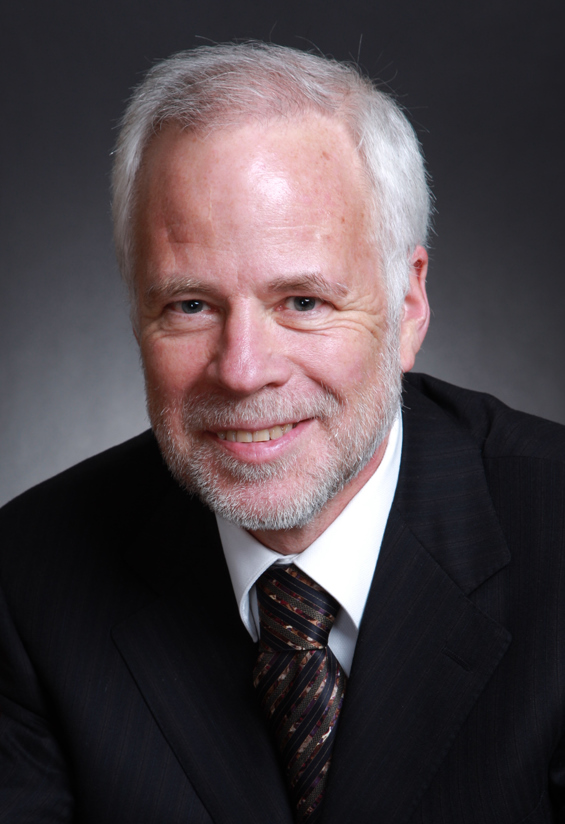
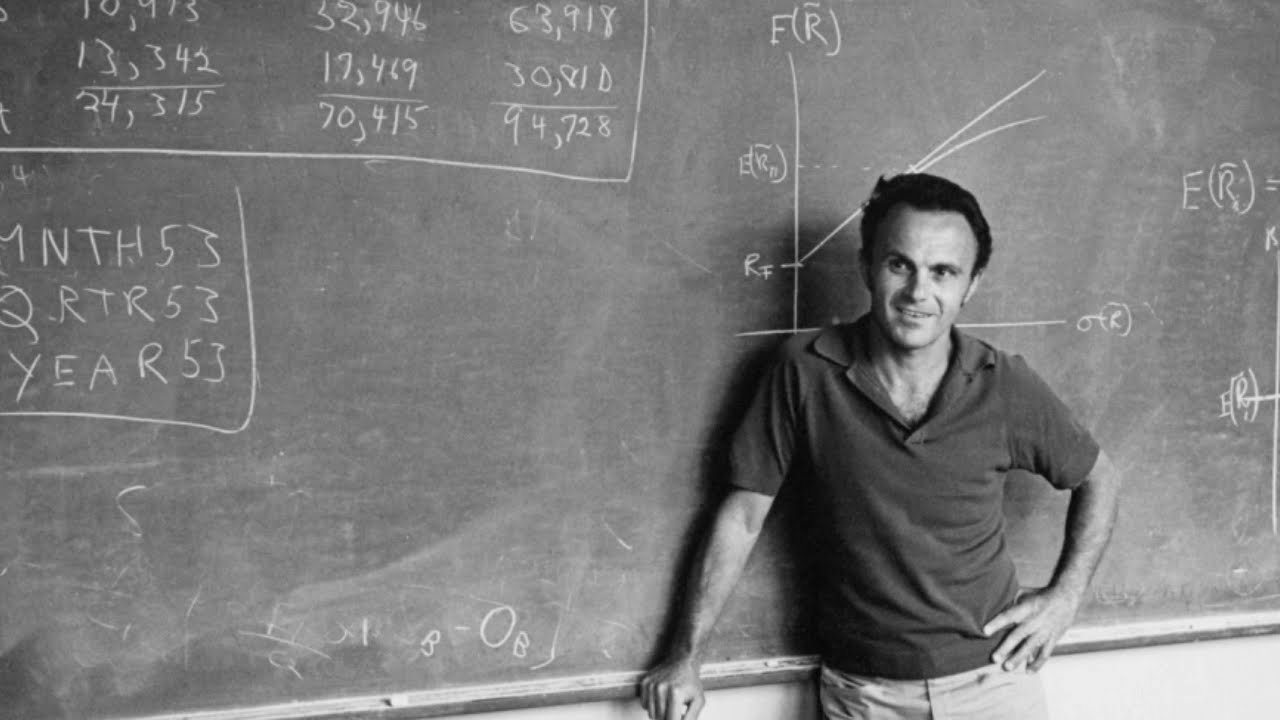
Eugene Fama Economic Rockstar

“I went into academics because I didn’t want to go into anything that would affect my sports life.” – Professor Eugene Fama

Eugene F. Fama is Professor of Finance at the University of Chicago Booth School of Business. Professor Fama was awarded the 2013 Nobel laureate in economic sciences and is widely recognized as the “father of modern finance.”

Professor Fama’s research is well known in both the academic and investment communities. He is strongly identified with research on markets, particularly the efficient markets hypothesis. He focuses much of his research on the relation between risk and expected return and its implications for portfolio management. His work has transformed the way finance is viewed and conducted.

Eugene is a prolific author, having written two books and published more than 100 articles in academic journals. He is among the most cited researchers in economics.

In addition to the Nobel Prize in Economic Sciences, Professor Fama was the first elected fellow of the American Finance Association in 2001. He is also a fellow of the Econometric Society and the American Academy of Arts and Sciences. He was the first recipient of three major prizes in finance: the Deutsche Bank Prize in Financial Economics (2005), the Morgan Stanley American Finance Association Award for Excellence in Finance (2007), and the Onassis Prize in finance (2009).

Professor Fama was awarded doctor of law degrees by the University of Rochester and DePaul University, a doctor honoris causa by the Catholic University of Leuven, Belgium, and a doctor of science honoris causa by Tufts University.

Eugene is chairman of the Center for Research in Security Prices at Chicago Booth, which was founded 40 years ago to create the finest tools for tracking, measuring, and analyzing securities data. He is also an advisory editor of the Journal of Financial Economics.

Professor Fama earned a bachelor’s degree from Tufts University in 1960, followed by an MBA and PhD from the University of Chicago Graduate School of Business (now the Booth School) in 1964. He joined the GSB faculty in 1963.

Economists:

In this episode, Professor Fama mentions: Gary Becker, Vernon Smith, John Cochrane,Robert Shiller, Campbell Harvey,  John Campbell, Narasimhan Jagadeesh, Sheridan Titman, Cliff Asness, Louis Bachlier, Paul Samuelson, Benoit Mandlebrot, Robert C. Merton, Fischer Black, Myron Scholes, Merton Miller, Harry Roberts and Kenneth French.

Economics:

In this episode, Professor Fama mentions: EMH, anomalies, Momentum Effect, January Effect, Options Pricing Model, Price Earnings Ratio, Federal Reserve, Fed Funds Rate, reserves, reserve requirements, lending mechanism, quantitative easing, economic activity, bitcoin, speculation, medium of exchange, Ripple and blockchain.

Professor Fama’s Mentors:

  • Merton Miller, Harry Roberts and Benoit Mandelbrot.

Individuals were very important to me especially Merton Miller and Harry Roberts. And Benoit too. – Professor Fama

Find out:

  • How studying economics in the 1960s differs to present day.
  • What is EMH and how it relates to the random walk and the submartingale process.
  • The beginning of mathematics in economics in the 1960s.
  • Independent, identically distributed  – a more restrictive view of EMH.
  • How prices and returns are so noisy that it is difficult to identify stock-picking skills.
  • About stock market anomalies.
  • What is the problem in academics?
  • About the Federal Funds Rate.
  • Does the Federal Reserve Bank or the market control the Fed Funds Rate?
  • If there is a lending channel.
  • Do we need a Federal Reserve bank?
  • About Professor Fama’s views on Quantitative Easing (QE).
  • About Professor Fama’s hobbies and how he uses them to regain balance in his life as an economist.
  • Why Eugene Fama went into academics.
  • Find out about Eugene’s daily routines.
  • About Bitcoin.

On the Problem in Academics:

“There is a problem in academics. Everybody wants to publish papers. That’s the way they advance and get tenure and get higher salaries. They also get noticed on Wall Street for doing it. So there’s an incentive to dredge the data and come with things that will be attention-grabbing but won’t necessarily be there in new data and aren’t the basis for new strategies.” – Professor Fama

Eugene Fama Economic Rockstar

On Theoretical Models

“Robustness is the name of the game. All scientific theories have anomalies otherwise they’re not theories, they’re reality.”

“All science is you propose models, you test them and you come up with some stuff that says that says this works pretty well and then you come with other stuff that says well it doesn’t work very well on this particular so called anomaly. And so you either tweak the model to incorporate that or you just accept it as one of the shortcomings of the model. That’s why you called them models.”

“You have to be careful. It has to be systematic empirical work. You can’t just go work with anecdotes. Anecdotes are not empirical work.”

On the Fed:

“What goes on when you go to work for the Fed or you get onto the Board or whatever, it’s the invasion of the Body Snatchers. Whatever you thought before becomes irrelevant and you buy the party line or you buy the line that says they have a lot of power.”

“I don’t there ever was a lending channel but there certainly isn’t one now.”

“The main job of the Fed is to control inflation. Unfortunately, in the current regime they can’t do that.”

On Bitcoin:

  • I’m suspicious about it as a unit of account because it has such an uncertain value. Monetary theory basically says that you want a unit of account that has a certain value.
  • It’s just like paper currency. If no body is willing to use it, it becomes valueless.

Thanks to Conor Murray for the question on Bitcoin!

On Writing:

  1. There’s no easy way to do it. I do a lot of writing with Kenneth French. We always re-write these papers that we put out at least twenty or thirty times front to back. And you struggle over every word and you try to say stuff as simply as possible because by saying it simply you reach more people than saying it in a more complex way.
  2. Work on it. Really read it. Get other people to read it and get their reactions.
  3. Organize how you present stuff. You want a brief introduction. Most papers tend to have long introductions. Get right into the guts and keep it as simple as possible for as long as possible so that you lose the fewest number of people.

Movies:

  • Invasion of the Body Snatchers
  • Equilibrium


Patreon

If you’re a fan of the podcast and would like to show your support in anyway, please check out my Patreon page at patreon.com/economicrockstar where you can sign up for any of the awards for as little as $1 a month or you can simply follow me on the Economic Rockstar Facebook page or on Twitter or simply recommend the show to a friend, especially if they have never had the opportunity to study economics.


http://traffic.libsyn.com/economicrockstar/125_Eugene_Fama__Final.mp3

Podcast: Play in new window | Download

009: Naomi Brockwell (Bitcoin Girl) on Bitcoins, Liberty, Government and Fiat Currency.

December 3, 2014 by Frank

http://traffic.libsyn.com/economicrockstar/009_Naomi_Brockwell.mp3
Play in New WindowDownload

009: Naomi Brockwell (Bitcoin Girl) on Bitcoins, Liberty, Government and Fiat Currency.

Naomi BrockwellNaomi Brockwell is the always effervescent face of Bitcoin Girl She is an opera singer, film-maker and actress, and studied commerce at the University of Western Australia. Currently residing in New York, Naomi also runs her own company Rainsworth Productions and is a fellow at The Moving Picture Institute. Naomi speaks five languages, plays six musical instruments and, of course, is a gold medal-winning Irish dancer. Naomi is on the Advisory Council of the Mannkal Economic Education Foundation.

Economic Themes:

In this interview, Naomi mentions and discusses: bitcoins, crypto-currencies, monetary policy, inflation, fiat currency, fractional reserve banking, central banks, living standards,  international trade, negative externalities, unintended consequences, equilibrium, supply and demand.

Economists and Economic Schools:

In this interview, Naomi mentions: Victor Niederhoffer, Gene Epstein, Murray Rothbard, Jean-Baptiste Say, Ludwig von Mises, Friedrich Hayek, Carl Menger, Erik Voorheese, Paul Krugman, Austrian economics, Libertarianism, Keynesian economics and Hunter Lewis.

Naomi’s Passions:

Economics, Film, Dance and Opera Singing.

Naomi’s Affirmations/Mantra:

“I like people who are inspiring and I like reading their biographies” – Naomi Brockwell

“We really underestimate what we can achieve and if we remember that so much more is possible than we may think, then that’s a good way to live. It encourages you to press your boundaries and explore new horizons. Seek what your potential is, really try to fulfil your potential.” – Naomi Brockwell

Naomi’s Influencers:

Gene Epstein, Murray Rothbard and Georgia Hilton of The Moving Picture Institute

Exclusive News Announced on the Economic Rockstar Podcast:

Naomi is writing a FUN and ACADEMIC book which will be released soon.

Find Out:

  • what Naomi’s two favorite drinks are – they’re Irish by the way!
  • and watch Naomi’s video ‘Bitcoin Girl’ (see below), made with The Moving Picture Institute, in which she is featured.
  • what began Naomi’s passion for economics after staying in New York City to study and train with other great opera singers.
  • how a discussion on the housing crisis and the housing bubble at Junto in New York City inspired Naomi to read economics.
  • how a chance email to Gene Epstein of Barron’s developed a passion for Austrian and Libertarian economics.
  • Naomi’s shared views with Gene on educating people in economics even if they disagree on some of the thinking.
  • why Naomi questions the foundation of fiat money after reading Rothbard.
  • why Naomi believes that the private sector can manage money better than the government.
  • why bitcoin is used voluntarily with no coercion.
  • what is a virtual or crypto-currency and how does it work when there is no physical coin to use.
  • what excites Naomi about Bitcoin and why, as Bitcoin Girl, she is becoming synonymous with Bitcoin.
  • what cryptography is and what it has to do with Bitcoin.
  • the difference between fractional reserve banking and how bitcoin operates.
  • what scares Naomi when she requested her Australian bank to transfer her own money into a Bitstamp account.
  • about Naomi’s thoughts on inflation and fiat currencies.
  • why Naomi believes that Bitcoin will take many people out of poverty and how it will benefit the 2.5 billion people that are un-bankable.
  • why Bitcoin owners have a right to privacy, while owners of fiat money run the risk of having their identity and privacy hacked.
  • why American venture capital investor Tim Draper bought up Bitcoins from the Silk Road auction.
  • where venture capital money is going in relation to Bitcoin.
  • why governments and central banks have a vested interest to make Bitcoin obsolete.
  • about the opportunities and the jobs being created by the Bitcoin industry.
  • why bitcoins are safe from government interference and control.
  • why Naomi thinks Uber and AirBnB should follow the decentralized model of Bitcoin.
  • if Bitcoin is a buying opportunity.
  • who is Satoshi Nakamoto (or maybe not!).
  • what Naomi was doing in a World War II submarine

https://www.youtube.com/watch?v=XEthXBHsEac

Advice:

Find people who you find really inspirational and learn as much as you can – Naomi Brockwell

Click To Tweet

On Bitcoins:

Bitcoin is a digital currency which is keeping up with the digital age – Naomi Brockwell

Click To Tweet

Bitcoin is a global currency keeping up with a global marketplace – Naomi Brockwell

Click To Tweet

Bitcoin is specifically being engineered as an ideal form of money – Naomi Brockwell

Click To Tweet

The fact that people are using Bitcoin because they prefer it over sovereign currency interests me – Naoim Brockwell

Click To Tweet

Bitcoin, in layman’s terms is ‘Money for the Internet’ – Naomi Brockwell

Click To Tweet

About Bitcoin: That is a superstar currency right there – Naomi Brockwell

Click To Tweet

Which is Safer – Your details with J.P. Morgan or a Bitcoin wallet?

It’s just as easy to get access to a persons bitcoin if they have access to the key as it is to get into someones house if you get access to their key. It’s very much the same issue. However, the issue I have with J.P. Morgan is that they take all of your private information. So identity fraud can ruin a persons life.

When a person hacks into my Bitcoin account, first of all it’s up to me to decide how I want to secure that. There are incredible secure ways that I can use to protect my Bitcoins.

There are no personal details attached to that money. There are no names, no phone numbers and no addresses – just ones and zeros.

If someone hacks into J.P. Morgan, they steal everything about me. That is really, really scary and that is far more severe than any Bitcoin hacking.

With Bitcoin, it’s all up to you how you want to safe-guard your property. There are paper wallets.

Venture capital investment is going to Bitcoin entrepreneurs who are improving the Bitcoin infrastructure.

There are going to be scammers just as there are in any other industry.

I feel that I’m empowered using Bitcoin – Naomi Brockwell

Click To Tweet

About Fiat Currency:

“As long as my money stays in an organisation that can be coerced by government or can play by its own rules, I don’t have control over my own money. That’s a scary thought. My instinct is to get my money out of that system as fast as I can so that I can regain the control over where I want to spend my own money” – Naomi Brockwell.

Inflation is a secret tax that the government didn’t need approval for. There is absolutely no sane reason why any person should accept money from someone that they know will be worth less the next day. It’s possibly the biggest scam ever created.

‘Money is not an invention of the State and it’s not a product of a legislative act’ – Carl Menger

Click To Tweet

On Sensationalist News Stories on Bitcoins:

“If it Bleeds, it Leads. So any bad news on Bitcoin is good news for media outlets” – Naomi Brockwell.

Click To Tweet

Every second week someone is putting out a report – it’s usually Paul Krugman that says ‘Bitcoin is finally dead’ – Naomi Brockwell

Personal Habits:

  • Naomi subscribes to Louise Hay’s Daily Affirmation
  • Naomi and Gene Epstein run an Austrian economics reading group together.
I like to surround myself with such amazing and inspiring people – Naomi Brockwell

Click To Tweet

Takeaway:

There is so much more to economics and to the housing crisis than the mainstream media let on – Naomi Brockwell

Click To Tweet

Economics is just an incredible way of helping the less fortunate areas of society, of helping people out of poverty, of helping the unrepresented, people being persecuted by government. Economic, if you really understand it, it provides all of these answers. With economics, you could do a lot more to help people.

Recommended Books:

  • What Has the Government Done to Our Money by Murray Rothbard
  • Money: How the Destruction of the Dollar Threatens the Global Economy – and What We Can Do About It by Steve Forbes
  • The Financial Crisis and the Free Market Cure: Why Pure Capitalism is the World Economy’s Only Hope by John Allison
  • Where Keynes Went Wrong: And Why World Governments Keep CreatingInflation, Bubbles, and Busts by Hunter LewisAudible

Favorite Internet Resources:

  • On Life and Liberty by Erik Voorheese
  • The Moving Picture Institute for FREE movies.
  • Liberty.me

Where To Find Naomi Brockwell:

  • Websites: naomibrockwell.com and bitcoingirl.com
  • Moving Picture Institute


http://traffic.libsyn.com/economicrockstar/009_Naomi_Brockwell.mp3

Podcast: Play in new window | Download

Frank Conway

Frank Conway is founder of Economic Rockstar and lecturer of economics, finance and statistics. Read More…

View My Blog Posts

Youtube Sub

Become a Patron of the Economic Rockstar Podcast

patreon

Ireland’s Economy by the Numbers

Leaving Cert Economics: Ireland’s Economy  Click here to download a workbook on Ireland’s Economy so that you can add your own notes. [Original size] Ireland’s Economy by fconway

Categories

Subscribe and Never Miss An Episode

itunes-logo

Recent Posts

  • Ireland’s Economy by the Numbers April 8, 2019
  • 174: Wendy Carlin on The Core Project, Capitalism, Democracy and Normative Statements February 13, 2019
  • 173: Stephen Wright on Core Econ as a Learning Resource for Mainstream Economics January 28, 2019
  • 172: Best of 2018 Part 2: From the Great Depression to Futurism; Institutions, Individualism, Cooperation and Reciprocity January 22, 2019
  • 171: Best of 2018 Part 1 January 3, 2019

Copyright © 2026 · Podcast Pro Theme on Genesis Framework · WordPress · Log in

This website uses cookies to improve your experience. We'll assume you're ok with this, but you can opt-out if you wish. Accept Reject Read More

Privacy Policy

Privacy Overview

This website uses cookies to improve your experience while you navigate through the website. Out of these, the cookies that are categorized as necessary are stored on your browser as they are essential for the working of basic functionalities of the website. We also use third-party cookies that help us analyze and understand how you use this website. These cookies will be stored in your browser only with your consent. You also have the option to opt-out of these cookies. But opting out of some of these cookies may affect your browsing experience.
Necessary
Always Enabled
Necessary cookies are absolutely essential for the website to function properly. This category only includes cookies that ensures basic functionalities and security features of the website. These cookies do not store any personal information.
Non-necessary
Any cookies that may not be particularly necessary for the website to function and is used specifically to collect user personal data via analytics, ads, other embedded contents are termed as non-necessary cookies. It is mandatory to procure user consent prior to running these cookies on your website.
SAVE & ACCEPT