046: Shanta Devarajan on The World Bank, Quiet Corruption, Government Failure and Comparative Advantage
Shantayanan Devarajan is the former Chief Economist of the World Ban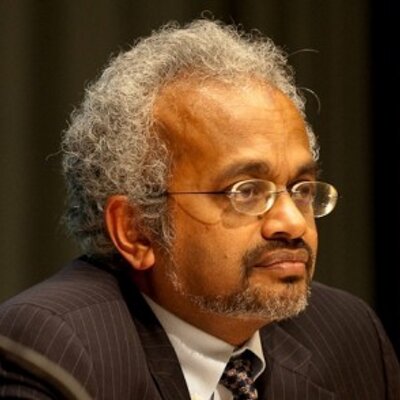 k’s Middle East and North Africa Region. Since joining the World Bank in 1991, he has been a Principal Economist and Research Manager for Public Economics in the Development Research Group, and the Chief Economist of the Human Development Network, South Asia, and Africa Region.
Shanta was the director of the World Development Report 2004, ‘Making Services Work for Poor People’. Before 1991, he was on the faculty of Harvard University’s John F. Kennedy School of Government.
Shanta is the author and co-author of over 100 publications, with his research covering public economics, trade policy, natural resources and the environment, and general equilibrium modeling of developing countries.
Born in Sri Lanka, Shanta received his B.A. in Mathematics from Princeton University and his Ph.D. in Economics from University of California, Berkeley.
People care so much about education. They will not eat if they can send their kid to a better school – Shanta Devarajan
In this episode, you will learn:
- why Shanta decided to take a sabbatical from lecturing and never went back.
- about Shanta’s passion to end world poverty.
- how experiencing living on a $1 a day with a poor family made Shanta realize that the failure lies with government.
- how empowering people in poverty-stricken countries with information could be the catalyst to end poverty.
- the huge government failures and market distortions threatening the economy in India.
- why teachers and doctors in India are absent from work 25% and 40% of the time respectively and how this is affecting progress.
- how the powerful medical union in India are making healthcare inaccessible to the poor.
- why poor people in India think that the reason why doctors do not show up at clinics is because ‘the rain didn’t come’.
- why politicians in India do not have an incentive to fix the problem of doctor absenteeism.
- what the solutions to corruption in India.
- about unemployment being the biggest problem in the Middle East and North Africa.
- that the reason why unemployment is so high in the MENA region is due the industrial sector being highly monopolised.
- about how crony capitalism is preventing SMEs from growing in the MENA region.
- why Tunisia has failed to develop into an export-oriented economy due the legacy of the Ben Ali family and their connections to firms operating in heavily protected markets.
- that the failure for governments to continue with social contracts due to high deficits triggered the Arab Spring.
- about Colonel Gaddafi’s regime and how he managed to keep peace between tribes.
- how water subsidies and water-intensive crops are depleting water resources in Yemen.
- why the addictive habit of chewing qat or khat in Yemen is causing water shortages.
- why Yemen, who doesn’t have a comparative advantage in qat, continues to use resources to produce the commodity.
- what is the main purpose of the World Bank and how different is it to the IMF.
- where the World Bank gets its finance from and how much interest they charge.
- how the money trickles down to the unbanked people in low and middle-income countries.
- about biometric identification smart cards and how the unbanked in low-income countries can access capital.
Takeaway:
The problems of poor people are man-made and we as economists can actually help solve them. The way in which we can solve them is by carrying our work toward empowering them. The reason they’re man-made is that poor people lack political power. We can actually strengthen their clout, their political power, by providing economic analysis and making it accessible to them – Shanta Devarajan
Economics:
In this interview, Shanta mentions and discusses: poverty, development, capital markets, government failure, policy distortion, structural adjustment, debt crisis, macroeconomic environment, incentives, quiet corruption, unemployment, monopoly, social contracts, crowding out, finance capital, subsidies, water subsidies, energy subsidies, comparative advantage, imports, exports, budget expenditures, IMF, the World Bank, MENA, public goods, leakages, multiple effect, dynamic stochastic general equilibrium model, savings, investments, sovereign wealth funds and consumption.
Economists:
In this interview, Shanta mentions and discusses: Chris Blattman, Gerard Debreu , Joseph Stiglitz, Sherman Robinson and Paul Collier
Influencers:
Gerard Debreu , Joseph Stiglitz, Sherman Robinson , Paul Collier
Quotes by Shanta Devarajan in Episode 046 of the Economic Rockstar Podcast:
The marginal product of writing an additional paper was lower than my actually trying to go out there and apply what I know to reduce poverty. I became quite passionate about this quest to reduce this poverty. – Shanta Devarajan
The problems of poverty under development are problems of government failure. The problem of government failure is because the political system is one where poor people don’t have sufficient voice and sufficient ability to make sure that politicians take decisions in their interest. – Shanta Devarajan
On the changing views of The World Bank:
The traditional view of development in the 1950s and 60s was a belief that it was a market failure. Their capital markets weren’t working. Poor countries didn’t have access to capital and so the World Bank had to provide capital. However, in the 1970s and 80s there was a realisation that the problem was not the result of a lack of capital. There were policy distortions in these countries that made this capital unproductive. The challenge became trying to remove these policy distortions or try to improve these policies so that capital could be productive. – Shanta Devarajan
On Quite Corruption in India:
Quite corruption in India is a deep political problem. There is nothing illegal about this corruption. It is a failure of the system. The political system is geared so that it creates this kind of corruption. – Shanta Devarajan
On Crony Capitalism in Tunisia:
It’s a little bit of a puzzle why Tunisia, which has a very highly educated population, a very nice location right across from Europe and a pretty good infrastructure, hasn’t been able to be a manufacturing, export-driven power-house. The reason is the industrial structure is being monopolised by the cronies of the political elite. – Shanta Devarajan
On Capital Leakages in Chad:
The leakages are higher in resource-rich countries. For instance in Chad, the money that was intended for public primary clinics, that actually arrives at the clinic is 1%. So the leakage is 99%. Chad is an oil-rich country. The reason for that is there is very little accountability – Shanta Devarajan
Reasons Why Yemen is Producing Khat (Qat) Inefficiently
Yemen produces its own qat despite not having a comparative advantage in the commodity. Factors of production, such as land, labor and capital, are used inefficiently to produce khat. So, the question remains as to why Yemen does not import qat. There are two main reasons why the continue to produce it domestically.
The first is that qat is consumed fresh. Domestic production allows qat to be distributed and sold throughout Yemen once it is picked. Freshness is required and it is expected that any imported khat could reduce its quality.
The second reason is that the president’s wife manages the qat monopoly and made a lot of money from it. Any imports would be competition. Given that khat is an addictive substance, the revenue made by this monopoly would have been so large that using resources inefficiently, particularly water, outweighed the costs.
The Difference Between the World Bank and the IMF
- The World Bank only works on developing countries and the IMF works on all countries.
- The IMF is concerned with short-term macroeconomic development, whereas the World Bank is concerned about long-term development.
- Anything that is in the order of one to two years is when the IMF will become involved in order to solve a macroeconomic crisis. Whereas, if it’s a question of building a road or a bridge or educating children, that’s when the World Bank comes in. Both the IMF and the World Bank, because they’re across the street from each other in Washington DC, communicate quite intensively.
- In the past, it may have been viewed that the IMF, because it is more macro-focused, was more interested in the aggregate budget rather than the composition of the budget. In the late 1990s, there were many countries that had fiscal crises. The IMF insisted that they cut their budget in order to maintain fiscal balance. However, just cutting the budget rather than cutting wasteful expenditures and protecting some valuable expenditures makes a big difference.
- It got to the stage where the World Bank would come in and look at the composition of the budget and suggest where it’s better to cut rather than simply take the targets that the IMF had set.
- Both institutions have evolved quite a bit since the 1990s. The IMF now looks quite closely at the composition of budget expenditures and the World Bank worries a lot about macroeconomic stability.
How The World Bank Funds its Operations
- The finance that the World Bank accumulates is obtained by World Bank bonds.
- The World Bank uses the ‘paid-in capital’ which the original members of the World Bank pledged back in 1947. This has now grown to about $300 billion.
- This capital is used as collateral to float bonds and because of this capital, the World Bank can get bonds at three-quarters of a percent below the market rate.
- This capital is then lent to middle-income countries at about half to a quarter of a precent below the market rate. The difference between these rates is what pays the salaries of those working for the World Bank.
- For low-income countries, mostly in Sub-Saharan Africa, there is a separate window called the International Development Association (IDA) where concessional loans are offered. These loans are pledged every three years by donor countries. The World Bank collects this IDA money, which is about $50 billion, and lends it to these low-income countries at virtually zero percent interest with a 35 year grace period.
Recommended Resource:
Recommended Book:
- Dubliners by James Joyce
Where to Find Shanta Devarajan:
- Blog: Future Development
- Twitter: @Shanta_WB
- Email: sd294 [at] georgetown [dot] edu
Meeting Up With Shanta in Waterford City, Ireland (August, 2015):
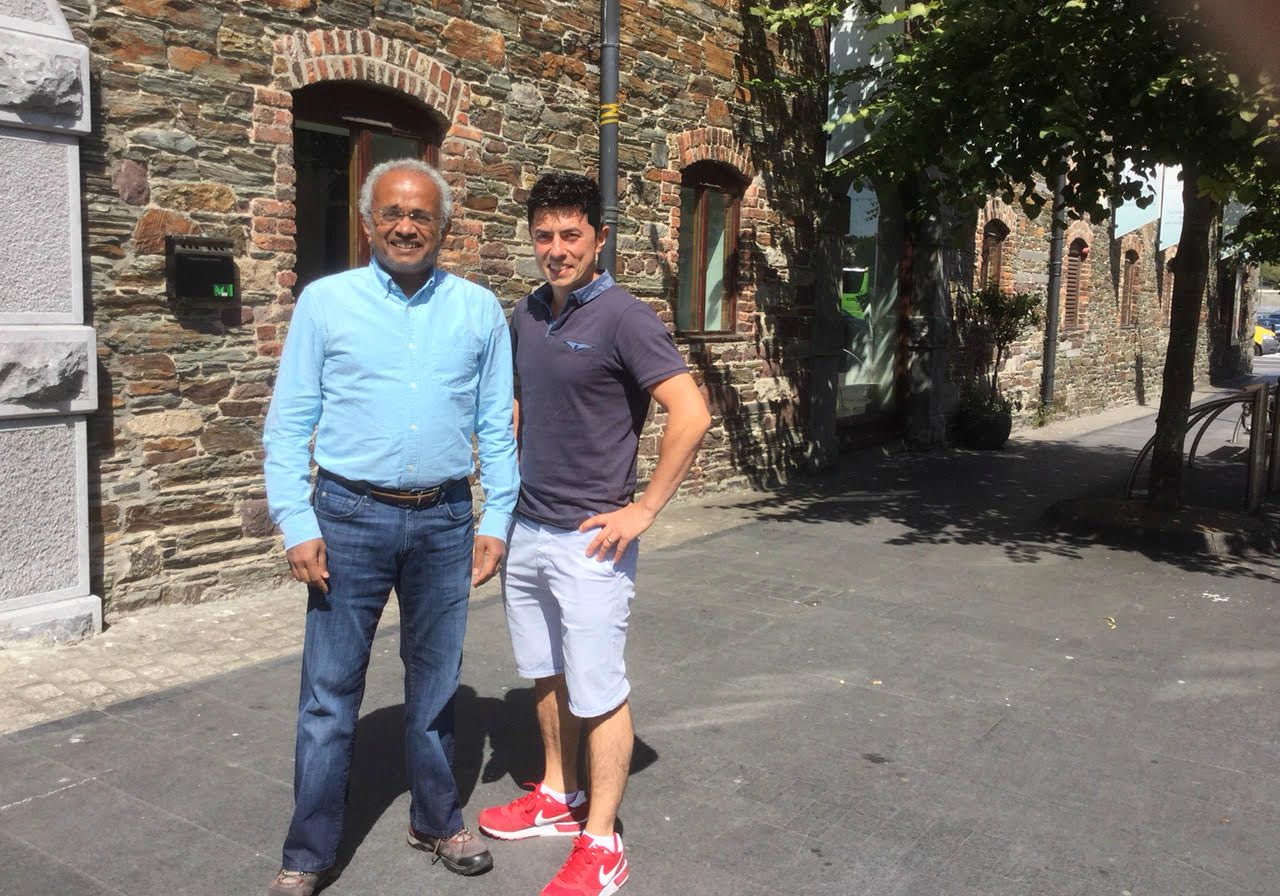
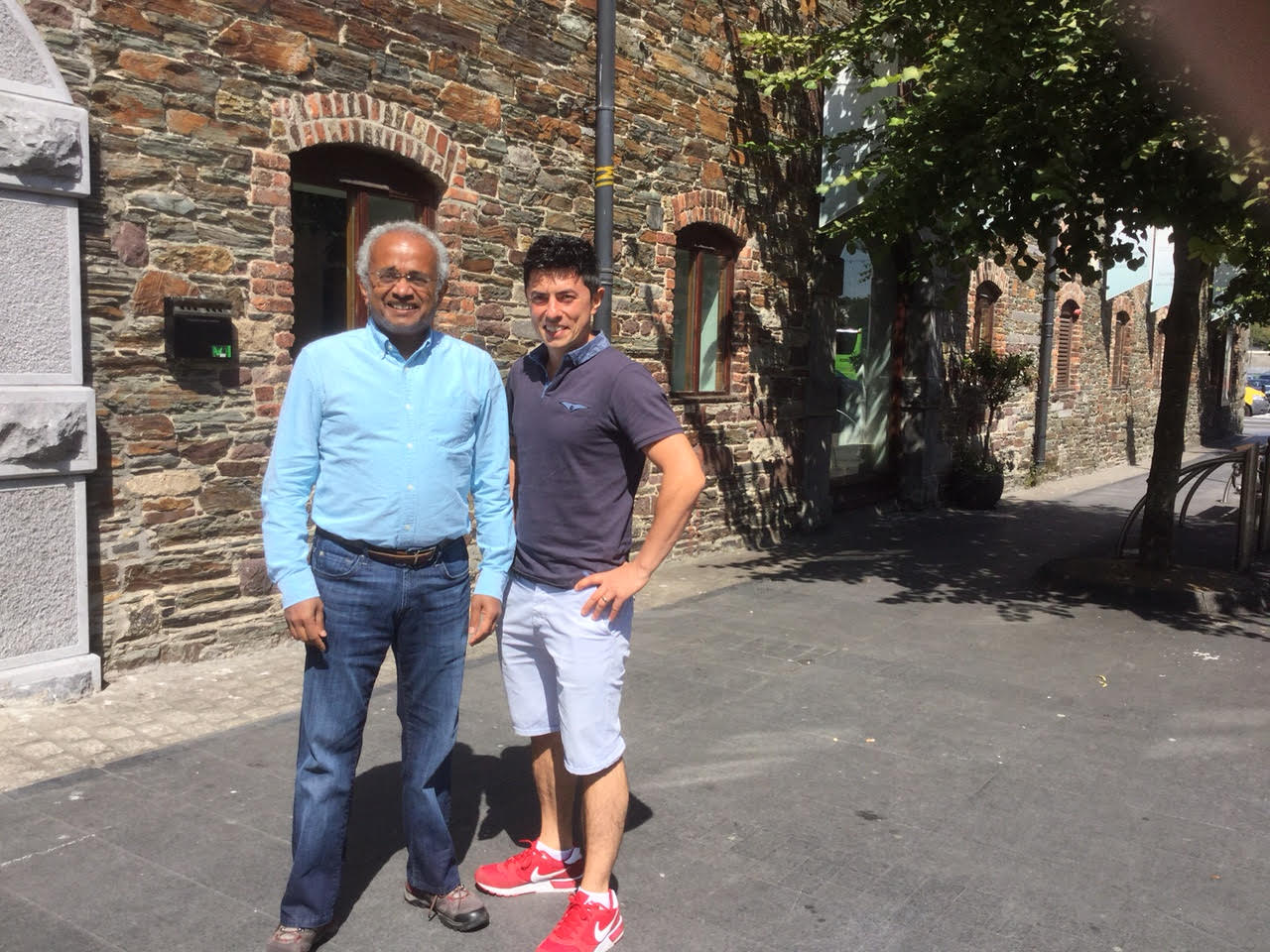
Since our conversation in episode 046 of the Economic Rockstar podcast, myself and Shanta met up for a brief period in Waterford City, Ireland. Shanta was on a visit form Washington DC (not work-related, just in case you think the The World Bank are coming in to Ireland!). Check back for a new blog post on what we chatted about.
Podcast: Play in new window | Download