• ABOUT
  • RESOURCES
  • PODCAST
  • BOOKS
  • BLOG
  • SUPPORTERS
  • QFA Financial Advice
  • CONTACT

Economic Rockstar

Connecting Brilliant Minds in Economics and Finance

127: Barry Eichengreen on the Importance of Economic History, the IMF and Reserve Currencies

February 8, 2018 by Frank

http://traffic.libsyn.com/economicrockstar/127_Barry_Eichengreen_Final.mp3
Play in New WindowDownload

127: Barry Eichengreen on the Importance of Economic History, the IMF and Reserve Currencies

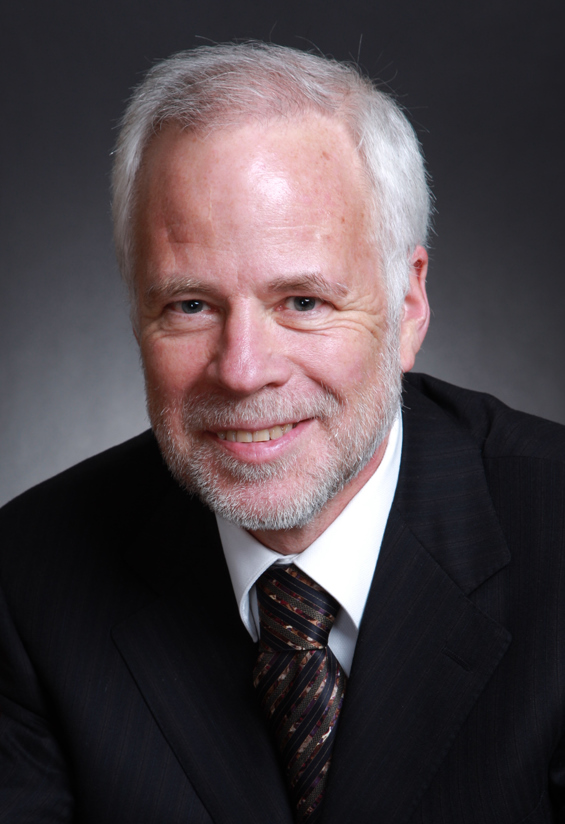
Barry Eichengreen is Professor of Economics and Professor of Political Science at the University of California, Berkeley, where he has taught since 1987, and Professor of American History and Institutions, University of Cambridge.
Professor Eichengreen is a Research Associate of the National Bureau of Economic Research and Research Fellow of the Centre for Economic Policy Research.

Professor Eichengreen has been a fellow of the Center for Advanced Study in the Behavioral Sciences (Palo Alto) and the Institute for Advanced Study (Berlin). He is a regular monthly columnist for Project Syndicate.

His most recent books are How Global Currencies Work: Past, Present, and Future with Livia Chitu and Arnaud Mehl, The Korean Economy: From a Miraculous Past to a Sustainable Future with Wonhyuk Lim, Yung Chul Park and Dwight H. Perkins and Exorbitant Privilege: The Rise and Fall of the Dollar and the Future of the International Monetary System (2011) (shortlisted for the Financial Times and Goldman Sachs Business Book of the Year Award in 2011).

Professor Eichengreen is the recipient of a doctor honoris causa from the American University in Paris, and the 2010 recipient of the Schumpeter Prize from the International Schumpeter Society.

Importance of Economic History

“One of my motivations for studying economic history is the belief that the past can inform the present” Professor Eichengreen

In this episode you will learn:

  • Whether we can learn from economic history and whether history can repeat itself.
  • The importance of history in institutions.
  • Why the economics discipline suffers from “academic schizophrenia”.
  • The problems of the IMF as an organisation today. 
  • How the IMF can change for the better.
  • The IMF letters to Ireland regarding its bailout.
  • The tensions regarding the rise of China  and the isolation of the United States.
  • Is there room for only one reserve currency or can we have more than one?
  • Advice Professor Eichengreen would give to the Chinese if they wish to establish the Renminbi as a reserve currency. 
  • Does Bitcoin meet the criteria to be regarded as money?
  • About Clarence Hatry and how he contributed to the stock market crash of 1929.

Economists:

In this episode, Professor Eichengreen mentions: Charles Kindleberger (MIT), John Maynard Keynes, Benjamin Strong and Montagu Strong.

Economics:

In this episode, Professor Eichengreen mentions: economic history, financial markets, institutional framework, monetary policy, central banks, cryptocurrencies, blockchain, function of money, central banks, King’s College, Cambridge

Writing Tips:

1) Read critically. Find someone whose writing you admire and try to figure out what makes it work.

2) Keep it simple. Shorter declarative sentences are better and you can always make them shorter and more declarative.

3) Revise. No sentence or paragraph is perfect or even adequate the first, second, third, fourth or fifth. Go around.

4) Practice. One’s writing tends to get better the more that you do.

Work Habits:

“I do better when it’s quiet and when there are fewer distractions. So I tend to work at home early on the morning and try to avoid my email until I’ve spent some time writing. I can only do serious writing at my desk in my study at home.” Professor Eichengreen

Movie:

  • It’s a Wonderful Life

Books:

  • Hall of Mirrors by Barry Eichengreen
  • How Global Currencies Work: Past, Present, and Future by Barry Eichengreen, Livia Chitu and Arnaud Mehl.
  • The Korean Economy: From a Miraculous Past to a Sustainable Future by Barry Eichengreen, Wonhyuk Lim, Yung Chul Park and Dwight H. Perkins.
  • Exorbitant Privilege: The Rise and Fall of the Dollar and the Future of the International Monetary System by Barry Eichengreen.

Recommend Book:

  • Against the Grain by James C. Scott

Patreon

If you’re a fan of the podcast and would like to show your support in anyway, please check out my Patreon page at www.patreon.com/economicrockstar where you can sign up for any of the awards for as little as $1 a month or you can simply follow me on the Economic Rockstar Facebook page or on Twitter or simply recommend the show to a friend, especially if they have never had the opportunity to study economics.

http://traffic.libsyn.com/economicrockstar/127_Barry_Eichengreen_Final.mp3

Podcast: Play in new window | Download

094: Daniel Crosby on Stock Market Investment Errors and the Price Earnings Ratio

July 14, 2016 by Frank

http://traffic.libsyn.com/economicrockstar/094_Daniel_Crosby_Final.mp3
Play in New WindowDownload

094: Daniel Crosby on Stock Market Investment Errors and the Price Earnings Ratio

Dr. Daniel Crosby is a psychologist, behavioral finance expert and asset manager who daniel crosby economic rockstarapplies his study of market psychology to everything from financial product design to security selection. 

Daniel is author of 2 books – The Laws of Wealth: Psychology and the secret to investing success and You’re not that Great. He is co-author of the New York Times bestseller Personal Benchmark: Integrating Behavioral Finance and Investment Management.

Dr. Crosby is founder of Nocturne Capital. His ideas have appeared in the Huffington Post and Risk Management Magazine, as well as his monthly columns for WealthManagement.com and Investment News.

Daniel was named one of the “12 Thinkers to Watch” by Monster.com, a “Financial Blogger You Should Be Reading” by AARP and in the “Top 40 Under 40” by Investment News.

Daniel was educated at Brigham Young and Emory Universities.

Economics:

Volatility, stock markets, behavioral finance, investments, human error, behavioral bias, money, confirmation bias, loss aversion, price earnings ratio, CAPE, Quantitative Easing and central banks.

Economists:

Benjamin Graham, Christopher Geczy, Jeremy Siegel, Robert Shiller and John Paulson.

We lose 13% of our IQ when we are under stress, so even if you know all of these great lessons about the way the markets work, you tend to have least access to them when you need those lessons the most. – Daniel Crosby

5 consistent factors that underlie the 100 ways that we can make mistakes:

1. Ego – The belief that we are special or different.

2. Emotion – Allowing our feelings to drive our perception of risk.

When we’re in a good mood, the world seems to be a safe place to be. Equity markets seem to be a safe place to be. The opposite is also true.

3. Conservation – A preference for the status quo & Asymmetry – the way we see loses versus gains.

We are much more upset with a loss than a similarly sized gain.

4. Information – We have too much data available for our brains to absorb.

The Fed releases 45,000 pieces of economic data each month. There is no way that we can comprehend all of that. We have information processing problems and we mis-weight data.

5. Attention – Salience trumps probability.

The more vividly we’re able to think  about something, the more probable it seems

Books:

  • The Laws of Wealth: Psychology and the Secret to Investing Success by Daniel Crosby
  • You’re Not That Great by Daniel Crosby
  • Personal Benchmark: Integrating Behavioral Finance and Investment Management by Chuck Widger and Daniel Crosby
  • The Behavioral Finance Reading List featured on Nocturne Capital.

Links:

  • Nocturne Capital
  • 212 Years of Price Momentum (The World’s Longest Back Test: 1801 – 2012) by Christopher Geczy and Mikhail Samonov

Weatherman, Michael Fish gets it wrong with the 1987 Storm in England

http://traffic.libsyn.com/economicrockstar/094_Daniel_Crosby_Final.mp3

Podcast: Play in new window | Download
087: Asgeir B. Torfason on the Economy of Iceland and Explaining Negative Cashflows in Banks

May 26, 2016 by Frank

http://traffic.libsyn.com/economicrockstar/087_Asgeir_Torfason_Final.mp3
Play in New WindowDownload

087: Asgeir B. Torfason on the Economy of Iceland and Explaining Negative Cashflows in Banks

Asgeir B. Torfason is Assistant Professor in the School of Business at the University of Iceland where he teaches asgeir torfasonFinance, Accounting and Financial Statement Analysis. Asgeir is also Postdoc Research Fellow, as well as an Assistant Professor at Gothenburg Research Institute.

Asgeir defended his PhD at Gothenburg University in May 2014 with dissertation: Cash Flow Accounting in Banks – A study of practice.

His research combines bank management, finance theory, monetary economics and accounting studies.

Previous research has focused on asset values and long-term investment in real estate, a field where Asgeir has extensive practical experience, covering the Nordics as VP for a REIT listed on NYSE.

Prior to that he worked in university management after getting an MBA from Norwegian Business School in Oslo, and studied earlier Philosophy and Economics in Iceland.

Economics:

In this episode, Asgeir mentions: Iceland’s economy, IT bubble, Tulip Mania, banks, capital controls, devaluation, tourism, resources, trade, cashflows, assets, liabilities, revenue, equity, income statements, bankruptcy, lending, negative cashflows, money multiplier, reserve requirement, central banks, quantitative easing, swap lines and housing bubbles.

Economists:

In this episode, Asgeir mentions: Joseph Schumpeter, John Maynard Keynes, Hyman Minsky, Perry G Mehrling, 

Links:

  • Economics of Money andBanking, Part One by Perry G Mehrling
  • Economics of Money andBanking, Part Two by Perry G Mehrling
  • Money View by Institute for New Economic Thinking
  • Katharina Pistor, Professor of Law at Columbia Law School

Papers:

  • The difference between cash flows in banks and non-financial firms by Asgeir B. Torfason
  • Methods for Making Sense of Cash Flow in Banks by Asgeir B. Torfason
  • Cash flow accounting in banks – a study of practice (PhD) by Asgeir B. Torfason

Books:

  • The New Lombard Street: How the Fed Became the Dealer of Last Resort by Perry Mehrling
  • Lombard Street-A Description of the Money Market by Walter Bagehot
  • Manias, Panics and Crashes: A History of Financial Crises, Sixth Edition by Charles P. Kindleberger
  • The Economic Consequences of the Peace by John Maynard Keynes

Where to Find Asgeir:

  • Twitter:  @asgeirbt
  • About.me
http://traffic.libsyn.com/economicrockstar/087_Asgeir_Torfason_Final.mp3

Podcast: Play in new window | Download

Frank Conway

Frank Conway is founder of Economic Rockstar and lecturer of economics, finance and statistics. Read More…

View My Blog Posts

Youtube Sub

Become a Patron of the Economic Rockstar Podcast

patreon

Ireland’s Economy by the Numbers

Leaving Cert Economics: Ireland’s Economy  Click here to download a workbook on Ireland’s Economy so that you can add your own notes. [Original size] Ireland’s Economy by fconway

Categories

Subscribe and Never Miss An Episode

itunes-logo

Recent Posts

  • Ireland’s Economy by the Numbers April 8, 2019
  • 174: Wendy Carlin on The Core Project, Capitalism, Democracy and Normative Statements February 13, 2019
  • 173: Stephen Wright on Core Econ as a Learning Resource for Mainstream Economics January 28, 2019
  • 172: Best of 2018 Part 2: From the Great Depression to Futurism; Institutions, Individualism, Cooperation and Reciprocity January 22, 2019
  • 171: Best of 2018 Part 1 January 3, 2019

Copyright © 2026 · Podcast Pro Theme on Genesis Framework · WordPress · Log in

This website uses cookies to improve your experience. We'll assume you're ok with this, but you can opt-out if you wish. Accept Reject Read More
Privacy Policy

Privacy Overview

This website uses cookies to improve your experience while you navigate through the website. Out of these, the cookies that are categorized as necessary are stored on your browser as they are essential for the working of basic functionalities of the website. We also use third-party cookies that help us analyze and understand how you use this website. These cookies will be stored in your browser only with your consent. You also have the option to opt-out of these cookies. But opting out of some of these cookies may affect your browsing experience.
Necessary
Always Enabled
Necessary cookies are absolutely essential for the website to function properly. This category only includes cookies that ensures basic functionalities and security features of the website. These cookies do not store any personal information.
Non-necessary
Any cookies that may not be particularly necessary for the website to function and is used specifically to collect user personal data via analytics, ads, other embedded contents are termed as non-necessary cookies. It is mandatory to procure user consent prior to running these cookies on your website.
SAVE & ACCEPT