• ABOUT
  • RESOURCES
  • PODCAST
  • BOOKS
  • BLOG
  • SUPPORTERS
  • QFA Financial Advice
  • CONTACT

Economic Rockstar

Connecting Brilliant Minds in Economics and Finance

085: Michael Roberts on Understanding Karl Marx and His Thinking on Capitalism
May 12, 2016 by Frank

http://traffic.libsyn.com/economicrockstar/085_Michael_Roberts_Final_.mp3
Play in New WindowDownload

085: Michael Roberts on Understanding Karl Marx and His Thinking on Capitalism

Michael Roberts

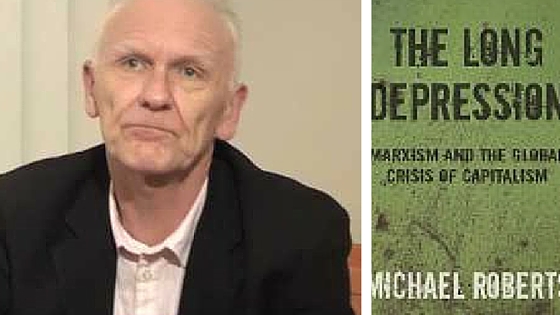
Michael Roberts has worked as an economist for over 30 years in the City of London. He is author of The Great Recession: Profit cycles, economic crisis A Marxist View and The Long Depression: Marxism and the Global Crisis of Capitalism.

Economics:

In this episode, Michael mentions: Marxism, capitalism, Austrian economics, GDP, multinationals, inflation, printing of money, booms, busts, profitability, recession, depression, inequality, wealth, means of production, private property, competition, externalities, unintended consequences, bailout, austerity and unemployment.

Economists:

In this episode, Michael mentions: Karl Marx, Friedrich Hayek, Adam Smith, John Maynard Keynes, Brad DeLong and Paul Mattick.

Links:

  • www.thenextrecession.wordpress.com by Michael Roberts

Books:

  • The Great Recession: Profit cycles, economic crisis A Marxist View by Michael Roberts
  • The Long Depression: Marxism and the Global Crisis of Capitalism by Michael Roberts
  • The Communist Manifesto by Karl Marx and Friedrich Engels
  • Capital by Karl Marx
  • Business As Usual by Paul Mattick
  • Waiting for Godot by Samuel Beckett


http://traffic.libsyn.com/economicrockstar/085_Michael_Roberts_Final_.mp3

Podcast: Play in new window | Download
073: Robin Hanson on The Age of Em and How Brain Emulations Will Double Economic Growth Every Month

February 18, 2016 by Frank

http://traffic.libsyn.com/economicrockstar/073_Robin_Hanson.mp3
Play in New WindowDownload

073: Robin Hanson on The Age of Em and How Brain Emulations Will Double Economic Growth Every Month

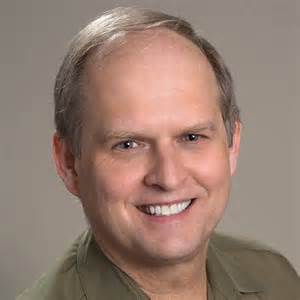
Robin Hanson is associate professor of economics at George Mason University. He is also a research associate at robin hansonOxford’s Future of Humanity Institute and chief scientist at Consensus Point.

Professor Hanson has diverse research interests, including spatial product competition, health incentive contracts, reversible computation, the origin of life, the survival of humanity, very long-term economic growth, growth given machine intelligence, and interstellar colonization

Robin has pioneered prediction markets, also known as information markets and idea futures, since 1988.

His passion is to understand everything, and to save the world. He is addicted to “viewquakes”, loves to argue one on one, and values honesty and passion. He blogs at OvercomingBias.com which has had over eight million visits.

His book The Age of Em: Work, Love and Life When Robots Rule the Earth will be available in May 2016, and The Elephant in the Brain, co-authored with Kevin Simler, in spring 2017.

Economists:

In this episode, Robin mentions and discusses: Thomas Malthus and Cass Sunstein

Economics:

In this episode, Robin mentions and discusses: emulation economy, economic growth, labor, competition, wages, subsistence economy, capital, land, slaves, supply and demand.

In this episode you will learn:

  • about Robin Hanson’s work in economics.
  • what is The Age of Em and how it could double economic growth every month rather than the current doubling of growth every 15 years.
  • what are brain emulations.
  • what is a singularity and if we will have one within the next 200 years.
  • how the workforce of the future look.
  • how humans will retire and have brain emulations do their work.
  • what will a brain emulation be like.
  • if humans will revert to subsistence levels of existence as predicted by Malthus.
  • about the labor market of the future and whether wages will be competed away with humans and ems living on the margin.
  • how Robin anticipates living in the future and how you can too.
  • why space exploration and space colonization will be delayed until after the rapid and exponential economic expansion brought about by brain emulation.
  • whether you can have a brain emulation of your own brain or whether the process will be reserved to a few hundred people who are best equipped to perform certain tasks.
  • how the relationship between humans and robots is portrayed as a dichotomy – a heaven or hell scenario – but this will not be the case with the technology available using brain emulations.
  • how you can be ‘teleported’ from one device to another without being physically affected.
  • how Robin used economic theory to explain the economy of the future where brain emulations are the drivers of growth.
  • why the Age of Em will last for about 2 years.
  • about Robin Hanson’s request to have only his head cryogenically frozen and what he hopes to achieve.

Paper:

  • Hanson, R. (1994). If Uploads Come First: The Crack of a Future Dawn 

Podcast Episodes:

  • Manu Saadia

Books:

  • The Age of Em by Robin Hanson
  • Trekonomics by Manu Saadia
  • The World According to Star Wars by Cass Sunstein

Resources:

  • The Age of Em
  • www.overcomingbias.com
  • Future of Humanity Institute
  • Consensus Point


http://traffic.libsyn.com/economicrockstar/073_Robin_Hanson.mp3

Podcast: Play in new window | Download
053: Helena Norberg-Hodge on Localisation, Trade Treaties and the Economics of Happiness

October 8, 2015 by Frank

http://traffic.libsyn.com/economicrockstar/Helena_Norberg_Hodge_Final.mp3
Play in New WindowDownload

053: Helena Norberg-Hodge on Localisation, Trade Treaties and the Economics of Happiness

Helena Norberg-Hodge is the founder and director of Local Futures. A pioneer of the ‘new economy’ movement, she has been promoting an economics of personal, social and ecological well-being for more than 30 years.Helena Norberg Hodge

Helena is the producer and co-director of the award-winning documentary The Economics of Happiness, and is the author of Ancient Futures: Learning from Ladakh, described as “an inspirational classic”.

Helena has given public lectures in seven languages, and has appeared in broadcast, print, and online media worldwide.

She was honored with the Right Livelihood Award (or ‘Alternative Nobel Prize’) for her groundbreaking work in Ladakh, and received the 2012 Goi Peace Prize for contributing to “the revitalization of cultural and biological diversity, and the strengthening of local communities and economies worldwide”.

Economics:

In this interview, Helena mentions: localisation, globalisation, deregulation, finance, banking, money, real economy, price, demand, subsidies, tax, business alliances, lobbying, competition, trade treaties, unemployment, poverty, natural environment, growth, climate, energy consumption, comparative advantage and GDP.

Economists:

In this interview, Helena mentions: Alex Tabarrok, Adam Smith, David Riccardo,

In this episode you will learn:

  • how and why Helena decided to advocate for and promote localisation.
  • about Ladakh and how it was removed from the rest of the world.
  • how the global market was very destructive to the local market in Ladakh.
  • how globalisation destroyed the livelihood of farms and local businesses and created unemployment.
  • how the happiness and high self-esteem among the people of Ladakh was destroyed after a decade of economic development.
  • why extreme tensions between buddhists and muslims erupted after living in peace for over 500 years in Ladakh.
  • about Ladakh, where the Dalai Lama is the spiritual head.
  • how Ladakh has become a case study on how a local economy has been quickly affected by globalisation.
  • about the phenomenal work Helena is doing to highlight the changing lives and economy of Ladakh and other regions.
  • about the true meaning of the real economy and how cheap money and speculation is destroying it.
  • why the earth is so precious and must be protected before we see irreversible and horrific damage.
  • about the terrific work being undertaken by Local Futures to highlight the need for economic change to protect our earth.
  • why we need to make the local food market a global initiative.
  • how small towns and villages are taking initiatives to feed their community with fresh, organic foods.
  • how schools are integrating nature into their infrastructure to increase the well-being of staff and pupils.
  • how nature provides profound and important psychological healing benefits.
  • how diversifying and staying local can provide more diversified foods per unit of land and water than the large monocultures.
  • why farmers prefer to work closely with the customer than with large-scale supermarkets.
  • whether small farmers and businesses should create a group to represent the their interests and to lobby governments in much the same way as large companies like Volkswagen and Monsanto.
  • how to make small and local businesses more visible.
  • about Helena’s mantra for resistance and renewal – resisting trade treaties and renewing localisation.
  • about the law that was passed in Sweden to have trade treaties to be discussed in secret.
  • how, under the new trade agreements, multinational corporations can sue governments if they inhibit their profit-making ability of that governments country.
  • whether GDP is a good measure of progress and how Helena interprets its true meaning.

Quotes by Helena on the Economic Rockstar Podcast:

“The EU is essentially an economic union and it’s bringing with it a centralised bureaucracy” – Helena Norberg-Hodge

About Earth Being Our Only Economy:

“The earth is our only economy. There’s nothing we use that doesn’t come from the earth. Nothing, nothing. Every iPad, every shoe, every television. And that economy, the real economy, is diversity. It requires and can only continue to live by respecting the uniqueness of every leaf, of every human being. Everything that lives is unique and is changing from moment to moment.” – Helena Norberg-Hodge

“I describe Nature as the economy, but it’s also our Mother. It’s our spiritual home” – Helena Norberg-Hodge

Click To Tweet

“Usually when people talk about the economy, they’re just thinking about paper money. They don’t think about culture and farming as having anything to do with the economy.” – Helena Norberg-Hodge

“The global food economy, from beginning to end, is the biggest contributor to CO2 emissions, and it’s not just because of the factory farming with animals. It’s across the board.” – Helena Norberg-Hodge

About the Stock Market and Cheap Money:

“The market is really young lads sitting in front of computers speculating with huge amounts of money. And they inevitably have to and do favour the giant. They’re betting on the giants ‘horses’ like Monsanto, McDonalds and Walmart. And so this connection between that flood of cheap money created out of thin air, now has become a sort of a ‘blind machinery’ that is eating up the real economy, the earth, extremely rapidly and we’re going to see more horrific examples.” – Helena Norberg-Hodge

Other Quotes:

There is a growing local food market that is going global – Helena Norberg-Hodge

Click To Tweet

GDP is an outrageous measure of progress. It is simply a measure of commercialisation – Helena Norberg-Hodge

With Riccardo and the notion of comparative advantage, it sounds good on the surface. But let’s remember it was brought in in a time of slavery – Helena Norberg-Hodge

Where to Find Helena:

  • Local Futures: www.localfutures.org
  • Economics of Happiness
http://traffic.libsyn.com/economicrockstar/Helena_Norberg_Hodge_Final.mp3

Podcast: Play in new window | Download
038: Leah Bell on Being an Angry Grad and Setting Yourself Up for a Life of Success

June 25, 2015 by Frank

http://traffic.libsyn.com/economicrockstar/038_Leah_Bell_Final.mp3
Play in New WindowDownload

038: Leah Bell on Being an Angry Grad and Setting Yourself Up for a Life of Success

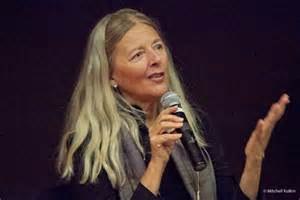
Leah BellLeah Bell spent tens of thousands of dollars on a college education for a degree in Education with the same hope of getting a job one day.  After struggling to find a teaching job as an Elementary school teacher, Leah had to work at a minimum part-time job to supplement her teaching salary. However, the school closed and she lost her job. Leah took on a job related to sales. But after a few years she realized that she wanted nothing more than to stay at home with her son. But with student debt and rising prices, it was extremely difficult on one income.

Leah Bell learned the most about life, not in the classrooms of the colleges she attended, but in the years following. After realizing the struggle in the job market, the difficulty of paying off student loans, and the heartbreak of sacrificing priceless time with family to meet financial needs, she and her husband have devoted their lives to sparing people of this depressing fate through their company Neotrep™, providing entrepreneurs with affordable education and tools to succeed. She recently wrote the book The Angry Grad to help prospective students and recent graduates choose the route of entrepreneurship instead of the unstable job world.

Economics:

Mortgage, student loan, debt, competition, labor, happiness, tax and return on investment.

Economics and finance suddenly became personal. It became emotional and, at that time, I became interested in it because it’s not just about numbers. I want people to get their finances under control so they can have a better life and give their children a better life – Leah Bell.

Economists:

Paul Dolan and John Gathergood.

Influencer:

Robert Kiyosaki

Takeaway:

“Always be asking questions, always be willing to learn and take advantage of all of the resources that are out there” – Leah Bell.

Find Out:

  • what is the average student debt?
  • how a college degree is different today than it was just two or three decades ago.
  • why it’s so difficult for college graduates to find jobs and pay back their student loans.
  • how the future will look if we continue teaching young people that debt is the only way to afford a house, a car and an education.
  • what other options are there for people who are considering an education.
  • how debt is not the only way to get through college.
  • if we are paying more for college than we can hope to get back.
  • if it’s still worth taking on so much debt to get a degree.
  • if we’re living in a school loan debt bubble.
  • what we can do about all this?

The Disillusioned Student

High-school students are being blind-sided and do not truly understand the debt that they will accumulate while attending college. Educators and college and career guidance counsellors are failing high-school students by only providing a one-sided argument to going to college. They emphasise the pros of going to college and, in most cases, fail to disclose the cons of going to college in terms of the costs, term loans and the interest repayments. Educators prepare high-school students for college in terms of the grades but lack the financial planning required by the student and their parents.

Typically, a $30,000 loan, which is approximately the average student debt in the US, will amount to $60,000 in capital and interest repayments over the life the loan. However, in many cases, students fail to meet these repayments which equate to upward of $1,000 per month. Consequently, the loan becomes structured to suit the needs of the graduate by acknowledging their current income status and the number of children they may have.

People are putting life events on hold because of the amount of debt they are in – Leah Bell.

Many graduates have become disillusioned with the education system in terms of the costs and the likelihood of repaying it with jobs that do not exist for the training and preparation that they had done at college. For example, teachers are supplementing their teaching salary (if they have a teaching job that is) with a second income earned at shoe stores and restaurants.

By the time students plan to have their entire loan paid off, their going to have double maybe triple the total amount that they originally took out – Leah Bell.

Unfortunately, parents do not understand the reality of the situation. When they themselves were graduating from college, they typically did well relative to those who didn’t attend. Then, jobs weren’t competitive but today, almost everyone has a college degree and finding a job is so much greater than it was then. Now, you need a masters degree to be competitive.

Since there is a demand for college places and lenders are willing to give education loans, colleges  can charge whatever they want. Colleges are aware of this and are raising their rates to astronomical levels. Colleges too are borrowing to finance the development of their campus and their sports and recreational facilities. Football stadiums are being built to professional standards and who best to service this debt than the incoming college students who are paying the ever-increasing fees.

Students are paying more for a college experience than for a college education – Leah Bell

“The college experience is setting up people to fail”. Unless you’re going to college for an engineering degree or something in computer science or physics, something math or science heavy, those are the jobs that you make a decent amount coming out of college. But not everyone fits this mould. Some want to do something in education, social science, music, photography or the arts. Those, however, are on the lower end of the pay scale.

Quotes by Leah Bell on the Economic Rockstar podcast:

“We’re living a very different life than the one we were expecting” – Leah Bell.

“The highest taxed person is the employee” – Leah Bell.

“Why people are encouraged to go to college and get a job is just for the tax reasons” – Leah Bell.

“Set yourself up for a life of success” – Leah Bell.

Click To Tweet

If you can just discipline yourself enough to sit down and learn and go out and try things and be willing to fail and get back up again, you can do anything – Leah Bell.

You’re capped out at your salary and your employer is using your strengths to become really wealthy. What upsets me is people don’t look inside themselves and see all the potential they have and what they can do for themselves – Leah Bell.

“There is no limit to what you can do. No-one is limiting you” – Leah Bell.

Click To Tweet

“I feel that when I wrote this book, I was writing it to myself 12 years ago” – Leah Bell.

Get off your butt. Get some confidence. Do things different. Step out of the box and be different. Don’t be what everyone’s telling you you have to be – Leah Bell.

“The only person that will ever hold you back is you” – Leah Bell.

Click To Tweet

I deal with doubts every single day – whether or not I can do what I wan to do. Do I have enough time in the day? Am I good enough to do it? That’s so natural – Leah Bell.

There’s no one in the world that has not failed except for the people who don’t try. And the people who don’t try never succeed because they never try to get to the point of success – Leah Bell.

“A winner never quits and a quitter never wins” – Napoleon Hill

Click To Tweet

Blogs Mentioned in this Episode:

  • www.neotrep.com by Leah and Walt Bell
  • www.theangrygrad.com by Leah Bell
  • www.smartpassiveincome.com by Pat Flynn
  • www.flippedlifestyle.com by Shane and Jocelyn Sams

Podcast Episodes Mentioned in this Episode:

  • SPI 122 : From Teachers to Totally Rocking it Online – Shane and Jocelyn Sams Share their Success Story – Smart Passive Income.
  • 007: Ryan Blair – Gangster turned Millionaire on Decision-Making, Game Theory and Incentives – Economic Rockstar.

Recommended Books:

  • The Angry Grad: Your Guide to Student Loans, a Struggling Economy, and Becoming Your Own Boss by Leah Bell
  • Spirit of Apollo by Sidney Newton Bremer
  • The 4-Hour Workweek by Tim Ferriss
  • Nothing to Lose, Everything to Gain: How I Went from Gang Member to Multimillionaire Entrepreneur by Ryan Blair 
  • Rich Dad Poor Dad: What the Rich Teach Their Kids About Money That the Poor and Middle Class Do Not! by Robert Kiyosaki 

Music:

It’s Not Right For You by The Script

This song inspired Leah during the writing of her book The Angry Grad.

Where to Find Leah Bell:

  • Twitter: @AngryGradBook
  • Facebook: The Angry Grad
  • Website: www.theangrygrad.com
http://traffic.libsyn.com/economicrockstar/038_Leah_Bell_Final.mp3

Podcast: Play in new window | Download
033: Abdullah Al-Bahrani on the Economy of Oman and How Racial Discrimination Empowered Him to Succeed in Life and in Economics.

May 22, 2015 by Frank

http://traffic.libsyn.com/economicrockstar/033_Abdullah_Al_Bahrani_Final.mp3
Play in New WindowDownload

033: Abdullah Al-Bahrani on the Economy of Oman and How Racial Discrimination Empowered Him to Succeed in Life and in Economics.

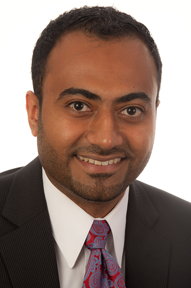
Dr. Abdullah Al Bahrani is an Assistant Professor of Economics at Northern Kentucky University,Abdullah al Bahrani where he serves as the Principles of Economics Coordinator.

Abdullah’s research interests are in the fields of Industrial Organization and Education of Economics. Currently, his primary focus is on innovative approaches to teaching Economics. In Industrial Organization, his research examines market structure and competition in the banking and real estate industries.

Prior to joining academia, Dr. Al Bahrani worked in the mortgage industry from 2003-2006. He has also served as outside economic consult to the Ministry of Education, Sultanate of Oman and new business ventures entering Oman.

Abdullah received his Ph.D. in Economics from the University of Kentucky in 2010, where he received an award for Best Economics Graduate Teaching Assistant.

His Master degree in Economic Theory was awarded by American University in Washington D.C. in 2003 and he earned a Bachelor of Science in Business Economics from the University of Louisville in 2002.

Influencers:

My parents are big advocates of education and they instil the value of education and the value of curiosity – Abdullah Al-Bahrani

Personal Habits:

Abdullah has a 5am start and gets to the gym most mornings. It is at the gym where Abdullah creates his to-do list, becomes super-organized and listens to Economic Rockstar!

On dealing with racial discrimination:

You roll up your sleeves and you keep on trying – Abdullah Al-Bahrani

Abdullah’s Philosophy and Affirmations:

Failure is the opportunity to begin again more intelligently

Click To Tweet

Failing in a business does not need to mean that you failed as a person – Abdullah Al-Bahrani

Click To Tweet

Whatever you do, allow your personality to shine – Abdullah Al-Bahrani

Click To Tweet

The thing that I appreciate is people that push the boundaries that create new paths – to me that’s what growth is – Abdullah Al-Bahrani

My philosophy is to embrace technology – Abdullah Al-Bahrani

Click To Tweet

Find Out:

  • why Abdullah decided to do a Phd in Economics in 2006 and left the mortgage industry just before it imploded.
  • about Abdullah’s economic consultancy work with the Sultanate of Oman.
  • about Abdullah’s connection when reviewing labor market studies in Oman (Hint: She is the Director General of the National Centre of Career Guidance and is as maternal to Abdullah as Oman as a country is to him).
  • how Oman are creating an entrepreneurial spirit to drive is economy in the future.
  • why Oman is faced with difficulties in transitioning to an entrepreneurial economy.
  • how Omani culture is preventing it’s people to take on risk and why incentives do not work.
  • about Abdullah’s suggestion that to create an entrepreneurial spirit in Oman, the labor market must first be liberalised.
  • how ‘Omanization’ has made it costly for foreign firms to set up subsidiaries in Oman.
  • why Omani’s are not hired by foreign firms setting up in Oman.
  • why discrimination exists in the Omani labor market and why US and UK ex-pats would be a preferred employee.
  • how data limitations for Oman make it difficult to conduct an empirical analysis of the labor market.
  • how labor market regulations in Oman is making it costly for firms to hire Omani’s.
  • about some economic indicators for Oman.
  • about Oman’s free trade agreements, the Gulf Corporation Council and the potential Oman offers.
  • about Oman’s tourism initiative to create Oman as an eco-friendly destination.
  • how Abdullah is integrating social media into the classroom, making education a more interactive and conducive learning environment for students.
  • about Abdullah’s clever way of using a students’ mobile phone in explaining the concept of a negative externality.
  • how to create a sense of community in a classroom.
  • why Abdullah received an Easter basket of goodies from a student’s mother.
  • why Abdullah is ‘helping his students to ‘clean’ their social media footprint.
  • how Abdullah encourages his students to connect with him on whatever platform they choose to use.
  • how using ESPN 30 for 30 to teach economics and to keep the economics student engaged.
  • how to teach economics with no math and no graphs.
  • about the research Abdullah is doing on racial discrimination in the labor market.
  • how Abdullah is identifying how racial discrimination is evident in online markets where, unlike traditional markets,  the color of your skin is not a factor.
  • if your last name prevent you from getting a loan, employment or from being priced out of a market.
  • how dropping a letter from your name can get you a job if you’re being racially discriminated against.
  • how Abdullah was racially discriminated against in both the labor market and when selling mortgage loans in the USA.
  • how Abdullah dealt with racial discrimination and how it gave him his Phd dissertation question.
  • how online price comparison websites may actually be anti-competitive.
  • how online stores are eating into the consumer surplus.

Economists:

In this interview, Abdullah mentions:

Darshak Patel, Kim Holder, Gary Becker, Steven Levitt, Stephen Dubnar, Frank Scott, Chris Bollinger and Gail Hoyt, Brandon Sheridan and Roland Fryer.

Economics:

In this interview, Abdullah mentions and discusses:

Labor market, incentives, entrepreneurship, small and medium sized enterprise, venture capital, unintended consequences, business cycle, unemployment, GDP per capita, trade agreements, indigenous industries, multinational companies, Gulf Corporation Council, tourism, factor endowments, negative externality, comparative advantage, search cost, marginal cost, competition and consumer surplus.

Papers:

  • Al-Bahrani, Abdullah and Darshak Patel (2014). Using ESPN 30 for 30 to Teach Economics. Southern Economic Journal. 81:3. 829-842.
  • Al-Bahrani, Abdullah. Competition in Online Markets: When Banks, Compete do Consumers Really Win? Journal of Housing Research. Forthcoming (Accepted October 2014).
  • Al-Bahrani, Abdullah and Darshak Patel (2015). Incorporating Twitter, Instagram and Facebook in Economics Classrooms. Journal of Economic Education. 44:1. 56-67.

Books:

  • The Color of Credit: Mortgage Discrimination, Research Methodology, and Fair-Lending Enforcement by Stephen Ross and John Yinger.
  • Chicago by Alaa Al-Aswani

Resources:

  • Twitter

Where to find Abdullah:

  • Twitter: @teach_econ
  • Website: www.teach-econ.com


http://traffic.libsyn.com/economicrockstar/033_Abdullah_Al_Bahrani_Final.mp3

Podcast: Play in new window | Download

029: John Cochrane on the Future of Finance, MOOC Education, Regulation and the Case for Free Markets

April 22, 2015 by Frank

http://traffic.libsyn.com/economicrockstar/029_John_Cochrane_Final.mp3
Play in New WindowDownload

029: John Cochrane on the Future of Finance, MOOC Education, Regulation and the Case for Free Markets

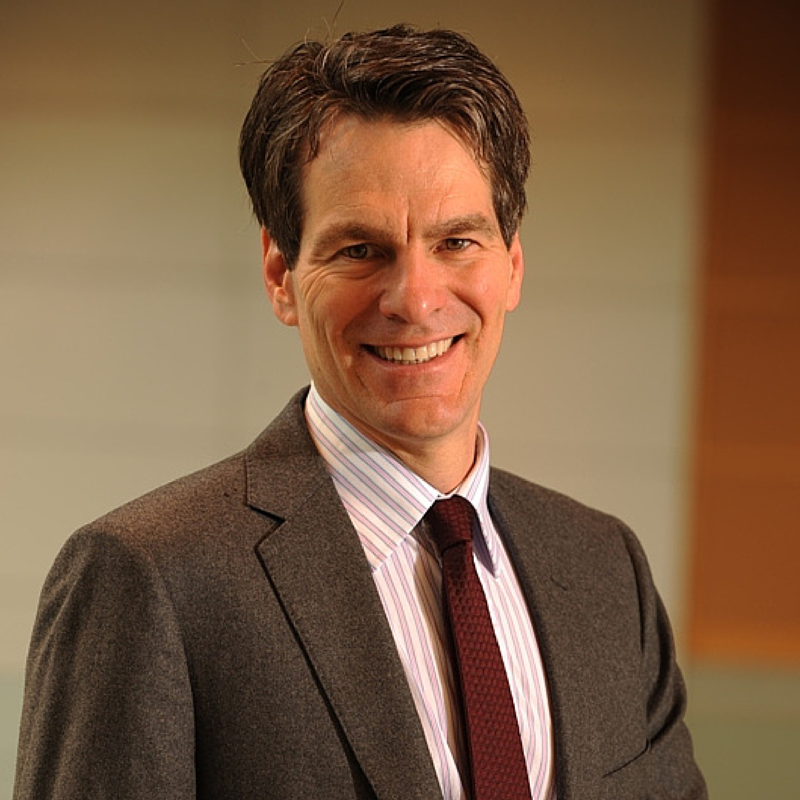
John Cochrane is the AQR Capital Management Distinguished Service Professor of Finance at the University of Chicago Booth School of Business and is currently Senior Fellow at the Hoover Institution.

Professor Cochrane is a Research Associate of the National Bureau of Economic Research and past director of its asset pricing program, and an Adjunct Scholar of the CATO institute.

John is past President and Fellow of the American Finance Association, and a Fellow of the Econometric Society. He has been an Editor of the Journal of Political Economy, and associate editor of several journals including the Journal of Monetary Economics.

John’s is the author of 3 books including the book Asset Pricing. Other  finance publications include articles on stock and bond markets, exchange rates, interest rates, liquidity premiums and option pricing.

John’s monetary economics publications include articles on the relationship between deficits and inflation, the effects of monetary policy, and on the fiscal theory of the price level.

John currently teaches the MBA class Advanced Investments and a variety of PhD classes in Asset Pricing and Monetary Economics.

John earned a Bachelor’s degree in Physics at MIT, and earned his Ph.D. in Economics at the University of California at Berkeley.

In addition to research and teaching, John is a competitive sailplane pilot and windsurfs.

John blogs as ‘The Grumpy Economist’.

Find Out:

  • why Professor Cochrane is known as the Grumpy Economist.
  • about John’s Proposed New Structure for US Debt.
  • how to create financial stability with a currency fit for the 21st century.
  • about the advantages of government debt.
  • what happened when Ireland guaranteed the bondholders and entered into a bailout.
  • the limitations to a eurozone country when faced with a bailout.
  • why countries should be allowed to act like companies and default.
  • why Greece should have defaulted and why Ireland should not have bailed out the bondholders.
  • about Professor Cochrane competing in the World Gliding Championship for the USA.
  • why Professor Cochrane delivered his Asset Pricing PhD course as a MOOC.
  • the costs and benefits of delivering a MOOC.
  • how MOOCs will become the textbook of the future.
  • how to monetize a MOOC and which type of course would have mass market appeal.
  • Ireland’s aim to become the capital of MOOCs.
  • how to create a social environment for students using MOOCs.
  • why Professor Cochrane went from a degree in physics to a PhD in Economics.
  • why people are stuck in the welfare system.
  • about the over-regulated US economy that restricts the development of competitive markets.
  • how Uber gave supply-side competition in the US taxi market.
  • what should be done to the US healthcare industry which is protected from competition.
  • if the US Federal Reserve should end its monopoly on the dollar and allow other currencies, such as Bitcoin, compete.
  • about the unique feature of US government debt – it cannot default!
  • who are Professor Cochrane’s heroes due to their no bullshit approach to research.
  • why the the 2008 financial crisis was proof that the efficient market hypothesis works.
  • what annoys Professor Cochrane.

Influencers:

  • University of California: George Akerlof, Roger Crane, Jim Pearce and Tom Roffenburg.
  • University of Chicago: Robert Lucas, Lars Hansen, Gene Fama, Ed Prescott and Tom Sargeant.

Defining Moment

A professor was showing an economics class that John attended in which he explained, using the Budget Constraint, why people are stuck in welfare. Up to that point, John had read that it was due to people being lazy or that it was due to moral, sociology or cultural. However, the analysis showed that any normal person who was stuck below an income threshold and receiving benefits would not welcome a moderate pay rise as they would lose entitlements.

Here was a value-free, and ethics-free, a morality-free discussion of a social problem that showed exactly where it came from, exactly how to fix it, exactly how the perverse design of the well-intentioned welfare was causing people to get stuck. That was my conversion moment.

Economics:

In this interview, John mentions and discusses: Asset Pricing, unintended consequences, free markets, incentives, budget constraints, welfare, competition, supply-side competition, regulation, monopoly, natural monopoly, bitcoin, debt, default, Gold Standard, fractals and efficient market hypothesis.

Economists:

In this interview, John mentions and discusses: George Akerlof, Roger Crane, Jim Pearce, Tom Roffenburg, Robert Lucas, Lars Hansen, Eugene Fama, Ed Prescott, Tom Sargeant, Benoit Mandlebrot

“What makes free markets work is the discipline of competition, of the ability of new entrants to come in and disrupt things” – Professor Cochrane.

“Regulation is stifling the ability of  new people with great ideas, with cost control ideas to come in and make healthcare both better and a lot cheaper” – Professor Cochrane.

The Future of Finance:

Professor Cochrane likens the financial crisis as a ‘good old-fashioned’ run on the banks. Twenty years ago, the world economy developed ‘electronic interest-paying money’. Most of the financial system uses overnight repurchase agreements, money market funds and short-term government bonds. These became very liquid and have been prone to runs just like bank notes. For financial stability, the crucial thing is to get away from this run-prone system.

John proposed that governments should provide interest-paying electronic money that will not experience a run in the 21st Century. This would look something like a money-market fund. It will always be worth $1, pays interest and will always be electronically transferable. Financial stability would be achieved and we would have more efficient payments.

On Ireland Bailing Out All Depositors

Irish banks took a lot of German deposits and invested them in US sub-prime mortgages. The money passed through Ireland and it’s not quiet clear why the taxpayers of Ireland who footed the bill for that. Why couldn’t the depositors from Germany lost a little bit of their money along the way. That would have seemed to make sense. Cyprus and Iceland made their depositors take haircuts.

When you’re a small country with an open banking system, the model of the government who bails out all depositors including foreign depositors is not one that can go on. That’s a troublesome system. Ireland maybe regretting bailing out all of the depositors in the process.

Since Ireland is part of the EU and the eurozone, it cannot print money to bailout people. Government debt in that situation becomes private debt. Ireland would not be in as much trouble if it didn’t bailout the depositors in its bank.

Greece certainly should have just defaulted the way a company defaults. If a company defaults on its debt it doesn’t have to leave the eurozone, so why shouldn’t countries become like companies.

MOOCs: The Future but Not a Substitute for Formal Education

Professor Cochrane delivered his PhD class ‘Asset Pricing’ as a MOOC. He felt that such ‘cut and dry’ material would be easier to get started with, particularly when he also had a book of the same name, rather than a more discussion-based empirical class. There were numerous challenges along the way. “It turned out being a lot more work than I thought it was going to be but it also turned out very rewarding”. It allows Professor Cochrane to leverage his delivery going from teaching 20 students to upward of thousands of students.

MOOC

Like any new technology, there are lots of unanticipated ways in which it can be used, unanticipated markets that are going to find it that nobody thought about it how that was going to work out. MOOCs were originally intended to deliver ‘introductory-type’ classes which would have mass appeal. However, John believes that the way forward for MOOCs is in the delivery of ‘distinctive-type’ classes where the class is more specialised and in greater variety.

Creating a MOOC can be costly in terms of time, resources and the infrastructure that needs to be built to deliver the course. “Like all technology, if you’ve ever made a webpage, it has a high fixed cost but low marginal cost.” The secret to putting a MOOC together is it has a high fixed cost to put it together. Creating the video content for lectures is easy. It’s putting together the significant typo-free problem sets and other materials like that that’s hard. But once the MOOC is done, it is scalable in terms of multiple years and to a lot of people.

Professor Cochrane views MOOCs as a way of creating a ‘flipped classroom’. They will not be a substitute for formal education but one of the ways that MOOCs will develop into is that they will become the modern textbook. “The MOOC is a self-contained class outside the university but it’s a textbook for my classroom”. Professor Cochrane’s Asset Pricing class at Stanford is a much less formal experience due to the flipped nature of his classroom.

MOOCs have allowed his students to review the material and answer the questions in his series of videos before they arrive to class. Subsequently, Professor Cochrane can deliver more advanced material, as well as have an in-dept discussion on the material the student reviewed on his MOOC. The class becomes a much more rewarding, personal, interactive experience.

MOOCs will be beneficial to the university in so far as creating a brand so as to attract more students to attend. Being online with a MOOC will be useful for the university to connect with their alumni who may be interested in doing an executive education. The MOOC will be paid for indirectly by attracting people into the executive programmes since the flipped classroom model would work very well for this cohort of people.

The social environment of the class turns out to be very important to getting people to stick with the course on MOOC. MOOCs need to move from its current form to a version “2.0 Social Internet and to re-create that social structure that gets people going. The next round of MOOC will need to integrate social media so that the learning experience becomes part of a community of students just like it is on campus”.

How to Create a Social Environment for Students on MOOCs

  • Scheduled classes so that students attend together.
  • Discussion forums where students are encouraged to participate after the class.
  • Weekly Google Hangouts

http://youtu.be/U5CfYQw4X7k

How Similar the Study of Physics is to Economics

Physics teaches you quantitative analysis as well as modelling.

There is some truth in the physics joke: “Physics is the study of massless elephants going down a frictionless sandpaper”. You have to find the elements of a problem, simplify it down to what’s solvable and intuit how it works, not only mathematical. It’s about the intuition of seeing something work and describing it mathematically.

Economics is similar to undergraduate physics – everything before Quantum Theory. If you’re good at mechanics and electricity of magnetism, then that structure is what’s behind economics and you should be equally good at economics. You will also be good at the modelling part of economics which is all about throwing out all the real-world details that don’t really matter to a particular problem. If the mass of the elephant wasn’t particularly important to that problem, then just assume the mass of sumables. That’s the key to economics.

Economics is full of quantitative parables and you have to make them vivid by making them simple and clear. And then understanding intuitively how to put the pieces together.

On discovering economics, Professor Cochrane believed that he could use the tools of Physics to understand all the hard social problems that everybody is fighting and getting so excited about in a value-free way.

On Bitcoin:

“The design of Bitcoin is fundamentally flawed. We have lost anonymity. That worries me for political reasons as well as economic reasons”. Anything that is done electronically, then the National Security Administration knows what you bought if you use your credit card. Cash allows you to do things anonymously. “Bitcoin promised anonymity but didn’t really deliver it in the first place.”

Bitcoin is based on the Gold Standard model where we need a fixed supply of something rather than a steady price of something.

Where to Find John Cochrane:

  • Website: The Grumpy Economist
  • Faculty Page: Chicago Booth
  • MOOC: Asset Pricing

The Grumpy Economist

http://traffic.libsyn.com/economicrockstar/029_John_Cochrane_Final.mp3

Podcast: Play in new window | Download

Frank Conway

Frank Conway is founder of Economic Rockstar and lecturer of economics, finance and statistics. Read More…

View My Blog Posts

Youtube Sub

Become a Patron of the Economic Rockstar Podcast

patreon

Ireland’s Economy by the Numbers

Leaving Cert Economics: Ireland’s Economy  Click here to download a workbook on Ireland’s Economy so that you can add your own notes. [Original size] Ireland’s Economy by fconway

Categories

Subscribe and Never Miss An Episode

itunes-logo

Recent Posts

  • Ireland’s Economy by the Numbers April 8, 2019
  • 174: Wendy Carlin on The Core Project, Capitalism, Democracy and Normative Statements February 13, 2019
  • 173: Stephen Wright on Core Econ as a Learning Resource for Mainstream Economics January 28, 2019
  • 172: Best of 2018 Part 2: From the Great Depression to Futurism; Institutions, Individualism, Cooperation and Reciprocity January 22, 2019
  • 171: Best of 2018 Part 1 January 3, 2019

Copyright © 2026 · Podcast Pro Theme on Genesis Framework · WordPress · Log in

This website uses cookies to improve your experience. We'll assume you're ok with this, but you can opt-out if you wish. Accept Reject Read More
Privacy Policy

Privacy Overview

This website uses cookies to improve your experience while you navigate through the website. Out of these, the cookies that are categorized as necessary are stored on your browser as they are essential for the working of basic functionalities of the website. We also use third-party cookies that help us analyze and understand how you use this website. These cookies will be stored in your browser only with your consent. You also have the option to opt-out of these cookies. But opting out of some of these cookies may affect your browsing experience.
Necessary
Always Enabled
Necessary cookies are absolutely essential for the website to function properly. This category only includes cookies that ensures basic functionalities and security features of the website. These cookies do not store any personal information.
Non-necessary
Any cookies that may not be particularly necessary for the website to function and is used specifically to collect user personal data via analytics, ads, other embedded contents are termed as non-necessary cookies. It is mandatory to procure user consent prior to running these cookies on your website.
SAVE & ACCEPT