• ABOUT
  • RESOURCES
  • PODCAST
  • BOOKS
  • BLOG
  • SUPPORTERS
  • QFA Financial Advice
  • CONTACT

Economic Rockstar

Connecting Brilliant Minds in Economics and Finance

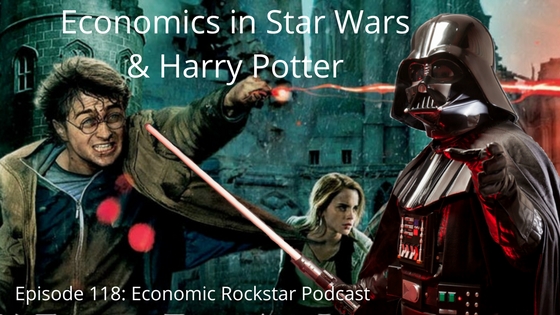
118: Zachary Feinstein on Systemic Risk and Economics in Star Wars and Harry Potter

December 30, 2016 by Frank

http://traffic.libsyn.com/economicrockstar/118_Zachery_Feinstein_Final.mp3
Play in New WindowDownload

118: Zachary Feinstein on Systemic Risk and Economics in Star Wars and Harry Potter

Zachary Feinstein is Professor joined the Preston M. Green Department of Electrical & Systems Engineering at Washington University in St. Louis in 2014.

While earning a doctorate at Princeton University, Zachary supervised the senior thesis-writing group and assisted in teaching several courses.

Previously, he conducted research at Hunan University in China and was an intern at Millennium Partners LP and Lehman Brothers Inc., both in New York City.

Professor Feinstein works in the broad fields of operations research and financial engineering and he heads The Operations Research and Financial Engineering Laboratory Washington University.

His research focus has been on the applications of set-optimization to financial risk measurement, with projects studying and defining dynamic risk measures in markets with transaction costs and measures of systemic risk.

You can find Professor Feinstein’s work on Star Wars and more at www.fictionomics.com.

On Systemic Crises and Contagion:

“This is something that comes up very regularly in modern economic history. And really it’s something that we talk about it for a year after the crisis and then we forget to think that this is a problem. So by bringing it up in Star Wars and by bringing it up in Harry Potter we can keep this in the public consciousness.” Professor Zachary Feinstein.

Economics:

In this episode, Zachary discusses and mentions: systemic risk, contagion, world GDP, Gross World Product, Gross Galactic Product (GGP), interstellar travel, economic stagnation, financial deregulation, resources, scarcity, bailout, bank failures, TARP, moral hazard and the Glass-Steagall Act.

In this Episode, you will Learn:

  • about the petition to White House to build the Death Star.
  • how the Death Star would cost $193 quintillion to build and World GDP is $70 trillion.
  • about how Professor Feinstein used the Manhattan Project to build the first Atomic Bomb as a proxy to calculate the cost of the second Death Star.
  • why people would go back to authoritarian rule like The First Order (economic depression).
  • how economic growth is linked to population growth.
  • what happens in a systemic crisis if it’s generated by currency exchanges.
  • the Economic System in the Star Wars Galaxy.
  • the systemic risk imposed by the Gringotts Bank in the Harry Potter series.
  • and much much more.

Movies/TV Series Mentioned in this Episode:

  • The Clone Wars
  • Rogue One
  • Star Wars: The Force Awakens
  • Star Wars: The Empire Strikes Back
  • Star Wars: Return of the Jedi
  • Harry Potter and the Cursed Child
  • Lord of The Rings: The Fellowship of the Ring
  • Game of Thrones
  • Sharknado
  • Back to the Future
  • Doctor Who

Writing Tips:

Just write it down. Get something on page and then afterward you can mark it up in red as much as you want. Don’t worry about getting the right sentence down, just get something on the page and then move it all around. Mark it up. Completely delete it if you want. But once it’s on the page, it’s much easier to move forward than worrying about the perfect sentence to start – Professor Zachary Feinstein.

Academic Papers:

  • Feinstein, Z. (2015). It’s a Trap: Emperor Palpatine’s Poison Pill. Washington University.
  • Other academic papers by Professor Zachery Feinstein.

Links:

  • Petition to White House to build the Death Star
  • Rogue One and Building the Death Star by Zachary Feinstein
  • Thoughts on the Operational Costs of the Death Star by Zachary Feinstein
  • The economics of Star Wars: How the Empire collapses by Erika Ebsworth-Goold
  • Harry Potter and the Goblin Bank of Gringotts by Zachary Feinstein
  • Harry Potter and the Economic Catastrophe: The Rise of Voldemort by Zachary Feinstein
  • Sharknado: The Deficit Spending We Need by Zachary Feinstein

Books:

  • Foundation by Isaac Asimov
  • Foundation and Empire by Isaac Asimov
  • Second Foundation by Isaac Asimov
  • Anathem byNeal Stephenson
  • Cryptomicon by Neal Stephenson
  • The Diamond Age by Neal Stephenson
  • Harry Potter and the Cursed Child by J. K. Rowling

http://traffic.libsyn.com/economicrockstar/118_Zachery_Feinstein_Final.mp3

Podcast: Play in new window | Download

040: Rebecca Harding on Trade Finance and How Delta Economics Can Help Identify Growth Opportunities World-wide

July 8, 2015 by Frank

http://traffic.libsyn.com/economicrockstar/040_Rebecca_Harding_Final.mp3
Play in New WindowDownload

040: Rebecca Harding on Trade Finance and How Delta Economics Can Help Identify Growth Opportunities World-wide

Dr Rebecca Harding is CEO of Delta Economics, which specialises in the area of Trade Finance. Rebecca is an independent economistRebecca Harding with an extensive background in modelling economic growth, trade, productivity, innovation and enterprise.

Rebecca is the author of nine books and has written over 250 articles on economic issues. She has held senior positions in leading academic, think-tank and corporate organisations, including roles at the London Business School, Deloitte and the Work Foundation.

Rebecca has advised the European Union and regional governments and agencies in the UK and Germany on innovation and enterprise policy.

Rebecca is a Board Member of the Society of Business Economists and a Board Member and Trustee of the German British Forum. In 2013, she was elected as a national representative of the European Movement UK.

Rebecca holds a BA in Economics and German and an MSc and PhD in the economics of Science and Innovation from the University of Sussex and writes on her blog rebeccanomics.com.

How Rebecca First Discovered Economics:

Rebecca was taught economics as a kid by her father who was a sociologist. “An economist who’s taught by a sociologist is quite an unusual thing. He started off with the fundamental principle that economics is wrong because people aren’t rational. So the first lesson in economics I had was my father telling me that the subject was wrong”.

I have a very eclectic background. I was taught by a sociologist. Some of my big influences when I was in university were in geopolitics and international relations. I’ve done a lot of political science and a lot of philosophy as well. And then, of course, I have an economics, mathematics and language background. So I’m a bit weird. I call myself a hybrid.

Find Out:

  • about Dr Harding’s company DeltaEconomics.
  • about the data used by DeltaEconomics and why it has developed its database of statistics.
  • what is Trade Finance and how it has experienced phenomenal growth in recent years.
  • how companies bridge the finance gap between the time they export goods to the time they receive payment.
  • what the challenges are with long-term growth in trade.
  • if there are inherent risks associated with the trade finance market as more sophisticated derivative and credit markets emerge.
  • about the inherent risks that may appear in the derivatives markets for trade finance.
  • if a market collapse could be the outcome of a non-compliant and unregulated trade finance securities market.
  • if could an implosion in trade finance is possible with large defaults in payments due mainly to the development of a derivatives and securities market.
  • if sovereign risk will become prominent if trade finance risk increases.
  • if enough data exists for trade finance to allow it to mature into a fully functioning wholesale and derivatives market.
  • about some risks to the global supply chain.
  • about the pioneers of innovation and productivity in economic theory.
  • how productivity and trade finance could be correlated.

Economics:

In this interview, Rebecca mentions and discusses: trade finance, credit, exports, growth, derivatives, securitisation, risk aversion, sovereign risk, business risk, contagion, commodities, inflation, fiscal policy, monetary policy, foreign direct investment, demographics, innovation and total factor productivity.

Economists:

In this interview, Rebecca mentions and discusses: Joseph Schumpeter, Christopher Freeman, Carlota Perez, J. K. Galbraith and Frances Coppola.

Influencers:

Karl Marx, Christopher Freeman, Carlota Perez, Joseph Schumpeter, J. K. Galbraith,

On Delta Economics:

“For trade data, it’s the best platform in the world – it’s corrected, it’s clean, it’s comprehensive and it covers continents like Africa all on one platform. It gives clients information on what the trading opportunities are” – Rebecca Harding, CEO of Delta Economics.

“We view the world from a trade perspective. Trade is important because it’s how businesses interact with one another.”

Delta Economics – It’s macroeconomic big data! – Rebecca Harding

Click To Tweet

What we’ve done is pioneer the way in which big data is used in economics – Rebecca Harding

Click To Tweet

What is Trade Finance?

Trade Finance is everything that drives trade itself. From a financial perspective, if you look at the value of world trade, about 80% of that is financed by banks or backed up by big insurance companies or finance through export credit agencies. It’s a huge market and grew very quickly in the from 2000 to 2007. The reason being was due to emerging markets entering into global trade in a very much aggressive way. Banks saw huge opportunities for financing trade.

Essentially, if you are trading with another company in another country, then what you need is some kind of bridging finance between the gap from when you put your goods onto a ship or an aeroplane and when it’s received by the person in the other country and paid for. So what this company needs is some kind of financing gap between those two points. That’s what trade finance is.

By including trade finance data into forecasting, you get much more accurate forecasts as to what’s going to happen to trade. In 2007, there was a tightening of credit available to businesses since the credit in the financial markets of developed countries had locked up. Subsequently, much of the trade finance went to emerging Asia and emerging Latin America and financed huge growth there.

The whole Trade Finance market is largely driven through very large finance houses such as JP Morgan, HSBC, Barclays, Bank of America, Merrill Lynch and BNP Paribas. These very big global banks are the ones that are involved on a day-to-day basis with the trade-receivables, the credit lines, the letters of credit, the open account and the working capital.

What’s also interesting about Trade Finance is that you also have quasi-government agencies and export credit agencies, which are part of the private sector and which are sometimes supported by the public sector. There is also a massive insurance market and legal sector attached to it. With such growth in the Trade Finance market, there is interest now coming from private sector private equity companies who see an opportunity to buy the debt and securitise it and actually use it as an asset class. What Delta Economics also do is it allows the data user to understand trade finance as an asset class. Companies can securitise the debt and trade that securitisation. The derivatives market will be an important component of this.

The Trade Finance market is estimated to be worth $7.4 trillion annually. There are many companies , like Lloyds, who will be putting security behind the money they are backing up.

It was seen as a way of fuelling long-term economic growth through trade.

Data Sources Mentioned in this Episode:

  • Delta Economics
  • UN Comtrade
  • IMF Direction of Trade Statistics

Recommended Books:

  • As Time Goes by: From the Industrial Revolutions to the Information Revolution by Christopher Freeman

Where to Find Rebecca Harding:

  • Twitter: @RebeccaDelta
  • LinkedIn: Rebecca Harding
  • Blog: www.rebeccanomics.com
  • Website: www.deltaeconomics.com
http://traffic.libsyn.com/economicrockstar/040_Rebecca_Harding_Final.mp3

Podcast: Play in new window | Download

Frank Conway

Frank Conway is founder of Economic Rockstar and lecturer of economics, finance and statistics. Read More…

View My Blog Posts

Youtube Sub

Become a Patron of the Economic Rockstar Podcast

patreon

Ireland’s Economy by the Numbers

Leaving Cert Economics: Ireland’s Economy  Click here to download a workbook on Ireland’s Economy so that you can add your own notes. [Original size] Ireland’s Economy by fconway

Categories

Subscribe and Never Miss An Episode

itunes-logo

Recent Posts

  • Ireland’s Economy by the Numbers April 8, 2019
  • 174: Wendy Carlin on The Core Project, Capitalism, Democracy and Normative Statements February 13, 2019
  • 173: Stephen Wright on Core Econ as a Learning Resource for Mainstream Economics January 28, 2019
  • 172: Best of 2018 Part 2: From the Great Depression to Futurism; Institutions, Individualism, Cooperation and Reciprocity January 22, 2019
  • 171: Best of 2018 Part 1 January 3, 2019

Copyright © 2026 · Podcast Pro Theme on Genesis Framework · WordPress · Log in

This website uses cookies to improve your experience. We'll assume you're ok with this, but you can opt-out if you wish. Accept Reject Read More
Privacy Policy

Privacy Overview

This website uses cookies to improve your experience while you navigate through the website. Out of these, the cookies that are categorized as necessary are stored on your browser as they are essential for the working of basic functionalities of the website. We also use third-party cookies that help us analyze and understand how you use this website. These cookies will be stored in your browser only with your consent. You also have the option to opt-out of these cookies. But opting out of some of these cookies may affect your browsing experience.
Necessary
Always Enabled
Necessary cookies are absolutely essential for the website to function properly. This category only includes cookies that ensures basic functionalities and security features of the website. These cookies do not store any personal information.
Non-necessary
Any cookies that may not be particularly necessary for the website to function and is used specifically to collect user personal data via analytics, ads, other embedded contents are termed as non-necessary cookies. It is mandatory to procure user consent prior to running these cookies on your website.
SAVE & ACCEPT