• ABOUT
  • RESOURCES
  • PODCAST
  • BOOKS
  • BLOG
  • SUPPORTERS
  • QFA Financial Advice
  • CONTACT

Economic Rockstar

Connecting Brilliant Minds in Economics and Finance

038: Leah Bell on Being an Angry Grad and Setting Yourself Up for a Life of Success

June 25, 2015 by Frank

http://traffic.libsyn.com/economicrockstar/038_Leah_Bell_Final.mp3
Play in New WindowDownload

038: Leah Bell on Being an Angry Grad and Setting Yourself Up for a Life of Success

Leah BellLeah Bell spent tens of thousands of dollars on a college education for a degree in Education with the same hope of getting a job one day.  After struggling to find a teaching job as an Elementary school teacher, Leah had to work at a minimum part-time job to supplement her teaching salary. However, the school closed and she lost her job. Leah took on a job related to sales. But after a few years she realized that she wanted nothing more than to stay at home with her son. But with student debt and rising prices, it was extremely difficult on one income.

Leah Bell learned the most about life, not in the classrooms of the colleges she attended, but in the years following. After realizing the struggle in the job market, the difficulty of paying off student loans, and the heartbreak of sacrificing priceless time with family to meet financial needs, she and her husband have devoted their lives to sparing people of this depressing fate through their company Neotrep™, providing entrepreneurs with affordable education and tools to succeed. She recently wrote the book The Angry Grad to help prospective students and recent graduates choose the route of entrepreneurship instead of the unstable job world.

Economics:

Mortgage, student loan, debt, competition, labor, happiness, tax and return on investment.

Economics and finance suddenly became personal. It became emotional and, at that time, I became interested in it because it’s not just about numbers. I want people to get their finances under control so they can have a better life and give their children a better life – Leah Bell.

Economists:

Paul Dolan and John Gathergood.

Influencer:

Robert Kiyosaki

Takeaway:

“Always be asking questions, always be willing to learn and take advantage of all of the resources that are out there” – Leah Bell.

Find Out:

  • what is the average student debt?
  • how a college degree is different today than it was just two or three decades ago.
  • why it’s so difficult for college graduates to find jobs and pay back their student loans.
  • how the future will look if we continue teaching young people that debt is the only way to afford a house, a car and an education.
  • what other options are there for people who are considering an education.
  • how debt is not the only way to get through college.
  • if we are paying more for college than we can hope to get back.
  • if it’s still worth taking on so much debt to get a degree.
  • if we’re living in a school loan debt bubble.
  • what we can do about all this?

The Disillusioned Student

High-school students are being blind-sided and do not truly understand the debt that they will accumulate while attending college. Educators and college and career guidance counsellors are failing high-school students by only providing a one-sided argument to going to college. They emphasise the pros of going to college and, in most cases, fail to disclose the cons of going to college in terms of the costs, term loans and the interest repayments. Educators prepare high-school students for college in terms of the grades but lack the financial planning required by the student and their parents.

Typically, a $30,000 loan, which is approximately the average student debt in the US, will amount to $60,000 in capital and interest repayments over the life the loan. However, in many cases, students fail to meet these repayments which equate to upward of $1,000 per month. Consequently, the loan becomes structured to suit the needs of the graduate by acknowledging their current income status and the number of children they may have.

People are putting life events on hold because of the amount of debt they are in – Leah Bell.

Many graduates have become disillusioned with the education system in terms of the costs and the likelihood of repaying it with jobs that do not exist for the training and preparation that they had done at college. For example, teachers are supplementing their teaching salary (if they have a teaching job that is) with a second income earned at shoe stores and restaurants.

By the time students plan to have their entire loan paid off, their going to have double maybe triple the total amount that they originally took out – Leah Bell.

Unfortunately, parents do not understand the reality of the situation. When they themselves were graduating from college, they typically did well relative to those who didn’t attend. Then, jobs weren’t competitive but today, almost everyone has a college degree and finding a job is so much greater than it was then. Now, you need a masters degree to be competitive.

Since there is a demand for college places and lenders are willing to give education loans, colleges  can charge whatever they want. Colleges are aware of this and are raising their rates to astronomical levels. Colleges too are borrowing to finance the development of their campus and their sports and recreational facilities. Football stadiums are being built to professional standards and who best to service this debt than the incoming college students who are paying the ever-increasing fees.

Students are paying more for a college experience than for a college education – Leah Bell

“The college experience is setting up people to fail”. Unless you’re going to college for an engineering degree or something in computer science or physics, something math or science heavy, those are the jobs that you make a decent amount coming out of college. But not everyone fits this mould. Some want to do something in education, social science, music, photography or the arts. Those, however, are on the lower end of the pay scale.

Quotes by Leah Bell on the Economic Rockstar podcast:

“We’re living a very different life than the one we were expecting” – Leah Bell.

“The highest taxed person is the employee” – Leah Bell.

“Why people are encouraged to go to college and get a job is just for the tax reasons” – Leah Bell.

“Set yourself up for a life of success” – Leah Bell.

Click To Tweet

If you can just discipline yourself enough to sit down and learn and go out and try things and be willing to fail and get back up again, you can do anything – Leah Bell.

You’re capped out at your salary and your employer is using your strengths to become really wealthy. What upsets me is people don’t look inside themselves and see all the potential they have and what they can do for themselves – Leah Bell.

“There is no limit to what you can do. No-one is limiting you” – Leah Bell.

Click To Tweet

“I feel that when I wrote this book, I was writing it to myself 12 years ago” – Leah Bell.

Get off your butt. Get some confidence. Do things different. Step out of the box and be different. Don’t be what everyone’s telling you you have to be – Leah Bell.

“The only person that will ever hold you back is you” – Leah Bell.

Click To Tweet

I deal with doubts every single day – whether or not I can do what I wan to do. Do I have enough time in the day? Am I good enough to do it? That’s so natural – Leah Bell.

There’s no one in the world that has not failed except for the people who don’t try. And the people who don’t try never succeed because they never try to get to the point of success – Leah Bell.

“A winner never quits and a quitter never wins” – Napoleon Hill

Click To Tweet

Blogs Mentioned in this Episode:

  • www.neotrep.com by Leah and Walt Bell
  • www.theangrygrad.com by Leah Bell
  • www.smartpassiveincome.com by Pat Flynn
  • www.flippedlifestyle.com by Shane and Jocelyn Sams

Podcast Episodes Mentioned in this Episode:

  • SPI 122 : From Teachers to Totally Rocking it Online – Shane and Jocelyn Sams Share their Success Story – Smart Passive Income.
  • 007: Ryan Blair – Gangster turned Millionaire on Decision-Making, Game Theory and Incentives – Economic Rockstar.

Recommended Books:

  • The Angry Grad: Your Guide to Student Loans, a Struggling Economy, and Becoming Your Own Boss by Leah Bell
  • Spirit of Apollo by Sidney Newton Bremer
  • The 4-Hour Workweek by Tim Ferriss
  • Nothing to Lose, Everything to Gain: How I Went from Gang Member to Multimillionaire Entrepreneur by Ryan Blair 
  • Rich Dad Poor Dad: What the Rich Teach Their Kids About Money That the Poor and Middle Class Do Not! by Robert Kiyosaki 

Music:

It’s Not Right For You by The Script

This song inspired Leah during the writing of her book The Angry Grad.

Where to Find Leah Bell:

  • Twitter: @AngryGradBook
  • Facebook: The Angry Grad
  • Website: www.theangrygrad.com
http://traffic.libsyn.com/economicrockstar/038_Leah_Bell_Final.mp3

Podcast: Play in new window | Download
029: John Cochrane on the Future of Finance, MOOC Education, Regulation and the Case for Free Markets

April 22, 2015 by Frank

http://traffic.libsyn.com/economicrockstar/029_John_Cochrane_Final.mp3
Play in New WindowDownload

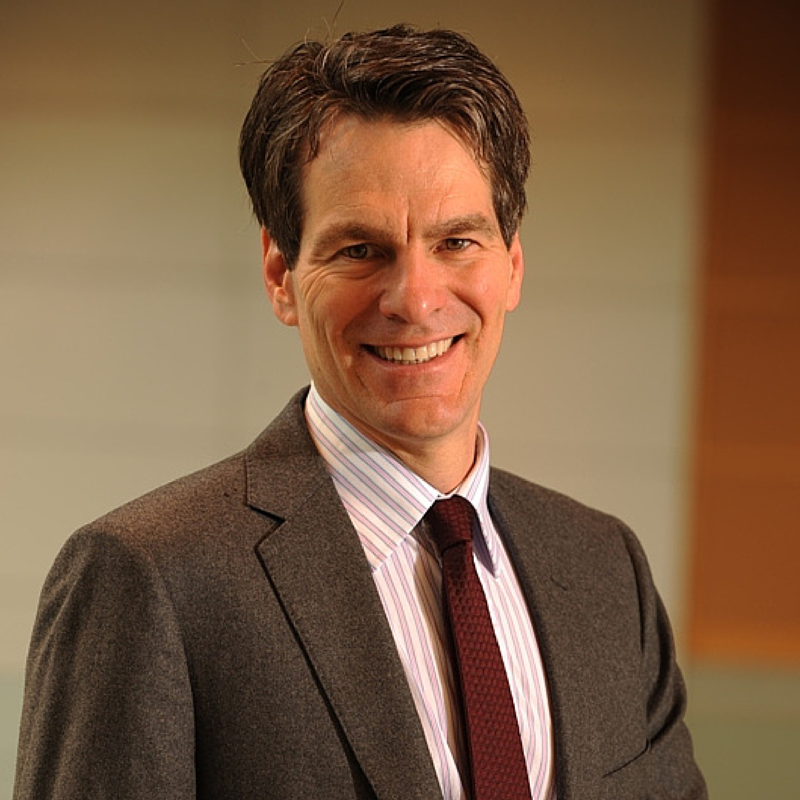
029: John Cochrane on the Future of Finance, MOOC Education, Regulation and the Case for Free Markets

John Cochrane is the AQR Capital Management Distinguished Service Professor of Finance at the University of Chicago Booth School of Business and is currently Senior Fellow at the Hoover Institution.

Professor Cochrane is a Research Associate of the National Bureau of Economic Research and past director of its asset pricing program, and an Adjunct Scholar of the CATO institute.

John is past President and Fellow of the American Finance Association, and a Fellow of the Econometric Society. He has been an Editor of the Journal of Political Economy, and associate editor of several journals including the Journal of Monetary Economics.

John’s is the author of 3 books including the book Asset Pricing. Other  finance publications include articles on stock and bond markets, exchange rates, interest rates, liquidity premiums and option pricing.

John’s monetary economics publications include articles on the relationship between deficits and inflation, the effects of monetary policy, and on the fiscal theory of the price level.

John currently teaches the MBA class Advanced Investments and a variety of PhD classes in Asset Pricing and Monetary Economics.

John earned a Bachelor’s degree in Physics at MIT, and earned his Ph.D. in Economics at the University of California at Berkeley.

In addition to research and teaching, John is a competitive sailplane pilot and windsurfs.

John blogs as ‘The Grumpy Economist’.

Find Out:

  • why Professor Cochrane is known as the Grumpy Economist.
  • about John’s Proposed New Structure for US Debt.
  • how to create financial stability with a currency fit for the 21st century.
  • about the advantages of government debt.
  • what happened when Ireland guaranteed the bondholders and entered into a bailout.
  • the limitations to a eurozone country when faced with a bailout.
  • why countries should be allowed to act like companies and default.
  • why Greece should have defaulted and why Ireland should not have bailed out the bondholders.
  • about Professor Cochrane competing in the World Gliding Championship for the USA.
  • why Professor Cochrane delivered his Asset Pricing PhD course as a MOOC.
  • the costs and benefits of delivering a MOOC.
  • how MOOCs will become the textbook of the future.
  • how to monetize a MOOC and which type of course would have mass market appeal.
  • Ireland’s aim to become the capital of MOOCs.
  • how to create a social environment for students using MOOCs.
  • why Professor Cochrane went from a degree in physics to a PhD in Economics.
  • why people are stuck in the welfare system.
  • about the over-regulated US economy that restricts the development of competitive markets.
  • how Uber gave supply-side competition in the US taxi market.
  • what should be done to the US healthcare industry which is protected from competition.
  • if the US Federal Reserve should end its monopoly on the dollar and allow other currencies, such as Bitcoin, compete.
  • about the unique feature of US government debt – it cannot default!
  • who are Professor Cochrane’s heroes due to their no bullshit approach to research.
  • why the the 2008 financial crisis was proof that the efficient market hypothesis works.
  • what annoys Professor Cochrane.

Influencers:

  • University of California: George Akerlof, Roger Crane, Jim Pearce and Tom Roffenburg.
  • University of Chicago: Robert Lucas, Lars Hansen, Gene Fama, Ed Prescott and Tom Sargeant.

Defining Moment

A professor was showing an economics class that John attended in which he explained, using the Budget Constraint, why people are stuck in welfare. Up to that point, John had read that it was due to people being lazy or that it was due to moral, sociology or cultural. However, the analysis showed that any normal person who was stuck below an income threshold and receiving benefits would not welcome a moderate pay rise as they would lose entitlements.

Here was a value-free, and ethics-free, a morality-free discussion of a social problem that showed exactly where it came from, exactly how to fix it, exactly how the perverse design of the well-intentioned welfare was causing people to get stuck. That was my conversion moment.

Economics:

In this interview, John mentions and discusses: Asset Pricing, unintended consequences, free markets, incentives, budget constraints, welfare, competition, supply-side competition, regulation, monopoly, natural monopoly, bitcoin, debt, default, Gold Standard, fractals and efficient market hypothesis.

Economists:

In this interview, John mentions and discusses: George Akerlof, Roger Crane, Jim Pearce, Tom Roffenburg, Robert Lucas, Lars Hansen, Eugene Fama, Ed Prescott, Tom Sargeant, Benoit Mandlebrot

“What makes free markets work is the discipline of competition, of the ability of new entrants to come in and disrupt things” – Professor Cochrane.

“Regulation is stifling the ability of  new people with great ideas, with cost control ideas to come in and make healthcare both better and a lot cheaper” – Professor Cochrane.

The Future of Finance:

Professor Cochrane likens the financial crisis as a ‘good old-fashioned’ run on the banks. Twenty years ago, the world economy developed ‘electronic interest-paying money’. Most of the financial system uses overnight repurchase agreements, money market funds and short-term government bonds. These became very liquid and have been prone to runs just like bank notes. For financial stability, the crucial thing is to get away from this run-prone system.

John proposed that governments should provide interest-paying electronic money that will not experience a run in the 21st Century. This would look something like a money-market fund. It will always be worth $1, pays interest and will always be electronically transferable. Financial stability would be achieved and we would have more efficient payments.

On Ireland Bailing Out All Depositors

Irish banks took a lot of German deposits and invested them in US sub-prime mortgages. The money passed through Ireland and it’s not quiet clear why the taxpayers of Ireland who footed the bill for that. Why couldn’t the depositors from Germany lost a little bit of their money along the way. That would have seemed to make sense. Cyprus and Iceland made their depositors take haircuts.

When you’re a small country with an open banking system, the model of the government who bails out all depositors including foreign depositors is not one that can go on. That’s a troublesome system. Ireland maybe regretting bailing out all of the depositors in the process.

Since Ireland is part of the EU and the eurozone, it cannot print money to bailout people. Government debt in that situation becomes private debt. Ireland would not be in as much trouble if it didn’t bailout the depositors in its bank.

Greece certainly should have just defaulted the way a company defaults. If a company defaults on its debt it doesn’t have to leave the eurozone, so why shouldn’t countries become like companies.

MOOCs: The Future but Not a Substitute for Formal Education

Professor Cochrane delivered his PhD class ‘Asset Pricing’ as a MOOC. He felt that such ‘cut and dry’ material would be easier to get started with, particularly when he also had a book of the same name, rather than a more discussion-based empirical class. There were numerous challenges along the way. “It turned out being a lot more work than I thought it was going to be but it also turned out very rewarding”. It allows Professor Cochrane to leverage his delivery going from teaching 20 students to upward of thousands of students.

MOOC

Like any new technology, there are lots of unanticipated ways in which it can be used, unanticipated markets that are going to find it that nobody thought about it how that was going to work out. MOOCs were originally intended to deliver ‘introductory-type’ classes which would have mass appeal. However, John believes that the way forward for MOOCs is in the delivery of ‘distinctive-type’ classes where the class is more specialised and in greater variety.

Creating a MOOC can be costly in terms of time, resources and the infrastructure that needs to be built to deliver the course. “Like all technology, if you’ve ever made a webpage, it has a high fixed cost but low marginal cost.” The secret to putting a MOOC together is it has a high fixed cost to put it together. Creating the video content for lectures is easy. It’s putting together the significant typo-free problem sets and other materials like that that’s hard. But once the MOOC is done, it is scalable in terms of multiple years and to a lot of people.

Professor Cochrane views MOOCs as a way of creating a ‘flipped classroom’. They will not be a substitute for formal education but one of the ways that MOOCs will develop into is that they will become the modern textbook. “The MOOC is a self-contained class outside the university but it’s a textbook for my classroom”. Professor Cochrane’s Asset Pricing class at Stanford is a much less formal experience due to the flipped nature of his classroom.

MOOCs have allowed his students to review the material and answer the questions in his series of videos before they arrive to class. Subsequently, Professor Cochrane can deliver more advanced material, as well as have an in-dept discussion on the material the student reviewed on his MOOC. The class becomes a much more rewarding, personal, interactive experience.

MOOCs will be beneficial to the university in so far as creating a brand so as to attract more students to attend. Being online with a MOOC will be useful for the university to connect with their alumni who may be interested in doing an executive education. The MOOC will be paid for indirectly by attracting people into the executive programmes since the flipped classroom model would work very well for this cohort of people.

The social environment of the class turns out to be very important to getting people to stick with the course on MOOC. MOOCs need to move from its current form to a version “2.0 Social Internet and to re-create that social structure that gets people going. The next round of MOOC will need to integrate social media so that the learning experience becomes part of a community of students just like it is on campus”.

How to Create a Social Environment for Students on MOOCs

  • Scheduled classes so that students attend together.
  • Discussion forums where students are encouraged to participate after the class.
  • Weekly Google Hangouts

http://youtu.be/U5CfYQw4X7k

How Similar the Study of Physics is to Economics

Physics teaches you quantitative analysis as well as modelling.

There is some truth in the physics joke: “Physics is the study of massless elephants going down a frictionless sandpaper”. You have to find the elements of a problem, simplify it down to what’s solvable and intuit how it works, not only mathematical. It’s about the intuition of seeing something work and describing it mathematically.

Economics is similar to undergraduate physics – everything before Quantum Theory. If you’re good at mechanics and electricity of magnetism, then that structure is what’s behind economics and you should be equally good at economics. You will also be good at the modelling part of economics which is all about throwing out all the real-world details that don’t really matter to a particular problem. If the mass of the elephant wasn’t particularly important to that problem, then just assume the mass of sumables. That’s the key to economics.

Economics is full of quantitative parables and you have to make them vivid by making them simple and clear. And then understanding intuitively how to put the pieces together.

On discovering economics, Professor Cochrane believed that he could use the tools of Physics to understand all the hard social problems that everybody is fighting and getting so excited about in a value-free way.

On Bitcoin:

“The design of Bitcoin is fundamentally flawed. We have lost anonymity. That worries me for political reasons as well as economic reasons”. Anything that is done electronically, then the National Security Administration knows what you bought if you use your credit card. Cash allows you to do things anonymously. “Bitcoin promised anonymity but didn’t really deliver it in the first place.”

Bitcoin is based on the Gold Standard model where we need a fixed supply of something rather than a steady price of something.

Where to Find John Cochrane:

  • Website: The Grumpy Economist
  • Faculty Page: Chicago Booth
  • MOOC: Asset Pricing

The Grumpy Economist

http://traffic.libsyn.com/economicrockstar/029_John_Cochrane_Final.mp3

Podcast: Play in new window | Download
010: Douglas Goldstein on How Chess Can Teach Us Lessons on Strategic Financial Planning

December 11, 2014 by Frank

http://traffic.libsyn.com/economicrockstar/010_Doug_Goldstein.mp3
Play in New WindowDownload

010: Douglas Goldstein on How Chess Can Teach Us Lessons on Strategic Financial Planning

Doug GoldsteinDoug Goldstein has over 20 years in the financial planning and services industry, beginning his career on Wall Street in 1992 at Dean Witter. Doug is a Certified Financial Planner, registered Investment  Advisor, Trust and Estate Practitioner, and a licensed investment professional. Doug is the founder and director of Profile Investment Services, Ltd and hosts two podcasts on iTunes called Goldstein on Gelt and Rich As A King. Doug has authored numerous books on financial planning and building wealth and is co-author of Rich As A King: How the Wisdom of Chess Can Make You The Grandmaster of Investing. Doug is quoted in many publications such as The Wall Street Journal and Forbes, as well as guest lecturing on investment in colleges.

Economic Themes:

In this interview, Doug mentions and discusses: investment planning, stock markets, over-confidence, behavioral finance, loss aversion, prospect theory, personal finance, strategic finance, interest rates, bonds, risk, liquidity risk, hedge funds,

Economists and Economic Schools:

In this interview, Doug mentions: Terence Odean, Daniel Kahneman and Kenneth Rogoff.

Doug’s Defining Moment:

  • A chance meeting with Boris and Anna, a Russian couple, led to Doug enrolling his daughter and son into Boris’ chess classes. While sitting in during these classes, Doug realised that the strategic thinking and analysis of a chess player is similar to that of a financial planner and investor.
  • You can use the strategies of chess to illuminate so many concepts in investment

Doug’s Affirmations/Mantra:

Accept upon yourself a teacher, acquire for yourself a friend and judge everyone favorably

Click To Tweet

Doug’s Influencers:

Doug’s mother and grandmother who were both in the finance industry.

In this episode, you will learn:

  • about two women in Doug’s life who smashed the glass ceiling in their respective careers.
  • about the financial planning lessons Doug learned from his mother and grandmother.
  • if women make better financial planners or investors than men.
  • if trading markets more frequently leads to better returns.
  • how the patience of chess playing is similar to the patience needed when planning your stock market trades.
  • why the fear of losing results in investors making bad decisions.
  • what you should do if you have a question about your business.
  • how the concepts of improving your game in chess is the same as that of investment and financial planning.
  • about the difference between short-term and long-term financial planning.
  • how a game of chess is bounded unlike the uncertainties of a stock market and what you can do to manage these uncertainties.
  • ‘how the News causes you to Lose’.
  • how goal-setting can get you out of the bottom of the socio-economic ladder.
  • who Doug would be if he was a chess piece.
  • whether stocks or bonds are more dangerous today.
  • which investor performs better – those listening to the news for advice or those that do not.
  • if Doug has a crystal ball to help make predictions!
  • why building a community is better than building a network if you want to succeed.
  • what Doug’s path to success is.
  • if we should try to pay off our mortgage early.
  • how being a philanthropist can make you a better person.
  • Doug’s simple method of identifying if you are risk averse in terms of your investment.
  • the parallels that Ireland and Israel have in terms of their economy, innovations and foreign direct investment.

Advice:

  • When you’re an investment advisor, you don’t have any prophecy – Doug Goldstein

    Click To Tweet

  • There’s nothing that you’re actually going to know about what’s going to happen tomorrow in the markets. But what you do know is to educate your clients about how to responsibly take care of their own money.
  • Every move must have a purpose – Susan Polgar Chess Grandmaster

    Click To Tweet

  • Amateur investors  and amateur chess players move around because they can’t figure out their strategy. They make a move that doesn’t really have a purpose and that’s a huge mistake.
  • Go into meetings and discussions with people as a friend. Assume that they’re there to work with you and not against you. You’ll be much happier.
  • Plan ahead. ‘It wasn’t raining when Noah built the Ark’ – Howard Ruff

    Click To Tweet

  • Focus on developing a strategy.
  • ‘If interest rates move up, the value of your bond could tumble’ – Doug Goldstein

    Click To Tweet

  • Build your community – that’s how you will ultimately succeed. Build a group of people that you can constantly be in touch.
  • ‘Spend a lot more time focusing on what you can give to people, than what you can get from them. I believe that’s the path to success.’ Doug Goldstein

  • ‘Liquidity, having access to your money, is really really important’ – Doug Goldstein

    Click To Tweet

Career Advice

‘We are not the same as our parents and grandparents. You’re not going to work for some company for your whole life and then retire with a great pension at 60. it’s up to you to take care of yourself. The governments going broke, your parents are probably going broke, you’re going broke and you’re in debt. You’ve got to get your own act together. As soon as you understand how business works, you should try and set your own sails and find something that you really enjoy doing, that can add value and work really hard to do it.’

‘There’s nothing wrong with a little bit of hard work in order to succeed. Don’t assume someones going give it to you’

Personal Habits:

  • ‘I tend to be more conservative. I look for ways of trying to protect my business and my savings. I’m constantly looking for problems, coming up with solutions before the problems arise so that they don’t arise.’
  • Goal-setting. Check out Doug’s and Susan’s goal-setting paradigm STRATegic in Rich As A King.
  • Doug is an anti-debt person and is a philanthropist.
  • Doug organizes everything first thing in the morning – calender, email and builds a list of what needs to be done. He does the unpleasant but most important things first. Everything that’s crossed out are his accomplishments for the day.

Takeaway:

  • ‘Get yourself a teacher – a real mentor’ – Doug Goldstein

    Click To Tweet

  • Don’t be afraid to pick up the phone and calling someone if you have a question about your business.
  • Having a pretty good strategy today is much better than having no strategy until maybe one day you’ll develop one.
  • It’s okay to develop as a strategist. It’s what all investors do and it’s what all chess players do.
  • The news you’re getting from most sources is probably useless.

    ‘Give me a stock clerk with a goal and I’ll give you a man who will make history. Give me a man with no goals and I’ll give you  a stock clerk.’ J.C. Penney

  • ‘You might have a good piece but if it’s in the wrong place it’s going to be very dangerous’ – Doug Goldstein

    Click To Tweet

  • ‘If you don’t know where you’re going, any road will get you there’ – Lewis Carroll

    Click To Tweet

  • Doug uses this quote from Alice in Wonderland to explain the concept of having a specific budgeting roadmap or goal set within a certain time frame.

    When Planning for a year, plant corn. When planning for a decade, plant trees. When planning for a life, train and educate people’ – Chinese proverb.

  • For those who want long-term success, start with education – Doug Goldstein

    Click To Tweet

Recommended Books:

  • Rich As A King by Doug Goldstein and Susan PolgarAudible
  • Eat That Frog! by Brian Tracy
  • The Time Trap by Alec Mackenzie

Favorite Internet Resources:

  • Financial Snapshot – a tool that builds up your financial profile and identifies your financial situation so that you can work on it or improve it.

Where To Find Doug Godstein:

  • Website: Rich As A King

Gift for You:

How To Achieve Exponential Growth in Your Business: The 3 Game-Changing Tactics I Used to Double, Double Again and Then Triple The Size of My Business.

http://traffic.libsyn.com/economicrockstar/010_Doug_Goldstein.mp3

Podcast: Play in new window | Download

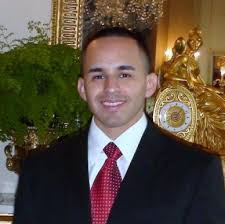
005: Hector Avellaneda on Buying Gold to Protect Your Wealth from a Dollar Crisis

November 19, 2014 by Frank

http://traffic.libsyn.com/economicrockstar/005_Hector_Avellaneda.mp3
Play in New WindowDownload

Episode 005: Hector Avellaneda on Buying Gold to Protect Your Wealth from a Dollar Crisis

Hector AvellanedaHector Avellaneda is from Houston, Texas and has a passion for entrepreneurship, economics, finance and gold. This, however, only materialized after Hector came face to face with a untold truth and one of the harshest lessons that only a life experience can teach you, as long as you are willing to dig deep in search for answers.

Hector, the son of Mexican immigrants to the US, grew up in poverty and was statistically destined to a life of poverty in adulthood. However, Hector wanted to defy this probability and worked extremely hard in school. In typical fashion, Hector accumulated college debt and was ironically facing a poorer life than his own parents despite a larger mean income.

Hector questioned the college debt system and deeply explored how US citizens have grown accustomed to taking on such debt. Further research led him to realise that middle-class America could see their wealth wiped out due to an impending dollar crisis. Subsequently, Hector wrote an economics and finance-related book to share his findings and to suggest what you can do to protect your wealth.

Economics and Finance Themes:

In this interview, Hector mentions and discusses: poverty, wealth, college debt, economic crisis, the Great Depression, loans, credit card debt, poverty trap, psychological effects of poverty, deficit, free markets, incentives, purchasing power, inflation, taxes, quantitative easing, money supply, the Minsky Moment, financial literacy, properties of money, fiat currency, the US Federal Reserve, stock markets, crypto-currencies, the Gold Standard.

Hector’s Influencers:

His dad and a college counsellor. Find out more in his book ‘De-CLASS-ified’ (see below for a link to Amazon and get an e-copy on Amazon for a bargain $2.99).

In this episode, you will learn:

  • how Hector had all the hallmarks of continuing to live a life of poverty in America.
  • about Hector being bullied in school because of the charitable clothes he wore .
  • how Hectors’ father and mother’s sense of hard-work and money management became naturally ingrained in him.
  • how Hector defied and beat the statistical odds of remaining poor for life due to a strong work ethic and a desire to succeed.
  • how hard work in school can open up many opportunities in life including an internship with NASA.
  • the importance of being mentored.
  • how easy credit for college education made Hector ‘s financial position worse off than his parents.
  • what triggered Hector into discovering the truth about the American economy and the college debt system.
  • the risks in the US economy.
  • why the US could be faced with a massive default on student loans and what is triggering this today.
  • how it became acceptable to borrow to pay for college.
  • why Hector’s $50,000 student debt became a blessing in disguise.
  • how Hector’s research into the US college debt crisis resulted in him writing an economics and finance book without having a background in these disciplines.
  • why the middle class in America is about to collapse financially.
  • why the US government will seize money from an American workers’ wages.
  • what type of college degree is not in demand in US anymore.
  • what you should do today when making a college or subject choice.
  • what it takes to have financial and economic freedom.
  • about the 7 properties of money.
  • what countries are doing today with their dollar reserves.
  • about who actually owns the Federal Reserve Bank of America. Hint: It’s not the US government!
  • what you can do to protect your wealth from being transferred to others.
  • who are buying up gold and for what reason.

On Living in Poverty:

  • ‘I was pretty poor. I lived in a small wooden type of house with a sheet metal roof’ – Hector Avellaneda
  • ‘Growing up I saw my parents argue and fight about money and not having enough money to take a family trip or a vacation or just be able to enjoy a day out on the town and so my parents were always very stressed out, always kind of arguing and fighting’ -Hector Avellaneda
  • ‘I was made fun off in school because a lot of clothes that I wore was donated from the local church or local program, a local donation program’ – Hector Avellaneda
  • ‘I always told myself that I was going to do whatever it took to make sure that I was successful in life and to make sure that I got out of that poverty that I had seen as a child’ – Hector Avellaneda

Advice:

  • “Today we need computer scientists, we need computer programmers, we need engineers – those are the degrees that are in demand  and I myself sit on the board directors of a non-profit organization here in Houston that actually encourages kids to go to college and major in things like engineering, major in things like computer science because I think those are the degrees that we need in today’s economy” – Hector Avellaneda.

  • ‘To have financial and economic freedom, I had to become an entrepreneur’ – Hector Avellaneda

    Click To Tweet

  • “For anyone who is going to college or who is thinking about going to college today, I would say ‘do some real research and figure out what pay expectations you will have upon graduation’ and, with that said, make sure that, if you are going to go to college, major in a degree that will be able to sustain your way of life that you want to live and if you don’t want to major in something like engineering or computer science because that’s just not what you are passionate for then don’t take on any student debt” – Hector Avellaneda.

  • Those holding onto paper assets are at risk of losing it all to those holding real tangible assets like gold and silver, land and claims on oil fields.

Personal Habits:

  • A hard worker, head-strong, determined, passionate and a desire to find out the truth through research, self-education, reading and learning.
  • Hector had a desire to find out what went wrong in his life as he was mis-sold the American idea of taking on college debt . With a limited exposure to finance and economics in college, $50,000 of college debt and unemployed due to the Great Recession of 2008, Hector read widely to learn and understand about the truth behind the US economy, the trillions of dollars of debt and the risks of a mass student loan default and a dollar crisis. 

Takeaway:

‘We have a generation of college students who are graduating into financial bondage’ – Hector

Click To Tweet

The free markets have been distorted due to all the incentives that have been created in the US economy.

‘Paper money eventually returns to its intrinsic value – zero’ – Voltaire

Click To Tweet

Before making a college decision, do a course that will allow you to earn an income to pay off your debt, otherwise do not take on debt.

Increase your understanding of financial literacy. Read books on money.

Schools and Universities need to teach more economics, finance and financial literacy subjects to all students.

Self-education is very important – read books and get access to the necessary information online.

‘Money is nothing more than an economic tool by which we convert our time and freedom’ – Hector

Click To Tweet

Recommended Books:

  • The Death of Money by James Rickards
  • De-CLASS-ified: The Fall of the Middle Class and Rise of the Internet Entrepreneur by Hector Avellaneda

Favorite Internet Resource:

  • iCloud

Where to Find Hector Avellaneda:

  • Gold and Silver Buyer Club
  • New Class Rising
  • Podcast on iTunes
http://traffic.libsyn.com/economicrockstar/005_Hector_Avellaneda.mp3

Podcast: Play in new window | Download

003: Erin Lowry on Millennials, College Debt and Asking for the Order

November 12, 2014 by Frank

http://traffic.libsyn.com/economicrockstar/003_Erin_Lowry_final.mp3
Play in New WindowDownload

Episode 003: Erin Lowry on Millennials, College Debt and Asking for the Order

Erin LowryErin Lowry is a double major in journalism and theatre and writes on finance and money related matters for the millennial generation. She lives in New York and is founder of brokemillennial.com where she is on a mission to explain financial concepts and money saving tips to her fellow Millennials using a little humor along the way. Erin is also a freelance writer for both Daily Finance and US News and World Report. Erin has deservedly been recognized for her astounding contribution to the finance and money industry, being voted ‘Top Finance Blog’ and winner of the ‘Best Personal Finance Blog for Young Adults’. Erin has also been featured on Forbes and Reuters, as well making appearances on TV, radio and other podcasts for her advice.

Economics and Finance Themes:

In this interview, Erin mentions and discusses: millennials, Generation Y, student loan debt, credit card debt, savings, habits, business startups, money, returns, net profit, incentives and perfect competition.

Erin’s Influencers: 

Her Mum and Dad, Warren Buffett, Bill Gates, Mark Cuban and Magic Johnson.

Find out:

  • how a Krispee Kreme gave Erin her biggest lesson in understanding finance, money and net profit at the tender age of seven.
  • how living in Japan and China during her childhood developed a different money mindset to her fellow consumer-led American peers.
  • how Erin left college debt-free.
  • who are millennials, if you are one and, if so, are you narcissistic and lazy?
  • about the massive student loan and credit card debt taken on by this generation and what you can do about it.
  • the money-saving tips that you can use in college or at work.
  • how saving a little, even $2, from a paycheck now will develop into a powerful life habit.
  • the importance of having a mentor in your life, particularly as a young adult.
  • the importance of networking for millennials.
  • how ‘Asking for the Order’ can help you succeed.
  • some money-saving dating tips.
  • how you can use your free-time between college classes or in the evenings to become creative and generate supplementary income.
  • how to manage your credit card and to use it to your advantage.
  • about the importance of list-making and how this can empower you.
  • about the ‘Snowball Method’ and how it can make you feel good.

Advice:

‘As soon as you get your pay cheque, the first thing you do is pay yourself’ – Erin Lowry

Click To Tweet

  • If you felt an outcome was unfair, ‘Ask for the Order’.  If you don’t tell people what you want, they can’t read your mind and the worse someone can tell you is ‘No’..
  • I find that list writing helps me organize my thoughts and then when I cross something off, it’s just such a satisfying feeling.

  • If you are having debt problems, talk about it to your loved ones, to your closest friends, to a credible financial planner or to a priest.

Personal Habits:

A respect for money was instilled in Erin at a young age by her father, which she carried right through into her adult life. As a head-strong decision-maker, Erin was faced with an ‘economic’ choice in adolescence which resulted in her finishing college debt-free! These traits, coupled with her mother’s mantra ‘Ask for the Order’ has given Erin enough social and financial clout too pursue her love of personal finance and helping fellow millennials to straighten out their finances.

‘Ask for the Order’ – Erin Lowry

Click To Tweet

Takeaway:

  • ‘Your relationship with your parents and how they treat money is huge because we started learning about money from an incredibly young age’.
  • ‘I find very fascinating… men and women that are able to go out and start their own companies and start with very little money and even not necessarily a lot of knowledge about something, and they teach themselves and they just go out and work really, really hard and I think that that’s the realization of the American dream and that it still really is possible.’
  • ‘Put yourself out there, develop contacts and network with others. You can be successful this way.’
  • ‘Never just make the minimum payment on your credit card. Pay it off in full. Banks will earn high interest on outstanding credit card debt.’

Recommended Books:

  • Personal Finance in Your 20s For Dummies by Eric Tyson
  • The Automatic Millionaire: A Powerful One-Step Plan to Live and Finish Rich by David Bach
  • The Ascent of Money by Niall Fergusan

Favourite Internet Resource:

  • Twitter

Where to Find Erin Lowry:

  • brokemillennial.com
  • magnifymoney.com
toto togel situs togel situs toto situs toto situs toto situs toto situs toto toto slot situs toto situs togel situs toto slot gacor situs toto situs togel situs toto situs toto situs togel situs toto pam4d situs toto pam4d gimbal4d pam4d gimbal4d sangkarbet sangkarbet pam4d toto slot
http://traffic.libsyn.com/economicrockstar/003_Erin_Lowry.mp3

Podcast: Play in new window | Download

Frank Conway

Frank Conway is founder of Economic Rockstar and lecturer of economics, finance and statistics. Read More…

View My Blog Posts

Youtube Sub

Become a Patron of the Economic Rockstar Podcast

patreon

Ireland’s Economy by the Numbers

Leaving Cert Economics: Ireland’s Economy  Click here to download a workbook on Ireland’s Economy so that you can add your own notes. [Original size] Ireland’s Economy by fconway

Categories

Subscribe and Never Miss An Episode

itunes-logo

Recent Posts

  • Ireland’s Economy by the Numbers April 8, 2019
  • 174: Wendy Carlin on The Core Project, Capitalism, Democracy and Normative Statements February 13, 2019
  • 173: Stephen Wright on Core Econ as a Learning Resource for Mainstream Economics January 28, 2019
  • 172: Best of 2018 Part 2: From the Great Depression to Futurism; Institutions, Individualism, Cooperation and Reciprocity January 22, 2019
  • 171: Best of 2018 Part 1 January 3, 2019

Copyright © 2026 · Podcast Pro Theme on Genesis Framework · WordPress · Log in

This website uses cookies to improve your experience. We'll assume you're ok with this, but you can opt-out if you wish. Accept Reject Read More
Privacy Policy

Privacy Overview

This website uses cookies to improve your experience while you navigate through the website. Out of these, the cookies that are categorized as necessary are stored on your browser as they are essential for the working of basic functionalities of the website. We also use third-party cookies that help us analyze and understand how you use this website. These cookies will be stored in your browser only with your consent. You also have the option to opt-out of these cookies. But opting out of some of these cookies may affect your browsing experience.
Necessary
Always Enabled
Necessary cookies are absolutely essential for the website to function properly. This category only includes cookies that ensures basic functionalities and security features of the website. These cookies do not store any personal information.
Non-necessary
Any cookies that may not be particularly necessary for the website to function and is used specifically to collect user personal data via analytics, ads, other embedded contents are termed as non-necessary cookies. It is mandatory to procure user consent prior to running these cookies on your website.
SAVE & ACCEPT