
• ABOUT
  • RESOURCES
  • PODCAST
  • BOOKS
  • BLOG
  • SUPPORTERS
  • QFA Financial Advice
  • CONTACT

Economic Rockstar

Connecting Brilliant Minds in Economics and Finance

086: Philip Pilkington on Determinism and the Reformation in Economics

May 19, 2016 by Frank

http://traffic.libsyn.com/economicrockstar/086_Philip_Pilkington_Final.mp3
Play in New WindowDownload

086: Philip Pilkington on Determinism and the Reformation in Economics

Phillip Pilkington works in investment and has contributed to numerous online and print media philip pilkingtonoutlets as a freelance economic journalist.
Phillip ran a popular economics blog called www.fixingtheeconomists.wordpress.com and will be releasing his book The Reformation in Economics soon.

Phillip earned his B.A. in Journalism from the Independent Colleges, as well as his M.A. in Economics from Kingston University.

All views expressed by Phillip are his own and are not representative of the firm in which he works.

Economics:

In this episode, Philip mentions: utility maximizing, behavioral bias, interest rates, time preference, savings, money, comparative advantage, decision making, consumption function, marginal propensity to consume and the multiplier.

Economists:

In this episode, Philip mentions: Steve Keen, Paul Samuelson, Adam Smith, James Steuart, David Ricardo and G. L. S. Shackle.

Links:

  • Fixing the Economist – a blog by Philip Pilkington

Books:

  • The Reformation in Economics: A Deconstruction and Reconstruction of Economic Theory by Philip Pilkington
  • Foundations of Business Thought by Calvin M. Boardman
  • Market Sense and Nonsense: How the Markets Really Work (and How They Don’t) by Jack D. Schwager
  • A Treatise Concerning The Principles of Human Knowledge by George Berkley
http://traffic.libsyn.com/economicrockstar/086_Philip_Pilkington_Final.mp3

Podcast: Play in new window | Download

071: Darshak Patel on Using Popular Culture to Engage Economics Students in the Classroom and Online

February 5, 2016 by Frank

http://traffic.libsyn.com/economicrockstar/071_Darshak_Patel.mp3
Play in New WindowDownload

071: Darshak Patel on Using Popular Culture to Engage Economics Students in the Classroom and Online

Darshak Patel is currently a Lecturer of economics at the University of Kentucky, USA.darshak patel

After a one-year Visiting Assistant Professor appointment at Roanoke College, Darshak served three years as an Assistant Professor of Economics at the University of Tennessee, Martin. 

Darshak’s research and teaching interests include labor economics, microeconomics, industrial organization, the economics of education, and sports economics.  

Darshak graduated with a PhD in Economics at the University of Kentucky with his dissertation exploring the use of  option value theory to explain student decision-making in post-secondary schooling. 

Economics:

In this interview, Darshak mentions: option value theory, pedagogy, decision-making, opportunity cost, logic, profit, the hazard model, entrepreneurship, economic growth and corruption.

Economists:

In this interview, Darshak mentions: Abdullah Al-Bahrani, Kim Holder, Brendan Sheridan, Jadrian Wooten and Milton Friedman.

In this episode you will learn:

  • whether using Twitter to enhance the students’ learning outcomes is effective.
  • how video scrapbooking can be integrated into the economics curriculum.
  • the benefits and difficulties of using social media platforms to teach economics.
  • what option value theory is.
  • about Milton Friedman’s recommendation to the US government to introduce a tax to finance the US involvement in World War II.
  • how Bing Crosby helped promote the purchase of war bonds for the US war effort during the Second World War.
  • about the transition of the Kenyan economy since the 1970s.
  • about the Chinese influence in Africa.
  • how you can use the economic data provided on FRED to bring your economics classroom alive.
  • how Darshak is using popular culture to help interpret economic concepts and theories.

Resources:

  • ESPN 30 for 30
  • Rockonomix
  • FRED
  • Critical Commons
  • Economics of Seinfeld by Professor Linda S. Ghent, Professor Alan Grant and George Lesica.
  • Bazinganomics by James Tierney, G. Dirk Mateer, Wayne Geerling, Jadrian Wooten and Ben Smith.
  • Economics of The Office by Dan Kuester, Dirk Mateer and Chris Youderian.
  • University of Kentucky Teaching Economics Conference

Books:

  • The Two-Second Advantage: How We Succeed by Anticipating the Future–Just Enough by Vivek Ranadive and Kevin Maney
  • Soccernomics by Simon Kuper and  Stefan Szymanski

Papers:

  • Al-Bahrani, A., Dowell, C. & Patel, D. (2016). Video Scrapbooking: An Art Form Revived in the Economics Curriculum. Journal of Economics and Economic Education Research. Forthcoming.
  • Patel, D. and Saunoris, J. (2016). Using FRED Data Series to Improve Learning Outcomes in Economic Courses: From Student to Practitioner, Journal of Economics and Finance Education. Forthcoming.
  • Al-bahrani, A., Patel, D. and Sheridan, B. (2015). Engaging Students Using Social Media: The Students Perspective. International Review of Economics Education, 19, 36-50.
  • Al-bahrani, A. and Patel, D. (2015). Incorporating Twitter, Instagram, and Facebook in Economics Classrooms,  Journal of Economic Education. 46 (1), 56-67.
  • Al-bahrani, A. and Patel, D. (2015). Using ESPN 30 for 30 to Teach Principles of Economics, Southern Economic Journal, 81 (3), 829-842.
  • Patel, D. and Ward, M. R. (2011). “Using Patent Citation Patterns to Infer Innovation Market Competition,” Research Policy. 40(6), 886–894.
http://traffic.libsyn.com/economicrockstar/071_Darshak_Patel.mp3

Podcast: Play in new window | Download
050: Dan Ariely on Irrational Behavior and the Importance of Our Environment When Making Decisions

September 16, 2015 by Frank

http://traffic.libsyn.com/economicrockstar/050_Dan_Ariely_Final.mp3
Play in New WindowDownload

050: Dan Ariely on Irrational Behavior and the Importance of Our Environment When Making Decisions

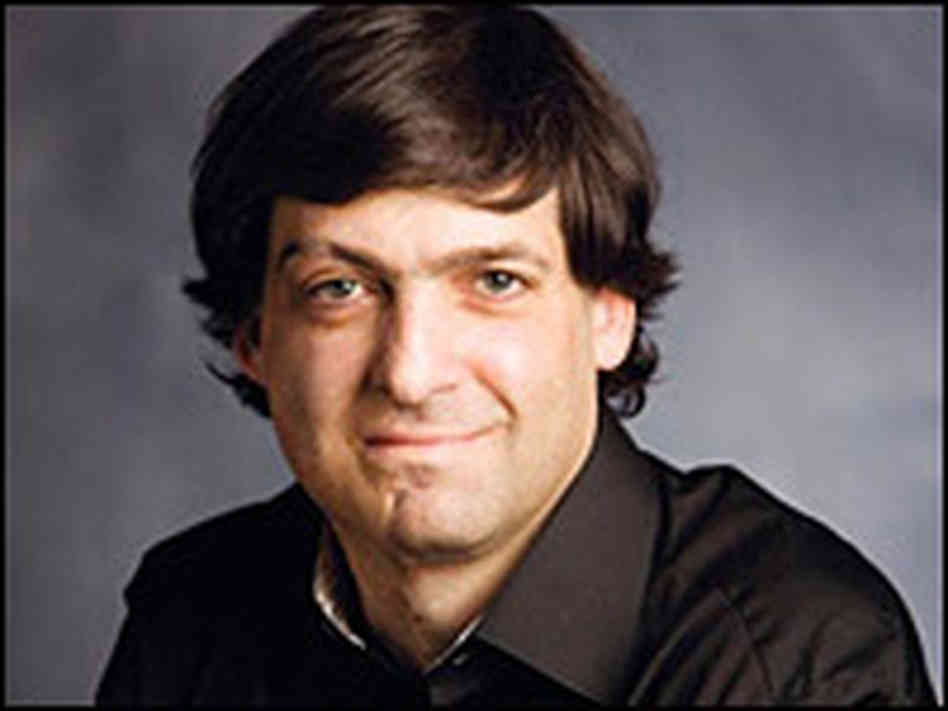
Dan Ariely is Professor of Psychology & Behavioral Economics at Duke University in North Carolina. Dan’s interests spanDan Ariely a wide range of behaviors, and his sometimes unusual experiments are consistently interesting, amusing and informative, demonstrating profound ideas that fly in the face of common wisdom.

In addition to appointments at the Fuqua School of Business, the Center for Cognitive Neuroscience, the Department of Economics, and the School of Medicine at Duke University, Dan is also a founding member of the Center for Advanced Hindsight.

Dan is the author of the New York Times bestsellers Predictably Irrational, The Upside of Irrationality, and The Honest Truth About Dishonesty and his latest book Irrationally Yours is now available.

Dan has received numerous honors and awards in medicine, psychology and economics.

Dan received a B.A in Psychology from Tel Aviv University, an M.A and PhD in Cognitive Psychology from University of North Carolina and another PhD in Business Administration from Duke University.

Influencer:

Professor Hanan Frenk, Tel Aviv University

Economists:

In this interview, Dan mentions: Brian Wansink. 

Psychologists:

In this interview, Dan mentions: Mike Norton and Elizabeth Dunn.

Economics:

In this interview, Dan mentions and discusses: Tragedy of the Commons, behavioral economics, public goods, pricing, decision-making, choice architecture, Ulysses Contract, happiness, asymmetric dominance effect and choice.

Takeaway:

“Think about your environment and always experiment” – Dan Ariely

Click To Tweet

In this episode, you will learn:

  • about Dan Ariely’s traumatic experience resulting in severe burns.
  • how Dan Ariely found his love for psychology and behavioral economics.
  • why Dan will not be teaching his Irrational Behavior course on Coursera.
  • the problems with MOOCs like Coursera and why it is making the wrong choice regarding its open platform system.
  • why Dan was turned down for his first book – a cookbook and what advice he was given by a publisher.
  • why we as humans make very costly mistakes and what we can do about it.
  • how people eat more than they realise and how experiments in economics have shown this.
  • why we are bad at doing things that makes us happy.
  • the most common mistake companies make when making decisions or processing information.
  • how companies can avoid making mistakes.
  • if anger is a good or bad emotion.
  • the most surprising finding from Dan Ariely’s research.
  • the most surprising question put to Ask Ariely.
  • how to get poor people in Kenya to save.
  • how your environment matters when making decisions.

Quotes by Dan Ariely in Episode 50 of the Economic Rockstar Podcast:

“Choice architecture is this idea that our environment influences how we make decisions” – Dan Ariely

Click To Tweet

“In the process of trying to not make any mistakes, companies create environments that punish risk and therefore punish ingenuity and growth” – Dan Ariely

“Tim is a very interesting character and he is experimenting on himself. We have to realize that his experiments have the validity that they work very well for him” – Dan Ariely

On Coursera:

“I think we do need rules for trolls. I think that pricing is a very good mechanism for some things and I’m not sure it’s a mechanism for all for all things like this. The reality is that Coursera probably over samples from the people on the tail of the distribution in terms of mental stability.” – Dan Ariely

Books:

  • Predictably Irrational by Dan Ariely
  • The Upside of Irrationality by Dan Ariely
  • The Honest Truth About Dishonesty by Dan Ariely
  • Irrationally Yours by Dan Ariely
  • The 4 Hour Chef by Tim Ferriss
  • Happy Money: The Science of Smarter Spending by Elizabeth Dunn and Michael Norton

Resources Mentioned by Dan Ariely:

  • Kitchen Safe: www.thekitchensafe.com
  • Coursera: www.coursera.org

Where to Find Dan Ariely:

  • Website: www.danariely.com
  • Twitter: @danariely
  • LinkedIn: Dan Ariely
  • Ted: www.ted.com

Transcript:

The full transcript of this episode with Dan Ariely will be available shortly.

Thanks for Listening!

Thanks so much for joining me again this week. Have some feedback you’d like to share? Leave a note in the comment section below!

If you enjoyed this episode, please share it using the social media buttons you see at the bottom of the post.

Also, please leave an honest review for the Economic Rockstar Podcast on iTunes! Ratings and reviews are extremely helpful and greatly appreciated! They do matter in the rankings of the show, and I read each and every one of them.

http://traffic.libsyn.com/economicrockstar/050_Dan_Ariely_Final.mp3

Podcast: Play in new window | Download
032: Joe Gladstone on the ‘Pay What You Want’ Pricing Model and Using Big Data to Understand You Better

May 14, 2015 by Frank

http://traffic.libsyn.com/economicrockstar/032_Joe_Gladstone_Final.mp3
Play in New WindowDownload

032: Joe Gladstone on the ‘Pay What You Want’ Pricing Model and Using Big Data to Understand You Better

Joe Gladstone is an academic researcher and consultant based at the University of Cambridge, where heJoe Gladstone applies insights from behavioral economics and psychological research to better understand consumer behaviour.

Joe partners with some of the world’s largest corporations, such as Twitter, Bupa and Visa, as well as government departments, to tackle challenges that deal with behaviour change.

Joe’s views on consumer behaviour have been featured in the BBC, Forbes, The Huffington Post and other media outlets.

Joe is founder of BE-events and BE-Recruit.  He received his Masters from Oxford University and his Phd from Cambridge University, and has been awarded a range of competitive grants and prizes.

Find Out:

  • about the link between the discipline of psychology and economics.
  • why Joe decided to do postgraduate research in behavioral economics.
  • how advances in technology, especially in social media, can help behavioral scientists understand human behaviour better.
  • why you do not know how much you spend on coffee.
  • how Joe has identified the relationship between psychology and money.
  • how Joe has used the ‘My Personality’ app to predict your personality from what you like.
  • how companies can use ‘Big Data’ to target messages directly to you.
  • why people are willing to pay for services that they could otherwise get for free.
  • if TIDAL will disrupt the online music industry by taking control of their own music.
  • if Spotify risks losing out to TIDAL.
  • how important is the price of zero?
  • how the ‘Pay What You Want’ pricing model defies classical economic theory.
  • why people pay even if they are given the option to take the product for free.
  • how Radiohead made more in sales when offering their album on a ‘Pay What You Want’ basis.
  • if the ‘Pay What You Want’ model is sustainable for a business in the long run?
  • how Jon Bon Jovi has successfully implemented the ‘Pay What You Want’ model in his Soul Kitchen restaurant in New Jersey.
  • how sitting with strangers to eat in Soul Kitchen can ‘nudge’ diners to pay more than what they were initially willing to pay.
  • about Joe’s passion for financial literacy and financial empowerment.
  • if you can become immune to nudging by having a deeper understanding of it.
  • if knowledge prevents you from being nudged.
  • about behavioral economics events that could be going on in your area with BE-events.org.
  • how Joe maximises his time by outsourcing his work on oDesk.
  • how to get girls in less-developed and poor countries to go to school.
  • how Joe built up a name for himself on LinkedIn by connecting with the main people in the banking sector and offering his services on a no cost basis.
  • what the five personality traits known as OCEAN stands for.

Economists Joe Would Love to Collaborate With:

Professor Dean Karlan of Yale University and Professor John List of University of Chicago.

Economists:

In this interview, Joe mentions: 

Daniel Kahneman, Amos Tversky, Cass Sunstein, Dean Karlan (Poverty Action), David Hagmann, George Loewenstein, Craig Fox (The Behavioral Science and Policy Association), John List and The Behavioural Insights Team in the UK.

Economics:

In this interview, Joe mentions and discusses:

Behavioral economics, experimental economics, factor analysis, microeconomics, poverty, banking, micro-finance, decision making, nudge, nudging, pricing, demand, supply, randomised control trials, field experiments and multi-variate testing.

The ‘Pay What You Want’ pricing model is a great example of where the Classical economic theory doesn’t do a great job of explaining real world behavior – Joe Gladstone.

Resources:

  • Upwork (formally oDesk)
  • Leadpages

Books:

  • The Behavioral Foundations of Public Policy by Eldar Shafir

Papers:

  • Warning: You Are About to be Nudged by David Hagmann and George Loewenstein.

Where to find Joe:

  • Website: www.joegladstone.com
  • BE-events.org
  • BE-recruit.com
  • LinkedIn: Joe Gladstone
http://traffic.libsyn.com/economicrockstar/032_Joe_Gladstone_Final.mp3

Podcast: Play in new window | Download
014: Shoshana Grossbard on Why Dry Cleaners Charge Women More, on the Economics of Love & Marriage and on Polygamy

January 8, 2015 by Frank

http://traffic.libsyn.com/economicrockstar/014_Shoshana_Grossbard.mp3
Play in New WindowDownload

014: Shoshana Grossbard on Why Dry Cleaners Charge Women More, on the Economics of Love & Marriage and on Polygamy

Shoshana GrossbardShoshana Grossbard is Professor of Economics at San Diego State University and founding editor of the Review of Economics of the Household.  Shoshana has been a fellow and visiting lecturer  at numerous universities including Stanford, Columbia University, the University of Zaragoza, Spain, Tel Aviv and Bar Ilan University, as well as in Munich and Bonn, Germany.

Shoshana obtained her Phd from the University of Chicago where she developed an interest in the New Home Economics from its founders, the late Nobel Laureate Gary Becker and the late Jacob Mincer. The main focus of Shoshana’s research is household economics, family economics and the economics of marriage and, as a student, developed her first non-unitary model of household decision-making. Shoshana is actively promoting the establishment of household economics as a separate specialty in economics. She is one of the first social scientists to have analyzed consequences of gender imbalance in the sex ratio for intra-household distribution, labor supply, fertility and cohabitation. The economics and social impact of polygamy is also a research interest.

Shoshana has published 5 books and more than 50 articles on the determinants of marriage, consumption and labor supply and on the law and economics of household decisions. She is fluent in English, French, Hebrew, Spanish, and Dutch and has presented her work at many universities in more than 13 countries.

Economic Themes:

In this interview, Shoshana mentions and discusses: household economics, family economics, economics of the household, household decision-making, sex-ratios, the economic and social impact of polygamy, determinants of marriage, opportunity cost, consumption and labor supply, immigration, population, marriage, price discrimination, government intervention and elasticity.

Economists and Economic Schools:

In this interview, Shoshana mentions: New Home Economics, Gary Becker, Jacob Mincer, Adam Smith, Arleen Leibowitz, Linda Edwards, Andrea Beller, Elizabeth Landes, Catalina Amuedo-Dorantes and Sankar Mukhopadhyay.

Shoshana’s Defining Moment/Affirmations/Mantra:

Shoshana is defined by the feminist movement of the 1960s/1970s in her early student days and her mother’s dislike of being a housewife.

I’ve remained a feminist for the rest of my life. It was always very clear to me that I was going to have a career in addition to having a family.

Personal Habits:

Hard work. I work very long hours, I work very hard and I’m very motivated to be successful. There’s no other way.

If you don’t work hard, things don’t just fall on your lap – Shoshana Grossbard

Click To Tweet

Advice:

It’s very important to have a critical eye. Whatever you read you have to realise that most research, including research by economists is biased by the point of view of the writer and they have an axe to grind typically. You have to try to figure out what’s the axe they’re grinding before you read it.

In this episode, you will learn:

  • about Shoshana being a 1970s hippie and her demonstrations against King Constantine of Greece.
  • about the differences in female educational participation between the 1960s and present day.
  • about the sexist advertisements that existed which placed the wife in the household.
  • about the origins of the New Home Economics.
  • about what the theory of household means.
  • how Shoshana transitioned herself from an interest in the economics of education to the economics of polygamy while a student of Gary Becker.
  • how Shoshana’s approach to the study of polygamy differed with Gary Becker’s.
  • what quasi-wages are for the stay-at-home mum or dad.
  • if there is an opportunity cost to marriage.
  • the implication on labor force participation as a result of marriage.
  • about WiHo or Work-in-Household.
  • about the importance of the sex-ratio in determining labor force participation.
  • how Shoshana calculates the sex-ratio.
  • how women’s participation in the labor force can be a direct result of fluctuations in the sex-ratio.
  • how a high sex-ratio (more men than women) can increase the bargaining power of men.
  • how a low sex-ratio (more women than men) can increase the bargaining power of women.
  • if Hilary Clinton‘s year of birth allowed her to be the successful and educated person she is today due to the low sex ratio in the US between 1946 and 1950.
  • about the marriage-squeeze hypothesis (in which there is a shortage of men or women for marriage).
  • about the detail of Ireland’s population pyramid, which indicates a male marriage squeeze for those aged 4 to 10 (more males due to births) and a female marriage squeeze for those aged 20 to 29 (more females due to male emigration).
  • about the relevance of the sex-ratio of immigrants and how the freedom of labor can solve the problem of a  marriage squeeze.
  • if the availability of polygamy translates into a higher bargaining power for women.
  • if polygamy solves a marriage market disequilibrium.
  • about the polygamy ruling in Canada.
  • how polygamy can be harmful for young men and why they are known as the lost boys.
  • about the Fundamentalist Latter Day Saints in British Columbia.
  • if the government should intervene in markets where gender price discrimination occurs.
  • who pays more for dry-cleaning services – males or females – based on their elasticity of demand.
  • if we should trust our spouse given the ideology behind economics that all market participants are self-interested and seek to gain wealth without any consideration of others.
  • if spousal love diminishes once you have children and that the love you have toward your child compensates for the lack of love from your spouse.

Origins of New Household Economics:

When Gary Becker and Jacob Mincer started New Home Economics, it was mostly their initiative but it was the students at the University of Columbia at that time who participated in the labor workshops that were very instrumental in promoting and developing it.

There were a high proportion of women who attended the workshop including Arleen Leibowitz and Linda Edwards and, later on, Andrea Beller and Elizabeth Landes.

It is wrong to view New Home Economics as ideologically motivated to maintain old-fashioned gender roles.

One of the major ideas of the New Home Economics is to consider households like firms where there is household production and to analyse them with the same tools economists analyse business firms.

So basically, households are non-profit firms but there are many small non-profit firms in the economy that are considered part of the economy that are counted in GNP. But the most prevalent non-profit firm, the household, is not counted in the GNP.

Jacob Mincer and Gary Becker were not concerned about what was counted in GNP but they were more micro-economists. So they wanted to use all the tool available from price theory and apply them to the analysis of what households do:

  • How do they divide the housework?
  • Do women participate in the labor force?
  • The trade-off between household production and participation in the labor force.

The Origins of Shoshana’s Work:

Shoshana‘s approach to the study of polygamy took account of the point of view of women whereas Gary Becker considered variables such as how men’s incomes determined the number of wives he would have.

Shoshana challenged Gary stating that it’s not just about men’s income but it’s also a matter of women’s education, the age of the women, the fertility of the women and the resources that they have because they can bargain with the men about what they’re willing to do.

Shoshana continued to work on economic development issues because polygamy is practiced mostly in less-developed countries where she examined data in Nigeria and then the study of consensual marriages in Guatemala.

Jacob Mincer advised Shoshana, when she was seeking a job, to do more mainstream economics rather than the exotic research mentioned above which may not be of interest to economists in general. That is when she switched to the study of labor force participation and developed a theory of allocation of time in markets for labor and marriage.

There is a major difference between the model developed by Grossbard and that developed by Becker and Mincer. When Becker and Mincer talk of household production, they refer to households as a unit or as an entity making decisions. However, in Grossbard’s model it is the individuals making decisions.

Household Decision-Making and Quasi-Wages

The fundamental question of New Household Economics: Is there an opportunity cost to marriage and what is the implication on labor force participation as a result of marriage?

Individuals, from an early age, have a concept and vision of how they want to live their lives.

Work in Household (WiHo) represents the willingness to work in a household to, say, raise children.

On Gender Price Discrimination:

“We should all be conscious that sometimes there is exploitation of the consumer and if you don’t like the subliminal advertising that companies use to make you buy perfume or aftershave well then just don’t buy it.”

I’m not a fan of regulation – Shoshana Grossbard

Click To Tweet

Dry cleaners charge more for women’s blouses than for men’s shirts, despite them being the same product, with perhaps the main difference being that the buttons on a blouse are typically located on one side of a blouse to that of a man’s shirt.

Dry cleaners are aware that the price elasticity of demand for a woman needing dry cleaning is less than that of a man, meaning that there is more of a need for women to use the dry cleaning services and would, hence pay more as no-one else would do it for them.

On the other hand, the elasticity of demand is more for men, meaning that dry cleaners may charge less for the same service so as to encourage men to dry clean.

Shoshana states that the reason for this gender price differential by dry cleaners is that the majority of men would not go to a dry cleaners as they have a wife, girlfriend or mother who would take on the task of cleaning their clothes. The WiHo or Work in Household is higher for these women as they have, in the majority of cases, taken on the responsibility of running the household chores.

The women who arrive at a dry cleaners are those who have a low WiHo perhaps due to a working career or an unwillingness to take on the responsibility of such chores or even due to the lack of people willing to do the work, such as a spouse.

How the Activities of a Home Differs to the Activities of a Market

Adam Smith stated: “It is not from the benevolence of the butcher, the brewer or the baker that we expect our dinner but from the regard of their own interest”.

If we view all participants in a household as economic agents who have a certain degree of self-interest, should we trust our spouse?

The statement by Adam Smith is about the functioning of the market and how the competition among the bakers and the other professionals brings down the prices and eventually the consumer benefits.

The problem with household production, which is a non-profit firm, is that most of what is produced at home is not going to be sold in the market, principally the children, the beauty of the  home, the harmony in the home. These are products that are being consumed by the producers themselves or by the people who pay for the WiHo. In this case, the market system doesn’t work.

The benevolence of the spouse is a very important element. Adam Smith also had a Theory of Moral Sentiments and in the framework of the household, altruism matters. So, benevolence and altruism matters.

Favorite Books:

  • Dollars and Sex by Marina Adshade
  • The Marriage Motive: The Price Theory of Marriage by Shoshana Grossbard
  • Publications of Shoshana Grossbard

Favorite Internet Resource:

  • marinaadshade.com  and on Twitter: @dollarsandsex
  • omgchronicles.vickilarson.com and on Twitter: @OMGchronicles
  • Gretchen Livingston on Twitter: @DrGMLivingston

Where To Find Shoshana Grossbard:

  • Facebook: Economics of Love
  • Twitter: @econoflove
http://traffic.libsyn.com/economicrockstar/014_Shoshana_Grossbard.mp3

Podcast: Play in new window | Download

007: Ryan Blair – Gangster turned Millionaire on Decision-Making, Game Theory and Incentives

November 21, 2014 by Frank

http://traffic.libsyn.com/economicrockstar/007_Ryan_Blair.mp3
Play in New WindowDownload


Episode 007: Ryan Blair –  Gangster turned Millionaire on Decision-Making, Game Theory and Incentives

Ryan BlairRyan Blair is a serial entrepreneur but his path to becoming a millionaire is both unique and fascinating. From a middle-class family who lost it all, Ryan became a gang member and, at times, carried an AK-47. life changed for Ryan due to a strong work ethic and a will to succeed. He overcame great obstacles to achieve extraordinary success.

With six multi-million dollar companies by age 30, Ryan vowed to make his current company, ViSalus Sciences, be the first billion dollar company to come out of the Great Recession and to help many people along the way. He is a philanthropist and New York Times best selling author.

Economics and Finance Themes:

In this interview, Ryan Blair mentions and discusses: decision-making, incentives, rewards, compensation, leveraging, poverty, entrepreneurialism, economic systems, philanthropy, venture capitalists, investors, Game Theory, complementary goods and capital markets.

How being a gang member is similar to being a business person:

  • “A gang is an economic system. Similarities  exist between being an entrepreneur and a legitimate businessman and doing business as a gang member on the street”.
  • “A gang is simply illegal entrepreneurship. It has a management hierarchy. Generally a gang will have various revenue streams. It has a compensation system. There are incentives and rewards as a recruiting system to recruit new members. There’s replication that occurs as a business model. The gang will have different hubs and different cities and countries it operates in. There are so many similarities”.
  • “Game theory is simply the idea of a game of chicken. Sometimes you have to be willing to risk it all and a lot of the time you have to be willing to walk away from a deal”.

Ryan’s Influencers:

  • Bob Hunt: Ryan’s step-father. Find out what he taught Ryan.
  • John Wooden: basketball player and NCAA coach, author on leadership and winner of the Presidential Medal of Freedom.
  • John C. Maxwell: Expert on leadership and New York Times best-selling author.
  • Dale Brown: NCAA Hall of Fame basketball coach.

In this episode, you will learn:

  • what life was like for Ryan growing up with a violent, drug-addicted father and how his family lost everything.
  • how Ryan overcame this to teach people how to overcome their poor decisions or the decisions of their family or the environment they were born into.
  • what skeletons Ryan takes out of the closet (revealed in his book) giving us some insight in this podcast.
  • why people are shocked that he was in a gang but how people that he knew in the past are even more shocked by his appearance, level of education and his ability to articulate on subjects that he is passionate about.
  • how over-leveraging and keeping-up with the Jones’ fuelled by credit in the economic ‘good times’ can be destructive for some families.
  • how Ryan went from middle-class to poverty to multi-millionaire.
  • how Ryan went from earning minimum wage at 18 to earning 6 figures within 2 years.
  • how staring at a 60-year old prisoner became the defining moment that changed Ryan’s life-path.
  • how Ryan overcame dyslexia and ADD to create his own auditory learning system, something which the current educational system failed to do.
  • why Ryan believes that ‘vision’ is so important in your life.
  • how Ryan helps people facing life in adversity: Clue? – The creation of foundations and philanthropic work.
  • about Ryan’s work with autism.
  • about the importance of having mentors and having a life purpose.
  • why Ryan had the perfect attributes to be involved in gangs. [Ryan was forced into a gang because he was a young kid, influenceable and could be productive. He was an angry kid, got into a lot of fights and had something to prove to society].
  • how Ryan learnt powerful lessons from the boardroom on how to structure agreements.
  • how Ryan used the economic theory of Game Theory to get ahead in business and become the dominant player.
  • how Ryan applies mathematical techniques to get the result he’s looking for.
  • the meaning behind Ryan’s tattoos: ‘Carpe Diem’ and ‘8411’.
  • how a tragedy that befell Ryan’s mother has become a great learning experience and a way to develop and to value certain things in life.
  • how Ryan will help give his son a strong work ethic and an incentive to do whatever he wants to do.
  • what Ryan would tell his younger self? –
    ‘Don’t allow short-term thinking to impact your long-term vision’- Ryan Blair

    Click To Tweet

Advice:

  • Ryan’s life purpose goal: “I will measure my influence by the network of the people I can draw upon for inspiration and economic creation’ – Ryan Blair”.
  • Ryan’s Philosophy: “Success is about your beliefs, values, actions and skills. So if you work on all of these things you will be successful” – Ryan Blair”.
  • On Vision: “I use that method in my life and my conscious and subconscious has no choice but to pursue them because I really fall in love with the vision”.
  • On Failing: “I fail forward and try to draw from certain things or from my gang past or maybe perhaps an investment that I made that didn’t work out so well”.
  • On Recruitment:   
    ‘Recruitment is one of the most important things on building a culture in business’ – Ryan Blair

    Click To Tweet

  • On Getting the Best Deal: “If you’re not prepared to walk away [from the deal] and the other party knows that, then you’re gonna be out-negotiated in many cases or you simply won’t get the best result possible for you, your family and your shareholders, which is what’s most important in a business negotiation”.
  • On Learning: Because Ryan knew that he wanted to be an entrepreneur, it was easy for him to associate learning with growth as an entrepreneur.
  • On Opportunities: “Opportunity exists all around you. If you’re looking for it and if you train yourself in how to see it – start there. If I sat in my garden, I could possibly find an opportunity to become an entrepreneur and be successful”.
  • On Nutrition and Learning: “Have a breakfast in the morning before school so as to have a proper education. Nutrition is so important to learning and to growth in an individual”.
  • ‘
    A Quitter Never Wins and A Winner Never Quits’ – Napoleon Hill

    Click To Tweet

Personal Habits:

1. 

‘I’m an idealist. I like to make things as good as I possibly can’ – Ryan Blair

Click To Tweet

2. Asking questions: “I ask a lot of questions of myself. Am I doing the right things? Am I making the right adjustments necessary for me to achieve the result that I want? I ask myself the question ‘Why not?”.

“If I want a vacation and I can’t afford one I then go ‘Why can’t I afford one and someone else can?’. Generally, there’s a reason for that. Maybe you haven’t properly saved or you don’t have enough income coming in. If I want a new car that I would really like to have and I can’t afford it, I’ll ask myself ‘Why not?’ and eventually I ask that question enough times then I got the new car or I got the vacation or I got the houses or I got the stuff that I wanted. Now I ask myself ‘Why can’t I have a billion dollar company?’ The answer is a multi-faceted one and it’s one that I will find a solution to and solve the problem”.

3. Making decisions: “Making the right decisions is harder to do because you can’t always have all the facts and all the information in front of you. I look back on a lot of my decisions, reflecting on them and say ‘Hey, maybe I didn’t make the right decision’, meaning there was another decision that would have been better”. A wrong decision could have been made because “I had the wrong facts or, perhaps, the wrong intentions or emotions in the decision-making process that made me fail to make the right decision”.

4. Evaluating decisions and making the necessary adjustments: “In life, you’re going to make some bad decisions, particularly in business because you don’t always have all the facts or you can’t predict the future or you don’t know how the economy might change or how capital markets might change”.

“If bad decisions are made, you’ve just got to assess it, understand it and make better decisions, and eventually you accumulate enough right decisions to where you’ve got success”.

The Golden Rule that Ryan Lives By:

“The Path is all Math” – “you’re reverse engineering or you’re finding the mathematical equation to get the result you’re looking for and that could be a result of fixing any deficiency in your life or to improve something. There’s generally a mathematical path to it and that could simply be the number of steps in the formula or the amount of time it takes for you to get the result that you’re looking for”.

‘Understanding the math behind things is very important’ – Ryan Blair

Click To Tweet

‘The Path is all Math’ – Ryan Blair

Click To Tweet

Takeaway:

  • Don’t let anyone steal your milk: a gang member lifestyle allowed Ryan to develop an innate ability to spot trouble in the boardroom and to fight his corner.
  • Be careful in deals that you do as an entrepreneur with venture capitalists or sophisticated investors. Ryan found himself in a situation where he had created value and wealth but faced not receiving any of it.
  • “Life can deal you a bad hand and if you sit at the table long enough and you play with the best strategy, you’ll end up getting a great result out of it. And I’m living proof of that”.
  • Attributes required to make multi-generational wealth: creativity and strong work ethic.

Recommended Books:

  • Nothing to Lose, Everything to Gain by Ryan Blair
  • David and Goliath:  Underdogs, Misfits, and the Art of Battling by Malcolm Gladwell
  • Blink: The Power of Thinking Without Thinking by Malcolm Gladwell
  • The Tipping Point: How Little Things Can Make a Big Difference by Malcolm Gladwell
  • Outliers: The Story of Success by Malcolm Gladwell
  • The 5 Levels of Leadership: Proven Steps to Maximize Your Potential by John MaxwellAudible

Favorite Internet Resource:

  • http://www.ryanblair.com
  • http://ntldocumentary.com
  • Audible is the leading provider of premium digital spoken audio information and entertainment on the internet.

Where to Find Ryan Blair:

  • Instagram
  • Twitter
  • Facebook
http://traffic.libsyn.com/economicrockstar/007_Ryan_Blair.mp3

Podcast: Play in new window | Download

Frank Conway

Frank Conway is founder of Economic Rockstar and lecturer of economics, finance and statistics. Read More…

View My Blog Posts

Youtube Sub

Become a Patron of the Economic Rockstar Podcast

patreon

Ireland’s Economy by the Numbers

Leaving Cert Economics: Ireland’s Economy  Click here to download a workbook on Ireland’s Economy so that you can add your own notes. [Original size] Ireland’s Economy by fconway

Categories

Subscribe and Never Miss An Episode

itunes-logo

Recent Posts

  • Ireland’s Economy by the Numbers April 8, 2019
  • 174: Wendy Carlin on The Core Project, Capitalism, Democracy and Normative Statements February 13, 2019
  • 173: Stephen Wright on Core Econ as a Learning Resource for Mainstream Economics January 28, 2019
  • 172: Best of 2018 Part 2: From the Great Depression to Futurism; Institutions, Individualism, Cooperation and Reciprocity January 22, 2019
  • 171: Best of 2018 Part 1 January 3, 2019

Copyright © 2026 · Podcast Pro Theme on Genesis Framework · WordPress · Log in

This website uses cookies to improve your experience. We'll assume you're ok with this, but you can opt-out if you wish. Accept Reject Read More
Privacy Policy

Privacy Overview

This website uses cookies to improve your experience while you navigate through the website. Out of these, the cookies that are categorized as necessary are stored on your browser as they are essential for the working of basic functionalities of the website. We also use third-party cookies that help us analyze and understand how you use this website. These cookies will be stored in your browser only with your consent. You also have the option to opt-out of these cookies. But opting out of some of these cookies may affect your browsing experience.
Necessary
Always Enabled
Necessary cookies are absolutely essential for the website to function properly. This category only includes cookies that ensures basic functionalities and security features of the website. These cookies do not store any personal information.
Non-necessary
Any cookies that may not be particularly necessary for the website to function and is used specifically to collect user personal data via analytics, ads, other embedded contents are termed as non-necessary cookies. It is mandatory to procure user consent prior to running these cookies on your website.
SAVE & ACCEPT