• ABOUT
  • RESOURCES
  • PODCAST
  • BOOKS
  • BLOG
  • SUPPORTERS
  • QFA Financial Advice
  • CONTACT

Economic Rockstar

Connecting Brilliant Minds in Economics and Finance

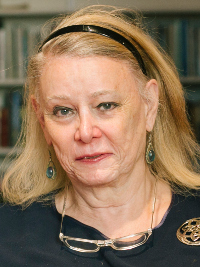
114: Deirdre McCloskey on Equality and Greed and How To Be a Very Good Economist
December 2, 2016 by Frank

http://traffic.libsyn.com/economicrockstar/114_Deirdre_McCloskey_Final.mp3
Play in New WindowDownload

114: Deirdre McCloskey on Equality and Greed and How To Be a Very Good Economist

Deirdre McCloskey taught at the University of Illinois at Chicago and was a Distinguished Professor of Economics, History, English, and Communication.

She was also adjunct professor of Philosophy and Classics there, and for five years was a visiting Professor of philosophy at Erasmus University in Rotterdam.

Since October 2007 Deirdre has received six honorary doctorates. In 2013, she received the Julian L. Simon Memorial Award from the Competitive Enterprise Institute for her work examining factors in history that led to advancement in human achievement and prosperity.

Deirdre’s main research interests include the origins of the modern world, the misuse of statistical significance in economics and other sciences, and the study of capitalism, among many others.

Deirdre has written 17 books and around 400 scholarly pieces on topics ranging from technical economics and statistical theory to transgender advocacy and the ethics of the bourgeois virtues.

Her latest book, Bourgeois Equality: How Ideas, Not Capital or Institutions, Enriched the World is part of the Bourgeois Era trilogy described as an “apology” for capitalism.

Deirdre describes herself as a “post-modern, quantitative, free-market, feminist, Episcopalian, Midwestern, gender-crossing, literary woman”.

Deirdre’s website deirdremccloskey.org contains information and links to her books, articles, interviews and much more.

Economics:

In this episode, Deirdre discusses and mentions: blackboard economics, poverty, game theory, inequality, education, healthcare, economic growth, trade, production possibility frontier, gains from trade, liberty, greed, equality, utility maximisation, covered interest arbitrage, theory of marriage.

Economists:

In this episode, Deirdre discusses and mentions: Adam Smith, John Mayanrd Keynes, Karl Marx, David Hume, Gary Becker, Shoshana Grossbard, Nancy Folbre, Herbert Gintis, Jonathan McEvoy, Sam Bowles, Nassim Taleb, Paul Samuelson, Kenneth Arrow, Thomas Piketty, Joseph Schumpeter and David Ricardo.

On the Economics Discipline:

“It’s not to soften the science. It’s to harden the science. We’ve got to stop talking about this softening. That’s not going to persuade the guys to take this stuff seriously. It’s harder to do it correctly than to do it by going on and on with Game Theory and Max. U. As Keynes said ‘A person who is only an economist is not going to be a very good economist’. And I think that’s correct. You need to be a statistician and a mathematician of course and I’m not against that. But you also need to be a historian and a philosopher and a sociologist and a psychologist and a serious person who knows the world. And the way we know the world is mainly through the humanities, through theology, through religion, through novels. through poetry, song, country music where the river meets the road. It’s through films, through gossip, through going to a football game with their mates. That’s how we learn how societies really work. And it’s harder to bring that to bare our human experience into the economic science. But to get a good economic science, and like any thoughtful person agrees, you have to have all of that.” – Deirdre McCloskey

On Greed and Envy:

“Greed is a corrosive sin. Greed is the sin of the conservatives and envy is the sin of the socialists. And both of them is corrosive of the human soul. What happens in both greed and envy is that possessions, if you allow me I am a Christian,  take the place of God or to take the place, to put it more generally, of some dignified transcendent outside yourself. Both of them are selfish.”  – Deirdre McCloskey

On Liberalism:

“Liberalism is under attack everywhere, this populism that we see all over the place is anti-liberal above all. But I believe on the long run all societies will become liberal democracies. And the reason is the incredible magnitude of the economic gain from adopting liberal policies as in Singapore, as in Hong Kong, as in South Korea andTaiwan, as in Botswana, as in most spectacularity China and India. And then, if I can persuade people, in the longer sweep of history I make the point of Holland in the 17th century and England and Scotland in the 18th in the New World. And this liberal experiment that we engaged in then and is being repeated now in China and India is so productive that I think that it will win in the end.”  – Deirdre McCloskey

People Mentioned in this Episode:

  • Lillian Bettencourt 
  • The Clancy Brothers 
  • St Thomas Aquinas

Writing Tips:

  • Put pen to paper and keep going. – Deirdre McCloskey
  • Read Deirdre’s book Economical Writing for amazing writing tips for economists.

Recommended Books:

  • Economical Writing by Deirdre McCloskey
  • Crossing: A Memoir by Deirdre McCloskey


http://traffic.libsyn.com/economicrockstar/114_Deirdre_McCloskey_Final.mp3

Podcast: Play in new window | Download
073: Robin Hanson on The Age of Em and How Brain Emulations Will Double Economic Growth Every Month

February 18, 2016 by Frank

http://traffic.libsyn.com/economicrockstar/073_Robin_Hanson.mp3
Play in New WindowDownload

073: Robin Hanson on The Age of Em and How Brain Emulations Will Double Economic Growth Every Month

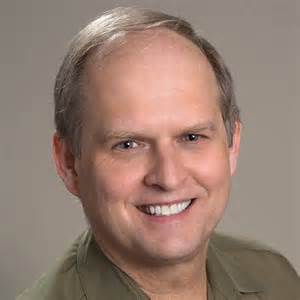
Robin Hanson is associate professor of economics at George Mason University. He is also a research associate at robin hansonOxford’s Future of Humanity Institute and chief scientist at Consensus Point.

Professor Hanson has diverse research interests, including spatial product competition, health incentive contracts, reversible computation, the origin of life, the survival of humanity, very long-term economic growth, growth given machine intelligence, and interstellar colonization

Robin has pioneered prediction markets, also known as information markets and idea futures, since 1988.

His passion is to understand everything, and to save the world. He is addicted to “viewquakes”, loves to argue one on one, and values honesty and passion. He blogs at OvercomingBias.com which has had over eight million visits.

His book The Age of Em: Work, Love and Life When Robots Rule the Earth will be available in May 2016, and The Elephant in the Brain, co-authored with Kevin Simler, in spring 2017.

Economists:

In this episode, Robin mentions and discusses: Thomas Malthus and Cass Sunstein

Economics:

In this episode, Robin mentions and discusses: emulation economy, economic growth, labor, competition, wages, subsistence economy, capital, land, slaves, supply and demand.

In this episode you will learn:

  • about Robin Hanson’s work in economics.
  • what is The Age of Em and how it could double economic growth every month rather than the current doubling of growth every 15 years.
  • what are brain emulations.
  • what is a singularity and if we will have one within the next 200 years.
  • how the workforce of the future look.
  • how humans will retire and have brain emulations do their work.
  • what will a brain emulation be like.
  • if humans will revert to subsistence levels of existence as predicted by Malthus.
  • about the labor market of the future and whether wages will be competed away with humans and ems living on the margin.
  • how Robin anticipates living in the future and how you can too.
  • why space exploration and space colonization will be delayed until after the rapid and exponential economic expansion brought about by brain emulation.
  • whether you can have a brain emulation of your own brain or whether the process will be reserved to a few hundred people who are best equipped to perform certain tasks.
  • how the relationship between humans and robots is portrayed as a dichotomy – a heaven or hell scenario – but this will not be the case with the technology available using brain emulations.
  • how you can be ‘teleported’ from one device to another without being physically affected.
  • how Robin used economic theory to explain the economy of the future where brain emulations are the drivers of growth.
  • why the Age of Em will last for about 2 years.
  • about Robin Hanson’s request to have only his head cryogenically frozen and what he hopes to achieve.

Paper:

  • Hanson, R. (1994). If Uploads Come First: The Crack of a Future Dawn 

Podcast Episodes:

  • Manu Saadia

Books:

  • The Age of Em by Robin Hanson
  • Trekonomics by Manu Saadia
  • The World According to Star Wars by Cass Sunstein

Resources:

  • The Age of Em
  • www.overcomingbias.com
  • Future of Humanity Institute
  • Consensus Point


http://traffic.libsyn.com/economicrockstar/073_Robin_Hanson.mp3

Podcast: Play in new window | Download
071: Darshak Patel on Using Popular Culture to Engage Economics Students in the Classroom and Online

February 5, 2016 by Frank

http://traffic.libsyn.com/economicrockstar/071_Darshak_Patel.mp3
Play in New WindowDownload

071: Darshak Patel on Using Popular Culture to Engage Economics Students in the Classroom and Online

Darshak Patel is currently a Lecturer of economics at the University of Kentucky, USA.darshak patel

After a one-year Visiting Assistant Professor appointment at Roanoke College, Darshak served three years as an Assistant Professor of Economics at the University of Tennessee, Martin. 

Darshak’s research and teaching interests include labor economics, microeconomics, industrial organization, the economics of education, and sports economics.  

Darshak graduated with a PhD in Economics at the University of Kentucky with his dissertation exploring the use of  option value theory to explain student decision-making in post-secondary schooling. 

Economics:

In this interview, Darshak mentions: option value theory, pedagogy, decision-making, opportunity cost, logic, profit, the hazard model, entrepreneurship, economic growth and corruption.

Economists:

In this interview, Darshak mentions: Abdullah Al-Bahrani, Kim Holder, Brendan Sheridan, Jadrian Wooten and Milton Friedman.

In this episode you will learn:

  • whether using Twitter to enhance the students’ learning outcomes is effective.
  • how video scrapbooking can be integrated into the economics curriculum.
  • the benefits and difficulties of using social media platforms to teach economics.
  • what option value theory is.
  • about Milton Friedman’s recommendation to the US government to introduce a tax to finance the US involvement in World War II.
  • how Bing Crosby helped promote the purchase of war bonds for the US war effort during the Second World War.
  • about the transition of the Kenyan economy since the 1970s.
  • about the Chinese influence in Africa.
  • how you can use the economic data provided on FRED to bring your economics classroom alive.
  • how Darshak is using popular culture to help interpret economic concepts and theories.

Resources:

  • ESPN 30 for 30
  • Rockonomix
  • FRED
  • Critical Commons
  • Economics of Seinfeld by Professor Linda S. Ghent, Professor Alan Grant and George Lesica.
  • Bazinganomics by James Tierney, G. Dirk Mateer, Wayne Geerling, Jadrian Wooten and Ben Smith.
  • Economics of The Office by Dan Kuester, Dirk Mateer and Chris Youderian.
  • University of Kentucky Teaching Economics Conference

Books:

  • The Two-Second Advantage: How We Succeed by Anticipating the Future–Just Enough by Vivek Ranadive and Kevin Maney
  • Soccernomics by Simon Kuper and  Stefan Szymanski

Papers:

  • Al-Bahrani, A., Dowell, C. & Patel, D. (2016). Video Scrapbooking: An Art Form Revived in the Economics Curriculum. Journal of Economics and Economic Education Research. Forthcoming.
  • Patel, D. and Saunoris, J. (2016). Using FRED Data Series to Improve Learning Outcomes in Economic Courses: From Student to Practitioner, Journal of Economics and Finance Education. Forthcoming.
  • Al-bahrani, A., Patel, D. and Sheridan, B. (2015). Engaging Students Using Social Media: The Students Perspective. International Review of Economics Education, 19, 36-50.
  • Al-bahrani, A. and Patel, D. (2015). Incorporating Twitter, Instagram, and Facebook in Economics Classrooms,  Journal of Economic Education. 46 (1), 56-67.
  • Al-bahrani, A. and Patel, D. (2015). Using ESPN 30 for 30 to Teach Principles of Economics, Southern Economic Journal, 81 (3), 829-842.
  • Patel, D. and Ward, M. R. (2011). “Using Patent Citation Patterns to Infer Innovation Market Competition,” Research Policy. 40(6), 886–894.
http://traffic.libsyn.com/economicrockstar/071_Darshak_Patel.mp3

Podcast: Play in new window | Download

042: Parviz Parvizi on Clammr, Coffee, Coase and the Economy of Iran

July 23, 2015 by Frank

http://traffic.libsyn.com/economicrockstar/042_Parviz_Parvizi_Final.mp3
Play in New WindowDownload

042: Parviz Parvizi on Clammr, Coffee, Coase and the Economy of Iran

Parviz Parvizi is co-founder of Clammr, a mobile app and platform making audio more social and viral. Users areParviz Parvizi on the Economic Rockstar podcast calling Clammr, which features snack-sized audio clips of 18 seconds or less, the “Instagram of Audio” and “Audio Twitter”.

Previously, Parviz worked at McKinsey & Company, Goldman Sachs, the Federal Communications Commission, and O’Melveny & Myers.

He has advised top 5 global media companies and mobile carriers on strategy and growth. He was a founder of McKinsey’s iConsumer research initiative on digital consumer behavior, authoring 3 of the firm’s 10 most-downloaded media sector knowledge documents.

Parviz was a Olin Law & Economics Fellow at Yale Law School. At Cornell he majored in economics and served as President of the Cornell Economics Society while an undergraduate.

Parviz holds a JD from Yale Law School and AB from Cornell.

Economics:

In this interview, Parviz mentions and discusses: development economics, poverty, transitional economies, microeconomics, exports, auction markets, transaction costs, fair trade, taxes, theory of specialisation, Coase theorem, theory of the firm, property rights, bargaining power, market prices, transaction costs, fair trade, economic growth, consumption, productivity, autarky,

Economists

In this interview, Parviz mentions and discusses: Friedrich Hayek, Adam Smith,David Ricardo, Ronald Coase and Steven Dubnar, 

Favorite Economists:

  • Adam Smith and Ronald Coase

Clammr as featured on Economic Rockstar

Find Out:

  • about Clammr, the amazingly new app that shares an 18-second audio clip just like an audio tweet.
  • about Parviz Parvizi’s journey from Iran to the US.
  • how Parviz Parvizi got his name.
  • how there are 4 hours of audio-only time each day for people and how Clammr can accommodate your needs.
  • about the motivation behind the creation of Clammr and how Parviz and his co-founder solved a problem.
  • how Clammr was built up from the beginning at zero cost.
  • what Clammr found out about podcasting.
  • the difficulties of growing and monetising a podcast and how Clammr is helping podcasters to solve these challenges.
  • about the social aspect of Clammr and how you can share audio snippets to your friends, colleagues and audience.
  • if Clammr will adopt a monetization model similar to YouTube.
  • how Clammr’s ‘Hear More’ button can potentially lead to a paid transaction for users.
  • about the opportunities that exist for users of Clammr in the education sector.
  • how teachers can use Clammr in assessments and how students can collaborate to give their audio response in a mashup-like answer.
  • how Clammr could be the new route for a musician to become known, just like the way Justin Bieber made it using YouTube.
  • how being an early adopter of a new platform can lead to a large following.
  • about the sensation that is PewDiePie on YouTube and his degree in Industrial Economics.
  • about Parviz’s work in the Tanzania and Ethiopia coffee trade market.
  • about the challenges faced by African coffee growers and how Parviz solved this problem.
  • Parviz’s views on the recent US-Iran deal.
  • how the US-Iran deal may have economic limitations due to Iran’s economy being 70% state-dominated.
  • about the benefits of an export-oriented market economy.
  • about the benefits of a knowledge economy.
  • how democracy and economic growth could improve if marginalised groups in society are helped.

Quotes by Parviz in Episode 042 of the Economic Rockstar Podcast:

  • Clammr is really trying to address the challenge of discovery and social sharing in audio – Parviz Parvizi

    Click To Tweet

  • You build a more sustainable business if the way you get paid is a way in which all parties involved actually get value – Parviz Parvizi

Advice:

  • Don’t sell yourself short in terms of where you’re aiming and don’t think that your starting point has to define your ending point – Parviz Parvizi

  • Even if you’re aren’t getting access to the very best schools, it doesn’t actually take that much time to catch up with hard work – Parviz Parvizi

  • Aim high and exposing yourself to people, institutions and places of incredibly high standards is a great way to push yourself even if initially you’re kind of a failure”– Parviz Parvizi

  • Entrepreneuship is a constant battle of wills – Parviz Parvizi

    Click To Tweet

Recommended Books:

  • The Elements of Style by Strunk and White
  • Wealth of Nations by Adam Smith
  • The Holy Bible

The Next Decade of Podcasting:

  • What’s in store for the next decade of podcasting and radio? Check out this great post.
  • Clammr releases Future Podcasting 2015 Report on SlideShare.
  • The Future of Podcasting by Parviz Parvizi.

Where to Find Parviz Parvizi:

  • Twitter: @ClammrClammr App on Economic Rockstar
  • Clammr: @Parviz
  • Facebook: Clammr

Links for the Clammr App:

  • Download Clammr for iPhone/iPad in the App Store or by visiting Clammr.
  • For Android use the web-based publisher to upload files and for a basic listening experience.
  • Workshop and update videos.
http://traffic.libsyn.com/economicrockstar/042_Parviz_Parvizi_Final.mp3

Podcast: Play in new window | Download
Frank Conway

Frank Conway is founder of Economic Rockstar and lecturer of economics, finance and statistics. Read More…

View My Blog Posts

Youtube Sub

Become a Patron of the Economic Rockstar Podcast

patreon

Ireland’s Economy by the Numbers

Leaving Cert Economics: Ireland’s Economy  Click here to download a workbook on Ireland’s Economy so that you can add your own notes. [Original size] Ireland’s Economy by fconway

Categories

Subscribe and Never Miss An Episode

itunes-logo

Recent Posts

  • Ireland’s Economy by the Numbers April 8, 2019
  • 174: Wendy Carlin on The Core Project, Capitalism, Democracy and Normative Statements February 13, 2019
  • 173: Stephen Wright on Core Econ as a Learning Resource for Mainstream Economics January 28, 2019
  • 172: Best of 2018 Part 2: From the Great Depression to Futurism; Institutions, Individualism, Cooperation and Reciprocity January 22, 2019
  • 171: Best of 2018 Part 1 January 3, 2019

Copyright © 2026 · Podcast Pro Theme on Genesis Framework · WordPress · Log in

This website uses cookies to improve your experience. We'll assume you're ok with this, but you can opt-out if you wish. Accept Reject Read More
Privacy Policy

Privacy Overview

This website uses cookies to improve your experience while you navigate through the website. Out of these, the cookies that are categorized as necessary are stored on your browser as they are essential for the working of basic functionalities of the website. We also use third-party cookies that help us analyze and understand how you use this website. These cookies will be stored in your browser only with your consent. You also have the option to opt-out of these cookies. But opting out of some of these cookies may affect your browsing experience.
Necessary
Always Enabled
Necessary cookies are absolutely essential for the website to function properly. This category only includes cookies that ensures basic functionalities and security features of the website. These cookies do not store any personal information.
Non-necessary
Any cookies that may not be particularly necessary for the website to function and is used specifically to collect user personal data via analytics, ads, other embedded contents are termed as non-necessary cookies. It is mandatory to procure user consent prior to running these cookies on your website.
SAVE & ACCEPT