• ABOUT
  • RESOURCES
  • PODCAST
  • BOOKS
  • BLOG
  • SUPPORTERS
  • QFA Financial Advice
  • CONTACT

Economic Rockstar

Connecting Brilliant Minds in Economics and Finance

127: Barry Eichengreen on the Importance of Economic History, the IMF and Reserve Currencies

February 8, 2018 by Frank

http://traffic.libsyn.com/economicrockstar/127_Barry_Eichengreen_Final.mp3
Play in New WindowDownload

127: Barry Eichengreen on the Importance of Economic History, the IMF and Reserve Currencies

Barry Eichengreen is Professor of Economics and Professor of Political Science at the University of California, Berkeley, where he has taught since 1987, and Professor of American History and Institutions, University of Cambridge.
Professor Eichengreen is a Research Associate of the National Bureau of Economic Research and Research Fellow of the Centre for Economic Policy Research.

Professor Eichengreen has been a fellow of the Center for Advanced Study in the Behavioral Sciences (Palo Alto) and the Institute for Advanced Study (Berlin). He is a regular monthly columnist for Project Syndicate.

His most recent books are How Global Currencies Work: Past, Present, and Future with Livia Chitu and Arnaud Mehl, The Korean Economy: From a Miraculous Past to a Sustainable Future with Wonhyuk Lim, Yung Chul Park and Dwight H. Perkins and Exorbitant Privilege: The Rise and Fall of the Dollar and the Future of the International Monetary System (2011) (shortlisted for the Financial Times and Goldman Sachs Business Book of the Year Award in 2011).

Professor Eichengreen is the recipient of a doctor honoris causa from the American University in Paris, and the 2010 recipient of the Schumpeter Prize from the International Schumpeter Society.

Importance of Economic History

“One of my motivations for studying economic history is the belief that the past can inform the present” Professor Eichengreen

In this episode you will learn:

  • Whether we can learn from economic history and whether history can repeat itself.
  • The importance of history in institutions.
  • Why the economics discipline suffers from “academic schizophrenia”.
  • The problems of the IMF as an organisation today. 
  • How the IMF can change for the better.
  • The IMF letters to Ireland regarding its bailout.
  • The tensions regarding the rise of China  and the isolation of the United States.
  • Is there room for only one reserve currency or can we have more than one?
  • Advice Professor Eichengreen would give to the Chinese if they wish to establish the Renminbi as a reserve currency. 
  • Does Bitcoin meet the criteria to be regarded as money?
  • About Clarence Hatry and how he contributed to the stock market crash of 1929.

Economists:

In this episode, Professor Eichengreen mentions: Charles Kindleberger (MIT), John Maynard Keynes, Benjamin Strong and Montagu Strong.

Economics:

In this episode, Professor Eichengreen mentions: economic history, financial markets, institutional framework, monetary policy, central banks, cryptocurrencies, blockchain, function of money, central banks, King’s College, Cambridge

Writing Tips:

1) Read critically. Find someone whose writing you admire and try to figure out what makes it work.

2) Keep it simple. Shorter declarative sentences are better and you can always make them shorter and more declarative.

3) Revise. No sentence or paragraph is perfect or even adequate the first, second, third, fourth or fifth. Go around.

4) Practice. One’s writing tends to get better the more that you do.

Work Habits:

“I do better when it’s quiet and when there are fewer distractions. So I tend to work at home early on the morning and try to avoid my email until I’ve spent some time writing. I can only do serious writing at my desk in my study at home.” Professor Eichengreen

Movie:

  • It’s a Wonderful Life

Books:

  • Hall of Mirrors by Barry Eichengreen
  • How Global Currencies Work: Past, Present, and Future by Barry Eichengreen, Livia Chitu and Arnaud Mehl.
  • The Korean Economy: From a Miraculous Past to a Sustainable Future by Barry Eichengreen, Wonhyuk Lim, Yung Chul Park and Dwight H. Perkins.
  • Exorbitant Privilege: The Rise and Fall of the Dollar and the Future of the International Monetary System by Barry Eichengreen.

Recommend Book:

  • Against the Grain by James C. Scott

Patreon

If you’re a fan of the podcast and would like to show your support in anyway, please check out my Patreon page at www.patreon.com/economicrockstar where you can sign up for any of the awards for as little as $1 a month or you can simply follow me on the Economic Rockstar Facebook page or on Twitter or simply recommend the show to a friend, especially if they have never had the opportunity to study economics.

http://traffic.libsyn.com/economicrockstar/127_Barry_Eichengreen_Final.mp3

Podcast: Play in new window | Download

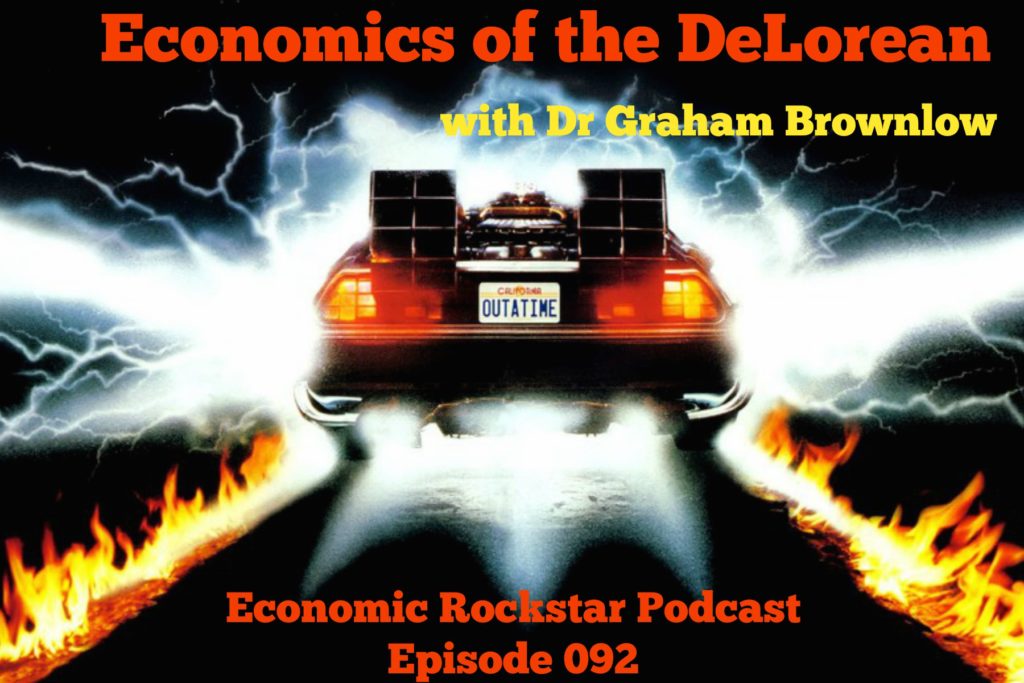
092: Graham Brownlow on Rent Seeking, Cliometrics and the Economics of the DeLorean

June 30, 2016 by Frank

http://traffic.libsyn.com/economicrockstar/092_Graham_Brownlow_Final.mp3
Play in New WindowDownload

092: Graham Brownlow on Rent Seeking, Cliometrics and the Economics of the DeLorean

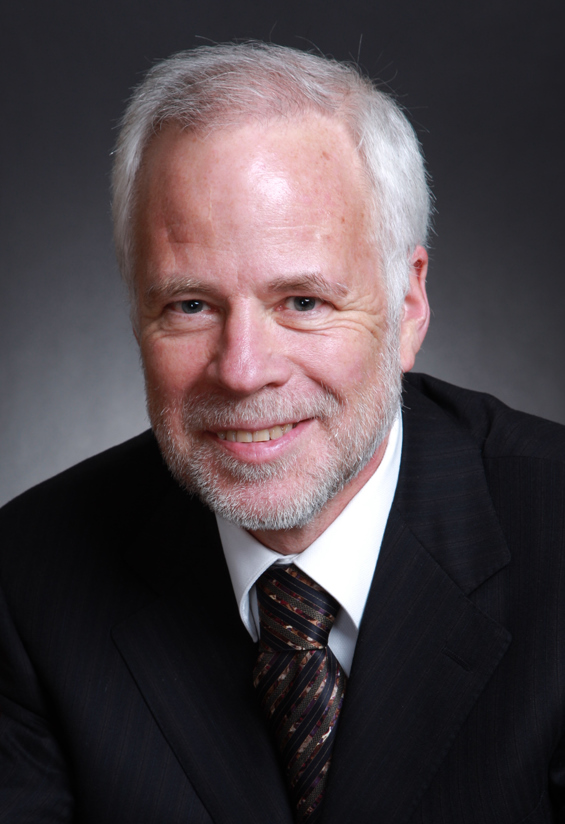
Dr. Graham Brownlow (PhD, QUB) is a Lecturer in Economics at Queen’s University in Belfast, Northern Ireland.Graham Brownlow Economic Rockstar

Dr. Brownlow’s research focuses primarily on economic history and institutions, evolutionary economics, Irish economic and business performance and violence. He also has an interest in methodology in economic and business history.

Graham edits the journal Irish Economic and Social History.

I’m very eclectic and pragmatic – Dr. Graham Brownlow

Economics:

In this episode, Graham mentions: rent seeking, cliometrics, inefficiency, corruption, institutions, subsidies, Brexit, monopolies, sharing economy, fast money, game theory, bargaining, public choice, regional economics and economic history. 

Economists:

In this episode, Graham mentions: Peter Boettke, Peter Leeson, Gary Becker, William Baumal, Douglass North, Robert Hamilton, Eli Hecksher, Adam Smith, John Maynard Keynes, Joseph Schumpeter, Friedrich Hayek, Milton Friedman, George Duncan, Tim Harford, Steven Landsburg and G. L. S. Shackle.

Using Analytic Narratives in Economic Research

Looking to balance the details of fact and yet keep the rigour of an economic model – Graham Brownlow

  1. Identify the problem or puzzle.
  2. Immerse yourself in the topic or resources.
  3. Move to more formal aspects.
  4. Don’t start with the model and then use it to explain your findings.
  5. You actually first look at the historical issue under investigation and then apply it to the model.

Links:

  • Mont Pelerin Society

Research by Dr. Graham Brownlow:

  • Back to the Failure: An Analytic Narrative of the De Lorean Debacle (2015).
  • Soft Budget Constraints and Regional Industrial Policy: Reinterpreting the Rise and Fall of De Lorean (2015).
  • ‘Review of Cullen Economy, Trade and Irish Merchants at Home and Abroad, 1600-1988’ (2013).
  • How do we Ensure a Useful Future for Irish Cliometrics? (2012).
  • A complete list of Graham’s research can be found here.

Economics of the DeLorean Economic Rockstar

Where to Find Graham:

  • Queen’s University, Belfast, Northern Ireland
  • Twitter: @GrahamBrownlow

Books:

  • The Undercover Economist by Tim Harford
  • The Undercover Economist Strikes Back: How to Run – or Ruin – an Economy by Tim Harford
  • The Undercover Economist, Revised and Updated Edition: Exposing Why the Rich Are Rich, the Poor Are Poor – and Why You Can Never Buy a Decent Used Car! by Tim Harford
  • The Logic of Life: The Rational Economics of an Irrational World by Tim Harford
  • Adapt: Why Success Always Starts with Failure by Tim Harford
  • Messy: The Power of Disorder to Transform Our Lives by Tim Harford
  • The Armchair Economist: Economics and Everyday Life by Steven Landsburg
  • Economics for Pleasure by G. L. S. Shackle
  • The New Geography of Jobs by Enrico Moretti


http://traffic.libsyn.com/economicrockstar/092_Graham_Brownlow_Final.mp3

Podcast: Play in new window | Download
060: Manu Saadia on Trekonomics – The Economics of Star Trek: Scarcity, Productivity and Public Goods

November 26, 2015 by Frank

http://traffic.libsyn.com/economicrockstar/Manu_Saadia_Final.mp3
Play in New WindowDownload

060: Manu Saadia on Trekonomics – The Economics of Star Trek: Scarcity, Productivity and Public Goods

Manu Saadia fell into science fiction and Star Trek fandom at the age of eight, back in Paris, France, where he was born and raised.Manu Saadia

Manu  studied history of science and economic history in Paris and Chicago. After many happy years in the Ivory Tower, he yielded to his childhood passion for the future.

Manu embarked on his continuing mission to explore strange new worlds by boldly going where many have gone before: Los Angeles, CA, where he advise and (occasionally) builds tech companies.

Manu received the 2005 Wayne C. Booth Graduate Student Prize for Excellence in Teaching at the University of Chicago.

His book, Trekonomics, is currently available for pre-order at www.inkshares.com and will be released in 2016.

Star Trek offers much more detail about its own world and the way its economics actually works – like the plumbing so to speak. So that’s what I wanted to do. Go into the plumbing of Star Trek. – Manu Saadia

Economics:

In this interview, Manu mentions:  trekonomics, crowd funding, labor, economic history, trade, robots, capitalism, comparative advantage, currency, money, Gold-Pressed Latinum, public goods, conspicuous consumption, scarcity, peak oil, productivity and opportunity costs.

Economists:

In this interview, Manu mentions: Brad DeLong, Felix Salmon, Adam Smith, Thomas Malthus, Hubbert, Paul Ehrlich, Julian Simon, Romer, Larry Summers, John Maynard Keynes and Angus Deaton,

In this episode you will learn:

  • why Manu Saadia wrote Trekonomics.
  • about the Star Trek Economics panel at Comic Con.
  • why economists love Star Trek.
  • about inkshares and how it can help authors publish their book.
  • how traditional media rather than social media boosted pre-order sales of Trekonomics – an ironic outcome.
  • when Manu’s interested in economics and Star Trek collided.
  • about the work of Isaac Asimov and how his stories are a discourse on economics.
  • how the stories of robots and the future by Asimov influenced and shaped the storyline in Star Trek.
  • about the replicators in Star Trek and how they solve the problem of economic scarcity.
  • about the Ferengi’s and how they represent capitalism and trade.
  • why The Federation or the humans in Star Trek do not use money but have a foreign account to trade with the Ferengi’s.
  • about the Ferengi’s currency, Gold-Pressed Latinum, which cannot be replicable.
  • why owning a replicator is a ‘pain in the ass’.
  • how things that cannot be replicated has value but those that can be replicated has no value.
  • if Keynes’ The Economic Possibilities of Our Grand Children is a rebuttal of the writings of H. G. Wells.
  • about GPS being a public good and the benefits it has brought to the public.
  • why making GPS a public good in 1983 was one of the best decisions Ronald Reagan made as US President.
  • Manu’s favourite Star Trek episode is Lower Decks (The Next Generation).

Quotes by Manu Saadia in Episode 60 of the Economic Rockstar Podcast:

Trekonomics got a lot of support and very nice feedback from a lot of economists – Manu Saadia

Click To Tweet

“It always baffles me when you have these very famous and serious economic thinkers were in fact  total Star Trek nerds. I was on a panel at New York Comic Con with Brad DeLong, Paul Krugman and Annalen Newitz from i09. There was Chris Black as well and Felix Salmon.” – Manu Saadia

Brad DeLong came to the panel with a Star Trek hoodie. – Manu Saadia

Click To Tweet

On Isaac Asimov: “All of his work is a long meditation on economics, either foundation where there is this science called psychohistory which is in fact a fictional mathematical modelling of human behaviours on the scale of societies on a galactic scale.” – Manu Saadia

“One of the reasons why I wanted to study economics was that I was fascinated by and really wanted to understand the transformation of humanity’s relation to its own labor. This is one of the great questions of political economy because it determines a lot of things when it comes to the shape society and the role of the state and how behaviors are determined and constructed over time. But it’s also the key to understanding where we’re going”. – Manu Saadia

“I would say the replicators are more of a metaphor. If you look at their status in the series, they do not help move the narratives forward. They’re just there to signify that there’s no need to work. They’re a little bit like robots in Asimov. They have the same narrative function, which is to show and demonstrate that post-scarcity does exist and is based on automation and artificial intelligence.” – Manu Saadia

The Ferengi’s are the capitalist, merchant traders of the galaxy – Manu Saadia

Click To Tweet

Most of the stuff in Star Trek is basically a public good – Manu Saadia

Click To Tweet

I think Star Trek is very much what Keynes described in The Economic Possibilities of Our Grand Children – Manu Saadia

Click To Tweet

Books:

  • Scatter, Adapt, and Remember by Annalen Newitz 
  • Isaac Asimov
  • Frankenstein by Mary Shelly
  • The Economic Possibilities of Our Grand Children by John Maynard Keynes

Papers:

  • Romer (1990) Productivity Gains

Links:

  • What I Learned Crowdfunding Trekonomics  by Manu Saadia
  • Trekonomics The economics of Star Trek: how does it work, and how do we get there?  by Manu Saadia
  • View the transcript to The Amazing Economics of Star Trek at New York Comic Con
  • www.i09.com 
  • www.inkshares.com
  • What the economics of Star Trek can teach us about the real world by Brian Fung, Andrea Peterson and Hayley Tsukayama Washington Post 
  • The Live Long and Prosper Edition Slate Money 
  • Club of Rome 

Manu’s Favorite Star Trek Epsiodes:

  • City on the Edge of Forever
  • Arena

Where to Find Manu:

  • inkshares.com
  • fusion.net

Music:

  • Star Trek Episode Amok Time
http://traffic.libsyn.com/economicrockstar/Manu_Saadia_Final.mp3

Podcast: Play in new window | Download
Frank Conway

Frank Conway is founder of Economic Rockstar and lecturer of economics, finance and statistics. Read More…

View My Blog Posts

Youtube Sub

Become a Patron of the Economic Rockstar Podcast

patreon

Ireland’s Economy by the Numbers

Leaving Cert Economics: Ireland’s Economy  Click here to download a workbook on Ireland’s Economy so that you can add your own notes. [Original size] Ireland’s Economy by fconway

Categories

Subscribe and Never Miss An Episode

itunes-logo

Recent Posts

  • Ireland’s Economy by the Numbers April 8, 2019
  • 174: Wendy Carlin on The Core Project, Capitalism, Democracy and Normative Statements February 13, 2019
  • 173: Stephen Wright on Core Econ as a Learning Resource for Mainstream Economics January 28, 2019
  • 172: Best of 2018 Part 2: From the Great Depression to Futurism; Institutions, Individualism, Cooperation and Reciprocity January 22, 2019
  • 171: Best of 2018 Part 1 January 3, 2019

Copyright © 2026 · Podcast Pro Theme on Genesis Framework · WordPress · Log in

This website uses cookies to improve your experience. We'll assume you're ok with this, but you can opt-out if you wish. Accept Reject Read More
Privacy Policy

Privacy Overview

This website uses cookies to improve your experience while you navigate through the website. Out of these, the cookies that are categorized as necessary are stored on your browser as they are essential for the working of basic functionalities of the website. We also use third-party cookies that help us analyze and understand how you use this website. These cookies will be stored in your browser only with your consent. You also have the option to opt-out of these cookies. But opting out of some of these cookies may affect your browsing experience.
Necessary
Always Enabled
Necessary cookies are absolutely essential for the website to function properly. This category only includes cookies that ensures basic functionalities and security features of the website. These cookies do not store any personal information.
Non-necessary
Any cookies that may not be particularly necessary for the website to function and is used specifically to collect user personal data via analytics, ads, other embedded contents are termed as non-necessary cookies. It is mandatory to procure user consent prior to running these cookies on your website.
SAVE & ACCEPT