• ABOUT
  • RESOURCES
  • PODCAST
  • BOOKS
  • BLOG
  • SUPPORTERS
  • QFA Financial Advice
  • CONTACT

Economic Rockstar

Connecting Brilliant Minds in Economics and Finance

114: Deirdre McCloskey on Equality and Greed and How To Be a Very Good Economist
December 2, 2016 by Frank

http://traffic.libsyn.com/economicrockstar/114_Deirdre_McCloskey_Final.mp3
Play in New WindowDownload

114: Deirdre McCloskey on Equality and Greed and How To Be a Very Good Economist

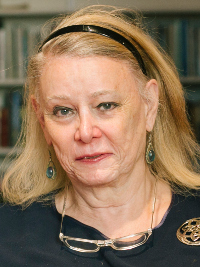
Deirdre McCloskey taught at the University of Illinois at Chicago and was a Distinguished Professor of Economics, History, English, and Communication.

She was also adjunct professor of Philosophy and Classics there, and for five years was a visiting Professor of philosophy at Erasmus University in Rotterdam.

Since October 2007 Deirdre has received six honorary doctorates. In 2013, she received the Julian L. Simon Memorial Award from the Competitive Enterprise Institute for her work examining factors in history that led to advancement in human achievement and prosperity.

Deirdre’s main research interests include the origins of the modern world, the misuse of statistical significance in economics and other sciences, and the study of capitalism, among many others.

Deirdre has written 17 books and around 400 scholarly pieces on topics ranging from technical economics and statistical theory to transgender advocacy and the ethics of the bourgeois virtues.

Her latest book, Bourgeois Equality: How Ideas, Not Capital or Institutions, Enriched the World is part of the Bourgeois Era trilogy described as an “apology” for capitalism.

Deirdre describes herself as a “post-modern, quantitative, free-market, feminist, Episcopalian, Midwestern, gender-crossing, literary woman”.

Deirdre’s website deirdremccloskey.org contains information and links to her books, articles, interviews and much more.

Economics:

In this episode, Deirdre discusses and mentions: blackboard economics, poverty, game theory, inequality, education, healthcare, economic growth, trade, production possibility frontier, gains from trade, liberty, greed, equality, utility maximisation, covered interest arbitrage, theory of marriage.

Economists:

In this episode, Deirdre discusses and mentions: Adam Smith, John Mayanrd Keynes, Karl Marx, David Hume, Gary Becker, Shoshana Grossbard, Nancy Folbre, Herbert Gintis, Jonathan McEvoy, Sam Bowles, Nassim Taleb, Paul Samuelson, Kenneth Arrow, Thomas Piketty, Joseph Schumpeter and David Ricardo.

On the Economics Discipline:

“It’s not to soften the science. It’s to harden the science. We’ve got to stop talking about this softening. That’s not going to persuade the guys to take this stuff seriously. It’s harder to do it correctly than to do it by going on and on with Game Theory and Max. U. As Keynes said ‘A person who is only an economist is not going to be a very good economist’. And I think that’s correct. You need to be a statistician and a mathematician of course and I’m not against that. But you also need to be a historian and a philosopher and a sociologist and a psychologist and a serious person who knows the world. And the way we know the world is mainly through the humanities, through theology, through religion, through novels. through poetry, song, country music where the river meets the road. It’s through films, through gossip, through going to a football game with their mates. That’s how we learn how societies really work. And it’s harder to bring that to bare our human experience into the economic science. But to get a good economic science, and like any thoughtful person agrees, you have to have all of that.” – Deirdre McCloskey

On Greed and Envy:

“Greed is a corrosive sin. Greed is the sin of the conservatives and envy is the sin of the socialists. And both of them is corrosive of the human soul. What happens in both greed and envy is that possessions, if you allow me I am a Christian,  take the place of God or to take the place, to put it more generally, of some dignified transcendent outside yourself. Both of them are selfish.”  – Deirdre McCloskey

On Liberalism:

“Liberalism is under attack everywhere, this populism that we see all over the place is anti-liberal above all. But I believe on the long run all societies will become liberal democracies. And the reason is the incredible magnitude of the economic gain from adopting liberal policies as in Singapore, as in Hong Kong, as in South Korea andTaiwan, as in Botswana, as in most spectacularity China and India. And then, if I can persuade people, in the longer sweep of history I make the point of Holland in the 17th century and England and Scotland in the 18th in the New World. And this liberal experiment that we engaged in then and is being repeated now in China and India is so productive that I think that it will win in the end.”  – Deirdre McCloskey

People Mentioned in this Episode:

  • Lillian Bettencourt 
  • The Clancy Brothers 
  • St Thomas Aquinas

Writing Tips:

  • Put pen to paper and keep going. – Deirdre McCloskey
  • Read Deirdre’s book Economical Writing for amazing writing tips for economists.

Recommended Books:

  • Economical Writing by Deirdre McCloskey
  • Crossing: A Memoir by Deirdre McCloskey


http://traffic.libsyn.com/economicrockstar/114_Deirdre_McCloskey_Final.mp3

Podcast: Play in new window | Download

113: Jonathan McEvoy on Globalisation, National Autonomy, Capitalism and the Economic Resonance in Timeless Songs

November 25, 2016 by Frank

http://traffic.libsyn.com/economicrockstar/113-_Jonathan_McEvoy_Final.mp3
Play in New WindowDownload

113: Jonathan McEvoy on Globalisation, National Autonomy, Capitalism and the Economic Resonance in Timeless Songs

Jonathan McEvoy is currently an undergrad student of economics at Waterford Institute of Technology in jonathan-mcevoy-economic-rockstarIreland.

He was recently recognised for being in the top 5% of the Business School at W.I.T, earning the honour of being on the Deans List for Academic Achievement.

Jonathan has a unique understanding of the world around us and, together with his love of economics, has a unique perspective on the economics discipline.

Jonathan’s desire to discover and explore the multitude of economic thinking, from Keynesianism to Marxism, has resulted in him creating a blog called Economics – Thoughts of a Student which can be found at jonathanmcevoy888.blogspot.com.

His recent career history has prepared him well to be great public speaker and communicator.

Jonathan is also an athlete and a top soccer player, having spent time with English Premier League clubs Manchester City and Tottenham Hotspur.

Jonathan’s interests also include Health, Human Rights, Politics, Civil Rights, Poverty Alleviation and Science and Technology.

Economics:

In this episode, Jonathan discusses and mentions: production possibility frontier, comparative advantage, production, services, efficiency, technology, foreign direct investment, tariffs, income, vertical farming, externalities, capitalism, profit, inequality, welfare, labour costs, GDP, economics of war and economics of romance.

Economists:

In this episode, Jonathan discusses and mentions: Adam Smith, John Maynard Keynes, Karl Marx, Friedrich Engels and David Ricardo.

In this episode you will learn:

  • about the balance required between globalisation and national autonomy.
  • about Ireland’s role in CERN.
  • whether future-tech will improve humanity’s standard of living?

  • how economics and technology are inextricably interlinked.
  • why economists and technologists should increase collaboration for the betterment of society.
  • how the world’s production possibility frontier can move outward to reach once unimagined and unattainable outcomes.
  • whether ‘planetisation’ can be a reality.
  • the use of songs to capture the economic and social setting of an era.
  • and much much more.

People Mentioned in this Episode:

  • Cormac O’Rafferty
  • Stephen Hawking
  • Nikola Tesla
  • Elon Musk
  • John F. Kennedy
  • Neil deGrasse Tyson
  • Warren Buffett
  • Bob Dylan
  • Bruce Springsteen
  • Tupac Shakur
  • Bruce Hornsby

Links:

  • Finding the Balance Between Globalisation and National Autonomy by Jonathan McEvoy

  • Why Ireland Should Aspire to CERN Status – The Role of Economics in Science and Technology and How They Benefit One Another by Jonathan McEvoy

  • Will Future-Tech Improve Humanity’s Standards of Living? by Jonathan McEvoy
  • How to Write Timeless Songs like Springsteen and other Artists – The Economic Resonance in Timeless Songs and Creativity being born from Economics by Jonathan McEvoy

  • The Big Bang Theory

Where to Find Jonathan McEvoy:

  • Website: jonathanmcevoy888.blogspot.com
  • Twitter: @JonathanMcEv0y

Books:

  • Wealth of Nations by Adam Smith
  • Communist Manifesto by Karl Marx and Friedrich Engels
  • Game of Thrones by George R. R. Martin
http://traffic.libsyn.com/economicrockstar/113-_Jonathan_McEvoy_Final.mp3

Podcast: Play in new window | Download
079: Bryan Caplan on Parenting, the Case Against Education and the Rational Voter

March 31, 2016 by Frank

http://traffic.libsyn.com/economicrockstar/079_Bryan_Caplan.mp3
Play in New WindowDownload

079: Bryan Caplan on Parenting, the Case Against Education and the Rational Voter

Bryan Caplan is Professor of Economics at George Mason University and Senior Scholar at the Mercatus Center.Bryan Caplan Economic Rockstar

Bryan is the author of The Myth of the Rational Voter: Why Democracies Choose Bad Policies, named “the best political book of the year” by the New York Times, and Selfish Reasons to Have More Kids: Why Being a Great Parent Is Less Work and More Fun Than You Think. He also blogs at EconLog.

Bryan has published in the New York Times, the Washington Post, the Wall Street Journal, the American Economic Review, the Economic Journal, the Journal of Law and Economics, and Intelligence, and has appeared on 20/20, FoxNews, and C-SPAN. He is now working on a new book, The Case Against Education.

His webpage, bcaplan.com, features both his academic research and his numerous other interests, including the online Museum of Communism.

Bryan has a B.A. in Economics from University of California, Berkeley and a Ph.D. in Economics from Princeton University.

Economists and Influencers:

In this episode, Bryan mentions: Milton Friedman, Gary Becker, Daniel Kahneman and Tyler Cowen.

Economics:

In this episode, Bryan mentions: the signaling effect, behavioral genetics, fertility rates, immigration, open borders, productivity and democracy.

Where to Find Bryan Caplan:

  • www.bryancaplan.com
  • EconLog

Books:

  • The Myth of the Rational Voter: Why Democracies Choose Bad Policies by Bryan Caplan
  • Selfish Reasons to Have More Kids: Why Being a Great Parent Is Less Work and More Fun Than You Think by Bryan Caplan
  • Understanding Comics: The Invisible Art by Scott McCloud
http://traffic.libsyn.com/economicrockstar/079_Bryan_Caplan.mp3

Podcast: Play in new window | Download

071: Darshak Patel on Using Popular Culture to Engage Economics Students in the Classroom and Online

February 5, 2016 by Frank

http://traffic.libsyn.com/economicrockstar/071_Darshak_Patel.mp3
Play in New WindowDownload

071: Darshak Patel on Using Popular Culture to Engage Economics Students in the Classroom and Online

Darshak Patel is currently a Lecturer of economics at the University of Kentucky, USA.darshak patel

After a one-year Visiting Assistant Professor appointment at Roanoke College, Darshak served three years as an Assistant Professor of Economics at the University of Tennessee, Martin. 

Darshak’s research and teaching interests include labor economics, microeconomics, industrial organization, the economics of education, and sports economics.  

Darshak graduated with a PhD in Economics at the University of Kentucky with his dissertation exploring the use of  option value theory to explain student decision-making in post-secondary schooling. 

Economics:

In this interview, Darshak mentions: option value theory, pedagogy, decision-making, opportunity cost, logic, profit, the hazard model, entrepreneurship, economic growth and corruption.

Economists:

In this interview, Darshak mentions: Abdullah Al-Bahrani, Kim Holder, Brendan Sheridan, Jadrian Wooten and Milton Friedman.

In this episode you will learn:

  • whether using Twitter to enhance the students’ learning outcomes is effective.
  • how video scrapbooking can be integrated into the economics curriculum.
  • the benefits and difficulties of using social media platforms to teach economics.
  • what option value theory is.
  • about Milton Friedman’s recommendation to the US government to introduce a tax to finance the US involvement in World War II.
  • how Bing Crosby helped promote the purchase of war bonds for the US war effort during the Second World War.
  • about the transition of the Kenyan economy since the 1970s.
  • about the Chinese influence in Africa.
  • how you can use the economic data provided on FRED to bring your economics classroom alive.
  • how Darshak is using popular culture to help interpret economic concepts and theories.

Resources:

  • ESPN 30 for 30
  • Rockonomix
  • FRED
  • Critical Commons
  • Economics of Seinfeld by Professor Linda S. Ghent, Professor Alan Grant and George Lesica.
  • Bazinganomics by James Tierney, G. Dirk Mateer, Wayne Geerling, Jadrian Wooten and Ben Smith.
  • Economics of The Office by Dan Kuester, Dirk Mateer and Chris Youderian.
  • University of Kentucky Teaching Economics Conference

Books:

  • The Two-Second Advantage: How We Succeed by Anticipating the Future–Just Enough by Vivek Ranadive and Kevin Maney
  • Soccernomics by Simon Kuper and  Stefan Szymanski

Papers:

  • Al-Bahrani, A., Dowell, C. & Patel, D. (2016). Video Scrapbooking: An Art Form Revived in the Economics Curriculum. Journal of Economics and Economic Education Research. Forthcoming.
  • Patel, D. and Saunoris, J. (2016). Using FRED Data Series to Improve Learning Outcomes in Economic Courses: From Student to Practitioner, Journal of Economics and Finance Education. Forthcoming.
  • Al-bahrani, A., Patel, D. and Sheridan, B. (2015). Engaging Students Using Social Media: The Students Perspective. International Review of Economics Education, 19, 36-50.
  • Al-bahrani, A. and Patel, D. (2015). Incorporating Twitter, Instagram, and Facebook in Economics Classrooms,  Journal of Economic Education. 46 (1), 56-67.
  • Al-bahrani, A. and Patel, D. (2015). Using ESPN 30 for 30 to Teach Principles of Economics, Southern Economic Journal, 81 (3), 829-842.
  • Patel, D. and Ward, M. R. (2011). “Using Patent Citation Patterns to Infer Innovation Market Competition,” Research Policy. 40(6), 886–894.
http://traffic.libsyn.com/economicrockstar/071_Darshak_Patel.mp3

Podcast: Play in new window | Download

059: Shawn Humphrey on La Ceiba Microfinance, Tribal Teaching and Creating a Culture of Commitment in the Classroom

November 19, 2015 by Frank

http://traffic.libsyn.com/economicrockstar/059_Shawn_Humphrey_Final.mp3
Play in New WindowDownload

059: Shawn Humphrey on La Ceiba Microfinance, Tribal Teaching and Creating a Culture of Commitment in the Classroom

Shawn Humphrey is currently an Associate Professor of Economics at the University of Mary Washington.shawn humphrey

Shawn is the founder of La Ceiba Microfinance,the Two Dollar Challenge, the Month of Microfinance, and the Poverty Action Conference. 

He is also on the Board of Directors of Students Helping Honduras, a former Clinton Global Initiative University mentor, an Opportunity Collaboration alum and a 2014 Feast on Good Speaker.

Shawn is from North Bend, OH, earned his BA in Economics from Earlham College (Richmond, IN), his MA in Economics at Virginia Commonwealth University (Richmond, VA), and after having read Douglass C. North’s Institutions, Institutional Change, and Economic Performance headed to Washington University in St. Louis where he earned his PhD in Economics.

Shawn describes himself as a Tribal Teacher, a Diligent Do-Gooder and a Global Grassroots Mobilizer.

I grew up poor in Ohio. I was bullied from the time I was young, all the way through 8th grade. Both these things are part of my core and they motivate me in everything that I do – Shawn Humphrey

Economics:

In this interview, Shawn mentions: economic development, microfinance, consumption smoothing, poverty and globalisation.

Economists:

In this interview, Shawn mentions: Christine Exley, Helena Nordberg-Hodge, Eugene Power, Robert Solow, Douglass North, Armen Alchian, Harold Demsetz and Gary Miller.

In this episode you will learn:

  • about the social entrepreneurial journey that Shawn found himself pursuing.
  • about Shawn’s Tribal Teaching pedagogy and if this is the future of education.
  • why Shawn wanted to help the poor in Honduras and to encourage people to experience poverty.
  • about Shawn’s family experiencing poverty in the 1970s and how their standing in the community led him to believe that there was a better way to treat and help people out of poverty.
  • about how La Ceiba are helping the poor in Honduras.
  • about the importance of building relationships with individuals that seek assistance from La Ceiba.
  • the problems with microfinance due to group lending and peer-pressure.
  • about the Two Dollar Challenge and you can get involved.
  • why supporting local leaders is the key to ending poverty.
  • about Shawn’s 7 year journey to finding a common ground in humanity.
  • why Shawn’s initial desire to feel significant while helping the poor is now a constant battle.
  • about Tribal Teaching and the pedagogy Shawn has  designed and embraced to make a better learning environment and process.
  • about the culture of commitment that Shawn has introduced into his classroom.

Shawn Humphrey on La Ceiba Microfinance:

“My students and I, we run our own microfinance institution in Honduras called La Ceiba where we take a very distinct approach to microfinance which is different to anything else that is out there.” – Shawn Humphrey

You can make a global impact on not a lot of money if you’re creative enough to embrace your constraints and say ‘hey, let’s find a way around this one!’ and do it creatively. – Shawn Humphrey

“Group lending is simply peer-pressure. It’s a public process by which a small set of individuals can apply pressure to one individual in the group who is unable and/or unwilling at that moment to pay off her loan.”

“90% of our clients did not use their loans for entrepreneurial activities. Most of them use it for consumption smoothing.” – Shawn Humphrey

We get more stories out of coffee and donuts than we do out of group meetings – Shawn Humphrey

Click To Tweet

My role is actually on the side-lines as a side-kick, not as a hero in this whole thing – Shawn Humphrey

Click To Tweet

I’m fighting an entire culture that has conditioned us to believe in certain things – Shawn Humphrey

Click To Tweet

When I started this work, I was flailing human being. I felt hollow inside and for some reason I felt that I could fill that hole by trying to end someone else’s poverty. – Shawn Humphrey

Our hardest work is inside of us – Shawn Humphrey

Click To Tweet

Where to Find Shawn Humphrey:

  • shawnhumphrey.com

Organisations founded by Shawn Humphrey:

  • La Ceiba Microfinance
  • Tribal Teaching
  • Month of Microfinance
  • Two Dollar Challenge

Recommended Readings:

  • 5 Species of Students by Shawn Humphrey
  • Life Chart by Shawn Humphrey
  • If You Breathe You Must Battle by Shawn Humphrey
  • To Hell With Good Intentions by Ivan Illich 

Documentaries:

  • Cowspiracy: The Sustainability Secret by Kip Andersen and Keegan Kuhn
  • The Stanford Prison Experiment

Books:

  • The Hero with a Thousand Faces by Joseph Campbell
  • Institutions, Institutional Change, and Economic Performance by Douglass C. North
  • Managerial Dilemma’s by Gary Miller
  • The War of Art by Stephen Pressfield
http://traffic.libsyn.com/economicrockstar/059_Shawn_Humphrey_Final.mp3

Podcast: Play in new window | Download

028: Alice Louise Kassens on Nudging Students to Study Economics and Why Mainstream Media Should Publish Research on Mental Health

April 16, 2015 by Frank

http://traffic.libsyn.com/economicrockstar/028_Alice_Louise_Kassens.mp3
Play in New WindowDownload

028: Alice Louise Kassens on Nudging Students to Study Economics and Why Mainstream Media Should Publish Research on Mental Health

Dr. Alice Louise Kassens is an Economics Professor at Roanoke College and has already built a notable
reputation in her profession.

Alice is the current recipient of Roanoke’s John S. Shannon Professorship in Economics, which honors and supports a faculty member who is an outstanding teacher and accomplished scholar and who is thoroughly committed to enriching the lives of Roanoke students.

Dr Kassens’ work at Roanoke includes creating and maintaining an economics program blog and a biannual newsletter, Roanomics. She also serves as the faculty advisor for the College’s Economics Club.

Alice’s areas of expertise include labor and health economics. She has won several awards and fellowships, and her work has been published in numerous academic journals.

Alice is one of three economists who won Cengage Learning’s 2013 Economist Educators Best in Class Award for her method of teaching using Twitter.

Dr Kassens is president of the Virginia Association of Economics, has recently been appointed by Governor McAuliffe to his Joint Advisory Board of Economists, is a senior analyst for the Institute for Policy and Opinion Research and is a Referee for the Journal of Economic  Education, the Journal of Economics and Finance Education, and the National Council on Undergraduate Research.

Alice is the author of Changing Perceptions and Waistlines – A Bayesian and Behavioral Approach and is known as the ‘Running Economist’ not because of her busy lifestyle but because she is a competitive runner.

Alice earned her bachelor’s degree from the College of William and Mary and her Ph.D. from North Carolina State University.

Personal Habits:

  • Running, swimming and looking after her five dogs and an 18 year old cat!

Economic Themes:

In this interview, Alice mentions and discusses: 

Supply-side and demand-side of the housing market, primary research methods, sample selection bias, surveys, employment, unemployment, the Great Recession and regression discontinuity design models.

Economists:

In this interview, Alice mentions: 

Milton Friedman, Thomas Sowell, William Rogers, Mark V. Pauly, Alvin Headen, Yana van der Meulen Rodgers, Luther Lawson, Dean Baker and Jadrian Wooten.

Takeaway:

Do a little something everyday, even if it’s as simple as downloading a dataset, making an outline for a paper, talking to a colleague about a project. Do something small and all of it adds up overtime.

Find out:

  • how Alice’s secrets to increasing an economics class size.
  • how Alice uses social media to encourage students to learn economics more effectively.
  • how Twitter can be used to remove the limitations to classroom-specific learning.
  • how Dr. Kassens collects data for the Consumer Sentiment Report for Virginia.
  • how to remove sample selection bias when collecting primary data.
  • how to analyse unobservables using observed data.
  • about the benefits of small-class sizes for learning.
  • which economist Dr. Kassens would love to collaborate with.
  • how being an athlete helped with a career decision to become a health economist.
  • why Dr. Kassens wrote a report on gender disparities in health care in Papa New Guinea.
  • about the gender disparity in depression levels upon losing a job.
  • whether men or women respond better to losing their jobs by continuing to job search.
  • if people lose their job because they were depressed or are they depressed because they’re unemployed?
  • how Dr. Kassens’ research can help people with depression if the media can report her findings to the masses.
  • if people reduce their expectations to live longer once they are diagnosed with Type II diabetes.
  • if obese people who are diagnosed with Type II diabetes respond by losing weight.
  • how writing a blog makes you accountable for what you do and helps you get things done.
  • the importance of why organisations should make their data freely accessible to academics.

Nudging Students to Study Economics at Roanoke College

  • Running Economist Blog.
  • Twitter Feeds.
  • Roanonomics Newsletter.
  • Economics Club.
  • Economics Reading Group.
  • Economics Study Trip.
  • Create a sense of community among Economic Students.
  • Working with Advanced Placement Teachers at High School.
  • Inviting High School students to Roanoke College Campus.

Dr. Kassens offers her best students the opportunity to teach economics weekly at the local Patrick Henry High School in Roanoke to help teach Mr. Hartman’s Advanced Placement Economics course. This is part of Dr. Kassens’ Service Learning Independent Study in which participating seniors are awarded academic credit for meeting the course requirements. Students teach the economics lesson plan of the day and sometimes run simulations, do group-work or show movies or tv programs like House of Cards, extracting economic concepts and themes from them. This helps reinforce the learning process both for the economic seniors and for the High School students.

To fulfil a whole credit, Dr. Kassens’ students are required to write reflective pieces based on a number of questions such as ‘What did you learn about yourself?’, ‘How do you think you’re helping the community?’ and ‘What challenges did you face?’. Dr. Kassens has identified research which shows that employers need students to be able to articulate what they learned and why their independent study or internship was important, not that they actually did one.

The Service Learning Independent Study at Roanoke College fulfils such a need. Not only does it give students the opportunity to gain invaluable experience but also prepares the student to be self-motivated, confident and above-all being able to demonstrate, in an articulate fashion, to potential employers what they have gained from such an experience.

This program is a win-win both for the senior at Roanoke College and the student at Patrick Henry High School. The senior, who is at this stage studying intermediate micro and macro, will go over principles of economics to teach the High School students. This only reinforces the learning process and makes them a more accomplished student. By reinforcing the material of principle micro and macro, the student can create a solid foundation to build upon, which will become invaluable at intermediate level economics.

Using Twitter in the Classroom to Teach Economics

Dr. Kassens uses Twitter as part of her assignments for her Principles of Micro and Macro classes. Students are given 10 different tasks to fulfil during this semester-long assignment in which they need to write and articulate an economic-related tweet based on the pre-assigned guidelines. For example, students are required to tweet about economic policy as outlined in the State of the Union address by the US President. Following this, students must then comment on or answer a question made by a fellow student. The hashtag #kassensecon122 must be used in order to keep the conversation going and for ease of tracking the students work. This can be challenging due to the limitation of articulating a tweet of up to 140 characters in length.

The students also helped Dr. Kassens in the development of a rubric so they knew how they were going to be graded. It was a short but well-defined rubric, which was important as it allowed Dr. Kassens to be responsive leading to a fast turn-around in grading results. This was considered vital since “the goal was to improve their writing”. Using Twitter to improve writing skills may, at first, appear a failed experiment but it is surprisingly “difficult to put into 140 characters something meaningful that’s going to score well on the rubric because they can’t use funny abbreviations”.

[Tweeting your way to improved writing, reflection, and community by Dr. Alice Louise Kassens]

The rubric was therefore important so that students could get feedback quickly allowing them to make improvements in their next assignment. Finding topics that Dr. Kassens believes her students would find interesting was also important. Dr. Kassens reached out to other economists on Twitter, some she didn’t know personally such as Dean Baker, and asked them to engage with her students by asking  a question. Once students answered this question, Dr. Kassens sent the answers back to the economist.

The benefits Dr. Kassens found with using Twitter in assessing economics was that students’ writing skills improved as evidenced by how the rubric scoring went but “it also broke down these barriers that you have with a classroom so that they could beyond the classroom walls and interact with well-known economists”.

The semester-long project at Roanoke College is worth 20 to 25% of the students’ final grade. However, Dr. Kassens found it interesting that half of her students did not have a Twitter account. She had believed that most young kids use Twitter. This statistic seemed consistent for each of the three semesters in which the assignment was delivered. Consequently, the first week of the semester was devoted to setting up an account, informing students of how to use Twitter and sending out ‘practice’ tweets that reflects an economic argument, concept or point-of-view within 140 characters.

Using Twitter to sharpen critical thinking and writing skills by Dr. Alice Louise Kassens

Favorite Internet Resource:

  • SAS: Visual Analytics for UN Comtrade

Recommended Book:

  • Keynes Hayek: The Clash that Defined Modern Economics by Nicholas Washout
  • Economic Facts and Fallacies by Thomas Sowell
  • How to Write A Lot: A Practical Guide to Productive Academic Writing by Paul J. Silvia
  • Changing Perceptions and Waistlines – A Bayesian and Behavioral Approach by Alice Kassens

Where to Find Alice Kassens:

  • Website: The Running Economist
  • Twitter: @RnningEconomist 
http://traffic.libsyn.com/economicrockstar/028_Alice_Louise_Kassens.mp3

Podcast: Play in new window | Download

Frank Conway

Frank Conway is founder of Economic Rockstar and lecturer of economics, finance and statistics. Read More…

View My Blog Posts

Youtube Sub

Become a Patron of the Economic Rockstar Podcast

patreon

Ireland’s Economy by the Numbers

Leaving Cert Economics: Ireland’s Economy  Click here to download a workbook on Ireland’s Economy so that you can add your own notes. [Original size] Ireland’s Economy by fconway

Categories

Subscribe and Never Miss An Episode

itunes-logo

Recent Posts

  • Ireland’s Economy by the Numbers April 8, 2019
  • 174: Wendy Carlin on The Core Project, Capitalism, Democracy and Normative Statements February 13, 2019
  • 173: Stephen Wright on Core Econ as a Learning Resource for Mainstream Economics January 28, 2019
  • 172: Best of 2018 Part 2: From the Great Depression to Futurism; Institutions, Individualism, Cooperation and Reciprocity January 22, 2019
  • 171: Best of 2018 Part 1 January 3, 2019

Copyright © 2026 · Podcast Pro Theme on Genesis Framework · WordPress · Log in

This website uses cookies to improve your experience. We'll assume you're ok with this, but you can opt-out if you wish. Accept Reject Read More
Privacy Policy

Privacy Overview

This website uses cookies to improve your experience while you navigate through the website. Out of these, the cookies that are categorized as necessary are stored on your browser as they are essential for the working of basic functionalities of the website. We also use third-party cookies that help us analyze and understand how you use this website. These cookies will be stored in your browser only with your consent. You also have the option to opt-out of these cookies. But opting out of some of these cookies may affect your browsing experience.
Necessary
Always Enabled
Necessary cookies are absolutely essential for the website to function properly. This category only includes cookies that ensures basic functionalities and security features of the website. These cookies do not store any personal information.
Non-necessary
Any cookies that may not be particularly necessary for the website to function and is used specifically to collect user personal data via analytics, ads, other embedded contents are termed as non-necessary cookies. It is mandatory to procure user consent prior to running these cookies on your website.
SAVE & ACCEPT