• ABOUT
  • RESOURCES
  • PODCAST
  • BOOKS
  • BLOG
  • SUPPORTERS
  • QFA Financial Advice
  • CONTACT

Economic Rockstar

Connecting Brilliant Minds in Economics and Finance

113: Jonathan McEvoy on Globalisation, National Autonomy, Capitalism and the Economic Resonance in Timeless Songs

November 25, 2016 by Frank

http://traffic.libsyn.com/economicrockstar/113-_Jonathan_McEvoy_Final.mp3
Play in New WindowDownload

113: Jonathan McEvoy on Globalisation, National Autonomy, Capitalism and the Economic Resonance in Timeless Songs

Jonathan McEvoy is currently an undergrad student of economics at Waterford Institute of Technology in jonathan-mcevoy-economic-rockstarIreland.
He was recently recognised for being in the top 5% of the Business School at W.I.T, earning the honour of being on the Deans List for Academic Achievement.

Jonathan has a unique understanding of the world around us and, together with his love of economics, has a unique perspective on the economics discipline.

Jonathan’s desire to discover and explore the multitude of economic thinking, from Keynesianism to Marxism, has resulted in him creating a blog called Economics – Thoughts of a Student which can be found at jonathanmcevoy888.blogspot.com.

His recent career history has prepared him well to be great public speaker and communicator.

Jonathan is also an athlete and a top soccer player, having spent time with English Premier League clubs Manchester City and Tottenham Hotspur.

Jonathan’s interests also include Health, Human Rights, Politics, Civil Rights, Poverty Alleviation and Science and Technology.

Economics:

In this episode, Jonathan discusses and mentions: production possibility frontier, comparative advantage, production, services, efficiency, technology, foreign direct investment, tariffs, income, vertical farming, externalities, capitalism, profit, inequality, welfare, labour costs, GDP, economics of war and economics of romance.

Economists:

In this episode, Jonathan discusses and mentions: Adam Smith, John Maynard Keynes, Karl Marx, Friedrich Engels and David Ricardo.

In this episode you will learn:

  • about the balance required between globalisation and national autonomy.
  • about Ireland’s role in CERN.
  • whether future-tech will improve humanity’s standard of living?

  • how economics and technology are inextricably interlinked.
  • why economists and technologists should increase collaboration for the betterment of society.
  • how the world’s production possibility frontier can move outward to reach once unimagined and unattainable outcomes.
  • whether ‘planetisation’ can be a reality.
  • the use of songs to capture the economic and social setting of an era.
  • and much much more.

People Mentioned in this Episode:

  • Cormac O’Rafferty
  • Stephen Hawking
  • Nikola Tesla
  • Elon Musk
  • John F. Kennedy
  • Neil deGrasse Tyson
  • Warren Buffett
  • Bob Dylan
  • Bruce Springsteen
  • Tupac Shakur
  • Bruce Hornsby

Links:

  • Finding the Balance Between Globalisation and National Autonomy by Jonathan McEvoy

  • Why Ireland Should Aspire to CERN Status – The Role of Economics in Science and Technology and How They Benefit One Another by Jonathan McEvoy

  • Will Future-Tech Improve Humanity’s Standards of Living? by Jonathan McEvoy
  • How to Write Timeless Songs like Springsteen and other Artists – The Economic Resonance in Timeless Songs and Creativity being born from Economics by Jonathan McEvoy

  • The Big Bang Theory

Where to Find Jonathan McEvoy:

  • Website: jonathanmcevoy888.blogspot.com
  • Twitter: @JonathanMcEv0y

Books:

  • Wealth of Nations by Adam Smith
  • Communist Manifesto by Karl Marx and Friedrich Engels
  • Game of Thrones by George R. R. Martin
http://traffic.libsyn.com/economicrockstar/113-_Jonathan_McEvoy_Final.mp3

Podcast: Play in new window | Download

044: Nancy Folbre on Feminist Economics and the Care Economy

August 6, 2015 by Frank

http://traffic.libsyn.com/economicrockstar/044_Nancy_Folbre_Final1.mp3
Play in New WindowDownload

044: Nancy Folbre on Feminist Economics and the Care Economy

Nancy Folbre is a recently retired Professor of Economics at the University of Massachusetts, Amherst andNancy Folbrecurrently directs a research program of gender and care work at the Political Economy Research Institute.

Professor Folbre’s research focuses on the interface between feminist theory and political economy, with a particular focus on the work of caring for others.

Nancy was elected president of the International Association for Feminist Economics (IAFFE) in 2002, has been an associate editor of the Journal Feminist Economics since 1995, and is also an editorial assistant of the Journal of Women, Politics & Policy.

Nancy is recipient of a MacArthur Fellowship, and she has consulted for the United Nations Human Development Office, the World Bank and other organizations.

Professor Folbre has also written extensively on the social organization of time, namely the time allotted to care for children and the elderly and how family policies and social institutions limit the choices people can make between paid and unpaid work.

She is a contributor to the New York Times Economix blog.

Nancy’s book ‘Saving State U‘ (New Press, 2010) makes a case for strengthening public support for higher education in the United States.

Other recent books include ‘Greed, Lust, and Gender: A History of Economic Ideas’ (Oxford University Press, 2009) and ‘Valuing Children: Rethinking the Economics of the Family’ (Harvard University Press, 2008).

Nancy received a B.A. in philosophy from the University of Texas at Austin in 1971, an M.A. in Latin American studies from UT Austin in 1973, and a Ph.D. in economics from the University of Massachusetts, Amherst in 1979.

In this episode, you will learn:

  • why Nancy Folbre decided to study economics.
  • how the household is very much like the market economy.
  • about feminist household economics.
  • what the underlying principles and foundation to feminist economics.
  • why we should see unpaid work as part of the economy.
  • how the state and the market has reinforced the patriarchal system.
  • why the capitalist system, ironically, has downside effects on women today despite the benefits it provides.
  • why we should adopt the Scandinavian model of paternal responsibility.
  • about the unmeasured ‘Care Economy’ where people perform unpaid work.
  • about the opportunity cost to care work.
  • why Replacement Cost is a better proxy from a National Accounting perspective for measuring the size of the Care Economy.
  • why people are intrinsically motivated to care and that money is not an issue.
  • why Nancy Folbre strongly believes that we should think carefully about how we reward care work.
  • about the ‘Care Penalty’ and why we shouldn’t take advantage of the care workers motivation to work in the care industry.
  • about the societal pressures on a man who decides to stay at home and be the care giver.
  • why we should be providing a better account of the costs and benefits of raising kids.
  • if women have a ‘wage-penalty’ as they are, in most cases, the care-giver.
  • whether we can capture the value spent by parents caring for their children.
  • if intrinsic values of happiness lead to economic benefits for household.
  • if children of developed and less-developed countries are treated differently by their parents in terms of their perception of value.
  • about the rapid decline in fertility rates in India, Asia and Latin America.
  • why self-interest was always described in gender terms and why it was always permissible for men to be self-interested than women.
  • if having more women involved in economics and the economy would lead to better outcomes.

Economists:

In this interview, Nancy mentions and discusses: Gary Becker, Shoshana Grossbard, Friedrich Engels and Adam Smith.

Economics:

In this interview, Nancy mentions and discusses: feminist economics, market choice, economics of the household, altruism, rationality, interdependent utility, collective bargaining, choice, efficiency, inequality, incentives, opportunity cost, replacement cost, free market, Invisible Hand and happiness.

Quotes by Professor Folbre in Episode 044 of the Economic Rockstar Podcast:

Work can be very productive and create value for society even if it’s unpaid – Nancy Folbre

Click To Tweet

“Definitions of femininity and masculinity are changing in a positive way” – Nancy Folbre

Click To Tweet

“Smith had a lot of confidence in the pursuit of individual self-interest” – Nancy Folbre

Click To Tweet

Many people have taken Smith’s praise of the free market as an endorsement of selfish behavior, that it doesn’t matter if you think only of yourself because in a market economy we can be confident that everything will turn out just fine.  What I argue in the Invisible Heart is that’s really incorrect. The market economy really depends to a very great extent on a sense of commitment and obligation to other people of trust and reciprocity and concern for the welfare of others. That affects overall economic organisation and success in some pretty profound ways – Nancy Folbre

“We need to change the way we think about work and about value” – Nancy Folbre

Click To Tweet

Leading happy and worthwhile lives is kinda the point of the whole economic enterprise and sometimes we lose sight of that. And there’s certainly a lot of evidence that what makes people happy is good human relationships, having close ties with family and friends and community. If we appreciated that a little bit more fully, we could organise our economic system a lot more successfully – Nancy Folbre

“I think Feminist Economics is a part of the whole heterodox challenge to the mainstream economics, and I fell good about that” – Nancy Folbre

Recommended Books:

  • Valuing Children: Rethinking the Economics of the Family by Nancy Folbre
  • Greed, Lust, and Gender: A History of Economic Ideas by Nancy Folbre
  • Saving State U by Nancy Folbre
  • The Invisible Heart by Nancy Folbre
  • The Condition of the Working-Class in England in 1844 by Friedrich Engels
  • The Invisible Hand by Adam Smith

Blog:

  • Care Talk by Nancy Folbre

Conference:

  • International Association for Feminist Economics

http://traffic.libsyn.com/economicrockstar/044_Nancy_Folbre_Final1.mp3

Podcast: Play in new window | Download
039: David Zetland on Aguanomics, Water Scarcity, Water Wars and ‘Toilet-to-Tap’

July 1, 2015 by Frank

http://traffic.libsyn.com/economicrockstar/039_David_Zetland_Final.mp3
Play in New WindowDownload

039: David Zetland on Aguanomics, Water Scarcity, Water Wars and ‘Toilet-to-Tap’

David Zetland is an assistant professor at Leiden University College, where he teaches various classes on economics. He was a PostdoctoralDavid Zetland Fellow in Natural Resource Economics and Political Economy at UC Berkeley (2008-2010) and a Senior Water Economist at Wageningen University (2011-2013). David blogs on water, economics and politics at aguanomics.com and gives many talks to public, professional and academic audiences.

David has two books The End of Abundance: economic solutions to water scarcity (2011)  and Living with Water Scarcity (2014). He received his PhD in Agricultural and Resource Economics from UC Davis in 2008. David lives in Amsterdam.

Influencers:

Adam Smith, Friedrich Hayek and Nassim Taleb.

Economics:

In this interview, David mentions and discusses: scarcity, shortage, commodity, supply, demand, marginal cost, opportunity cost, unintended consequences, monopoly, common-carrier system, the water-diamond paradox, development economics, governance, probability, fat tails, Buddhist economics, the problem of over-consumption, non-satiation assumption, GDP, pricing, fairness and efficiency.

Economists:

In this interview, David mentions and discusses: Adam Smith, Friedrich Hayek, Nassim Nicholas Taleb and Ernst Friedrich Schumacher.

The Water-Diamond Paradox (23rd minute in this Episode)

Find out:

  • if we should be worried more about a shortage of water or a scarcity of water.
  • if we should learn from the oil industry and develop the technology-equivalent of extracting oil from oil sands and desalinate the ocean water?
  • if we can tell whether we know the water footprint of a cow and if it’s different in California than Ireland.
  • why water is actually free and what you pay is for the delivery.
  • if there is an opportunity costs to acquiring water?
  • why people living in the slums of India pay up to 50 times the price for water than those who have cheaper piped water.
  • if a water monopoly is an effective market structure.
  • if price competition in the market for water would result in the over-use of water consumption.
  • about Scottish Water and how other utilities across the UK and adopting their distribution and pricing structure.
  • about the water-diamond paradox.
  • why David decided to do a PhD in economics after failing to get rich in the dotcom era.
  • how David came to get his family name ‘Zetland’.
  • about the coming ‘Water Wars’ and how it has already started.
  • about Sao Paulo’s troubled water situation and how it’s creating gang warfare on the streets.
  • who we should assign the property rights to water.
  • about Chile‘s exemplary assigning of water property rights.
  • what David proposes to be the most effective way of managing water.
  • how Singapore are becoming independent in creating their supply of water and are no longer depending on imports from Malaysia.
  • how Singapore are building technologies to recycle water from waste.
  • why the ‘toilet-to-tap’ water recycling initiative has failed in the US but is working in Singapore.
  • how marketing recycled water works in Singapore and not in the US – one known as ‘New Water’ and the other ‘Toilet-to-Tap Water’.
  • why Singapore treats water as a national security issue.
  • why it will take 20 years to build a desalination plant and why San Diego will need 15 of these plants to serve the water needs of the locals.
  • about the new Irish water utility, Irish Water, and how the management decided to ‘award’ themselves bonuses even before the Irish people payed for their water.
  • about ‘Buddhist Economics’ and the assumption of non-satiation.
  • what David would suggest if he was an Economic Advisor to any country regarding water policy.

Why David Studied Economics:

When I was between 25 and 30 years old, I travelled to 65 countries and when I came back to the States I was looking around and figuring out what to do. I tried to get rich in the dotcom era and that totally failed and I started to work with a bunch of academic mathematicians and they were really kinda cool people. But they were pretty cool and I thought ‘well this is interesting. Maybe I should go and do something academic’. I went back to grad school to get a PhD and I wanted to do development economics. My research project, which was to go and study cocaine production in South America, sounded to my advisors a littlest dangerous. Then one of my advisors said that there was this really strange case in Southern California where San Diego is in a big fight with other water utilities and maybe you should look into that. So that ended up being my dissertation – David Zetland.

David’s Advice to a Country Implementing a Water Policy:

“You have to take care of your environment. Then you have to commodify all the rest of the water. But all that revenue really should go to the citizens of that country. Other than that, I’m open to any other discussion about what’s a better system in terms of balancing between efficiency, which is pricing and fairness which is the distribution of those revenues” – David Zetland.

‘Water Water Everywhere and Not a Drop to Drink’: The Right to Water – It’s a Necessity After All

The ‘Right to Water’ is an important part of the conversation but it tends to confuse things. People need water for drinking, cleaning, washing and so on. But is there a right to water to put on your garden? Is there a right to water to wash your car? Do farmers have a right to water that goes on their fields if that means the river is going to be dry? So, there comes a point where the ‘Right to Water’ runs out and we have to start talking about water as a scarce good or an economic commodity. That’s the separation you need to start with.

Shortage is worse than scarcity because you can’t get any of what you want, even if you have time or money – David Zetland

David Zetland’s book ‘Living with Water Scarcity’ is about learning how to manage water scarcity, the same way we have learned to manage land scarcity, time scarcity and money scarcity. Water scarcity is not confined to any particular region or country. This is a global phenomenon. We can generalise water scarcity in terms of the lack of water available. But there exists specific concerns such as the scarcity of clean water, which is becoming a problem in northern European countries and eastern United States, where there’s lots of water but a lot of it is polluted.

Ireland's Anti-Water Charges Protest 2014

Ireland’s Anti-Water Charges Protest 2014

The irony for people living in Ireland, for example, is that the country is surrounded by water but yet availability of fresh, clean water can be scarce in some regions. There are a few towns and villages in Ireland who have been buying bottled water or are on boiling notices due the presence of cryptosporidium in their water. Water shortages is not necessarily an immediate concern for Ireland. However, California, on the other hand, is experiencing their 4th year of drought. This is something that is being experienced in many regions around the world, but ‘California has more reporters hanging around’ and other regions’ grief remain unreported.

The ‘Water Water Everywhere and Not a Drop to Drink’ problem leads people to think that we should desalinate the ocean and get all the water that we want from the ocean. This, however, would be a great physical and expensive task to undertake and the conversation on desalination tends to stop. Should we learn from the oil industry and develop the technology-equivalent of extracting oil from oil sands and desalinate the ocean water?

Adam Smith explained the value in exchange as being determined by labor: ‘The real price of every thing, what every thing really costs to the man who wants to acquire it, is the toil and trouble of acquiring it’.

David frames this as ‘Technologies and Techniques’; techniques meaning how we use technologies and how we use water. “In the case where you have scarcity, you could say we’re going to build a desalination plant, drill a deeper well, build aqueducts, take shorter showers or stop watering our lawns. We should try and help people use as many ways as possible instead of focusing on one particular silver bullet.”

Who’s the Straw that Broke the Camels Back?

Numerous groups are pointing the finger at each other and casting blame each others way for causing pollution, drought and water scarcity. Besides the natural precipitation, farmers use half as much water as people in the city, such as industries and municipalities. In California, farmers use four times as much water as cities, say in the UK. Farmers obviously use water in various forms, but they’re not necessarily using more than the cities.

Then there’s the big discussion about who should be allowed to or who has the right to us water and that’s where the politics and mudslinging comes in. However, the level of precipitation is different in Arizona and California, as well as in Spain and Cyprus, compared to regions in Ireland and the UK.

Quotes from David in this Episode:

“These pro-poor policies can end up being so anti-poor. It’s terrible, it’s actually almost a crime” – David Zetland

Click To Tweet

on how cheap water in India results in water utilities not having the infrastructure to deliver water to the slum areas. These people end up paying up to 50 times for their water from tankards. This water is dirty and people, particularly children, queue up for hours to collect and carry this water to their homes which can often be on the 3rd or 4th floor of a building.

“The customer is vulnerable to being exploited by the monopoly and the monopoly is vulnerable to being exploited by the customer. And that’s where regulations come in” – David Zetland on the need for regulation in the market for water.

Why is water, which is something we need to live, so cheap, whereas diamonds, which are a pure frivolous luxury, so expensive? – David Zetland on the Water-Diamond Paradox.

Water Wars in Sao Paulo, Brazil

Sao Paulo’s reservoirs have fallen to such low levels that their supply fails to meet with their expected demand. There were a lot of ways in which Sao Paulo could’ve dealt with this risk, such as fixing their leaky networks. They cannot get water from somewhere else. You’ve got a limited amount of water and 10 to 20 million people who need water to drink. The utility can shut off the water supply at various locations if they like and that raises the question of rich versus poor. That kind of decision is not going to please anybody. There have been protests over this.

David’s assessment of this is that if Sao Paulo wants to avoid a war on the streets, they need to shut of everybody’s water and have tankard trucks distributing water in Jerry cans in the corners – one man, one bottle. And that’s because you’d be addressing the concern of social equality and human rights.

Israel is not going to invade Turkey for their water. You can’t win that battle. You can’t bring back the water – it’s too heavy.There won’t be wars of plunder, there’ll be just conflicts over who’s going to get the water. Water gangs will form and they will take your water.


Recommended Books:

  • The End of Abundance: economic solutions to water scarcity (2011)  by David Zetland.
  • Living with Water Scarcity (2014) by David Zetland.
  • Small is Beautiful by Ernst Friedrich Schumacher.
  • The Theory of Moral Sentiments by Adam Smith.
  • Check out David’s review of ‘Small is Beautiful’ by E. F. Schumacher.
  • Find out here why David decided to give his book away for FREE.

Where to Find David Zetland:

  • Blog: aguanomics
  • Twitter: @aguonomics
http://traffic.libsyn.com/economicrockstar/039_David_Zetland_Final.mp3

Podcast: Play in new window | Download
Frank Conway

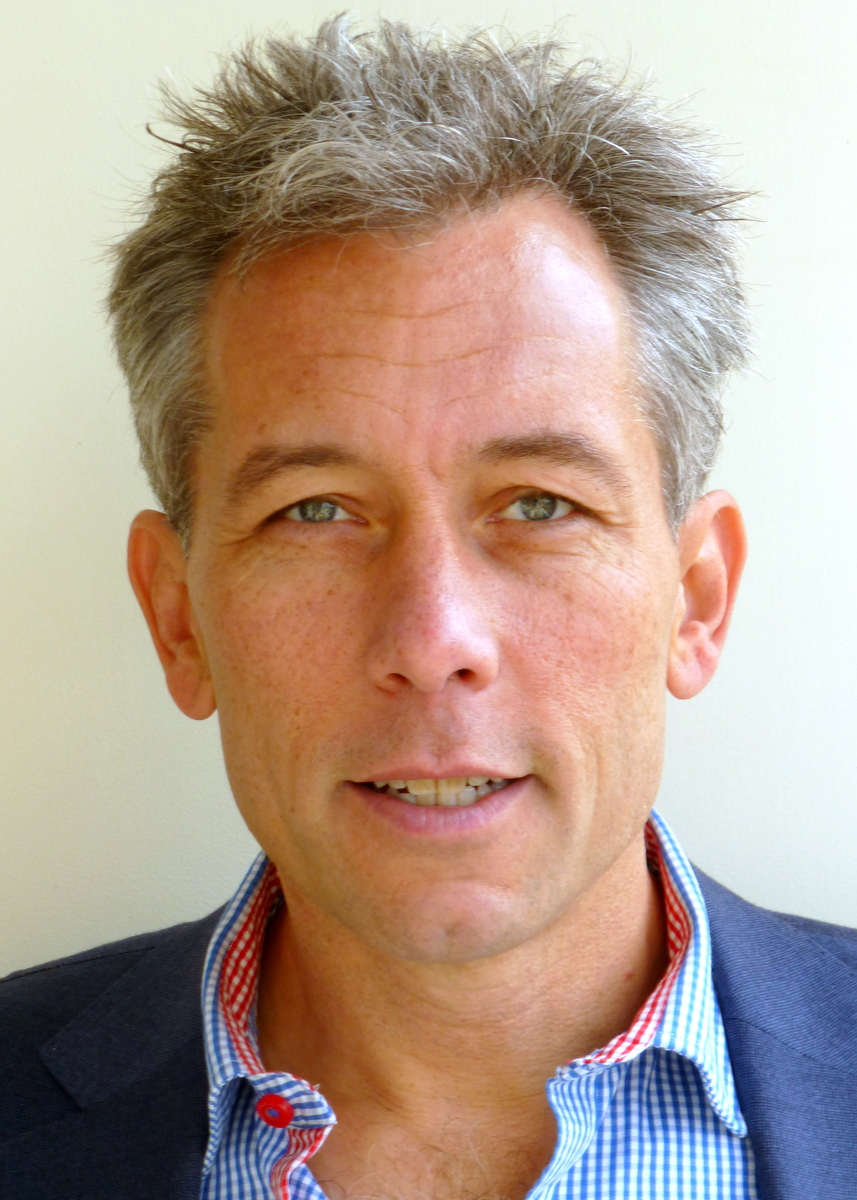
Frank Conway is founder of Economic Rockstar and lecturer of economics, finance and statistics. Read More…

View My Blog Posts

Youtube Sub

Become a Patron of the Economic Rockstar Podcast

patreon

Ireland’s Economy by the Numbers

Leaving Cert Economics: Ireland’s Economy  Click here to download a workbook on Ireland’s Economy so that you can add your own notes. [Original size] Ireland’s Economy by fconway

Categories

Subscribe and Never Miss An Episode

itunes-logo

Recent Posts

  • Ireland’s Economy by the Numbers April 8, 2019
  • 174: Wendy Carlin on The Core Project, Capitalism, Democracy and Normative Statements February 13, 2019
  • 173: Stephen Wright on Core Econ as a Learning Resource for Mainstream Economics January 28, 2019
  • 172: Best of 2018 Part 2: From the Great Depression to Futurism; Institutions, Individualism, Cooperation and Reciprocity January 22, 2019
  • 171: Best of 2018 Part 1 January 3, 2019

Copyright © 2026 · Podcast Pro Theme on Genesis Framework · WordPress · Log in

This website uses cookies to improve your experience. We'll assume you're ok with this, but you can opt-out if you wish. Accept Reject Read More
Privacy Policy

Privacy Overview

This website uses cookies to improve your experience while you navigate through the website. Out of these, the cookies that are categorized as necessary are stored on your browser as they are essential for the working of basic functionalities of the website. We also use third-party cookies that help us analyze and understand how you use this website. These cookies will be stored in your browser only with your consent. You also have the option to opt-out of these cookies. But opting out of some of these cookies may affect your browsing experience.
Necessary
Always Enabled
Necessary cookies are absolutely essential for the website to function properly. This category only includes cookies that ensures basic functionalities and security features of the website. These cookies do not store any personal information.
Non-necessary
Any cookies that may not be particularly necessary for the website to function and is used specifically to collect user personal data via analytics, ads, other embedded contents are termed as non-necessary cookies. It is mandatory to procure user consent prior to running these cookies on your website.
SAVE & ACCEPT