
• ABOUT
  • RESOURCES
  • PODCAST
  • BOOKS
  • BLOG
  • SUPPORTERS
  • QFA Financial Advice
  • CONTACT

Economic Rockstar

Connecting Brilliant Minds in Economics and Finance

052: Alex Tabarrok on Globalisation, Bounty Hunters and Leveraging Online Education

October 1, 2015 by Frank

http://traffic.libsyn.com/economicrockstar/Alex_Tabbarrok__Final.mp3
Play in New WindowDownload

052: Alex Tabarrok on Globalisation, Bounty Hunters and Leveraging Online Education

Alex Tabarrok is Associate Professor of Economics at George Mason University and co-founder (with Tyler Cowen) of Marginal Revolution University, an online platform for learning economics.Alex Tabarrok
Alex is Senior Fellow and former Research Director for The Independent Institute, Assistant Editor of The Independent Review, Bartley J. Madden Chair in Economics at the Mercatus Center and Director of the Center for Study of Public Choice.

Alex is the author or editor of a number of books including the introductory economics textbooks, Modern Principles, The Voluntary City and Changing the Guard: Private Prisons and the Control of Crime.

Alex is a TED speaker with over 640,000 views of his TED talk, How Ideas Trump Crises.

Alex received his Ph.D. in economics from George Mason University, and he has taught at the University of Virginia and Ball State University.

“I hope to be teaching long after I’m dead” – Alex Tabarrok

Click To Tweet

In this episode, you will learn:

  • how to ensure that criminals turn up of trial and to reduce the possibility of them becoming a fugitive.
  • how bounty hunters are more successful than the police in catching criminals.
  • why bounty hunters and bail bondsmen are the most best for the taxpayer.
  • why bounty hunters invited Alex Tabarrok to join them in a bounty hunting.
  • why a mother’s signature on a bail bond is the most effective way of making sure a criminal repays its  due.
  • how effective are the police in deterring crime.
  • how a police strike in Montreal in 1967 resulted in an spike in crime.
  • how the terror alert level results in an increase in police presence and results in a decrease in local crime.
  • whether we should reward the police for reducing crime and the problems that could arise from this reward system.
  • about the use of value-added tests for identifying teacher quality.
  • whether the best teachers have a positive impact on the future earnings of their students.
  • if a country can have a welfare state and open borders.
  • how the next generation of immigrants revert to the average of their adopted country including crime.
  • why immigrants to the United States are the most entrepreneurial.
  • why Alex co-founded Marginal Revolution University.
  • what Marginal Revolution University is about and who it’s for.
  • how to leverage the best teachers and leverage their experience.
  • how teaching will evolve into a format that’s similar to how plays evolved into movies with leading actors being paid millions of dollars and the production being created just once.
  • how artificial intelligence and computer adaptive learning programmes will be the next wave of teaching and learning.
  • what is the ideal length for a recorded educational video.
  • why universities will have to adapt to online technologies.
  • why parents and politicians want colleges to use online technologies.

Immigrants have lower crime rates, but the children of immigrants have about average crime rates. It’s unfortunate that the immigrants adopt our ways. They assimilate to American crime rates – Alex Tabarrok

Personal Habits:

I love doing what I do and that removes a lot of barriers. It gets you up in the mornings – Alex Tabarrok

Takeaway:

“Economics is fun. Economics brings in these world histories, things about climate, geography and history” – Alex Tabarrok

Economics:

In this interview, Alex mentions: crime, incentives, causality, elasticity, Baumol’s Cost Disease, rewards, redistribution, welfare, taxes, entrepreneurship, human capital, globalisation, public goods, free trade, structural unemployment and trade.

Economists:

In this interview, Alex mentions: Tyler Cowen, Greg Mankiw, Paul Krugman, Eric Callan, John Click, Milton Freidamn, John Nash, Bryan Caplan, Robin Hanson, Joseph Schumpeter, Adam Smith, David Hume and Richard Cantillon.

“This is a cliche, but Adam Smith really is great” – Alex Tabarrok

Click To Tweet

Ted:

  • How Ideas Trump Crises by Alex Tabarrok
  • Comment: Solving Crises Through Innovation and Ideas or Creating Problems Through Marginalisation and Displacement by Frank Conway

My TED talk is 75% of my entire teaching. So that 15 minute talk has been seen by so many people that that’s the majority – the big majority of all my teaching in my life. – Alex Tabarrok

Podcasts:

  • EconPop

Books:

  • Economics in One Lesson by Henry Hazlitt
  • The Armchair Economist by Stephen Lansberg
  • Freakonomics by Steven  D. Levitt and Stephen J. Dubnar
  • An Economist Gets Lunch: New Rules for Everyday Foodies by Tyler Cowen
  • The Undercover Economist by Tim Hartford
  • The Undercover Economist Strikes Back by Tim Hartford
  • The Case Against Education by Bryan Caplan (coming soon)
  • The Age of Em by Robin Hanson 
  • Trekonomics by Manu Saadia

    http://traffic.libsyn.com/economicrockstar/Alex_Tabbarrok__Final.mp3

    Podcast: Play in new window | Download
    045: Jon Manning on the Art of Pricing and How Economic Theory Has Got Pricing All Wrong

    August 13, 2015 by Frank

    http://traffic.libsyn.com/economicrockstar/045_Jon_Manning_Final.mp3
    Play in New WindowDownload

    045: Jon Manning on the Art of Pricing and How Economic Theory Has Got Pricing All Wrong

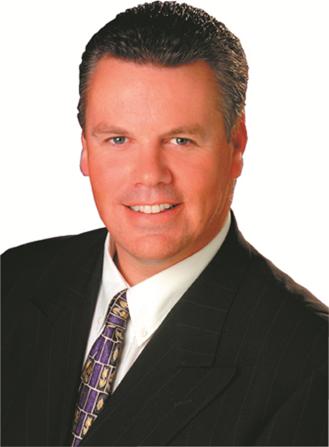
    Jon Manning is the Founder and Principal Consultant of Sans Prix and has over two decades of Pricing experiencejon manning in a wide variety of industries.

    Since establishing Sans Prix, Jon (and his associates) have generated millions of dollars in incremental revenue for clients in places such as the UK, USA, India, and Australia.

    Increasingly in demand as both a speaker and educator, Jon has spoken at many conferences, workshops, webinars and educational institutions across the Asia-Pacific, the Middle East and the United Kingdom.

    In 2011, Jon and Greg Eyres established Pricing Prophets, the world’s first and only online pricing advisory service where clients can ask a panel of global pricing experts and thought-leaders what price to charge for a product or service and why.

    Jon holds a Bachelor of Business (Applied Economics) from Deakin University (Australia), a Graduate Diploma of Business (Management) from Monash University (Australia) and a Master of Arts (European Studies), from The University of West London. He is a member of the Australian Institute of Management and the Professional Pricing Society.

    In this episode, you will learn:

    • why Jon believes pricing is more of an a art than a science.
    • why pricing is based on human behavior that no scientific model can predict.
    • why there’s no such thing as Adam Smith’s Invisible Hand.
    • that 70% to 80% of companies use cost-based methods to set prices and few use a value-based method.
    • why customers don’t care about companies who use cost-based pricing and prefer companies that use value-based pricing methods.
    • why the best pricing strategy for a company is a value-based method.
    • the trials and tribulations of the pricing strategy adopted by Netflix and how it affected its share price.
    • how a $40 fine for returning a DVD late led to the founding of Netflix.
    • if the best strategy for companies to announce price increases to its customers is to do so a few years in advance.
    • how behavioral economics is opening up a minefield of exploration in pricing.
    • how Apple used anchoring techniques to sell their iWatch by offering a $10,000 iWatch. It makes the mainstream iWatch appear to be value for money.
    • how a $100 omelette was used by a restaurant to act as a decoy so it can influence your decision to pay for high-end or expensive goods.
    • how Goldilock Pricing helps a company, like Starbucks and Harvey Norman, sell more of a middle tiered product as it helps customers make decisions to buy.
    • how Starbucks found the that most of their customers have inelastic demand and decided to increase prices despite a recession in the US.
    • how the internet has changed the pricing model by offering freemium products and services and 30-Day money back guarantees.
    • if there are myths to pricing for companies.
    • how companies like Apple and Amazon price discriminate in order to capture market share and drive revenues upward.
    • how more and more companies are adopting dynamic pricing when selling into different markets.
    • the education pricing model in Ireland, Australia and the US.
    • about MOOCs and how it could have an impact on the future education model.
    • about Gaelic Football and how its players do not get paid unlike other sports.
    • how football games are using dynamic pricing models to charge for tickets based on opposition and weather.
    • that a 1% improvement in price leads to a 10% improvement in operating profit.
    • about the Banksy Experiment in New York where many passers-by failed to pick up an original for $60 that would otherwise fetch for $10,000 in an auction house.
    • how classical violinist Joshua Bell earned $26 in tips playing his $3.5 million violin but played to a packed audience for $100 per ticket the night before.
    • the 2 Golden Rules to Pricing.
    • about the ‘Pay What You Want’ model as followed by Radiohead and Jon Bon Jovi’s Soul Kitchen.

    Economics:

    In this interview, Jon mentions and discusses: pricing, the Invisible Hand, behavioral economics, heuristics, anchoring effects, framing, Extremeness Aversion, Goldilocks Pricing, demand, elasticity, elastic demand, inelastic demand, pricing architecture, consumer surplus, monopoly, price discrimination, dynamic pricing, marginal pricing and behavioral economics.

    Economists:

    In this interview, Jon mentions and discusses: Adam Smith, Dan Ariely, John H. Cochrane and Paul Samuelson.

    Influencers:

    Behavioral economists and marketers.

    Quotes by Jon Manning in Episode 045 of the Economic Rockstar Podcast:

    What they teach you in economics about pricing is true in theory but it’s irrelevant in practice – Jon Manning

    Click To Tweet

    I know why there is interest in price elasticity but I sort of think it’s a bit like the abominable snowman – Jon Manning.

    Click To Tweet

    There’s no formula to calculate the consumer surplus. You hear a lot of economists talk about the consumer surplus, which in the business community is known as leaving money on the table – Jon Manning.

    There’s very few revolutionary monopolies around these days – Jon Manning.

    Click To Tweet

    There’s one thing that’s not a myth and that is you get what you pay for – Jon Manning.

    Click To Tweet

    The 2 Golden Rules to Pricing:

    Rule #1: All value is subjective.

    Value is in the eye of the customer. No matter what price you put onto something, at the end of the day, the customer is the single point of failure and if they don’t see value at the price you’ve attached to the product, they’re not going to buy. The ‘Pay What You Want’ pricing model is the purest form of value-based pricing since the customer can decide to pay for the product or service by attaching a value to it.

    Rule #2: All value is contextual.

    By placing a product or service in a certain context, people’s perceptions of its value change. A product placed in a high-end, up-market setting is more likely to command a higher price, whereas the exact same product placed in a low value setting or environment may only demand a smaller price. Joshua Bell and Banksy showed this golden rule of pricing in their experiments.

    Companies Mentioned in this Episode Regarding their Pricing Methods:

    Ryanair, EasyJet, Amazon, Apple, Uber, Starbucks, Harvey Norman and Netflix.

    Recommended Books:

    • Meatonomics by David Simon
    • Priceless: The Myth of Fair Value (and How to Take Advantage of It) by William Poundstone
    • Information Rules: A Strategic Guide to the Network Economy by Carl Shapiro and Hal Varian
    • Pricing and Revenue Optimisation by Robert Phillips
    • Misbehaving by Richard Thaler
    • Butterfly Economics: A New General Theory of Social and Economic Behavior by Paul Omerod
    • New Ideas from Dead Economists by Todd G. Buchholz
    • The CEO of the Sofa by P. J. O’Rourke
    • Eat the Rich: A Treatise on Economics by PJ O’Rourke

    Internet Resource:

    • 77 Inspirational Pricing Pages

    Where to Find Jon Manning:

    • Sans Prix
    • Pricing Prophets
    • Twitter

    http://traffic.libsyn.com/economicrockstar/045_Jon_Manning_Final.mp3

    Podcast: Play in new window | Download
    014: Shoshana Grossbard on Why Dry Cleaners Charge Women More, on the Economics of Love & Marriage and on Polygamy

    January 8, 2015 by Frank

    http://traffic.libsyn.com/economicrockstar/014_Shoshana_Grossbard.mp3
    Play in New WindowDownload

    014: Shoshana Grossbard on Why Dry Cleaners Charge Women More, on the Economics of Love & Marriage and on Polygamy

    Shoshana GrossbardShoshana Grossbard is Professor of Economics at San Diego State University and founding editor of the Review of Economics of the Household.  Shoshana has been a fellow and visiting lecturer  at numerous universities including Stanford, Columbia University, the University of Zaragoza, Spain, Tel Aviv and Bar Ilan University, as well as in Munich and Bonn, Germany.

    Shoshana obtained her Phd from the University of Chicago where she developed an interest in the New Home Economics from its founders, the late Nobel Laureate Gary Becker and the late Jacob Mincer. The main focus of Shoshana’s research is household economics, family economics and the economics of marriage and, as a student, developed her first non-unitary model of household decision-making. Shoshana is actively promoting the establishment of household economics as a separate specialty in economics. She is one of the first social scientists to have analyzed consequences of gender imbalance in the sex ratio for intra-household distribution, labor supply, fertility and cohabitation. The economics and social impact of polygamy is also a research interest.

    Shoshana has published 5 books and more than 50 articles on the determinants of marriage, consumption and labor supply and on the law and economics of household decisions. She is fluent in English, French, Hebrew, Spanish, and Dutch and has presented her work at many universities in more than 13 countries.

    Economic Themes:

    In this interview, Shoshana mentions and discusses: household economics, family economics, economics of the household, household decision-making, sex-ratios, the economic and social impact of polygamy, determinants of marriage, opportunity cost, consumption and labor supply, immigration, population, marriage, price discrimination, government intervention and elasticity.

    Economists and Economic Schools:

    In this interview, Shoshana mentions: New Home Economics, Gary Becker, Jacob Mincer, Adam Smith, Arleen Leibowitz, Linda Edwards, Andrea Beller, Elizabeth Landes, Catalina Amuedo-Dorantes and Sankar Mukhopadhyay.

    Shoshana’s Defining Moment/Affirmations/Mantra:

    Shoshana is defined by the feminist movement of the 1960s/1970s in her early student days and her mother’s dislike of being a housewife.

    I’ve remained a feminist for the rest of my life. It was always very clear to me that I was going to have a career in addition to having a family.

    Personal Habits:

    Hard work. I work very long hours, I work very hard and I’m very motivated to be successful. There’s no other way.

    If you don’t work hard, things don’t just fall on your lap – Shoshana Grossbard

    Click To Tweet

    Advice:

    It’s very important to have a critical eye. Whatever you read you have to realise that most research, including research by economists is biased by the point of view of the writer and they have an axe to grind typically. You have to try to figure out what’s the axe they’re grinding before you read it.

    In this episode, you will learn:

    • about Shoshana being a 1970s hippie and her demonstrations against King Constantine of Greece.
    • about the differences in female educational participation between the 1960s and present day.
    • about the sexist advertisements that existed which placed the wife in the household.
    • about the origins of the New Home Economics.
    • about what the theory of household means.
    • how Shoshana transitioned herself from an interest in the economics of education to the economics of polygamy while a student of Gary Becker.
    • how Shoshana’s approach to the study of polygamy differed with Gary Becker’s.
    • what quasi-wages are for the stay-at-home mum or dad.
    • if there is an opportunity cost to marriage.
    • the implication on labor force participation as a result of marriage.
    • about WiHo or Work-in-Household.
    • about the importance of the sex-ratio in determining labor force participation.
    • how Shoshana calculates the sex-ratio.
    • how women’s participation in the labor force can be a direct result of fluctuations in the sex-ratio.
    • how a high sex-ratio (more men than women) can increase the bargaining power of men.
    • how a low sex-ratio (more women than men) can increase the bargaining power of women.
    • if Hilary Clinton‘s year of birth allowed her to be the successful and educated person she is today due to the low sex ratio in the US between 1946 and 1950.
    • about the marriage-squeeze hypothesis (in which there is a shortage of men or women for marriage).
    • about the detail of Ireland’s population pyramid, which indicates a male marriage squeeze for those aged 4 to 10 (more males due to births) and a female marriage squeeze for those aged 20 to 29 (more females due to male emigration).
    • about the relevance of the sex-ratio of immigrants and how the freedom of labor can solve the problem of a  marriage squeeze.
    • if the availability of polygamy translates into a higher bargaining power for women.
    • if polygamy solves a marriage market disequilibrium.
    • about the polygamy ruling in Canada.
    • how polygamy can be harmful for young men and why they are known as the lost boys.
    • about the Fundamentalist Latter Day Saints in British Columbia.
    • if the government should intervene in markets where gender price discrimination occurs.
    • who pays more for dry-cleaning services – males or females – based on their elasticity of demand.
    • if we should trust our spouse given the ideology behind economics that all market participants are self-interested and seek to gain wealth without any consideration of others.
    • if spousal love diminishes once you have children and that the love you have toward your child compensates for the lack of love from your spouse.

    Origins of New Household Economics:

    When Gary Becker and Jacob Mincer started New Home Economics, it was mostly their initiative but it was the students at the University of Columbia at that time who participated in the labor workshops that were very instrumental in promoting and developing it.

    There were a high proportion of women who attended the workshop including Arleen Leibowitz and Linda Edwards and, later on, Andrea Beller and Elizabeth Landes.

    It is wrong to view New Home Economics as ideologically motivated to maintain old-fashioned gender roles.

    One of the major ideas of the New Home Economics is to consider households like firms where there is household production and to analyse them with the same tools economists analyse business firms.

    So basically, households are non-profit firms but there are many small non-profit firms in the economy that are considered part of the economy that are counted in GNP. But the most prevalent non-profit firm, the household, is not counted in the GNP.

    Jacob Mincer and Gary Becker were not concerned about what was counted in GNP but they were more micro-economists. So they wanted to use all the tool available from price theory and apply them to the analysis of what households do:

    • How do they divide the housework?
    • Do women participate in the labor force?
    • The trade-off between household production and participation in the labor force.

    The Origins of Shoshana’s Work:

    Shoshana‘s approach to the study of polygamy took account of the point of view of women whereas Gary Becker considered variables such as how men’s incomes determined the number of wives he would have.

    Shoshana challenged Gary stating that it’s not just about men’s income but it’s also a matter of women’s education, the age of the women, the fertility of the women and the resources that they have because they can bargain with the men about what they’re willing to do.

    Shoshana continued to work on economic development issues because polygamy is practiced mostly in less-developed countries where she examined data in Nigeria and then the study of consensual marriages in Guatemala.

    Jacob Mincer advised Shoshana, when she was seeking a job, to do more mainstream economics rather than the exotic research mentioned above which may not be of interest to economists in general. That is when she switched to the study of labor force participation and developed a theory of allocation of time in markets for labor and marriage.

    There is a major difference between the model developed by Grossbard and that developed by Becker and Mincer. When Becker and Mincer talk of household production, they refer to households as a unit or as an entity making decisions. However, in Grossbard’s model it is the individuals making decisions.

    Household Decision-Making and Quasi-Wages

    The fundamental question of New Household Economics: Is there an opportunity cost to marriage and what is the implication on labor force participation as a result of marriage?

    Individuals, from an early age, have a concept and vision of how they want to live their lives.

    Work in Household (WiHo) represents the willingness to work in a household to, say, raise children.

    On Gender Price Discrimination:

    “We should all be conscious that sometimes there is exploitation of the consumer and if you don’t like the subliminal advertising that companies use to make you buy perfume or aftershave well then just don’t buy it.”

    I’m not a fan of regulation – Shoshana Grossbard

    Click To Tweet

    Dry cleaners charge more for women’s blouses than for men’s shirts, despite them being the same product, with perhaps the main difference being that the buttons on a blouse are typically located on one side of a blouse to that of a man’s shirt.

    Dry cleaners are aware that the price elasticity of demand for a woman needing dry cleaning is less than that of a man, meaning that there is more of a need for women to use the dry cleaning services and would, hence pay more as no-one else would do it for them.

    On the other hand, the elasticity of demand is more for men, meaning that dry cleaners may charge less for the same service so as to encourage men to dry clean.

    Shoshana states that the reason for this gender price differential by dry cleaners is that the majority of men would not go to a dry cleaners as they have a wife, girlfriend or mother who would take on the task of cleaning their clothes. The WiHo or Work in Household is higher for these women as they have, in the majority of cases, taken on the responsibility of running the household chores.

    The women who arrive at a dry cleaners are those who have a low WiHo perhaps due to a working career or an unwillingness to take on the responsibility of such chores or even due to the lack of people willing to do the work, such as a spouse.

    How the Activities of a Home Differs to the Activities of a Market

    Adam Smith stated: “It is not from the benevolence of the butcher, the brewer or the baker that we expect our dinner but from the regard of their own interest”.

    If we view all participants in a household as economic agents who have a certain degree of self-interest, should we trust our spouse?

    The statement by Adam Smith is about the functioning of the market and how the competition among the bakers and the other professionals brings down the prices and eventually the consumer benefits.

    The problem with household production, which is a non-profit firm, is that most of what is produced at home is not going to be sold in the market, principally the children, the beauty of the  home, the harmony in the home. These are products that are being consumed by the producers themselves or by the people who pay for the WiHo. In this case, the market system doesn’t work.

    The benevolence of the spouse is a very important element. Adam Smith also had a Theory of Moral Sentiments and in the framework of the household, altruism matters. So, benevolence and altruism matters.

    Favorite Books:

    • Dollars and Sex by Marina Adshade
    • The Marriage Motive: The Price Theory of Marriage by Shoshana Grossbard
    • Publications of Shoshana Grossbard

    Favorite Internet Resource:

    • marinaadshade.com  and on Twitter: @dollarsandsex
    • omgchronicles.vickilarson.com and on Twitter: @OMGchronicles
    • Gretchen Livingston on Twitter: @DrGMLivingston

    Where To Find Shoshana Grossbard:

    • Facebook: Economics of Love
    • Twitter: @econoflove
    http://traffic.libsyn.com/economicrockstar/014_Shoshana_Grossbard.mp3

    Podcast: Play in new window | Download

    Frank Conway

    Frank Conway is founder of Economic Rockstar and lecturer of economics, finance and statistics. Read More…

    View My Blog Posts

    Youtube Sub

    Become a Patron of the Economic Rockstar Podcast

    patreon

    Ireland’s Economy by the Numbers

    Leaving Cert Economics: Ireland’s Economy  Click here to download a workbook on Ireland’s Economy so that you can add your own notes. [Original size] Ireland’s Economy by fconway

    Categories

    Subscribe and Never Miss An Episode

    itunes-logo

    Recent Posts

    • Ireland’s Economy by the Numbers April 8, 2019
    • 174: Wendy Carlin on The Core Project, Capitalism, Democracy and Normative Statements February 13, 2019
    • 173: Stephen Wright on Core Econ as a Learning Resource for Mainstream Economics January 28, 2019
    • 172: Best of 2018 Part 2: From the Great Depression to Futurism; Institutions, Individualism, Cooperation and Reciprocity January 22, 2019
    • 171: Best of 2018 Part 1 January 3, 2019

    Copyright © 2026 · Podcast Pro Theme on Genesis Framework · WordPress · Log in

    This website uses cookies to improve your experience. We'll assume you're ok with this, but you can opt-out if you wish. Accept Reject Read More
    Privacy Policy

    Privacy Overview

    This website uses cookies to improve your experience while you navigate through the website. Out of these, the cookies that are categorized as necessary are stored on your browser as they are essential for the working of basic functionalities of the website. We also use third-party cookies that help us analyze and understand how you use this website. These cookies will be stored in your browser only with your consent. You also have the option to opt-out of these cookies. But opting out of some of these cookies may affect your browsing experience.
    Necessary
    Always Enabled
    Necessary cookies are absolutely essential for the website to function properly. This category only includes cookies that ensures basic functionalities and security features of the website. These cookies do not store any personal information.
    Non-necessary
    Any cookies that may not be particularly necessary for the website to function and is used specifically to collect user personal data via analytics, ads, other embedded contents are termed as non-necessary cookies. It is mandatory to procure user consent prior to running these cookies on your website.
    SAVE & ACCEPT