• ABOUT
  • RESOURCES
  • PODCAST
  • BOOKS
  • BLOG
  • SUPPORTERS
  • QFA Financial Advice
  • CONTACT

Economic Rockstar

Connecting Brilliant Minds in Economics and Finance

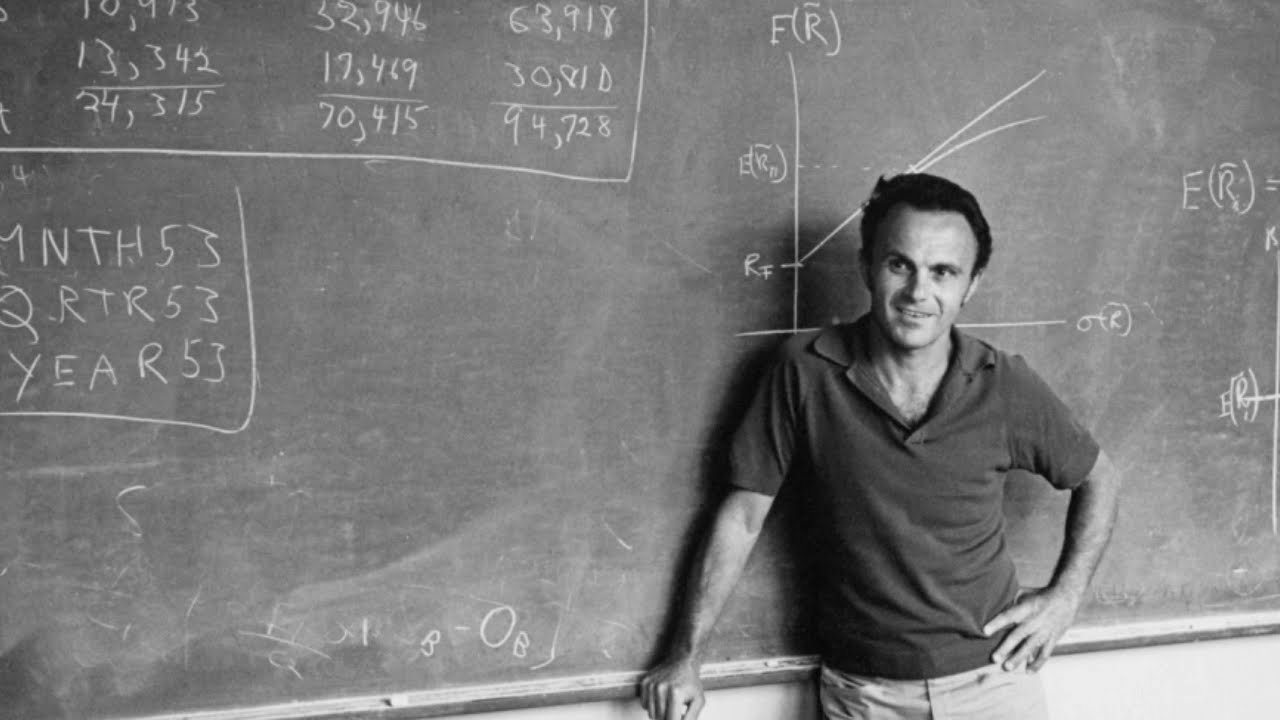
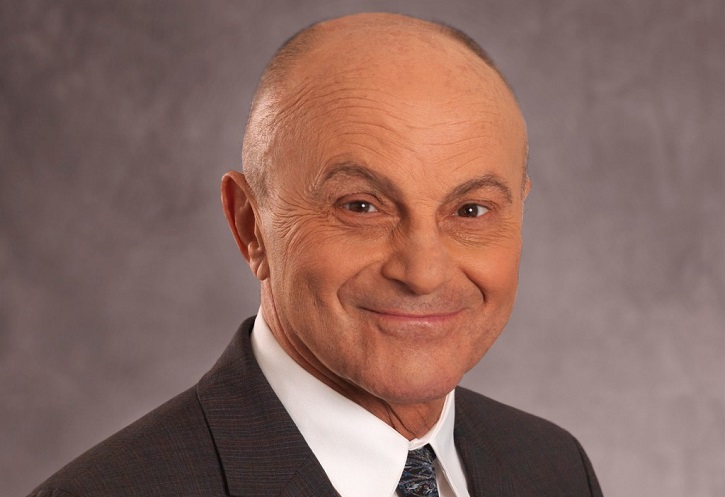
125: Eugene Fama on the Efficient Market Hypothesis, the Feds Fund Rate, Bitcoin and Daily Routines
January 25, 2018 by Frank

http://traffic.libsyn.com/economicrockstar/125_Eugene_Fama__Final.mp3
Play in New WindowDownload

125: Eugene Fama on the Efficient Market Hypothesis, the Feds Fund Rate, Bitcoin and Daily Routines

Eugene Fama Economic Rockstar

“I went into academics because I didn’t want to go into anything that would affect my sports life.” – Professor Eugene Fama

Eugene F. Fama is Professor of Finance at the University of Chicago Booth School of Business. Professor Fama was awarded the 2013 Nobel laureate in economic sciences and is widely recognized as the “father of modern finance.”

Professor Fama’s research is well known in both the academic and investment communities. He is strongly identified with research on markets, particularly the efficient markets hypothesis. He focuses much of his research on the relation between risk and expected return and its implications for portfolio management. His work has transformed the way finance is viewed and conducted.

Eugene is a prolific author, having written two books and published more than 100 articles in academic journals. He is among the most cited researchers in economics.

In addition to the Nobel Prize in Economic Sciences, Professor Fama was the first elected fellow of the American Finance Association in 2001. He is also a fellow of the Econometric Society and the American Academy of Arts and Sciences. He was the first recipient of three major prizes in finance: the Deutsche Bank Prize in Financial Economics (2005), the Morgan Stanley American Finance Association Award for Excellence in Finance (2007), and the Onassis Prize in finance (2009).

Professor Fama was awarded doctor of law degrees by the University of Rochester and DePaul University, a doctor honoris causa by the Catholic University of Leuven, Belgium, and a doctor of science honoris causa by Tufts University.

Eugene is chairman of the Center for Research in Security Prices at Chicago Booth, which was founded 40 years ago to create the finest tools for tracking, measuring, and analyzing securities data. He is also an advisory editor of the Journal of Financial Economics.

Professor Fama earned a bachelor’s degree from Tufts University in 1960, followed by an MBA and PhD from the University of Chicago Graduate School of Business (now the Booth School) in 1964. He joined the GSB faculty in 1963.

Economists:

In this episode, Professor Fama mentions: Gary Becker, Vernon Smith, John Cochrane,Robert Shiller, Campbell Harvey,  John Campbell, Narasimhan Jagadeesh, Sheridan Titman, Cliff Asness, Louis Bachlier, Paul Samuelson, Benoit Mandlebrot, Robert C. Merton, Fischer Black, Myron Scholes, Merton Miller, Harry Roberts and Kenneth French.

Economics:

In this episode, Professor Fama mentions: EMH, anomalies, Momentum Effect, January Effect, Options Pricing Model, Price Earnings Ratio, Federal Reserve, Fed Funds Rate, reserves, reserve requirements, lending mechanism, quantitative easing, economic activity, bitcoin, speculation, medium of exchange, Ripple and blockchain.

Professor Fama’s Mentors:

  • Merton Miller, Harry Roberts and Benoit Mandelbrot.

Individuals were very important to me especially Merton Miller and Harry Roberts. And Benoit too. – Professor Fama

Find out:

  • How studying economics in the 1960s differs to present day.
  • What is EMH and how it relates to the random walk and the submartingale process.
  • The beginning of mathematics in economics in the 1960s.
  • Independent, identically distributed  – a more restrictive view of EMH.
  • How prices and returns are so noisy that it is difficult to identify stock-picking skills.
  • About stock market anomalies.
  • What is the problem in academics?
  • About the Federal Funds Rate.
  • Does the Federal Reserve Bank or the market control the Fed Funds Rate?
  • If there is a lending channel.
  • Do we need a Federal Reserve bank?
  • About Professor Fama’s views on Quantitative Easing (QE).
  • About Professor Fama’s hobbies and how he uses them to regain balance in his life as an economist.
  • Why Eugene Fama went into academics.
  • Find out about Eugene’s daily routines.
  • About Bitcoin.

On the Problem in Academics:

“There is a problem in academics. Everybody wants to publish papers. That’s the way they advance and get tenure and get higher salaries. They also get noticed on Wall Street for doing it. So there’s an incentive to dredge the data and come with things that will be attention-grabbing but won’t necessarily be there in new data and aren’t the basis for new strategies.” – Professor Fama

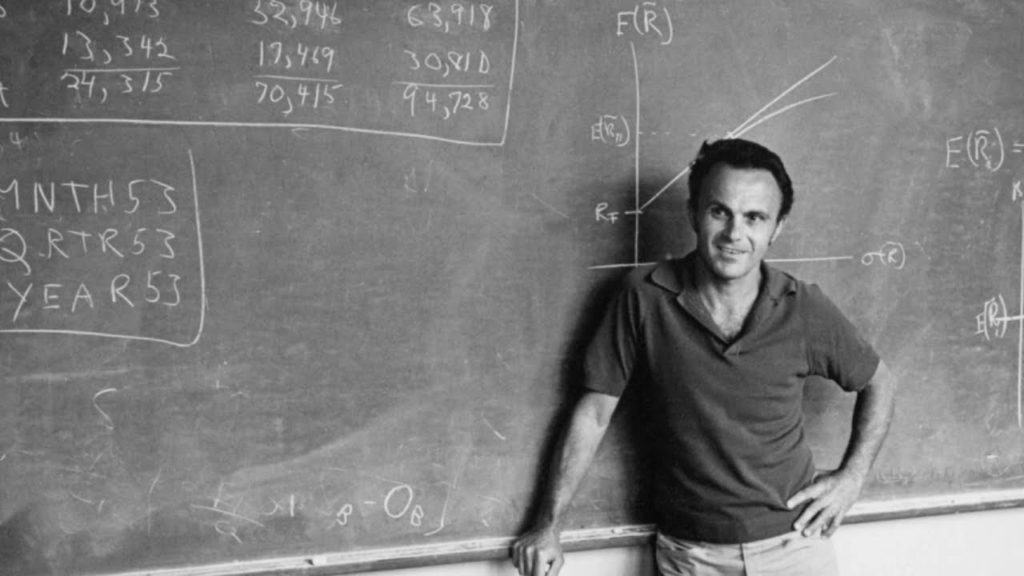
Eugene Fama Economic Rockstar
On Theoretical Models

“Robustness is the name of the game. All scientific theories have anomalies otherwise they’re not theories, they’re reality.”

“All science is you propose models, you test them and you come up with some stuff that says that says this works pretty well and then you come with other stuff that says well it doesn’t work very well on this particular so called anomaly. And so you either tweak the model to incorporate that or you just accept it as one of the shortcomings of the model. That’s why you called them models.”

“You have to be careful. It has to be systematic empirical work. You can’t just go work with anecdotes. Anecdotes are not empirical work.”

On the Fed:

“What goes on when you go to work for the Fed or you get onto the Board or whatever, it’s the invasion of the Body Snatchers. Whatever you thought before becomes irrelevant and you buy the party line or you buy the line that says they have a lot of power.”

“I don’t there ever was a lending channel but there certainly isn’t one now.”

“The main job of the Fed is to control inflation. Unfortunately, in the current regime they can’t do that.”

On Bitcoin:

  • I’m suspicious about it as a unit of account because it has such an uncertain value. Monetary theory basically says that you want a unit of account that has a certain value.
  • It’s just like paper currency. If no body is willing to use it, it becomes valueless.

Thanks to Conor Murray for the question on Bitcoin!

On Writing:

  1. There’s no easy way to do it. I do a lot of writing with Kenneth French. We always re-write these papers that we put out at least twenty or thirty times front to back. And you struggle over every word and you try to say stuff as simply as possible because by saying it simply you reach more people than saying it in a more complex way.
  2. Work on it. Really read it. Get other people to read it and get their reactions.
  3. Organize how you present stuff. You want a brief introduction. Most papers tend to have long introductions. Get right into the guts and keep it as simple as possible for as long as possible so that you lose the fewest number of people.

Movies:

  • Invasion of the Body Snatchers
  • Equilibrium


Patreon

If you’re a fan of the podcast and would like to show your support in anyway, please check out my Patreon page at patreon.com/economicrockstar where you can sign up for any of the awards for as little as $1 a month or you can simply follow me on the Economic Rockstar Facebook page or on Twitter or simply recommend the show to a friend, especially if they have never had the opportunity to study economics.


http://traffic.libsyn.com/economicrockstar/125_Eugene_Fama__Final.mp3

Podcast: Play in new window | Download

016: Jack Schwager on How You Can Become a Market Wizard with Fundseeder.com

January 22, 2015 by Frank

http://traffic.libsyn.com/economicrockstar/016_Jack_Schwager.mp3
Play in New WindowDownload

016: Jack Schwager on How You Can Become a Market Wizard with Fundseeder.com

Untitled design (10)

Jack Schwager is a recognized industry expert in futures and hedge funds and the author of a number of widely acclaimed financial books. Mr. Schwager is one of the founders of Fund Seeder (FundSeeder.com), a platform designed to find undiscovered trading talent worldwide and connect unknown successful traders with sources of investment capital.

Previously, Mr. Schwager was a partner in the Fortune Group (2001-2010), a London-based hedge fund advisory firm. His prior experience also includes 22 years as Director of Futures research for some of Wall Street’s leading firms, most recently Prudential Securities.

Mr. Schwager has written extensively on the futures industry and great traders in all financial markets. He is perhaps best known for his best-selling series of interviews with the greatest hedge fund managers of the last three decades: Market Wizards (1989), The New Market Wizards (1992), Stock Market Wizards (2001), Hedge Fund Market Wizards (2012), and The Little Book of Market Wizards (2014).

His other books include Market Sense and Nonsense (2012), a compendium of investment misconceptions, and the three-volume series, Schwager on Futures, consisting of Fundamental Analysis (1995), Technical Analysis (1996), and Managed Trading (1996). He is also the author of Getting Started in Technical Analysis (1999), part of John Wiley’s popular Getting Started series.

Mr. Schwager is a frequent seminar speaker and has lectured on a range of analytical topics including the characteristics of great traders, investment fallacies, hedge fund portfolios, managed accounts, technical analysis, and trading system evaluation. He holds a BA in Economics from Brooklyn College (1970) and an MA in Economics from Brown University (1971).

Economic and Finance Themes:

In this interview, Jack mentions and discusses: chartists, technical analysis, fundamentals, futures, normal distribution curve, options, Black-Scholes Options Pricing Model, option warrant trading, efficient market hypothesis, probability, negative externalities, fiscal responsibility, Keynesianism, deficits and demand.

I chose economics because I wasn’t any good to major in physics or math. I just felt I would be mediocre if I went into those fields. On the positive side, I had a super professor for Econ1. He was just so clear and logical – Jack Schwager.

Economists and Traders:

In this interview, Jack mentions: David Shaw, Ed Thorp, John Bender, Michael Marcus, Fischer Black, Robert Merton, Myron Scholes, John Maynard Keynes, Michael Lewis, Nassim Nicholas Taleb, and Yoram Bauman.

In this episode, you will learn:

  • why Jack chose economics at University.
  • about the similarities between Physics and Economics and why they are so different as a science.
  • if there is a certain personality that is required in trading financial markets.
  • if there is a holy grail to trading the markets.
  • about the importance of discipline.
  • how an $18 ‘Job Wanted’ ad in the New York Times landed Jack a position as a key analyst.
  • the one trader that particularly impressed Jack.
  • about the different strategies of some of Jack’s Market Wizards.
  • why normal distribution tail events can have a higher probability of occurrence than is lead to believe.
  • about the tragic ending of Market Wizard John Bender and the current case against his wife by the Costa Rican authorities for his ‘murder’.
  • about Fund Seeder – the world’s first search engine for undiscovered trading talent.
  • about Jack’s forthcoming book with the working title ‘Undiscovered Market Wizards’ and how you could possibly feature it.
  • about the Market Wizards Roadshow coming soon in 2015.
  • why Jack wrote his book ‘Market Sense and Nonsense’.
  • about the debunking of the efficient market hypothesis.
  • what a negative externality is in the context of economic theory.

Physics, Economics and the Stock Market: A Connection

Economics is more complex from a quantitative standpoint because in physics at least the rules are well-defined and don’t change and in economics they’re not stable.

Many schools in economics get it wrong because they fail to appreciate the influence of human behavior which is not stable.

Because of the human element it becomes much more difficult to forecast in economics than it is using physical laws.

A lot of traders interviewed for the Market Wizards book come from the higher level mathematics and physics spectrum. That’s one type of person who is attracted to the markets. It’s solving analytical problems that intrigues them.

Other traders are very intuitive and have a completely different approach to trading markets.

Trading with  Discipline in the Markets

There are no secrets to trading the markets. There are an untold number of ways in which the markets can be successfully approached.

They are all very difficult and most people will fail. There is no common approach and it’s more of a matter of finding an approach that works for you.

On Trading: Regardless of how you do it, you better have discipline – Jack Schwager

Click To Tweet

It doesn’t matter if you’re quant or not quant, chart or fundamental,  long-term or short-term. Whatever approach you do use, you better be disciplined or it’s not going to work.

Once I got involved in futures, I quickly discovered that at that time, at least on the analytical side, there wasn’t much talent out there. I think I succeeded because competition was very easy at that time – Jack Schwager.

Life for almost all of us is tremendously influenced by chance more so than people would admit or realise – Jack Schwager.

Probability and Options

On Ed Thorp: He is the walking refutation of the Efficient Market Hypothesis – Jack Schwager

Click To Tweet

The options markets are pricing for the assumption of equal probabilities at all times on both sides.

Options are priced for neutrality all of the time and that’s not reality. There are certain circumstances in the markets where something happening is much more likely to occur on one side of the distribution curve than the other.

The markets may assume a log normal distribution. But when there is a critical stop level at some price then, when the market goes to that price, the probability that the market will go below that price, what is considered within the tail events, will be much greater. Just getting to that critical price can trigger an avalanche of orders.

Fundseeder: The World’s First Search Engine for Undiscovered Trading Talent

The concept of Fund Seeder is to create a central place on the web where all traders, particularly undiscovered traders can establish their track records, have them verified and then have investors who are looking to allocate new trading talent find them.

The trader links their brokerage accounts with their own account on Fund Seeder so the numbers come directly from the traders’ brokerage account. That critical verification step occurs on this central platform allowing the traders and potential investors to verify the numbers.

There are traders from over 60 countries on Fundseeder who now have the opportunity to get in front of potential investors and establish a track record.

There is also the ‘seeding’ side where investor groups will participate to find traders and offer seed funding. It acts like venture capital where traders will receive seed funding to allow them trade larger accounts, which otherwise would not have been available to them outside Fund Seeder.

Many brokerage firms can be connected to Fund Seeder, including Interactive Brokers, and many more will connect in the near future.

Fund Seeder is a place where traders go to be discovered and where investors go to look for traders. You trade, we connect, they invest – Jack Schwager

Problems Jack Sees with Economics and Finance

  • The Efficient Market Hypothesis.
  • The Sharpe Ratio.
  • Looking at past returns to pick investments.
  • Volatility as a satisfactory and complete measure of risk.
  • Risk management.
On writing Market Sense and Nonsense: ‘I really wanted to throw stones’ – Jack Schwager

Click To Tweet

Jack Schwager on Economists, Externalities and Fiscal Responsibility

I believe that 90% of economists will agree 90% of the time. Economists do agree on a lot of things. You can go from a liberal to a conservative spectrum in economics and still have wide agreement on a lot of things Jack Schwager.

The solution to global warming is a revenue-neutral carbon tax. You have a cost attached to the polluter side and you have a benefit attached to growth and expansion.

Keynes would never have argued for deficit spending in an expanding economy

Recommended Books:

  • Beat the Dealer by Ed Thorp
  • Market Wizards by Jack Schwager
  • Market Sense and Nonsense: How the Markets Really Work (and How They Don’t) by Jack Schwager
  • The Big Short by Michael Lewis
  • Liars Poker by Michael Lewis
  • Reminiscences if a Stock Operator by Edwin Lefèvre
  • Fooled by Randomness by Nassim Nicholas Taleb
  • The Black Swan by Nassim Nicholas Taleb
  • When Genius Failed: The Rise and Fall of Long Term Capital Management by Roger Lowenstein
  • Fortune’s Formula: The Untold Story of the Scientific Betting System that Beat the Casinos and Wall Street by William Poundstone
  • More Money Than God: Hedge Funds and the Making of a New Elite by Sebastian Mallaby
  • Endurance: Shackleton’s Incredible Voyage by Alfred Lansing

Where To Find Jack Schwager:

  • Fundseeder.com
  • Website: www.jackschwager.com
  • Twitter: @jackschwager

015: Niels Kaastrup-Larsen on Trend Following Strategies and Stock Market Turmoil Ahead

January 14, 2015 by Frank

http://traffic.libsyn.com/economicrockstar/015_Niels_Kaastrup-Larsson_.mp3
Play in New WindowDownload

015: Niels Kaastrup-Larsen on Trend Following Strategies and Stock Market Turmoil Ahead

TopTraderPodcast NielsNiels Kaastrup-Larsen is Managing Director of Dunn Capital (Europe). Niels is a trend follower with more than 20 years experience in the hedge fund industry, working for some of the largest CTAs or Commodity Trading Advisors in the world, including Chesapeake Capital. Niels co-founded, built and managed three businesses within the alternative investment space, including Rho Asset Management.

Niels trades futures markets in a systematic and highly-automated way. He is the founder and host of the popular podcast ‘Top Traders Unplugged’, where he uses his experience and contacts in the industry to deliver insightful, engaging and passionate interviews with the most successful hedge fund managers and traders.

Economic and Finance Themes:

In this interview, Niels mentions and discusses: Trend following, futures markets, gold, anomalies, confirmation bias, efficient market hypothesis, fixed-income securities, treasuries, bonds, the Great Depression, stock market portfolio, diversification, equities, systematic trading, stop-losses, technical analysis.

Niels’ Influencers:

Jerry Parker of Chesapeake Capital, Michael Lewis and Jack Schwager

‘There’s no doubt that Jack Schwager’s book ‘Market Wizards’ was an inspiration’ – Niels Kaastrup-Larsson

Click To Tweet

Niels’ Affirmations:

  • ‘The trend is your friend’.
  • ‘KISS – Keep it Simple’.
  • ‘Cut your losses, let your profits run’.
  • ‘Diversification is so important because markets are very different animals and you’re going to have periods of time where types of markets are trending and easy to trade.’
  • Strict Risk Control.
  • Discipline: 
    ‘Without discipline you’re not going to get very far’ Niels Kaastrup-Larsson

    Click To Tweet

Niels’ Personal Habits:

Niels loves playing football on a Friday evening with a group of friends who all come from diverse backgrounds. It allows him to clear his mind and to think about things other than trading.

In todays world we really need to focus on WHY we do what we do and not just what we do and how we do it – Niels citing Simon Sinek (see recommended books below).

Find out:

  • about trend following and how to spot a trend.
  • what is a trend following strategy.
  • two ways in which we can take on market risk – one good and the other not so good.
  • how emotions can lead to losses.
  • why trend followers use computers with built-in trend following rules to make trades.
  • why we are more likely to buy a bar of soap that is reduced by 50% in a retail store than buy a stock that has fallen 50%.
  • how you should diversify a portfolio.
  • how global markets are beginning to diverge which is key for a trend following strategy.
  • why Niels believes that global markets will be in turmoil within the next 5 years.
  • why Niels believes the economic cycle will turn by October 2015.
  • why events will unfold just like 1929.
  • if the Swiss and Germans should take back their gold reserves from the United States.
  • about whether there are job opportunities in the trading industry today.

  • why the industry has become more scientific.

  • how to navigate through the noise when markets undergo a process of price discovery.

  • why Niels created the Top Traders Unplugged podcast rather than write a book.
  • Niels recommendation for a great market data resource.

Niels didn’t know what he wanted to do after High-School, but one thing he did know was that he didn’t want to go to university and try to learn from books. He was much more interested in doing things and being practical is his approach to learning.

A job in a bank seemed a good compromise – Niels would learn by doing and get paid for it!

Niels’ Defining Moment:

Niels took a job in a large bank in Denmark straight out of High-School and, during his induction week, he passed by a room full of young people waving their arms and shouting. He found out that they were trading currencies, stocks and bonds. Immediately, Niels knew that after his 2 years of training, that’s what he was going to do. At the age of 19 or 20, Niels began trading Danish government bonds.

Niels began reading international magazines about traders and came across tables of rankings based upon trader performance. These traders were systematic trend followers or Commodity Trading Advisors.

Trend-Following:

It was intriguing to me to see that these people [trend-followers] could continue to produce extraordinary returns.

Niels searched for and read books on interviews with traders in general and some were rule-based or systematic traders.

Niels got a chance to work with Jerry Parker of Chesapeake Capital who was once part of the well-publicized Turtle Trader experiment, which was run by Richard Dennis and Bill Eckhardt.

“It is the most consistent way of investing your money when you look at it in the very long-run”  – Niels Kaastrop-Larsen.

I see people like Jerry Parker and Bill Dunn with thirty or forty years track record still making all-time highs and they’re still going strong, There are not that many discretionary traders doing that. I think that there is something to this methodology.

Trend following comes down to the way we as human beings take on risk. There are two ways that we can do that:

1) a convergent risk-taking style.

2) a divergent risk-taking style.

A convergent risk-taking world is one where you believe that you know where all the risks are and you see the environment as being stable. Therefore, you are willing to bet a large proportion of your assets on a single or few investment themes because you really fell sure that you have it right. When assets go up based on on your expectations, you take your profits quickly as the movement confirms your theory.

On the other hand, when equities fall you still believe that you will be right at the end of the day. So what happens is that you are going to increase your risk and double-up – ‘you double in trouble’. Unfortunately, many investors make their decisions when prices are going against them.

In a convergent world, the profile of a trader is one who makes very small gains because you take your profit quickly. But once in a while you have a devastating loss with huge amounts because you won’t accept you’re wrong.

The equity curve or the returns profile for this trader is quite flat and then spikes downwards where you will lose most, if not all, of your money.

In a divergent risk-taking world, people confess that they don’t know what is going to happen tomorrow. So, the way they play these situations is that they are always unsure what they are going to do and, therefore, their risk-taking is generally small. But since their risks are small, it allows them to take risks in many different opportunities at the same time.

If people here are wrong and, because they feel unsure about their investment from the beginning, they cut there losses quickly just to get out. They didn’t feel good from the beginning and if they continue to lose money then it will feel worse.

When these people are right and their trades are working out for them, then they believe that something is right and they take on a little bit more risk because the movement is going in their favor. They increase their position size.

The equity curve of this trader can be flat or slightly down for some time but then spikes upward where they get a good run and increase their risk at the right time. They make a lot of money with these few investment opportunities.

‘The universe that I came from, the trend-followers or rule-based strategies, use a divergent strategy. We’re not trying to forecast what is going to happen tomorrow, we let the financial media try to that. Instead, we analyse historic price data and when data goes in a certain direction, then we essentially react to that price action’ – Niels Kaastrop-Larsen.

Trend Following Strategies:

Trend following is about ‘buying highs and selling lows’, which is the opposite to what most people would think. They buy the lows because they think it’s cheap and sell the highs as it’s more expensive.

Trend followers think completely opposite to the traditional investor.

Trend following strategies are also known as using price breakout methodologies.

If a stock, like Microsoft, was reaching a high, a trend-follower would buy or go long this stock with the belief that it could go higher. If the stock was at the lower end of a price range or band, then you would want to go short the stock.

Moving averages could also be used with the same effect, but their are small differences.

Once you’ve got your entry signal, then you need an exit because if you are wrong, you need to cut your losses. You want to have small losses and big winners.

Many traders lose money because they don’t know when to get out and even if they do, they usually don’t have the discipline to get out. This is why trend followers use computers to do it for them because, emotionally, it is not very easy to take a loss. It’s not very easy to take a profit either, so using rules and putting them into a computer.

‘The rules do not have to be complicated. But it’s the discipline of doing this day-in-day-out, even with 10 losing days in a row, you still keep doing it as you believe in the rules you created’ – Niels Kaastrop-Larsen.

Based on cognitive reasoning, our brains actually work quite opposite to our day-to-day decisions that we make.

A lot of people don’t make money in the stock market despite all the news and advice that they get.

Trading a Diversified Portfolio:

If you want others to trade for you then you need:

1) Different managers: Each manager trades different markets,

2) Speed: both short-term, medium-term and long-term periods.

3) Strategies: Then you can go into detail about the strategies.

‘You should certainly allocate to smaller managers who are more nimble, who maybe more innovative because they have more flexibility in their strategy, which the bigger firms don’t have. They can trade markets that the bigger firms can’t do.‘

If you want to trade for yourself you need to:

1) Consider whether you want to trade all markets – commodities and financials or just a few.

2) Know how you’re going to make your investments, not when.

‘You must have a prudent approach to risk and that really boils down to diversification.’

Click To Tweet

Market Turmoil Expected Soon:

‘The problem is going to start in the fixed-income market. It’s the bond market that I worry the most. The whole system has been pumped with liquidity and a lot of bad debt is sitting in places in the system that we probably don’t know about’ –Niels Kaastrop-Larsen.

‘The whole idea of creating a strong and more stable financial structure has back-fired because the banks have not become smaller, they’ve become bigger. So the systemic risk that the authorities wanted to combat back in 2009 has in fact increased’ – Niels Kaastrop-Larsen.

The economic cycle will turn by October 2015 and once they turn, that will have a major effect on the financial markets. Once this happens, the fixed-income markets around the world will burst, so the bubble in sovereign debt will burst.

This means the whole financial sector will get into much more serious problems than before because there is not any central bank in the world that can take interest rates from 5% to zero. The weapons in their armoury is much less. This will spill over to the equity markets, but you could see a steep increase in equity markets before this happens. This is what happened in 1929 before the Great Depression.

We could be in the first depressionary environment since 1929 when we get into 2016, 2017 and 2018. That’s a scary thought but it can create opportunity.

The losers in this will be retail investors who, by their bank and financial advisor, will be advised to buy more bonds or more stocks because that’s where we’ve seen the gains in the last 5 years.

If you don’t understand history, you’re likely to repeat your errors.

Click To Tweet

Gold Reserves and The Swiss Referendum:

The people of Switzerland made the wrong choice by not demanding that the Swiss National Bank should hold at least 20% of their reserves in gold and by not demanding that gold be returned to Switzerland.

Gold will get its shine back. It will fall a little before going back up.

There are a number of theories about the amount of gold in Fort Knox, with one of them being that there is no longer the amount of gold in the vaults there that we may once believed.

‘Many believe that gold is a hedge against inflation. To me gold is a hedge against government’ – Niels Kaastrup-Larsen

Click To Tweet

If you had an asset at a time of crisis, wouldn’t you want it at home? Countries should have their gold at home. The Americans told the Germans it would take them 8 years to deliver the gold. So maybe there is some truth about whether the gold is still there or not.

Are There Job Opportunities in Trading Today?

The approach to trading is more scientific now more than ever. Trading firms look for scientists who can work with large volumes of data in order to identify patterns.

‘There are less need for traders because machines have taken over’ – Niels Kaastrup-Larsen

Click To Tweet

You are more likely to get a job in the trading industry if you come from a more academic or scientific approach.

If you trade your own account and have found a system, then it could be a good idea to approach a large firm and tell them of your system and trading history. You should be honest that you do not know of all the answers. That way you could get a position with a firm.

‘90% of assets are managed by 10% of managers, and 10% of assets have to be divided by 90% of managers’

How to Navigate Through the Noise When Markets Undergo a Process of Price Discovery:

If you are using moving averages, you have the element of time involved meaning that the moving averages have to turn and cross before you get a signal to either enter or exit a trade.

When it comes to exiting a trade, using moving averages can be dangerous in some ways because if you have a very steep and fast change in trend you could give back a lot of your profit.

A price breakout strategy would allow you to use stop-loss rules that can allow you to move up underneath the trend.

The only thing you should look at is the price. Price is objective. It is probably the only thing we can rely on that in this very second the price of a financial futures market is what it is. Anything you start doing after price is a derivative of price whether it is volatility or something else. I would caution against using too many fancy indicators – KISS – Keep It Simple’

Favorite Books:

  • Liars Poker by Michael Lewis
  • Market Wizards by Jack Schwager
  • It Starts With Why by Simon Sinek

Favorite Internet Resource:

  • Commodity Systems Inc. – Market Data and Trading Software “Provides great data in a timely manners and it’s quite inexpensive compared to other providers

Where To Find Niels Kaastrup-Larsson:

  • Niels Website: TopTradersUnplugged.com
  • On Twitter: @TopTradersLive
  • Niels’ Podcast: Top Traders Unplugged
  • Dunn Capital: https://dunncapital.com/about/
http://traffic.libsyn.com/economicrockstar/015_Niels_Kaastrup-Larsson_.mp3

Podcast: Play in new window | Download

Frank Conway

Frank Conway is founder of Economic Rockstar and lecturer of economics, finance and statistics. Read More…

View My Blog Posts

Youtube Sub

Become a Patron of the Economic Rockstar Podcast

patreon

Ireland’s Economy by the Numbers

Leaving Cert Economics: Ireland’s Economy  Click here to download a workbook on Ireland’s Economy so that you can add your own notes. [Original size] Ireland’s Economy by fconway

Categories

Subscribe and Never Miss An Episode

itunes-logo

Recent Posts

  • Ireland’s Economy by the Numbers April 8, 2019
  • 174: Wendy Carlin on The Core Project, Capitalism, Democracy and Normative Statements February 13, 2019
  • 173: Stephen Wright on Core Econ as a Learning Resource for Mainstream Economics January 28, 2019
  • 172: Best of 2018 Part 2: From the Great Depression to Futurism; Institutions, Individualism, Cooperation and Reciprocity January 22, 2019
  • 171: Best of 2018 Part 1 January 3, 2019

Copyright © 2026 · Podcast Pro Theme on Genesis Framework · WordPress · Log in

This website uses cookies to improve your experience. We'll assume you're ok with this, but you can opt-out if you wish. Accept Reject Read More
Privacy Policy

Privacy Overview

This website uses cookies to improve your experience while you navigate through the website. Out of these, the cookies that are categorized as necessary are stored on your browser as they are essential for the working of basic functionalities of the website. We also use third-party cookies that help us analyze and understand how you use this website. These cookies will be stored in your browser only with your consent. You also have the option to opt-out of these cookies. But opting out of some of these cookies may affect your browsing experience.
Necessary
Always Enabled
Necessary cookies are absolutely essential for the website to function properly. This category only includes cookies that ensures basic functionalities and security features of the website. These cookies do not store any personal information.
Non-necessary
Any cookies that may not be particularly necessary for the website to function and is used specifically to collect user personal data via analytics, ads, other embedded contents are termed as non-necessary cookies. It is mandatory to procure user consent prior to running these cookies on your website.
SAVE & ACCEPT