• ABOUT
  • RESOURCES
  • PODCAST
  • BOOKS
  • BLOG
  • SUPPORTERS
  • QFA Financial Advice
  • CONTACT

Economic Rockstar

Connecting Brilliant Minds in Economics and Finance

072: Friedrich A. Hayek – That Entrepreneurial Knowledge is Situational and Commonsensical, Not Scientific
February 11, 2016 by Frank

http://traffic.libsyn.com/economicrockstar/072_Hayek_Essay.mp3
Play in New WindowDownload

072: Friedrich A. Hayek – That Entrepreneurial Knowledge is Situational and Commonsensical, Not Scientific

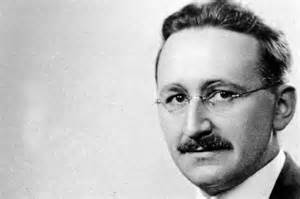
HayekIn this essay, I present a personal essay based on the work of Freidrich A. Hayek, most notably concerning his thoughts and discussion on how knowledge cannot be scientifically calculated for use within a centrally planned organisation, which is argued in his own essays ‘The Use of Knowledge in Society’ (1945) and ‘Competition as a Discovery Procedure’ (1984). 


That Entrepreneurial Knowledge is Situational and Commonsensical, Not Scientific

Part One:

Explanation and Development of the Thesis

In Austrian theory, that entrepreneur is an agent whose character has been carefully explored. Such on entrepreneur operates in a market economy, which is referred to as a ‘discovery process’ by Hayek¹. That entrepreneurs knowledge of the market is imperfect due to do reasoning that knowledge is dispersed amongst the undertakers of the business.

Entrepreneurs possess a certain degree of knowledge dust is unique to them individually and one that cannot be expressed quantitatively. Thus, Hayek disregards all neo-classical and Keynesian economics as they seem to dismiss the role of the entrepreneur via use of quantitative analysis (of averages and aggregates) in measuring equilibrium points to which all entrepreneurs must strive towards and achieve.

The unquantifiable (tacit) knowledge, possessed by the entrepreneur, is therefore ignored when scientific knowledge is made available. As Hayek stated ‘the knowledge of the particular circumstances of time and place… is… the body of very important but unorganized knowledge which cannot possibly be called scientific in the sense of knowledge of general rules’ (1945).

In the writings of Hayek, sScientific knowledge is associated with centralized planning whereas entrepreneurial knowledge is associated with a market order where knowledge is dispersed and situational. The latter includes tacit knowledge, as it is not directly communicable.

‘Every individual… possesses unique information of which beneficial use… [is] based on… [the] knowledge of people of local conditions and of special circumstances… of the fleeting moment not known to others… The sort of knowledge with which I have been concerned is knowledge of the kind which by its nature cannot enter into statistics and therefore cannot be conveyed to any central authority and statistical form’ (Hayek, 1945: 251).

The market economy can only operate at its most optimum level given the knowledge of entrepreneurs who mutually adjust via negative feedback. There is no role for scientific knowledge, as such use would ‘collectively’ combine the knowledge of all entrepreneurs in some mathematical formulation, thereby ignoring situational and commonsensical knowledge.

The market is a ‘discovery process’ for all undertakers who aim to eliminate in perfect knowledge by receiving ‘information for judgments about… matters by reading…, watching…, experiencing…, chatting…, strolling… Much of what he thereby observes – or senses – he could not express in explicit words or numbers’ (Yeager, 1996).

Thus, the entrepreneur will base decisions regarding cost minimisation, prices, allocation of resources, etc. on what they know and what they believe is the right and optimum choice. Scientific knowledge is irrelevant, as it does not quantify the ‘feel’ for the market. It aims for an equilibrium point in time, is costly, his complicated and fails to adjust to changes in the market at the required time.

Tacit knowledge is often not consciously known, even to those who process it, and come never be communicated to a central authority or used in their scientific evaluations. Such entrepreneurial knowledge is unknowingly transmitted throughout the economy as an unintended consequence of individuals pursuing their own ends. The unintended consequences of an economy fail to be recognized by those reliant on scientific knowledge, whereas the entrepreneur with situational knowledge, will recognize such and act accordingly.

Spontaneity is key to the entrepreneur and utmost for the market economy, thereby suggesting that the process towards obtaining equilibrium is a never ending process. As Knight put it, ‘business decisions deal with situations which are far too unique, for any sort of statistical tabulation to have any value for guidance’ (1971: 231).

Part Two:

A] Argument Against the Thesis

Hayek’s thesis that entrepreneurial knowledge is not scientific has drawn the attention of its critics, most notably Lange, Dickinson and Stiglitz. All three believe that entrepreneurial knowledge consists of scientific information as it practically improves business decisions.

Lange (1938) proposed that scientific knowledge of, say, conditional prices for all goods and factors of production should be made available and that these could be taken as parameters in the decision-making process of the entrepreneur. The result would speed up the equilibrium process and enhance the knowledge of the entrepreneur regarding market indicators.

‘the Central Planning Board has a much wider knowledge of what is going on in the whole economic system than any private entrepreneur can ever have’ (Lange, 1938).

In the advent of supercomputers, Lange stated that entrepreneurs could use scientific information to aid in their decision-making and that such scientific knowledge could be obtained in real-time given the demands of the market.

Dickinson agreed with Lange, stating that rational calculation under socialism was at least theoretically possible. Dickinson believed that any economy could be formerly represented by a Walrasian system of equations from which the undertakers in the market base their decisions to achieve an equilibrium point. Such scientific knowledge is vital for entrepreneurs if they wish to remain competitive and understand the direction taken by the market as a whole.

Stiglitz refers to ‘imperfect knowledge’ as known-to-be-available information that is costly to produce. Stiglitz states that such information, not known by the entrepreneur, could be obtained by acquiring statistical and computable data about the markets which can aid in the process of eliminating the imperfect knowledge of the entrepreneur and reduce uncertainty and risk.

Each decision is made within a well-defined framework made up of a given objective function, a given set of resource constraints, and a given set of technologically or economically means of transforming resources into desired objectives².

A famous physicist, Lord Kelvin, stated that ‘When you cannot measure your knowledge is meager and unsatisfactory’³ a statement that many critics of Hayek will stand by.

B] Arguments in Favor of the Thesis:

The main body of argument for Hayek’s thesis came from Hayek himself, although many supported his writings such as Kirzner, Gray and Yeager. Hayek argued that entrepreneurial knowledge is by no means scientific. Knowledge is dispersed throughout society and it is embodied in habits and dispositions of the entrepreneur.

Entrepreneurial knowledge ‘is “knowing where to look for knowledge” rather than knowledge of substantive market information’ (Kirzner, 1973: 68). Entrepreneurial knowledge cannot be quantified or recognized by a central planner or any undertaker in a market who uses a scientific approach.

‘Pantometria’ fails to recognize the tacit knowledge of the entrepreneur and, thus, competitive market behavior relying on scientific knowledge, cannot be a true reflection of entrepreneurial undertakings.

‘there is… a body of very important but unorganised knowledge which cannot possibly be called scientific… the knowledge of the particular circumstances of time and place… every individual… possesses unique information of which beneficial use might be made, but of which use can be made only if the decisions depending on it are left to him or are made with his active co-operation’ (Hayek, 1968, 250).

In response to Langes criticisms, Hayek states that the ‘imperfect knowledge’ of the entrepreneur is actually ‘previously unthought of knowledge’ which must be discovered by the entrepreneur without any need for science. The entrepreneur, given unique and tacit knowledge, can’t adapt to changing requirements of the market process.

Those who possessed scientific knowledge aim for an equilibrium point in time but fail to recognize that ‘long before [equilibrium] is reached the circumstances to which the local efforts adapt themselves will have changed themselves’. Only the entrepreneur who possesses unique and tacit knowledge will ‘change their plans in the direction made necessary by actual changes’.

‘One major flaw in all proposals for the economic planning is that they are all bound to attempt to transform entrepreneurial perception of opportunities into mechanical procedures for resource-utilization and to incur vast losses of efficiency in so attempting’ (Gray, 1998: 38).

With the application of scientific knowledge, entrepreneurs misinterpret the markers process and, as such, tacit knowledge is lost when averages and aggregates our computed. Entrepreneurs, due to the ‘organised complexity [of the market process] where we expect to find permanent constant relations between aggregates or averages’, must not rely upon scientific knowledge.

Part Three:

Argued Statement of Writer’s Own Position

  1. Acceptance of the Thesis

Having read the relevant literature and wait of the arguments for and against the thesis, the author is in the position of agreeing with Hayek’s thesis.

It is true that not all knowledge can be observed and represented by variables to be inserted into complicated scientific models and conceptual frameworks. Each entrepreneur possesses unique knowledge that orders do not have. Such knowledge is based upon intuition, beliefs, sense and first-hand know-how, which is collectively and instinctively used by entrepreneur to achieve his/her ends.

We human beings live in a world where science seems to preoccupy our minds and influence our decisions. However, such scientific knowledge it is based on the law of averages and probabilities, which persuade entrepreneurs that some optimum outcome will be achieved at some point in time.

The author shares the view of Hayek that there exists a body of knowledge that is ‘particular to the circumstances of time and place’ which cannot be detected, quantified or interpreted by any scientific machine, framework or equation. For example, become attrition’s aim to explain the relationships between variables, but there exists an error term in each regression due to unknown variables that are omitted from the model.

Introducing the case of the BSE crisis, a conflict of interest between individual and scientific knowledge is apparent. It is all well and good to provide statistical data, but entrepreneurs, who operate in the beef industry, do not need such information, how’s they already knew of the crisis when it became apparent.

Such knowledge was situational to entrepreneur and it was common sense that the affected cattle would be a threat to his/her undertakings. The entrepreneur, by a discovery process, will operate in the best possible market available under such a crisis. No scientific knowledge is required in predicting an equilibrium point for the farmer.

2. Objection to the Thesis

Despite accepting that entrepreneurial knowledge is situational and commonsensical, the author shares the view of Stiglitz that’s of entrepreneurs cannot afford to be ignorant of the fact that scientific methods are vital in expanding the decision making process of the entrepreneur. It is evident to every undertaker in a market. Scientific evaluations of costs, prices and other indices are available I’m very helpful in finalizing decisions.

Part Three

Responses to Objections Against the Writer’s Position:

In the previous section, it had been acknowledged that entrepreneurial knowledge is situational and commonsensical, but it is the belief of the writer that such knowledge is incomplete without the use of scientific knowledge.

Scientific knowledge is considered a net benefactor to entrepreneurs as it provides vital information that can almost drastically eliminate imperfections of knowledge. ‘Misallocations’ or ‘wastes’ would be minimised.

However, it is understandable to criticize the above statement and defend the position of Hayek. Entrepreneurs will eventually eliminate the imperfection that they possess via the ‘discovery process’ without the dependency of science.

To describe entrepreneurial activity as wasteful because it corrects mistakes only after they occur seems, as Kirzner put it, ‘similar to ascribing the ailment to the medicine which heals it, or even to blaming the diagnostic procedure for the disease is identifies’ (1973: 236).

To conclude, the writer believes that entrepreneurial knowledge is situational and to some degree commonsensical but it also includes an element of science.

References:

Caldwell, B. J. (1997). Hayek and Socialism. Journal of Economic Literature, 35(4):1856-1890.

Gray, J. (1998). Hayek on Liberty. Third edition. Routeledge: London and New York.

Hayek, F. A. (1945). The Use of Knowledge in Society. American Economic Review. XXXV, No. 4. pp. 519-30. American Economic Association.

Hayek, F. A. (1968). Competition as a Discovery Procedure. The Quarterly Journal of Austrian Economics 5, No. 3 (Fall 2002): 9–23.

Check out this FREE Kindle ebook ‘The Essential Hayek’ by Donald Boudreaux

http://traffic.libsyn.com/economicrockstar/072_Hayek_Essay.mp3

Podcast: Play in new window | Download

007: Ryan Blair – Gangster turned Millionaire on Decision-Making, Game Theory and Incentives

November 21, 2014 by Frank

http://traffic.libsyn.com/economicrockstar/007_Ryan_Blair.mp3
Play in New WindowDownload


Episode 007: Ryan Blair –  Gangster turned Millionaire on Decision-Making, Game Theory and Incentives

Ryan BlairRyan Blair is a serial entrepreneur but his path to becoming a millionaire is both unique and fascinating. From a middle-class family who lost it all, Ryan became a gang member and, at times, carried an AK-47. life changed for Ryan due to a strong work ethic and a will to succeed. He overcame great obstacles to achieve extraordinary success.

With six multi-million dollar companies by age 30, Ryan vowed to make his current company, ViSalus Sciences, be the first billion dollar company to come out of the Great Recession and to help many people along the way. He is a philanthropist and New York Times best selling author.

Economics and Finance Themes:

In this interview, Ryan Blair mentions and discusses: decision-making, incentives, rewards, compensation, leveraging, poverty, entrepreneurialism, economic systems, philanthropy, venture capitalists, investors, Game Theory, complementary goods and capital markets.

How being a gang member is similar to being a business person:

  • “A gang is an economic system. Similarities  exist between being an entrepreneur and a legitimate businessman and doing business as a gang member on the street”.
  • “A gang is simply illegal entrepreneurship. It has a management hierarchy. Generally a gang will have various revenue streams. It has a compensation system. There are incentives and rewards as a recruiting system to recruit new members. There’s replication that occurs as a business model. The gang will have different hubs and different cities and countries it operates in. There are so many similarities”.
  • “Game theory is simply the idea of a game of chicken. Sometimes you have to be willing to risk it all and a lot of the time you have to be willing to walk away from a deal”.

Ryan’s Influencers:

  • Bob Hunt: Ryan’s step-father. Find out what he taught Ryan.
  • John Wooden: basketball player and NCAA coach, author on leadership and winner of the Presidential Medal of Freedom.
  • John C. Maxwell: Expert on leadership and New York Times best-selling author.
  • Dale Brown: NCAA Hall of Fame basketball coach.

In this episode, you will learn:

  • what life was like for Ryan growing up with a violent, drug-addicted father and how his family lost everything.
  • how Ryan overcame this to teach people how to overcome their poor decisions or the decisions of their family or the environment they were born into.
  • what skeletons Ryan takes out of the closet (revealed in his book) giving us some insight in this podcast.
  • why people are shocked that he was in a gang but how people that he knew in the past are even more shocked by his appearance, level of education and his ability to articulate on subjects that he is passionate about.
  • how over-leveraging and keeping-up with the Jones’ fuelled by credit in the economic ‘good times’ can be destructive for some families.
  • how Ryan went from middle-class to poverty to multi-millionaire.
  • how Ryan went from earning minimum wage at 18 to earning 6 figures within 2 years.
  • how staring at a 60-year old prisoner became the defining moment that changed Ryan’s life-path.
  • how Ryan overcame dyslexia and ADD to create his own auditory learning system, something which the current educational system failed to do.
  • why Ryan believes that ‘vision’ is so important in your life.
  • how Ryan helps people facing life in adversity: Clue? – The creation of foundations and philanthropic work.
  • about Ryan’s work with autism.
  • about the importance of having mentors and having a life purpose.
  • why Ryan had the perfect attributes to be involved in gangs. [Ryan was forced into a gang because he was a young kid, influenceable and could be productive. He was an angry kid, got into a lot of fights and had something to prove to society].
  • how Ryan learnt powerful lessons from the boardroom on how to structure agreements.
  • how Ryan used the economic theory of Game Theory to get ahead in business and become the dominant player.
  • how Ryan applies mathematical techniques to get the result he’s looking for.
  • the meaning behind Ryan’s tattoos: ‘Carpe Diem’ and ‘8411’.
  • how a tragedy that befell Ryan’s mother has become a great learning experience and a way to develop and to value certain things in life.
  • how Ryan will help give his son a strong work ethic and an incentive to do whatever he wants to do.
  • what Ryan would tell his younger self? –
    ‘Don’t allow short-term thinking to impact your long-term vision’- Ryan Blair

    Click To Tweet

Advice:

  • Ryan’s life purpose goal: “I will measure my influence by the network of the people I can draw upon for inspiration and economic creation’ – Ryan Blair”.
  • Ryan’s Philosophy: “Success is about your beliefs, values, actions and skills. So if you work on all of these things you will be successful” – Ryan Blair”.
  • On Vision: “I use that method in my life and my conscious and subconscious has no choice but to pursue them because I really fall in love with the vision”.
  • On Failing: “I fail forward and try to draw from certain things or from my gang past or maybe perhaps an investment that I made that didn’t work out so well”.
  • On Recruitment:   
    ‘Recruitment is one of the most important things on building a culture in business’ – Ryan Blair

    Click To Tweet

  • On Getting the Best Deal: “If you’re not prepared to walk away [from the deal] and the other party knows that, then you’re gonna be out-negotiated in many cases or you simply won’t get the best result possible for you, your family and your shareholders, which is what’s most important in a business negotiation”.
  • On Learning: Because Ryan knew that he wanted to be an entrepreneur, it was easy for him to associate learning with growth as an entrepreneur.
  • On Opportunities: “Opportunity exists all around you. If you’re looking for it and if you train yourself in how to see it – start there. If I sat in my garden, I could possibly find an opportunity to become an entrepreneur and be successful”.
  • On Nutrition and Learning: “Have a breakfast in the morning before school so as to have a proper education. Nutrition is so important to learning and to growth in an individual”.
  • ‘
    A Quitter Never Wins and A Winner Never Quits’ – Napoleon Hill

    Click To Tweet

Personal Habits:

1. 

‘I’m an idealist. I like to make things as good as I possibly can’ – Ryan Blair

Click To Tweet

2. Asking questions: “I ask a lot of questions of myself. Am I doing the right things? Am I making the right adjustments necessary for me to achieve the result that I want? I ask myself the question ‘Why not?”.

“If I want a vacation and I can’t afford one I then go ‘Why can’t I afford one and someone else can?’. Generally, there’s a reason for that. Maybe you haven’t properly saved or you don’t have enough income coming in. If I want a new car that I would really like to have and I can’t afford it, I’ll ask myself ‘Why not?’ and eventually I ask that question enough times then I got the new car or I got the vacation or I got the houses or I got the stuff that I wanted. Now I ask myself ‘Why can’t I have a billion dollar company?’ The answer is a multi-faceted one and it’s one that I will find a solution to and solve the problem”.

3. Making decisions: “Making the right decisions is harder to do because you can’t always have all the facts and all the information in front of you. I look back on a lot of my decisions, reflecting on them and say ‘Hey, maybe I didn’t make the right decision’, meaning there was another decision that would have been better”. A wrong decision could have been made because “I had the wrong facts or, perhaps, the wrong intentions or emotions in the decision-making process that made me fail to make the right decision”.

4. Evaluating decisions and making the necessary adjustments: “In life, you’re going to make some bad decisions, particularly in business because you don’t always have all the facts or you can’t predict the future or you don’t know how the economy might change or how capital markets might change”.

“If bad decisions are made, you’ve just got to assess it, understand it and make better decisions, and eventually you accumulate enough right decisions to where you’ve got success”.

The Golden Rule that Ryan Lives By:

“The Path is all Math” – “you’re reverse engineering or you’re finding the mathematical equation to get the result you’re looking for and that could be a result of fixing any deficiency in your life or to improve something. There’s generally a mathematical path to it and that could simply be the number of steps in the formula or the amount of time it takes for you to get the result that you’re looking for”.

‘Understanding the math behind things is very important’ – Ryan Blair

Click To Tweet

‘The Path is all Math’ – Ryan Blair

Click To Tweet

Takeaway:

  • Don’t let anyone steal your milk: a gang member lifestyle allowed Ryan to develop an innate ability to spot trouble in the boardroom and to fight his corner.
  • Be careful in deals that you do as an entrepreneur with venture capitalists or sophisticated investors. Ryan found himself in a situation where he had created value and wealth but faced not receiving any of it.
  • “Life can deal you a bad hand and if you sit at the table long enough and you play with the best strategy, you’ll end up getting a great result out of it. And I’m living proof of that”.
  • Attributes required to make multi-generational wealth: creativity and strong work ethic.

Recommended Books:

  • Nothing to Lose, Everything to Gain by Ryan Blair
  • David and Goliath:  Underdogs, Misfits, and the Art of Battling by Malcolm Gladwell
  • Blink: The Power of Thinking Without Thinking by Malcolm Gladwell
  • The Tipping Point: How Little Things Can Make a Big Difference by Malcolm Gladwell
  • Outliers: The Story of Success by Malcolm Gladwell
  • The 5 Levels of Leadership: Proven Steps to Maximize Your Potential by John MaxwellAudible

Favorite Internet Resource:

  • http://www.ryanblair.com
  • http://ntldocumentary.com
  • Audible is the leading provider of premium digital spoken audio information and entertainment on the internet.

Where to Find Ryan Blair:

  • Instagram
  • Twitter
  • Facebook
http://traffic.libsyn.com/economicrockstar/007_Ryan_Blair.mp3

Podcast: Play in new window | Download

005: Hector Avellaneda on Buying Gold to Protect Your Wealth from a Dollar Crisis

November 19, 2014 by Frank

http://traffic.libsyn.com/economicrockstar/005_Hector_Avellaneda.mp3
Play in New WindowDownload

Episode 005: Hector Avellaneda on Buying Gold to Protect Your Wealth from a Dollar Crisis

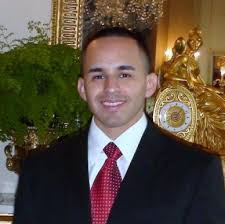
Hector AvellanedaHector Avellaneda is from Houston, Texas and has a passion for entrepreneurship, economics, finance and gold. This, however, only materialized after Hector came face to face with a untold truth and one of the harshest lessons that only a life experience can teach you, as long as you are willing to dig deep in search for answers.

Hector, the son of Mexican immigrants to the US, grew up in poverty and was statistically destined to a life of poverty in adulthood. However, Hector wanted to defy this probability and worked extremely hard in school. In typical fashion, Hector accumulated college debt and was ironically facing a poorer life than his own parents despite a larger mean income.

Hector questioned the college debt system and deeply explored how US citizens have grown accustomed to taking on such debt. Further research led him to realise that middle-class America could see their wealth wiped out due to an impending dollar crisis. Subsequently, Hector wrote an economics and finance-related book to share his findings and to suggest what you can do to protect your wealth.

Economics and Finance Themes:

In this interview, Hector mentions and discusses: poverty, wealth, college debt, economic crisis, the Great Depression, loans, credit card debt, poverty trap, psychological effects of poverty, deficit, free markets, incentives, purchasing power, inflation, taxes, quantitative easing, money supply, the Minsky Moment, financial literacy, properties of money, fiat currency, the US Federal Reserve, stock markets, crypto-currencies, the Gold Standard.

Hector’s Influencers:

His dad and a college counsellor. Find out more in his book ‘De-CLASS-ified’ (see below for a link to Amazon and get an e-copy on Amazon for a bargain $2.99).

In this episode, you will learn:

  • how Hector had all the hallmarks of continuing to live a life of poverty in America.
  • about Hector being bullied in school because of the charitable clothes he wore .
  • how Hectors’ father and mother’s sense of hard-work and money management became naturally ingrained in him.
  • how Hector defied and beat the statistical odds of remaining poor for life due to a strong work ethic and a desire to succeed.
  • how hard work in school can open up many opportunities in life including an internship with NASA.
  • the importance of being mentored.
  • how easy credit for college education made Hector ‘s financial position worse off than his parents.
  • what triggered Hector into discovering the truth about the American economy and the college debt system.
  • the risks in the US economy.
  • why the US could be faced with a massive default on student loans and what is triggering this today.
  • how it became acceptable to borrow to pay for college.
  • why Hector’s $50,000 student debt became a blessing in disguise.
  • how Hector’s research into the US college debt crisis resulted in him writing an economics and finance book without having a background in these disciplines.
  • why the middle class in America is about to collapse financially.
  • why the US government will seize money from an American workers’ wages.
  • what type of college degree is not in demand in US anymore.
  • what you should do today when making a college or subject choice.
  • what it takes to have financial and economic freedom.
  • about the 7 properties of money.
  • what countries are doing today with their dollar reserves.
  • about who actually owns the Federal Reserve Bank of America. Hint: It’s not the US government!
  • what you can do to protect your wealth from being transferred to others.
  • who are buying up gold and for what reason.

On Living in Poverty:

  • ‘I was pretty poor. I lived in a small wooden type of house with a sheet metal roof’ – Hector Avellaneda
  • ‘Growing up I saw my parents argue and fight about money and not having enough money to take a family trip or a vacation or just be able to enjoy a day out on the town and so my parents were always very stressed out, always kind of arguing and fighting’ -Hector Avellaneda
  • ‘I was made fun off in school because a lot of clothes that I wore was donated from the local church or local program, a local donation program’ – Hector Avellaneda
  • ‘I always told myself that I was going to do whatever it took to make sure that I was successful in life and to make sure that I got out of that poverty that I had seen as a child’ – Hector Avellaneda

Advice:

  • “Today we need computer scientists, we need computer programmers, we need engineers – those are the degrees that are in demand  and I myself sit on the board directors of a non-profit organization here in Houston that actually encourages kids to go to college and major in things like engineering, major in things like computer science because I think those are the degrees that we need in today’s economy” – Hector Avellaneda.

  • ‘To have financial and economic freedom, I had to become an entrepreneur’ – Hector Avellaneda

    Click To Tweet

  • “For anyone who is going to college or who is thinking about going to college today, I would say ‘do some real research and figure out what pay expectations you will have upon graduation’ and, with that said, make sure that, if you are going to go to college, major in a degree that will be able to sustain your way of life that you want to live and if you don’t want to major in something like engineering or computer science because that’s just not what you are passionate for then don’t take on any student debt” – Hector Avellaneda.

  • Those holding onto paper assets are at risk of losing it all to those holding real tangible assets like gold and silver, land and claims on oil fields.

Personal Habits:

  • A hard worker, head-strong, determined, passionate and a desire to find out the truth through research, self-education, reading and learning.
  • Hector had a desire to find out what went wrong in his life as he was mis-sold the American idea of taking on college debt . With a limited exposure to finance and economics in college, $50,000 of college debt and unemployed due to the Great Recession of 2008, Hector read widely to learn and understand about the truth behind the US economy, the trillions of dollars of debt and the risks of a mass student loan default and a dollar crisis. 

Takeaway:

‘We have a generation of college students who are graduating into financial bondage’ – Hector

Click To Tweet

The free markets have been distorted due to all the incentives that have been created in the US economy.

‘Paper money eventually returns to its intrinsic value – zero’ – Voltaire

Click To Tweet

Before making a college decision, do a course that will allow you to earn an income to pay off your debt, otherwise do not take on debt.

Increase your understanding of financial literacy. Read books on money.

Schools and Universities need to teach more economics, finance and financial literacy subjects to all students.

Self-education is very important – read books and get access to the necessary information online.

‘Money is nothing more than an economic tool by which we convert our time and freedom’ – Hector

Click To Tweet

Recommended Books:

  • The Death of Money by James Rickards
  • De-CLASS-ified: The Fall of the Middle Class and Rise of the Internet Entrepreneur by Hector Avellaneda

Favorite Internet Resource:

  • iCloud

Where to Find Hector Avellaneda:

  • Gold and Silver Buyer Club
  • New Class Rising
  • Podcast on iTunes
http://traffic.libsyn.com/economicrockstar/005_Hector_Avellaneda.mp3

Podcast: Play in new window | Download

Frank Conway

Frank Conway is founder of Economic Rockstar and lecturer of economics, finance and statistics. Read More…

View My Blog Posts

Youtube Sub

Become a Patron of the Economic Rockstar Podcast

patreon

Ireland’s Economy by the Numbers

Leaving Cert Economics: Ireland’s Economy  Click here to download a workbook on Ireland’s Economy so that you can add your own notes. [Original size] Ireland’s Economy by fconway

Categories

Subscribe and Never Miss An Episode

itunes-logo

Recent Posts

  • Ireland’s Economy by the Numbers April 8, 2019
  • 174: Wendy Carlin on The Core Project, Capitalism, Democracy and Normative Statements February 13, 2019
  • 173: Stephen Wright on Core Econ as a Learning Resource for Mainstream Economics January 28, 2019
  • 172: Best of 2018 Part 2: From the Great Depression to Futurism; Institutions, Individualism, Cooperation and Reciprocity January 22, 2019
  • 171: Best of 2018 Part 1 January 3, 2019

Copyright © 2026 · Podcast Pro Theme on Genesis Framework · WordPress · Log in

This website uses cookies to improve your experience. We'll assume you're ok with this, but you can opt-out if you wish. Accept Reject Read More
Privacy Policy

Privacy Overview

This website uses cookies to improve your experience while you navigate through the website. Out of these, the cookies that are categorized as necessary are stored on your browser as they are essential for the working of basic functionalities of the website. We also use third-party cookies that help us analyze and understand how you use this website. These cookies will be stored in your browser only with your consent. You also have the option to opt-out of these cookies. But opting out of some of these cookies may affect your browsing experience.
Necessary
Always Enabled
Necessary cookies are absolutely essential for the website to function properly. This category only includes cookies that ensures basic functionalities and security features of the website. These cookies do not store any personal information.
Non-necessary
Any cookies that may not be particularly necessary for the website to function and is used specifically to collect user personal data via analytics, ads, other embedded contents are termed as non-necessary cookies. It is mandatory to procure user consent prior to running these cookies on your website.
SAVE & ACCEPT