• ABOUT
  • RESOURCES
  • PODCAST
  • BOOKS
  • BLOG
  • SUPPORTERS
  • QFA Financial Advice
  • CONTACT

Economic Rockstar

Connecting Brilliant Minds in Economics and Finance

071: Darshak Patel on Using Popular Culture to Engage Economics Students in the Classroom and Online

February 5, 2016 by Frank

http://traffic.libsyn.com/economicrockstar/071_Darshak_Patel.mp3
Play in New WindowDownload

071: Darshak Patel on Using Popular Culture to Engage Economics Students in the Classroom and Online

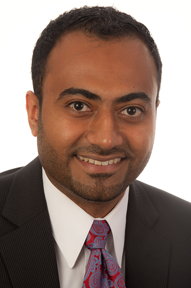
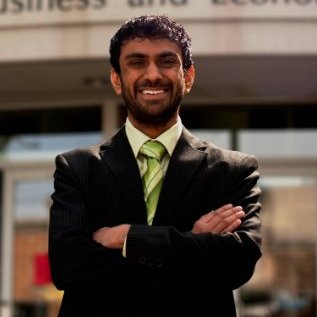
Darshak Patel is currently a Lecturer of economics at the University of Kentucky, USA.darshak patel
After a one-year Visiting Assistant Professor appointment at Roanoke College, Darshak served three years as an Assistant Professor of Economics at the University of Tennessee, Martin. 

Darshak’s research and teaching interests include labor economics, microeconomics, industrial organization, the economics of education, and sports economics.  

Darshak graduated with a PhD in Economics at the University of Kentucky with his dissertation exploring the use of  option value theory to explain student decision-making in post-secondary schooling. 

Economics:

In this interview, Darshak mentions: option value theory, pedagogy, decision-making, opportunity cost, logic, profit, the hazard model, entrepreneurship, economic growth and corruption.

Economists:

In this interview, Darshak mentions: Abdullah Al-Bahrani, Kim Holder, Brendan Sheridan, Jadrian Wooten and Milton Friedman.

In this episode you will learn:

  • whether using Twitter to enhance the students’ learning outcomes is effective.
  • how video scrapbooking can be integrated into the economics curriculum.
  • the benefits and difficulties of using social media platforms to teach economics.
  • what option value theory is.
  • about Milton Friedman’s recommendation to the US government to introduce a tax to finance the US involvement in World War II.
  • how Bing Crosby helped promote the purchase of war bonds for the US war effort during the Second World War.
  • about the transition of the Kenyan economy since the 1970s.
  • about the Chinese influence in Africa.
  • how you can use the economic data provided on FRED to bring your economics classroom alive.
  • how Darshak is using popular culture to help interpret economic concepts and theories.

Resources:

  • ESPN 30 for 30
  • Rockonomix
  • FRED
  • Critical Commons
  • Economics of Seinfeld by Professor Linda S. Ghent, Professor Alan Grant and George Lesica.
  • Bazinganomics by James Tierney, G. Dirk Mateer, Wayne Geerling, Jadrian Wooten and Ben Smith.
  • Economics of The Office by Dan Kuester, Dirk Mateer and Chris Youderian.
  • University of Kentucky Teaching Economics Conference

Books:

  • The Two-Second Advantage: How We Succeed by Anticipating the Future–Just Enough by Vivek Ranadive and Kevin Maney
  • Soccernomics by Simon Kuper and  Stefan Szymanski

Papers:

  • Al-Bahrani, A., Dowell, C. & Patel, D. (2016). Video Scrapbooking: An Art Form Revived in the Economics Curriculum. Journal of Economics and Economic Education Research. Forthcoming.
  • Patel, D. and Saunoris, J. (2016). Using FRED Data Series to Improve Learning Outcomes in Economic Courses: From Student to Practitioner, Journal of Economics and Finance Education. Forthcoming.
  • Al-bahrani, A., Patel, D. and Sheridan, B. (2015). Engaging Students Using Social Media: The Students Perspective. International Review of Economics Education, 19, 36-50.
  • Al-bahrani, A. and Patel, D. (2015). Incorporating Twitter, Instagram, and Facebook in Economics Classrooms,  Journal of Economic Education. 46 (1), 56-67.
  • Al-bahrani, A. and Patel, D. (2015). Using ESPN 30 for 30 to Teach Principles of Economics, Southern Economic Journal, 81 (3), 829-842.
  • Patel, D. and Ward, M. R. (2011). “Using Patent Citation Patterns to Infer Innovation Market Competition,” Research Policy. 40(6), 886–894.
http://traffic.libsyn.com/economicrockstar/071_Darshak_Patel.mp3

Podcast: Play in new window | Download
052: Alex Tabarrok on Globalisation, Bounty Hunters and Leveraging Online Education

October 1, 2015 by Frank

http://traffic.libsyn.com/economicrockstar/Alex_Tabbarrok__Final.mp3
Play in New WindowDownload

052: Alex Tabarrok on Globalisation, Bounty Hunters and Leveraging Online Education

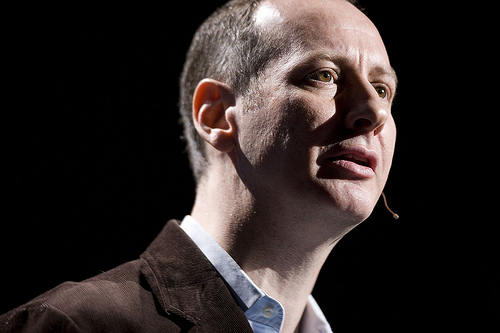
Alex Tabarrok is Associate Professor of Economics at George Mason University and co-founder (with Tyler Cowen) of Marginal Revolution University, an online platform for learning economics.Alex Tabarrok

Alex is Senior Fellow and former Research Director for The Independent Institute, Assistant Editor of The Independent Review, Bartley J. Madden Chair in Economics at the Mercatus Center and Director of the Center for Study of Public Choice.

Alex is the author or editor of a number of books including the introductory economics textbooks, Modern Principles, The Voluntary City and Changing the Guard: Private Prisons and the Control of Crime.

Alex is a TED speaker with over 640,000 views of his TED talk, How Ideas Trump Crises.

Alex received his Ph.D. in economics from George Mason University, and he has taught at the University of Virginia and Ball State University.

“I hope to be teaching long after I’m dead” – Alex Tabarrok

Click To Tweet

In this episode, you will learn:

  • how to ensure that criminals turn up of trial and to reduce the possibility of them becoming a fugitive.
  • how bounty hunters are more successful than the police in catching criminals.
  • why bounty hunters and bail bondsmen are the most best for the taxpayer.
  • why bounty hunters invited Alex Tabarrok to join them in a bounty hunting.
  • why a mother’s signature on a bail bond is the most effective way of making sure a criminal repays its  due.
  • how effective are the police in deterring crime.
  • how a police strike in Montreal in 1967 resulted in an spike in crime.
  • how the terror alert level results in an increase in police presence and results in a decrease in local crime.
  • whether we should reward the police for reducing crime and the problems that could arise from this reward system.
  • about the use of value-added tests for identifying teacher quality.
  • whether the best teachers have a positive impact on the future earnings of their students.
  • if a country can have a welfare state and open borders.
  • how the next generation of immigrants revert to the average of their adopted country including crime.
  • why immigrants to the United States are the most entrepreneurial.
  • why Alex co-founded Marginal Revolution University.
  • what Marginal Revolution University is about and who it’s for.
  • how to leverage the best teachers and leverage their experience.
  • how teaching will evolve into a format that’s similar to how plays evolved into movies with leading actors being paid millions of dollars and the production being created just once.
  • how artificial intelligence and computer adaptive learning programmes will be the next wave of teaching and learning.
  • what is the ideal length for a recorded educational video.
  • why universities will have to adapt to online technologies.
  • why parents and politicians want colleges to use online technologies.

Immigrants have lower crime rates, but the children of immigrants have about average crime rates. It’s unfortunate that the immigrants adopt our ways. They assimilate to American crime rates – Alex Tabarrok

Personal Habits:

I love doing what I do and that removes a lot of barriers. It gets you up in the mornings – Alex Tabarrok

Takeaway:

“Economics is fun. Economics brings in these world histories, things about climate, geography and history” – Alex Tabarrok

Economics:

In this interview, Alex mentions: crime, incentives, causality, elasticity, Baumol’s Cost Disease, rewards, redistribution, welfare, taxes, entrepreneurship, human capital, globalisation, public goods, free trade, structural unemployment and trade.

Economists:

In this interview, Alex mentions: Tyler Cowen, Greg Mankiw, Paul Krugman, Eric Callan, John Click, Milton Freidamn, John Nash, Bryan Caplan, Robin Hanson, Joseph Schumpeter, Adam Smith, David Hume and Richard Cantillon.

“This is a cliche, but Adam Smith really is great” – Alex Tabarrok

Click To Tweet

Ted:

  • How Ideas Trump Crises by Alex Tabarrok
  • Comment: Solving Crises Through Innovation and Ideas or Creating Problems Through Marginalisation and Displacement by Frank Conway

My TED talk is 75% of my entire teaching. So that 15 minute talk has been seen by so many people that that’s the majority – the big majority of all my teaching in my life. – Alex Tabarrok

Podcasts:

  • EconPop

Books:

  • Economics in One Lesson by Henry Hazlitt
  • The Armchair Economist by Stephen Lansberg
  • Freakonomics by Steven  D. Levitt and Stephen J. Dubnar
  • An Economist Gets Lunch: New Rules for Everyday Foodies by Tyler Cowen
  • The Undercover Economist by Tim Hartford
  • The Undercover Economist Strikes Back by Tim Hartford
  • The Case Against Education by Bryan Caplan (coming soon)
  • The Age of Em by Robin Hanson 
  • Trekonomics by Manu Saadia

    http://traffic.libsyn.com/economicrockstar/Alex_Tabbarrok__Final.mp3

    Podcast: Play in new window | Download
    033: Abdullah Al-Bahrani on the Economy of Oman and How Racial Discrimination Empowered Him to Succeed in Life and in Economics.

    May 22, 2015 by Frank

    http://traffic.libsyn.com/economicrockstar/033_Abdullah_Al_Bahrani_Final.mp3
    Play in New WindowDownload

    033: Abdullah Al-Bahrani on the Economy of Oman and How Racial Discrimination Empowered Him to Succeed in Life and in Economics.

    Dr. Abdullah Al Bahrani is an Assistant Professor of Economics at Northern Kentucky University,Abdullah al Bahrani where he serves as the Principles of Economics Coordinator.

    Abdullah’s research interests are in the fields of Industrial Organization and Education of Economics. Currently, his primary focus is on innovative approaches to teaching Economics. In Industrial Organization, his research examines market structure and competition in the banking and real estate industries.

    Prior to joining academia, Dr. Al Bahrani worked in the mortgage industry from 2003-2006. He has also served as outside economic consult to the Ministry of Education, Sultanate of Oman and new business ventures entering Oman.

    Abdullah received his Ph.D. in Economics from the University of Kentucky in 2010, where he received an award for Best Economics Graduate Teaching Assistant.

    His Master degree in Economic Theory was awarded by American University in Washington D.C. in 2003 and he earned a Bachelor of Science in Business Economics from the University of Louisville in 2002.

    Influencers:

    My parents are big advocates of education and they instil the value of education and the value of curiosity – Abdullah Al-Bahrani

    Personal Habits:

    Abdullah has a 5am start and gets to the gym most mornings. It is at the gym where Abdullah creates his to-do list, becomes super-organized and listens to Economic Rockstar!

    On dealing with racial discrimination:

    You roll up your sleeves and you keep on trying – Abdullah Al-Bahrani

    Abdullah’s Philosophy and Affirmations:

    Failure is the opportunity to begin again more intelligently

    Click To Tweet

    Failing in a business does not need to mean that you failed as a person – Abdullah Al-Bahrani

    Click To Tweet

    Whatever you do, allow your personality to shine – Abdullah Al-Bahrani

    Click To Tweet

    The thing that I appreciate is people that push the boundaries that create new paths – to me that’s what growth is – Abdullah Al-Bahrani

    My philosophy is to embrace technology – Abdullah Al-Bahrani

    Click To Tweet

    Find Out:

    • why Abdullah decided to do a Phd in Economics in 2006 and left the mortgage industry just before it imploded.
    • about Abdullah’s economic consultancy work with the Sultanate of Oman.
    • about Abdullah’s connection when reviewing labor market studies in Oman (Hint: She is the Director General of the National Centre of Career Guidance and is as maternal to Abdullah as Oman as a country is to him).
    • how Oman are creating an entrepreneurial spirit to drive is economy in the future.
    • why Oman is faced with difficulties in transitioning to an entrepreneurial economy.
    • how Omani culture is preventing it’s people to take on risk and why incentives do not work.
    • about Abdullah’s suggestion that to create an entrepreneurial spirit in Oman, the labor market must first be liberalised.
    • how ‘Omanization’ has made it costly for foreign firms to set up subsidiaries in Oman.
    • why Omani’s are not hired by foreign firms setting up in Oman.
    • why discrimination exists in the Omani labor market and why US and UK ex-pats would be a preferred employee.
    • how data limitations for Oman make it difficult to conduct an empirical analysis of the labor market.
    • how labor market regulations in Oman is making it costly for firms to hire Omani’s.
    • about some economic indicators for Oman.
    • about Oman’s free trade agreements, the Gulf Corporation Council and the potential Oman offers.
    • about Oman’s tourism initiative to create Oman as an eco-friendly destination.
    • how Abdullah is integrating social media into the classroom, making education a more interactive and conducive learning environment for students.
    • about Abdullah’s clever way of using a students’ mobile phone in explaining the concept of a negative externality.
    • how to create a sense of community in a classroom.
    • why Abdullah received an Easter basket of goodies from a student’s mother.
    • why Abdullah is ‘helping his students to ‘clean’ their social media footprint.
    • how Abdullah encourages his students to connect with him on whatever platform they choose to use.
    • how using ESPN 30 for 30 to teach economics and to keep the economics student engaged.
    • how to teach economics with no math and no graphs.
    • about the research Abdullah is doing on racial discrimination in the labor market.
    • how Abdullah is identifying how racial discrimination is evident in online markets where, unlike traditional markets,  the color of your skin is not a factor.
    • if your last name prevent you from getting a loan, employment or from being priced out of a market.
    • how dropping a letter from your name can get you a job if you’re being racially discriminated against.
    • how Abdullah was racially discriminated against in both the labor market and when selling mortgage loans in the USA.
    • how Abdullah dealt with racial discrimination and how it gave him his Phd dissertation question.
    • how online price comparison websites may actually be anti-competitive.
    • how online stores are eating into the consumer surplus.

    Economists:

    In this interview, Abdullah mentions:

    Darshak Patel, Kim Holder, Gary Becker, Steven Levitt, Stephen Dubnar, Frank Scott, Chris Bollinger and Gail Hoyt, Brandon Sheridan and Roland Fryer.

    Economics:

    In this interview, Abdullah mentions and discusses:

    Labor market, incentives, entrepreneurship, small and medium sized enterprise, venture capital, unintended consequences, business cycle, unemployment, GDP per capita, trade agreements, indigenous industries, multinational companies, Gulf Corporation Council, tourism, factor endowments, negative externality, comparative advantage, search cost, marginal cost, competition and consumer surplus.

    Papers:

    • Al-Bahrani, Abdullah and Darshak Patel (2014). Using ESPN 30 for 30 to Teach Economics. Southern Economic Journal. 81:3. 829-842.
    • Al-Bahrani, Abdullah. Competition in Online Markets: When Banks, Compete do Consumers Really Win? Journal of Housing Research. Forthcoming (Accepted October 2014).
    • Al-Bahrani, Abdullah and Darshak Patel (2015). Incorporating Twitter, Instagram and Facebook in Economics Classrooms. Journal of Economic Education. 44:1. 56-67.

    Books:

    • The Color of Credit: Mortgage Discrimination, Research Methodology, and Fair-Lending Enforcement by Stephen Ross and John Yinger.
    • Chicago by Alaa Al-Aswani

    Resources:

    • Twitter

    Where to find Abdullah:

    • Twitter: @teach_econ
    • Website: www.teach-econ.com


    http://traffic.libsyn.com/economicrockstar/033_Abdullah_Al_Bahrani_Final.mp3

    Podcast: Play in new window | Download

    005: Hector Avellaneda on Buying Gold to Protect Your Wealth from a Dollar Crisis

    November 19, 2014 by Frank

    http://traffic.libsyn.com/economicrockstar/005_Hector_Avellaneda.mp3
    Play in New WindowDownload

    Episode 005: Hector Avellaneda on Buying Gold to Protect Your Wealth from a Dollar Crisis

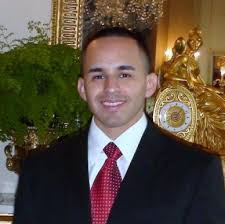
    Hector AvellanedaHector Avellaneda is from Houston, Texas and has a passion for entrepreneurship, economics, finance and gold. This, however, only materialized after Hector came face to face with a untold truth and one of the harshest lessons that only a life experience can teach you, as long as you are willing to dig deep in search for answers.

    Hector, the son of Mexican immigrants to the US, grew up in poverty and was statistically destined to a life of poverty in adulthood. However, Hector wanted to defy this probability and worked extremely hard in school. In typical fashion, Hector accumulated college debt and was ironically facing a poorer life than his own parents despite a larger mean income.

    Hector questioned the college debt system and deeply explored how US citizens have grown accustomed to taking on such debt. Further research led him to realise that middle-class America could see their wealth wiped out due to an impending dollar crisis. Subsequently, Hector wrote an economics and finance-related book to share his findings and to suggest what you can do to protect your wealth.

    Economics and Finance Themes:

    In this interview, Hector mentions and discusses: poverty, wealth, college debt, economic crisis, the Great Depression, loans, credit card debt, poverty trap, psychological effects of poverty, deficit, free markets, incentives, purchasing power, inflation, taxes, quantitative easing, money supply, the Minsky Moment, financial literacy, properties of money, fiat currency, the US Federal Reserve, stock markets, crypto-currencies, the Gold Standard.

    Hector’s Influencers:

    His dad and a college counsellor. Find out more in his book ‘De-CLASS-ified’ (see below for a link to Amazon and get an e-copy on Amazon for a bargain $2.99).

    In this episode, you will learn:

    • how Hector had all the hallmarks of continuing to live a life of poverty in America.
    • about Hector being bullied in school because of the charitable clothes he wore .
    • how Hectors’ father and mother’s sense of hard-work and money management became naturally ingrained in him.
    • how Hector defied and beat the statistical odds of remaining poor for life due to a strong work ethic and a desire to succeed.
    • how hard work in school can open up many opportunities in life including an internship with NASA.
    • the importance of being mentored.
    • how easy credit for college education made Hector ‘s financial position worse off than his parents.
    • what triggered Hector into discovering the truth about the American economy and the college debt system.
    • the risks in the US economy.
    • why the US could be faced with a massive default on student loans and what is triggering this today.
    • how it became acceptable to borrow to pay for college.
    • why Hector’s $50,000 student debt became a blessing in disguise.
    • how Hector’s research into the US college debt crisis resulted in him writing an economics and finance book without having a background in these disciplines.
    • why the middle class in America is about to collapse financially.
    • why the US government will seize money from an American workers’ wages.
    • what type of college degree is not in demand in US anymore.
    • what you should do today when making a college or subject choice.
    • what it takes to have financial and economic freedom.
    • about the 7 properties of money.
    • what countries are doing today with their dollar reserves.
    • about who actually owns the Federal Reserve Bank of America. Hint: It’s not the US government!
    • what you can do to protect your wealth from being transferred to others.
    • who are buying up gold and for what reason.

    On Living in Poverty:

    • ‘I was pretty poor. I lived in a small wooden type of house with a sheet metal roof’ – Hector Avellaneda
    • ‘Growing up I saw my parents argue and fight about money and not having enough money to take a family trip or a vacation or just be able to enjoy a day out on the town and so my parents were always very stressed out, always kind of arguing and fighting’ -Hector Avellaneda
    • ‘I was made fun off in school because a lot of clothes that I wore was donated from the local church or local program, a local donation program’ – Hector Avellaneda
    • ‘I always told myself that I was going to do whatever it took to make sure that I was successful in life and to make sure that I got out of that poverty that I had seen as a child’ – Hector Avellaneda

    Advice:

    • “Today we need computer scientists, we need computer programmers, we need engineers – those are the degrees that are in demand  and I myself sit on the board directors of a non-profit organization here in Houston that actually encourages kids to go to college and major in things like engineering, major in things like computer science because I think those are the degrees that we need in today’s economy” – Hector Avellaneda.

    • ‘To have financial and economic freedom, I had to become an entrepreneur’ – Hector Avellaneda

      Click To Tweet

    • “For anyone who is going to college or who is thinking about going to college today, I would say ‘do some real research and figure out what pay expectations you will have upon graduation’ and, with that said, make sure that, if you are going to go to college, major in a degree that will be able to sustain your way of life that you want to live and if you don’t want to major in something like engineering or computer science because that’s just not what you are passionate for then don’t take on any student debt” – Hector Avellaneda.

    • Those holding onto paper assets are at risk of losing it all to those holding real tangible assets like gold and silver, land and claims on oil fields.

    Personal Habits:

    • A hard worker, head-strong, determined, passionate and a desire to find out the truth through research, self-education, reading and learning.
    • Hector had a desire to find out what went wrong in his life as he was mis-sold the American idea of taking on college debt . With a limited exposure to finance and economics in college, $50,000 of college debt and unemployed due to the Great Recession of 2008, Hector read widely to learn and understand about the truth behind the US economy, the trillions of dollars of debt and the risks of a mass student loan default and a dollar crisis. 

    Takeaway:

    ‘We have a generation of college students who are graduating into financial bondage’ – Hector

    Click To Tweet

    The free markets have been distorted due to all the incentives that have been created in the US economy.

    ‘Paper money eventually returns to its intrinsic value – zero’ – Voltaire

    Click To Tweet

    Before making a college decision, do a course that will allow you to earn an income to pay off your debt, otherwise do not take on debt.

    Increase your understanding of financial literacy. Read books on money.

    Schools and Universities need to teach more economics, finance and financial literacy subjects to all students.

    Self-education is very important – read books and get access to the necessary information online.

    ‘Money is nothing more than an economic tool by which we convert our time and freedom’ – Hector

    Click To Tweet

    Recommended Books:

    • The Death of Money by James Rickards
    • De-CLASS-ified: The Fall of the Middle Class and Rise of the Internet Entrepreneur by Hector Avellaneda

    Favorite Internet Resource:

    • iCloud

    Where to Find Hector Avellaneda:

    • Gold and Silver Buyer Club
    • New Class Rising
    • Podcast on iTunes
    http://traffic.libsyn.com/economicrockstar/005_Hector_Avellaneda.mp3

    Podcast: Play in new window | Download

    Frank Conway

    Frank Conway is founder of Economic Rockstar and lecturer of economics, finance and statistics. Read More…

    View My Blog Posts

    Youtube Sub

    Become a Patron of the Economic Rockstar Podcast

    patreon

    Ireland’s Economy by the Numbers

    Leaving Cert Economics: Ireland’s Economy  Click here to download a workbook on Ireland’s Economy so that you can add your own notes. [Original size] Ireland’s Economy by fconway

    Categories

    Subscribe and Never Miss An Episode

    itunes-logo

    Recent Posts

    • Ireland’s Economy by the Numbers April 8, 2019
    • 174: Wendy Carlin on The Core Project, Capitalism, Democracy and Normative Statements February 13, 2019
    • 173: Stephen Wright on Core Econ as a Learning Resource for Mainstream Economics January 28, 2019
    • 172: Best of 2018 Part 2: From the Great Depression to Futurism; Institutions, Individualism, Cooperation and Reciprocity January 22, 2019
    • 171: Best of 2018 Part 1 January 3, 2019

    Copyright © 2026 · Podcast Pro Theme on Genesis Framework · WordPress · Log in

    This website uses cookies to improve your experience. We'll assume you're ok with this, but you can opt-out if you wish. Accept Reject Read More
    Privacy Policy

    Privacy Overview

    This website uses cookies to improve your experience while you navigate through the website. Out of these, the cookies that are categorized as necessary are stored on your browser as they are essential for the working of basic functionalities of the website. We also use third-party cookies that help us analyze and understand how you use this website. These cookies will be stored in your browser only with your consent. You also have the option to opt-out of these cookies. But opting out of some of these cookies may affect your browsing experience.
    Necessary
    Always Enabled
    Necessary cookies are absolutely essential for the website to function properly. This category only includes cookies that ensures basic functionalities and security features of the website. These cookies do not store any personal information.
    Non-necessary
    Any cookies that may not be particularly necessary for the website to function and is used specifically to collect user personal data via analytics, ads, other embedded contents are termed as non-necessary cookies. It is mandatory to procure user consent prior to running these cookies on your website.
    SAVE & ACCEPT