• ABOUT
  • RESOURCES
  • PODCAST
  • BOOKS
  • BLOG
  • SUPPORTERS
  • QFA Financial Advice
  • CONTACT

Economic Rockstar

Connecting Brilliant Minds in Economics and Finance

147: Ngaio Hotte on Resource Economics, Externalities and Elinor Ostrom
July 8, 2018 by Frank

http://traffic.libsyn.com/economicrockstar/147_Ngaio_Hotte_Final.mp3
Play in New WindowDownload

147: Ngaio Hotte on Resource Economics, Externalities and Elinor Ostrom


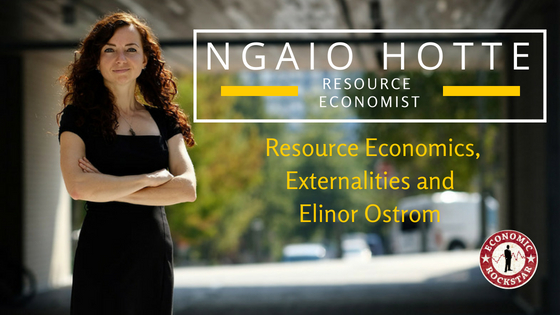
Ngaio Hotte is co-founder of the consultancy firm Resource Economics Group, which is based in British Columbia in Canada. Resource Economics Group specializes in natural resources policy, planning and management. They do research and support decision-making related to the many values of natural resources and trade-offs associated with managing these values for the benefit of people and the planet.

Ngaio is a Ph.D candidate at the University of British Columbia. Her research title is ‘How can trust be built among parties engaged in collaborative natural resource governance?’ and she draws influence from the work of the only female Nobel laureate in economics, Elinor Ostrom.

Ngaio’s Research Interests include trust, government-to-government relations, Indigenous communities, collaboration and natural resources and we touch on some of these topics in out conversation in this episode.

You can find out more about Ngaio’s work at www.resource-economics.ca.

Economics:

In this episode, Ngaio mentions and/or discusses: Elasticity of demand, externalities, substitutes, meat tax, carbon tax, resource extraction, resource management, tanker spills, New Institutional Economics, game theory, private ownership, the Tragedy of the Commons, the Broken Window Fallacy, reciprocity, trust and self-interest. 

Economists:

This episode mentions and/or discusses: Elinor Ostrom, Garrett Harden (Tragedy of the Commons), Donald J. Boudreaux, Cameron Murray, Jason Shogren and Herbert Gintis.

  • What is an externality and examples of negative and positive externalities.
  • The market value for the pollination that is created by the honey bees – people will pay bee keepers to bring their hives to certain areas so that they can pollinate the plants.
  • Addressing the negative externality of oil spillages using a carbon tax.
  • The Broken Window Fallacy.
  • Is it better for the environment and for the minimisation of pollution to have the private ownership rather than the public ownership of lands and waters?
  • Collective action by Elinor Ostrom.
  • Crack Gardens in Tokyo and Guerrilla Gardening in parkways between sidewalks and parking spots.
  • Ron Finley: Gangsta Gardener for the Urban Community– all in search for organic apples nearby and failed.
  • How tax breaks in Vancouver can beautify the landscape and generate positive externalities.
  • Writing advice.

Papers:

  • Hotte, N. and U. Rashid Sumaila, (2014). How much could a tanker spill cost British Columbians? Environment, Development and Sustainability, February 2014, Volume 16, Issue 1, pp 159–180.
  • Garrett Harden (1968). The Tragedy of the Commons. Science, New Series, Vol. 162, No. 3859 (Dec. 13, 1968), pp. 1243-1248 

Organisations:

  • Resource Economics Group: Check out the list of projects, op-eds and articles written by Ngaio Hotte here.
  • Shifting Growth

Other Links:

  • Hotte, N. (November 2, 2015). Urban forestry and the greening of Canadian cities. Spacing.

  • Nobel Speech by Elinor Ostrom: Beyond Markets and States: Polycentric Governance of Complex Economic Systems

  • Ostrom’s the Movie: Elinor Ostrom’s Governing the Commons and the Cooperative Enterprise Movement by Barbara Allen

  • Ron Finley: Gangsta Gardener for the Urban Community: www.ronfinley.com
  • TED: Ron Finley A guerilla gardener in South Central LA

Books:

  • Governing the Commons: The Evolution of Institutions for Collective Action by Elinor Ostrom

Patreon:

If you’re a fan of the podcast and would like to show your support in anyway, please check out my Patreon page at www.patreon.com/economicrockstar where you can sign up for any of the awards for as little as $1 a month or you can simply follow me on the Economic Rockstar Facebook page or on Twitter or simply recommend the show to a friend, especially if they have never had the opportunity to study economics.

http://traffic.libsyn.com/economicrockstar/147_Ngaio_Hotte_Final.mp3

Podcast: Play in new window | Download
113: Jonathan McEvoy on Globalisation, National Autonomy, Capitalism and the Economic Resonance in Timeless Songs

November 25, 2016 by Frank

http://traffic.libsyn.com/economicrockstar/113-_Jonathan_McEvoy_Final.mp3
Play in New WindowDownload

113: Jonathan McEvoy on Globalisation, National Autonomy, Capitalism and the Economic Resonance in Timeless Songs

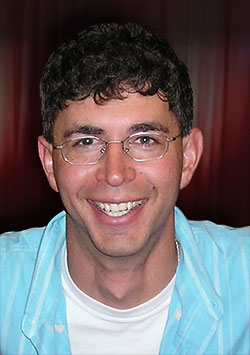
Jonathan McEvoy is currently an undergrad student of economics at Waterford Institute of Technology in jonathan-mcevoy-economic-rockstarIreland.

He was recently recognised for being in the top 5% of the Business School at W.I.T, earning the honour of being on the Deans List for Academic Achievement.

Jonathan has a unique understanding of the world around us and, together with his love of economics, has a unique perspective on the economics discipline.

Jonathan’s desire to discover and explore the multitude of economic thinking, from Keynesianism to Marxism, has resulted in him creating a blog called Economics – Thoughts of a Student which can be found at jonathanmcevoy888.blogspot.com.

His recent career history has prepared him well to be great public speaker and communicator.

Jonathan is also an athlete and a top soccer player, having spent time with English Premier League clubs Manchester City and Tottenham Hotspur.

Jonathan’s interests also include Health, Human Rights, Politics, Civil Rights, Poverty Alleviation and Science and Technology.

Economics:

In this episode, Jonathan discusses and mentions: production possibility frontier, comparative advantage, production, services, efficiency, technology, foreign direct investment, tariffs, income, vertical farming, externalities, capitalism, profit, inequality, welfare, labour costs, GDP, economics of war and economics of romance.

Economists:

In this episode, Jonathan discusses and mentions: Adam Smith, John Maynard Keynes, Karl Marx, Friedrich Engels and David Ricardo.

In this episode you will learn:

  • about the balance required between globalisation and national autonomy.
  • about Ireland’s role in CERN.
  • whether future-tech will improve humanity’s standard of living?

  • how economics and technology are inextricably interlinked.
  • why economists and technologists should increase collaboration for the betterment of society.
  • how the world’s production possibility frontier can move outward to reach once unimagined and unattainable outcomes.
  • whether ‘planetisation’ can be a reality.
  • the use of songs to capture the economic and social setting of an era.
  • and much much more.

People Mentioned in this Episode:

  • Cormac O’Rafferty
  • Stephen Hawking
  • Nikola Tesla
  • Elon Musk
  • John F. Kennedy
  • Neil deGrasse Tyson
  • Warren Buffett
  • Bob Dylan
  • Bruce Springsteen
  • Tupac Shakur
  • Bruce Hornsby

Links:

  • Finding the Balance Between Globalisation and National Autonomy by Jonathan McEvoy

  • Why Ireland Should Aspire to CERN Status – The Role of Economics in Science and Technology and How They Benefit One Another by Jonathan McEvoy

  • Will Future-Tech Improve Humanity’s Standards of Living? by Jonathan McEvoy
  • How to Write Timeless Songs like Springsteen and other Artists – The Economic Resonance in Timeless Songs and Creativity being born from Economics by Jonathan McEvoy

  • The Big Bang Theory

Where to Find Jonathan McEvoy:

  • Website: jonathanmcevoy888.blogspot.com
  • Twitter: @JonathanMcEv0y

Books:

  • Wealth of Nations by Adam Smith
  • Communist Manifesto by Karl Marx and Friedrich Engels
  • Game of Thrones by George R. R. Martin
http://traffic.libsyn.com/economicrockstar/113-_Jonathan_McEvoy_Final.mp3

Podcast: Play in new window | Download
103: Brian Mills on the Labor Market in Baseball, the Umpire Strikes Back and R

September 15, 2016 by Frank

http://traffic.libsyn.com/economicrockstar/103_Brian_Mills_Final.mp3
Play in New WindowDownload

103: Brian Mills on the Labor Market in Baseball, the Umpire Strikes Back and R

Brian Mills is an Assistant Professor at the University of Florida within the Department of Tourism, brian-mills-economic-rockstarRecreation, and Sport Management specializing in Managerial Sports Economics.

Professor Mills is also Associate Research Faculty within the Eric Friedheim Tourism Institute (EFTI).

Brian’s research interests encompass topics such as the sports labor market, industrial organization and sports league policy, public policy and economic development related to sport, and advanced analytics in the sports business. He is especially interested in applying economic lessons and quantitative analysis to problems that sport managers face in their everyday decision making.

Dr. Mills has also worked on consulting projects for professional sports teams and municipalities both in the U.S. and Canada.

Before arriving at Florida, Brian received his PhD and MA in Sport Management from the University of Michigan.  During that time, he also completed MA degrees in Statistics and in Applied Economics.  Brian earned his BA in Psychology in 2006 from St. Mary’s College of Maryland where he played NCAA Division III baseball.

Brian’s work and research interests can be found at brianmmills.com and at princeofslides.blogspot

Brian is now offering a new course called Exploring Pitch Data with R over at www.datacamp.com.

Check it out. You’ll have lots of fun learning basic data manipulation, summarization, and visualization in R using Statcast data.

Economics:

In this episode, Brian discusses and mentions: sports economics, labor market, externalities, incentives, wages, allocation of time, R, population, GDP and incomes.

Economists:

In this episode, Brian discusses and mentions: Rodney Fort, Stefan Szymanski, Lawrence Kahn and Bill Gerrard.

Links:

  • 090: Stefan Szymanski on Soccernomics and How Sabermetrics, Inequality and Finance Rules the Sport
  • 096: Cameron Murray on the Robinson Crusoe Economy and Blogging toward your PhD
  • 099: Rodney Fort on Sport Economics, Big Data in Baseball and the Value of Hosting an Olympic Games
  • Freakonomics
  • Fastball Movie
  • Trackman Baseball
  • Trackman Golf

Brian Mills’ Writing Tips:

  1. Always be reading and writing.
  2. Give or receive feedback and re-write.
  3. Develop a habit of note-taking.
  4. Turn your idea into a good story.

Resources:

  • Sabermetrics, Scouting, and the Science of Baseball
  • Data Camp
  • Exploring Pitch Data with R
  • A Guide to Sabermetric Research: How to Find Raw Data by the Society for American Baseball Research
  • Number Munchers game

Artilces:

Scoring in Baseball Is Down. Blame the Umpires: A Study Found That Umpires Have Expanded Their Strike Zone in Recent Years in The Wall Street Journal

Books:

  • Pay Dirt by Rodeny Fort
http://traffic.libsyn.com/economicrockstar/103_Brian_Mills_Final.mp3

Podcast: Play in new window | Download

085: Michael Roberts on Understanding Karl Marx and His Thinking on Capitalism

May 12, 2016 by Frank

http://traffic.libsyn.com/economicrockstar/085_Michael_Roberts_Final_.mp3
Play in New WindowDownload

085: Michael Roberts on Understanding Karl Marx and His Thinking on Capitalism

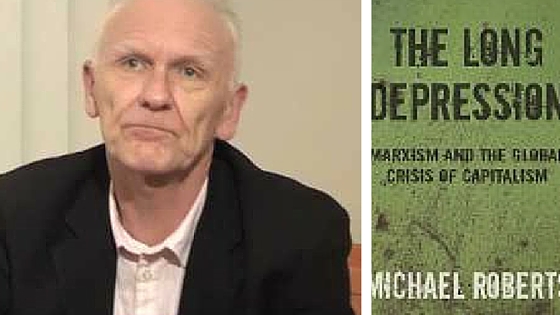
Michael Roberts

Michael Roberts has worked as an economist for over 30 years in the City of London. He is author of The Great Recession: Profit cycles, economic crisis A Marxist View and The Long Depression: Marxism and the Global Crisis of Capitalism.

Economics:

In this episode, Michael mentions: Marxism, capitalism, Austrian economics, GDP, multinationals, inflation, printing of money, booms, busts, profitability, recession, depression, inequality, wealth, means of production, private property, competition, externalities, unintended consequences, bailout, austerity and unemployment.

Economists:

In this episode, Michael mentions: Karl Marx, Friedrich Hayek, Adam Smith, John Maynard Keynes, Brad DeLong and Paul Mattick.

Links:

  • www.thenextrecession.wordpress.com by Michael Roberts

Books:

  • The Great Recession: Profit cycles, economic crisis A Marxist View by Michael Roberts
  • The Long Depression: Marxism and the Global Crisis of Capitalism by Michael Roberts
  • The Communist Manifesto by Karl Marx and Friedrich Engels
  • Capital by Karl Marx
  • Business As Usual by Paul Mattick
  • Waiting for Godot by Samuel Beckett


http://traffic.libsyn.com/economicrockstar/085_Michael_Roberts_Final_.mp3

Podcast: Play in new window | Download

074: Peter Leeson on The Invisible Hook: The Hidden Economics of Pirates

February 24, 2016 by Frank

http://traffic.libsyn.com/economicrockstar/074_Peter_Leeson_.mp3
Play in New WindowDownload

074: Peter Leeson on The Invisible Hook: The Hidden Economics of Pirates

Peter T. Leeson is Duncan Black Professor of Economics and Law at George Mason University.Peter Leeson

He is also a Senior Fellow at the F.A. Hayek Program for the Advanced Study of Philosophy, Politics, and Economics as well as the North American Editor of Public Choice.

Formerly, Peter was Visiting Professor of Economics at the University of Chicago, Visiting Fellow in Political Economy and Government at Harvard University, and F.A. Hayek Fellow at the London School of Economics.

Peter is author of The Invisible Hook: The Hidden Economics of Pirates and Anarchy Unbound: Why Self-Governance Works Better Than You Think.

Peter can be found at PeterLeeson.com.

Economists:

In this episode, Peter mentions and discusses: Ludwig von Miss, F. A. Hayek, Gary Becker, Karl Menger, Steven Levitt, Robin Hanson, Karl Marx, Adam Smith and Peter Boettke.

Economics:

In this episode, Peter mentions and discusses: price theory, human behaviour, Austrian Economics, Chicago School of Economics, economics of self-governance, rational thinking, profit maximisation, incentives, social insurance, externalities, unemployment, governance, self-governance, public goods and rational choice theory.

Pirates were economic actors but they were criminals. Criminal behaviour, as some had suggested, is not very amenable to the economic way of thinking.But Gary Becker pioneered research demonstrating that that wasn’t so.

In this episode you will learn:

  • about the similarities and differences between Austrian Economics and Becker’s thinking in the Chicago School of Economics.
  • why Peter decided to study the economics of pirates.
  • about the scientific approach to economic thinking.
  • how limitations to data restrict analytical research and how historical economic thinking can be used as a form of empirical analysis.
  • how using the economic narrative is just as effective as the mathematical regressions to explain theoretical concepts.
  • the similarities between The Invisible Hand and The Invisible Hook.
  • how pirates were rational thinkers and social revolutionaries.
  • how a hierarchy was established on a pirate ship using the Pirate Code.
  • how the Pirate Code created a social order that was economically beneficial to the crew.
  • about the constitutional democracy that pirates established onboard their ship and the misperceptions we had of an autocratic captain.
  • about some rules, codes of conduct and dispute resolution mechanisms that existed on a pirate ship.
  • how pirates were incentivised to engage in battle with a social fund (moral hazard) that was a predecessor to today’s social insurance policy.
  • how the pirate code minimised or eliminated the impact of a negative externality on a crew member or the whole crew.
  • how Peter’s book dedication, in the form of a marriage proposal, worked out.
  • when did piracy at sea begin and when did the romanticised period of piracy, as we know it, occur.
  • how are the pirates of the early 18th Century, such as Captain Blackbeard, so different to the pirates of today, such as the Somali pirates.
  • how sailors found solace and refuge as buccaneers and pirates after wars, such as the War of the Spanish Succession.
  • why unemployed sailors became buccaneers and pirates.
  • the risk-reward ratio of becoming a pirate.
  • whether pirates actually buried their treasure.
  • how an enterprising society was established at the land bases of pirates.
  • what pirates spent their spoils and treasures on.
  • the signalling effect of the Jolly Roger flag and why pirates used it as they approached a merchant ship.
  • how an ‘honor among thieves’ and collusive agreements between pirate groups allowed them to avoid attacking each other.
  • how coast guards, who were legally allowed to plunder merchant ships, often used the Jolly Roger flag as a signal to deceive their subjects into thinking they were pirates for the purpose of avoiding a bloody battle.
  • why coast guards used the Jolly Roger flag to cash in on the reputation of pirates.
  • if self-governance is effective and more successful that government.
  • whether the free-rider problem would exist in a self-governed economy regarding public goods.

Links:

  • Gary Becker’s Centre on Chicago Price Theory
  • Becker Friedman Institute for Research in Economics: The University of Chicago
  • Episode 072: F. A. Hayek
  • Episode 073: Robin Hanson
  • Episode 055: David Skarbek
  • Journal of Political Economy

Papers:

  • The Invisible Hook: The Law and Economics of Pirate Tolerance by Peter T. Leeson
  • Human Sacrifice by Peter T. Leeson in Review of Behavioral Economics. 

Books:

  • The Invisible Hook by Peter Leeson
  • Anarchy Unbound by Peter Leeson
  • Living Economics by Peter Boettke
  • Economic Approach to Human Behaviour by Gary Becker
  • Human Action: A Treatise on Economics by Ludwig von Mises
http://traffic.libsyn.com/economicrockstar/074_Peter_Leeson_.mp3

Podcast: Play in new window | Download

035: Stephen Young on Being Car-Free and the Behavioural Economics of Owning A Car

June 4, 2015 by Frank

http://traffic.libsyn.com/economicrockstar/035_Stephen_Young_Final.mp3
Play in New WindowDownload

035: Stephen Young on Being Car-Free and the Behavioural Economics of Owning A Car

Stephen Young is a Senior Lecturer at Brighton Business School and is subject leader for behavioural economics.Stephen Young

He is also Visiting Lecturer at Brighton and Sussex Medical School, where he teaches Behavioural Economics to health professionals, including commissioners, public health practitioners and GPs.

As an independent consultant and trainer, Stephen also provides client workshops and presentations on behavioural economics and behaviour change.

Stephen is widely published and his research interests include behaviour change, climate change, health, sustainability, and Information and Communications Technology.

Stephen does not own a car and is so passionate about being car free that he writes regularly on his blog livingthecarfreelife.blogspot.com. 

Economists:

In this interview, Stephen mentions and discusses:

Paul Ormerod, Richard Thaler, Cass Sunstein, John Cochrane, Paul Dolan, Malcolm Gladwell, Phil Goodwin, Daniel Kahneman, Adam Smith, Karl Marx, Barry Schwartz, Richard Layard, Nassim Nicholas Taleb, Paul Krugman and Friedrich Hayek.

Economic Themes:

In this interview, Stephen mentions and discusses:

Bank run, financial crisis, risk, behavioural economics, nudge, rationality, incentives, tax, choice architecture, obesity, climate change, externalities, loss aversion and the endowment effect.

On Economic Theory:

“None of the models are completely perfect. None of them work to everybody’s benefit” – Stephen Young

Click To Tweet

Is behavioural economics storming the citadel or is it shoring up the ramparts? – Stephen Young

Click To Tweet

Find Out:

  • why Stephen decided to become an academic.
  • about the Northern Rock bank run in the UK in 2007.
  • why universities need to adapt or die when it comes to addressing relevant content.
  • what Stephen is doing to reduce his carbon footprint in college and how he’s responding to the digital needs of his students.
  • why health professionals are interested in behavioral economics.
  • about the Irish government’s fight against obesity.
  • how Stephen is encouraging a town in the UK to become pedestrian friendly.
  • about framing car ownership – status and perception of rank.
  • how by ditching your car you can burn calories.
  • how the average person is working two days a week to pay for their car.
  • about the emotional attachment that a car represents.
  • what major cities across Europe are doing to make them more pedestrian and bike-friendly.
  • about peak car ownership.
  • some advice from Stephen on how to give up your car and become car free.
  • about the pluralist approach to embracing economics.

“The externalities don’t work for car ownership because it’s not priced in because of the pollution emitted” – Stephen Young

Click To Tweet

You can live a better life without a car. You can be thinner. You  can be richer. You can be more sociable. You can be more flexible. You can get around just as easily – Stephen Young.

Reasons for Peak Car Ownership:

  1. The youth do not have the income to finance the ownership of a car due to the high unemployment rates.
  2. High cost of car insurance.
  3. The opportunity costs of owning the latest technology.
  4. You don’t need a car to participate in a lot of things today.

Behavior Economics in the Health Sector:

“We’re not just nudged by the other side, we’re being bombarded by the other side. There’s a lot of room to doubt the way public health policy is being transacted and implemented in a lot of economies” – Stephen Young.

Giving Up Your Car and Becoming Car Free:

  1. Try living without your car for a while before you give up.
  2. If you’re moving house, locate to an area where everything you need is close by.
  3. Don’t give up your car just because it’ll make the world a better place. Only do it to improve your own life.
  4. Take a ‘hike’ – go for a walk.
  5. Walking is a great way of forming your thoughts and ideas as it clears your head and frees your mind.
  6. Walking, rather than driving, improves your health and well-being. It connects you to where you live, to where you are.

“All truly great thoughts are conceived by walking” – Nietzcshe.

Click To Tweet

Recommended Books:

  • The Death of Economics by Paul Ormerod
  • Why Most Things Fail: Evolution, Extinction and Economics by Paul Ormerod
  • Nudge by Richard Thaler and Cass Sunstein
  • The Tipping Point by Malcolm Gladwell
  • Happiness by Design by Paul Dolan
  • Thinking, Fast and Slow by Daniel Kahneman
  • The Road to Serfdom by Friedrich Hayek
  • Capital: Volume 1 by Karl Marx
  • Misbehaving: The Making of Behavioural Economics by Richard Thaler
  • Poor Economics by Abhijit V. Banerjee and Esther Duflo
  • Scarcity by Sendil Mullainathan and Eldar Shafir
  • The Structure of Scientific Revolutions by Thomas Kuhn

Where to Find Stephen Young:

  • Website: stephenyoung.org.uk
  • Website: livingthecarfreelife.blogspot.com
  • LinkedIn: Stephen Young
  • Twitter: @stephenyounguk
  • BehaviourWorkshops Twitter: @BehaviourW
  • Behaviour Workshops Blog: http://www.behaviourworkshops.blogspot.co.uk/

Stephen Young’s Publications:

  • Young, S (2013). The Behavioural Economics of Owning A Car. eg magazine. Volume 18, Issue 5, March-April  2013. ISSN 2042-1990.
  • Other Publications.

Forthcoming

  • Young, S. and Caisey, V. Behavioral Economics and Social Marketing: Points of Contact?  Chapter in Volume II of Stewart, D. (Ed) Handbook of Persuasion and Social Marketing. NY: Praeger. 2015.
http://traffic.libsyn.com/economicrockstar/035_Stephen_Young_Final.mp3

Podcast: Play in new window | Download

025: Dan Hamermesh on the Economics of Beauty: Attractive People Are More Successful

March 26, 2015 by Frank

http://traffic.libsyn.com/economicrockstar/025_Dan_Hamermesh.mp3
Play in New WindowDownload

025: Dan Hamermesh on the Economics of Beauty: Attractive People Are More Successful 

Dan Hamermesh is Professor in Economics at the Royal Holloway University of London and at thePortraitHamermeshwithoutJacket University of Texas at Austin. Dan researches the economics of beauty. He received his Ph.D. from Yale and has since taught at Princeton, at Michigan State, and at Texas. He has held visiting professorships at universities in North America, Europe, Australia and Asia, and lectured at almost 250 universities in 48 states and 33 foreign countries. His research, published in nearly 100 refereed papers in scholarly journals, has concentrated on time use, labor demand, discrimination, academic labor markets and unusual applications of labor economics (to beauty, sleep and suicide).

Professor Hamermesh has received many notable and distinguished honors and awards in recognition for his contribution to the field of economics. These include the Mincer Award and the IZA Prize in Labor Economics, the John R. Commons Award, as well as many teaching of excellence awards.

Daniel’s teaching include Microeconomics; Macroeconomics; Econometrics; Economics of Labor and Economics of Life.

Daniel is the author of many books including Demand for Labor: The Neglected Side of the Market, Beauty Pays: Why Attractive People Are More Successful, The Economics of Time Use and Economics Is Everywhere. He is also a regular contributor to the Freakonomics blog and podcast.

Economic Themes:

In this interview, Dan mentions and discusses:

Speculation, inter-temporal maximisation, labor economics, incentives, wages, welfare payments, comparative advantage and externalities.

Economists:

In this interview, Dan mentions:

 John Maynard Keynes, Gary Becker, Gregg Lewis, Robert Lucas and Michael Lewis.

Influencers:

Gary Becker and Gregg Lewis

A lot of my stuff is the weird kind of stuff that Becker pioneered – Dan Hamermesh.

Click To Tweet

Gregg Lewis had a concern about data – about doing it right, making sure you were right. That’s a crucial thing. One has to take data seriously – Dan Hamermesh.

Advice:

Do what you think you’ll enjoy, because if you think you’ll enjoy it the odds are pretty good you’ll do well at it. You’ll be motivated to work hard and to succeed – Dan Hamermesh

Find out:

  • how economics can be used beyond the theoretical framework we see in textbooks.
  • why we should think about economics in things we see or do in the real world.
  • how students of economics can inspire their professors in a two-way mutual learning process.
  • how economics is everywhere – we just need to think, see and interpret.
  • how economics is enjoying a revival in reaching to mass audiences.
  • the benefits of economics books like Freakonomics, Beauty Pays, Dollars and Sex and Happiness By Design.
  • why we should read interesting books on economics.
  • if happiness is related to how beautiful or attractive you are.
  • why better-looking men are happier.
  • how to recognise if you are beautiful.
  • what good-looking attorneys, prostitutes, politicians and NFL quarter-backs have in common.
  • if economists should be studying the effects of being attractive and ugly.
  • if people have an increased need to become beautiful.
  • whether increased spending on cosmetics, hair and clothing by women will have a pay-off in the labor market.
  • if plastic surgery to alter beauty results in higher earnings.
  • about the disability benefits available to obese people.
  • if an obese person is perceived to be less beautiful than a slim person.
  • if there is a relationship between ugliness and where a person lives.
  • why Dan was interested in studying the economic impact of beauty.
  • which economic markets show evidence of the impact of beauty.
  • how Dan first met his wife of 42 years.
  • what Dan thinks of Abercrombie and Fitch’s ‘six-pack’ hiring policy.
  • if being attractive prohibits opportunities in the labor market.
  • if you should work in the private or public sector if you are good-looking.
  • how to identify an externality on the side-walk.
  • why you should do what you’ll enjoy rather than chasing the money.

Why Attractive People Are Happier and Economically Better-Off.

Attractive people have been found to be happier than not-so-good-looking people. Better-looking men receive higher incomes, which make them happier overall. Attractive women are also happier, but their happiness is more direct in that their happiness is the result of knowing that they are good-looking. Attractive women do receive higher incomes but this is not a direct link to their happiness as it is for men.

“The beauty itself is directly more salient to them than it was for men, even though the overall effect was identical for both genders” – Dan Hamermesh.

How someone realises if they are attractive or not is due to the reinforcement by other people in making you aware whether you are good-looking or ugly. “Better-looking babies are treated better by their parents and by other people. Better-looking 5 year olds are treated better in kindergarten than ugly ones. When you’re chosen for teams or go out in High School, the better-looking people do better. And they also, given even the amount of education they attained, they’ll do better in the labor market. They’ll get better jobs, make higher pay, even within the same occupation” (Dan Hamermesh). Good-looking attorneys, prostitutes, politicians and National Football League quarter-backs make higher pay than their uglier colleagues.

In the labor market, the top one-third of people who are considered good-looking will earn 10 to 12% more in income independent of any differences that might exist between them and those not considered good-looking.

A woman’s increased spending on cosmetics, hair and clothing will not increase her perceived beauty and will also have a minimal pay-off on the labor market for her. Plastic surgery for cosmetic reasons does not have a benefit in terms of increasing earnings in the labor market. You do it to feel good. It’s not an economic investment, it’s a feel-good investment.

“Unless a person is morbidly obese, people do not view him or her as being any uglier than anybody else, all things taking together” – Dan Hammermesh.

Does Location Determine Whether You Are Beautiful or Ugly?

I ask Dan whether a person’s good looks are determined by the area in which they live. The reason I ask this is based on our earlier discussion on why attractive people typically earn a higher income. It can be fair to suggest that cities or regions that pay more would consequently attract good-looking people.

Dan states that “if you’re a good-looking person, you’re going to flock to an area where your looks pay off more. And if you’re a bad-looking person, you might want to go away from an area where looks pay off. In the UK, where people who were born in Scotland and Wales, if they’re good-looking, are more likely to migrate to South-East England (London) than other people”.

Also, “people who were born in South-East England (London) who are bad-looking appear to move to outlying areas where their looks aren’t so important”.

“Looks not only affects where we live in terms of what we make, but where we choose to live in terms of where we spend out adult lives. You’ll go where you get the biggest bang for your buck or, in this case, the biggest pounds for your beauty.”

Economic Markets Where Beauty and Attractiveness Are Present:

  1. Labor Markets: Higher wages and better conditions.
  2. Marriage Markets: A good-looking woman will attract a man who earns more.
  3. Market on Unsecured Loans: Attractive people are more likely to get a loan and on better terms.

Recommended Books:

  • Beauty Pays: Why Attractive People Are More Successful by Dan Hamermesh.
  • Economics Is Everywhere by Dan Hamermesh.
  • The Worldly Philosophers: The Lives, Times And Ideas Of The Great Economic Thinkers by Robert L. Heilbroner.
  • Moneyball by Michael Lewis.

Where To Find Dan Hamermesh:

  • Facebook: BeautyPays
http://traffic.libsyn.com/economicrockstar/025_Dan_Hamermesh.mp3

Podcast: Play in new window | Download

016: Jack Schwager on How You Can Become a Market Wizard with Fundseeder.com

January 22, 2015 by Frank

http://traffic.libsyn.com/economicrockstar/016_Jack_Schwager.mp3
Play in New WindowDownload

016: Jack Schwager on How You Can Become a Market Wizard with Fundseeder.com

Untitled design (10)

Jack Schwager is a recognized industry expert in futures and hedge funds and the author of a number of widely acclaimed financial books. Mr. Schwager is one of the founders of Fund Seeder (FundSeeder.com), a platform designed to find undiscovered trading talent worldwide and connect unknown successful traders with sources of investment capital.

Previously, Mr. Schwager was a partner in the Fortune Group (2001-2010), a London-based hedge fund advisory firm. His prior experience also includes 22 years as Director of Futures research for some of Wall Street’s leading firms, most recently Prudential Securities.

Mr. Schwager has written extensively on the futures industry and great traders in all financial markets. He is perhaps best known for his best-selling series of interviews with the greatest hedge fund managers of the last three decades: Market Wizards (1989), The New Market Wizards (1992), Stock Market Wizards (2001), Hedge Fund Market Wizards (2012), and The Little Book of Market Wizards (2014).

His other books include Market Sense and Nonsense (2012), a compendium of investment misconceptions, and the three-volume series, Schwager on Futures, consisting of Fundamental Analysis (1995), Technical Analysis (1996), and Managed Trading (1996). He is also the author of Getting Started in Technical Analysis (1999), part of John Wiley’s popular Getting Started series.

Mr. Schwager is a frequent seminar speaker and has lectured on a range of analytical topics including the characteristics of great traders, investment fallacies, hedge fund portfolios, managed accounts, technical analysis, and trading system evaluation. He holds a BA in Economics from Brooklyn College (1970) and an MA in Economics from Brown University (1971).

Economic and Finance Themes:

In this interview, Jack mentions and discusses: chartists, technical analysis, fundamentals, futures, normal distribution curve, options, Black-Scholes Options Pricing Model, option warrant trading, efficient market hypothesis, probability, negative externalities, fiscal responsibility, Keynesianism, deficits and demand.

I chose economics because I wasn’t any good to major in physics or math. I just felt I would be mediocre if I went into those fields. On the positive side, I had a super professor for Econ1. He was just so clear and logical – Jack Schwager.

Economists and Traders:

In this interview, Jack mentions: David Shaw, Ed Thorp, John Bender, Michael Marcus, Fischer Black, Robert Merton, Myron Scholes, John Maynard Keynes, Michael Lewis, Nassim Nicholas Taleb, and Yoram Bauman.

In this episode, you will learn:

  • why Jack chose economics at University.
  • about the similarities between Physics and Economics and why they are so different as a science.
  • if there is a certain personality that is required in trading financial markets.
  • if there is a holy grail to trading the markets.
  • about the importance of discipline.
  • how an $18 ‘Job Wanted’ ad in the New York Times landed Jack a position as a key analyst.
  • the one trader that particularly impressed Jack.
  • about the different strategies of some of Jack’s Market Wizards.
  • why normal distribution tail events can have a higher probability of occurrence than is lead to believe.
  • about the tragic ending of Market Wizard John Bender and the current case against his wife by the Costa Rican authorities for his ‘murder’.
  • about Fund Seeder – the world’s first search engine for undiscovered trading talent.
  • about Jack’s forthcoming book with the working title ‘Undiscovered Market Wizards’ and how you could possibly feature it.
  • about the Market Wizards Roadshow coming soon in 2015.
  • why Jack wrote his book ‘Market Sense and Nonsense’.
  • about the debunking of the efficient market hypothesis.
  • what a negative externality is in the context of economic theory.

Physics, Economics and the Stock Market: A Connection

Economics is more complex from a quantitative standpoint because in physics at least the rules are well-defined and don’t change and in economics they’re not stable.

Many schools in economics get it wrong because they fail to appreciate the influence of human behavior which is not stable.

Because of the human element it becomes much more difficult to forecast in economics than it is using physical laws.

A lot of traders interviewed for the Market Wizards book come from the higher level mathematics and physics spectrum. That’s one type of person who is attracted to the markets. It’s solving analytical problems that intrigues them.

Other traders are very intuitive and have a completely different approach to trading markets.

Trading with  Discipline in the Markets

There are no secrets to trading the markets. There are an untold number of ways in which the markets can be successfully approached.

They are all very difficult and most people will fail. There is no common approach and it’s more of a matter of finding an approach that works for you.

On Trading: Regardless of how you do it, you better have discipline – Jack Schwager

Click To Tweet

It doesn’t matter if you’re quant or not quant, chart or fundamental,  long-term or short-term. Whatever approach you do use, you better be disciplined or it’s not going to work.

Once I got involved in futures, I quickly discovered that at that time, at least on the analytical side, there wasn’t much talent out there. I think I succeeded because competition was very easy at that time – Jack Schwager.

Life for almost all of us is tremendously influenced by chance more so than people would admit or realise – Jack Schwager.

Probability and Options

On Ed Thorp: He is the walking refutation of the Efficient Market Hypothesis – Jack Schwager

Click To Tweet

The options markets are pricing for the assumption of equal probabilities at all times on both sides.

Options are priced for neutrality all of the time and that’s not reality. There are certain circumstances in the markets where something happening is much more likely to occur on one side of the distribution curve than the other.

The markets may assume a log normal distribution. But when there is a critical stop level at some price then, when the market goes to that price, the probability that the market will go below that price, what is considered within the tail events, will be much greater. Just getting to that critical price can trigger an avalanche of orders.

Fundseeder: The World’s First Search Engine for Undiscovered Trading Talent

The concept of Fund Seeder is to create a central place on the web where all traders, particularly undiscovered traders can establish their track records, have them verified and then have investors who are looking to allocate new trading talent find them.

The trader links their brokerage accounts with their own account on Fund Seeder so the numbers come directly from the traders’ brokerage account. That critical verification step occurs on this central platform allowing the traders and potential investors to verify the numbers.

There are traders from over 60 countries on Fundseeder who now have the opportunity to get in front of potential investors and establish a track record.

There is also the ‘seeding’ side where investor groups will participate to find traders and offer seed funding. It acts like venture capital where traders will receive seed funding to allow them trade larger accounts, which otherwise would not have been available to them outside Fund Seeder.

Many brokerage firms can be connected to Fund Seeder, including Interactive Brokers, and many more will connect in the near future.

Fund Seeder is a place where traders go to be discovered and where investors go to look for traders. You trade, we connect, they invest – Jack Schwager

Problems Jack Sees with Economics and Finance

  • The Efficient Market Hypothesis.
  • The Sharpe Ratio.
  • Looking at past returns to pick investments.
  • Volatility as a satisfactory and complete measure of risk.
  • Risk management.
On writing Market Sense and Nonsense: ‘I really wanted to throw stones’ – Jack Schwager

Click To Tweet

Jack Schwager on Economists, Externalities and Fiscal Responsibility

I believe that 90% of economists will agree 90% of the time. Economists do agree on a lot of things. You can go from a liberal to a conservative spectrum in economics and still have wide agreement on a lot of things Jack Schwager.

The solution to global warming is a revenue-neutral carbon tax. You have a cost attached to the polluter side and you have a benefit attached to growth and expansion.

Keynes would never have argued for deficit spending in an expanding economy

Recommended Books:

  • Beat the Dealer by Ed Thorp
  • Market Wizards by Jack Schwager
  • Market Sense and Nonsense: How the Markets Really Work (and How They Don’t) by Jack Schwager
  • The Big Short by Michael Lewis
  • Liars Poker by Michael Lewis
  • Reminiscences if a Stock Operator by Edwin Lefèvre
  • Fooled by Randomness by Nassim Nicholas Taleb
  • The Black Swan by Nassim Nicholas Taleb
  • When Genius Failed: The Rise and Fall of Long Term Capital Management by Roger Lowenstein
  • Fortune’s Formula: The Untold Story of the Scientific Betting System that Beat the Casinos and Wall Street by William Poundstone
  • More Money Than God: Hedge Funds and the Making of a New Elite by Sebastian Mallaby
  • Endurance: Shackleton’s Incredible Voyage by Alfred Lansing

Where To Find Jack Schwager:

  • Fundseeder.com
  • Website: www.jackschwager.com
  • Twitter: @jackschwager

012: Yoram Bauman on Cartoons, Being a Stand-Up Economist & His Passion to Save the Environment

December 25, 2014 by Frank

http://traffic.libsyn.com/economicrockstar/012_Yoram_Bauman.mp3
Play in New WindowDownload

012: Yoram Bauman on Cartoons, Being a Stand-Up Economist & His Passion to Save the Environment 

Yoram BaumanYoram Bauman is considered the world’s first and only stand-up economist and uses cartoons to explain economic concepts and theories. He has a PhD from the University of Washington and a BA in Mathematics from Reed College. Yoram lectured environmental and health economics at both Whitman College and University of Washington and was a visiting research scholar at the University of International Business and Economics in Beijing. Yoram has swapped the lecture hall for the comedy club and is on a mission to spread joy to the world and to reform economics education. Every year Yoram organizes the Humor Session at the American Economic Association annual meeting.

Yoram is an advocate for carbon pricing and other economic approaches to protecting the environment. Yoram has written extensively on these issues but has also published numerous micro and macro books with comedy and entertainment as its central theme. They include The Cartoon Introduction to Economics, The Cartoon Introduction to Climate Change and Stand-Up Economics: The Micro Textbook. Some of these books have been translated into over 10 languages.

Economic Themes:

In this interview, Yoram mentions and discusses: adverse selection, portfolio selection theory, the invisible hand, environmental economics, environmental taxes, market power, monopoly, corruption, opportunity cost, free market, revenue-neutral carbon taxes, consumption tax, tragedy of the commons, externalities, correlation, hyperinflation, population growth, economic growth, monetary base and rational expectations.

Economists and Economic Schools:

In this interview, Yoram mentions: George Akerlof, James Tobin, Adam Smith, Gregory Mankiw and Paul Krugman.

Yoram’s AH-HA HA HA HA Moment:

“I went to graduate school to work on environmental taxes and to make them a reality, so being an academic was one path to doing that. When I was in graduate school I wrote a parody of an economics textbook by Greg Mankiw just to blow off steam. It ended up getting published in a science humor journal called The Annals of Improbable Research and they run a humor session each year at the AAAS meeting. They invited me to come and I had so much fun that I got into stand-up comedy as a hobby.”

“My academic career wasn’t going as well as I hoped.”

Yoram’s Affirmations/Mantra:

  • “When I had choices in front of me, in terms of life choices, I was going to choose the path of adventure. That’s turned out to work really well for me. There’s this constant pressure in life that you’re not good enough. Maybe you have a PhD in economics but you’re not a Professor at Harvard. I’m in a position where I can take chances and I don’t have to pursue the resume builder and I don’t have to take the conventional path.”
  • “I think if a lot of people stop and look in the mirror, especially college-educated folks, I think that they are already winners. And when you’re already a winner then you can afford to take some risks and take some chances.”
When you’re already a winner you can afford to take some risks and take some chances – Yoram

Click To Tweet

Personal Habits:

  • Yoram’s 4 month old baby Zadie wakes up at 4am for a bottle feed. He feeds her, puts her back to sleep and stays up, spending 2 to 3 hours working when it’s quite.
I work pretty hard and set deadlines for myself and make them happen – Yoram Bauman

Click To Tweet

  • Yoram spends some of his time at Lighthouse Coffee in Seattle, where his child likes to nap with the comforting noise that’s there, and gets to work on his emails while off-line (there’s no wi-fi at Lighthouse Coffee). It’s a great way to clear out your inbox without fighting off all the traffic

Influencers:

  • Yoram’s father, his grandmother, Helen Winter, his godmother Betty Tansey, his professors, the Overeducated Cartoonist, Larry Gonick, Jon Stewart and John Oliver.

The longer we live, the more there is to learn and the more exciting it is to dig out the answers – Helen Winter.

Click To Tweet

In this episode, you will learn:

  • about revenue-neutral carbon taxing.
  • if we should keep economics serious or is there room for comedy?
  • why it’s important to motivate people to open a textbook and how humor and comedy can  do this.
  • how cartoons and humor can bring so much detail and understanding to economic concepts.
  • where it all began for Yoram when writing a cartoon economics textbook.
  • about the cartoon books written by Yoram that document the annals of economic theory.
  • how Yoram humorously depicts why some economists have won the Nobel Prize in Economics in a simplified and memorable manner.
  • how Adam Smith calls the winners of the Nobel Prize in Economics to interview them. Spooked? Find out how.
  • how Yoram found his true calling while reading Mankiw’s economics textbook.
  • how Yoram uses cartoons and comedy to teach us economics and to inform us of the need for environmental taxes, something he is passionate about.
  • how Yoram can use his knowledge on monopoly to maintain a lucrative career in comedy.
  • if Yoram ‘fears market failure’ (he is a monopolist after all!).
  • how the comedy club and the lecture hall are quite similar.
  • about Yoram’s passion for environmental tax reform.
  • how we can reduce the carbon impact on our environment with tax reform.
  • about the meaning of The Tragedy of the Commons.
  • about the secret to being a comedian.
  • why I think Yoram reminds me of Walter White from Breaking Bad.
  • about the connection Yoram has with Steve Jobs.
  • about the influence that the strong women in Yoram’s life had on his outlook and philosophy.
  • how having a new born baby has created a new habit for Yoram to help him get things done.
  • about Joss Paper or spirit money and how you can make your dead ancestors wealthy in the afterworld.

On Being a Monopolist:

“I’m the world’s first and only, so I have market power. Fortunately, I know a thing or two about monopoly pricing.” – Yoram Bauman

‘I’m the world’s first and only, so I have market power’ – Yoram Bauman

Click To Tweet

Yoram has over 1.7 million YouTube views – ‘That’s a lot for economics jokes’ – Yoram Bauman

On Failure:

“I’m not afraid of failure because I’m an economist. Economists are experts on failure.” – Yoram Bauman

Click To Tweet

“I’ve done my fair share of ‘bombing’. Hopefully you learn from it, you grow from it and you also realise that it’s not the end of the world and that you wake up the next morning and the sun still rises and you try again.”– Yoram Bauman

On Cartooning and The Similarities Between Teaching and Stand-Up Comedy:

  • “Anytime you can try to reach out to people and humanise the subject and humanise yourself as an instructor I think that’s helpful. Humor has a way of motivating people. Especially at college level, teachers forget how important motivation is. Try and give people an incentive to crack open a textbook other than the fact their grades depend upon it.”

‘Cartooning is an under-appreciated method of education’ – Yoram Bauman

Click To Tweet

  • “What I learned from comedy is that it’s a two-way street. You have to pay attention to where the audience is and you have to figure out ways to get feedback from them. In the comedy world that’s quite easy – people are either laughing or they’re not laughing. You get feedback pretty easily. But in the teaching world it’s a lot harder to get feedback. You have get yourself in that mindset of thinking about how is the audience viewing this and how can I figure out where they are and how can I connect with them.”

Gigging in Beijing in The Bookworm

  • There’s no censorship at The Bookworm. There’s actually quite a bit of free speech in China if you’re a Westerner speaking English.
  • They had a book on Tiananmen Square in The Bookworm.
  • There’s a lot of China that’s very laissez-faire. You think about it as a Communist state, and you think this must mean it’s like a police state like North Korea. But it’s actually a lot like the Wild West in the United States in many places.
  • If you look at the day-to-day lives of many people, it’s become more like the Wild West than the totalitarian North Korea style regime.

Environmental Tax Reform

  • If we had higher taxes on bad things like pollution, we can afford to have lower taxes on good things. That idea struck me as being intellectually beautiful and it also struck me as something that was politically a good idea that could get some bi-partisan support.
  • I decided to devote a considerable portion of my life-energy to make pollution tax a reality.
  • Economic theory and almost all economists think that revenue-neutral carbon tax is a good idea but if you look at the political system, it’s been very difficult to get environmental taxes to work in the political arena.

British Columbia Case Study on Carbon Taxing

  • British Columbia is considered to have the best climate policy in the world with its revenue-neutral carbon tax and it’s performing terrifically. But it’s one of the relatively few examples of a textbook case of environmental economics in action in terms of pollution taxes.
  • The revenue from the carbon tax in British Columbia reduces investment and corporate tax, so the overall impact on the province is its fiscal status is basically zero.
  • I’m working with a group called Carbon Washington and we’re going to reduce sales tax in the state. Households will pay a few hundred dollars more a year for fossil fuels but they’ll pay a few hundred dollars less a year for something else.

China’s Role in Environmental Reform

  • The Chinese make noise about pricing carbon. There’s a big agreement their president made with President Obama. Maybe they’re exploring the idea but I have a hard time believing that they’re fully committed to it because they don’t yet seem to be fully committed to reducing local air pollution.

Tragedy of the Commons (21:23)

The Secret To Being a Comedian

  • “Let yourself be free to explore unusual areas and hobbies. You have to give yourself permission to follow your passions to pursue something. I gave myself permission to try it (comedy) and I gave myself permission to fail, and I think with a lot of creative endeavours it’s what you  need to do.”

The Difference Between Macro Economists and Micro Economists:

“The level of vitriol in macro economics makes it especially appealing as a target. Micro economists disagree about little things, but on the big things they are all pretty much on the same page. But macro economists are really all over the map and so that opens up some opportunities for  comedy.”

Recommended Books:

  • The Cartoon Introduction to Economics: Volume One: Microeconomics by Yoram Bauman and Grady Klein
  • The Cartoon Introduction to Economics: Volume Two: Macroeconomics by Yoram Bauman and Grady Klein
  • The Cartoon Introduction to Climate Change by Yoram Bauman and Grady KleinAudible
  • Economics of the Environment: Selected Readings by Robert Stavins
  • Becoming Richard Pryor by Scott Saul
  • Andy Kaufman: The Truth, Finally by Bob Zmuda
  • Books by comedian Lenny Bruce
  • A bunch of baby books.

Favorite Internet Resources:

  • Greg Mankiw’s Blog
  • Paul Krugman’s Blog
  • Real Climate
  • Climate Progress
  • Climate Etc by Judith Curry

Where To Find Yoram Bauman:

  • Yoram’s website: www.standupeconomist.com
  • Carbon Washington: www.carbonwa.org
http://traffic.libsyn.com/economicrockstar/012_Yoram_Bauman.mp3

Podcast: Play in new window | Download

006: Andrew Heaton on Using Comedy to Explain Economic Concepts

November 20, 2014 by Frank

http://traffic.libsyn.com/economicrockstar/006_Andrew_Heaton.mp3
Play in New WindowDownload

006: Andrew Heaton on Using Comedy to Explain Economic Concepts

Andrew Heaton

Andrew Heaton is a comedian, writer and political satirist. He is the presenter of the witty and entertaining economics podcast, EconPop and has a Masters degree in International Politics. Andrew has been featured in a Bollywood movie, plays a lead role in the sitcom Cap South and has been voted best new comedian of 2013 in New York. Andrew hails from Oklahoma, is an Officer to a Prince and plays the Ukelele to enhance the mood of his friends’ amorous endeavors.

Economic Themes:

In this interview, Andrew mentions and discusses: wheat quotas, comparative advantage, protectionism, relative and actual growth, free markets and limited government, Austrian Theory of Monetary Creation, supply and demand, signalling, subjective value, negative externalities, tariffs and import duty, protectionism, corporation tax, scarce resources, population, abundance of resources, the Great Depression, US deficit, unintended consequences, behavioral economics and risk aversion.

Economists and Economic Schools:

In this interview, Andrew mentions: the Chicago School, the Austrian School, Libertarianism, Adam Smith, Milton Friedman, Freidrich Hayek, John Maynard Keynes, Murray Rothbard, Frédéric Bastiat, Thomas Malthus, Gene Epstein, Steven Horwitz,

Andrew’s Influencers:

Gene Epstein and Milton Friedman.

Podcasts:

EconPop is hosted by Andrew, who is joined by economist Steven Horwitz and professor of literature Paul Cantor.

In this episode, you will learn:

  • how Andrew became interested in economics while studying abroad in Scotland.
  • what parallels Andrew draws between politics, economics and comedy.
  • what economists and school of thought Andrew draws inspiration from to carve out his own views.
  • where and from whom Andrew gets his inspiration for his anecdotal writings on economics concepts.
  • how economic concepts is in abundance in life and can be found in the many movies we may have watched.
  • what qualities Andrew believes makes a successful person.
  • about Andrew being an Officer to Prince Leonard of Hutt River.
  • what comparative advantage is and how Andrew explains it in an unusual but light-hearted way.
  • why Andrew believes we will never run out of resources and why we should not worry about scarcity.

Advice:

‘If you’re gonna have a lot of activities that you are doing, you need to be mentally organised and very good at prioritising.’

‘To supercharge your day, when you are getting to your tasks, do the one you hate most first… the rest of your day is a cinch.’

‘With books, the trick is you just write a thousand words a night… your subconscious mind works on it and when you sit down the following night it’s a little bit easier.  You have a full novel in two and half months.’

Personal Habits:

  • Andrew works extremely hard to get things done. He has blended comedy with economics to allow this dismal science to become enjoyable or entertaining.
  • Andrew believes that having the right mentor is hugely beneficial and such a relationship allows him to learn and focus on reaching small milestones. This has worked out favorably well for Andrew in the field of economics where he developed a strong set of opinions on some theoretical aspects of economics. By expanding his knowledge-base through economics books and the many discussions with his mentor, Gene Epstein, Andrew has opened new doors and created new opportunities that otherwise may not have been attainable. His love of economics, particularly the Austrian and Chicago Schools and libertarianism, has given Andrew a lot of material to work on for his comedic performances onstage, online and in books.
  • Andrew writes quite frequently and believes that constant writing will have a payoff in terms of the publication of a book.
  • Andrew writes ‘common sense economics for people who need to learn about common sense economics’ – Gene Epstein

    Click To Tweet

  • Andrew plays the ukelele but, unfortunately, it wasn’t ‘tuned’ correctly for him to give us a treat on this podcast. So, as an homage to Andrew, I changed the outro music theme of Economic Rockstar to one that uses a ukelele. I hope you enjoy it!

Takeaway:

On Economics and Comedy:

Economics is a dismal science, so if you can make it funny it sweetens it – Andrew Heaton

Click To Tweet

On Humor and Economic Differences:

‘When you start arguing with somebody your adrenaline level shoots up.  Just on a biochemical level, you become much less able to hear what they are saying because you are taking a defensive posture.  Conversely, when you’re laughing, you produce endorphins.  And, if I can make you laugh, for a moment you are willing to listen to me – just for a moment.’

On Human Innovation Outpacing Declining Resources:

“We didn’t end the Stone Age because we ran out of stones”. – Andrew Heaton

Click To Tweet

Recommended Books:

  • Laughter Is Better Than Communism by Andrew Heaton
  • Frank Got Abducted by Andrew Heaton
  • Re-Boot Grandpa by Andrew Heaton (coming soon in 2016)
  • Speech Trap Werewolf by Andrew Heaton (coming soon)
  • The Conscience of a Conservative by Barry Goldwater
  • Parliament of Whores: A Lone Humorist Attempts to Explain the Entire U.S.  Government by P.J. O’Rourke
  • Free To Choose by Milton Friedman and Rose Friedman
  • Life at the Bottom: The Worldview That Makes the Underclass by Theodore Dairymple
  • Economics In One Lesson by Henry Hazlitt
  • Nudge: Improving Decisions About Health, Wealth and Happiness by Richard H. Thaler and Cass R. Sunstein

Favorite Internet Resources:

  • Evernote

Where To Find Andrew Heaton:

  • Website: MightyHeaton
  • Twitter: @MightyHeaton

Contact Andrew and start a campaign if you would like him to create a ‘Mighty Heaton’ doll!

http://traffic.libsyn.com/economicrockstar/006_Andrew_Heaton.mp3

Podcast: Play in new window | Download

Frank Conway

Frank Conway is founder of Economic Rockstar and lecturer of economics, finance and statistics. Read More…

View My Blog Posts

Youtube Sub

Become a Patron of the Economic Rockstar Podcast

patreon

Ireland’s Economy by the Numbers

Leaving Cert Economics: Ireland’s Economy  Click here to download a workbook on Ireland’s Economy so that you can add your own notes. [Original size] Ireland’s Economy by fconway

Categories

Subscribe and Never Miss An Episode

itunes-logo

Recent Posts

  • Ireland’s Economy by the Numbers April 8, 2019
  • 174: Wendy Carlin on The Core Project, Capitalism, Democracy and Normative Statements February 13, 2019
  • 173: Stephen Wright on Core Econ as a Learning Resource for Mainstream Economics January 28, 2019
  • 172: Best of 2018 Part 2: From the Great Depression to Futurism; Institutions, Individualism, Cooperation and Reciprocity January 22, 2019
  • 171: Best of 2018 Part 1 January 3, 2019

Copyright © 2026 · Podcast Pro Theme on Genesis Framework · WordPress · Log in

This website uses cookies to improve your experience. We'll assume you're ok with this, but you can opt-out if you wish. Accept Reject Read More
Privacy Policy

Privacy Overview

This website uses cookies to improve your experience while you navigate through the website. Out of these, the cookies that are categorized as necessary are stored on your browser as they are essential for the working of basic functionalities of the website. We also use third-party cookies that help us analyze and understand how you use this website. These cookies will be stored in your browser only with your consent. You also have the option to opt-out of these cookies. But opting out of some of these cookies may affect your browsing experience.
Necessary
Always Enabled
Necessary cookies are absolutely essential for the website to function properly. This category only includes cookies that ensures basic functionalities and security features of the website. These cookies do not store any personal information.
Non-necessary
Any cookies that may not be particularly necessary for the website to function and is used specifically to collect user personal data via analytics, ads, other embedded contents are termed as non-necessary cookies. It is mandatory to procure user consent prior to running these cookies on your website.
SAVE & ACCEPT