• ABOUT
  • RESOURCES
  • PODCAST
  • BOOKS
  • BLOG
  • SUPPORTERS
  • QFA Financial Advice
  • CONTACT

Economic Rockstar

Connecting Brilliant Minds in Economics and Finance

125: Eugene Fama on the Efficient Market Hypothesis, the Feds Fund Rate, Bitcoin and Daily Routines
January 25, 2018 by Frank

http://traffic.libsyn.com/economicrockstar/125_Eugene_Fama__Final.mp3
Play in New WindowDownload

125: Eugene Fama on the Efficient Market Hypothesis, the Feds Fund Rate, Bitcoin and Daily Routines

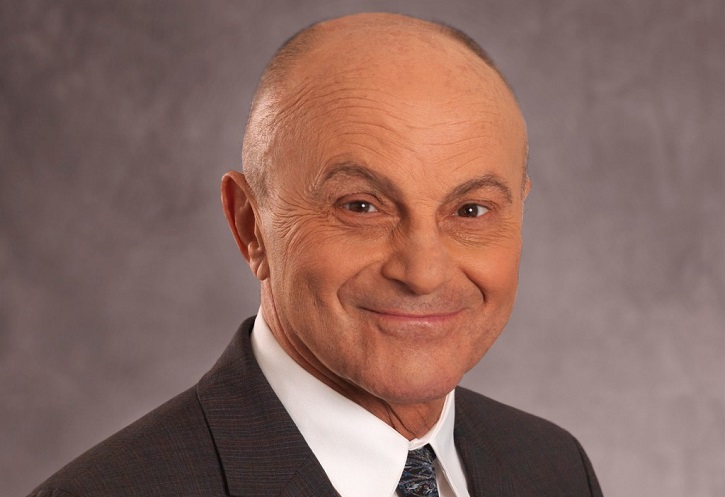
Eugene Fama Economic Rockstar

“I went into academics because I didn’t want to go into anything that would affect my sports life.” – Professor Eugene Fama

Eugene F. Fama is Professor of Finance at the University of Chicago Booth School of Business. Professor Fama was awarded the 2013 Nobel laureate in economic sciences and is widely recognized as the “father of modern finance.”

Professor Fama’s research is well known in both the academic and investment communities. He is strongly identified with research on markets, particularly the efficient markets hypothesis. He focuses much of his research on the relation between risk and expected return and its implications for portfolio management. His work has transformed the way finance is viewed and conducted.

Eugene is a prolific author, having written two books and published more than 100 articles in academic journals. He is among the most cited researchers in economics.

In addition to the Nobel Prize in Economic Sciences, Professor Fama was the first elected fellow of the American Finance Association in 2001. He is also a fellow of the Econometric Society and the American Academy of Arts and Sciences. He was the first recipient of three major prizes in finance: the Deutsche Bank Prize in Financial Economics (2005), the Morgan Stanley American Finance Association Award for Excellence in Finance (2007), and the Onassis Prize in finance (2009).

Professor Fama was awarded doctor of law degrees by the University of Rochester and DePaul University, a doctor honoris causa by the Catholic University of Leuven, Belgium, and a doctor of science honoris causa by Tufts University.

Eugene is chairman of the Center for Research in Security Prices at Chicago Booth, which was founded 40 years ago to create the finest tools for tracking, measuring, and analyzing securities data. He is also an advisory editor of the Journal of Financial Economics.

Professor Fama earned a bachelor’s degree from Tufts University in 1960, followed by an MBA and PhD from the University of Chicago Graduate School of Business (now the Booth School) in 1964. He joined the GSB faculty in 1963.

Economists:

In this episode, Professor Fama mentions: Gary Becker, Vernon Smith, John Cochrane,Robert Shiller, Campbell Harvey,  John Campbell, Narasimhan Jagadeesh, Sheridan Titman, Cliff Asness, Louis Bachlier, Paul Samuelson, Benoit Mandlebrot, Robert C. Merton, Fischer Black, Myron Scholes, Merton Miller, Harry Roberts and Kenneth French.

Economics:

In this episode, Professor Fama mentions: EMH, anomalies, Momentum Effect, January Effect, Options Pricing Model, Price Earnings Ratio, Federal Reserve, Fed Funds Rate, reserves, reserve requirements, lending mechanism, quantitative easing, economic activity, bitcoin, speculation, medium of exchange, Ripple and blockchain.

Professor Fama’s Mentors:

  • Merton Miller, Harry Roberts and Benoit Mandelbrot.

Individuals were very important to me especially Merton Miller and Harry Roberts. And Benoit too. – Professor Fama

Find out:

  • How studying economics in the 1960s differs to present day.
  • What is EMH and how it relates to the random walk and the submartingale process.
  • The beginning of mathematics in economics in the 1960s.
  • Independent, identically distributed  – a more restrictive view of EMH.
  • How prices and returns are so noisy that it is difficult to identify stock-picking skills.
  • About stock market anomalies.
  • What is the problem in academics?
  • About the Federal Funds Rate.
  • Does the Federal Reserve Bank or the market control the Fed Funds Rate?
  • If there is a lending channel.
  • Do we need a Federal Reserve bank?
  • About Professor Fama’s views on Quantitative Easing (QE).
  • About Professor Fama’s hobbies and how he uses them to regain balance in his life as an economist.
  • Why Eugene Fama went into academics.
  • Find out about Eugene’s daily routines.
  • About Bitcoin.

On the Problem in Academics:

“There is a problem in academics. Everybody wants to publish papers. That’s the way they advance and get tenure and get higher salaries. They also get noticed on Wall Street for doing it. So there’s an incentive to dredge the data and come with things that will be attention-grabbing but won’t necessarily be there in new data and aren’t the basis for new strategies.” – Professor Fama

Eugene Fama Economic Rockstar
On Theoretical Models

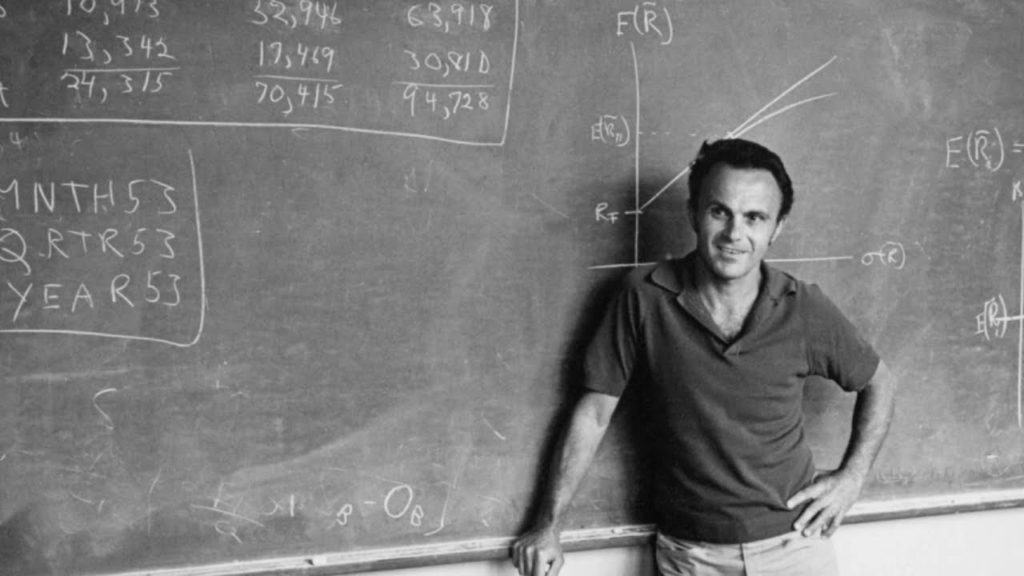
“Robustness is the name of the game. All scientific theories have anomalies otherwise they’re not theories, they’re reality.”

“All science is you propose models, you test them and you come up with some stuff that says that says this works pretty well and then you come with other stuff that says well it doesn’t work very well on this particular so called anomaly. And so you either tweak the model to incorporate that or you just accept it as one of the shortcomings of the model. That’s why you called them models.”

“You have to be careful. It has to be systematic empirical work. You can’t just go work with anecdotes. Anecdotes are not empirical work.”

On the Fed:

“What goes on when you go to work for the Fed or you get onto the Board or whatever, it’s the invasion of the Body Snatchers. Whatever you thought before becomes irrelevant and you buy the party line or you buy the line that says they have a lot of power.”

“I don’t there ever was a lending channel but there certainly isn’t one now.”

“The main job of the Fed is to control inflation. Unfortunately, in the current regime they can’t do that.”

On Bitcoin:

  • I’m suspicious about it as a unit of account because it has such an uncertain value. Monetary theory basically says that you want a unit of account that has a certain value.
  • It’s just like paper currency. If no body is willing to use it, it becomes valueless.

Thanks to Conor Murray for the question on Bitcoin!

On Writing:

  1. There’s no easy way to do it. I do a lot of writing with Kenneth French. We always re-write these papers that we put out at least twenty or thirty times front to back. And you struggle over every word and you try to say stuff as simply as possible because by saying it simply you reach more people than saying it in a more complex way.
  2. Work on it. Really read it. Get other people to read it and get their reactions.
  3. Organize how you present stuff. You want a brief introduction. Most papers tend to have long introductions. Get right into the guts and keep it as simple as possible for as long as possible so that you lose the fewest number of people.

Movies:

  • Invasion of the Body Snatchers
  • Equilibrium


Patreon

If you’re a fan of the podcast and would like to show your support in anyway, please check out my Patreon page at patreon.com/economicrockstar where you can sign up for any of the awards for as little as $1 a month or you can simply follow me on the Economic Rockstar Facebook page or on Twitter or simply recommend the show to a friend, especially if they have never had the opportunity to study economics.


http://traffic.libsyn.com/economicrockstar/125_Eugene_Fama__Final.mp3

Podcast: Play in new window | Download

037: Noah Smith on Austrian Theory Being a ‘Bad Joke’, Heterodox Models and Efficient Markets

June 18, 2015 by Frank

http://traffic.libsyn.com/economicrockstar/037_Noah_Smith.mp3
Play in New WindowDownload

037: Noah Smith on Austrian Theory Being a ‘Bad Joke’, Heterodox Models and Efficient Markets

Noah Smith is Assistant Professor of Finance at Stony Brook University, New York where he is also a member of the Center for Behavioral Noah SmithFinance research team. Noah’s research Interests include Experimental Finance, Behavioral Finance and Macroeconomics Noah was panel discussant for the Institute for New Economic Thinking Task Force and has received numerous research awards and fellowships. 

Noah is a regular contributor to Bloomberg View where he writes extensively on economics and finance related topics. He also writes at his fantastic economics blog Noahpinion.

Noah received his PhD in economics from the University of Michigan, graduating in 2012. His dissertation examined expectation formation in financial markets. Noah majored in physics as an undergraduate at Stanford University, and spent three years working in Japan, where he still returns from time to time to do research.

Everyone who meets in the public sphere, unless you’re extremely dry and technical, is going to piss people off. Econ is one of those fields where everyone has their own opinion and position and their models that they like. Traditionally, it was this very closed discipline. Econ was for economists and they didn’t often interface with the outside world except through official policy advice and the occasional op-ed. People start talking in the public sphere and I think that disturbs a lot of people. So all the blogs are bad boys really – Noah Smith.

Economics:

GDP, inflation, Central Bank, consumption, microeconomics, macroeconomics, behavioral economics, DSGE, game theory, decision theory, supply, demand, time series, interest rates, linear regression, forecasting, Quantitative Easing, money, gold, Federal Reserve, efficient markets hypothesis, extrapolative expectations, hedge funds, adverse selection, random walk, fat tails and volatility.

Economists:

Paul Samuelson, Brad DeLong, Steve Keen, Greg Mankiw, John H. Cochrane, Jack Schwager, Josh Angrist, Steve Pischke, Ed Phelps, Robert Lucas, Ed Prescott, Paul Volcker, Ludwig von Mises, Friedrich Hayek, Hyman Minsky, Andrei Schleifer, Alok Kumar, Kelly Schuh,  Jonathan Burke, Burton Malkiel, Marcus Brunnermeier, Mark Thoma, Tyler Cowen and Alex Tabarrok.

Find out:

  • whether economists suffer from ‘Physics Envy’.
  • if we should remove mathematics from economics.
  • how math took over economics.
  • if there is a connection between economics and physics.
  • how economics is becoming a more data-driven field.
  • about the micro foundations to macro theory and why these models don’t work.
  • why theory and math-focused economics papers are waning in the academic publishing field.
  • how to approach teaching micro and macro when the theoretical models may not explain much.
  • about whether Economics is moving away from the orthodox method of teaching toward a heterodox method.
  • about the difference between Heterodox and Orthodox teaching in Economics.
  • why Noah considers Austrian Economics to be a bad joke.
  • where Noah falls within the economic spectrum.
  • why Noah believes that heterodox economics is not the future.
  • Noah’s recommended economics blogs to follow.
  • why the Efficient Market Hypothesis is a good starting model for finance students to understand.
  • and much much more

Physics Envy and the Mathematisation of Economics:

At one point economics was a literary discipline. It was philosophical. It was people writing down verbal description of how they thought things worked. Then people started writing down equations. At first it was just a couple of people doing it who were obscure and then, with Paul Samuelson, they really started putting everything in terms of equations and mathematising everything. It was at that point people started to mention that economists had ‘Physics Envy’ because physicists write everything in equations. Maybe that was true as Samuelson had also studied Physics. This was probably a misnomer.

There were new mathematical tools and people were just trying to apply them to things. Math really took over economics and the style of math they did was sometimes similar to physics. Mathematicians are very rigorous. They start with axioms and they have this really formal proof structure. A physicists approach to working with equations is a lot more ad hoc and informal. So in economics, you see both styles. Noah doesn’t think there’s a lot of connection between economics and physics. He also doesn’t believe there is any particular pieces of math in economics that were inspired by physics.

Math helps you organise your thoughts. It makes your economic theory more internally consistent because math always has to work out perfectly and all the logic has to work out. But in practice it rarely does that. What usually happens is that people usually end up sticking in the assumptions they need to get the conclusions they want to see in the theories. So there’s essentially no discipline provided by math on theory, but math is useful when you want to get actual numbers.

Economics is becoming a more and more data-driven field. Now that we have information technology, we have so much data. We have macro data and industry-level data that we can keep track of with electronic records. Government can easily keep track of statistics on all kinds of variables on the economy. We have a lot more financial data. It is easier to get people surveyed so you have a lot more survey data. So you have huge amounts of data that is easily transferable and easily manipulatable in statistics programs. Economists are basically rolling in data. What we’ve seen from that is that data and empirics has become so much central  to the economics field in recent years. The number of published papers that are data and empiric-focused has soared, whereas the percent that is just theory and math-focused has gone down in the last twenty years.

On Teaching Micro and Macro When Theoretical Models Fail:

Economics is not data-free. You can use data to help you teach. But in terms of giving students a hands-on thing where they can predict some outcome something, well for lower-level students, there’s not much you can do. But for upper-level students there are some things you can do with linear regression that help you make a prediction or forecast. Certainly with graduate-level students you can do things with time series econometrics. Then you can have them make forecasts and see how well their forecasts come out. There’s things you can do but it doesn’t work as beautifully as it does in Physics – Noah Smith

Noah Smith on Why He Considers Austrian Economics to be a Bad Joke and Why Heterodox Economics is Not the Future:

The idea that economics is substantially divided between the orthodox and the heterodox is wrong. That’s just not the way it is. There’s only a very few people in the world who call themselves heterodox. For any science you’re going to get some people somewhere who are doing something totally different. There’s probably somebody out there using physics models that look nothing like quantum mechanics or Newton’s Laws or any of the core physics models we think of as real physics. There’s probably someone out there doing some model of a type you and I never heard of and will never hear of. And that’s basically what the heterodox economics guys are.

The people who call themselves heterodox in economics, include some people who are nakedly political. All they really are is political, well I could say hacks but they’re not paid by parties, but they’re trying to make economics into a politicised discipline. So, the most prominent group of these is people who call themselves Austrians.

There were these guys, called the Austrians, who wrote some ideas down. All of those ideas were later taken up by the mathematical economists and put into math language. Most were tested in some way. They were developed further on. But then what happened was there was a tribe of people who declared that all the mathematical economics was bullshit and that what we had to do was pay attention to the wisdom of the ‘Old Masters’. So they spend a lot of time reading the old wisdom of Mises and Hayek and those guys. And the only way this group could survive when economics itself had moved on was to take donations from political people who agree with their politics.

So they politicise themselves in order to survive. And in the wilderness where they deserve to be, their method of analysis they use are a joke. A lot of mainstream normal economics might also be a joke but the Austrian stuff is definitely a joke. And the problem is with the addition of politics to the mix, it really becomes a bad joke.

Most of what they do is advocating through their version of free markets or advocating for various conservative policies and politics. And that’s what they spend most of their time doing. It’s clear that what they really want to do is just turn economics into a mouthpiece for conservative ideas.

I haven’t spent hundreds of hours reading Mises because that would be robbing me of many many valuable hours of my life-span and I’m mortal and my life-span is ticking away and I can’t spend my time reading Mises. I’ve read a little bit. It was obviously silly. It was like reading Jacques Derrida.

It’s so dense and confusing and self-referential and full of neologisms and just, frankly, badly written that what it descends into this infinite recursion where you have people who read the ‘Old Master’ and write some interpretation of the ‘Old Master’ and then someone reads what that person wrote and mis-interprets that and then writes their own interpretation of that. Then you just have this infinite recurring commentary where nobody really knows what the hell anyone else is talking about and they all just sort of talk about their own distorted, twisted perception of what these other people talk about. It gives no insight and no understanding. People ‘parrot’ the words of the ‘Old Masters’ without understanding what the ‘Old Masters ‘ were necessarily meant or what those ideas would even imply.

If you criticise the ‘Old Masters’ or criticise this paradigm of relying on the ‘Old Masters’, They say “Oh, you have to go read everything the ‘Old Masters’ wrote before you are qualified to comment on this. How dare you comment on this when you haven’t read this and this and this. I’ve spent time reading this.” What do you say to that. That’s not scientific. That’s scholastic.

Sometimes you look at Minsky and you look at Hayek and you say these guys aren’t saying such different things after all actually. But the thing is you have the right-wingers in the modern day who think that Hayek and Mises are gods and left-wing guys who think Minsky is a god and they fight like cats and dogs.

The mere fact of these kind of battles is one thing that convinces me that so-called heterodox economics is not the future at all.

Austrians have a lot of blogs. They have a big mouth-piece; much bigger than their academic footprint. Austrians took a huge hit in 2011 and 2012. Those are absolute critical years for this sort of ‘pop-Austrianism’ that has become very popular on sites like zerohedge. All the Austrians are saying is the Fed is printing all this money doing Quantitative Easing. There’s going to be big inflation. And this never happened. That was like a thunderbolt that really discredited Austrians. They were saying things were going to happen by gold now. There was a gold bubble and gold is quite a bit off its peak. A lot of people lost some of their savings on that. People are not happy to lose their savings. If you bought gold collectibles in 2011, well you were a sad puppy when it crashed. That’s God’s punishment. That’s the market’s punishment anyway. It’s the markets punishment for making bets on silliness.

Where does Noah Fall within the Economic Spectrum:

I really don’t know. I suspect something that would look like demand is responsible for most recessions. And I suspect something that they call a limit cycle is going on where something in a boom actually causes a bust to become more likely. So booms lead to busts. Austrians said that, absolutely. The ‘Old Masters’ definitely said that and Minsky said that too – Noah Smith

Recommended Blogs:

  • Economists’ View by Mark Thoma
  • Marginal Revolution by Tyler Cowen and Alex Tabarrok
  • Grasping Reality by Brad DeLong

Recommended Book:

  • The Myth of the Rational Market by Justin Fox
http://traffic.libsyn.com/economicrockstar/037_Noah_Smith.mp3

Podcast: Play in new window | Download
005: Hector Avellaneda on Buying Gold to Protect Your Wealth from a Dollar Crisis

November 19, 2014 by Frank

http://traffic.libsyn.com/economicrockstar/005_Hector_Avellaneda.mp3
Play in New WindowDownload

Episode 005: Hector Avellaneda on Buying Gold to Protect Your Wealth from a Dollar Crisis

Hector AvellanedaHector Avellaneda is from Houston, Texas and has a passion for entrepreneurship, economics, finance and gold. This, however, only materialized after Hector came face to face with a untold truth and one of the harshest lessons that only a life experience can teach you, as long as you are willing to dig deep in search for answers.

Hector, the son of Mexican immigrants to the US, grew up in poverty and was statistically destined to a life of poverty in adulthood. However, Hector wanted to defy this probability and worked extremely hard in school. In typical fashion, Hector accumulated college debt and was ironically facing a poorer life than his own parents despite a larger mean income.

Hector questioned the college debt system and deeply explored how US citizens have grown accustomed to taking on such debt. Further research led him to realise that middle-class America could see their wealth wiped out due to an impending dollar crisis. Subsequently, Hector wrote an economics and finance-related book to share his findings and to suggest what you can do to protect your wealth.

Economics and Finance Themes:

In this interview, Hector mentions and discusses: poverty, wealth, college debt, economic crisis, the Great Depression, loans, credit card debt, poverty trap, psychological effects of poverty, deficit, free markets, incentives, purchasing power, inflation, taxes, quantitative easing, money supply, the Minsky Moment, financial literacy, properties of money, fiat currency, the US Federal Reserve, stock markets, crypto-currencies, the Gold Standard.

Hector’s Influencers:

His dad and a college counsellor. Find out more in his book ‘De-CLASS-ified’ (see below for a link to Amazon and get an e-copy on Amazon for a bargain $2.99).

In this episode, you will learn:

  • how Hector had all the hallmarks of continuing to live a life of poverty in America.
  • about Hector being bullied in school because of the charitable clothes he wore .
  • how Hectors’ father and mother’s sense of hard-work and money management became naturally ingrained in him.
  • how Hector defied and beat the statistical odds of remaining poor for life due to a strong work ethic and a desire to succeed.
  • how hard work in school can open up many opportunities in life including an internship with NASA.
  • the importance of being mentored.
  • how easy credit for college education made Hector ‘s financial position worse off than his parents.
  • what triggered Hector into discovering the truth about the American economy and the college debt system.
  • the risks in the US economy.
  • why the US could be faced with a massive default on student loans and what is triggering this today.
  • how it became acceptable to borrow to pay for college.
  • why Hector’s $50,000 student debt became a blessing in disguise.
  • how Hector’s research into the US college debt crisis resulted in him writing an economics and finance book without having a background in these disciplines.
  • why the middle class in America is about to collapse financially.
  • why the US government will seize money from an American workers’ wages.
  • what type of college degree is not in demand in US anymore.
  • what you should do today when making a college or subject choice.
  • what it takes to have financial and economic freedom.
  • about the 7 properties of money.
  • what countries are doing today with their dollar reserves.
  • about who actually owns the Federal Reserve Bank of America. Hint: It’s not the US government!
  • what you can do to protect your wealth from being transferred to others.
  • who are buying up gold and for what reason.

On Living in Poverty:

  • ‘I was pretty poor. I lived in a small wooden type of house with a sheet metal roof’ – Hector Avellaneda
  • ‘Growing up I saw my parents argue and fight about money and not having enough money to take a family trip or a vacation or just be able to enjoy a day out on the town and so my parents were always very stressed out, always kind of arguing and fighting’ -Hector Avellaneda
  • ‘I was made fun off in school because a lot of clothes that I wore was donated from the local church or local program, a local donation program’ – Hector Avellaneda
  • ‘I always told myself that I was going to do whatever it took to make sure that I was successful in life and to make sure that I got out of that poverty that I had seen as a child’ – Hector Avellaneda

Advice:

  • “Today we need computer scientists, we need computer programmers, we need engineers – those are the degrees that are in demand  and I myself sit on the board directors of a non-profit organization here in Houston that actually encourages kids to go to college and major in things like engineering, major in things like computer science because I think those are the degrees that we need in today’s economy” – Hector Avellaneda.

  • ‘To have financial and economic freedom, I had to become an entrepreneur’ – Hector Avellaneda

    Click To Tweet

  • “For anyone who is going to college or who is thinking about going to college today, I would say ‘do some real research and figure out what pay expectations you will have upon graduation’ and, with that said, make sure that, if you are going to go to college, major in a degree that will be able to sustain your way of life that you want to live and if you don’t want to major in something like engineering or computer science because that’s just not what you are passionate for then don’t take on any student debt” – Hector Avellaneda.

  • Those holding onto paper assets are at risk of losing it all to those holding real tangible assets like gold and silver, land and claims on oil fields.

Personal Habits:

  • A hard worker, head-strong, determined, passionate and a desire to find out the truth through research, self-education, reading and learning.
  • Hector had a desire to find out what went wrong in his life as he was mis-sold the American idea of taking on college debt . With a limited exposure to finance and economics in college, $50,000 of college debt and unemployed due to the Great Recession of 2008, Hector read widely to learn and understand about the truth behind the US economy, the trillions of dollars of debt and the risks of a mass student loan default and a dollar crisis. 

Takeaway:

‘We have a generation of college students who are graduating into financial bondage’ – Hector

Click To Tweet

The free markets have been distorted due to all the incentives that have been created in the US economy.

‘Paper money eventually returns to its intrinsic value – zero’ – Voltaire

Click To Tweet

Before making a college decision, do a course that will allow you to earn an income to pay off your debt, otherwise do not take on debt.

Increase your understanding of financial literacy. Read books on money.

Schools and Universities need to teach more economics, finance and financial literacy subjects to all students.

Self-education is very important – read books and get access to the necessary information online.

‘Money is nothing more than an economic tool by which we convert our time and freedom’ – Hector

Click To Tweet

Recommended Books:

  • The Death of Money by James Rickards
  • De-CLASS-ified: The Fall of the Middle Class and Rise of the Internet Entrepreneur by Hector Avellaneda

Favorite Internet Resource:

  • iCloud

Where to Find Hector Avellaneda:

  • Gold and Silver Buyer Club
  • New Class Rising
  • Podcast on iTunes
http://traffic.libsyn.com/economicrockstar/005_Hector_Avellaneda.mp3

Podcast: Play in new window | Download
Frank Conway

Frank Conway is founder of Economic Rockstar and lecturer of economics, finance and statistics. Read More…

View My Blog Posts

Youtube Sub

Become a Patron of the Economic Rockstar Podcast

patreon

Ireland’s Economy by the Numbers

Leaving Cert Economics: Ireland’s Economy  Click here to download a workbook on Ireland’s Economy so that you can add your own notes. [Original size] Ireland’s Economy by fconway

Categories

Subscribe and Never Miss An Episode

itunes-logo

Recent Posts

  • Ireland’s Economy by the Numbers April 8, 2019
  • 174: Wendy Carlin on The Core Project, Capitalism, Democracy and Normative Statements February 13, 2019
  • 173: Stephen Wright on Core Econ as a Learning Resource for Mainstream Economics January 28, 2019
  • 172: Best of 2018 Part 2: From the Great Depression to Futurism; Institutions, Individualism, Cooperation and Reciprocity January 22, 2019
  • 171: Best of 2018 Part 1 January 3, 2019

Copyright © 2026 · Podcast Pro Theme on Genesis Framework · WordPress · Log in

This website uses cookies to improve your experience. We'll assume you're ok with this, but you can opt-out if you wish. Accept Reject Read More
Privacy Policy

Privacy Overview

This website uses cookies to improve your experience while you navigate through the website. Out of these, the cookies that are categorized as necessary are stored on your browser as they are essential for the working of basic functionalities of the website. We also use third-party cookies that help us analyze and understand how you use this website. These cookies will be stored in your browser only with your consent. You also have the option to opt-out of these cookies. But opting out of some of these cookies may affect your browsing experience.
Necessary
Always Enabled
Necessary cookies are absolutely essential for the website to function properly. This category only includes cookies that ensures basic functionalities and security features of the website. These cookies do not store any personal information.
Non-necessary
Any cookies that may not be particularly necessary for the website to function and is used specifically to collect user personal data via analytics, ads, other embedded contents are termed as non-necessary cookies. It is mandatory to procure user consent prior to running these cookies on your website.
SAVE & ACCEPT