• ABOUT
  • RESOURCES
  • PODCAST
  • BOOKS
  • BLOG
  • SUPPORTERS
  • QFA Financial Advice
  • CONTACT

Economic Rockstar

Connecting Brilliant Minds in Economics and Finance

127: Barry Eichengreen on the Importance of Economic History, the IMF and Reserve Currencies

February 8, 2018 by Frank

http://traffic.libsyn.com/economicrockstar/127_Barry_Eichengreen_Final.mp3
Play in New WindowDownload

127: Barry Eichengreen on the Importance of Economic History, the IMF and Reserve Currencies

Barry Eichengreen is Professor of Economics and Professor of Political Science at the University of California, Berkeley, where he has taught since 1987, and Professor of American History and Institutions, University of Cambridge.
Professor Eichengreen is a Research Associate of the National Bureau of Economic Research and Research Fellow of the Centre for Economic Policy Research.

Professor Eichengreen has been a fellow of the Center for Advanced Study in the Behavioral Sciences (Palo Alto) and the Institute for Advanced Study (Berlin). He is a regular monthly columnist for Project Syndicate.

His most recent books are How Global Currencies Work: Past, Present, and Future with Livia Chitu and Arnaud Mehl, The Korean Economy: From a Miraculous Past to a Sustainable Future with Wonhyuk Lim, Yung Chul Park and Dwight H. Perkins and Exorbitant Privilege: The Rise and Fall of the Dollar and the Future of the International Monetary System (2011) (shortlisted for the Financial Times and Goldman Sachs Business Book of the Year Award in 2011).

Professor Eichengreen is the recipient of a doctor honoris causa from the American University in Paris, and the 2010 recipient of the Schumpeter Prize from the International Schumpeter Society.

Importance of Economic History

“One of my motivations for studying economic history is the belief that the past can inform the present” Professor Eichengreen

In this episode you will learn:

  • Whether we can learn from economic history and whether history can repeat itself.
  • The importance of history in institutions.
  • Why the economics discipline suffers from “academic schizophrenia”.
  • The problems of the IMF as an organisation today. 
  • How the IMF can change for the better.
  • The IMF letters to Ireland regarding its bailout.
  • The tensions regarding the rise of China  and the isolation of the United States.
  • Is there room for only one reserve currency or can we have more than one?
  • Advice Professor Eichengreen would give to the Chinese if they wish to establish the Renminbi as a reserve currency. 
  • Does Bitcoin meet the criteria to be regarded as money?
  • About Clarence Hatry and how he contributed to the stock market crash of 1929.

Economists:

In this episode, Professor Eichengreen mentions: Charles Kindleberger (MIT), John Maynard Keynes, Benjamin Strong and Montagu Strong.

Economics:

In this episode, Professor Eichengreen mentions: economic history, financial markets, institutional framework, monetary policy, central banks, cryptocurrencies, blockchain, function of money, central banks, King’s College, Cambridge

Writing Tips:

1) Read critically. Find someone whose writing you admire and try to figure out what makes it work.

2) Keep it simple. Shorter declarative sentences are better and you can always make them shorter and more declarative.

3) Revise. No sentence or paragraph is perfect or even adequate the first, second, third, fourth or fifth. Go around.

4) Practice. One’s writing tends to get better the more that you do.

Work Habits:

“I do better when it’s quiet and when there are fewer distractions. So I tend to work at home early on the morning and try to avoid my email until I’ve spent some time writing. I can only do serious writing at my desk in my study at home.” Professor Eichengreen

Movie:

  • It’s a Wonderful Life

Books:

  • Hall of Mirrors by Barry Eichengreen
  • How Global Currencies Work: Past, Present, and Future by Barry Eichengreen, Livia Chitu and Arnaud Mehl.
  • The Korean Economy: From a Miraculous Past to a Sustainable Future by Barry Eichengreen, Wonhyuk Lim, Yung Chul Park and Dwight H. Perkins.
  • Exorbitant Privilege: The Rise and Fall of the Dollar and the Future of the International Monetary System by Barry Eichengreen.

Recommend Book:

  • Against the Grain by James C. Scott

Patreon

If you’re a fan of the podcast and would like to show your support in anyway, please check out my Patreon page at www.patreon.com/economicrockstar where you can sign up for any of the awards for as little as $1 a month or you can simply follow me on the Economic Rockstar Facebook page or on Twitter or simply recommend the show to a friend, especially if they have never had the opportunity to study economics.

http://traffic.libsyn.com/economicrockstar/127_Barry_Eichengreen_Final.mp3

Podcast: Play in new window | Download

069: Diane Coyle on GDP, Its Shortcomings and Alternative Measures

January 21, 2016 by Frank

http://traffic.libsyn.com/economicrockstar/069_Diane_Coyle.mp3
Play in New WindowDownload

069: Diane Coyle on GDP, Its Shortcomings and Alternative Measures

Diane Coyle is Professor of Economics at the University of Manchester and runs the consultancy Enlightenment Economics.diane coyle

Diane is Vice-Chair of the BBC Trust and was a member of the Migration Advisory Committee and a member of the Competition Commission. She is also a visiting research associate at the University of Oxford’s Smith School of Enterprise and the Environment. 

Diane specialises in competition analysis and the economics of new technologies and globalisation.

Diane is the author of several books, including GDP: A Brief But Affectionate History, The Economics of Enough, The Soulful Science, Sex, Drugs and Economics and Paradoxes of Prosperity.

She was previously Economics Editor of The Independent and before that worked at the Treasury and in the private sector as an economist.

Diane has a PhD from Harvard and was awarded the OBE in January 2009.

Using happiness is an excuse for inactivity – Diane Coyle

Click To Tweet

Influencers:

Peter Sinclair (University of Birmingham) and Ben Friedman (Harvard).

Economists:

In this interview, Diane mentions: Adam Smith, John Stuart Mill, Sir Charles Bean, Daron Acemoglu, Thomas Piketty, John McMillan, Tim Harford, Peter Sinclair (University of Birmingham) and Ben Friedman (Harvard).

Economics:

In this interview, Diane mentions: GDP, budget deficit, fiscal policy, monetary policy, interest rates, growth, employment, unemployment, Human Development Index, Gross National Happiness Index, happiness, hysteresis, inequality, financial markets, derivatives and leverage.

In this episode you will learn:

  • what is GDP and how it is measured.
  • the complications with understanding the meaning of GDP.
  • the historical origins of GDP and why it is used to measure our economy.
  • the complications in measuring GDP.
  • how GDP data is still collected in such an ‘old-fashioned’ way and the new methods to collecting data.
  • about the uncertainty and margin of error in GDP statistics.
  • why it is wrong to make fiscal policy, monetary policy and interest rate decisions on GDP statistics.
  • what proxy variables were used to measure economic activity before GDP was introduced.
  • why we should re-think the meaning of the economy.
  • why GDP today doesn’t work in its present form and if there is an alternative.
  • how countries can use GDP and GNP measures to portray different economic conditions.
  • the difference between GDP and GNP.
  • the concerning use of ‘administrative statistics’ by countries to falsify economic growth.
  • whether it’s correct to include illegal drug activity and prostitution in measuring GDP.
  • why measuring happiness and well-being should be of little importance when measuring GDP.
  • why Diane is sceptical about the Happiness Index.
  • the reason why economics was coined by Thomas Carlyle as the the ‘dismal science’.
  • who is to blame for the financial crisis of 2007/2008.
  • about the UK’s over-reliance on the financial sector and its role in measuring GDP.
  • about the uncertainty that would exist if the UK withdrew from the EU.
  • the policy factors required to create a sustainable society and a stable government.


It’s just so easy now to download data from the internet and run through statistical packages and get some results. And I think a lot of professional economists are guilty of not rethinking about their data enough – Diane Coyle

You cannot think about the economy mechanically – Diane Coyle

Click To Tweet

The way we measure GDP now is really closely linked to Keynesian macroeconomic theory and a very famous definition he gave of  what total output in the economy is, that it’s consumer spending, government spending, investment spending and the balance of payments – Diane Coyle

There is no benefit for society in a lot of what happens in the financial markets – Diane Coyle

Click To Tweet

Resources:

  • The Enlightenment Economist
  • Doomsday Book  – Earliest recording of economic activity.
  • Time to ditch GDP as a measure of economic well-being by Diane Coyle 
  • The Review of Economics and Statistics

Favorite Internet Resource:

  • Twitter

If you pick the right people to follow it acts as a brilliant editor of all the interesting information that you might want to know and it’s like having a personalised newspaper – Diane Coyle

Books:

  • GDP: A Brief But Affectionate History by Diane Coyle
  • The Soulful Science: What Economists Really Do and Why It Matters by Diane Coyle
  • The Economics of Enough: How to Run the Economy as If the Future Matters by Diane Coyle
  • Sex, Drugs and Economics: An Unconventional Introduction to Economics by Diane Coyle
  • Paradoxes of Prosperity: Why the New Capitalism Benefits All by Diane Coyle
  • Reinventing the Bazaar: A natural History of Markets by John McMillan
  • The Undercover Economist by Tim Harford
  • The Undercover Economist Strikes Back: How to Run or Ruin an Economy by Tim Harford


http://traffic.libsyn.com/economicrockstar/069_Diane_Coyle.mp3

Podcast: Play in new window | Download
002: Jason Stapleton on Trader Psychology and Why You Shouldn’t Listen to Financial News

November 11, 2014 by Frank

http://traffic.libsyn.com/economicrockstar/002_Jason_Stapleton.mp3
Play in New WindowDownload

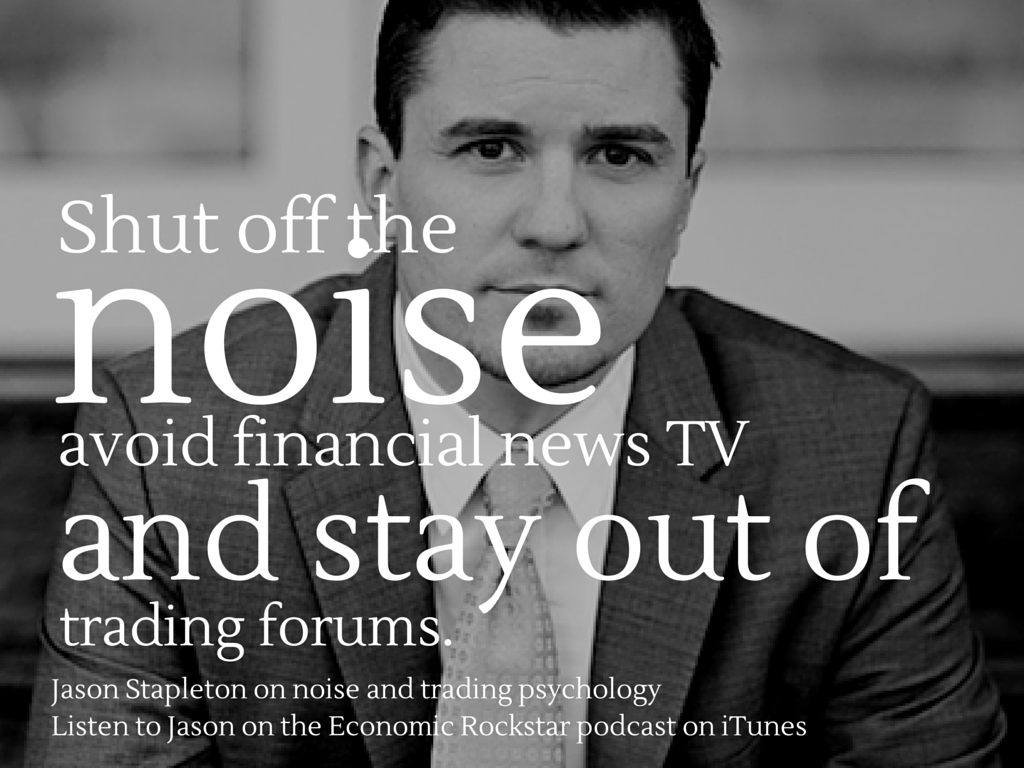
Episode 002: Jason Stapleton on Trader Psychology and Why You Shouldn’t Listen to Financial News

In this second part of the Economic Rockstar interview with Jason Stapleton, Jason shares with us some thoughts on trader psychology:Jason Stapleton

  • his thoughts on Richard Dennis’ Turtle Trader Program
  • why you shouldn’t trade and instead give your money to somebody else to manage.
  • noise that exists in the financial markets and what to do about it.
  • why you shouldn’t listen to financial news and what you can do instead to gain a competitive edge.
  • herding behaviors and trader psychology in markets.
  • why the markets are not fundamentally driven and what drives the markets instead.
  • why he believes that there is an inherent beauty in price patterns.
  • his thoughts on Fibonacci trading.
  • how being in the Marine Corp provided the discipline required to survive in the markets.
  • Some recommended books, such as Market Wizards by Jack Schwager.

You can check out and listen to the first part of this great interview with Jason Stapleton here.

About Jason Stapleton

Jason Stapleton is one of the founders of Trade Empowered and a managing partner of Harborsite Capital.  Jason’s heavy focus  on trader psychology, along with his in-depth knowledge of advanced technical analysis, gives him the unique opportunity to work with traders of all skills and levels, helping them to achieve a higher level of success and understanding in the foreign exchange market.

Recommended Books:

  • Trade What You See: How To Profit From Pattern Recognition by Larry Pesavento
  • Harmonic Trading, Volume One: Profiting from the Natural Order of the Financial Markets by Scott M. Carney
  • Harmonic Trading, Volume Two: Advanced Strategies for Profiting from the Natural Order of the Financial Markets by Scott M. Carney
  • Technical Analysis of the Financial Markets: A Comprehensive Guide to Trading Methods and Applications by John J. Murphy
  • Market Wizards by Jack Schwager
  • One Good Trade by Mike Bellafiore

Favorite Internet Resource:

  • Trading View

Where to Find Jason Stapleton:

  • Trade Empowered
  • Jason Stapleton on YouTube
  • The Live Show
  • Learn the Secret to Trading Fibonacci
toto togel situs togel situs toto situs toto situs toto situs toto situs toto toto slot situs toto situs togel situs toto slot gacor situs toto situs togel situs toto situs toto situs togel situs toto pam4d situs toto pam4d gimbal4d pam4d gimbal4d sangkarbet sangkarbet pam4d toto slot
http://traffic.libsyn.com/economicrockstar/002_Jason_Stapleton.mp3

Podcast: Play in new window | Download

Frank Conway

Frank Conway is founder of Economic Rockstar and lecturer of economics, finance and statistics. Read More…

View My Blog Posts

Youtube Sub

Become a Patron of the Economic Rockstar Podcast

patreon

Ireland’s Economy by the Numbers

Leaving Cert Economics: Ireland’s Economy  Click here to download a workbook on Ireland’s Economy so that you can add your own notes. [Original size] Ireland’s Economy by fconway

Categories

Subscribe and Never Miss An Episode

itunes-logo

Recent Posts

  • Ireland’s Economy by the Numbers April 8, 2019
  • 174: Wendy Carlin on The Core Project, Capitalism, Democracy and Normative Statements February 13, 2019
  • 173: Stephen Wright on Core Econ as a Learning Resource for Mainstream Economics January 28, 2019
  • 172: Best of 2018 Part 2: From the Great Depression to Futurism; Institutions, Individualism, Cooperation and Reciprocity January 22, 2019
  • 171: Best of 2018 Part 1 January 3, 2019

Copyright © 2026 · Podcast Pro Theme on Genesis Framework · WordPress · Log in

This website uses cookies to improve your experience. We'll assume you're ok with this, but you can opt-out if you wish. Accept Reject Read More
Privacy Policy

Privacy Overview

This website uses cookies to improve your experience while you navigate through the website. Out of these, the cookies that are categorized as necessary are stored on your browser as they are essential for the working of basic functionalities of the website. We also use third-party cookies that help us analyze and understand how you use this website. These cookies will be stored in your browser only with your consent. You also have the option to opt-out of these cookies. But opting out of some of these cookies may affect your browsing experience.
Necessary
Always Enabled
Necessary cookies are absolutely essential for the website to function properly. This category only includes cookies that ensures basic functionalities and security features of the website. These cookies do not store any personal information.
Non-necessary
Any cookies that may not be particularly necessary for the website to function and is used specifically to collect user personal data via analytics, ads, other embedded contents are termed as non-necessary cookies. It is mandatory to procure user consent prior to running these cookies on your website.
SAVE & ACCEPT