• ABOUT
  • RESOURCES
  • PODCAST
  • BOOKS
  • BLOG
  • SUPPORTERS
  • QFA Financial Advice
  • CONTACT

Economic Rockstar

Connecting Brilliant Minds in Economics and Finance

044: Nancy Folbre on Feminist Economics and the Care Economy

August 6, 2015 by Frank

http://traffic.libsyn.com/economicrockstar/044_Nancy_Folbre_Final1.mp3
Play in New WindowDownload

044: Nancy Folbre on Feminist Economics and the Care Economy

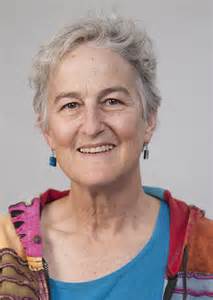
Nancy Folbre is a recently retired Professor of Economics at the University of Massachusetts, Amherst andNancy Folbrecurrently directs a research program of gender and care work at the Political Economy Research Institute.
Professor Folbre’s research focuses on the interface between feminist theory and political economy, with a particular focus on the work of caring for others.

Nancy was elected president of the International Association for Feminist Economics (IAFFE) in 2002, has been an associate editor of the Journal Feminist Economics since 1995, and is also an editorial assistant of the Journal of Women, Politics & Policy.

Nancy is recipient of a MacArthur Fellowship, and she has consulted for the United Nations Human Development Office, the World Bank and other organizations.

Professor Folbre has also written extensively on the social organization of time, namely the time allotted to care for children and the elderly and how family policies and social institutions limit the choices people can make between paid and unpaid work.

She is a contributor to the New York Times Economix blog.

Nancy’s book ‘Saving State U‘ (New Press, 2010) makes a case for strengthening public support for higher education in the United States.

Other recent books include ‘Greed, Lust, and Gender: A History of Economic Ideas’ (Oxford University Press, 2009) and ‘Valuing Children: Rethinking the Economics of the Family’ (Harvard University Press, 2008).

Nancy received a B.A. in philosophy from the University of Texas at Austin in 1971, an M.A. in Latin American studies from UT Austin in 1973, and a Ph.D. in economics from the University of Massachusetts, Amherst in 1979.

In this episode, you will learn:

  • why Nancy Folbre decided to study economics.
  • how the household is very much like the market economy.
  • about feminist household economics.
  • what the underlying principles and foundation to feminist economics.
  • why we should see unpaid work as part of the economy.
  • how the state and the market has reinforced the patriarchal system.
  • why the capitalist system, ironically, has downside effects on women today despite the benefits it provides.
  • why we should adopt the Scandinavian model of paternal responsibility.
  • about the unmeasured ‘Care Economy’ where people perform unpaid work.
  • about the opportunity cost to care work.
  • why Replacement Cost is a better proxy from a National Accounting perspective for measuring the size of the Care Economy.
  • why people are intrinsically motivated to care and that money is not an issue.
  • why Nancy Folbre strongly believes that we should think carefully about how we reward care work.
  • about the ‘Care Penalty’ and why we shouldn’t take advantage of the care workers motivation to work in the care industry.
  • about the societal pressures on a man who decides to stay at home and be the care giver.
  • why we should be providing a better account of the costs and benefits of raising kids.
  • if women have a ‘wage-penalty’ as they are, in most cases, the care-giver.
  • whether we can capture the value spent by parents caring for their children.
  • if intrinsic values of happiness lead to economic benefits for household.
  • if children of developed and less-developed countries are treated differently by their parents in terms of their perception of value.
  • about the rapid decline in fertility rates in India, Asia and Latin America.
  • why self-interest was always described in gender terms and why it was always permissible for men to be self-interested than women.
  • if having more women involved in economics and the economy would lead to better outcomes.

Economists:

In this interview, Nancy mentions and discusses: Gary Becker, Shoshana Grossbard, Friedrich Engels and Adam Smith.

Economics:

In this interview, Nancy mentions and discusses: feminist economics, market choice, economics of the household, altruism, rationality, interdependent utility, collective bargaining, choice, efficiency, inequality, incentives, opportunity cost, replacement cost, free market, Invisible Hand and happiness.

Quotes by Professor Folbre in Episode 044 of the Economic Rockstar Podcast:

Work can be very productive and create value for society even if it’s unpaid – Nancy Folbre

Click To Tweet

“Definitions of femininity and masculinity are changing in a positive way” – Nancy Folbre

Click To Tweet

“Smith had a lot of confidence in the pursuit of individual self-interest” – Nancy Folbre

Click To Tweet

Many people have taken Smith’s praise of the free market as an endorsement of selfish behavior, that it doesn’t matter if you think only of yourself because in a market economy we can be confident that everything will turn out just fine.  What I argue in the Invisible Heart is that’s really incorrect. The market economy really depends to a very great extent on a sense of commitment and obligation to other people of trust and reciprocity and concern for the welfare of others. That affects overall economic organisation and success in some pretty profound ways – Nancy Folbre

“We need to change the way we think about work and about value” – Nancy Folbre

Click To Tweet

Leading happy and worthwhile lives is kinda the point of the whole economic enterprise and sometimes we lose sight of that. And there’s certainly a lot of evidence that what makes people happy is good human relationships, having close ties with family and friends and community. If we appreciated that a little bit more fully, we could organise our economic system a lot more successfully – Nancy Folbre

“I think Feminist Economics is a part of the whole heterodox challenge to the mainstream economics, and I fell good about that” – Nancy Folbre

Recommended Books:

  • Valuing Children: Rethinking the Economics of the Family by Nancy Folbre
  • Greed, Lust, and Gender: A History of Economic Ideas by Nancy Folbre
  • Saving State U by Nancy Folbre
  • The Invisible Heart by Nancy Folbre
  • The Condition of the Working-Class in England in 1844 by Friedrich Engels
  • The Invisible Hand by Adam Smith

Blog:

  • Care Talk by Nancy Folbre

Conference:

  • International Association for Feminist Economics

http://traffic.libsyn.com/economicrockstar/044_Nancy_Folbre_Final1.mp3

Podcast: Play in new window | Download
005: Hector Avellaneda on Buying Gold to Protect Your Wealth from a Dollar Crisis

November 19, 2014 by Frank

http://traffic.libsyn.com/economicrockstar/005_Hector_Avellaneda.mp3
Play in New WindowDownload

Episode 005: Hector Avellaneda on Buying Gold to Protect Your Wealth from a Dollar Crisis

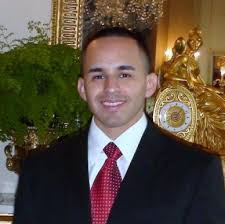
Hector AvellanedaHector Avellaneda is from Houston, Texas and has a passion for entrepreneurship, economics, finance and gold. This, however, only materialized after Hector came face to face with a untold truth and one of the harshest lessons that only a life experience can teach you, as long as you are willing to dig deep in search for answers.

Hector, the son of Mexican immigrants to the US, grew up in poverty and was statistically destined to a life of poverty in adulthood. However, Hector wanted to defy this probability and worked extremely hard in school. In typical fashion, Hector accumulated college debt and was ironically facing a poorer life than his own parents despite a larger mean income.

Hector questioned the college debt system and deeply explored how US citizens have grown accustomed to taking on such debt. Further research led him to realise that middle-class America could see their wealth wiped out due to an impending dollar crisis. Subsequently, Hector wrote an economics and finance-related book to share his findings and to suggest what you can do to protect your wealth.

Economics and Finance Themes:

In this interview, Hector mentions and discusses: poverty, wealth, college debt, economic crisis, the Great Depression, loans, credit card debt, poverty trap, psychological effects of poverty, deficit, free markets, incentives, purchasing power, inflation, taxes, quantitative easing, money supply, the Minsky Moment, financial literacy, properties of money, fiat currency, the US Federal Reserve, stock markets, crypto-currencies, the Gold Standard.

Hector’s Influencers:

His dad and a college counsellor. Find out more in his book ‘De-CLASS-ified’ (see below for a link to Amazon and get an e-copy on Amazon for a bargain $2.99).

In this episode, you will learn:

  • how Hector had all the hallmarks of continuing to live a life of poverty in America.
  • about Hector being bullied in school because of the charitable clothes he wore .
  • how Hectors’ father and mother’s sense of hard-work and money management became naturally ingrained in him.
  • how Hector defied and beat the statistical odds of remaining poor for life due to a strong work ethic and a desire to succeed.
  • how hard work in school can open up many opportunities in life including an internship with NASA.
  • the importance of being mentored.
  • how easy credit for college education made Hector ‘s financial position worse off than his parents.
  • what triggered Hector into discovering the truth about the American economy and the college debt system.
  • the risks in the US economy.
  • why the US could be faced with a massive default on student loans and what is triggering this today.
  • how it became acceptable to borrow to pay for college.
  • why Hector’s $50,000 student debt became a blessing in disguise.
  • how Hector’s research into the US college debt crisis resulted in him writing an economics and finance book without having a background in these disciplines.
  • why the middle class in America is about to collapse financially.
  • why the US government will seize money from an American workers’ wages.
  • what type of college degree is not in demand in US anymore.
  • what you should do today when making a college or subject choice.
  • what it takes to have financial and economic freedom.
  • about the 7 properties of money.
  • what countries are doing today with their dollar reserves.
  • about who actually owns the Federal Reserve Bank of America. Hint: It’s not the US government!
  • what you can do to protect your wealth from being transferred to others.
  • who are buying up gold and for what reason.

On Living in Poverty:

  • ‘I was pretty poor. I lived in a small wooden type of house with a sheet metal roof’ – Hector Avellaneda
  • ‘Growing up I saw my parents argue and fight about money and not having enough money to take a family trip or a vacation or just be able to enjoy a day out on the town and so my parents were always very stressed out, always kind of arguing and fighting’ -Hector Avellaneda
  • ‘I was made fun off in school because a lot of clothes that I wore was donated from the local church or local program, a local donation program’ – Hector Avellaneda
  • ‘I always told myself that I was going to do whatever it took to make sure that I was successful in life and to make sure that I got out of that poverty that I had seen as a child’ – Hector Avellaneda

Advice:

  • “Today we need computer scientists, we need computer programmers, we need engineers – those are the degrees that are in demand  and I myself sit on the board directors of a non-profit organization here in Houston that actually encourages kids to go to college and major in things like engineering, major in things like computer science because I think those are the degrees that we need in today’s economy” – Hector Avellaneda.

  • ‘To have financial and economic freedom, I had to become an entrepreneur’ – Hector Avellaneda

    Click To Tweet

  • “For anyone who is going to college or who is thinking about going to college today, I would say ‘do some real research and figure out what pay expectations you will have upon graduation’ and, with that said, make sure that, if you are going to go to college, major in a degree that will be able to sustain your way of life that you want to live and if you don’t want to major in something like engineering or computer science because that’s just not what you are passionate for then don’t take on any student debt” – Hector Avellaneda.

  • Those holding onto paper assets are at risk of losing it all to those holding real tangible assets like gold and silver, land and claims on oil fields.

Personal Habits:

  • A hard worker, head-strong, determined, passionate and a desire to find out the truth through research, self-education, reading and learning.
  • Hector had a desire to find out what went wrong in his life as he was mis-sold the American idea of taking on college debt . With a limited exposure to finance and economics in college, $50,000 of college debt and unemployed due to the Great Recession of 2008, Hector read widely to learn and understand about the truth behind the US economy, the trillions of dollars of debt and the risks of a mass student loan default and a dollar crisis. 

Takeaway:

‘We have a generation of college students who are graduating into financial bondage’ – Hector

Click To Tweet

The free markets have been distorted due to all the incentives that have been created in the US economy.

‘Paper money eventually returns to its intrinsic value – zero’ – Voltaire

Click To Tweet

Before making a college decision, do a course that will allow you to earn an income to pay off your debt, otherwise do not take on debt.

Increase your understanding of financial literacy. Read books on money.

Schools and Universities need to teach more economics, finance and financial literacy subjects to all students.

Self-education is very important – read books and get access to the necessary information online.

‘Money is nothing more than an economic tool by which we convert our time and freedom’ – Hector

Click To Tweet

Recommended Books:

  • The Death of Money by James Rickards
  • De-CLASS-ified: The Fall of the Middle Class and Rise of the Internet Entrepreneur by Hector Avellaneda

Favorite Internet Resource:

  • iCloud

Where to Find Hector Avellaneda:

  • Gold and Silver Buyer Club
  • New Class Rising
  • Podcast on iTunes
http://traffic.libsyn.com/economicrockstar/005_Hector_Avellaneda.mp3

Podcast: Play in new window | Download
Frank Conway

Frank Conway is founder of Economic Rockstar and lecturer of economics, finance and statistics. Read More…

View My Blog Posts

Youtube Sub

Become a Patron of the Economic Rockstar Podcast

patreon

Ireland’s Economy by the Numbers

Leaving Cert Economics: Ireland’s Economy  Click here to download a workbook on Ireland’s Economy so that you can add your own notes. [Original size] Ireland’s Economy by fconway

Categories

Subscribe and Never Miss An Episode

itunes-logo

Recent Posts

  • Ireland’s Economy by the Numbers April 8, 2019
  • 174: Wendy Carlin on The Core Project, Capitalism, Democracy and Normative Statements February 13, 2019
  • 173: Stephen Wright on Core Econ as a Learning Resource for Mainstream Economics January 28, 2019
  • 172: Best of 2018 Part 2: From the Great Depression to Futurism; Institutions, Individualism, Cooperation and Reciprocity January 22, 2019
  • 171: Best of 2018 Part 1 January 3, 2019

Copyright © 2026 · Podcast Pro Theme on Genesis Framework · WordPress · Log in

This website uses cookies to improve your experience. We'll assume you're ok with this, but you can opt-out if you wish. Accept Reject Read More
Privacy Policy

Privacy Overview

This website uses cookies to improve your experience while you navigate through the website. Out of these, the cookies that are categorized as necessary are stored on your browser as they are essential for the working of basic functionalities of the website. We also use third-party cookies that help us analyze and understand how you use this website. These cookies will be stored in your browser only with your consent. You also have the option to opt-out of these cookies. But opting out of some of these cookies may affect your browsing experience.
Necessary
Always Enabled
Necessary cookies are absolutely essential for the website to function properly. This category only includes cookies that ensures basic functionalities and security features of the website. These cookies do not store any personal information.
Non-necessary
Any cookies that may not be particularly necessary for the website to function and is used specifically to collect user personal data via analytics, ads, other embedded contents are termed as non-necessary cookies. It is mandatory to procure user consent prior to running these cookies on your website.
SAVE & ACCEPT