• ABOUT
  • RESOURCES
  • PODCAST
  • BOOKS
  • BLOG
  • SUPPORTERS
  • QFA Financial Advice
  • CONTACT

Economic Rockstar

Connecting Brilliant Minds in Economics and Finance

081: Julie Nelson on the Importance of Ecology in Economics and the Misconception of Gender Roles in the Economy

April 14, 2016 by Frank

http://traffic.libsyn.com/economicrockstar/081_Julie_Nelson.mp3
Play in New WindowDownload

081: Julie Nelson on the Importance of Ecology in Economics and the Misconception of Gender Roles in the Economy

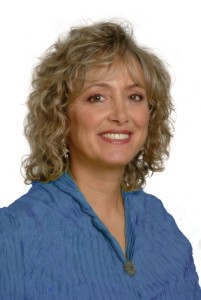
Julie Nelson is Professor of Economics at University of Massachusetts Boston and Senior Research Fellow at Global Development and Environment Institute, Tufts University, also in the USA.Julie Nelson Economic Rockstar
Julie’s research areas include feminist economics, ecological economics, the philosophy and methodology of economics, ethics and economics, the teaching of economics, and the empirical study of individual and household behavior.

Professor Nelson has also served as a Research Economist at the U.S. Bureau of Labor Statistics and a Visiting Associate Professor at Harvard University amongst others.

Julie is the author of Economics for Humans and author, co-author, or co-editor of several other books including Beyond Economic Man: Feminist Theory and Economics.

She has also authored numerous articles in journals ranging from Econometrica, the American Economic Review, and the Journal of Political Economy, to Signs: Journal of Women in Culture and Society, Feminist Economics, and Ecological Economics.

Professor Nelson earned a B.A. degree in Economics from St. Olaf College and an M.A. and Ph.D. in Economics from the University of Wisconsin, Madison, USA.

Julie, along with Mark Maier, runs the website introducingeconomics.org

Economics:

In this episode, Julie mentions: statistical inference, bias, production function, land, labor, capital, resource maintenance, feminist economics, care, GDP, Pigouvian tax, carbon, welfare gains, negative externality and Kyoto Agreement.

Economists:

In this episode, Julie mentions: John Stuart Mill, Gary Becker and Amartya Sen.

Quotes by Julie in Episode 81:

“Math gives you internal consistency. It does not give you objectivity and reliability.” – Julie Nelson

Click To Tweet

“Most economic textbooks tell you there are three basic economic activities… production, distribution and consumption. We added one at the beginning and what we called ‘resource maintenance’. That is, how are you ever going to produce anything if you don’t have the resources and if you haven’t taken care of them and sustained them in a way that they’ll be productive in the future” – Julie Nelson

“No one would be so silly to try to address an economic problem without looking at its social, ethical, physical and political dimensions. But later economists didn’t remember those cautions of Mills and just ran with the math aspect of it.” – Julie Nelson

“There’s still a long way to go to think of gender in an intelligent and equitable way.” – Julie Nelson

Click To Tweet

Takeaway:

“Be careful about what you believe that economists are telling you.” – Julie Nelson

“Wherever we are in our life whether we’re at work in a business or at home or bringing our whole selves with us. We don’t just bring parts of ourselves. So if you want to be an ethical person anywhere, we need to do that when we’re at work.” – Julie Nelson

Books:

  • Men are from Mars. Women are from Venus by John Gray
  • ECONned: How Unenlightened Self Interest Undermined Democracy and Corrupted Capitalism by Yves Smith
  • The Shareholder Value Myth by Lynn Stout

Links:

  • www.julieanelson.com
http://traffic.libsyn.com/economicrockstar/081_Julie_Nelson.mp3

Podcast: Play in new window | Download
036: Jason Shogren on Music and Endogenous Risk and Rationality in the Environmental Goods Market

June 11, 2015 by Frank

http://traffic.libsyn.com/economicrockstar/Jason_Shogren_Final.mp3
Play in New WindowDownload

036: Jason Shogren on Music and Endogenous Risk and Rationality in the Environmental Goods Market

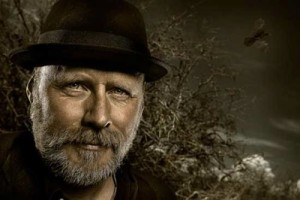
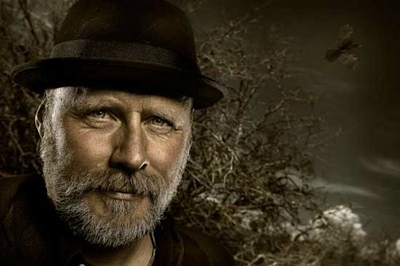
Jason Shogren is the Stroock Professor of Natural Resource Conservation and Management and Chair of the Department of Economics and Finance at the University of Wyoming.Jason Shogren

Professor Shogren’s background and research interests include the economics of environmental and natural resource policy, experimental methods; endangered species; invasive species; climate change; agricultural and forest management; energy; health; regulation; and paleoeconomics.

Jason has been named a fellow of the Association of Environmental and Resource Economists (AERE), the nation’s pre-eminent professional society for environmental economists and policy.

Jason served as professor to Sweden’s King Carl Gustaf XVI in 2012 and is a 2007 Nobel Peace Prize winner (shared with Al Gore) as a member of the United Nations team working on climate change.

He has also served as a senior economist on the Council of Economic Advisers in the White House under the Clinton Administration.

Professor Shogren’s teaching include Global Economic Issues, Natural Resource and Environmental Economics, Environmental Risk and Conflict and Experimental Economics.

Jason is well published with over 200 articles and is the author and editor-in-chief of numerous books including Encyclopedia on Resource, Environmental, and Energy Economics, Experimental Auctions and Fat Economics: Nutrition, Health, and Economic Policy

Jason loves fishing and music. He spends his time composing acoustic roots songs that he describes as catawampus Americana music, has five albums and will be touring this summer.

Economists:

In this interview, Jason mentions and discusses:

Janet Yellen, Thomas Sowell, Daniel Kahneman, Amos Tversky, Gary Becker, Isaac Ehrlich, Ralph C. D’Arge, Tom Crocker, Peter Baum, Karl-Göran Mäler, Vernon Smith and Charlie Plott.

Economic Themes:

In this interview, Jason mentions and discusses:

Carbon tax, cap and trade market, the Coase Theorem, probability, general equilibrium models, expected utility, nudge, rationality, irrationality, risk aversion, loss aversion, homo economicus, soft paternalism, trade-off, scarcity, endogenous risk and extreme tail-end events.

“I spent most of my life before becoming a PhD economist as a musician” -Jason Shogren.

Click To Tweet

“I like to think of economics as applied philosophy”- Jason Shogren.

Click To Tweet

Find Out:

  • about the Cap and Trade Market for carbon emissions is a failure and would only work in a micro-management setting.
  • why its best to implement a carbon tax.
  • the difference between luxury emissions and survival emissions and why it maybe difficult for China and India to reduce their carbon.
  • how Jason’s depiction of a low probability-high severity event influenced Janet Yellen to take action on climate change.
  • if we are acting rationally or irrationally toward the environment.
  • how we can exploit rationality ‘for the good’.
  • how, over the last 30 years, we have become averse to just about everything.
  • how we can take advantage of peoples’ status quo to increase their contribution of paying a carbon tax.
  • how designing the right system can nudge people to do the right thing – just like soft paternalism.
  • how Jason sought inspiration about rationality from other disciplines, such as English literature and music composition, rather than from economics.
  • how Jason uses music as a form of escapism.
  • about the inspiration Jason gets for writing songs from economics.
  • who the talented people are behind the creation of Jason’s amazing artwork and photography.
  • about the concerts that Jason Shogren will be playing at each year.
  • about Jason’s hitch-hiking experience in Ireland in 1985 from the Giants Causeway and down along the West Coast (now known as the Wild Atlantic Way).
  • about Jason theoretical thought process regarding endogenous risk and  how he applies it to different environmental risks.
  • what Jason would do if he was once again Economic Advisor to the US government.
  • a little about the Endangered Species Act.
  • what I saw on Professor Shogren’s whiteboard when I spoke to him on Skype. Hint: It’s his next economic model.
  • about the 25% chance you have in meeting Jason in Centennial, Wyoming – it involves the population and the number of pubs!
  • about Jason’s plastic Nobel Prize keychain and where he hangs it.

Jason Shogren band

Influencers:

Ralph C. D’Arge, Tom Crocker (Wyoming), Peter Baum (University of Stockholm) , Karl-Göran Mäler, Vernon Smith  and Charlie Plott.

An Economic Theory that Influenced Jason Shogren:

A paper by Ehrlich and Becker on self-protection and self-insurance, i.e. endogenous risk, where people invest to change the lottery they face in life, influenced Professor Shogren’s theoretical approach to economics. Once Jason started looking at economics from that perspective, he began to see a lot of models in which the states of nature where independent. To Jason, that seemed too fatalistic for how we spend our resources and how we invest. Most environmental policies are a lottery because we can’t guarantee that somebody’s going to live or not get sick based on exposure (to environmental risk).

We have an estimate and ‘safe’ minimum standards, but there’s no guarantee. So we’re really talking about policies at a collective level that are moving probabilities and damages around. We also have investment at a private level in which we’re doing the same thing – Jason Shogren

What, therefore, struck Jason was asking people about their value of reducing risk and they giving him a value of zero. He questioned people’s decision of applying a value of zero to reducing risk. The reason was that they valued the ‘collective’ reduction as zero and not their ‘individual’ reduction because they took care of the risk themselves.

Applying this theoretical thought process to climate change, endangered species, health risks, pandemics, invasive species or any other problem, will most likely have some element of endogenous risk. Once you add that element to it, the model gets a little richer and once the model gets a little richer, then you can explain a little more behaviour. By adding the behavioural element to the model, the question is ‘What drives things more? Technology of reducing risk? Tastes? How do they work together or how they work apart?’.

“If you can strip it down to that level, then you can really look at a lot of different problems using that type of kit”– Jason Shogren. It can become very flexible as a theoretical framework and model, that it is the reason why Jason, his peers and his students were able to look at a lot of different problems in terms of endogenous risk. It allows for focus on a particular research topic, otherwise it would be too scattered.

Jason on Carbon Emissions:

“We still have to figure out a Plan B, because there is no Planet B” – Jason Shogren.

Click To Tweet

Putting a price on carbon has been the way to reduce carbon emissions. Trying to set up cap and trade markets has been too hard. The cap and trade market has allowed the supply to increase – Jason Shogren.

“If you’re waiting for people to do the right thing for the right reason, you can wait a long time. We’ve seen that throughout history. Economists would say that ‘if you want to do the right thing at the right time, let’s get the prices right and then people will make their own choices’. But if you get prices to reflect true costs and reveal hidden costs that are being imposed on others, then hopefully we don’t have to job-own them and nudge them. Maybe we have to nudge people and get the price right. Both theoretical aspects of economics should be complementary and we should not substitute one for the other” – Jason Shogren.

Before we start calling it nudging, there was a saying “The target is the target and the costs are regrettable but not really decisive” – Thomas Sowell.

Rationality in the Environmental Goods Market:

Rationality in psychology is very different to rationality in economics, in that when we think about rationality in economics we think about a social construct. People are making choices within an active exchange institution like a market and if they start making their emotions run wild, then there are people to arbitrage them. Either they like less money to more or they adjust and they start looking for opportunities themselves. It’s not that we all have to be 100% rational. As long as the folks at the margin who are making those trades pay attention, the market is powerful enough to move it along as if everybody was rational. But they don’t have to be.

The problem with environmental goods is that we don’t have markets like that. So now we have to figure out the problem of how to aggregate up in a way that would incorporate both economic monetary decisions and economic non-monetary decisions. That becomes trickier. Up to quite recently, the only thing economists were dealing with in terms of aversion was risk aversion. Typically it was believed that risk was the only thing that people were averse of. And then Kahneman and Tversky came along and we were now averse to losses and we treated gains and losses differently.

Over the last 30 years, we have become averse to just about everything – ambiguity, inflation aversion, equity aversion, disappointment aversion, envy aversion, lying aversion, guilt aversion. And so by adding all of these emotions into our typical economic model, the question is ‘How and when do we stop?’. Do we add all 40 emotions into our models? And now how do we sort out cross-partial derivatives between equity and envy and disappointment and suspicion and regret? And those are jobs that economists have not been typically trained to deal with – assigning complementarities or substitutabilities between different emotional factors.

So part of this working on nudges is trying to understand that if we tweak the models so that we can take advantage of how people feel guilty about this or how they opt-in or opt-out about different things, we can exploit that irrationality ‘for the good’. For example, people like status quo, so let’s take advantage of that. So instead of buying an airline ticket, nowadays you have to opt-in to add in a carbon price or you can buy a carbon off-set. What we should do is get all the airlines to opt out of buying that carbon off-set. And giving our tendencies not to want to opt out of things, we would probably buy a whole lot more carbon off-sets.

If we can exploit those at the same time as having an active market for those off-sets and a price, then it’s not irrational or rational. It’s understanding that there is some instinctual behaviour that people at a ground level will stick with. That’s the whole soft paternalism idea that we know that you know what’s right and we’re just designing the system to help you get there as opposed to us telling you what’s right.

It is extremely difficult to single out one emotion and to identify it as the one emotion that is driving homo economicus away from our rational base-line. It’s going to take us a while to say ‘Here are the ten big emotions that we can live with and let’s just work on those’.

On Human Behavior:

“If I really want to understand human behaviour, who should I read – Shakespeare or Gary Becker?” – Jason Shogren.

Click To Tweet

If we really want to study emotions we should study literature. If you really want to be economical about how people think, then you should study poetry. Then if you want to convey all of that in a compact form that people will pay attention to then you add music. Now you’ve got a melody and lyrics  and you have a path where essentially you are projecting what you are considering to be an important story to tell. Song writing has its structures and its forms that you can easily translate into guidelines and rules and math models, just like we do in economics. To me, arts and science – I don’t know if they’re ying and yang – to me they go parallel and spillover all over each other – Jason Shogren.

What Professor Shogren Would Do Today as Economic Advisor to the US Government:

  1. Figure out a way to introduce a carbon tax but difficulty would lie with the Senate and the House of Representatives since they are essentially run by the Republicans.
  1. Take on the Endangered Species Act because it’s being waiting to be revised for almost 22 years. The way that it is written is that any species has to be protected at any cost. That type pf pressure can’t hold without the economy bursting at the seams. It would be worth going through this Act and add safety valves in a systematic and coherent way. It’s too important for this Act to just sit idly by when people using discretion as to when it holds and when it doesn’t.

josh shogren

Takeaway:

As a younger man, everybody sort of hits that wall of maturity that you don’t really want to go through. Sometime you get forced through it and sometimes you walk through it and sometimes you fall through it. Once you get there and you decide you can’t control the universe, that’s a good place to be – Jason Shogren.

At the same time, you take care of what you can’t control. You know, it’s the oldest story in the book. Once you come to the realisation and you find that balance, things are just way more interesting, way easier to deal with and just, in general, happier. Being a good Scandinavian doesn’t mean I have my gloomy dark moments – Jason Shogren.

Songs Mentioned and Played in this Episode:

  • Works by Jason Shogren
  • Exit In Flames by Jason Shogren
  • Broken Every Vow by Jason Shogren
  • Me and Genghis Khan by Jason Shogren

Concerts Where You Can See Jason Shogren:

  • WHAT fest
  • Nowoodstock
  • Snowy Range

On Ireland:

“I spent a month hitch-hiking in Ireland way back in ’85. I started up in Larne, went up through the Causeway, then all the way down the West coast. It was a great month of hitch-hiking, Guinness, rain, people and adventure. So, yeah, I’m ready to come again” – Jason Shogren.

On Conferences:

“It’s supposed to be fun. You’re supposed to live and learn and try to pass on something better. Sometimes it’s ideas and sometimes it’s ideas through songs” – Jason Shogren.

Musicians Mentioned in this Episode:

  • Mumford and Sons
  • Gordon Barry

Recommended Book:

  • What Work Is by Philip Levine (Poet) 

Where to Find Jason Shogren:

  • Website: www.jshogren.com
  • CDBaby
http://traffic.libsyn.com/economicrockstar/Jason_Shogren_Final.mp3

Podcast: Play in new window | Download
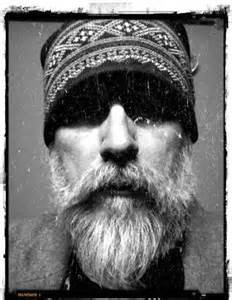
014: Shoshana Grossbard on Why Dry Cleaners Charge Women More, on the Economics of Love & Marriage and on Polygamy

January 8, 2015 by Frank

http://traffic.libsyn.com/economicrockstar/014_Shoshana_Grossbard.mp3
Play in New WindowDownload

014: Shoshana Grossbard on Why Dry Cleaners Charge Women More, on the Economics of Love & Marriage and on Polygamy

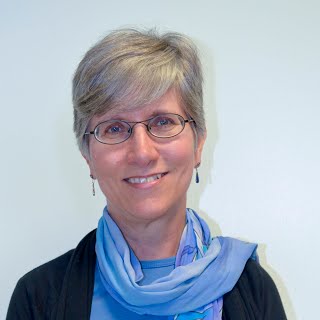
Shoshana GrossbardShoshana Grossbard is Professor of Economics at San Diego State University and founding editor of the Review of Economics of the Household.  Shoshana has been a fellow and visiting lecturer  at numerous universities including Stanford, Columbia University, the University of Zaragoza, Spain, Tel Aviv and Bar Ilan University, as well as in Munich and Bonn, Germany.

Shoshana obtained her Phd from the University of Chicago where she developed an interest in the New Home Economics from its founders, the late Nobel Laureate Gary Becker and the late Jacob Mincer. The main focus of Shoshana’s research is household economics, family economics and the economics of marriage and, as a student, developed her first non-unitary model of household decision-making. Shoshana is actively promoting the establishment of household economics as a separate specialty in economics. She is one of the first social scientists to have analyzed consequences of gender imbalance in the sex ratio for intra-household distribution, labor supply, fertility and cohabitation. The economics and social impact of polygamy is also a research interest.

Shoshana has published 5 books and more than 50 articles on the determinants of marriage, consumption and labor supply and on the law and economics of household decisions. She is fluent in English, French, Hebrew, Spanish, and Dutch and has presented her work at many universities in more than 13 countries.

Economic Themes:

In this interview, Shoshana mentions and discusses: household economics, family economics, economics of the household, household decision-making, sex-ratios, the economic and social impact of polygamy, determinants of marriage, opportunity cost, consumption and labor supply, immigration, population, marriage, price discrimination, government intervention and elasticity.

Economists and Economic Schools:

In this interview, Shoshana mentions: New Home Economics, Gary Becker, Jacob Mincer, Adam Smith, Arleen Leibowitz, Linda Edwards, Andrea Beller, Elizabeth Landes, Catalina Amuedo-Dorantes and Sankar Mukhopadhyay.

Shoshana’s Defining Moment/Affirmations/Mantra:

Shoshana is defined by the feminist movement of the 1960s/1970s in her early student days and her mother’s dislike of being a housewife.

I’ve remained a feminist for the rest of my life. It was always very clear to me that I was going to have a career in addition to having a family.

Personal Habits:

Hard work. I work very long hours, I work very hard and I’m very motivated to be successful. There’s no other way.

If you don’t work hard, things don’t just fall on your lap – Shoshana Grossbard

Click To Tweet

Advice:

It’s very important to have a critical eye. Whatever you read you have to realise that most research, including research by economists is biased by the point of view of the writer and they have an axe to grind typically. You have to try to figure out what’s the axe they’re grinding before you read it.

In this episode, you will learn:

  • about Shoshana being a 1970s hippie and her demonstrations against King Constantine of Greece.
  • about the differences in female educational participation between the 1960s and present day.
  • about the sexist advertisements that existed which placed the wife in the household.
  • about the origins of the New Home Economics.
  • about what the theory of household means.
  • how Shoshana transitioned herself from an interest in the economics of education to the economics of polygamy while a student of Gary Becker.
  • how Shoshana’s approach to the study of polygamy differed with Gary Becker’s.
  • what quasi-wages are for the stay-at-home mum or dad.
  • if there is an opportunity cost to marriage.
  • the implication on labor force participation as a result of marriage.
  • about WiHo or Work-in-Household.
  • about the importance of the sex-ratio in determining labor force participation.
  • how Shoshana calculates the sex-ratio.
  • how women’s participation in the labor force can be a direct result of fluctuations in the sex-ratio.
  • how a high sex-ratio (more men than women) can increase the bargaining power of men.
  • how a low sex-ratio (more women than men) can increase the bargaining power of women.
  • if Hilary Clinton‘s year of birth allowed her to be the successful and educated person she is today due to the low sex ratio in the US between 1946 and 1950.
  • about the marriage-squeeze hypothesis (in which there is a shortage of men or women for marriage).
  • about the detail of Ireland’s population pyramid, which indicates a male marriage squeeze for those aged 4 to 10 (more males due to births) and a female marriage squeeze for those aged 20 to 29 (more females due to male emigration).
  • about the relevance of the sex-ratio of immigrants and how the freedom of labor can solve the problem of a  marriage squeeze.
  • if the availability of polygamy translates into a higher bargaining power for women.
  • if polygamy solves a marriage market disequilibrium.
  • about the polygamy ruling in Canada.
  • how polygamy can be harmful for young men and why they are known as the lost boys.
  • about the Fundamentalist Latter Day Saints in British Columbia.
  • if the government should intervene in markets where gender price discrimination occurs.
  • who pays more for dry-cleaning services – males or females – based on their elasticity of demand.
  • if we should trust our spouse given the ideology behind economics that all market participants are self-interested and seek to gain wealth without any consideration of others.
  • if spousal love diminishes once you have children and that the love you have toward your child compensates for the lack of love from your spouse.

Origins of New Household Economics:

When Gary Becker and Jacob Mincer started New Home Economics, it was mostly their initiative but it was the students at the University of Columbia at that time who participated in the labor workshops that were very instrumental in promoting and developing it.

There were a high proportion of women who attended the workshop including Arleen Leibowitz and Linda Edwards and, later on, Andrea Beller and Elizabeth Landes.

It is wrong to view New Home Economics as ideologically motivated to maintain old-fashioned gender roles.

One of the major ideas of the New Home Economics is to consider households like firms where there is household production and to analyse them with the same tools economists analyse business firms.

So basically, households are non-profit firms but there are many small non-profit firms in the economy that are considered part of the economy that are counted in GNP. But the most prevalent non-profit firm, the household, is not counted in the GNP.

Jacob Mincer and Gary Becker were not concerned about what was counted in GNP but they were more micro-economists. So they wanted to use all the tool available from price theory and apply them to the analysis of what households do:

  • How do they divide the housework?
  • Do women participate in the labor force?
  • The trade-off between household production and participation in the labor force.

The Origins of Shoshana’s Work:

Shoshana‘s approach to the study of polygamy took account of the point of view of women whereas Gary Becker considered variables such as how men’s incomes determined the number of wives he would have.

Shoshana challenged Gary stating that it’s not just about men’s income but it’s also a matter of women’s education, the age of the women, the fertility of the women and the resources that they have because they can bargain with the men about what they’re willing to do.

Shoshana continued to work on economic development issues because polygamy is practiced mostly in less-developed countries where she examined data in Nigeria and then the study of consensual marriages in Guatemala.

Jacob Mincer advised Shoshana, when she was seeking a job, to do more mainstream economics rather than the exotic research mentioned above which may not be of interest to economists in general. That is when she switched to the study of labor force participation and developed a theory of allocation of time in markets for labor and marriage.

There is a major difference between the model developed by Grossbard and that developed by Becker and Mincer. When Becker and Mincer talk of household production, they refer to households as a unit or as an entity making decisions. However, in Grossbard’s model it is the individuals making decisions.

Household Decision-Making and Quasi-Wages

The fundamental question of New Household Economics: Is there an opportunity cost to marriage and what is the implication on labor force participation as a result of marriage?

Individuals, from an early age, have a concept and vision of how they want to live their lives.

Work in Household (WiHo) represents the willingness to work in a household to, say, raise children.

On Gender Price Discrimination:

“We should all be conscious that sometimes there is exploitation of the consumer and if you don’t like the subliminal advertising that companies use to make you buy perfume or aftershave well then just don’t buy it.”

I’m not a fan of regulation – Shoshana Grossbard

Click To Tweet

Dry cleaners charge more for women’s blouses than for men’s shirts, despite them being the same product, with perhaps the main difference being that the buttons on a blouse are typically located on one side of a blouse to that of a man’s shirt.

Dry cleaners are aware that the price elasticity of demand for a woman needing dry cleaning is less than that of a man, meaning that there is more of a need for women to use the dry cleaning services and would, hence pay more as no-one else would do it for them.

On the other hand, the elasticity of demand is more for men, meaning that dry cleaners may charge less for the same service so as to encourage men to dry clean.

Shoshana states that the reason for this gender price differential by dry cleaners is that the majority of men would not go to a dry cleaners as they have a wife, girlfriend or mother who would take on the task of cleaning their clothes. The WiHo or Work in Household is higher for these women as they have, in the majority of cases, taken on the responsibility of running the household chores.

The women who arrive at a dry cleaners are those who have a low WiHo perhaps due to a working career or an unwillingness to take on the responsibility of such chores or even due to the lack of people willing to do the work, such as a spouse.

How the Activities of a Home Differs to the Activities of a Market

Adam Smith stated: “It is not from the benevolence of the butcher, the brewer or the baker that we expect our dinner but from the regard of their own interest”.

If we view all participants in a household as economic agents who have a certain degree of self-interest, should we trust our spouse?

The statement by Adam Smith is about the functioning of the market and how the competition among the bakers and the other professionals brings down the prices and eventually the consumer benefits.

The problem with household production, which is a non-profit firm, is that most of what is produced at home is not going to be sold in the market, principally the children, the beauty of the  home, the harmony in the home. These are products that are being consumed by the producers themselves or by the people who pay for the WiHo. In this case, the market system doesn’t work.

The benevolence of the spouse is a very important element. Adam Smith also had a Theory of Moral Sentiments and in the framework of the household, altruism matters. So, benevolence and altruism matters.

Favorite Books:

  • Dollars and Sex by Marina Adshade
  • The Marriage Motive: The Price Theory of Marriage by Shoshana Grossbard
  • Publications of Shoshana Grossbard

Favorite Internet Resource:

  • marinaadshade.com  and on Twitter: @dollarsandsex
  • omgchronicles.vickilarson.com and on Twitter: @OMGchronicles
  • Gretchen Livingston on Twitter: @DrGMLivingston

Where To Find Shoshana Grossbard:

  • Facebook: Economics of Love
  • Twitter: @econoflove
http://traffic.libsyn.com/economicrockstar/014_Shoshana_Grossbard.mp3

Podcast: Play in new window | Download

Frank Conway

Frank Conway is founder of Economic Rockstar and lecturer of economics, finance and statistics. Read More…

View My Blog Posts

Youtube Sub

Become a Patron of the Economic Rockstar Podcast

patreon

Ireland’s Economy by the Numbers

Leaving Cert Economics: Ireland’s Economy  Click here to download a workbook on Ireland’s Economy so that you can add your own notes. [Original size] Ireland’s Economy by fconway

Categories

Subscribe and Never Miss An Episode

itunes-logo

Recent Posts

  • Ireland’s Economy by the Numbers April 8, 2019
  • 174: Wendy Carlin on The Core Project, Capitalism, Democracy and Normative Statements February 13, 2019
  • 173: Stephen Wright on Core Econ as a Learning Resource for Mainstream Economics January 28, 2019
  • 172: Best of 2018 Part 2: From the Great Depression to Futurism; Institutions, Individualism, Cooperation and Reciprocity January 22, 2019
  • 171: Best of 2018 Part 1 January 3, 2019

Copyright © 2026 · Podcast Pro Theme on Genesis Framework · WordPress · Log in

This website uses cookies to improve your experience. We'll assume you're ok with this, but you can opt-out if you wish. Accept Reject Read More
Privacy Policy

Privacy Overview

This website uses cookies to improve your experience while you navigate through the website. Out of these, the cookies that are categorized as necessary are stored on your browser as they are essential for the working of basic functionalities of the website. We also use third-party cookies that help us analyze and understand how you use this website. These cookies will be stored in your browser only with your consent. You also have the option to opt-out of these cookies. But opting out of some of these cookies may affect your browsing experience.
Necessary
Always Enabled
Necessary cookies are absolutely essential for the website to function properly. This category only includes cookies that ensures basic functionalities and security features of the website. These cookies do not store any personal information.
Non-necessary
Any cookies that may not be particularly necessary for the website to function and is used specifically to collect user personal data via analytics, ads, other embedded contents are termed as non-necessary cookies. It is mandatory to procure user consent prior to running these cookies on your website.
SAVE & ACCEPT