• ABOUT
  • RESOURCES
  • PODCAST
  • BOOKS
  • BLOG
  • SUPPORTERS
  • QFA Financial Advice
  • CONTACT

Economic Rockstar

Connecting Brilliant Minds in Economics and Finance

076: Greg Ip on Foolproofing the Economy and Why Stability is Destabilizing

March 10, 2016 by Frank

http://traffic.libsyn.com/economicrockstar/076_Greg_Ip.mp3
Play in New WindowDownload

076: Greg Ip on Foolproofing the Economy and Why Stability is Destabilizing

Greg Ip is one of the best-known economics journalists in the US.Greg Ip Economic Rockstar
He is currently chief economics commentator of The Wall Street Journal and writes about U.S. and global economic developments and policy each week in the Capital Account column and on Real Time Economics, the Wall Street Journal’s economics blog.

From 2008 to January 2015, he was U.S. Economics Editor of The Economist magazine. Greg is the author of Foolproof: Why Safety Can Be Dangerous and How Danger Makes Us Safe as well as author of The Little Book of Economics: How the Economy Works in the Real World.

“Stability is Destabilising”- Hyman Minsky

Economics:

In this episode, Greg mentions and discusses: junk bonds, capitalism, investment, growth, financial crisis, bank deposits, loans, currency, gold, exchange rates, money market funds, bank run, exchange traded funds, recessions, unintended consequences and the Paradox of Thrift.

Economists:

In this episode, Greg mentions and discusses: Paul Volcker, Hyman Minsky, Gary Gorton, Joseph Schumpeter and John Maynard Keynes.


In this episode you will learn:

  • about the theme behind Greg Ip’s latest book Foolproof.

  • when the pursuit of safety lead us into danger?

  • what forest fires have to do with Wall Street.

  • about the relationship between the financial market (and its potential for a crisis) and ecological systems.
  • the way we publicly and privately try to cope with risk and danger and how those choices can create unintended consequences.

  • about the Fallacy of Composition: Things you do that are safe actually end up making other people less safe.
  • what American Football can teach us about the Fallacy of Composition.
  • how making American Football safe with the introduction of helmets has created increased risk taking and more injuries.
  • what past economic and financial crises have in common.
  • how the financial system succeeded too well in making people feel their money was safe.
  • how banking regulations and capital controls introduced after the financial crisis will create risks in other parts of the economy and financial markets.
  • if savings is actually bad for the economy.

  • about Keynes’ Paradox of Thrift and how savings forces others to borrow.

  • whether exchange traded funds (ETFs) will be the next financial catastrophe.
  • about the Peltzman Effect on anti-lock brakes.
  • how Paul Volcker‘s regulation of capital flows caused the growth of shadow banking.

  • how The Great Moderation changed attitudes about debt and how relaxed laws allowed high-risk households to borrow for mortgages.

  • about Gary Gorton of Yale and his explanation for a financial crisis.
  • how being present in danger can remind ourselves of the things that aren’t always safe.
  • whether the finance industry could take the lessons learned about safety and regulation in the airline industry.
  • why the Lehman Brothers collapse surprised many due to the US government indicating to the market that banks and mortgage companies would be bailed out.
  • how German savers were much to blame for the euro crisis than their European counterparts that borrowed.
  • why we continue to build cities near water which can cause devastation in the form of floods and tidal waves.
  • why The Netherlands, with their ‘Room For The River’ programme, is destroying dykes and allowing their lands to flood.
  • why Greg Ip is worried about the situation in China and how the stability that the government is trying to maintain will eventually lead to instability.

“If banks are limited from lending then lending activity will migrate elsewhere. We see this happening at exchange traded funds and other shadowy parts of the financial system. And you worry that risks are starting to grow there.” – Greg IP

“One way to protect ourselves against disaster is to make use of the presence of danger to remind ourselves that things aren’t always safe and to take steps that keep us safe”.  – Greg IP

“What I worry about more is that the pendulum has swung too far against risk taking. And the risks that are been taken are being channeled too far in the direction of financial risk and not real economy risk – people starting new businesses or buying new homes.” – Greg Ip

“What I worry about China is that they have leadership that is worried about political and economic stability.”

Where to Find Greg Ip:

  • The Wall Street Journal 
  • www.gregip.com

Books:

  • Foolproof: Why Safety Can Be Dangerous and How Danger Makes Us Safe by Greg Ip
  • The Little Book of Economics: How the Economy Works in the Real World by Greg Ip

Other Interesting Links:

  • Deregulation: The Expected and The Unexpected by Sam Peltzman
  • Do we really need more regulation of financial derivatives? by Merton H. Miller
  • Financial Innovation: The Last Twenty Years and the Next by Merton H. Miller
  • Peltzman, S. (1975). The Effects of Automobile Safety Regulation, Journal of Political Economy: 677 – 726.
  • National Center for Catastrophic Sport Injury Research 
  • Probability of a Hazardous Material Truck Accident in New Jersey by Damodaran, M., Daniel, J. and Luke, A. C. (2002)
http://traffic.libsyn.com/economicrockstar/076_Greg_Ip.mp3

Podcast: Play in new window | Download

037: Noah Smith on Austrian Theory Being a ‘Bad Joke’, Heterodox Models and Efficient Markets

June 18, 2015 by Frank

http://traffic.libsyn.com/economicrockstar/037_Noah_Smith.mp3
Play in New WindowDownload

037: Noah Smith on Austrian Theory Being a ‘Bad Joke’, Heterodox Models and Efficient Markets

Noah Smith is Assistant Professor of Finance at Stony Brook University, New York where he is also a member of the Center for Behavioral Noah SmithFinance research team. Noah’s research Interests include Experimental Finance, Behavioral Finance and Macroeconomics Noah was panel discussant for the Institute for New Economic Thinking Task Force and has received numerous research awards and fellowships. 

Noah is a regular contributor to Bloomberg View where he writes extensively on economics and finance related topics. He also writes at his fantastic economics blog Noahpinion.

Noah received his PhD in economics from the University of Michigan, graduating in 2012. His dissertation examined expectation formation in financial markets. Noah majored in physics as an undergraduate at Stanford University, and spent three years working in Japan, where he still returns from time to time to do research.

Everyone who meets in the public sphere, unless you’re extremely dry and technical, is going to piss people off. Econ is one of those fields where everyone has their own opinion and position and their models that they like. Traditionally, it was this very closed discipline. Econ was for economists and they didn’t often interface with the outside world except through official policy advice and the occasional op-ed. People start talking in the public sphere and I think that disturbs a lot of people. So all the blogs are bad boys really – Noah Smith.

Economics:

GDP, inflation, Central Bank, consumption, microeconomics, macroeconomics, behavioral economics, DSGE, game theory, decision theory, supply, demand, time series, interest rates, linear regression, forecasting, Quantitative Easing, money, gold, Federal Reserve, efficient markets hypothesis, extrapolative expectations, hedge funds, adverse selection, random walk, fat tails and volatility.

Economists:

Paul Samuelson, Brad DeLong, Steve Keen, Greg Mankiw, John H. Cochrane, Jack Schwager, Josh Angrist, Steve Pischke, Ed Phelps, Robert Lucas, Ed Prescott, Paul Volcker, Ludwig von Mises, Friedrich Hayek, Hyman Minsky, Andrei Schleifer, Alok Kumar, Kelly Schuh,  Jonathan Burke, Burton Malkiel, Marcus Brunnermeier, Mark Thoma, Tyler Cowen and Alex Tabarrok.

Find out:

  • whether economists suffer from ‘Physics Envy’.
  • if we should remove mathematics from economics.
  • how math took over economics.
  • if there is a connection between economics and physics.
  • how economics is becoming a more data-driven field.
  • about the micro foundations to macro theory and why these models don’t work.
  • why theory and math-focused economics papers are waning in the academic publishing field.
  • how to approach teaching micro and macro when the theoretical models may not explain much.
  • about whether Economics is moving away from the orthodox method of teaching toward a heterodox method.
  • about the difference between Heterodox and Orthodox teaching in Economics.
  • why Noah considers Austrian Economics to be a bad joke.
  • where Noah falls within the economic spectrum.
  • why Noah believes that heterodox economics is not the future.
  • Noah’s recommended economics blogs to follow.
  • why the Efficient Market Hypothesis is a good starting model for finance students to understand.
  • and much much more

Physics Envy and the Mathematisation of Economics:

At one point economics was a literary discipline. It was philosophical. It was people writing down verbal description of how they thought things worked. Then people started writing down equations. At first it was just a couple of people doing it who were obscure and then, with Paul Samuelson, they really started putting everything in terms of equations and mathematising everything. It was at that point people started to mention that economists had ‘Physics Envy’ because physicists write everything in equations. Maybe that was true as Samuelson had also studied Physics. This was probably a misnomer.

There were new mathematical tools and people were just trying to apply them to things. Math really took over economics and the style of math they did was sometimes similar to physics. Mathematicians are very rigorous. They start with axioms and they have this really formal proof structure. A physicists approach to working with equations is a lot more ad hoc and informal. So in economics, you see both styles. Noah doesn’t think there’s a lot of connection between economics and physics. He also doesn’t believe there is any particular pieces of math in economics that were inspired by physics.

Math helps you organise your thoughts. It makes your economic theory more internally consistent because math always has to work out perfectly and all the logic has to work out. But in practice it rarely does that. What usually happens is that people usually end up sticking in the assumptions they need to get the conclusions they want to see in the theories. So there’s essentially no discipline provided by math on theory, but math is useful when you want to get actual numbers.

Economics is becoming a more and more data-driven field. Now that we have information technology, we have so much data. We have macro data and industry-level data that we can keep track of with electronic records. Government can easily keep track of statistics on all kinds of variables on the economy. We have a lot more financial data. It is easier to get people surveyed so you have a lot more survey data. So you have huge amounts of data that is easily transferable and easily manipulatable in statistics programs. Economists are basically rolling in data. What we’ve seen from that is that data and empirics has become so much central  to the economics field in recent years. The number of published papers that are data and empiric-focused has soared, whereas the percent that is just theory and math-focused has gone down in the last twenty years.

On Teaching Micro and Macro When Theoretical Models Fail:

Economics is not data-free. You can use data to help you teach. But in terms of giving students a hands-on thing where they can predict some outcome something, well for lower-level students, there’s not much you can do. But for upper-level students there are some things you can do with linear regression that help you make a prediction or forecast. Certainly with graduate-level students you can do things with time series econometrics. Then you can have them make forecasts and see how well their forecasts come out. There’s things you can do but it doesn’t work as beautifully as it does in Physics – Noah Smith

Noah Smith on Why He Considers Austrian Economics to be a Bad Joke and Why Heterodox Economics is Not the Future:

The idea that economics is substantially divided between the orthodox and the heterodox is wrong. That’s just not the way it is. There’s only a very few people in the world who call themselves heterodox. For any science you’re going to get some people somewhere who are doing something totally different. There’s probably somebody out there using physics models that look nothing like quantum mechanics or Newton’s Laws or any of the core physics models we think of as real physics. There’s probably someone out there doing some model of a type you and I never heard of and will never hear of. And that’s basically what the heterodox economics guys are.

The people who call themselves heterodox in economics, include some people who are nakedly political. All they really are is political, well I could say hacks but they’re not paid by parties, but they’re trying to make economics into a politicised discipline. So, the most prominent group of these is people who call themselves Austrians.

There were these guys, called the Austrians, who wrote some ideas down. All of those ideas were later taken up by the mathematical economists and put into math language. Most were tested in some way. They were developed further on. But then what happened was there was a tribe of people who declared that all the mathematical economics was bullshit and that what we had to do was pay attention to the wisdom of the ‘Old Masters’. So they spend a lot of time reading the old wisdom of Mises and Hayek and those guys. And the only way this group could survive when economics itself had moved on was to take donations from political people who agree with their politics.

So they politicise themselves in order to survive. And in the wilderness where they deserve to be, their method of analysis they use are a joke. A lot of mainstream normal economics might also be a joke but the Austrian stuff is definitely a joke. And the problem is with the addition of politics to the mix, it really becomes a bad joke.

Most of what they do is advocating through their version of free markets or advocating for various conservative policies and politics. And that’s what they spend most of their time doing. It’s clear that what they really want to do is just turn economics into a mouthpiece for conservative ideas.

I haven’t spent hundreds of hours reading Mises because that would be robbing me of many many valuable hours of my life-span and I’m mortal and my life-span is ticking away and I can’t spend my time reading Mises. I’ve read a little bit. It was obviously silly. It was like reading Jacques Derrida.

It’s so dense and confusing and self-referential and full of neologisms and just, frankly, badly written that what it descends into this infinite recursion where you have people who read the ‘Old Master’ and write some interpretation of the ‘Old Master’ and then someone reads what that person wrote and mis-interprets that and then writes their own interpretation of that. Then you just have this infinite recurring commentary where nobody really knows what the hell anyone else is talking about and they all just sort of talk about their own distorted, twisted perception of what these other people talk about. It gives no insight and no understanding. People ‘parrot’ the words of the ‘Old Masters’ without understanding what the ‘Old Masters ‘ were necessarily meant or what those ideas would even imply.

If you criticise the ‘Old Masters’ or criticise this paradigm of relying on the ‘Old Masters’, They say “Oh, you have to go read everything the ‘Old Masters’ wrote before you are qualified to comment on this. How dare you comment on this when you haven’t read this and this and this. I’ve spent time reading this.” What do you say to that. That’s not scientific. That’s scholastic.

Sometimes you look at Minsky and you look at Hayek and you say these guys aren’t saying such different things after all actually. But the thing is you have the right-wingers in the modern day who think that Hayek and Mises are gods and left-wing guys who think Minsky is a god and they fight like cats and dogs.

The mere fact of these kind of battles is one thing that convinces me that so-called heterodox economics is not the future at all.

Austrians have a lot of blogs. They have a big mouth-piece; much bigger than their academic footprint. Austrians took a huge hit in 2011 and 2012. Those are absolute critical years for this sort of ‘pop-Austrianism’ that has become very popular on sites like zerohedge. All the Austrians are saying is the Fed is printing all this money doing Quantitative Easing. There’s going to be big inflation. And this never happened. That was like a thunderbolt that really discredited Austrians. They were saying things were going to happen by gold now. There was a gold bubble and gold is quite a bit off its peak. A lot of people lost some of their savings on that. People are not happy to lose their savings. If you bought gold collectibles in 2011, well you were a sad puppy when it crashed. That’s God’s punishment. That’s the market’s punishment anyway. It’s the markets punishment for making bets on silliness.

Where does Noah Fall within the Economic Spectrum:

I really don’t know. I suspect something that would look like demand is responsible for most recessions. And I suspect something that they call a limit cycle is going on where something in a boom actually causes a bust to become more likely. So booms lead to busts. Austrians said that, absolutely. The ‘Old Masters’ definitely said that and Minsky said that too – Noah Smith

Recommended Blogs:

  • Economists’ View by Mark Thoma
  • Marginal Revolution by Tyler Cowen and Alex Tabarrok
  • Grasping Reality by Brad DeLong

Recommended Book:

  • The Myth of the Rational Market by Justin Fox
http://traffic.libsyn.com/economicrockstar/037_Noah_Smith.mp3

Podcast: Play in new window | Download
023: Loretta Napoleoni on Financing Terrorism and the Creation of the Islamic State

March 12, 2015 by Frank

http://traffic.libsyn.com/economicrockstar/023_Loretta_Napoleoni.mp3
Play in New WindowDownload

023: Loretta Napoleoni on Financing Terrorism and the Creation of the Islamic State

Loretta Napoleoni is an expert on terrorist financing and the IslLoretta Napoleoniamic State. She advises several governments and international organizations on counter-terrorism and money laundering.

As Chairman of the countering terrorism financing group for the Club de Madrid, Loretta brought heads of state from around the world together to create a new strategy for combating the financing of terror networks.

Loretta is a regular media commentator for CNN, Sky and the BBC and advises several banks on strategies to counter the current ongoing crisis. She lectures regularly around the world on economics, terrorism and money laundering.

Loretta is also a columnist and writes about terrorism, money laundering and the economy for several European financial papers including El Pais, The Guardian and Le Monde.

Loretta began her career as an economist, working for several banks and international organizations in Europe and the US. She has a Phd in economics and a Masters of Philosophy in International Relations and one in terrorism.

She is the bestselling author of numerous books including The Islamist Phoenix, Maoanomics, Rogue Economics, Terror Incorporated and Insurgent Iraq.

Her books are translated into 18 languages including Chinese and Arabic.

“I studied economics because I thought that economics was the way to change the world” – Loretta Napoleoni.

Economic Themes:

In this interview, Loretta mentions and discusses: Islamic Finance, gold, barter, quantitative easing, reserve currency, consumerism, the Marshall Plan, labor, wages, sex trade, slavery, demand, profit, trade unions, capitalism and growth.

Economists:

In this interview, Loretta mentions: Adam Smith, David Ricardo, Karl Marx, John Stuart Mills and John Maynard Keynes.

Advice:

The key is to always search for the truth. It is important to listen to the experts because otherwise you get the wrong picture – Loretta Napoleoni.

Find out:

  • about Loretta’s involvement in the feminist revolution in the 1970s in Italy where she was one of the founding members of the Italian Feminist Movement.
  • why she studied economics and the subsequent irony of working for a Russian bank.
  • why Loretta sold her company to do a PhD in terrorism at the London School of Economics.
  • about Loretta’s contact with the Italian Marxist organisation, The Red Brigade.
  • how terrorists fund their activities.
  • who initially sponsored ISIS or the Islamic State initially and how they may regret this.
  • why Jihadi John and others were attracted to the Islamic State.
  • how Saudi Arabia’s sponsor of a war by proxy against the Assad regime in Syria resulted in the creation of IS.
  • about The Caliphate and why IS wants to re-create a modern version of this region.
  • about the functioning economy of the Islamic State.
  • if the Islamic State has a functioning banking system.
  • if the Islamic State is using gold coins, dollars or a bartering system.
  • about the how women are treated in the Islamic State.
  • why Loretta believes that the feminist movement ultimately failed.
  • if the US policy of quantitative easing is making it easier to finance terrorism due to the increase in the money supply.
  • the meaning of the Patriot Act and how every transaction made in US dollars is tracked and traced everywhere in the world.
  • whether the US should stop their foreign policy in the Middle East and North Africa.
  • how the world is being shaped by dark economic forces based on the fantasy world of consumerism.
  • how an increase in the number of democratic countries has resulted in an increase in modern-day slavery.
  • about the sex trade and the fall of the Berlin Wall.
  • how the Chinese are better capitalists than Western countries.
  • how we can learn from the Chinese economy.
  • whether Africa will benefit from the Chinese model of capitalism.
  • why there is a ‘race to the bottom’ in todays economy.
  • why Loretta believes that we need a new theory in economics.
  • about the problem of mathematics in economics.
  • the advice Loretta gives for writing a book.

The Caliphate and Islamic State

The Caliphate is a way to formulate the Muslim political utopia, whereby for centuries, Muslims have dreamt of the creation of a State but have failed. The political reality of their world has been dictatorship, foreign power, colonization or the tribal system.

The Caliphate is the only political expression that the Muslims have produced. The ancient Caliphate was a splendid civilization, very different from the Caliphate of the Islamic State because it was very tolerant. Jews, Christians and Muslims lived together in peace without any problems.

Today, the economy of the Islamic State is a closed economy in which the trading of goods and services is done within the State. There is some degree of smuggling going on. Loretta Napoleoni believes that the rise of the Islamic State is a European problem because of colonialization.

Quantitative Easing, the US Dollar and the Illegal Arms Market

The US can borrow against the stock of dollars in circulation all over the world since the dollar is the reserve currency. What this means is that the US prints more dollars, not only for the demand inside the US but also for the demand outside the US. The illegal arms market is run in dollars. Since this is a market that grows, it therefore needs to be fed an increasing supply of dollars. If the Islamic State is using dollars, then they will benefit indirectly from the printing of money inside the United States.

Slavery and the Link with Consumerism

This economy, this rogue economics, is very much an economy that is driven on one end by consumption, this endless consumption. And to feed this monster of endless consumption, you have to produce at a cheaper level. So you use anything you can.  – Loretta Napoleoni.

The sex trade boomed with the fall of the Berlin Wall. Some women had no alternative but to prostitute themselves to feed their family because of the collapse of the Communist economy.

On economics:

“There is too much maths. Everything is reduced to mathematical models. They want to predict everything with numbers. Economics is a social science so you can’t predict people’s behavior.”

Advice:

“If you want to write a book, you start now and you stop when you finish. You don’t stop in the middle, you don’t do many things. All you do is work, work, work.” – Loretta Napoleoni.

Resources:

  • Scrivener 
  • Evernote

Recommended Books:

  • The Islamist Phoenix: Islamic State and the Redrawing of the Middle East by Loretta Napoleoni.
  • Maonomics: Why Chinese Communists Make Better Capitalists than We Do by Loretta Napoleoni.
  • 10 Years That Shook the World by Loretta Napoleoni.
  • Terrorism and the Economy: How the War on Terror is Bankrupting the World by Loretta Napoleoni.
  • Rogue Economics: Capitalism’s New Reality by Loretta Napoleoni.
  • Terror Incorporated: Tracing the Dollars Behind the Terror Networks by Loretta Napoleoni.
  • The Wealth of Nations by Adam Smith
  • The Theory of Moral Sentiments by Adam Smith

Where To Find Loretta Napoleoni:

  • www.lorettanapoleoni.net
http://traffic.libsyn.com/economicrockstar/023_Loretta_Napoleoni.mp3

Podcast: Play in new window | Download

015: Niels Kaastrup-Larsen on Trend Following Strategies and Stock Market Turmoil Ahead

January 14, 2015 by Frank

http://traffic.libsyn.com/economicrockstar/015_Niels_Kaastrup-Larsson_.mp3
Play in New WindowDownload

015: Niels Kaastrup-Larsen on Trend Following Strategies and Stock Market Turmoil Ahead

TopTraderPodcast NielsNiels Kaastrup-Larsen is Managing Director of Dunn Capital (Europe). Niels is a trend follower with more than 20 years experience in the hedge fund industry, working for some of the largest CTAs or Commodity Trading Advisors in the world, including Chesapeake Capital. Niels co-founded, built and managed three businesses within the alternative investment space, including Rho Asset Management.

Niels trades futures markets in a systematic and highly-automated way. He is the founder and host of the popular podcast ‘Top Traders Unplugged’, where he uses his experience and contacts in the industry to deliver insightful, engaging and passionate interviews with the most successful hedge fund managers and traders.

Economic and Finance Themes:

In this interview, Niels mentions and discusses: Trend following, futures markets, gold, anomalies, confirmation bias, efficient market hypothesis, fixed-income securities, treasuries, bonds, the Great Depression, stock market portfolio, diversification, equities, systematic trading, stop-losses, technical analysis.

Niels’ Influencers:

Jerry Parker of Chesapeake Capital, Michael Lewis and Jack Schwager

‘There’s no doubt that Jack Schwager’s book ‘Market Wizards’ was an inspiration’ – Niels Kaastrup-Larsson

Click To Tweet

Niels’ Affirmations:

  • ‘The trend is your friend’.
  • ‘KISS – Keep it Simple’.
  • ‘Cut your losses, let your profits run’.
  • ‘Diversification is so important because markets are very different animals and you’re going to have periods of time where types of markets are trending and easy to trade.’
  • Strict Risk Control.
  • Discipline: 
    ‘Without discipline you’re not going to get very far’ Niels Kaastrup-Larsson

    Click To Tweet

Niels’ Personal Habits:

Niels loves playing football on a Friday evening with a group of friends who all come from diverse backgrounds. It allows him to clear his mind and to think about things other than trading.

In todays world we really need to focus on WHY we do what we do and not just what we do and how we do it – Niels citing Simon Sinek (see recommended books below).

Find out:

  • about trend following and how to spot a trend.
  • what is a trend following strategy.
  • two ways in which we can take on market risk – one good and the other not so good.
  • how emotions can lead to losses.
  • why trend followers use computers with built-in trend following rules to make trades.
  • why we are more likely to buy a bar of soap that is reduced by 50% in a retail store than buy a stock that has fallen 50%.
  • how you should diversify a portfolio.
  • how global markets are beginning to diverge which is key for a trend following strategy.
  • why Niels believes that global markets will be in turmoil within the next 5 years.
  • why Niels believes the economic cycle will turn by October 2015.
  • why events will unfold just like 1929.
  • if the Swiss and Germans should take back their gold reserves from the United States.
  • about whether there are job opportunities in the trading industry today.

  • why the industry has become more scientific.

  • how to navigate through the noise when markets undergo a process of price discovery.

  • why Niels created the Top Traders Unplugged podcast rather than write a book.
  • Niels recommendation for a great market data resource.

Niels didn’t know what he wanted to do after High-School, but one thing he did know was that he didn’t want to go to university and try to learn from books. He was much more interested in doing things and being practical is his approach to learning.

A job in a bank seemed a good compromise – Niels would learn by doing and get paid for it!

Niels’ Defining Moment:

Niels took a job in a large bank in Denmark straight out of High-School and, during his induction week, he passed by a room full of young people waving their arms and shouting. He found out that they were trading currencies, stocks and bonds. Immediately, Niels knew that after his 2 years of training, that’s what he was going to do. At the age of 19 or 20, Niels began trading Danish government bonds.

Niels began reading international magazines about traders and came across tables of rankings based upon trader performance. These traders were systematic trend followers or Commodity Trading Advisors.

Trend-Following:

It was intriguing to me to see that these people [trend-followers] could continue to produce extraordinary returns.

Niels searched for and read books on interviews with traders in general and some were rule-based or systematic traders.

Niels got a chance to work with Jerry Parker of Chesapeake Capital who was once part of the well-publicized Turtle Trader experiment, which was run by Richard Dennis and Bill Eckhardt.

“It is the most consistent way of investing your money when you look at it in the very long-run”  – Niels Kaastrop-Larsen.

I see people like Jerry Parker and Bill Dunn with thirty or forty years track record still making all-time highs and they’re still going strong, There are not that many discretionary traders doing that. I think that there is something to this methodology.

Trend following comes down to the way we as human beings take on risk. There are two ways that we can do that:

1) a convergent risk-taking style.

2) a divergent risk-taking style.

A convergent risk-taking world is one where you believe that you know where all the risks are and you see the environment as being stable. Therefore, you are willing to bet a large proportion of your assets on a single or few investment themes because you really fell sure that you have it right. When assets go up based on on your expectations, you take your profits quickly as the movement confirms your theory.

On the other hand, when equities fall you still believe that you will be right at the end of the day. So what happens is that you are going to increase your risk and double-up – ‘you double in trouble’. Unfortunately, many investors make their decisions when prices are going against them.

In a convergent world, the profile of a trader is one who makes very small gains because you take your profit quickly. But once in a while you have a devastating loss with huge amounts because you won’t accept you’re wrong.

The equity curve or the returns profile for this trader is quite flat and then spikes downwards where you will lose most, if not all, of your money.

In a divergent risk-taking world, people confess that they don’t know what is going to happen tomorrow. So, the way they play these situations is that they are always unsure what they are going to do and, therefore, their risk-taking is generally small. But since their risks are small, it allows them to take risks in many different opportunities at the same time.

If people here are wrong and, because they feel unsure about their investment from the beginning, they cut there losses quickly just to get out. They didn’t feel good from the beginning and if they continue to lose money then it will feel worse.

When these people are right and their trades are working out for them, then they believe that something is right and they take on a little bit more risk because the movement is going in their favor. They increase their position size.

The equity curve of this trader can be flat or slightly down for some time but then spikes upward where they get a good run and increase their risk at the right time. They make a lot of money with these few investment opportunities.

‘The universe that I came from, the trend-followers or rule-based strategies, use a divergent strategy. We’re not trying to forecast what is going to happen tomorrow, we let the financial media try to that. Instead, we analyse historic price data and when data goes in a certain direction, then we essentially react to that price action’ – Niels Kaastrop-Larsen.

Trend Following Strategies:

Trend following is about ‘buying highs and selling lows’, which is the opposite to what most people would think. They buy the lows because they think it’s cheap and sell the highs as it’s more expensive.

Trend followers think completely opposite to the traditional investor.

Trend following strategies are also known as using price breakout methodologies.

If a stock, like Microsoft, was reaching a high, a trend-follower would buy or go long this stock with the belief that it could go higher. If the stock was at the lower end of a price range or band, then you would want to go short the stock.

Moving averages could also be used with the same effect, but their are small differences.

Once you’ve got your entry signal, then you need an exit because if you are wrong, you need to cut your losses. You want to have small losses and big winners.

Many traders lose money because they don’t know when to get out and even if they do, they usually don’t have the discipline to get out. This is why trend followers use computers to do it for them because, emotionally, it is not very easy to take a loss. It’s not very easy to take a profit either, so using rules and putting them into a computer.

‘The rules do not have to be complicated. But it’s the discipline of doing this day-in-day-out, even with 10 losing days in a row, you still keep doing it as you believe in the rules you created’ – Niels Kaastrop-Larsen.

Based on cognitive reasoning, our brains actually work quite opposite to our day-to-day decisions that we make.

A lot of people don’t make money in the stock market despite all the news and advice that they get.

Trading a Diversified Portfolio:

If you want others to trade for you then you need:

1) Different managers: Each manager trades different markets,

2) Speed: both short-term, medium-term and long-term periods.

3) Strategies: Then you can go into detail about the strategies.

‘You should certainly allocate to smaller managers who are more nimble, who maybe more innovative because they have more flexibility in their strategy, which the bigger firms don’t have. They can trade markets that the bigger firms can’t do.‘

If you want to trade for yourself you need to:

1) Consider whether you want to trade all markets – commodities and financials or just a few.

2) Know how you’re going to make your investments, not when.

‘You must have a prudent approach to risk and that really boils down to diversification.’

Click To Tweet

Market Turmoil Expected Soon:

‘The problem is going to start in the fixed-income market. It’s the bond market that I worry the most. The whole system has been pumped with liquidity and a lot of bad debt is sitting in places in the system that we probably don’t know about’ –Niels Kaastrop-Larsen.

‘The whole idea of creating a strong and more stable financial structure has back-fired because the banks have not become smaller, they’ve become bigger. So the systemic risk that the authorities wanted to combat back in 2009 has in fact increased’ – Niels Kaastrop-Larsen.

The economic cycle will turn by October 2015 and once they turn, that will have a major effect on the financial markets. Once this happens, the fixed-income markets around the world will burst, so the bubble in sovereign debt will burst.

This means the whole financial sector will get into much more serious problems than before because there is not any central bank in the world that can take interest rates from 5% to zero. The weapons in their armoury is much less. This will spill over to the equity markets, but you could see a steep increase in equity markets before this happens. This is what happened in 1929 before the Great Depression.

We could be in the first depressionary environment since 1929 when we get into 2016, 2017 and 2018. That’s a scary thought but it can create opportunity.

The losers in this will be retail investors who, by their bank and financial advisor, will be advised to buy more bonds or more stocks because that’s where we’ve seen the gains in the last 5 years.

If you don’t understand history, you’re likely to repeat your errors.

Click To Tweet

Gold Reserves and The Swiss Referendum:

The people of Switzerland made the wrong choice by not demanding that the Swiss National Bank should hold at least 20% of their reserves in gold and by not demanding that gold be returned to Switzerland.

Gold will get its shine back. It will fall a little before going back up.

There are a number of theories about the amount of gold in Fort Knox, with one of them being that there is no longer the amount of gold in the vaults there that we may once believed.

‘Many believe that gold is a hedge against inflation. To me gold is a hedge against government’ – Niels Kaastrup-Larsen

Click To Tweet

If you had an asset at a time of crisis, wouldn’t you want it at home? Countries should have their gold at home. The Americans told the Germans it would take them 8 years to deliver the gold. So maybe there is some truth about whether the gold is still there or not.

Are There Job Opportunities in Trading Today?

The approach to trading is more scientific now more than ever. Trading firms look for scientists who can work with large volumes of data in order to identify patterns.

‘There are less need for traders because machines have taken over’ – Niels Kaastrup-Larsen

Click To Tweet

You are more likely to get a job in the trading industry if you come from a more academic or scientific approach.

If you trade your own account and have found a system, then it could be a good idea to approach a large firm and tell them of your system and trading history. You should be honest that you do not know of all the answers. That way you could get a position with a firm.

‘90% of assets are managed by 10% of managers, and 10% of assets have to be divided by 90% of managers’

How to Navigate Through the Noise When Markets Undergo a Process of Price Discovery:

If you are using moving averages, you have the element of time involved meaning that the moving averages have to turn and cross before you get a signal to either enter or exit a trade.

When it comes to exiting a trade, using moving averages can be dangerous in some ways because if you have a very steep and fast change in trend you could give back a lot of your profit.

A price breakout strategy would allow you to use stop-loss rules that can allow you to move up underneath the trend.

The only thing you should look at is the price. Price is objective. It is probably the only thing we can rely on that in this very second the price of a financial futures market is what it is. Anything you start doing after price is a derivative of price whether it is volatility or something else. I would caution against using too many fancy indicators – KISS – Keep It Simple’

Favorite Books:

  • Liars Poker by Michael Lewis
  • Market Wizards by Jack Schwager
  • It Starts With Why by Simon Sinek

Favorite Internet Resource:

  • Commodity Systems Inc. – Market Data and Trading Software “Provides great data in a timely manners and it’s quite inexpensive compared to other providers

Where To Find Niels Kaastrup-Larsson:

  • Niels Website: TopTradersUnplugged.com
  • On Twitter: @TopTradersLive
  • Niels’ Podcast: Top Traders Unplugged
  • Dunn Capital: https://dunncapital.com/about/
http://traffic.libsyn.com/economicrockstar/015_Niels_Kaastrup-Larsson_.mp3

Podcast: Play in new window | Download
005: Hector Avellaneda on Buying Gold to Protect Your Wealth from a Dollar Crisis

November 19, 2014 by Frank

http://traffic.libsyn.com/economicrockstar/005_Hector_Avellaneda.mp3
Play in New WindowDownload

Episode 005: Hector Avellaneda on Buying Gold to Protect Your Wealth from a Dollar Crisis

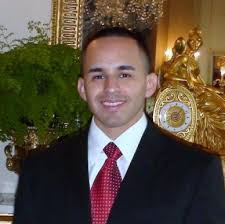
Hector AvellanedaHector Avellaneda is from Houston, Texas and has a passion for entrepreneurship, economics, finance and gold. This, however, only materialized after Hector came face to face with a untold truth and one of the harshest lessons that only a life experience can teach you, as long as you are willing to dig deep in search for answers.

Hector, the son of Mexican immigrants to the US, grew up in poverty and was statistically destined to a life of poverty in adulthood. However, Hector wanted to defy this probability and worked extremely hard in school. In typical fashion, Hector accumulated college debt and was ironically facing a poorer life than his own parents despite a larger mean income.

Hector questioned the college debt system and deeply explored how US citizens have grown accustomed to taking on such debt. Further research led him to realise that middle-class America could see their wealth wiped out due to an impending dollar crisis. Subsequently, Hector wrote an economics and finance-related book to share his findings and to suggest what you can do to protect your wealth.

Economics and Finance Themes:

In this interview, Hector mentions and discusses: poverty, wealth, college debt, economic crisis, the Great Depression, loans, credit card debt, poverty trap, psychological effects of poverty, deficit, free markets, incentives, purchasing power, inflation, taxes, quantitative easing, money supply, the Minsky Moment, financial literacy, properties of money, fiat currency, the US Federal Reserve, stock markets, crypto-currencies, the Gold Standard.

Hector’s Influencers:

His dad and a college counsellor. Find out more in his book ‘De-CLASS-ified’ (see below for a link to Amazon and get an e-copy on Amazon for a bargain $2.99).

In this episode, you will learn:

  • how Hector had all the hallmarks of continuing to live a life of poverty in America.
  • about Hector being bullied in school because of the charitable clothes he wore .
  • how Hectors’ father and mother’s sense of hard-work and money management became naturally ingrained in him.
  • how Hector defied and beat the statistical odds of remaining poor for life due to a strong work ethic and a desire to succeed.
  • how hard work in school can open up many opportunities in life including an internship with NASA.
  • the importance of being mentored.
  • how easy credit for college education made Hector ‘s financial position worse off than his parents.
  • what triggered Hector into discovering the truth about the American economy and the college debt system.
  • the risks in the US economy.
  • why the US could be faced with a massive default on student loans and what is triggering this today.
  • how it became acceptable to borrow to pay for college.
  • why Hector’s $50,000 student debt became a blessing in disguise.
  • how Hector’s research into the US college debt crisis resulted in him writing an economics and finance book without having a background in these disciplines.
  • why the middle class in America is about to collapse financially.
  • why the US government will seize money from an American workers’ wages.
  • what type of college degree is not in demand in US anymore.
  • what you should do today when making a college or subject choice.
  • what it takes to have financial and economic freedom.
  • about the 7 properties of money.
  • what countries are doing today with their dollar reserves.
  • about who actually owns the Federal Reserve Bank of America. Hint: It’s not the US government!
  • what you can do to protect your wealth from being transferred to others.
  • who are buying up gold and for what reason.

On Living in Poverty:

  • ‘I was pretty poor. I lived in a small wooden type of house with a sheet metal roof’ – Hector Avellaneda
  • ‘Growing up I saw my parents argue and fight about money and not having enough money to take a family trip or a vacation or just be able to enjoy a day out on the town and so my parents were always very stressed out, always kind of arguing and fighting’ -Hector Avellaneda
  • ‘I was made fun off in school because a lot of clothes that I wore was donated from the local church or local program, a local donation program’ – Hector Avellaneda
  • ‘I always told myself that I was going to do whatever it took to make sure that I was successful in life and to make sure that I got out of that poverty that I had seen as a child’ – Hector Avellaneda

Advice:

  • “Today we need computer scientists, we need computer programmers, we need engineers – those are the degrees that are in demand  and I myself sit on the board directors of a non-profit organization here in Houston that actually encourages kids to go to college and major in things like engineering, major in things like computer science because I think those are the degrees that we need in today’s economy” – Hector Avellaneda.

  • ‘To have financial and economic freedom, I had to become an entrepreneur’ – Hector Avellaneda

    Click To Tweet

  • “For anyone who is going to college or who is thinking about going to college today, I would say ‘do some real research and figure out what pay expectations you will have upon graduation’ and, with that said, make sure that, if you are going to go to college, major in a degree that will be able to sustain your way of life that you want to live and if you don’t want to major in something like engineering or computer science because that’s just not what you are passionate for then don’t take on any student debt” – Hector Avellaneda.

  • Those holding onto paper assets are at risk of losing it all to those holding real tangible assets like gold and silver, land and claims on oil fields.

Personal Habits:

  • A hard worker, head-strong, determined, passionate and a desire to find out the truth through research, self-education, reading and learning.
  • Hector had a desire to find out what went wrong in his life as he was mis-sold the American idea of taking on college debt . With a limited exposure to finance and economics in college, $50,000 of college debt and unemployed due to the Great Recession of 2008, Hector read widely to learn and understand about the truth behind the US economy, the trillions of dollars of debt and the risks of a mass student loan default and a dollar crisis. 

Takeaway:

‘We have a generation of college students who are graduating into financial bondage’ – Hector

Click To Tweet

The free markets have been distorted due to all the incentives that have been created in the US economy.

‘Paper money eventually returns to its intrinsic value – zero’ – Voltaire

Click To Tweet

Before making a college decision, do a course that will allow you to earn an income to pay off your debt, otherwise do not take on debt.

Increase your understanding of financial literacy. Read books on money.

Schools and Universities need to teach more economics, finance and financial literacy subjects to all students.

Self-education is very important – read books and get access to the necessary information online.

‘Money is nothing more than an economic tool by which we convert our time and freedom’ – Hector

Click To Tweet

Recommended Books:

  • The Death of Money by James Rickards
  • De-CLASS-ified: The Fall of the Middle Class and Rise of the Internet Entrepreneur by Hector Avellaneda

Favorite Internet Resource:

  • iCloud

Where to Find Hector Avellaneda:

  • Gold and Silver Buyer Club
  • New Class Rising
  • Podcast on iTunes
http://traffic.libsyn.com/economicrockstar/005_Hector_Avellaneda.mp3

Podcast: Play in new window | Download

Frank Conway

Frank Conway is founder of Economic Rockstar and lecturer of economics, finance and statistics. Read More…

View My Blog Posts

Youtube Sub

Become a Patron of the Economic Rockstar Podcast

patreon

Ireland’s Economy by the Numbers

Leaving Cert Economics: Ireland’s Economy  Click here to download a workbook on Ireland’s Economy so that you can add your own notes. [Original size] Ireland’s Economy by fconway

Categories

Subscribe and Never Miss An Episode

itunes-logo

Recent Posts

  • Ireland’s Economy by the Numbers April 8, 2019
  • 174: Wendy Carlin on The Core Project, Capitalism, Democracy and Normative Statements February 13, 2019
  • 173: Stephen Wright on Core Econ as a Learning Resource for Mainstream Economics January 28, 2019
  • 172: Best of 2018 Part 2: From the Great Depression to Futurism; Institutions, Individualism, Cooperation and Reciprocity January 22, 2019
  • 171: Best of 2018 Part 1 January 3, 2019

Copyright © 2026 · Podcast Pro Theme on Genesis Framework · WordPress · Log in

This website uses cookies to improve your experience. We'll assume you're ok with this, but you can opt-out if you wish. Accept Reject Read More
Privacy Policy

Privacy Overview

This website uses cookies to improve your experience while you navigate through the website. Out of these, the cookies that are categorized as necessary are stored on your browser as they are essential for the working of basic functionalities of the website. We also use third-party cookies that help us analyze and understand how you use this website. These cookies will be stored in your browser only with your consent. You also have the option to opt-out of these cookies. But opting out of some of these cookies may affect your browsing experience.
Necessary
Always Enabled
Necessary cookies are absolutely essential for the website to function properly. This category only includes cookies that ensures basic functionalities and security features of the website. These cookies do not store any personal information.
Non-necessary
Any cookies that may not be particularly necessary for the website to function and is used specifically to collect user personal data via analytics, ads, other embedded contents are termed as non-necessary cookies. It is mandatory to procure user consent prior to running these cookies on your website.
SAVE & ACCEPT