• ABOUT
  • RESOURCES
  • PODCAST
  • BOOKS
  • BLOG
  • SUPPORTERS
  • QFA Financial Advice
  • CONTACT

Economic Rockstar

Connecting Brilliant Minds in Economics and Finance

105: Jana Gallus on the Economics of Non-Financial Awards and How Editor Retention on Wikipedia Can Be Maintained

September 29, 2016 by Frank

http://traffic.libsyn.com/economicrockstar/105_Jana_Gallus_Final.mp3
Play in New WindowDownload

105: Jana Gallus on the Economics of Non-Financial Awards and How Editor Retention on Wikipedia Can Be Maintained

Jana Gallus is an assistant professor in the strategy group at UCLA Anderson.jana-gallus-economic-rockstar
Professor Gallus’s research interests lie in behavioral economics and strategy, with a focus on non-financial incentives and their effects on decision-making.

Jana investigates how incentive schemes can be designed to enhance employee motivation and organizational performance in the private and nonprofit sectors.

Jana joined UCLA Anderson from Harvard, where she was a postdoctoral fellow. She received her Ph.D. in economics from the University of Zurich, with the distinction summa cum laude, and holds two master’s degrees, from Sciences Po Paris in France and the University of St. Gallen in Switzerland.

Jana describes herself as an economist with a keen interest in studying and designing incentives to motivate human behaviour.

Her research and teaching lie at the intersection of strategy, economics and psychology.

Economists:

In this episode, Jana discusses and mentions: Adam Smith, Bruno Frey, John Bates Clark, Bengt Holmström

Economics:

In this episode, Jana discusses and mentions: incentives, awards, field experiments, utility, happiness, motivation and social signals.

The Salient Features of Wikipedia from a Economists Perspective When Studying the Motivation for Non-Financial Awards:

In a study by Professor Jana Gallus, the future behaviour of editors on Wikipedia were analysed from a purely non-financial awards perspective. A digital award was given to some newcomers who displayed it on their Wikipedia profile page. This group were compared to another group of newcomers who did not receive the digital award. Professor Gallus identified that non-financial awards are a motivating factor to determine future and continued behavior.

  1. The use of pseudonyms. This makes it possible to study purely symbolic awards without any material or career-related benefits. Normally when we study awards in the field of economics, it is difficult to argue that any motivational effect that you might find was due to the honour and the recognition rather than to the pecuniary benefit that comes along with most awards. Using pseudonyms on Wikipedia, nobody in the real world knows who it is, and  this allows a study of purely symbolic honors.
  1. The ability to randomize. This allows you to cleanly identify the effects of receiving an award on future behavior. Filtering out newcomers and ‘vandals’, allows the handing out of a ‘Newcomer Award’. The future behavior of those who receive the award, the treatment group, are compared to a control group (also newcomers who were not given an award). The only difference between both groups is the receipt of the ‘Newcomer Award’ which was given out by chance. So no other variables or characteristics were identified to discriminate or favor the newcomers.

The digital award for newcomers, a purely symbolic award, increases the retention rate of newcomers by 20% in the following month. This result was evident even in ‘high-powered’ editors and any minor editing activity was removed from the study, allowing for a more robust finding. The effect of this reward persists for a year and only then does the effect become insignificant.

Writing Tips:

  1. You must be motivated, love what you’re doing and be intrigued to know more about what you’re doing.
  2. Make sure to reserve time for active thinking. This seems so trivial but in today’s day and age of podcasting, you need to be optimizing all the time. Whether you’re cooking or exercising, every second can be optimized. It requires self-discipline to reserve some time for active thinking.
  3. Get a ‘birds-eye view’ of the research that you are doing by having amazing discussions with other researchers in your field of study. Discussions should not be on the nitty-gritty focused on the detail but more on the general phenomenon and why it is of interest.
  4. Always carry around a small booklet to keep notes.
  5. At the weekends, work from coffee houses and have lively discussions with others on topics that may not of interest immediately but may form the basis of your next research paper.
  6. Read books. By spending time reading a book, you are devoting more time on the subject matter than you would otherwise by reading an article or paper. You therefore deal with something more on a fundamental level and your thoughts keep coming back to this for a longer period of time than would be possible when you just read articles.

Papers:

  • The power of awards (with Bruno S. Frey). The Economists’ Voice, 2014, 11(1): 1–5.
  • Open issues in happiness research (with Bruno S. Frey and Lasse Steiner). International Review of Economics, 2014, 61(2): 115–125.
  • Other publications by Professor Gallus can be found here.

Where to Find Professor Gallus:

  • Website: www.janagallus.com
  • UCLA Anderson: www.anderson.ucla.edu/faculty/strategy/faculty/gallus

Links:

  • Wikipedia
  • Duolingo
  • Stack Exchange
  • Stack Overflow

Books:

  • Origins of Genius: Darwinian Perspectives on Creativity by Dean Keith Simonton
  • The Celebration of Heroes: Prestige as a Control System by William J. Goode
  • Models of the Man: Essays in Memory of Herbert Simon edited by Mie Augier and James G. March
  • What Works: Gender Equality By Design by Iris Bohnet
  • Arts and Economics: Analysis and Cultural Policy by Bruno S. Frey
  • Not Just for the Money: An Economic Theory of Personal Motivation by Bruno S. Frey
  • Happiness: A Revolution in Economics by Bruno S. Frey

http://traffic.libsyn.com/economicrockstar/105_Jana_Gallus_Final.mp3

Podcast: Play in new window | Download

069: Diane Coyle on GDP, Its Shortcomings and Alternative Measures

January 21, 2016 by Frank

http://traffic.libsyn.com/economicrockstar/069_Diane_Coyle.mp3
Play in New WindowDownload

069: Diane Coyle on GDP, Its Shortcomings and Alternative Measures

Diane Coyle is Professor of Economics at the University of Manchester and runs the consultancy Enlightenment Economics.diane coyle

Diane is Vice-Chair of the BBC Trust and was a member of the Migration Advisory Committee and a member of the Competition Commission. She is also a visiting research associate at the University of Oxford’s Smith School of Enterprise and the Environment. 

Diane specialises in competition analysis and the economics of new technologies and globalisation.

Diane is the author of several books, including GDP: A Brief But Affectionate History, The Economics of Enough, The Soulful Science, Sex, Drugs and Economics and Paradoxes of Prosperity.

She was previously Economics Editor of The Independent and before that worked at the Treasury and in the private sector as an economist.

Diane has a PhD from Harvard and was awarded the OBE in January 2009.

Using happiness is an excuse for inactivity – Diane Coyle

Click To Tweet

Influencers:

Peter Sinclair (University of Birmingham) and Ben Friedman (Harvard).

Economists:

In this interview, Diane mentions: Adam Smith, John Stuart Mill, Sir Charles Bean, Daron Acemoglu, Thomas Piketty, John McMillan, Tim Harford, Peter Sinclair (University of Birmingham) and Ben Friedman (Harvard).

Economics:

In this interview, Diane mentions: GDP, budget deficit, fiscal policy, monetary policy, interest rates, growth, employment, unemployment, Human Development Index, Gross National Happiness Index, happiness, hysteresis, inequality, financial markets, derivatives and leverage.

In this episode you will learn:

  • what is GDP and how it is measured.
  • the complications with understanding the meaning of GDP.
  • the historical origins of GDP and why it is used to measure our economy.
  • the complications in measuring GDP.
  • how GDP data is still collected in such an ‘old-fashioned’ way and the new methods to collecting data.
  • about the uncertainty and margin of error in GDP statistics.
  • why it is wrong to make fiscal policy, monetary policy and interest rate decisions on GDP statistics.
  • what proxy variables were used to measure economic activity before GDP was introduced.
  • why we should re-think the meaning of the economy.
  • why GDP today doesn’t work in its present form and if there is an alternative.
  • how countries can use GDP and GNP measures to portray different economic conditions.
  • the difference between GDP and GNP.
  • the concerning use of ‘administrative statistics’ by countries to falsify economic growth.
  • whether it’s correct to include illegal drug activity and prostitution in measuring GDP.
  • why measuring happiness and well-being should be of little importance when measuring GDP.
  • why Diane is sceptical about the Happiness Index.
  • the reason why economics was coined by Thomas Carlyle as the the ‘dismal science’.
  • who is to blame for the financial crisis of 2007/2008.
  • about the UK’s over-reliance on the financial sector and its role in measuring GDP.
  • about the uncertainty that would exist if the UK withdrew from the EU.
  • the policy factors required to create a sustainable society and a stable government.


It’s just so easy now to download data from the internet and run through statistical packages and get some results. And I think a lot of professional economists are guilty of not rethinking about their data enough – Diane Coyle

You cannot think about the economy mechanically – Diane Coyle

Click To Tweet

The way we measure GDP now is really closely linked to Keynesian macroeconomic theory and a very famous definition he gave of  what total output in the economy is, that it’s consumer spending, government spending, investment spending and the balance of payments – Diane Coyle

There is no benefit for society in a lot of what happens in the financial markets – Diane Coyle

Click To Tweet

Resources:

  • The Enlightenment Economist
  • Doomsday Book  – Earliest recording of economic activity.
  • Time to ditch GDP as a measure of economic well-being by Diane Coyle 
  • The Review of Economics and Statistics

Favorite Internet Resource:

  • Twitter

If you pick the right people to follow it acts as a brilliant editor of all the interesting information that you might want to know and it’s like having a personalised newspaper – Diane Coyle

Books:

  • GDP: A Brief But Affectionate History by Diane Coyle
  • The Soulful Science: What Economists Really Do and Why It Matters by Diane Coyle
  • The Economics of Enough: How to Run the Economy as If the Future Matters by Diane Coyle
  • Sex, Drugs and Economics: An Unconventional Introduction to Economics by Diane Coyle
  • Paradoxes of Prosperity: Why the New Capitalism Benefits All by Diane Coyle
  • Reinventing the Bazaar: A natural History of Markets by John McMillan
  • The Undercover Economist by Tim Harford
  • The Undercover Economist Strikes Back: How to Run or Ruin an Economy by Tim Harford


http://traffic.libsyn.com/economicrockstar/069_Diane_Coyle.mp3

Podcast: Play in new window | Download
050: Dan Ariely on Irrational Behavior and the Importance of Our Environment When Making Decisions

September 16, 2015 by Frank

http://traffic.libsyn.com/economicrockstar/050_Dan_Ariely_Final.mp3
Play in New WindowDownload

050: Dan Ariely on Irrational Behavior and the Importance of Our Environment When Making Decisions

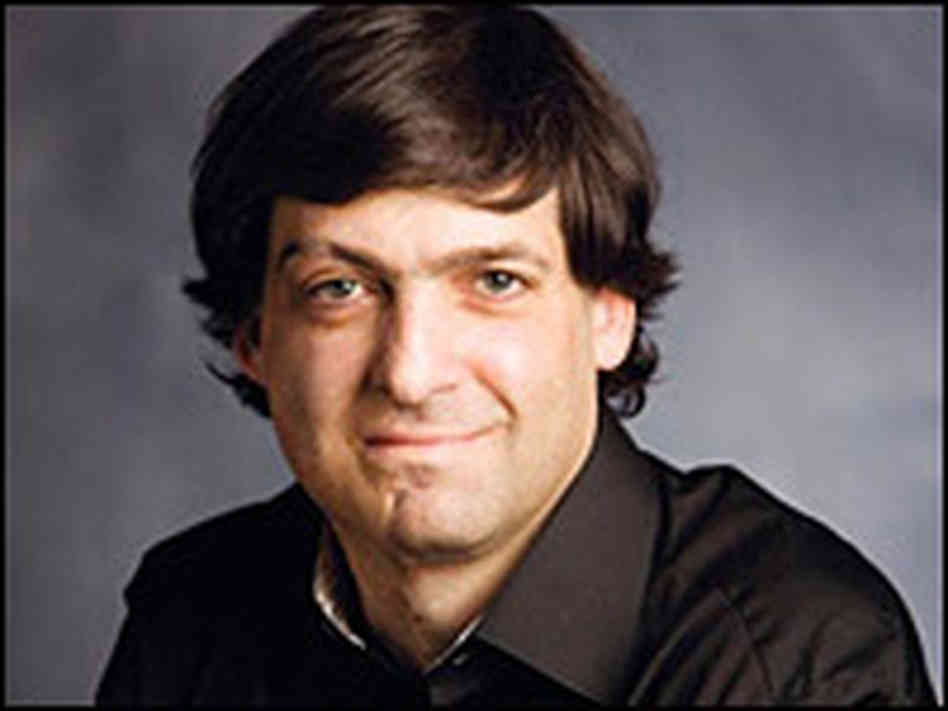
Dan Ariely is Professor of Psychology & Behavioral Economics at Duke University in North Carolina. Dan’s interests spanDan Ariely a wide range of behaviors, and his sometimes unusual experiments are consistently interesting, amusing and informative, demonstrating profound ideas that fly in the face of common wisdom.

In addition to appointments at the Fuqua School of Business, the Center for Cognitive Neuroscience, the Department of Economics, and the School of Medicine at Duke University, Dan is also a founding member of the Center for Advanced Hindsight.

Dan is the author of the New York Times bestsellers Predictably Irrational, The Upside of Irrationality, and The Honest Truth About Dishonesty and his latest book Irrationally Yours is now available.

Dan has received numerous honors and awards in medicine, psychology and economics.

Dan received a B.A in Psychology from Tel Aviv University, an M.A and PhD in Cognitive Psychology from University of North Carolina and another PhD in Business Administration from Duke University.

Influencer:

Professor Hanan Frenk, Tel Aviv University

Economists:

In this interview, Dan mentions: Brian Wansink. 

Psychologists:

In this interview, Dan mentions: Mike Norton and Elizabeth Dunn.

Economics:

In this interview, Dan mentions and discusses: Tragedy of the Commons, behavioral economics, public goods, pricing, decision-making, choice architecture, Ulysses Contract, happiness, asymmetric dominance effect and choice.

Takeaway:

“Think about your environment and always experiment” – Dan Ariely

Click To Tweet

In this episode, you will learn:

  • about Dan Ariely’s traumatic experience resulting in severe burns.
  • how Dan Ariely found his love for psychology and behavioral economics.
  • why Dan will not be teaching his Irrational Behavior course on Coursera.
  • the problems with MOOCs like Coursera and why it is making the wrong choice regarding its open platform system.
  • why Dan was turned down for his first book – a cookbook and what advice he was given by a publisher.
  • why we as humans make very costly mistakes and what we can do about it.
  • how people eat more than they realise and how experiments in economics have shown this.
  • why we are bad at doing things that makes us happy.
  • the most common mistake companies make when making decisions or processing information.
  • how companies can avoid making mistakes.
  • if anger is a good or bad emotion.
  • the most surprising finding from Dan Ariely’s research.
  • the most surprising question put to Ask Ariely.
  • how to get poor people in Kenya to save.
  • how your environment matters when making decisions.

Quotes by Dan Ariely in Episode 50 of the Economic Rockstar Podcast:

“Choice architecture is this idea that our environment influences how we make decisions” – Dan Ariely

Click To Tweet

“In the process of trying to not make any mistakes, companies create environments that punish risk and therefore punish ingenuity and growth” – Dan Ariely

“Tim is a very interesting character and he is experimenting on himself. We have to realize that his experiments have the validity that they work very well for him” – Dan Ariely

On Coursera:

“I think we do need rules for trolls. I think that pricing is a very good mechanism for some things and I’m not sure it’s a mechanism for all for all things like this. The reality is that Coursera probably over samples from the people on the tail of the distribution in terms of mental stability.” – Dan Ariely

Books:

  • Predictably Irrational by Dan Ariely
  • The Upside of Irrationality by Dan Ariely
  • The Honest Truth About Dishonesty by Dan Ariely
  • Irrationally Yours by Dan Ariely
  • The 4 Hour Chef by Tim Ferriss
  • Happy Money: The Science of Smarter Spending by Elizabeth Dunn and Michael Norton

Resources Mentioned by Dan Ariely:

  • Kitchen Safe: www.thekitchensafe.com
  • Coursera: www.coursera.org

Where to Find Dan Ariely:

  • Website: www.danariely.com
  • Twitter: @danariely
  • LinkedIn: Dan Ariely
  • Ted: www.ted.com

Transcript:

The full transcript of this episode with Dan Ariely will be available shortly.

Thanks for Listening!

Thanks so much for joining me again this week. Have some feedback you’d like to share? Leave a note in the comment section below!

If you enjoyed this episode, please share it using the social media buttons you see at the bottom of the post.

Also, please leave an honest review for the Economic Rockstar Podcast on iTunes! Ratings and reviews are extremely helpful and greatly appreciated! They do matter in the rankings of the show, and I read each and every one of them.

http://traffic.libsyn.com/economicrockstar/050_Dan_Ariely_Final.mp3

Podcast: Play in new window | Download

044: Nancy Folbre on Feminist Economics and the Care Economy

August 6, 2015 by Frank

http://traffic.libsyn.com/economicrockstar/044_Nancy_Folbre_Final1.mp3
Play in New WindowDownload

044: Nancy Folbre on Feminist Economics and the Care Economy

Nancy Folbre is a recently retired Professor of Economics at the University of Massachusetts, Amherst andNancy Folbrecurrently directs a research program of gender and care work at the Political Economy Research Institute.

Professor Folbre’s research focuses on the interface between feminist theory and political economy, with a particular focus on the work of caring for others.

Nancy was elected president of the International Association for Feminist Economics (IAFFE) in 2002, has been an associate editor of the Journal Feminist Economics since 1995, and is also an editorial assistant of the Journal of Women, Politics & Policy.

Nancy is recipient of a MacArthur Fellowship, and she has consulted for the United Nations Human Development Office, the World Bank and other organizations.

Professor Folbre has also written extensively on the social organization of time, namely the time allotted to care for children and the elderly and how family policies and social institutions limit the choices people can make between paid and unpaid work.

She is a contributor to the New York Times Economix blog.

Nancy’s book ‘Saving State U‘ (New Press, 2010) makes a case for strengthening public support for higher education in the United States.

Other recent books include ‘Greed, Lust, and Gender: A History of Economic Ideas’ (Oxford University Press, 2009) and ‘Valuing Children: Rethinking the Economics of the Family’ (Harvard University Press, 2008).

Nancy received a B.A. in philosophy from the University of Texas at Austin in 1971, an M.A. in Latin American studies from UT Austin in 1973, and a Ph.D. in economics from the University of Massachusetts, Amherst in 1979.

In this episode, you will learn:

  • why Nancy Folbre decided to study economics.
  • how the household is very much like the market economy.
  • about feminist household economics.
  • what the underlying principles and foundation to feminist economics.
  • why we should see unpaid work as part of the economy.
  • how the state and the market has reinforced the patriarchal system.
  • why the capitalist system, ironically, has downside effects on women today despite the benefits it provides.
  • why we should adopt the Scandinavian model of paternal responsibility.
  • about the unmeasured ‘Care Economy’ where people perform unpaid work.
  • about the opportunity cost to care work.
  • why Replacement Cost is a better proxy from a National Accounting perspective for measuring the size of the Care Economy.
  • why people are intrinsically motivated to care and that money is not an issue.
  • why Nancy Folbre strongly believes that we should think carefully about how we reward care work.
  • about the ‘Care Penalty’ and why we shouldn’t take advantage of the care workers motivation to work in the care industry.
  • about the societal pressures on a man who decides to stay at home and be the care giver.
  • why we should be providing a better account of the costs and benefits of raising kids.
  • if women have a ‘wage-penalty’ as they are, in most cases, the care-giver.
  • whether we can capture the value spent by parents caring for their children.
  • if intrinsic values of happiness lead to economic benefits for household.
  • if children of developed and less-developed countries are treated differently by their parents in terms of their perception of value.
  • about the rapid decline in fertility rates in India, Asia and Latin America.
  • why self-interest was always described in gender terms and why it was always permissible for men to be self-interested than women.
  • if having more women involved in economics and the economy would lead to better outcomes.

Economists:

In this interview, Nancy mentions and discusses: Gary Becker, Shoshana Grossbard, Friedrich Engels and Adam Smith.

Economics:

In this interview, Nancy mentions and discusses: feminist economics, market choice, economics of the household, altruism, rationality, interdependent utility, collective bargaining, choice, efficiency, inequality, incentives, opportunity cost, replacement cost, free market, Invisible Hand and happiness.

Quotes by Professor Folbre in Episode 044 of the Economic Rockstar Podcast:

Work can be very productive and create value for society even if it’s unpaid – Nancy Folbre

Click To Tweet

“Definitions of femininity and masculinity are changing in a positive way” – Nancy Folbre

Click To Tweet

“Smith had a lot of confidence in the pursuit of individual self-interest” – Nancy Folbre

Click To Tweet

Many people have taken Smith’s praise of the free market as an endorsement of selfish behavior, that it doesn’t matter if you think only of yourself because in a market economy we can be confident that everything will turn out just fine.  What I argue in the Invisible Heart is that’s really incorrect. The market economy really depends to a very great extent on a sense of commitment and obligation to other people of trust and reciprocity and concern for the welfare of others. That affects overall economic organisation and success in some pretty profound ways – Nancy Folbre

“We need to change the way we think about work and about value” – Nancy Folbre

Click To Tweet

Leading happy and worthwhile lives is kinda the point of the whole economic enterprise and sometimes we lose sight of that. And there’s certainly a lot of evidence that what makes people happy is good human relationships, having close ties with family and friends and community. If we appreciated that a little bit more fully, we could organise our economic system a lot more successfully – Nancy Folbre

“I think Feminist Economics is a part of the whole heterodox challenge to the mainstream economics, and I fell good about that” – Nancy Folbre

Recommended Books:

  • Valuing Children: Rethinking the Economics of the Family by Nancy Folbre
  • Greed, Lust, and Gender: A History of Economic Ideas by Nancy Folbre
  • Saving State U by Nancy Folbre
  • The Invisible Heart by Nancy Folbre
  • The Condition of the Working-Class in England in 1844 by Friedrich Engels
  • The Invisible Hand by Adam Smith

Blog:

  • Care Talk by Nancy Folbre

Conference:

  • International Association for Feminist Economics

http://traffic.libsyn.com/economicrockstar/044_Nancy_Folbre_Final1.mp3

Podcast: Play in new window | Download

038: Leah Bell on Being an Angry Grad and Setting Yourself Up for a Life of Success

June 25, 2015 by Frank

http://traffic.libsyn.com/economicrockstar/038_Leah_Bell_Final.mp3
Play in New WindowDownload

038: Leah Bell on Being an Angry Grad and Setting Yourself Up for a Life of Success

Leah BellLeah Bell spent tens of thousands of dollars on a college education for a degree in Education with the same hope of getting a job one day.  After struggling to find a teaching job as an Elementary school teacher, Leah had to work at a minimum part-time job to supplement her teaching salary. However, the school closed and she lost her job. Leah took on a job related to sales. But after a few years she realized that she wanted nothing more than to stay at home with her son. But with student debt and rising prices, it was extremely difficult on one income.

Leah Bell learned the most about life, not in the classrooms of the colleges she attended, but in the years following. After realizing the struggle in the job market, the difficulty of paying off student loans, and the heartbreak of sacrificing priceless time with family to meet financial needs, she and her husband have devoted their lives to sparing people of this depressing fate through their company Neotrep™, providing entrepreneurs with affordable education and tools to succeed. She recently wrote the book The Angry Grad to help prospective students and recent graduates choose the route of entrepreneurship instead of the unstable job world.

Economics:

Mortgage, student loan, debt, competition, labor, happiness, tax and return on investment.

Economics and finance suddenly became personal. It became emotional and, at that time, I became interested in it because it’s not just about numbers. I want people to get their finances under control so they can have a better life and give their children a better life – Leah Bell.

Economists:

Paul Dolan and John Gathergood.

Influencer:

Robert Kiyosaki

Takeaway:

“Always be asking questions, always be willing to learn and take advantage of all of the resources that are out there” – Leah Bell.

Find Out:

  • what is the average student debt?
  • how a college degree is different today than it was just two or three decades ago.
  • why it’s so difficult for college graduates to find jobs and pay back their student loans.
  • how the future will look if we continue teaching young people that debt is the only way to afford a house, a car and an education.
  • what other options are there for people who are considering an education.
  • how debt is not the only way to get through college.
  • if we are paying more for college than we can hope to get back.
  • if it’s still worth taking on so much debt to get a degree.
  • if we’re living in a school loan debt bubble.
  • what we can do about all this?

The Disillusioned Student

High-school students are being blind-sided and do not truly understand the debt that they will accumulate while attending college. Educators and college and career guidance counsellors are failing high-school students by only providing a one-sided argument to going to college. They emphasise the pros of going to college and, in most cases, fail to disclose the cons of going to college in terms of the costs, term loans and the interest repayments. Educators prepare high-school students for college in terms of the grades but lack the financial planning required by the student and their parents.

Typically, a $30,000 loan, which is approximately the average student debt in the US, will amount to $60,000 in capital and interest repayments over the life the loan. However, in many cases, students fail to meet these repayments which equate to upward of $1,000 per month. Consequently, the loan becomes structured to suit the needs of the graduate by acknowledging their current income status and the number of children they may have.

People are putting life events on hold because of the amount of debt they are in – Leah Bell.

Many graduates have become disillusioned with the education system in terms of the costs and the likelihood of repaying it with jobs that do not exist for the training and preparation that they had done at college. For example, teachers are supplementing their teaching salary (if they have a teaching job that is) with a second income earned at shoe stores and restaurants.

By the time students plan to have their entire loan paid off, their going to have double maybe triple the total amount that they originally took out – Leah Bell.

Unfortunately, parents do not understand the reality of the situation. When they themselves were graduating from college, they typically did well relative to those who didn’t attend. Then, jobs weren’t competitive but today, almost everyone has a college degree and finding a job is so much greater than it was then. Now, you need a masters degree to be competitive.

Since there is a demand for college places and lenders are willing to give education loans, colleges  can charge whatever they want. Colleges are aware of this and are raising their rates to astronomical levels. Colleges too are borrowing to finance the development of their campus and their sports and recreational facilities. Football stadiums are being built to professional standards and who best to service this debt than the incoming college students who are paying the ever-increasing fees.

Students are paying more for a college experience than for a college education – Leah Bell

“The college experience is setting up people to fail”. Unless you’re going to college for an engineering degree or something in computer science or physics, something math or science heavy, those are the jobs that you make a decent amount coming out of college. But not everyone fits this mould. Some want to do something in education, social science, music, photography or the arts. Those, however, are on the lower end of the pay scale.

Quotes by Leah Bell on the Economic Rockstar podcast:

“We’re living a very different life than the one we were expecting” – Leah Bell.

“The highest taxed person is the employee” – Leah Bell.

“Why people are encouraged to go to college and get a job is just for the tax reasons” – Leah Bell.

“Set yourself up for a life of success” – Leah Bell.

Click To Tweet

If you can just discipline yourself enough to sit down and learn and go out and try things and be willing to fail and get back up again, you can do anything – Leah Bell.

You’re capped out at your salary and your employer is using your strengths to become really wealthy. What upsets me is people don’t look inside themselves and see all the potential they have and what they can do for themselves – Leah Bell.

“There is no limit to what you can do. No-one is limiting you” – Leah Bell.

Click To Tweet

“I feel that when I wrote this book, I was writing it to myself 12 years ago” – Leah Bell.

Get off your butt. Get some confidence. Do things different. Step out of the box and be different. Don’t be what everyone’s telling you you have to be – Leah Bell.

“The only person that will ever hold you back is you” – Leah Bell.

Click To Tweet

I deal with doubts every single day – whether or not I can do what I wan to do. Do I have enough time in the day? Am I good enough to do it? That’s so natural – Leah Bell.

There’s no one in the world that has not failed except for the people who don’t try. And the people who don’t try never succeed because they never try to get to the point of success – Leah Bell.

“A winner never quits and a quitter never wins” – Napoleon Hill

Click To Tweet

Blogs Mentioned in this Episode:

  • www.neotrep.com by Leah and Walt Bell
  • www.theangrygrad.com by Leah Bell
  • www.smartpassiveincome.com by Pat Flynn
  • www.flippedlifestyle.com by Shane and Jocelyn Sams

Podcast Episodes Mentioned in this Episode:

  • SPI 122 : From Teachers to Totally Rocking it Online – Shane and Jocelyn Sams Share their Success Story – Smart Passive Income.
  • 007: Ryan Blair – Gangster turned Millionaire on Decision-Making, Game Theory and Incentives – Economic Rockstar.

Recommended Books:

  • The Angry Grad: Your Guide to Student Loans, a Struggling Economy, and Becoming Your Own Boss by Leah Bell
  • Spirit of Apollo by Sidney Newton Bremer
  • The 4-Hour Workweek by Tim Ferriss
  • Nothing to Lose, Everything to Gain: How I Went from Gang Member to Multimillionaire Entrepreneur by Ryan Blair 
  • Rich Dad Poor Dad: What the Rich Teach Their Kids About Money That the Poor and Middle Class Do Not! by Robert Kiyosaki 

Music:

It’s Not Right For You by The Script

This song inspired Leah during the writing of her book The Angry Grad.

Where to Find Leah Bell:

  • Twitter: @AngryGradBook
  • Facebook: The Angry Grad
  • Website: www.theangrygrad.com
http://traffic.libsyn.com/economicrockstar/038_Leah_Bell_Final.mp3

Podcast: Play in new window | Download

025: Dan Hamermesh on the Economics of Beauty: Attractive People Are More Successful

March 26, 2015 by Frank

http://traffic.libsyn.com/economicrockstar/025_Dan_Hamermesh.mp3
Play in New WindowDownload

025: Dan Hamermesh on the Economics of Beauty: Attractive People Are More Successful 

Dan Hamermesh is Professor in Economics at the Royal Holloway University of London and at thePortraitHamermeshwithoutJacket University of Texas at Austin. Dan researches the economics of beauty. He received his Ph.D. from Yale and has since taught at Princeton, at Michigan State, and at Texas. He has held visiting professorships at universities in North America, Europe, Australia and Asia, and lectured at almost 250 universities in 48 states and 33 foreign countries. His research, published in nearly 100 refereed papers in scholarly journals, has concentrated on time use, labor demand, discrimination, academic labor markets and unusual applications of labor economics (to beauty, sleep and suicide).

Professor Hamermesh has received many notable and distinguished honors and awards in recognition for his contribution to the field of economics. These include the Mincer Award and the IZA Prize in Labor Economics, the John R. Commons Award, as well as many teaching of excellence awards.

Daniel’s teaching include Microeconomics; Macroeconomics; Econometrics; Economics of Labor and Economics of Life.

Daniel is the author of many books including Demand for Labor: The Neglected Side of the Market, Beauty Pays: Why Attractive People Are More Successful, The Economics of Time Use and Economics Is Everywhere. He is also a regular contributor to the Freakonomics blog and podcast.

Economic Themes:

In this interview, Dan mentions and discusses:

Speculation, inter-temporal maximisation, labor economics, incentives, wages, welfare payments, comparative advantage and externalities.

Economists:

In this interview, Dan mentions:

 John Maynard Keynes, Gary Becker, Gregg Lewis, Robert Lucas and Michael Lewis.

Influencers:

Gary Becker and Gregg Lewis

A lot of my stuff is the weird kind of stuff that Becker pioneered – Dan Hamermesh.

Click To Tweet

Gregg Lewis had a concern about data – about doing it right, making sure you were right. That’s a crucial thing. One has to take data seriously – Dan Hamermesh.

Advice:

Do what you think you’ll enjoy, because if you think you’ll enjoy it the odds are pretty good you’ll do well at it. You’ll be motivated to work hard and to succeed – Dan Hamermesh

Find out:

  • how economics can be used beyond the theoretical framework we see in textbooks.
  • why we should think about economics in things we see or do in the real world.
  • how students of economics can inspire their professors in a two-way mutual learning process.
  • how economics is everywhere – we just need to think, see and interpret.
  • how economics is enjoying a revival in reaching to mass audiences.
  • the benefits of economics books like Freakonomics, Beauty Pays, Dollars and Sex and Happiness By Design.
  • why we should read interesting books on economics.
  • if happiness is related to how beautiful or attractive you are.
  • why better-looking men are happier.
  • how to recognise if you are beautiful.
  • what good-looking attorneys, prostitutes, politicians and NFL quarter-backs have in common.
  • if economists should be studying the effects of being attractive and ugly.
  • if people have an increased need to become beautiful.
  • whether increased spending on cosmetics, hair and clothing by women will have a pay-off in the labor market.
  • if plastic surgery to alter beauty results in higher earnings.
  • about the disability benefits available to obese people.
  • if an obese person is perceived to be less beautiful than a slim person.
  • if there is a relationship between ugliness and where a person lives.
  • why Dan was interested in studying the economic impact of beauty.
  • which economic markets show evidence of the impact of beauty.
  • how Dan first met his wife of 42 years.
  • what Dan thinks of Abercrombie and Fitch’s ‘six-pack’ hiring policy.
  • if being attractive prohibits opportunities in the labor market.
  • if you should work in the private or public sector if you are good-looking.
  • how to identify an externality on the side-walk.
  • why you should do what you’ll enjoy rather than chasing the money.

Why Attractive People Are Happier and Economically Better-Off.

Attractive people have been found to be happier than not-so-good-looking people. Better-looking men receive higher incomes, which make them happier overall. Attractive women are also happier, but their happiness is more direct in that their happiness is the result of knowing that they are good-looking. Attractive women do receive higher incomes but this is not a direct link to their happiness as it is for men.

“The beauty itself is directly more salient to them than it was for men, even though the overall effect was identical for both genders” – Dan Hamermesh.

How someone realises if they are attractive or not is due to the reinforcement by other people in making you aware whether you are good-looking or ugly. “Better-looking babies are treated better by their parents and by other people. Better-looking 5 year olds are treated better in kindergarten than ugly ones. When you’re chosen for teams or go out in High School, the better-looking people do better. And they also, given even the amount of education they attained, they’ll do better in the labor market. They’ll get better jobs, make higher pay, even within the same occupation” (Dan Hamermesh). Good-looking attorneys, prostitutes, politicians and National Football League quarter-backs make higher pay than their uglier colleagues.

In the labor market, the top one-third of people who are considered good-looking will earn 10 to 12% more in income independent of any differences that might exist between them and those not considered good-looking.

A woman’s increased spending on cosmetics, hair and clothing will not increase her perceived beauty and will also have a minimal pay-off on the labor market for her. Plastic surgery for cosmetic reasons does not have a benefit in terms of increasing earnings in the labor market. You do it to feel good. It’s not an economic investment, it’s a feel-good investment.

“Unless a person is morbidly obese, people do not view him or her as being any uglier than anybody else, all things taking together” – Dan Hammermesh.

Does Location Determine Whether You Are Beautiful or Ugly?

I ask Dan whether a person’s good looks are determined by the area in which they live. The reason I ask this is based on our earlier discussion on why attractive people typically earn a higher income. It can be fair to suggest that cities or regions that pay more would consequently attract good-looking people.

Dan states that “if you’re a good-looking person, you’re going to flock to an area where your looks pay off more. And if you’re a bad-looking person, you might want to go away from an area where looks pay off. In the UK, where people who were born in Scotland and Wales, if they’re good-looking, are more likely to migrate to South-East England (London) than other people”.

Also, “people who were born in South-East England (London) who are bad-looking appear to move to outlying areas where their looks aren’t so important”.

“Looks not only affects where we live in terms of what we make, but where we choose to live in terms of where we spend out adult lives. You’ll go where you get the biggest bang for your buck or, in this case, the biggest pounds for your beauty.”

Economic Markets Where Beauty and Attractiveness Are Present:

  1. Labor Markets: Higher wages and better conditions.
  2. Marriage Markets: A good-looking woman will attract a man who earns more.
  3. Market on Unsecured Loans: Attractive people are more likely to get a loan and on better terms.

Recommended Books:

  • Beauty Pays: Why Attractive People Are More Successful by Dan Hamermesh.
  • Economics Is Everywhere by Dan Hamermesh.
  • The Worldly Philosophers: The Lives, Times And Ideas Of The Great Economic Thinkers by Robert L. Heilbroner.
  • Moneyball by Michael Lewis.

Where To Find Dan Hamermesh:

  • Facebook: BeautyPays
http://traffic.libsyn.com/economicrockstar/025_Dan_Hamermesh.mp3

Podcast: Play in new window | Download

021: Paul Dolan on the Economics of Happiness

February 26, 2015 by Frank

http://traffic.libsyn.com/economicrockstar/021_Paul_Dolan.mp3
Play in New WindowDownload

021: Paul Dolan on the Economics of Happiness

Paul Dolan is an internationally renowned expert on happiness, behaviour and public policy. He is currently a Professor of Behavioural Science in the Department of Social Policy at the London School of Economics and Political Science.

Paul has previously held academic posts at York, Newcastle, Sheffield and Imperial and he has been a visiting scholar at Princeton University, working with Daniel Kahneman.

Professor Dolan has over 100 peer-reviewed publications which cover many topics including behavioural science, subjective wellbeing, equity in health and health valuation.

Paul is currently a Member of the World Economic Forum Panel on Behavioural Science, the Chief Academic Advisor on Economic Appraisal for the UK Government’s Economic Service. He is also a member of National Academy of Sciences Panel on Wellbeing and of the Measuring National Wellbeing Advisory Forum for the Office for National Statistics in the UK.

Paul is the author of ‘Happiness by Design’.

Economic Themes:

In this interview, Paul mentions and discusses:  behavioral economics, happiness, nudging, trade-off, pleasure-purpose principle, production function, utility models, causal relationships, priming effects, System 1, System 2

Economists:

In this interview, Paul mentions: Daniel Kahneman, Amos Tversky, Irving Fischer and Gregory Mankiw.

“2,500 years of ethical discourse hasn’t resolved the question what is the source of happiness” – Paul Dolan

Find Out:

  • how Paul evolved from a health economist to a behavioral economist.
  • how many years of your life would you be willing to give up to avoid being anxious or being down.
  • if Aristotle and other philosophers are right in saying that happiness can only be defined on a death-bed when reflecting upon your life.
  • how to create a pleasure-purpose balance that’s right for you.
  • how you can use the production function process to produce happiness.
  • what is this production process that makes us happy.
  • if money makes you happier.
  • how happiness studies influence policy decision-making.
  • about the limitations to happiness research and what can be done to make better research.
  • what nudging is.
  • how nudging by policy-makers can make you happier.
  • about the morality of nudging.
  • how supermarkets can nudge you into buying their breads and cakes.
  • why self-help books are a waste of money as they try to change your mindset.
  • why Paul’s book, ‘Happiness By Design’ will help you to change what you do.
  • about Paul’s ‘3 Pillars of Happiness’ – Deciding, Designing and Doing.
  • how designing your life to make things simple and easy can help you achieve your goals.
  • about the essence of mindfulness.
  • why people who are easily distracted are more likely to be less happy.
  • if your phone can make you unhappy and what you should do about it.
  • why Paul is a ‘Happy Hammer’ (West Ham fan) despite never winning the league.
  • how the power of ‘hope’ can make you happy by allowing your imagination run freely.

Pleasure-Purpose Principle

Alongside pleasure sits purpose. Happy lives are ones that have a good balance between experiences that are pleasurable on the one hand and purposeful on the other. You need to find out the right balance between pleasure and purpose that is right for you.

The creation of happiness is like a product function of a firm. A firm uses inputs, puts them through a production process to create outputs.  A person can equally use inputs like money, marriage, sex, jobs and watching television that are stimuli and we can convert them into happiness by a production process.

What is that production process? According to Paul this production process is called ‘Attention’. Attention is the ‘glue’ that keeps our lives together in terms of behaviour and happiness. The answer to the question ‘Does money make you happier?’ depends on how much attention you pay it.

“Most of economic modelling is based on looking at what people do, not what people say”

Challenges with Happiness Economics: “A lot of what we think we know comes from making inferences from associations. We need to to do more research and field experiments where we look at the causal impact of interventions on people’s happiness.”

You can beg, borrow and steal money, but you’re never going to get time that’s lost – Paul Dolan

Click To Tweet

Lost happiness is lost forever – Prof Paul Dolan

Click To Tweet

Nudging

Nudging can sometimes be overt and sometimes covert. It can take the form of financial incentives or below-conscious stimuli such as sounds, tastes and smells. The latter is known as priming effects.

According to Paul Dolan, the definition of a successful nudge is one where people, who are being nudged toward a particular direction with the expectation that they would be better-off, become happier as a result of being nudged.

Policy-makers assume after a nudge that people are better off, but research hasn’t captured the after-effects of these nudges to find out if they are indeed better off. Paul is all for designing nudges that make people happier, not by how he judges how they should be happier but according to what large datasets tell him what affects people’s happiness.

Listen to Paul’s 3 Pillars of Happiness: Deciding, Designing and Doing 

The Essence of Mindfulness: “We’re generally happier when we’re paying attention to what we’re doing and who we’re doing it with – living in the moment” – Paul Dolan.

“When you’re switching activities, your brain is using energy and it makes you more tired and less happy” – Paul Dolan.

“Being a football fan is a bit like faith. You can’t really change it once you’ve got it” – Paul Dolan.

Recommended Book:

  • Happiness By Design by Professor Paul Dolan

Where To Find Paul Dolan:

  • Twitter: @profpauldolan
  • Website: www.pauldolan.co.uk
  • Website: London School of Economics
http://traffic.libsyn.com/economicrockstar/021_Paul_Dolan.mp3

Podcast: Play in new window | Download

Frank Conway

Frank Conway is founder of Economic Rockstar and lecturer of economics, finance and statistics. Read More…

View My Blog Posts

Youtube Sub

Become a Patron of the Economic Rockstar Podcast

patreon

Ireland’s Economy by the Numbers

Leaving Cert Economics: Ireland’s Economy  Click here to download a workbook on Ireland’s Economy so that you can add your own notes. [Original size] Ireland’s Economy by fconway

Categories

Subscribe and Never Miss An Episode

itunes-logo

Recent Posts

  • Ireland’s Economy by the Numbers April 8, 2019
  • 174: Wendy Carlin on The Core Project, Capitalism, Democracy and Normative Statements February 13, 2019
  • 173: Stephen Wright on Core Econ as a Learning Resource for Mainstream Economics January 28, 2019
  • 172: Best of 2018 Part 2: From the Great Depression to Futurism; Institutions, Individualism, Cooperation and Reciprocity January 22, 2019
  • 171: Best of 2018 Part 1 January 3, 2019

Copyright © 2026 · Podcast Pro Theme on Genesis Framework · WordPress · Log in

This website uses cookies to improve your experience. We'll assume you're ok with this, but you can opt-out if you wish. Accept Reject Read More
Privacy Policy

Privacy Overview

This website uses cookies to improve your experience while you navigate through the website. Out of these, the cookies that are categorized as necessary are stored on your browser as they are essential for the working of basic functionalities of the website. We also use third-party cookies that help us analyze and understand how you use this website. These cookies will be stored in your browser only with your consent. You also have the option to opt-out of these cookies. But opting out of some of these cookies may affect your browsing experience.
Necessary
Always Enabled
Necessary cookies are absolutely essential for the website to function properly. This category only includes cookies that ensures basic functionalities and security features of the website. These cookies do not store any personal information.
Non-necessary
Any cookies that may not be particularly necessary for the website to function and is used specifically to collect user personal data via analytics, ads, other embedded contents are termed as non-necessary cookies. It is mandatory to procure user consent prior to running these cookies on your website.
SAVE & ACCEPT