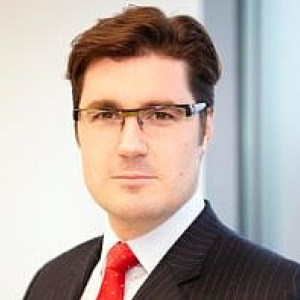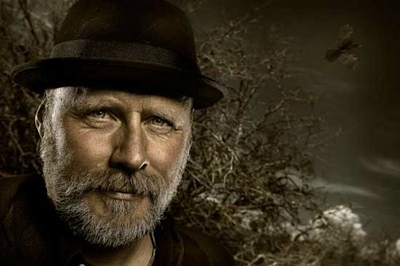
036: Jason Shogren on Music and Endogenous Risk and Rationality in the Environmental Goods Market
Jason Shogren is the Stroock Professor of Natural Resource Conservation and Management and Chair of the Department of Economics and Finance at the University of Wyoming.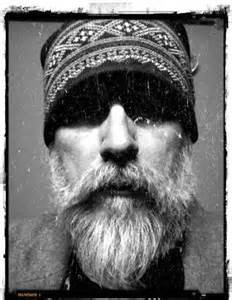
Professor Shogren’s background and research interests include the economics of environmental and natural resource policy, experimental methods; endangered species; invasive species; climate change; agricultural and forest management; energy; health; regulation; and paleoeconomics.
Jason has been named a fellow of the Association of Environmental and Resource Economists (AERE), the nation’s pre-eminent professional society for environmental economists and policy.
Jason served as professor to Sweden’s King Carl Gustaf XVI in 2012 and is a 2007 Nobel Peace Prize winner (shared with Al Gore) as a member of the United Nations team working on climate change.
He has also served as a senior economist on the Council of Economic Advisers in the White House under the Clinton Administration.
Professor Shogren’s teaching include Global Economic Issues, Natural Resource and Environmental Economics, Environmental Risk and Conflict and Experimental Economics.
Jason is well published with over 200 articles and is the author and editor-in-chief of numerous books including Encyclopedia on Resource, Environmental, and Energy Economics, Experimental Auctions and Fat Economics: Nutrition, Health, and Economic Policy
Jason loves fishing and music. He spends his time composing acoustic roots songs that he describes as catawampus Americana music, has five albums and will be touring this summer.
Economists:
In this interview, Jason mentions and discusses:
Janet Yellen, Thomas Sowell, Daniel Kahneman, Amos Tversky, Gary Becker, Isaac Ehrlich, Ralph C. D’Arge, Tom Crocker, Peter Baum, Karl-Göran Mäler, Vernon Smith and Charlie Plott.
Economic Themes:
In this interview, Jason mentions and discusses:
Carbon tax, cap and trade market, the Coase Theorem, probability, general equilibrium models, expected utility, nudge, rationality, irrationality, risk aversion, loss aversion, homo economicus, soft paternalism, trade-off, scarcity, endogenous risk and extreme tail-end events.
Find Out:
- about the Cap and Trade Market for carbon emissions is a failure and would only work in a micro-management setting.
- why its best to implement a carbon tax.
- the difference between luxury emissions and survival emissions and why it maybe difficult for China and India to reduce their carbon.
- how Jason’s depiction of a low probability-high severity event influenced Janet Yellen to take action on climate change.
- if we are acting rationally or irrationally toward the environment.
- how we can exploit rationality ‘for the good’.
- how, over the last 30 years, we have become averse to just about everything.
- how we can take advantage of peoples’ status quo to increase their contribution of paying a carbon tax.
- how designing the right system can nudge people to do the right thing – just like soft paternalism.
- how Jason sought inspiration about rationality from other disciplines, such as English literature and music composition, rather than from economics.
- how Jason uses music as a form of escapism.
- about the inspiration Jason gets for writing songs from economics.
- who the talented people are behind the creation of Jason’s amazing artwork and photography.
- about the concerts that Jason Shogren will be playing at each year.
- about Jason’s hitch-hiking experience in Ireland in 1985 from the Giants Causeway and down along the West Coast (now known as the Wild Atlantic Way).
- about Jason theoretical thought process regarding endogenous risk and how he applies it to different environmental risks.
- what Jason would do if he was once again Economic Advisor to the US government.
- a little about the Endangered Species Act.
- what I saw on Professor Shogren’s whiteboard when I spoke to him on Skype. Hint: It’s his next economic model.
- about the 25% chance you have in meeting Jason in Centennial, Wyoming – it involves the population and the number of pubs!
- about Jason’s plastic Nobel Prize keychain and where he hangs it.

Influencers:
Ralph C. D’Arge, Tom Crocker (Wyoming), Peter Baum (University of Stockholm) , Karl-Göran Mäler, Vernon Smith and Charlie Plott.
An Economic Theory that Influenced Jason Shogren:
A paper by Ehrlich and Becker on self-protection and self-insurance, i.e. endogenous risk, where people invest to change the lottery they face in life, influenced Professor Shogren’s theoretical approach to economics. Once Jason started looking at economics from that perspective, he began to see a lot of models in which the states of nature where independent. To Jason, that seemed too fatalistic for how we spend our resources and how we invest. Most environmental policies are a lottery because we can’t guarantee that somebody’s going to live or not get sick based on exposure (to environmental risk).
We have an estimate and ‘safe’ minimum standards, but there’s no guarantee. So we’re really talking about policies at a collective level that are moving probabilities and damages around. We also have investment at a private level in which we’re doing the same thing – Jason Shogren
What, therefore, struck Jason was asking people about their value of reducing risk and they giving him a value of zero. He questioned people’s decision of applying a value of zero to reducing risk. The reason was that they valued the ‘collective’ reduction as zero and not their ‘individual’ reduction because they took care of the risk themselves.
Applying this theoretical thought process to climate change, endangered species, health risks, pandemics, invasive species or any other problem, will most likely have some element of endogenous risk. Once you add that element to it, the model gets a little richer and once the model gets a little richer, then you can explain a little more behaviour. By adding the behavioural element to the model, the question is ‘What drives things more? Technology of reducing risk? Tastes? How do they work together or how they work apart?’.
“If you can strip it down to that level, then you can really look at a lot of different problems using that type of kit”– Jason Shogren. It can become very flexible as a theoretical framework and model, that it is the reason why Jason, his peers and his students were able to look at a lot of different problems in terms of endogenous risk. It allows for focus on a particular research topic, otherwise it would be too scattered.
Jason on Carbon Emissions:
Putting a price on carbon has been the way to reduce carbon emissions. Trying to set up cap and trade markets has been too hard. The cap and trade market has allowed the supply to increase – Jason Shogren.
“If you’re waiting for people to do the right thing for the right reason, you can wait a long time. We’ve seen that throughout history. Economists would say that ‘if you want to do the right thing at the right time, let’s get the prices right and then people will make their own choices’. But if you get prices to reflect true costs and reveal hidden costs that are being imposed on others, then hopefully we don’t have to job-own them and nudge them. Maybe we have to nudge people and get the price right. Both theoretical aspects of economics should be complementary and we should not substitute one for the other” – Jason Shogren.
Before we start calling it nudging, there was a saying “The target is the target and the costs are regrettable but not really decisive” – Thomas Sowell.
Rationality in the Environmental Goods Market:
Rationality in psychology is very different to rationality in economics, in that when we think about rationality in economics we think about a social construct. People are making choices within an active exchange institution like a market and if they start making their emotions run wild, then there are people to arbitrage them. Either they like less money to more or they adjust and they start looking for opportunities themselves. It’s not that we all have to be 100% rational. As long as the folks at the margin who are making those trades pay attention, the market is powerful enough to move it along as if everybody was rational. But they don’t have to be.
The problem with environmental goods is that we don’t have markets like that. So now we have to figure out the problem of how to aggregate up in a way that would incorporate both economic monetary decisions and economic non-monetary decisions. That becomes trickier. Up to quite recently, the only thing economists were dealing with in terms of aversion was risk aversion. Typically it was believed that risk was the only thing that people were averse of. And then Kahneman and Tversky came along and we were now averse to losses and we treated gains and losses differently.
Over the last 30 years, we have become averse to just about everything – ambiguity, inflation aversion, equity aversion, disappointment aversion, envy aversion, lying aversion, guilt aversion. And so by adding all of these emotions into our typical economic model, the question is ‘How and when do we stop?’. Do we add all 40 emotions into our models? And now how do we sort out cross-partial derivatives between equity and envy and disappointment and suspicion and regret? And those are jobs that economists have not been typically trained to deal with – assigning complementarities or substitutabilities between different emotional factors.
So part of this working on nudges is trying to understand that if we tweak the models so that we can take advantage of how people feel guilty about this or how they opt-in or opt-out about different things, we can exploit that irrationality ‘for the good’. For example, people like status quo, so let’s take advantage of that. So instead of buying an airline ticket, nowadays you have to opt-in to add in a carbon price or you can buy a carbon off-set. What we should do is get all the airlines to opt out of buying that carbon off-set. And giving our tendencies not to want to opt out of things, we would probably buy a whole lot more carbon off-sets.
If we can exploit those at the same time as having an active market for those off-sets and a price, then it’s not irrational or rational. It’s understanding that there is some instinctual behaviour that people at a ground level will stick with. That’s the whole soft paternalism idea that we know that you know what’s right and we’re just designing the system to help you get there as opposed to us telling you what’s right.
It is extremely difficult to single out one emotion and to identify it as the one emotion that is driving homo economicus away from our rational base-line. It’s going to take us a while to say ‘Here are the ten big emotions that we can live with and let’s just work on those’.
On Human Behavior:
If we really want to study emotions we should study literature. If you really want to be economical about how people think, then you should study poetry. Then if you want to convey all of that in a compact form that people will pay attention to then you add music. Now you’ve got a melody and lyrics and you have a path where essentially you are projecting what you are considering to be an important story to tell. Song writing has its structures and its forms that you can easily translate into guidelines and rules and math models, just like we do in economics. To me, arts and science – I don’t know if they’re ying and yang – to me they go parallel and spillover all over each other – Jason Shogren.
What Professor Shogren Would Do Today as Economic Advisor to the US Government:
- Figure out a way to introduce a carbon tax but difficulty would lie with the Senate and the House of Representatives since they are essentially run by the Republicans.
- Take on the Endangered Species Act because it’s being waiting to be revised for almost 22 years. The way that it is written is that any species has to be protected at any cost. That type pf pressure can’t hold without the economy bursting at the seams. It would be worth going through this Act and add safety valves in a systematic and coherent way. It’s too important for this Act to just sit idly by when people using discretion as to when it holds and when it doesn’t.
Takeaway:
As a younger man, everybody sort of hits that wall of maturity that you don’t really want to go through. Sometime you get forced through it and sometimes you walk through it and sometimes you fall through it. Once you get there and you decide you can’t control the universe, that’s a good place to be – Jason Shogren.
At the same time, you take care of what you can’t control. You know, it’s the oldest story in the book. Once you come to the realisation and you find that balance, things are just way more interesting, way easier to deal with and just, in general, happier. Being a good Scandinavian doesn’t mean I have my gloomy dark moments – Jason Shogren.
Songs Mentioned and Played in this Episode:
- Works by Jason Shogren
- Exit In Flames by Jason Shogren
- Broken Every Vow by Jason Shogren
- Me and Genghis Khan by Jason Shogren
Concerts Where You Can See Jason Shogren:
On Ireland:
“I spent a month hitch-hiking in Ireland way back in ’85. I started up in Larne, went up through the Causeway, then all the way down the West coast. It was a great month of hitch-hiking, Guinness, rain, people and adventure. So, yeah, I’m ready to come again” – Jason Shogren.
On Conferences:
“It’s supposed to be fun. You’re supposed to live and learn and try to pass on something better. Sometimes it’s ideas and sometimes it’s ideas through songs” – Jason Shogren.
Musicians Mentioned in this Episode:
Recommended Book:
- What Work Is by Philip Levine (Poet)
Where to Find Jason Shogren:
- Website: www.jshogren.com
- CDBaby
Podcast: Play in new window | Download