• ABOUT
  • RESOURCES
  • PODCAST
  • BOOKS
  • BLOG
  • SUPPORTERS
  • QFA Financial Advice
  • CONTACT

Economic Rockstar

Connecting Brilliant Minds in Economics and Finance

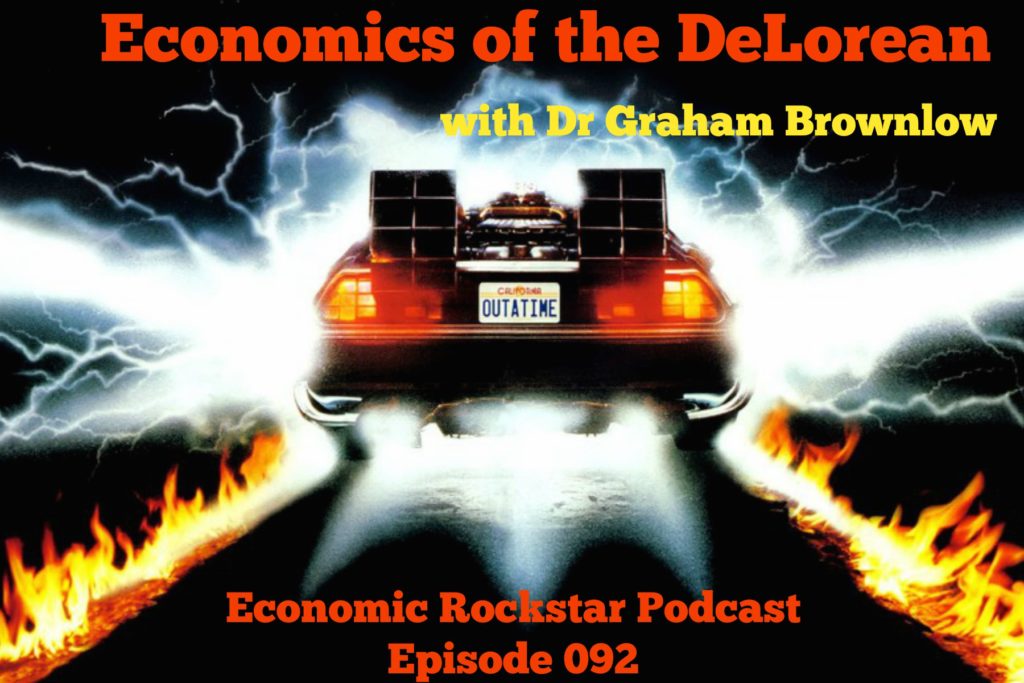
092: Graham Brownlow on Rent Seeking, Cliometrics and the Economics of the DeLorean

June 30, 2016 by Frank

http://traffic.libsyn.com/economicrockstar/092_Graham_Brownlow_Final.mp3
Play in New WindowDownload

092: Graham Brownlow on Rent Seeking, Cliometrics and the Economics of the DeLorean

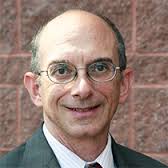
Dr. Graham Brownlow (PhD, QUB) is a Lecturer in Economics at Queen’s University in Belfast, Northern Ireland.Graham Brownlow Economic Rockstar
Dr. Brownlow’s research focuses primarily on economic history and institutions, evolutionary economics, Irish economic and business performance and violence. He also has an interest in methodology in economic and business history.

Graham edits the journal Irish Economic and Social History.

I’m very eclectic and pragmatic – Dr. Graham Brownlow

Economics:

In this episode, Graham mentions: rent seeking, cliometrics, inefficiency, corruption, institutions, subsidies, Brexit, monopolies, sharing economy, fast money, game theory, bargaining, public choice, regional economics and economic history. 

Economists:

In this episode, Graham mentions: Peter Boettke, Peter Leeson, Gary Becker, William Baumal, Douglass North, Robert Hamilton, Eli Hecksher, Adam Smith, John Maynard Keynes, Joseph Schumpeter, Friedrich Hayek, Milton Friedman, George Duncan, Tim Harford, Steven Landsburg and G. L. S. Shackle.

Using Analytic Narratives in Economic Research

Looking to balance the details of fact and yet keep the rigour of an economic model – Graham Brownlow

  1. Identify the problem or puzzle.
  2. Immerse yourself in the topic or resources.
  3. Move to more formal aspects.
  4. Don’t start with the model and then use it to explain your findings.
  5. You actually first look at the historical issue under investigation and then apply it to the model.

Links:

  • Mont Pelerin Society

Research by Dr. Graham Brownlow:

  • Back to the Failure: An Analytic Narrative of the De Lorean Debacle (2015).
  • Soft Budget Constraints and Regional Industrial Policy: Reinterpreting the Rise and Fall of De Lorean (2015).
  • ‘Review of Cullen Economy, Trade and Irish Merchants at Home and Abroad, 1600-1988’ (2013).
  • How do we Ensure a Useful Future for Irish Cliometrics? (2012).
  • A complete list of Graham’s research can be found here.
Economics of the DeLorean Economic Rockstar

Where to Find Graham:

  • Queen’s University, Belfast, Northern Ireland
  • Twitter: @GrahamBrownlow

Books:

  • The Undercover Economist by Tim Harford
  • The Undercover Economist Strikes Back: How to Run – or Ruin – an Economy by Tim Harford
  • The Undercover Economist, Revised and Updated Edition: Exposing Why the Rich Are Rich, the Poor Are Poor – and Why You Can Never Buy a Decent Used Car! by Tim Harford
  • The Logic of Life: The Rational Economics of an Irrational World by Tim Harford
  • Adapt: Why Success Always Starts with Failure by Tim Harford
  • Messy: The Power of Disorder to Transform Our Lives by Tim Harford
  • The Armchair Economist: Economics and Everyday Life by Steven Landsburg
  • Economics for Pleasure by G. L. S. Shackle
  • The New Geography of Jobs by Enrico Moretti


http://traffic.libsyn.com/economicrockstar/092_Graham_Brownlow_Final.mp3

Podcast: Play in new window | Download
082: Peter Boettke on Smith and Keynes and Why We Should Be ‘Living Economics’

April 21, 2016 by Frank

http://traffic.libsyn.com/economicrockstar/082_Peter_Boettke.mp3
Play in New WindowDownload

082: Peter Boettke on Smith and Keynes and Why We Should Be ‘Living Economics’

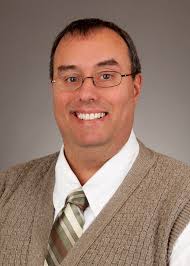
Peter Boettke is Professor of Economics and Philosophy at George Mason University, the BB&TPeter Boettke Economic Rockstar Professor for the Study of Capitalism, and the Director of the F.A. Hayek Program for Advanced Study in Philosophy, Politics, and Economics at the Mercatus Center at George Mason University.

Peter is now the co-author, along with David Prychitko, of the classic principles of economics texts of Paul Heyne’s The Economic Way of Thinking.

Professor Boettke’s most recent book, Living Economics, provides a resource for how teachers and students can engage in many fascinating questions in economics and illuminates the core principles that should guide our thinking.

Peter’s efforts in the classroom have earned him a number of distinctions including the Golden Dozen Award for Excellence in Teaching from the College of Arts and Sciences at New York University and the George Mason University Alumni Association’s 2009 Faculty Member of the Year award.

Peter’s research has primarily been in the area of comparative political and economic systems and the consequences with regard to material progress and political freedom.

Economics:

In this episode, Peter mentions: Classical economics, Austrian economics, Keynesian economics, credit transmission, institutions, the invisible hand, mainline economics, mainstream economics, private property, public choice, rent-seeking, opportunity cost, scarcity, exchange, markets, negative externalities, laissez-faire, Coase theorem, Pigouvian tax, reciprocity, inflation, stagflation and Malthus’ theory of The General Glut.

Economists:

In this episode, Peter mentions: Adam Smith, F. A. Hayek, Ludwig von Mises, Milton Friedman, Paul Samuelson, John Maynard Keynes,Frédéric Bastiat, David Hume, Vernon Smith, Thomas Robert Malthus, J. K. Galbraith, Paul Heyne, Hyman Minsky, Thorstein Veblen, Steve Keen, Ben Bernanke, Arthur Pigou, Gordon Tullock, James Buchanan, Robert Coase, Elinor Ostrom, Vincent Ostrom and Major Douglas.

Papers:

  • Teaching Austrian Economics to Graduate Students
  • Beyond Equilibrium Economics: Reflections on the Uniqueness of the Austrian Tradition

Books:

  • Living Economics: Yesterday, Today, and Tomorrow by Peter J. Boettke
  • The Economic Consequences of Peace by J. M. Keynes
  • The End of Laissez-Faire by J. M. Keynes
  • The Rogue Gallery of Economic Thinkers by J. M. Keynes
  • The Road to Serfdom by F. A. Hayek
  • Challenging Institutional Analysis and Development: The Bloomington School by Paul Dragos Aligica and Peter Boettke
http://traffic.libsyn.com/economicrockstar/082_Peter_Boettke.mp3

Podcast: Play in new window | Download
078: Arnold Kling on the Hidden Story of How Markets Work, the Mortgage Crisis and How We Pay for Health Care

March 24, 2016 by Frank

http://traffic.libsyn.com/economicrockstar/078_Arnold_Kling_.mp3
Play in New WindowDownload

078: Arnold Kling on the Hidden Story of How Markets Work, the Mortgage Crisis and How We Pay for Health Care

Arnold Kling is a Mercatus Center–affiliated senior scholar at George Mason University and a member of the arnold kling economic rockstarFinancial Markets Working Group.

Arnold specializes in housing-finance policy, financial institutions, macroeconomics, and the inside workings of America’s federal financial institutions. He also is an adjunct scholar at the Cato Institute in Washington, DC.

Arnold has testified before Congress on the collapse of Fannie Mae and Freddie Mac

He has authored five books, including Crisis of Abundance: Rethinking How We Pay for Health Care and Invisible Wealth: The Hidden Story of How Markets Work.

Arnold has published articles in the Economist, the Wall Street Journal, the New York Times, the Atlantic, and Forbes, among others, and he blogs at arnoldkling.com/blog/.

Previously, Arnold served as a senior economist at Freddie Mac and a staff economist on the Board of Governors of the Federal Reserve System.

He started Homefair, one of the first commercial websites on the Internet.

Arnold Kling received his PhD in economics from Massachusetts Institute of Technology.

“If you want to live a good lifestyle, you can find hobbies and interests that don’t cost very much. So it’s not hard to enjoy life. But if you want to make yourself miserable, watch politics.” – Arnold Kling

Economics:

In this episode, Arnold mentions and discusses: information rules, economic information, marginal cost of information, advertising, versioning, bundling, Austrian economics, risk measurement, capital, tax, mortgage-backed securities, loans, bubbles, crashes, excess leverage, marked-to-market, economics of health care, labor, capital, land, institutions.

Economists:

In this episode, Arnold mentions and discusses: Hal Varian, Carl Shapiro, Brad deLong, Tyler Cowen, Paul Krugman, Paul Volker, Douglass North, Robin Hanson, Bryan Caplan, James Buchanan, Adam Smith, F. A. Hayek and Robert Solow.

In this episode you will learn:

  • about Moore’s Law and what it means for the economy.
  • why economists are being lured into the world of start-ups and tech companies.
  • about the power of freemium and why companies need to build up trust to create a loyal customer base.
  • the difference between versioning and bundling.
  • what the future holds for the accessing information online.
  • about Arnold’s company online Homefair and how it was one of the first internet companies.
  • what really went on behind closed doors at Fannie Mae and Freddie Mac that resulted in their demise.
  • why Fannie Mae and Freddie Mac were bailed out.
  • how changing the culture at Freddie Mac caused its collapse.
  • about the state of health care in America today.
  • how Americans are to pay for the higher costs of health care.
  • about the fibre-bubble in the 1990s.
  • why we are richer today than a couple of hundred years ago.
  • why ideas are the foundation to economic growth and prosperity.
  • why nations like Cuba and North Korea are poor (bad institutions).
  • about the work being done at George Mason University.

Where to Find Arnold Kling:

  • www.arnoldkling.com/blog/

Books:

  • Crisis of Abundance: Rethinking How We Pay for Health Care by Arnold Kling
  • Invisible Wealth: The Hidden Story of How Markets Work by Arnold Kling
  • Information Rules: A Strategic Guide to the Network Economy by Carl Shapiro and Hal Varian
  • The Revolt of the Public and the Crisis of Authority in the New Millennium by Martin Gurri

Links: 

  • 23andMe: www.23andme.com
    • View reports on over 100 health conditions and traits
    • Find out about your inherited risk factors and how you might respond to certain medications
    • Discover your lineage and find DNA relatives
http://traffic.libsyn.com/economicrockstar/078_Arnold_Kling_.mp3

Podcast: Play in new window | Download

Frank Conway

Frank Conway is founder of Economic Rockstar and lecturer of economics, finance and statistics. Read More…

View My Blog Posts

Youtube Sub

Become a Patron of the Economic Rockstar Podcast

patreon

Ireland’s Economy by the Numbers

Leaving Cert Economics: Ireland’s Economy  Click here to download a workbook on Ireland’s Economy so that you can add your own notes. [Original size] Ireland’s Economy by fconway

Categories

Subscribe and Never Miss An Episode

itunes-logo

Recent Posts

  • Ireland’s Economy by the Numbers April 8, 2019
  • 174: Wendy Carlin on The Core Project, Capitalism, Democracy and Normative Statements February 13, 2019
  • 173: Stephen Wright on Core Econ as a Learning Resource for Mainstream Economics January 28, 2019
  • 172: Best of 2018 Part 2: From the Great Depression to Futurism; Institutions, Individualism, Cooperation and Reciprocity January 22, 2019
  • 171: Best of 2018 Part 1 January 3, 2019

Copyright © 2026 · Podcast Pro Theme on Genesis Framework · WordPress · Log in

This website uses cookies to improve your experience. We'll assume you're ok with this, but you can opt-out if you wish. Accept Reject Read More
Privacy Policy

Privacy Overview

This website uses cookies to improve your experience while you navigate through the website. Out of these, the cookies that are categorized as necessary are stored on your browser as they are essential for the working of basic functionalities of the website. We also use third-party cookies that help us analyze and understand how you use this website. These cookies will be stored in your browser only with your consent. You also have the option to opt-out of these cookies. But opting out of some of these cookies may affect your browsing experience.
Necessary
Always Enabled
Necessary cookies are absolutely essential for the website to function properly. This category only includes cookies that ensures basic functionalities and security features of the website. These cookies do not store any personal information.
Non-necessary
Any cookies that may not be particularly necessary for the website to function and is used specifically to collect user personal data via analytics, ads, other embedded contents are termed as non-necessary cookies. It is mandatory to procure user consent prior to running these cookies on your website.
SAVE & ACCEPT