• ABOUT
  • RESOURCES
  • PODCAST
  • BOOKS
  • BLOG
  • SUPPORTERS
  • QFA Financial Advice
  • CONTACT

Economic Rockstar

Connecting Brilliant Minds in Economics and Finance

086: Philip Pilkington on Determinism and the Reformation in Economics

May 19, 2016 by Frank

http://traffic.libsyn.com/economicrockstar/086_Philip_Pilkington_Final.mp3
Play in New WindowDownload

086: Philip Pilkington on Determinism and the Reformation in Economics

Phillip Pilkington works in investment and has contributed to numerous online and print media philip pilkingtonoutlets as a freelance economic journalist.
Phillip ran a popular economics blog called www.fixingtheeconomists.wordpress.com and will be releasing his book The Reformation in Economics soon.

Phillip earned his B.A. in Journalism from the Independent Colleges, as well as his M.A. in Economics from Kingston University.

All views expressed by Phillip are his own and are not representative of the firm in which he works.

Economics:

In this episode, Philip mentions: utility maximizing, behavioral bias, interest rates, time preference, savings, money, comparative advantage, decision making, consumption function, marginal propensity to consume and the multiplier.

Economists:

In this episode, Philip mentions: Steve Keen, Paul Samuelson, Adam Smith, James Steuart, David Ricardo and G. L. S. Shackle.

Links:

  • Fixing the Economist – a blog by Philip Pilkington

Books:

  • The Reformation in Economics: A Deconstruction and Reconstruction of Economic Theory by Philip Pilkington
  • Foundations of Business Thought by Calvin M. Boardman
  • Market Sense and Nonsense: How the Markets Really Work (and How They Don’t) by Jack D. Schwager
  • A Treatise Concerning The Principles of Human Knowledge by George Berkley
http://traffic.libsyn.com/economicrockstar/086_Philip_Pilkington_Final.mp3

Podcast: Play in new window | Download

069: Diane Coyle on GDP, Its Shortcomings and Alternative Measures

January 21, 2016 by Frank

http://traffic.libsyn.com/economicrockstar/069_Diane_Coyle.mp3
Play in New WindowDownload

069: Diane Coyle on GDP, Its Shortcomings and Alternative Measures

Diane Coyle is Professor of Economics at the University of Manchester and runs the consultancy Enlightenment Economics.diane coyle

Diane is Vice-Chair of the BBC Trust and was a member of the Migration Advisory Committee and a member of the Competition Commission. She is also a visiting research associate at the University of Oxford’s Smith School of Enterprise and the Environment. 

Diane specialises in competition analysis and the economics of new technologies and globalisation.

Diane is the author of several books, including GDP: A Brief But Affectionate History, The Economics of Enough, The Soulful Science, Sex, Drugs and Economics and Paradoxes of Prosperity.

She was previously Economics Editor of The Independent and before that worked at the Treasury and in the private sector as an economist.

Diane has a PhD from Harvard and was awarded the OBE in January 2009.

Using happiness is an excuse for inactivity – Diane Coyle

Click To Tweet

Influencers:

Peter Sinclair (University of Birmingham) and Ben Friedman (Harvard).

Economists:

In this interview, Diane mentions: Adam Smith, John Stuart Mill, Sir Charles Bean, Daron Acemoglu, Thomas Piketty, John McMillan, Tim Harford, Peter Sinclair (University of Birmingham) and Ben Friedman (Harvard).

Economics:

In this interview, Diane mentions: GDP, budget deficit, fiscal policy, monetary policy, interest rates, growth, employment, unemployment, Human Development Index, Gross National Happiness Index, happiness, hysteresis, inequality, financial markets, derivatives and leverage.

In this episode you will learn:

  • what is GDP and how it is measured.
  • the complications with understanding the meaning of GDP.
  • the historical origins of GDP and why it is used to measure our economy.
  • the complications in measuring GDP.
  • how GDP data is still collected in such an ‘old-fashioned’ way and the new methods to collecting data.
  • about the uncertainty and margin of error in GDP statistics.
  • why it is wrong to make fiscal policy, monetary policy and interest rate decisions on GDP statistics.
  • what proxy variables were used to measure economic activity before GDP was introduced.
  • why we should re-think the meaning of the economy.
  • why GDP today doesn’t work in its present form and if there is an alternative.
  • how countries can use GDP and GNP measures to portray different economic conditions.
  • the difference between GDP and GNP.
  • the concerning use of ‘administrative statistics’ by countries to falsify economic growth.
  • whether it’s correct to include illegal drug activity and prostitution in measuring GDP.
  • why measuring happiness and well-being should be of little importance when measuring GDP.
  • why Diane is sceptical about the Happiness Index.
  • the reason why economics was coined by Thomas Carlyle as the the ‘dismal science’.
  • who is to blame for the financial crisis of 2007/2008.
  • about the UK’s over-reliance on the financial sector and its role in measuring GDP.
  • about the uncertainty that would exist if the UK withdrew from the EU.
  • the policy factors required to create a sustainable society and a stable government.


It’s just so easy now to download data from the internet and run through statistical packages and get some results. And I think a lot of professional economists are guilty of not rethinking about their data enough – Diane Coyle

You cannot think about the economy mechanically – Diane Coyle

Click To Tweet

The way we measure GDP now is really closely linked to Keynesian macroeconomic theory and a very famous definition he gave of  what total output in the economy is, that it’s consumer spending, government spending, investment spending and the balance of payments – Diane Coyle

There is no benefit for society in a lot of what happens in the financial markets – Diane Coyle

Click To Tweet

Resources:

  • The Enlightenment Economist
  • Doomsday Book  – Earliest recording of economic activity.
  • Time to ditch GDP as a measure of economic well-being by Diane Coyle 
  • The Review of Economics and Statistics

Favorite Internet Resource:

  • Twitter

If you pick the right people to follow it acts as a brilliant editor of all the interesting information that you might want to know and it’s like having a personalised newspaper – Diane Coyle

Books:

  • GDP: A Brief But Affectionate History by Diane Coyle
  • The Soulful Science: What Economists Really Do and Why It Matters by Diane Coyle
  • The Economics of Enough: How to Run the Economy as If the Future Matters by Diane Coyle
  • Sex, Drugs and Economics: An Unconventional Introduction to Economics by Diane Coyle
  • Paradoxes of Prosperity: Why the New Capitalism Benefits All by Diane Coyle
  • Reinventing the Bazaar: A natural History of Markets by John McMillan
  • The Undercover Economist by Tim Harford
  • The Undercover Economist Strikes Back: How to Run or Ruin an Economy by Tim Harford


http://traffic.libsyn.com/economicrockstar/069_Diane_Coyle.mp3

Podcast: Play in new window | Download
048: Steve Hanke on Currency Boards, Moral Hazard and the Benefits of Privatization

September 3, 2015 by Frank

http://traffic.libsyn.com/economicrockstar/048_Steve_Hanke_Final.mp3
Play in New WindowDownload

048: Steve Hanke on Currency Boards, Moral Hazard and the Benefits of Privatization

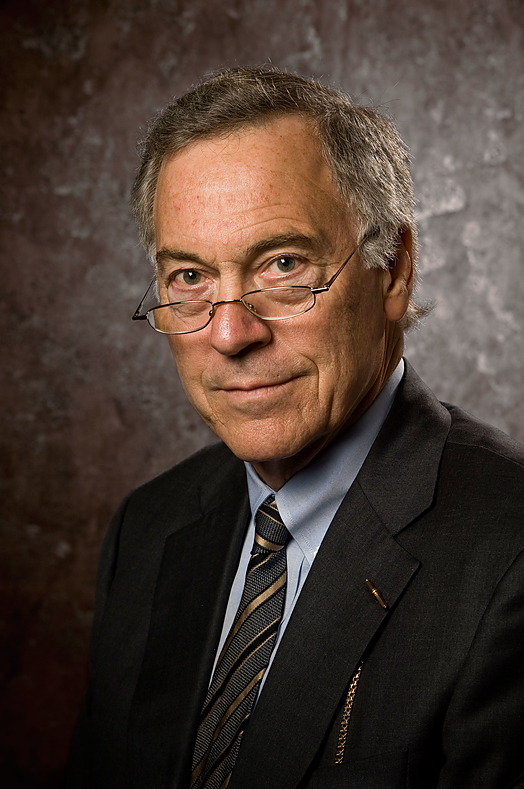
Steve Hanke is a Professor of Applied Economics, specializing in currency boards. He is Co-Director of the Institutesteve hanke for Applied Economics, Global Health, and the Study of Business Enterprise at The Johns Hopkins University in Baltimore.

Steve is a Senior Fellow and Director of the Troubled Currencies Project at the Cato Institute in Washington, D.C. and a member of the Charter Council of the Society of Economic Measurement and the Financial Advisory Council of the United Arab Emirates.

Previously, Professor Hanke was a Senior Economist on President Reagan’s Council of Economic Advisers and was also an Advisor to the Presidents of Bulgaria, Venezuela, and Indonesia.

He played an important role in establishing new currency regimes in Argentina, Estonia, Bulgaria, Bosnia-Herzegovina, Ecuador, Lithuania, and Montenegro. Professor Hanke has also advised the governments of many other countries, including Albania, Kazakhstan and Yugoslavia.

In 1998, Steve was named one of the twenty-five most influential people in the world by World Trade Magazine.

Professor Hanke is a well-known currency and commodity trader and serves as Chairman of Hanke-Guttridge Capital Management, LLC.

Steve Hanke’s most recent books are Zimbabwe: Hyperinflation to Growth (2008) and A Blueprint for a Safe, Sound Georgian Lari (2010).

Influencers:

Friedrich Hayek, Kenneth Boulding of the University of Colorado  and Bob Mundell

Economics:

In this interview, Steve mentions and discusses: currency boards, monetary policy, inflation, hyper-inflation, interest rates, currency reserves, optimum currency area, common currency, fiscal policy, moral hazard, eurozone, ECB, the World Bank, property rights, investment, central bank, dollarisation, interventionist policy, privatisation, hedging, Chicago Mercantile Exchange, futures contract and bitcoin.

Economists:

In this interview, Steve mentions and discusses: Kirk Schuller, Milton Friedman, Friedrich Hayek, Adam Smith, Robert Mundell and Kenneth Boulding.

There have only been 56 hyper-inflations in world history and I think I’ve stopped more of them than any living economist – Professor Steve Hanke

In this episode, you will learn:

  • what is a currency board and the reason why a country should resort to one.
  • about Bulgaria’s currency crisis in 1997, how hyper-inflation hit 142 percent per month and what Steve Hanke did to solve the problem.
  • the successful use of currency boards in Bulgaria in 1997 to significantly reduce inflation and interest rates.
  • why Bulgaria has one of the lowest fiscal deficits of any country.
  • about Yugoslavia’s hyper-inflation of 313 million percent in 1994.
  • why Montenegro dumped the Yugolsav Dinar for the Deutschmark during Slobodan Milosevic’s presidency of Yugoslavia.
  • how Montenegro will join the euro currency without having to do a currency changeover.
  • if it makes sense to leave a currency board to join a monetary union and giving up fiscal autonomy.
  • why it’s best for Bulgaria to stay outside the eurozone due to the issue of moral hazard.
  • why Greece ran up a fiscal deficit of 12.7% of GDP when the Maastricht Treaty stated a strict adherence to a maximum level of 3%.
  • about the Greek bailout of $472 billion and how it amounts to almost $43,000 for every man, woman and child in Greece.
  • how a currency board removes the moral hazard of a unified currency area by financing spending with current taxes or the private bond market.
  • if Greece should abandon the euro and set up a currency board and pegging their currency with the euro.
  • how a Greek currency board would operate if Greece left the eurozone.
  • about the success of the Hong Kong currency board and how it operates without a central bank.
  • if we are heading toward a one world currency.
  • why most small countries should abandon their currency and anchor it to the euro, dollar, yen or yuan.
  • whether Greece should sell off its ports, lands and other property to private investors just as Hayek proposed and Ronald Reagan did in the US in the 1980s.
  • about Ronald Reagan’s privatisation programme in the US in the early 1980s.
  • about the Bureaucratic Rule of Two and why privatisation is an optimal outcome for government, enterprise and society.
  • what Hayek was like as a person and what he thought of Ronald Reagan, The Intellectual.
  • about candling in the old days when grading eggs for futures contracts.

On Currency Boards:

A currency board system is a system in which you issue a domestic currency, which is anchored to a sound currency at a fixed exchange rate that’s fully convertible. The local currency is backed up with a 100% anchor currency’s reserves. So the local currency really becomes a clone of whatever the anchor currency happens to be.

The currency board is not allowed to emit credit to the government. If the government needs money for fiscal expansion, the only way to get this finance (in the form of your local currency) is to take hard currency in (like the euro) and exchange it for the local currency. Bulgaria has been doing this since 1997. The government cannot sell bonds to raise finance. They convert the euro (previously the Deutschmark) into their local currency, the lev, and can then carry out fiscal stimulus. Consequently, Bulgaria has one of the lowest fiscal deficits in Europe.

On Bulgaria and Why It Should Not Join the Eurozone:

“With the currency board, they (Bulgaria) ‘clone’ the euro, so they’re in a unified currency area with the eurozone but they’re not formally part of the eurozone itself. I’ve counselled the Bulgarians, and the best thing to do is to stay with that arrangement. And the reason why is that the eurozone, the common currency area, has a huge moral hazard associated with it. That is, something that creates bad behaviour encourages bad behaviour and Greece is a perfect example.” – Professor Steve Hanke

On the Greek Deceit and Its Fiscal Deficit:

“Greece entered the eurozone in 2001 on false pretences. They cooked the books and got in. They were allowed in the club even though the club knew the Greeks were lying in terms of their economics statistics.”

“The Greeks calculated that they could spend like drunken sailors, which they did and ran a completely irresponsible fiscal operation.”

“The moral hazard is you join a club and if you think the club won’t enforce its rules and won’t force you to tow the line, you will just go on your merry way spending and deficit spending and knowing, or at least thinking that, in this case the eurozone, would bail you out.”

Greece ranks 151 out of 189 countries for the ability of doing business. If you make a contract in Greece, the probability of having that contract enforced is very low by international standards. It’s like being in Zimbabwe. Greece is supposed to be part of the European Union and a modern country but it isn’t.

Greece should leave the eurozone, set up a currency board and re-introduce the Drachma. This would create fiscal discipline just like the situation in Bulgaria.

Quotes by Steve Hanke in Episode 048 of the Economic Rockstar Podcast:

I was hedging and trading when I was 14 years of age. I was trading with my grandfather – @steve_hanke

Click To Tweet

Hong Kong was aways a unilateralist free trader. That encourages competition, entrepreneurship and productivity. The countries with open trade tend to be more free market in general and they grow more rapidly. – Steve Hanke

“About 90 Central Banks should just be done away with completely and either a currency board be put in or a stronger foreign currency like the dollar, the euro or the yen.” – Steve Hanke

“If you want lower fiscal deficits, lower inflation and higher rates of growth you adopt with a currency board system or dollarize” – Steve Hanke

If you want to reduce corruption you privatise. But the potential gains in terms of economic prosperity are enormous – @steve_hanke

Click To Tweet

Europe’s lands are “a mere waste and loss of country in respect both of produce and population.” – Adam Smith

Click To Tweet

Bitcoin has a unit of account problem – @steve_hanke

Click To Tweet

On Hayek:

“He was delightful and charming and very interesting, particularly for Mrs Hanke and myself. One of Mrs Hanke’s Great Aunts was one of Hayek’s earlier loves of his life.”

Recommended Books:

  • Zimbabwe: Hyperinflation to Growth by Steve Hanke (Free download)
  • The Wealth of Nations by Adam Smith
  • Reagan, In His Own Hand by Ronald Reagan, edited by Marty Andersson et al.
  • The Advanced Introduction To The Austrian School of Economics by Randall Holcombe
  • The Essential Hayek by Donald Boudreaux (Free Kindle download)

Resources:

  • Case Studies written by Steve Hanke
  • Troubled Currencies Project
  • The Hanke-Krus Hyperinflation Index
  • http://econographic.com/hyperinflation
  • On the Measurement of Zimbabwe’s Hyperinflation by S. Hanke and A. Kwok
  • Friedman: Float or Fix? by Steve H. Hanke
  • Reflections on Currency Reform and the Euro by Steve H. Hanke
  • The Privatization Debate: An Insider’s View by Steve H. Hanke
  • Could Greece Adopt the Dollar? by Steve H. Hanke
  • Reflections on Reagan the Intellectual by Steve H. Hanke
  • On the Fall of the Rupiah and Suharto by Steve H. Hanke
  • Doing Business 2015 Report by The World Bank

Where to Find Steve Hanke:

  • Cato Institute: http://www.cato.org/people/steve-hanke
  • Johns Hopkins Institute: http://krieger.jhu.edu/iae/co-directors
  • Twitter: @steve_hanke
http://traffic.libsyn.com/economicrockstar/048_Steve_Hanke_Final.mp3

Podcast: Play in new window | Download

037: Noah Smith on Austrian Theory Being a ‘Bad Joke’, Heterodox Models and Efficient Markets

June 18, 2015 by Frank

http://traffic.libsyn.com/economicrockstar/037_Noah_Smith.mp3
Play in New WindowDownload

037: Noah Smith on Austrian Theory Being a ‘Bad Joke’, Heterodox Models and Efficient Markets

Noah Smith is Assistant Professor of Finance at Stony Brook University, New York where he is also a member of the Center for Behavioral Noah SmithFinance research team. Noah’s research Interests include Experimental Finance, Behavioral Finance and Macroeconomics Noah was panel discussant for the Institute for New Economic Thinking Task Force and has received numerous research awards and fellowships. 

Noah is a regular contributor to Bloomberg View where he writes extensively on economics and finance related topics. He also writes at his fantastic economics blog Noahpinion.

Noah received his PhD in economics from the University of Michigan, graduating in 2012. His dissertation examined expectation formation in financial markets. Noah majored in physics as an undergraduate at Stanford University, and spent three years working in Japan, where he still returns from time to time to do research.

Everyone who meets in the public sphere, unless you’re extremely dry and technical, is going to piss people off. Econ is one of those fields where everyone has their own opinion and position and their models that they like. Traditionally, it was this very closed discipline. Econ was for economists and they didn’t often interface with the outside world except through official policy advice and the occasional op-ed. People start talking in the public sphere and I think that disturbs a lot of people. So all the blogs are bad boys really – Noah Smith.

Economics:

GDP, inflation, Central Bank, consumption, microeconomics, macroeconomics, behavioral economics, DSGE, game theory, decision theory, supply, demand, time series, interest rates, linear regression, forecasting, Quantitative Easing, money, gold, Federal Reserve, efficient markets hypothesis, extrapolative expectations, hedge funds, adverse selection, random walk, fat tails and volatility.

Economists:

Paul Samuelson, Brad DeLong, Steve Keen, Greg Mankiw, John H. Cochrane, Jack Schwager, Josh Angrist, Steve Pischke, Ed Phelps, Robert Lucas, Ed Prescott, Paul Volcker, Ludwig von Mises, Friedrich Hayek, Hyman Minsky, Andrei Schleifer, Alok Kumar, Kelly Schuh,  Jonathan Burke, Burton Malkiel, Marcus Brunnermeier, Mark Thoma, Tyler Cowen and Alex Tabarrok.

Find out:

  • whether economists suffer from ‘Physics Envy’.
  • if we should remove mathematics from economics.
  • how math took over economics.
  • if there is a connection between economics and physics.
  • how economics is becoming a more data-driven field.
  • about the micro foundations to macro theory and why these models don’t work.
  • why theory and math-focused economics papers are waning in the academic publishing field.
  • how to approach teaching micro and macro when the theoretical models may not explain much.
  • about whether Economics is moving away from the orthodox method of teaching toward a heterodox method.
  • about the difference between Heterodox and Orthodox teaching in Economics.
  • why Noah considers Austrian Economics to be a bad joke.
  • where Noah falls within the economic spectrum.
  • why Noah believes that heterodox economics is not the future.
  • Noah’s recommended economics blogs to follow.
  • why the Efficient Market Hypothesis is a good starting model for finance students to understand.
  • and much much more

Physics Envy and the Mathematisation of Economics:

At one point economics was a literary discipline. It was philosophical. It was people writing down verbal description of how they thought things worked. Then people started writing down equations. At first it was just a couple of people doing it who were obscure and then, with Paul Samuelson, they really started putting everything in terms of equations and mathematising everything. It was at that point people started to mention that economists had ‘Physics Envy’ because physicists write everything in equations. Maybe that was true as Samuelson had also studied Physics. This was probably a misnomer.

There were new mathematical tools and people were just trying to apply them to things. Math really took over economics and the style of math they did was sometimes similar to physics. Mathematicians are very rigorous. They start with axioms and they have this really formal proof structure. A physicists approach to working with equations is a lot more ad hoc and informal. So in economics, you see both styles. Noah doesn’t think there’s a lot of connection between economics and physics. He also doesn’t believe there is any particular pieces of math in economics that were inspired by physics.

Math helps you organise your thoughts. It makes your economic theory more internally consistent because math always has to work out perfectly and all the logic has to work out. But in practice it rarely does that. What usually happens is that people usually end up sticking in the assumptions they need to get the conclusions they want to see in the theories. So there’s essentially no discipline provided by math on theory, but math is useful when you want to get actual numbers.

Economics is becoming a more and more data-driven field. Now that we have information technology, we have so much data. We have macro data and industry-level data that we can keep track of with electronic records. Government can easily keep track of statistics on all kinds of variables on the economy. We have a lot more financial data. It is easier to get people surveyed so you have a lot more survey data. So you have huge amounts of data that is easily transferable and easily manipulatable in statistics programs. Economists are basically rolling in data. What we’ve seen from that is that data and empirics has become so much central  to the economics field in recent years. The number of published papers that are data and empiric-focused has soared, whereas the percent that is just theory and math-focused has gone down in the last twenty years.

On Teaching Micro and Macro When Theoretical Models Fail:

Economics is not data-free. You can use data to help you teach. But in terms of giving students a hands-on thing where they can predict some outcome something, well for lower-level students, there’s not much you can do. But for upper-level students there are some things you can do with linear regression that help you make a prediction or forecast. Certainly with graduate-level students you can do things with time series econometrics. Then you can have them make forecasts and see how well their forecasts come out. There’s things you can do but it doesn’t work as beautifully as it does in Physics – Noah Smith

Noah Smith on Why He Considers Austrian Economics to be a Bad Joke and Why Heterodox Economics is Not the Future:

The idea that economics is substantially divided between the orthodox and the heterodox is wrong. That’s just not the way it is. There’s only a very few people in the world who call themselves heterodox. For any science you’re going to get some people somewhere who are doing something totally different. There’s probably somebody out there using physics models that look nothing like quantum mechanics or Newton’s Laws or any of the core physics models we think of as real physics. There’s probably someone out there doing some model of a type you and I never heard of and will never hear of. And that’s basically what the heterodox economics guys are.

The people who call themselves heterodox in economics, include some people who are nakedly political. All they really are is political, well I could say hacks but they’re not paid by parties, but they’re trying to make economics into a politicised discipline. So, the most prominent group of these is people who call themselves Austrians.

There were these guys, called the Austrians, who wrote some ideas down. All of those ideas were later taken up by the mathematical economists and put into math language. Most were tested in some way. They were developed further on. But then what happened was there was a tribe of people who declared that all the mathematical economics was bullshit and that what we had to do was pay attention to the wisdom of the ‘Old Masters’. So they spend a lot of time reading the old wisdom of Mises and Hayek and those guys. And the only way this group could survive when economics itself had moved on was to take donations from political people who agree with their politics.

So they politicise themselves in order to survive. And in the wilderness where they deserve to be, their method of analysis they use are a joke. A lot of mainstream normal economics might also be a joke but the Austrian stuff is definitely a joke. And the problem is with the addition of politics to the mix, it really becomes a bad joke.

Most of what they do is advocating through their version of free markets or advocating for various conservative policies and politics. And that’s what they spend most of their time doing. It’s clear that what they really want to do is just turn economics into a mouthpiece for conservative ideas.

I haven’t spent hundreds of hours reading Mises because that would be robbing me of many many valuable hours of my life-span and I’m mortal and my life-span is ticking away and I can’t spend my time reading Mises. I’ve read a little bit. It was obviously silly. It was like reading Jacques Derrida.

It’s so dense and confusing and self-referential and full of neologisms and just, frankly, badly written that what it descends into this infinite recursion where you have people who read the ‘Old Master’ and write some interpretation of the ‘Old Master’ and then someone reads what that person wrote and mis-interprets that and then writes their own interpretation of that. Then you just have this infinite recurring commentary where nobody really knows what the hell anyone else is talking about and they all just sort of talk about their own distorted, twisted perception of what these other people talk about. It gives no insight and no understanding. People ‘parrot’ the words of the ‘Old Masters’ without understanding what the ‘Old Masters ‘ were necessarily meant or what those ideas would even imply.

If you criticise the ‘Old Masters’ or criticise this paradigm of relying on the ‘Old Masters’, They say “Oh, you have to go read everything the ‘Old Masters’ wrote before you are qualified to comment on this. How dare you comment on this when you haven’t read this and this and this. I’ve spent time reading this.” What do you say to that. That’s not scientific. That’s scholastic.

Sometimes you look at Minsky and you look at Hayek and you say these guys aren’t saying such different things after all actually. But the thing is you have the right-wingers in the modern day who think that Hayek and Mises are gods and left-wing guys who think Minsky is a god and they fight like cats and dogs.

The mere fact of these kind of battles is one thing that convinces me that so-called heterodox economics is not the future at all.

Austrians have a lot of blogs. They have a big mouth-piece; much bigger than their academic footprint. Austrians took a huge hit in 2011 and 2012. Those are absolute critical years for this sort of ‘pop-Austrianism’ that has become very popular on sites like zerohedge. All the Austrians are saying is the Fed is printing all this money doing Quantitative Easing. There’s going to be big inflation. And this never happened. That was like a thunderbolt that really discredited Austrians. They were saying things were going to happen by gold now. There was a gold bubble and gold is quite a bit off its peak. A lot of people lost some of their savings on that. People are not happy to lose their savings. If you bought gold collectibles in 2011, well you were a sad puppy when it crashed. That’s God’s punishment. That’s the market’s punishment anyway. It’s the markets punishment for making bets on silliness.

Where does Noah Fall within the Economic Spectrum:

I really don’t know. I suspect something that would look like demand is responsible for most recessions. And I suspect something that they call a limit cycle is going on where something in a boom actually causes a bust to become more likely. So booms lead to busts. Austrians said that, absolutely. The ‘Old Masters’ definitely said that and Minsky said that too – Noah Smith

Recommended Blogs:

  • Economists’ View by Mark Thoma
  • Marginal Revolution by Tyler Cowen and Alex Tabarrok
  • Grasping Reality by Brad DeLong

Recommended Book:

  • The Myth of the Rational Market by Justin Fox
http://traffic.libsyn.com/economicrockstar/037_Noah_Smith.mp3

Podcast: Play in new window | Download

Frank Conway

Frank Conway is founder of Economic Rockstar and lecturer of economics, finance and statistics. Read More…

View My Blog Posts

Youtube Sub

Become a Patron of the Economic Rockstar Podcast

patreon

Ireland’s Economy by the Numbers

Leaving Cert Economics: Ireland’s Economy  Click here to download a workbook on Ireland’s Economy so that you can add your own notes. [Original size] Ireland’s Economy by fconway

Categories

Subscribe and Never Miss An Episode

itunes-logo

Recent Posts

  • Ireland’s Economy by the Numbers April 8, 2019
  • 174: Wendy Carlin on The Core Project, Capitalism, Democracy and Normative Statements February 13, 2019
  • 173: Stephen Wright on Core Econ as a Learning Resource for Mainstream Economics January 28, 2019
  • 172: Best of 2018 Part 2: From the Great Depression to Futurism; Institutions, Individualism, Cooperation and Reciprocity January 22, 2019
  • 171: Best of 2018 Part 1 January 3, 2019

Copyright © 2026 · Podcast Pro Theme on Genesis Framework · WordPress · Log in

This website uses cookies to improve your experience. We'll assume you're ok with this, but you can opt-out if you wish. Accept Reject Read More
Privacy Policy

Privacy Overview

This website uses cookies to improve your experience while you navigate through the website. Out of these, the cookies that are categorized as necessary are stored on your browser as they are essential for the working of basic functionalities of the website. We also use third-party cookies that help us analyze and understand how you use this website. These cookies will be stored in your browser only with your consent. You also have the option to opt-out of these cookies. But opting out of some of these cookies may affect your browsing experience.
Necessary
Always Enabled
Necessary cookies are absolutely essential for the website to function properly. This category only includes cookies that ensures basic functionalities and security features of the website. These cookies do not store any personal information.
Non-necessary
Any cookies that may not be particularly necessary for the website to function and is used specifically to collect user personal data via analytics, ads, other embedded contents are termed as non-necessary cookies. It is mandatory to procure user consent prior to running these cookies on your website.
SAVE & ACCEPT