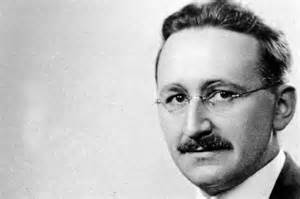
072: Friedrich A. Hayek – That Entrepreneurial Knowledge is Situational and Commonsensical, Not Scientific
 In this essay, I present a personal essay based on the work of Freidrich A. Hayek, most notably concerning his thoughts and discussion on how knowledge cannot be scientifically calculated for use within a centrally planned organisation, which is argued in his own essays ‘The Use of Knowledge in Society’ (1945) and ‘Competition as a Discovery Procedure’ (1984).
That Entrepreneurial Knowledge is Situational and Commonsensical, Not Scientific
Part One:
Explanation and Development of the Thesis
In Austrian theory, that entrepreneur is an agent whose character has been carefully explored. Such on entrepreneur operates in a market economy, which is referred to as a ‘discovery process’ by Hayek¹. That entrepreneurs knowledge of the market is imperfect due to do reasoning that knowledge is dispersed amongst the undertakers of the business.
Entrepreneurs possess a certain degree of knowledge dust is unique to them individually and one that cannot be expressed quantitatively. Thus, Hayek disregards all neo-classical and Keynesian economics as they seem to dismiss the role of the entrepreneur via use of quantitative analysis (of averages and aggregates) in measuring equilibrium points to which all entrepreneurs must strive towards and achieve.
The unquantifiable (tacit) knowledge, possessed by the entrepreneur, is therefore ignored when scientific knowledge is made available. As Hayek stated ‘the knowledge of the particular circumstances of time and place… is… the body of very important but unorganized knowledge which cannot possibly be called scientific in the sense of knowledge of general rules’ (1945).
In the writings of Hayek, sScientific knowledge is associated with centralized planning whereas entrepreneurial knowledge is associated with a market order where knowledge is dispersed and situational. The latter includes tacit knowledge, as it is not directly communicable.
‘Every individual… possesses unique information of which beneficial use… [is] based on… [the] knowledge of people of local conditions and of special circumstances… of the fleeting moment not known to others… The sort of knowledge with which I have been concerned is knowledge of the kind which by its nature cannot enter into statistics and therefore cannot be conveyed to any central authority and statistical form’ (Hayek, 1945: 251).
The market economy can only operate at its most optimum level given the knowledge of entrepreneurs who mutually adjust via negative feedback. There is no role for scientific knowledge, as such use would ‘collectively’ combine the knowledge of all entrepreneurs in some mathematical formulation, thereby ignoring situational and commonsensical knowledge.
The market is a ‘discovery process’ for all undertakers who aim to eliminate in perfect knowledge by receiving ‘information for judgments about… matters by reading…, watching…, experiencing…, chatting…, strolling… Much of what he thereby observes – or senses – he could not express in explicit words or numbers’ (Yeager, 1996).
Thus, the entrepreneur will base decisions regarding cost minimisation, prices, allocation of resources, etc. on what they know and what they believe is the right and optimum choice. Scientific knowledge is irrelevant, as it does not quantify the ‘feel’ for the market. It aims for an equilibrium point in time, is costly, his complicated and fails to adjust to changes in the market at the required time.
Tacit knowledge is often not consciously known, even to those who process it, and come never be communicated to a central authority or used in their scientific evaluations. Such entrepreneurial knowledge is unknowingly transmitted throughout the economy as an unintended consequence of individuals pursuing their own ends. The unintended consequences of an economy fail to be recognized by those reliant on scientific knowledge, whereas the entrepreneur with situational knowledge, will recognize such and act accordingly.
Spontaneity is key to the entrepreneur and utmost for the market economy, thereby suggesting that the process towards obtaining equilibrium is a never ending process. As Knight put it, ‘business decisions deal with situations which are far too unique, for any sort of statistical tabulation to have any value for guidance’ (1971: 231).
Part Two:
A] Argument Against the Thesis
Hayek’s thesis that entrepreneurial knowledge is not scientific has drawn the attention of its critics, most notably Lange, Dickinson and Stiglitz. All three believe that entrepreneurial knowledge consists of scientific information as it practically improves business decisions.
Lange (1938) proposed that scientific knowledge of, say, conditional prices for all goods and factors of production should be made available and that these could be taken as parameters in the decision-making process of the entrepreneur. The result would speed up the equilibrium process and enhance the knowledge of the entrepreneur regarding market indicators.
‘the Central Planning Board has a much wider knowledge of what is going on in the whole economic system than any private entrepreneur can ever have’ (Lange, 1938).
In the advent of supercomputers, Lange stated that entrepreneurs could use scientific information to aid in their decision-making and that such scientific knowledge could be obtained in real-time given the demands of the market.
Dickinson agreed with Lange, stating that rational calculation under socialism was at least theoretically possible. Dickinson believed that any economy could be formerly represented by a Walrasian system of equations from which the undertakers in the market base their decisions to achieve an equilibrium point. Such scientific knowledge is vital for entrepreneurs if they wish to remain competitive and understand the direction taken by the market as a whole.
Stiglitz refers to ‘imperfect knowledge’ as known-to-be-available information that is costly to produce. Stiglitz states that such information, not known by the entrepreneur, could be obtained by acquiring statistical and computable data about the markets which can aid in the process of eliminating the imperfect knowledge of the entrepreneur and reduce uncertainty and risk.
Each decision is made within a well-defined framework made up of a given objective function, a given set of resource constraints, and a given set of technologically or economically means of transforming resources into desired objectives².
A famous physicist, Lord Kelvin, stated that ‘When you cannot measure your knowledge is meager and unsatisfactory’³ a statement that many critics of Hayek will stand by.
B] Arguments in Favor of the Thesis:
The main body of argument for Hayek’s thesis came from Hayek himself, although many supported his writings such as Kirzner, Gray and Yeager. Hayek argued that entrepreneurial knowledge is by no means scientific. Knowledge is dispersed throughout society and it is embodied in habits and dispositions of the entrepreneur.
Entrepreneurial knowledge ‘is “knowing where to look for knowledge” rather than knowledge of substantive market information’ (Kirzner, 1973: 68). Entrepreneurial knowledge cannot be quantified or recognized by a central planner or any undertaker in a market who uses a scientific approach.
‘Pantometria’ fails to recognize the tacit knowledge of the entrepreneur and, thus, competitive market behavior relying on scientific knowledge, cannot be a true reflection of entrepreneurial undertakings.
‘there is… a body of very important but unorganised knowledge which cannot possibly be called scientific… the knowledge of the particular circumstances of time and place… every individual… possesses unique information of which beneficial use might be made, but of which use can be made only if the decisions depending on it are left to him or are made with his active co-operation’ (Hayek, 1968, 250).
In response to Langes criticisms, Hayek states that the ‘imperfect knowledge’ of the entrepreneur is actually ‘previously unthought of knowledge’ which must be discovered by the entrepreneur without any need for science. The entrepreneur, given unique and tacit knowledge, can’t adapt to changing requirements of the market process.
Those who possessed scientific knowledge aim for an equilibrium point in time but fail to recognize that ‘long before [equilibrium] is reached the circumstances to which the local efforts adapt themselves will have changed themselves’. Only the entrepreneur who possesses unique and tacit knowledge will ‘change their plans in the direction made necessary by actual changes’.
‘One major flaw in all proposals for the economic planning is that they are all bound to attempt to transform entrepreneurial perception of opportunities into mechanical procedures for resource-utilization and to incur vast losses of efficiency in so attempting’ (Gray, 1998: 38).
With the application of scientific knowledge, entrepreneurs misinterpret the markers process and, as such, tacit knowledge is lost when averages and aggregates our computed. Entrepreneurs, due to the ‘organised complexity [of the market process] where we expect to find permanent constant relations between aggregates or averages’, must not rely upon scientific knowledge.
Part Three:
Argued Statement of Writer’s Own Position
- Acceptance of the Thesis
Having read the relevant literature and wait of the arguments for and against the thesis, the author is in the position of agreeing with Hayek’s thesis.
It is true that not all knowledge can be observed and represented by variables to be inserted into complicated scientific models and conceptual frameworks. Each entrepreneur possesses unique knowledge that orders do not have. Such knowledge is based upon intuition, beliefs, sense and first-hand know-how, which is collectively and instinctively used by entrepreneur to achieve his/her ends.
We human beings live in a world where science seems to preoccupy our minds and influence our decisions. However, such scientific knowledge it is based on the law of averages and probabilities, which persuade entrepreneurs that some optimum outcome will be achieved at some point in time.
The author shares the view of Hayek that there exists a body of knowledge that is ‘particular to the circumstances of time and place’ which cannot be detected, quantified or interpreted by any scientific machine, framework or equation. For example, become attrition’s aim to explain the relationships between variables, but there exists an error term in each regression due to unknown variables that are omitted from the model.
Introducing the case of the BSE crisis, a conflict of interest between individual and scientific knowledge is apparent. It is all well and good to provide statistical data, but entrepreneurs, who operate in the beef industry, do not need such information, how’s they already knew of the crisis when it became apparent.
Such knowledge was situational to entrepreneur and it was common sense that the affected cattle would be a threat to his/her undertakings. The entrepreneur, by a discovery process, will operate in the best possible market available under such a crisis. No scientific knowledge is required in predicting an equilibrium point for the farmer.
2. Objection to the Thesis
Despite accepting that entrepreneurial knowledge is situational and commonsensical, the author shares the view of Stiglitz that’s of entrepreneurs cannot afford to be ignorant of the fact that scientific methods are vital in expanding the decision making process of the entrepreneur. It is evident to every undertaker in a market. Scientific evaluations of costs, prices and other indices are available I’m very helpful in finalizing decisions.
Part Three
Responses to Objections Against the Writer’s Position:
In the previous section, it had been acknowledged that entrepreneurial knowledge is situational and commonsensical, but it is the belief of the writer that such knowledge is incomplete without the use of scientific knowledge.
Scientific knowledge is considered a net benefactor to entrepreneurs as it provides vital information that can almost drastically eliminate imperfections of knowledge. ‘Misallocations’ or ‘wastes’ would be minimised.
However, it is understandable to criticize the above statement and defend the position of Hayek. Entrepreneurs will eventually eliminate the imperfection that they possess via the ‘discovery process’ without the dependency of science.
To describe entrepreneurial activity as wasteful because it corrects mistakes only after they occur seems, as Kirzner put it, ‘similar to ascribing the ailment to the medicine which heals it, or even to blaming the diagnostic procedure for the disease is identifies’ (1973: 236).
To conclude, the writer believes that entrepreneurial knowledge is situational and to some degree commonsensical but it also includes an element of science.
References:
Caldwell, B. J. (1997). Hayek and Socialism. Journal of Economic Literature, 35(4):1856-1890.
Gray, J. (1998). Hayek on Liberty. Third edition. Routeledge: London and New York.
Hayek, F. A. (1945). The Use of Knowledge in Society. American Economic Review. XXXV, No. 4. pp. 519-30. American Economic Association.
Hayek, F. A. (1968). Competition as a Discovery Procedure. The Quarterly Journal of Austrian Economics 5, No. 3 (Fall 2002): 9–23.
Check out this FREE Kindle ebook ‘The Essential Hayek’ by Donald Boudreaux
Podcast: Play in new window | Download

 Economic Rockstar is created for you, the economist, financial analyst, teacher or student. If you are looking to expand your knowledge or awareness, Frank Conway delivers the information you just don’t want to miss. Economic Rockstar brings to you each week an economist, financial analyst or business leader who shares their experiences, research interests or ideas. Hear their views on different schools of economic thinking – Chicago, Austrian, Keynesian and Classical, behavioral economics, stock markets, and how economics and finance can be used in our lives. Economic Rockstar interviews top-level lecturers and academics from highly renowned universities, best-selling authors and bloggers, inspirational CEOs and business leaders, as well as amazing and thought-provoking people who have recently discovered economics and finance and are carving out a career in their new-found passion. Guests in each episode gives us wonderful advice, takeaways and insights that will help you become part of the Economic Rockstar community that will be ‘Connecting Brilliant Minds in Economics and Finance’.