• ABOUT
  • RESOURCES
  • PODCAST
  • BOOKS
  • BLOG
  • SUPPORTERS
  • QFA Financial Advice
  • CONTACT

Economic Rockstar

Connecting Brilliant Minds in Economics and Finance

075: Kate Bahn on Monopsony in the Market for Teachers and the Economics of Retirement

March 3, 2016 by Frank

http://traffic.libsyn.com/economicrockstar/075_Kate_Bahn.mp3
Play in New WindowDownload

075: Kate Bahn on Monopsony in the Market for Teachers and the Economics of Retirement

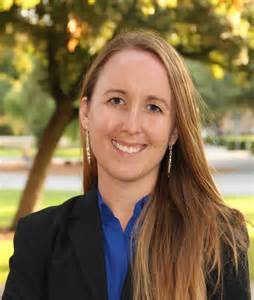
Kate Bahn is an economist at the Center for American Progress in Washington, D.C.Kate Bahn Economic Rockstar 2
Kate is also the co-founder and managing editor of Lady Economist, an amazing blog with rich content on how economics impacts women and girls.

Kate’s economics writing has been featured in the Guardian, the Nation, the Chronicle of Higher Education and Good Magazine among others.

She is also an active member of the International Association for Feminist Economics.

Kate received her PhD in Economics from the New School for Social Research, where she also worked as a researcher for the Schwartz Center for Economic Policy Analysis.

Kate’s scholarly research includes labor economics, gender in the economy, caring labor, and retirement.

Influencers:

Julie Nelson and Nancy Folbre

Economics:

In this episode, Kate mentions and discusses: monopsony, rents, labor markets, deadweight loss, retirement and risk aversion.

Economists:

In this episode, Kate mentions and discusses: Justin Wolfers, Nancy Folbre, Marina Adshade, Julie Nelson, Joan Robinson and Mesude Kongar 

In this episode you will learn:

  • what is a monopsony market
  • why early-career teachers leave their profession within the first five years.
  • about the International Association for Feminist Economics.
  • about the economics of retirement.
  • whether women are more risk averse than men or whether it is gender-stereotyping.
  • which US President should be removed from a US bill and what female should replace him.
  • and much more.

Research by Kate Bahn:

  • Bahn, Kate. (2015, July 17). Monopsony in Caring Labor: Job Search Models with Care as a Job Characteristic. Annual Conference of the International Association of Feminist Economics.
  • Bahn, Kate. (2013, July 10). Monopsony in Caring Labor: Estimating Labor Supply Elasticity of Teachers. Annual Conference of the International Association of Feminist Economics.
  • Bahn, Kate. (2013, January 5). Early Career Teachers and Gender Effects of Labor Market Decisions: Duration Analysis of the Beginning Teacher Longitudinal Study. Panel of the International Association of Feminist Economics at the American Social Science Academy Annual Conference.
  • Ghilarducci, Teresa, Saad-Lessler, Joelle, & Bahn, Kate. “Are U.S. Workers Ready for Retirement?” Journal of Pension Benefits. Winter (2015).

Other Writings:

Joseph Stiglitz taught me how to date by Kate Bahn

Books:

  • Invisible Heart by Nancy Folbre
  • Feminism, Objectivity and Economics by Julie Nelson
  • Angry Grad by Leah Bell

Podcast Episodes:

  • Leah Bell
  • Nancy Folbre
  • Marina Adshade

Papers:

  • Barber, R and T. Odean, (2001). Boys Will be Boys: Gender, Overconfidence, and Common Stock Investment. The Quarterly Journal of Economics, pg: 261- 292.

Conference:

  • International Association for Feminist Economics (IAFFE)

Where to Find Kate:

  • Twitter: @LipstickEcon
  • Website: www.ladyeconomist.com
  • Centre for American Progress
  • International Association for Feminist Economics

http://traffic.libsyn.com/economicrockstar/075_Kate_Bahn.mp3

Podcast: Play in new window | Download

062: Stephen Terry on Real Business Cycles, Total Factor Productivity, Short-Termism and Doing a PhD

December 10, 2015 by Frank

http://traffic.libsyn.com/economicrockstar/Stephen_Terry_Final.mp3
Play in New WindowDownload

062: Stephen Terry on Real Business Cycles, Total Factor Productivity, Short-Termism and DoiStephen_Terryng a PhD

Stephen Terry is Assistant Professor of Economics at Boston University.

In 2013 he was a Dissertation Intern, Federal Reserve Bank of Richmond and, from 2007 to 2009, Stephen was a Research Associate at the Federal Reserve Bank of Kansas City.

Stephen  received a PhD in Economics from Stanford University in 2015 as well as an  MA in Economics in 2011.

Stephen also has an MA in Mathematics from the University of Oklahoma and a BA in Economics from University of Texas at Arlington.

Stephens research interests include short-termism, uncertainty and real business cycles.

One of the most important summary statistics in macroeconomics is a measure known as TFP or total factor productivity of the economy as a whole – Stephen Terry

Economics:

In this interview, Stephen mentions: labor markets, double coincidence of wants, selection markets, matching markets, algebraic topology, total factor productivity, real business cycles, economic shocks, volatility, variance, risk, uncertainty, aggregate output, employment, investment, allocation of inputs, uncertainty, earnings, profits, short-termism and the Principle-Agent Problem.

Economists:

In this interview, Stephen mentions: Christine Exley, Nick Bloom, John Van Reenen and John Maynard Keynes.

In this episode you will learn:

  • about Stephen’s experience with the two-body or joint location problem.
  • about Stephen’s PhD process and the experience he developed along the way.
  • of some suggestions if you’re considering undertaking a PhD.
  • the differences and similarities in the mathematics of economics and the mathematics of other disciplines such as physics and chemistry.
  • if there is a divergence or a convergence in the branches of macroeconomics and microeconomics.
  • what really happens during recessions.
  • how firms can learn and react to the data provided at a micro level.
  • what Total Factor Productivity is.
  • about Real Business Cycle theory.
  • whether changes in uncertainty causes or amplifies recessions.
  • whether managers should forego the long-term objectives of the firm due to the pressures of short-termism.
  • whether rating agencies are beneficial to investors or if they potentially hinder the growth prospects of the firm due to short-term pressures and expectations.

Preparation for Life as a Research Economists into 2 Stages:

1) Useful things that you can be doing before graduate school.

You have to study Math. Economics at graduate level is increasingly dominated by the technical and quantitative research methods.

Having some practical experience in the application of mathematics in economics is not not only valuable for later on in your career but is now becoming a pre-condition to gaining access to research-intensive PhD programmes.

If your undergrad or Masters degree lacks math rigour, then you should consider building on your current level of math by undertaking a math PhD programme.

3) The ways in which you can maximise the benefits you get in your PhD training.

You should consider becoming a Research Assistant prior to starting your PhD so that you gain the practical experience.

This will put you in a situation in which you can be mentored and instructed by other economists who are undertaking economics and statistical research projects.

Being exposed to this will offer you an insight into the research process as well as ‘train’ you to become quite efficient and structured in terms of time management and application.

On the Use of Math in Economics:

At its core, math and applied mathematical techniques, but also pure mathematical proof-based reasoning, are ways to go from some set of assumptions to a coherent set of conclusions that you know follow logically without inconsistency from those assumptions.

By harnessing that logical consistency, economics is something, in the last few decades, that has been able to harness a great deal of precision in the statements that it’s able to make. But still at its core, where the debate centres, you have to understand that the assumptions that we make are primarily assumptions about people. Economic actors sometimes go their own way and don’t always follow perfectly the rules or logical coherent types of assumptions that we start with as an economist.

There’s a great deal of power and precision that is gained by math but this underlying realisation that we’re dealing with individuals rather than physical particles that you would use in physics is something that an economist has to keep in mind when they do think about the real world.

Papers:

  • Terry, S. (2015). The Macro Impact of Short-Termism. Working Paper.
  • Bloom, N.,  Floetotto, M., Jaimovich, N., Saporta-Eksten, I., and Terry, S. (2014). Really Uncertain Business Cycles. Working Paper.

Sources:

  • US Census Bureau
  • Institute for Fiscal Studies
  • McKinsey and Company
http://traffic.libsyn.com/economicrockstar/Stephen_Terry_Final.mp3

Podcast: Play in new window | Download
057: Alvin Roth on Match-Making, Repugnant Markets and Market Design

November 5, 2015 by Frank

http://traffic.libsyn.com/economicrockstar/057_Alvin_Roth_Final.mp3
Play in New WindowDownload

057: Alvin Roth on Match-Making, Repugnant Markets and Market Design

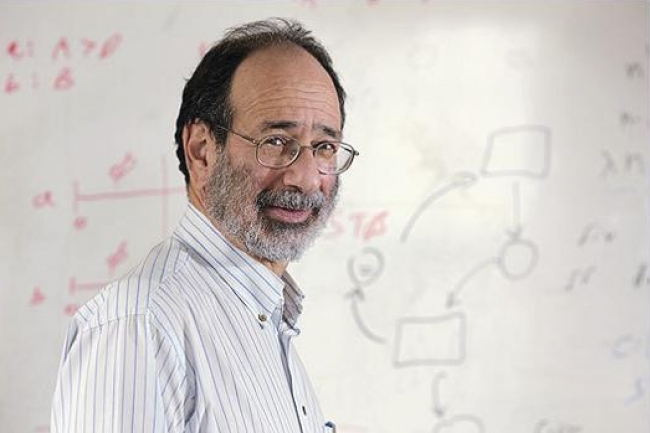
Alvin Roth is the Craig and Susan McCaw Professor of Economics at Stanford University.Alvin Roth

Professor Roth has made significant contributions to the fields of game theory, experimental economics and market design and is known for his emphasis on applying economic theory to solutions for “real-world” problems.

In 2012, Alvin won the Nobel Memorial Prize in Economic Sciences jointly with Lloyd Shapley “for the theory of stable allocations and the practice of market design.”

Alvin Roth has a B.S form Columbia University,  and earned his MS and Ph.D. from Stanford University.

Alvin’s latest book Who Gets What and Why: The New Economics of Matchmaking and Market Design is now available on Amazon.

Economics:

In this interview, Alvin mentions: money, barter, matching markets, supply, demand, price discovery, labor markets, marriage markets, market design, double coincidence of wants, property rights and game theory.

Economists:

In this interview, Alvin mentions: Gary Becker, Christien Exley, Lloyd Shapley, David Gayle, Herb Scarf, Hal R. Varian,  Preston McAfee, Fuhito Kojima, Muriel Niederle, Paul Milgrom, John Levin, Ilya Segal and Oskar Morgenstern.

In this episode you will learn:

  • what economics is and if we need money to allow a market to operate efficiently.
  • about the price discovery process in economics.
  • what is match-making markets and how similar the labor market is to the dating market.
  • what is market design and why it is important.
  • how entrepreneurs and start-ups, like Airbnb and Uber, use market failure to solve a problem.
  • what is a repugnant market.
  • the difference between a thick and a thin market.
  • what makes a market thick.
  • about the black market for kidneys.
  • how kidney exchange works.
  • about the double coincidence of wants in the kidney exchange market.
  • about the problem in the market for water in California.
  • some of the unintended consequences from the war on drugs.

Books:

  • Who Gets What and Why: The New Economics of Matchmaking and Market Design by Alvin Roth
  • Thinking, Fast and Slow by Daniel Kahneman
  • Theory of Games in Economic Behaviour by John von Neumann and Oskar Morgenstern

Papers:

  • Gayle, D. and L. Shapley (1962). College Admissions and the Stability of Marriage, The American Mathematical Monthly, Vol. 69, No. 1, pp: 9 – 15.  
  • Scarf, H. and L. Shapley. (1974). On Cores and Indivisibility. Journal of Mathematical Economics 1: 23-37.

Websites Mentioned in this Episode:

  • Market Design: Alvin Roth’s blog
  • Angel Flight: People Helping People in Need
http://traffic.libsyn.com/economicrockstar/057_Alvin_Roth_Final.mp3

Podcast: Play in new window | Download
054: Christine Exley on the Economics of Volunteering, Market Failure in the Homeless Dog Market and Wagaroo

October 15, 2015 by Frank

http://traffic.libsyn.com/economicrockstar/054_Christine_Exley_Final.mp3
Play in New WindowDownload

054: Christine Exley on the Economics of Volunteering, Market Failure in the Homeless Dog Market and Wagaroo

Christine Exley is Professor of Business Administration at Harvard Business School. Christine is also Co-founder and Christine ExleyChief of Research at Wagaroo – an organisation dedicated to re-house homeless dogs to responsible and loving families.

Wagaroo was founded to bring a simple principle to life: When it comes to getting a pet, it’s time to make it easier for people to do the right thing! No puppy mills. No backyard breeders. Just owners, rescues, responsible breeders, and shelters working together to find great homes for dogs who need them. Find out more at wagaroo.com.

This episode is dedicated to Pepper, Christine’s family pet dog who recently passed away. Pepper is the Pit Bull that Christine mentions in this episode whom she rescued from a dog shelter.

Economics:

In this interview, Christine mentions: gender differences, labor markets, incentives, market failure, search costs, information asymmetry, supply, demand, thick and thin markets, labor markets and wage elasticities.

Economists:

In this interview, Christine mentions: Al Roth, Dan Ariely, Shawn Humphrey, Doug Bernstein, Charlie Springer and Stephen Terry.

In this episode you will learn:

  • the use of assumptions in economic models for testing.
  • how to encourage volunteering and whether monetary incentives work.
  • how a trip to Honduras changed Christine’s academic path from mathematics to economics.
  • how a story about an individuals’ plight can be a powerful message to have people react in a charitable manner, while the plight of millions with no media coverage of a personal story of suffering could become less powerful.
  • about Wagaroo and why Christine set it up to help save dogs from puppy mills.
  • what are thick and thin markets.
  • how to spot an irresponsible dog breeder.
  • about the family2family programme run by Wagaroo.
  • how localised knowledge is key to separate the responsible dog breeder from the irresponsible breeder.
  • why more must be done to regulate and protect animals.
  • how Christine saved a pups life from a dog shelter when she was 17 and became her family pet.
  • why people put in less effort once they hit a target.
  • about the motivating benefits of rewarding volunteers with gift cards rather than a cash equivalent.
  • how virtual rewards, like stickers and badges, can incentivise people to rmeet targets.
  • how people’s perceptions of Pit Bull are an Econ 101 thing!

Quotes by Christine in Episode 54 of the Economic Rockstar Podcast:

“Your population of volunteers really matters” – Christine Exley

Click To Tweet

On Al Roth – “He’s someone who always encourages you to dream bigger” – Christine Exley

Click To Tweet

On the successful family2family programme run by Wagaroo: “As an economist I’m very pleased with how clean and, in a sense, compatible that is” – Christine Exley

Market Failure in the Market for Homeless Pets

“I think there’s every market failure in the book in the market for homeless pets” – Christine Exley

Click To Tweet

Two of the biggest ones arise from search costs. It’s really hard to find the dog you’re looking for. There are thousands of organisations globally that have dogs. There are thousands, if not millions, of families each year that need to re-home dogs.

The heterogeneity in types of dogs – different sizes, ages, breeds and personalities. The inventory is not always up-to-date. It’s hard to coordinate among multiple actors. It’s a disaster. Trying to find out all of that information is challenging.

Information asymmetry is another market failure. Often people on the other side have more information about the dog than you do. Sometimes no one has information on the dog. Maybe the dog was found on the street and we have no idea what’s this dogs history is or how this dog would interact in different environments.

There are many fundamental challenges that really make it a tricky market.

There’s actually about 2 million dogs and cats every year that are killed because they don’t find homes. So there’s certainly a surplus so to speak of dogs and cats.

Up to 23 million people are interested in acquiring a pet for their family in any given year. The vast majority are open to multiple sources – adoption, buying from a breeder.

It’s very easy for bad actors to imitate good actors – Christine Exley

Personal Habits:

  • Getting up at 5:45 am and Running

Takeaway:

  • Get a dog. Particularly get a Pit Bull – Christine Exley

    Click To Tweet

Internet Resource:

  • Wagaroo
  • Al Roth’s blog: marketdesigner
  • LaTex

Contact: spot@wagaroo.com

Where to Find Christine:

  • wagaroo.com
  • wagaroo.com/app
http://traffic.libsyn.com/economicrockstar/054_Christine_Exley_Final.mp3

Podcast: Play in new window | Download
Frank Conway

Frank Conway is founder of Economic Rockstar and lecturer of economics, finance and statistics. Read More…

View My Blog Posts

Youtube Sub

Become a Patron of the Economic Rockstar Podcast

patreon

Ireland’s Economy by the Numbers

Leaving Cert Economics: Ireland’s Economy  Click here to download a workbook on Ireland’s Economy so that you can add your own notes. [Original size] Ireland’s Economy by fconway

Categories

Subscribe and Never Miss An Episode

itunes-logo

Recent Posts

  • Ireland’s Economy by the Numbers April 8, 2019
  • 174: Wendy Carlin on The Core Project, Capitalism, Democracy and Normative Statements February 13, 2019
  • 173: Stephen Wright on Core Econ as a Learning Resource for Mainstream Economics January 28, 2019
  • 172: Best of 2018 Part 2: From the Great Depression to Futurism; Institutions, Individualism, Cooperation and Reciprocity January 22, 2019
  • 171: Best of 2018 Part 1 January 3, 2019

Copyright © 2026 · Podcast Pro Theme on Genesis Framework · WordPress · Log in

This website uses cookies to improve your experience. We'll assume you're ok with this, but you can opt-out if you wish. Accept Reject Read More
Privacy Policy

Privacy Overview

This website uses cookies to improve your experience while you navigate through the website. Out of these, the cookies that are categorized as necessary are stored on your browser as they are essential for the working of basic functionalities of the website. We also use third-party cookies that help us analyze and understand how you use this website. These cookies will be stored in your browser only with your consent. You also have the option to opt-out of these cookies. But opting out of some of these cookies may affect your browsing experience.
Necessary
Always Enabled
Necessary cookies are absolutely essential for the website to function properly. This category only includes cookies that ensures basic functionalities and security features of the website. These cookies do not store any personal information.
Non-necessary
Any cookies that may not be particularly necessary for the website to function and is used specifically to collect user personal data via analytics, ads, other embedded contents are termed as non-necessary cookies. It is mandatory to procure user consent prior to running these cookies on your website.
SAVE & ACCEPT