• ABOUT
  • RESOURCES
  • PODCAST
  • BOOKS
  • BLOG
  • SUPPORTERS
  • QFA Financial Advice
  • CONTACT

Economic Rockstar

Connecting Brilliant Minds in Economics and Finance

157: François Allisson on Value and Prices in Russian Economic Thought

September 8, 2018 by Frank

http://traffic.libsyn.com/economicrockstar/157_Francois_Allisson_Final.mp3
Play in New WindowDownload

157: François Allisson on Value and Prices in Russian Economic Thought

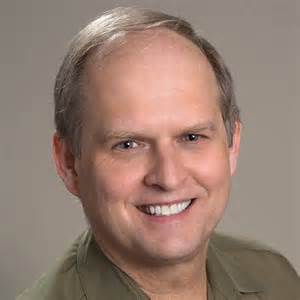
François Allisson is a scholar in history of economic thought and a senior lecturer at the Centre Walras-Pareto at the University of Lausanne in Switzerland.

His research interests encompass the whole history of Russian economic thought, with a special emphasis on the theories of value and prices at the end of the imperial period and the beginning of the Soviet era ( which covers the years from the 1870s to the 1920s).

Francois’s interests int the theories of value, distribution, money, crises, accumulation of capital and planning lead him to study various schools of economic thought and classical political economy as well as Marxism, and marginalism.

His book Value and Prices in Russian Economic Thought was awarded the European Society for the History of Economic Thought (ESHET) Best Book Award in 2016.

Francois is now engaged in a collective project intending towards an intellectual biography of Nikolay Ivanovich Sieber (1844–1888), a Swiss and Russian economist

His teaching activities include a course on the history of contemporary economic thought, which covers the history of macroeconomics since Keynes’s General Theory, in both mainstream and heterodox traditions.

Francois was recently elected Vice-President of the International Walras Association. Among other activities, he is General Secretary of the Association Charles Gide (the French association for history of economic thought) and a Managing Editor of Œconomia.

Talk about economic thought during the 1890s to 1920s and the Russian economists of the time.

About the classical theory of pricing based on the value of labour and how that has changed since the preferred neoclassical marginal revolution in pricing theory that we know of today.

Links:

  • François Allisson website
  • International Walras Association
  • Association Charles Gide
  • Œconomia
  •  Centre Walras-Pareto
  •  University of Lausanne

Books:

  • Value and Prices in Russian Economic Thought: A journey inside the Russian synthesis, 1890–1920 by François Allisson
  • Economics and Other Branches – In the Shade of the Oak Tree: Essays in Honour of Pascal Bridel by Roberto Baranzini and François Allisson
  • Red Star: The First Bolshevik Utopia by Alexander Bogdanov
  • Journey of My Brother Alexsey to the Land of Peasant Utopia by Alexander Chayanov

Patreon

If you’re a fan of the podcast and would like to show your support in anyway, please check out my Patreon page at www.patreon.com/economicrockstar where you can sign up for any of the awards for as little as $1 a month or you can simply follow me on Instagram the Economic Rockstar Facebook page or on Twitter or simply recommend the show to a friend, especially if they have never had the opportunity to study economics.

http://traffic.libsyn.com/economicrockstar/157_Francois_Allisson_Final.mp3

Podcast: Play in new window | Download

081: Julie Nelson on the Importance of Ecology in Economics and the Misconception of Gender Roles in the Economy

April 14, 2016 by Frank

http://traffic.libsyn.com/economicrockstar/081_Julie_Nelson.mp3
Play in New WindowDownload

081: Julie Nelson on the Importance of Ecology in Economics and the Misconception of Gender Roles in the Economy

Julie Nelson is Professor of Economics at University of Massachusetts Boston and Senior Research Fellow at Global Development and Environment Institute, Tufts University, also in the USA.Julie Nelson Economic Rockstar

Julie’s research areas include feminist economics, ecological economics, the philosophy and methodology of economics, ethics and economics, the teaching of economics, and the empirical study of individual and household behavior.

Professor Nelson has also served as a Research Economist at the U.S. Bureau of Labor Statistics and a Visiting Associate Professor at Harvard University amongst others.

Julie is the author of Economics for Humans and author, co-author, or co-editor of several other books including Beyond Economic Man: Feminist Theory and Economics.

She has also authored numerous articles in journals ranging from Econometrica, the American Economic Review, and the Journal of Political Economy, to Signs: Journal of Women in Culture and Society, Feminist Economics, and Ecological Economics.

Professor Nelson earned a B.A. degree in Economics from St. Olaf College and an M.A. and Ph.D. in Economics from the University of Wisconsin, Madison, USA.

Julie, along with Mark Maier, runs the website introducingeconomics.org

Economics:

In this episode, Julie mentions: statistical inference, bias, production function, land, labor, capital, resource maintenance, feminist economics, care, GDP, Pigouvian tax, carbon, welfare gains, negative externality and Kyoto Agreement.

Economists:

In this episode, Julie mentions: John Stuart Mill, Gary Becker and Amartya Sen.

Quotes by Julie in Episode 81:

“Math gives you internal consistency. It does not give you objectivity and reliability.” – Julie Nelson

Click To Tweet

“Most economic textbooks tell you there are three basic economic activities… production, distribution and consumption. We added one at the beginning and what we called ‘resource maintenance’. That is, how are you ever going to produce anything if you don’t have the resources and if you haven’t taken care of them and sustained them in a way that they’ll be productive in the future” – Julie Nelson

“No one would be so silly to try to address an economic problem without looking at its social, ethical, physical and political dimensions. But later economists didn’t remember those cautions of Mills and just ran with the math aspect of it.” – Julie Nelson

“There’s still a long way to go to think of gender in an intelligent and equitable way.” – Julie Nelson

Click To Tweet

Takeaway:

“Be careful about what you believe that economists are telling you.” – Julie Nelson

“Wherever we are in our life whether we’re at work in a business or at home or bringing our whole selves with us. We don’t just bring parts of ourselves. So if you want to be an ethical person anywhere, we need to do that when we’re at work.” – Julie Nelson

Books:

  • Men are from Mars. Women are from Venus by John Gray
  • ECONned: How Unenlightened Self Interest Undermined Democracy and Corrupted Capitalism by Yves Smith
  • The Shareholder Value Myth by Lynn Stout

Links:

  • www.julieanelson.com
http://traffic.libsyn.com/economicrockstar/081_Julie_Nelson.mp3

Podcast: Play in new window | Download
078: Arnold Kling on the Hidden Story of How Markets Work, the Mortgage Crisis and How We Pay for Health Care

March 24, 2016 by Frank

http://traffic.libsyn.com/economicrockstar/078_Arnold_Kling_.mp3
Play in New WindowDownload

078: Arnold Kling on the Hidden Story of How Markets Work, the Mortgage Crisis and How We Pay for Health Care

Arnold Kling is a Mercatus Center–affiliated senior scholar at George Mason University and a member of the arnold kling economic rockstarFinancial Markets Working Group.

Arnold specializes in housing-finance policy, financial institutions, macroeconomics, and the inside workings of America’s federal financial institutions. He also is an adjunct scholar at the Cato Institute in Washington, DC.

Arnold has testified before Congress on the collapse of Fannie Mae and Freddie Mac

He has authored five books, including Crisis of Abundance: Rethinking How We Pay for Health Care and Invisible Wealth: The Hidden Story of How Markets Work.

Arnold has published articles in the Economist, the Wall Street Journal, the New York Times, the Atlantic, and Forbes, among others, and he blogs at arnoldkling.com/blog/.

Previously, Arnold served as a senior economist at Freddie Mac and a staff economist on the Board of Governors of the Federal Reserve System.

He started Homefair, one of the first commercial websites on the Internet.

Arnold Kling received his PhD in economics from Massachusetts Institute of Technology.

“If you want to live a good lifestyle, you can find hobbies and interests that don’t cost very much. So it’s not hard to enjoy life. But if you want to make yourself miserable, watch politics.” – Arnold Kling

Economics:

In this episode, Arnold mentions and discusses: information rules, economic information, marginal cost of information, advertising, versioning, bundling, Austrian economics, risk measurement, capital, tax, mortgage-backed securities, loans, bubbles, crashes, excess leverage, marked-to-market, economics of health care, labor, capital, land, institutions.

Economists:

In this episode, Arnold mentions and discusses: Hal Varian, Carl Shapiro, Brad deLong, Tyler Cowen, Paul Krugman, Paul Volker, Douglass North, Robin Hanson, Bryan Caplan, James Buchanan, Adam Smith, F. A. Hayek and Robert Solow.

In this episode you will learn:

  • about Moore’s Law and what it means for the economy.
  • why economists are being lured into the world of start-ups and tech companies.
  • about the power of freemium and why companies need to build up trust to create a loyal customer base.
  • the difference between versioning and bundling.
  • what the future holds for the accessing information online.
  • about Arnold’s company online Homefair and how it was one of the first internet companies.
  • what really went on behind closed doors at Fannie Mae and Freddie Mac that resulted in their demise.
  • why Fannie Mae and Freddie Mac were bailed out.
  • how changing the culture at Freddie Mac caused its collapse.
  • about the state of health care in America today.
  • how Americans are to pay for the higher costs of health care.
  • about the fibre-bubble in the 1990s.
  • why we are richer today than a couple of hundred years ago.
  • why ideas are the foundation to economic growth and prosperity.
  • why nations like Cuba and North Korea are poor (bad institutions).
  • about the work being done at George Mason University.

Where to Find Arnold Kling:

  • www.arnoldkling.com/blog/

Books:

  • Crisis of Abundance: Rethinking How We Pay for Health Care by Arnold Kling
  • Invisible Wealth: The Hidden Story of How Markets Work by Arnold Kling
  • Information Rules: A Strategic Guide to the Network Economy by Carl Shapiro and Hal Varian
  • The Revolt of the Public and the Crisis of Authority in the New Millennium by Martin Gurri

Links: 

  • 23andMe: www.23andme.com
    • View reports on over 100 health conditions and traits
    • Find out about your inherited risk factors and how you might respond to certain medications
    • Discover your lineage and find DNA relatives
http://traffic.libsyn.com/economicrockstar/078_Arnold_Kling_.mp3

Podcast: Play in new window | Download

073: Robin Hanson on The Age of Em and How Brain Emulations Will Double Economic Growth Every Month

February 18, 2016 by Frank

http://traffic.libsyn.com/economicrockstar/073_Robin_Hanson.mp3
Play in New WindowDownload

073: Robin Hanson on The Age of Em and How Brain Emulations Will Double Economic Growth Every Month

Robin Hanson is associate professor of economics at George Mason University. He is also a research associate at robin hansonOxford’s Future of Humanity Institute and chief scientist at Consensus Point.

Professor Hanson has diverse research interests, including spatial product competition, health incentive contracts, reversible computation, the origin of life, the survival of humanity, very long-term economic growth, growth given machine intelligence, and interstellar colonization

Robin has pioneered prediction markets, also known as information markets and idea futures, since 1988.

His passion is to understand everything, and to save the world. He is addicted to “viewquakes”, loves to argue one on one, and values honesty and passion. He blogs at OvercomingBias.com which has had over eight million visits.

His book The Age of Em: Work, Love and Life When Robots Rule the Earth will be available in May 2016, and The Elephant in the Brain, co-authored with Kevin Simler, in spring 2017.

Economists:

In this episode, Robin mentions and discusses: Thomas Malthus and Cass Sunstein

Economics:

In this episode, Robin mentions and discusses: emulation economy, economic growth, labor, competition, wages, subsistence economy, capital, land, slaves, supply and demand.

In this episode you will learn:

  • about Robin Hanson’s work in economics.
  • what is The Age of Em and how it could double economic growth every month rather than the current doubling of growth every 15 years.
  • what are brain emulations.
  • what is a singularity and if we will have one within the next 200 years.
  • how the workforce of the future look.
  • how humans will retire and have brain emulations do their work.
  • what will a brain emulation be like.
  • if humans will revert to subsistence levels of existence as predicted by Malthus.
  • about the labor market of the future and whether wages will be competed away with humans and ems living on the margin.
  • how Robin anticipates living in the future and how you can too.
  • why space exploration and space colonization will be delayed until after the rapid and exponential economic expansion brought about by brain emulation.
  • whether you can have a brain emulation of your own brain or whether the process will be reserved to a few hundred people who are best equipped to perform certain tasks.
  • how the relationship between humans and robots is portrayed as a dichotomy – a heaven or hell scenario – but this will not be the case with the technology available using brain emulations.
  • how you can be ‘teleported’ from one device to another without being physically affected.
  • how Robin used economic theory to explain the economy of the future where brain emulations are the drivers of growth.
  • why the Age of Em will last for about 2 years.
  • about Robin Hanson’s request to have only his head cryogenically frozen and what he hopes to achieve.

Paper:

  • Hanson, R. (1994). If Uploads Come First: The Crack of a Future Dawn 

Podcast Episodes:

  • Manu Saadia

Books:

  • The Age of Em by Robin Hanson
  • Trekonomics by Manu Saadia
  • The World According to Star Wars by Cass Sunstein

Resources:

  • The Age of Em
  • www.overcomingbias.com
  • Future of Humanity Institute
  • Consensus Point


http://traffic.libsyn.com/economicrockstar/073_Robin_Hanson.mp3

Podcast: Play in new window | Download

068: Daron Acemoglu on Why Nations Fail and Why Inequality Exists Between Countries

January 14, 2016 by Frank

http://traffic.libsyn.com/economicrockstar/068_Daron_Acemoglu_.mp3
Play in New WindowDownload

068: Daron Acemoglu on Why Nations Fail and Why Inequality Exists Between Countries

Daron Acemoglu is the Elizabeth and James Killian Professor of Economics at Massachusetts Institute of daron acemoglu economic rockstarTechnology in Boston.

Daron’s principal interests are political economy, development economics, economic growth, technology, income and wage inequality, human capital and training, and labour economics.

Daron was the winner of the 2005 John Bates Clark Medal awarded to economists under forty judged to have made the most significant contribution to economic thought and knowledge.

His most recent works concentrate on the role of institutions in economic development and political economy.

Daron received his M.Sc. in Econometrics and Mathematical Economics and his Ph.D. from the London School of Economics.

Daron is co-author of ‘Why Nations Fail: The Origins of Power, Prosperity, and Poverty’ which can be found at whynationsfail.com

Markets are the foundation of long run economic growth but only if they are under guard by inclusive institutions – Daron Acemoglu

Economics: 

In this interview, Daron mentions: capitalism, marxism, inequality, inclusive institutions, extractive institutions, property, public finance,  rights, risks, cliometrics, econometrics, labor, technology, human capital, inequality, creative destruction and comparative advantage.

Economists: 

In this interview, Daron mentions: James Robinson, George Akerlof, Thomas Picketty, Douglass North and Joseph Schumpeter.

In this episode you will learn:

  • why nations fail and others prosper.
  • why Daron despises the term capitalism refereeing it as ‘and ugly term’.
  • why macro variables are second order to the type of institution when explaining the prosperity of a country.
  • why we should study political systems in an economics course.
  • how economic decisions get made.
  • if democracy is good for economic growth.
  • how Daron first became interested in institutions while growing up under a political dictatorship in Turkey.
  • if the political economy or the type of institution of a country explain inequality.
  • what explains inequality within a nation.
  • about Daron’s mixed views on philanthropy.
  • why empires, such as the Roman, Ottoman and British, collapse and whether we could witness the collapse of other institutions.
  • why China will ultimately fail in its present institutional form.
  • what China must do to maintain its economic growth.
  • about the Ireland and how its economy transitioned over the last 100 years.

I think, on the contrary, extractive institutions have great staying power – Daron Acemoglu

Books:

  • ‘Why Nations Fail: The Origins of Power, Prosperity, and Poverty’ by Daron Acemoglu.
  • Why the West Rules–for Now: The Patterns of History, and What They Reveal About the Future by Ian Morris.
  • War! What is It Good For? Conflict and the Progress of Civilization from Primates to Robots by Ian Morris
  • The Dynamics of Ancient Empires: State Power from Assyria to Byzantium by Ian Morris
  • The Secret of Our Success: How Culture Is Driving Human Evolution, Domesticating Our Species, and Making Us Smarter by Joseph Henrich

Where to Find Daron:

  • http://whynationsfail.com/
  • MIT academic page
http://traffic.libsyn.com/economicrockstar/068_Daron_Acemoglu_.mp3

Podcast: Play in new window | Download

060: Manu Saadia on Trekonomics – The Economics of Star Trek: Scarcity, Productivity and Public Goods

November 26, 2015 by Frank

http://traffic.libsyn.com/economicrockstar/Manu_Saadia_Final.mp3
Play in New WindowDownload

060: Manu Saadia on Trekonomics – The Economics of Star Trek: Scarcity, Productivity and Public Goods

Manu Saadia fell into science fiction and Star Trek fandom at the age of eight, back in Paris, France, where he was born and raised.Manu Saadia

Manu  studied history of science and economic history in Paris and Chicago. After many happy years in the Ivory Tower, he yielded to his childhood passion for the future.

Manu embarked on his continuing mission to explore strange new worlds by boldly going where many have gone before: Los Angeles, CA, where he advise and (occasionally) builds tech companies.

Manu received the 2005 Wayne C. Booth Graduate Student Prize for Excellence in Teaching at the University of Chicago.

His book, Trekonomics, is currently available for pre-order at www.inkshares.com and will be released in 2016.

Star Trek offers much more detail about its own world and the way its economics actually works – like the plumbing so to speak. So that’s what I wanted to do. Go into the plumbing of Star Trek. – Manu Saadia

Economics:

In this interview, Manu mentions:  trekonomics, crowd funding, labor, economic history, trade, robots, capitalism, comparative advantage, currency, money, Gold-Pressed Latinum, public goods, conspicuous consumption, scarcity, peak oil, productivity and opportunity costs.

Economists:

In this interview, Manu mentions: Brad DeLong, Felix Salmon, Adam Smith, Thomas Malthus, Hubbert, Paul Ehrlich, Julian Simon, Romer, Larry Summers, John Maynard Keynes and Angus Deaton,

In this episode you will learn:

  • why Manu Saadia wrote Trekonomics.
  • about the Star Trek Economics panel at Comic Con.
  • why economists love Star Trek.
  • about inkshares and how it can help authors publish their book.
  • how traditional media rather than social media boosted pre-order sales of Trekonomics – an ironic outcome.
  • when Manu’s interested in economics and Star Trek collided.
  • about the work of Isaac Asimov and how his stories are a discourse on economics.
  • how the stories of robots and the future by Asimov influenced and shaped the storyline in Star Trek.
  • about the replicators in Star Trek and how they solve the problem of economic scarcity.
  • about the Ferengi’s and how they represent capitalism and trade.
  • why The Federation or the humans in Star Trek do not use money but have a foreign account to trade with the Ferengi’s.
  • about the Ferengi’s currency, Gold-Pressed Latinum, which cannot be replicable.
  • why owning a replicator is a ‘pain in the ass’.
  • how things that cannot be replicated has value but those that can be replicated has no value.
  • if Keynes’ The Economic Possibilities of Our Grand Children is a rebuttal of the writings of H. G. Wells.
  • about GPS being a public good and the benefits it has brought to the public.
  • why making GPS a public good in 1983 was one of the best decisions Ronald Reagan made as US President.
  • Manu’s favourite Star Trek episode is Lower Decks (The Next Generation).

Quotes by Manu Saadia in Episode 60 of the Economic Rockstar Podcast:

Trekonomics got a lot of support and very nice feedback from a lot of economists – Manu Saadia

Click To Tweet

“It always baffles me when you have these very famous and serious economic thinkers were in fact  total Star Trek nerds. I was on a panel at New York Comic Con with Brad DeLong, Paul Krugman and Annalen Newitz from i09. There was Chris Black as well and Felix Salmon.” – Manu Saadia

Brad DeLong came to the panel with a Star Trek hoodie. – Manu Saadia

Click To Tweet

On Isaac Asimov: “All of his work is a long meditation on economics, either foundation where there is this science called psychohistory which is in fact a fictional mathematical modelling of human behaviours on the scale of societies on a galactic scale.” – Manu Saadia

“One of the reasons why I wanted to study economics was that I was fascinated by and really wanted to understand the transformation of humanity’s relation to its own labor. This is one of the great questions of political economy because it determines a lot of things when it comes to the shape society and the role of the state and how behaviors are determined and constructed over time. But it’s also the key to understanding where we’re going”. – Manu Saadia

“I would say the replicators are more of a metaphor. If you look at their status in the series, they do not help move the narratives forward. They’re just there to signify that there’s no need to work. They’re a little bit like robots in Asimov. They have the same narrative function, which is to show and demonstrate that post-scarcity does exist and is based on automation and artificial intelligence.” – Manu Saadia

The Ferengi’s are the capitalist, merchant traders of the galaxy – Manu Saadia

Click To Tweet

Most of the stuff in Star Trek is basically a public good – Manu Saadia

Click To Tweet

I think Star Trek is very much what Keynes described in The Economic Possibilities of Our Grand Children – Manu Saadia

Click To Tweet

Books:

  • Scatter, Adapt, and Remember by Annalen Newitz 
  • Isaac Asimov
  • Frankenstein by Mary Shelly
  • The Economic Possibilities of Our Grand Children by John Maynard Keynes

Papers:

  • Romer (1990) Productivity Gains

Links:

  • What I Learned Crowdfunding Trekonomics  by Manu Saadia
  • Trekonomics The economics of Star Trek: how does it work, and how do we get there?  by Manu Saadia
  • View the transcript to The Amazing Economics of Star Trek at New York Comic Con
  • www.i09.com 
  • www.inkshares.com
  • What the economics of Star Trek can teach us about the real world by Brian Fung, Andrea Peterson and Hayley Tsukayama Washington Post 
  • The Live Long and Prosper Edition Slate Money 
  • Club of Rome 

Manu’s Favorite Star Trek Epsiodes:

  • City on the Edge of Forever
  • Arena

Where to Find Manu:

  • inkshares.com
  • fusion.net

Music:

  • Star Trek Episode Amok Time
http://traffic.libsyn.com/economicrockstar/Manu_Saadia_Final.mp3

Podcast: Play in new window | Download

038: Leah Bell on Being an Angry Grad and Setting Yourself Up for a Life of Success

June 25, 2015 by Frank

http://traffic.libsyn.com/economicrockstar/038_Leah_Bell_Final.mp3
Play in New WindowDownload

038: Leah Bell on Being an Angry Grad and Setting Yourself Up for a Life of Success

Leah BellLeah Bell spent tens of thousands of dollars on a college education for a degree in Education with the same hope of getting a job one day.  After struggling to find a teaching job as an Elementary school teacher, Leah had to work at a minimum part-time job to supplement her teaching salary. However, the school closed and she lost her job. Leah took on a job related to sales. But after a few years she realized that she wanted nothing more than to stay at home with her son. But with student debt and rising prices, it was extremely difficult on one income.

Leah Bell learned the most about life, not in the classrooms of the colleges she attended, but in the years following. After realizing the struggle in the job market, the difficulty of paying off student loans, and the heartbreak of sacrificing priceless time with family to meet financial needs, she and her husband have devoted their lives to sparing people of this depressing fate through their company Neotrep™, providing entrepreneurs with affordable education and tools to succeed. She recently wrote the book The Angry Grad to help prospective students and recent graduates choose the route of entrepreneurship instead of the unstable job world.

Economics:

Mortgage, student loan, debt, competition, labor, happiness, tax and return on investment.

Economics and finance suddenly became personal. It became emotional and, at that time, I became interested in it because it’s not just about numbers. I want people to get their finances under control so they can have a better life and give their children a better life – Leah Bell.

Economists:

Paul Dolan and John Gathergood.

Influencer:

Robert Kiyosaki

Takeaway:

“Always be asking questions, always be willing to learn and take advantage of all of the resources that are out there” – Leah Bell.

Find Out:

  • what is the average student debt?
  • how a college degree is different today than it was just two or three decades ago.
  • why it’s so difficult for college graduates to find jobs and pay back their student loans.
  • how the future will look if we continue teaching young people that debt is the only way to afford a house, a car and an education.
  • what other options are there for people who are considering an education.
  • how debt is not the only way to get through college.
  • if we are paying more for college than we can hope to get back.
  • if it’s still worth taking on so much debt to get a degree.
  • if we’re living in a school loan debt bubble.
  • what we can do about all this?

The Disillusioned Student

High-school students are being blind-sided and do not truly understand the debt that they will accumulate while attending college. Educators and college and career guidance counsellors are failing high-school students by only providing a one-sided argument to going to college. They emphasise the pros of going to college and, in most cases, fail to disclose the cons of going to college in terms of the costs, term loans and the interest repayments. Educators prepare high-school students for college in terms of the grades but lack the financial planning required by the student and their parents.

Typically, a $30,000 loan, which is approximately the average student debt in the US, will amount to $60,000 in capital and interest repayments over the life the loan. However, in many cases, students fail to meet these repayments which equate to upward of $1,000 per month. Consequently, the loan becomes structured to suit the needs of the graduate by acknowledging their current income status and the number of children they may have.

People are putting life events on hold because of the amount of debt they are in – Leah Bell.

Many graduates have become disillusioned with the education system in terms of the costs and the likelihood of repaying it with jobs that do not exist for the training and preparation that they had done at college. For example, teachers are supplementing their teaching salary (if they have a teaching job that is) with a second income earned at shoe stores and restaurants.

By the time students plan to have their entire loan paid off, their going to have double maybe triple the total amount that they originally took out – Leah Bell.

Unfortunately, parents do not understand the reality of the situation. When they themselves were graduating from college, they typically did well relative to those who didn’t attend. Then, jobs weren’t competitive but today, almost everyone has a college degree and finding a job is so much greater than it was then. Now, you need a masters degree to be competitive.

Since there is a demand for college places and lenders are willing to give education loans, colleges  can charge whatever they want. Colleges are aware of this and are raising their rates to astronomical levels. Colleges too are borrowing to finance the development of their campus and their sports and recreational facilities. Football stadiums are being built to professional standards and who best to service this debt than the incoming college students who are paying the ever-increasing fees.

Students are paying more for a college experience than for a college education – Leah Bell

“The college experience is setting up people to fail”. Unless you’re going to college for an engineering degree or something in computer science or physics, something math or science heavy, those are the jobs that you make a decent amount coming out of college. But not everyone fits this mould. Some want to do something in education, social science, music, photography or the arts. Those, however, are on the lower end of the pay scale.

Quotes by Leah Bell on the Economic Rockstar podcast:

“We’re living a very different life than the one we were expecting” – Leah Bell.

“The highest taxed person is the employee” – Leah Bell.

“Why people are encouraged to go to college and get a job is just for the tax reasons” – Leah Bell.

“Set yourself up for a life of success” – Leah Bell.

Click To Tweet

If you can just discipline yourself enough to sit down and learn and go out and try things and be willing to fail and get back up again, you can do anything – Leah Bell.

You’re capped out at your salary and your employer is using your strengths to become really wealthy. What upsets me is people don’t look inside themselves and see all the potential they have and what they can do for themselves – Leah Bell.

“There is no limit to what you can do. No-one is limiting you” – Leah Bell.

Click To Tweet

“I feel that when I wrote this book, I was writing it to myself 12 years ago” – Leah Bell.

Get off your butt. Get some confidence. Do things different. Step out of the box and be different. Don’t be what everyone’s telling you you have to be – Leah Bell.

“The only person that will ever hold you back is you” – Leah Bell.

Click To Tweet

I deal with doubts every single day – whether or not I can do what I wan to do. Do I have enough time in the day? Am I good enough to do it? That’s so natural – Leah Bell.

There’s no one in the world that has not failed except for the people who don’t try. And the people who don’t try never succeed because they never try to get to the point of success – Leah Bell.

“A winner never quits and a quitter never wins” – Napoleon Hill

Click To Tweet

Blogs Mentioned in this Episode:

  • www.neotrep.com by Leah and Walt Bell
  • www.theangrygrad.com by Leah Bell
  • www.smartpassiveincome.com by Pat Flynn
  • www.flippedlifestyle.com by Shane and Jocelyn Sams

Podcast Episodes Mentioned in this Episode:

  • SPI 122 : From Teachers to Totally Rocking it Online – Shane and Jocelyn Sams Share their Success Story – Smart Passive Income.
  • 007: Ryan Blair – Gangster turned Millionaire on Decision-Making, Game Theory and Incentives – Economic Rockstar.

Recommended Books:

  • The Angry Grad: Your Guide to Student Loans, a Struggling Economy, and Becoming Your Own Boss by Leah Bell
  • Spirit of Apollo by Sidney Newton Bremer
  • The 4-Hour Workweek by Tim Ferriss
  • Nothing to Lose, Everything to Gain: How I Went from Gang Member to Multimillionaire Entrepreneur by Ryan Blair 
  • Rich Dad Poor Dad: What the Rich Teach Their Kids About Money That the Poor and Middle Class Do Not! by Robert Kiyosaki 

Music:

It’s Not Right For You by The Script

This song inspired Leah during the writing of her book The Angry Grad.

Where to Find Leah Bell:

  • Twitter: @AngryGradBook
  • Facebook: The Angry Grad
  • Website: www.theangrygrad.com
http://traffic.libsyn.com/economicrockstar/038_Leah_Bell_Final.mp3

Podcast: Play in new window | Download

023: Loretta Napoleoni on Financing Terrorism and the Creation of the Islamic State

March 12, 2015 by Frank

http://traffic.libsyn.com/economicrockstar/023_Loretta_Napoleoni.mp3
Play in New WindowDownload

023: Loretta Napoleoni on Financing Terrorism and the Creation of the Islamic State

Loretta Napoleoni is an expert on terrorist financing and the IslLoretta Napoleoniamic State. She advises several governments and international organizations on counter-terrorism and money laundering.

As Chairman of the countering terrorism financing group for the Club de Madrid, Loretta brought heads of state from around the world together to create a new strategy for combating the financing of terror networks.

Loretta is a regular media commentator for CNN, Sky and the BBC and advises several banks on strategies to counter the current ongoing crisis. She lectures regularly around the world on economics, terrorism and money laundering.

Loretta is also a columnist and writes about terrorism, money laundering and the economy for several European financial papers including El Pais, The Guardian and Le Monde.

Loretta began her career as an economist, working for several banks and international organizations in Europe and the US. She has a Phd in economics and a Masters of Philosophy in International Relations and one in terrorism.

She is the bestselling author of numerous books including The Islamist Phoenix, Maoanomics, Rogue Economics, Terror Incorporated and Insurgent Iraq.

Her books are translated into 18 languages including Chinese and Arabic.

“I studied economics because I thought that economics was the way to change the world” – Loretta Napoleoni.

Economic Themes:

In this interview, Loretta mentions and discusses: Islamic Finance, gold, barter, quantitative easing, reserve currency, consumerism, the Marshall Plan, labor, wages, sex trade, slavery, demand, profit, trade unions, capitalism and growth.

Economists:

In this interview, Loretta mentions: Adam Smith, David Ricardo, Karl Marx, John Stuart Mills and John Maynard Keynes.

Advice:

The key is to always search for the truth. It is important to listen to the experts because otherwise you get the wrong picture – Loretta Napoleoni.

Find out:

  • about Loretta’s involvement in the feminist revolution in the 1970s in Italy where she was one of the founding members of the Italian Feminist Movement.
  • why she studied economics and the subsequent irony of working for a Russian bank.
  • why Loretta sold her company to do a PhD in terrorism at the London School of Economics.
  • about Loretta’s contact with the Italian Marxist organisation, The Red Brigade.
  • how terrorists fund their activities.
  • who initially sponsored ISIS or the Islamic State initially and how they may regret this.
  • why Jihadi John and others were attracted to the Islamic State.
  • how Saudi Arabia’s sponsor of a war by proxy against the Assad regime in Syria resulted in the creation of IS.
  • about The Caliphate and why IS wants to re-create a modern version of this region.
  • about the functioning economy of the Islamic State.
  • if the Islamic State has a functioning banking system.
  • if the Islamic State is using gold coins, dollars or a bartering system.
  • about the how women are treated in the Islamic State.
  • why Loretta believes that the feminist movement ultimately failed.
  • if the US policy of quantitative easing is making it easier to finance terrorism due to the increase in the money supply.
  • the meaning of the Patriot Act and how every transaction made in US dollars is tracked and traced everywhere in the world.
  • whether the US should stop their foreign policy in the Middle East and North Africa.
  • how the world is being shaped by dark economic forces based on the fantasy world of consumerism.
  • how an increase in the number of democratic countries has resulted in an increase in modern-day slavery.
  • about the sex trade and the fall of the Berlin Wall.
  • how the Chinese are better capitalists than Western countries.
  • how we can learn from the Chinese economy.
  • whether Africa will benefit from the Chinese model of capitalism.
  • why there is a ‘race to the bottom’ in todays economy.
  • why Loretta believes that we need a new theory in economics.
  • about the problem of mathematics in economics.
  • the advice Loretta gives for writing a book.

The Caliphate and Islamic State

The Caliphate is a way to formulate the Muslim political utopia, whereby for centuries, Muslims have dreamt of the creation of a State but have failed. The political reality of their world has been dictatorship, foreign power, colonization or the tribal system.

The Caliphate is the only political expression that the Muslims have produced. The ancient Caliphate was a splendid civilization, very different from the Caliphate of the Islamic State because it was very tolerant. Jews, Christians and Muslims lived together in peace without any problems.

Today, the economy of the Islamic State is a closed economy in which the trading of goods and services is done within the State. There is some degree of smuggling going on. Loretta Napoleoni believes that the rise of the Islamic State is a European problem because of colonialization.

Quantitative Easing, the US Dollar and the Illegal Arms Market

The US can borrow against the stock of dollars in circulation all over the world since the dollar is the reserve currency. What this means is that the US prints more dollars, not only for the demand inside the US but also for the demand outside the US. The illegal arms market is run in dollars. Since this is a market that grows, it therefore needs to be fed an increasing supply of dollars. If the Islamic State is using dollars, then they will benefit indirectly from the printing of money inside the United States.

Slavery and the Link with Consumerism

This economy, this rogue economics, is very much an economy that is driven on one end by consumption, this endless consumption. And to feed this monster of endless consumption, you have to produce at a cheaper level. So you use anything you can.  – Loretta Napoleoni.

The sex trade boomed with the fall of the Berlin Wall. Some women had no alternative but to prostitute themselves to feed their family because of the collapse of the Communist economy.

On economics:

“There is too much maths. Everything is reduced to mathematical models. They want to predict everything with numbers. Economics is a social science so you can’t predict people’s behavior.”

Advice:

“If you want to write a book, you start now and you stop when you finish. You don’t stop in the middle, you don’t do many things. All you do is work, work, work.” – Loretta Napoleoni.

Resources:

  • Scrivener 
  • Evernote

Recommended Books:

  • The Islamist Phoenix: Islamic State and the Redrawing of the Middle East by Loretta Napoleoni.
  • Maonomics: Why Chinese Communists Make Better Capitalists than We Do by Loretta Napoleoni.
  • 10 Years That Shook the World by Loretta Napoleoni.
  • Terrorism and the Economy: How the War on Terror is Bankrupting the World by Loretta Napoleoni.
  • Rogue Economics: Capitalism’s New Reality by Loretta Napoleoni.
  • Terror Incorporated: Tracing the Dollars Behind the Terror Networks by Loretta Napoleoni.
  • The Wealth of Nations by Adam Smith
  • The Theory of Moral Sentiments by Adam Smith

Where To Find Loretta Napoleoni:

  • www.lorettanapoleoni.net
http://traffic.libsyn.com/economicrockstar/023_Loretta_Napoleoni.mp3

Podcast: Play in new window | Download

020: George Magnus on The Age of Ageing, China and the EU

February 19, 2015 by Frank

http://traffic.libsyn.com/economicrockstar/020_George_Magnus.mp3
Play in New WindowDownload

020: George Magnus on The Age of Ageing, China and the EU

George Magnus is an independent economist, consultant and commentator. He has a distinguished career that started with some teaching assignments but was spent mostly in the financial services industry.UBS INVESTMENT GROWTH

Before going solo in 2012, George was the Senior Economic Adviser at UBS Investment Bank having previously been the Chief Economist for 10 years. In almost 30 years of working experience in the City, he has held senior positions at SG Warburg, Chase Manhattan Bank and Bank of America. He is a well-known and highly regarded economist in the financial community and has won many accolades in professional surveys as one of the top global economists.

George is well known for his commentaries and interviews in newspapers, journals, TV and radio, most notably for the Financial Times, CNBC and Bloomberg.

George, gained widespread acclaim for declaring in early 2007 that we would face a Minsky Moment – or systemic banking crisis – and a decade of slow growth, has extensive experience of writing on, explaining and speaking about the global economy.

His first book, The Age of Ageing: How Demographics Are Changing The Global Economy And Our World was published in 2008. His latest book, Uprising: Will Emerging Markets Shape or Shake the Global Economy was published at the end of 2010, and assesses, in particular, whether China is set to dominate the world system.

Economic Themes:

In this interview, George mentions and discusses: bubbles, crashes, business cycles, demography, pensions, labor, emerging markets, life expectancy, debt-to-GDP, monetary union and fiscal union.

Economists:

In this interview, George mentions: Hyman Minsky, Thomas Malthus, J.K. Galbraith, James Galbraith (son), Thomas Picketty and Michael Pettis.

Influencer:

J.K. Galbraith

In this episode, you will learn: 

  • about bubbles and why we never learn from them.
  • how demographics are changing the world economy through declining fertility and rising life expectancy.
  • about the need for a policy agenda to cope with an ageing society.
  • why age-related commitments and promises such as pensions and health care schemes are unaffordable.
  • why there is a pension crisis to come and how it mimics a Ponzi-scheme.
  • about the fastest ageing country – China – and what problems will exist in the future.
  • if economies can experience positive growth rates if population declines by relying on robotics.
  • how the second machine age may bring problems to those whose jobs have been automated.
  • if there will be a strong Luddite presence in the future given the pace of technological change.
  • about the failure of the BRIC emerging countries to live up to their expectations.
  • if China is all hype.
  • what the real problem is in Europe in terms of its monetary union.
  • why the EU should have started with a fiscal and political union first and then build a monetary union on top.
  • about George Magnus’ band ‘Prisom’ and his love of Led Zeppelin and Pink Floyd.
On China: We have to decide whether reform is hope or hype. In many cases it’s hype. – George Magnus

Click To Tweet

Favorite Internet Resource:

  • Michael Pettis: China Financial Markets 
  • Margaret McMillan (Historian): Margaret McMillan 

Favorite Books:

  • The Second Machine Age by Erik Brynjolfsson and Andrew McAfee
  • A Short History of Financial Euphoria by J.K. Galbraith
  • The Culture of Contentment by J.K. Galbraith
  • The Age of Aging: How Demographics are Changing the Global Economy and Our World by George Magnus
  • Uprising: Will Emerging Markets Shape or Shake the World Economy by George Magnus
  • The Deluge: The Great War, America and the Remaking of the Global Order, 1916-1931 by Adam Tooz

Where To Find George Magnus:

  • Website: www.georgemagnus.com
  • Twitter: @georgemagnus1
http://traffic.libsyn.com/economicrockstar/020_George_Magnus.mp3

Podcast: Play in new window | Download

Frank Conway

Frank Conway is founder of Economic Rockstar and lecturer of economics, finance and statistics. Read More…

View My Blog Posts

Youtube Sub

Become a Patron of the Economic Rockstar Podcast

patreon

Ireland’s Economy by the Numbers

Leaving Cert Economics: Ireland’s Economy  Click here to download a workbook on Ireland’s Economy so that you can add your own notes. [Original size] Ireland’s Economy by fconway

Categories

Subscribe and Never Miss An Episode

itunes-logo

Recent Posts

  • Ireland’s Economy by the Numbers April 8, 2019
  • 174: Wendy Carlin on The Core Project, Capitalism, Democracy and Normative Statements February 13, 2019
  • 173: Stephen Wright on Core Econ as a Learning Resource for Mainstream Economics January 28, 2019
  • 172: Best of 2018 Part 2: From the Great Depression to Futurism; Institutions, Individualism, Cooperation and Reciprocity January 22, 2019
  • 171: Best of 2018 Part 1 January 3, 2019

Copyright © 2026 · Podcast Pro Theme on Genesis Framework · WordPress · Log in

This website uses cookies to improve your experience. We'll assume you're ok with this, but you can opt-out if you wish. Accept Reject Read More
Privacy Policy

Privacy Overview

This website uses cookies to improve your experience while you navigate through the website. Out of these, the cookies that are categorized as necessary are stored on your browser as they are essential for the working of basic functionalities of the website. We also use third-party cookies that help us analyze and understand how you use this website. These cookies will be stored in your browser only with your consent. You also have the option to opt-out of these cookies. But opting out of some of these cookies may affect your browsing experience.
Necessary
Always Enabled
Necessary cookies are absolutely essential for the website to function properly. This category only includes cookies that ensures basic functionalities and security features of the website. These cookies do not store any personal information.
Non-necessary
Any cookies that may not be particularly necessary for the website to function and is used specifically to collect user personal data via analytics, ads, other embedded contents are termed as non-necessary cookies. It is mandatory to procure user consent prior to running these cookies on your website.
SAVE & ACCEPT