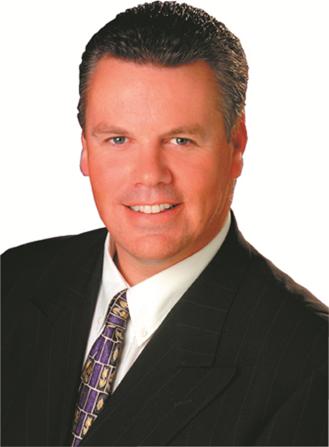
045: Jon Manning on the Art of Pricing and How Economic Theory Has Got Pricing All Wrong
Jon Manning is the Founder and Principal Consultant of Sans Prix and has over two decades of Pricing experience in a wide variety of industries.
Since establishing Sans Prix, Jon (and his associates) have generated millions of dollars in incremental revenue for clients in places such as the UK, USA, India, and Australia.
Increasingly in demand as both a speaker and educator, Jon has spoken at many conferences, workshops, webinars and educational institutions across the Asia-Pacific, the Middle East and the United Kingdom.
In 2011, Jon and Greg Eyres established Pricing Prophets, the world’s first and only online pricing advisory service where clients can ask a panel of global pricing experts and thought-leaders what price to charge for a product or service and why.
Jon holds a Bachelor of Business (Applied Economics) from Deakin University (Australia), a Graduate Diploma of Business (Management) from Monash University (Australia) and a Master of Arts (European Studies), from The University of West London. He is a member of the Australian Institute of Management and the Professional Pricing Society.
In this episode, you will learn:
- why Jon believes pricing is more of an a art than a science.
- why pricing is based on human behavior that no scientific model can predict.
- why there’s no such thing as Adam Smith’s Invisible Hand.
- that 70% to 80% of companies use cost-based methods to set prices and few use a value-based method.
- why customers don’t care about companies who use cost-based pricing and prefer companies that use value-based pricing methods.
- why the best pricing strategy for a company is a value-based method.
- the trials and tribulations of the pricing strategy adopted by Netflix and how it affected its share price.
- how a $40 fine for returning a DVD late led to the founding of Netflix.
- if the best strategy for companies to announce price increases to its customers is to do so a few years in advance.
- how behavioral economics is opening up a minefield of exploration in pricing.
- how Apple used anchoring techniques to sell their iWatch by offering a $10,000 iWatch. It makes the mainstream iWatch appear to be value for money.
- how a $100 omelette was used by a restaurant to act as a decoy so it can influence your decision to pay for high-end or expensive goods.
- how Goldilock Pricing helps a company, like Starbucks and Harvey Norman, sell more of a middle tiered product as it helps customers make decisions to buy.
- how Starbucks found the that most of their customers have inelastic demand and decided to increase prices despite a recession in the US.
- how the internet has changed the pricing model by offering freemium products and services and 30-Day money back guarantees.
- if there are myths to pricing for companies.
- how companies like Apple and Amazon price discriminate in order to capture market share and drive revenues upward.
- how more and more companies are adopting dynamic pricing when selling into different markets.
- the education pricing model in Ireland, Australia and the US.
- about MOOCs and how it could have an impact on the future education model.
- about Gaelic Football and how its players do not get paid unlike other sports.
- how football games are using dynamic pricing models to charge for tickets based on opposition and weather.
- that a 1% improvement in price leads to a 10% improvement in operating profit.
- about the Banksy Experiment in New York where many passers-by failed to pick up an original for $60 that would otherwise fetch for $10,000 in an auction house.
- how classical violinist Joshua Bell earned $26 in tips playing his $3.5 million violin but played to a packed audience for $100 per ticket the night before.
- the 2 Golden Rules to Pricing.
- about the ‘Pay What You Want’ model as followed by Radiohead and Jon Bon Jovi’s Soul Kitchen.
Economics:
In this interview, Jon mentions and discusses: pricing, the Invisible Hand, behavioral economics, heuristics, anchoring effects, framing, Extremeness Aversion, Goldilocks Pricing, demand, elasticity, elastic demand, inelastic demand, pricing architecture, consumer surplus, monopoly, price discrimination, dynamic pricing, marginal pricing and behavioral economics.
Economists:
In this interview, Jon mentions and discusses: Adam Smith, Dan Ariely, John H. Cochrane and Paul Samuelson.
Influencers:
Behavioral economists and marketers.
Quotes by Jon Manning in Episode 045 of the Economic Rockstar Podcast:
There’s no formula to calculate the consumer surplus. You hear a lot of economists talk about the consumer surplus, which in the business community is known as leaving money on the table – Jon Manning.
The 2 Golden Rules to Pricing:
Rule #1: All value is subjective.
Value is in the eye of the customer. No matter what price you put onto something, at the end of the day, the customer is the single point of failure and if they don’t see value at the price you’ve attached to the product, they’re not going to buy. The ‘Pay What You Want’ pricing model is the purest form of value-based pricing since the customer can decide to pay for the product or service by attaching a value to it.
Rule #2: All value is contextual.
By placing a product or service in a certain context, people’s perceptions of its value change. A product placed in a high-end, up-market setting is more likely to command a higher price, whereas the exact same product placed in a low value setting or environment may only demand a smaller price. Joshua Bell and Banksy showed this golden rule of pricing in their experiments.
Companies Mentioned in this Episode Regarding their Pricing Methods:
Ryanair, EasyJet, Amazon, Apple, Uber, Starbucks, Harvey Norman and Netflix.
Recommended Books:
- Meatonomics by David Simon
- Priceless: The Myth of Fair Value (and How to Take Advantage of It) by William Poundstone
- Information Rules: A Strategic Guide to the Network Economy by Carl Shapiro and Hal Varian
- Pricing and Revenue Optimisation by Robert Phillips
- Misbehaving by Richard Thaler
- Butterfly Economics: A New General Theory of Social and Economic Behavior by Paul Omerod
- New Ideas from Dead Economists by Todd G. Buchholz
- The CEO of the Sofa by P. J. O’Rourke
- Eat the Rich: A Treatise on Economics by PJ O’Rourke
Internet Resource:
Where to Find Jon Manning:
Podcast: Play in new window | Download