• ABOUT
  • RESOURCES
  • PODCAST
  • BOOKS
  • BLOG
  • SUPPORTERS
  • QFA Financial Advice
  • CONTACT

Economic Rockstar

Connecting Brilliant Minds in Economics and Finance

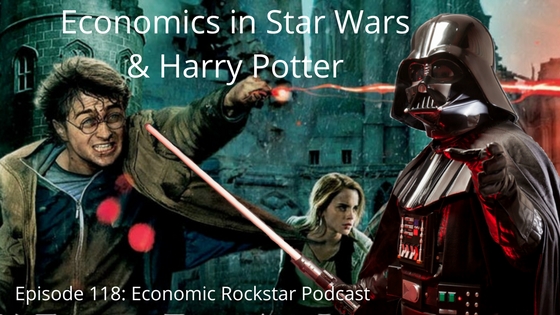
118: Zachary Feinstein on Systemic Risk and Economics in Star Wars and Harry Potter

December 30, 2016 by Frank

http://traffic.libsyn.com/economicrockstar/118_Zachery_Feinstein_Final.mp3
Play in New WindowDownload

118: Zachary Feinstein on Systemic Risk and Economics in Star Wars and Harry Potter

Zachary Feinstein is Professor joined the Preston M. Green Department of Electrical & Systems Engineering at Washington University in St. Louis in 2014.

While earning a doctorate at Princeton University, Zachary supervised the senior thesis-writing group and assisted in teaching several courses.

Previously, he conducted research at Hunan University in China and was an intern at Millennium Partners LP and Lehman Brothers Inc., both in New York City.

Professor Feinstein works in the broad fields of operations research and financial engineering and he heads The Operations Research and Financial Engineering Laboratory Washington University.

His research focus has been on the applications of set-optimization to financial risk measurement, with projects studying and defining dynamic risk measures in markets with transaction costs and measures of systemic risk.

You can find Professor Feinstein’s work on Star Wars and more at www.fictionomics.com.

On Systemic Crises and Contagion:

“This is something that comes up very regularly in modern economic history. And really it’s something that we talk about it for a year after the crisis and then we forget to think that this is a problem. So by bringing it up in Star Wars and by bringing it up in Harry Potter we can keep this in the public consciousness.” Professor Zachary Feinstein.

Economics:

In this episode, Zachary discusses and mentions: systemic risk, contagion, world GDP, Gross World Product, Gross Galactic Product (GGP), interstellar travel, economic stagnation, financial deregulation, resources, scarcity, bailout, bank failures, TARP, moral hazard and the Glass-Steagall Act.

In this Episode, you will Learn:

  • about the petition to White House to build the Death Star.
  • how the Death Star would cost $193 quintillion to build and World GDP is $70 trillion.
  • about how Professor Feinstein used the Manhattan Project to build the first Atomic Bomb as a proxy to calculate the cost of the second Death Star.
  • why people would go back to authoritarian rule like The First Order (economic depression).
  • how economic growth is linked to population growth.
  • what happens in a systemic crisis if it’s generated by currency exchanges.
  • the Economic System in the Star Wars Galaxy.
  • the systemic risk imposed by the Gringotts Bank in the Harry Potter series.
  • and much much more.

Movies/TV Series Mentioned in this Episode:

  • The Clone Wars
  • Rogue One
  • Star Wars: The Force Awakens
  • Star Wars: The Empire Strikes Back
  • Star Wars: Return of the Jedi
  • Harry Potter and the Cursed Child
  • Lord of The Rings: The Fellowship of the Ring
  • Game of Thrones
  • Sharknado
  • Back to the Future
  • Doctor Who

Writing Tips:

Just write it down. Get something on page and then afterward you can mark it up in red as much as you want. Don’t worry about getting the right sentence down, just get something on the page and then move it all around. Mark it up. Completely delete it if you want. But once it’s on the page, it’s much easier to move forward than worrying about the perfect sentence to start – Professor Zachary Feinstein.

Academic Papers:

  • Feinstein, Z. (2015). It’s a Trap: Emperor Palpatine’s Poison Pill. Washington University.
  • Other academic papers by Professor Zachery Feinstein.

Links:

  • Petition to White House to build the Death Star
  • Rogue One and Building the Death Star by Zachary Feinstein
  • Thoughts on the Operational Costs of the Death Star by Zachary Feinstein
  • The economics of Star Wars: How the Empire collapses by Erika Ebsworth-Goold
  • Harry Potter and the Goblin Bank of Gringotts by Zachary Feinstein
  • Harry Potter and the Economic Catastrophe: The Rise of Voldemort by Zachary Feinstein
  • Sharknado: The Deficit Spending We Need by Zachary Feinstein

Books:

  • Foundation by Isaac Asimov
  • Foundation and Empire by Isaac Asimov
  • Second Foundation by Isaac Asimov
  • Anathem byNeal Stephenson
  • Cryptomicon by Neal Stephenson
  • The Diamond Age by Neal Stephenson
  • Harry Potter and the Cursed Child by J. K. Rowling

http://traffic.libsyn.com/economicrockstar/118_Zachery_Feinstein_Final.mp3

Podcast: Play in new window | Download

074: Peter Leeson on The Invisible Hook: The Hidden Economics of Pirates

February 24, 2016 by Frank

http://traffic.libsyn.com/economicrockstar/074_Peter_Leeson_.mp3
Play in New WindowDownload

074: Peter Leeson on The Invisible Hook: The Hidden Economics of Pirates

Peter T. Leeson is Duncan Black Professor of Economics and Law at George Mason University.Peter Leeson

He is also a Senior Fellow at the F.A. Hayek Program for the Advanced Study of Philosophy, Politics, and Economics as well as the North American Editor of Public Choice.

Formerly, Peter was Visiting Professor of Economics at the University of Chicago, Visiting Fellow in Political Economy and Government at Harvard University, and F.A. Hayek Fellow at the London School of Economics.

Peter is author of The Invisible Hook: The Hidden Economics of Pirates and Anarchy Unbound: Why Self-Governance Works Better Than You Think.

Peter can be found at PeterLeeson.com.

Economists:

In this episode, Peter mentions and discusses: Ludwig von Miss, F. A. Hayek, Gary Becker, Karl Menger, Steven Levitt, Robin Hanson, Karl Marx, Adam Smith and Peter Boettke.

Economics:

In this episode, Peter mentions and discusses: price theory, human behaviour, Austrian Economics, Chicago School of Economics, economics of self-governance, rational thinking, profit maximisation, incentives, social insurance, externalities, unemployment, governance, self-governance, public goods and rational choice theory.

Pirates were economic actors but they were criminals. Criminal behaviour, as some had suggested, is not very amenable to the economic way of thinking.But Gary Becker pioneered research demonstrating that that wasn’t so.

In this episode you will learn:

  • about the similarities and differences between Austrian Economics and Becker’s thinking in the Chicago School of Economics.
  • why Peter decided to study the economics of pirates.
  • about the scientific approach to economic thinking.
  • how limitations to data restrict analytical research and how historical economic thinking can be used as a form of empirical analysis.
  • how using the economic narrative is just as effective as the mathematical regressions to explain theoretical concepts.
  • the similarities between The Invisible Hand and The Invisible Hook.
  • how pirates were rational thinkers and social revolutionaries.
  • how a hierarchy was established on a pirate ship using the Pirate Code.
  • how the Pirate Code created a social order that was economically beneficial to the crew.
  • about the constitutional democracy that pirates established onboard their ship and the misperceptions we had of an autocratic captain.
  • about some rules, codes of conduct and dispute resolution mechanisms that existed on a pirate ship.
  • how pirates were incentivised to engage in battle with a social fund (moral hazard) that was a predecessor to today’s social insurance policy.
  • how the pirate code minimised or eliminated the impact of a negative externality on a crew member or the whole crew.
  • how Peter’s book dedication, in the form of a marriage proposal, worked out.
  • when did piracy at sea begin and when did the romanticised period of piracy, as we know it, occur.
  • how are the pirates of the early 18th Century, such as Captain Blackbeard, so different to the pirates of today, such as the Somali pirates.
  • how sailors found solace and refuge as buccaneers and pirates after wars, such as the War of the Spanish Succession.
  • why unemployed sailors became buccaneers and pirates.
  • the risk-reward ratio of becoming a pirate.
  • whether pirates actually buried their treasure.
  • how an enterprising society was established at the land bases of pirates.
  • what pirates spent their spoils and treasures on.
  • the signalling effect of the Jolly Roger flag and why pirates used it as they approached a merchant ship.
  • how an ‘honor among thieves’ and collusive agreements between pirate groups allowed them to avoid attacking each other.
  • how coast guards, who were legally allowed to plunder merchant ships, often used the Jolly Roger flag as a signal to deceive their subjects into thinking they were pirates for the purpose of avoiding a bloody battle.
  • why coast guards used the Jolly Roger flag to cash in on the reputation of pirates.
  • if self-governance is effective and more successful that government.
  • whether the free-rider problem would exist in a self-governed economy regarding public goods.

Links:

  • Gary Becker’s Centre on Chicago Price Theory
  • Becker Friedman Institute for Research in Economics: The University of Chicago
  • Episode 072: F. A. Hayek
  • Episode 073: Robin Hanson
  • Episode 055: David Skarbek
  • Journal of Political Economy

Papers:

  • The Invisible Hook: The Law and Economics of Pirate Tolerance by Peter T. Leeson
  • Human Sacrifice by Peter T. Leeson in Review of Behavioral Economics. 

Books:

  • The Invisible Hook by Peter Leeson
  • Anarchy Unbound by Peter Leeson
  • Living Economics by Peter Boettke
  • Economic Approach to Human Behaviour by Gary Becker
  • Human Action: A Treatise on Economics by Ludwig von Mises
http://traffic.libsyn.com/economicrockstar/074_Peter_Leeson_.mp3

Podcast: Play in new window | Download
048: Steve Hanke on Currency Boards, Moral Hazard and the Benefits of Privatization

September 3, 2015 by Frank

http://traffic.libsyn.com/economicrockstar/048_Steve_Hanke_Final.mp3
Play in New WindowDownload

048: Steve Hanke on Currency Boards, Moral Hazard and the Benefits of Privatization

Steve Hanke is a Professor of Applied Economics, specializing in currency boards. He is Co-Director of the Institutesteve hanke for Applied Economics, Global Health, and the Study of Business Enterprise at The Johns Hopkins University in Baltimore.

Steve is a Senior Fellow and Director of the Troubled Currencies Project at the Cato Institute in Washington, D.C. and a member of the Charter Council of the Society of Economic Measurement and the Financial Advisory Council of the United Arab Emirates.

Previously, Professor Hanke was a Senior Economist on President Reagan’s Council of Economic Advisers and was also an Advisor to the Presidents of Bulgaria, Venezuela, and Indonesia.

He played an important role in establishing new currency regimes in Argentina, Estonia, Bulgaria, Bosnia-Herzegovina, Ecuador, Lithuania, and Montenegro. Professor Hanke has also advised the governments of many other countries, including Albania, Kazakhstan and Yugoslavia.

In 1998, Steve was named one of the twenty-five most influential people in the world by World Trade Magazine.

Professor Hanke is a well-known currency and commodity trader and serves as Chairman of Hanke-Guttridge Capital Management, LLC.

Steve Hanke’s most recent books are Zimbabwe: Hyperinflation to Growth (2008) and A Blueprint for a Safe, Sound Georgian Lari (2010).

Influencers:

Friedrich Hayek, Kenneth Boulding of the University of Colorado  and Bob Mundell

Economics:

In this interview, Steve mentions and discusses: currency boards, monetary policy, inflation, hyper-inflation, interest rates, currency reserves, optimum currency area, common currency, fiscal policy, moral hazard, eurozone, ECB, the World Bank, property rights, investment, central bank, dollarisation, interventionist policy, privatisation, hedging, Chicago Mercantile Exchange, futures contract and bitcoin.

Economists:

In this interview, Steve mentions and discusses: Kirk Schuller, Milton Friedman, Friedrich Hayek, Adam Smith, Robert Mundell and Kenneth Boulding.

There have only been 56 hyper-inflations in world history and I think I’ve stopped more of them than any living economist – Professor Steve Hanke

In this episode, you will learn:

  • what is a currency board and the reason why a country should resort to one.
  • about Bulgaria’s currency crisis in 1997, how hyper-inflation hit 142 percent per month and what Steve Hanke did to solve the problem.
  • the successful use of currency boards in Bulgaria in 1997 to significantly reduce inflation and interest rates.
  • why Bulgaria has one of the lowest fiscal deficits of any country.
  • about Yugoslavia’s hyper-inflation of 313 million percent in 1994.
  • why Montenegro dumped the Yugolsav Dinar for the Deutschmark during Slobodan Milosevic’s presidency of Yugoslavia.
  • how Montenegro will join the euro currency without having to do a currency changeover.
  • if it makes sense to leave a currency board to join a monetary union and giving up fiscal autonomy.
  • why it’s best for Bulgaria to stay outside the eurozone due to the issue of moral hazard.
  • why Greece ran up a fiscal deficit of 12.7% of GDP when the Maastricht Treaty stated a strict adherence to a maximum level of 3%.
  • about the Greek bailout of $472 billion and how it amounts to almost $43,000 for every man, woman and child in Greece.
  • how a currency board removes the moral hazard of a unified currency area by financing spending with current taxes or the private bond market.
  • if Greece should abandon the euro and set up a currency board and pegging their currency with the euro.
  • how a Greek currency board would operate if Greece left the eurozone.
  • about the success of the Hong Kong currency board and how it operates without a central bank.
  • if we are heading toward a one world currency.
  • why most small countries should abandon their currency and anchor it to the euro, dollar, yen or yuan.
  • whether Greece should sell off its ports, lands and other property to private investors just as Hayek proposed and Ronald Reagan did in the US in the 1980s.
  • about Ronald Reagan’s privatisation programme in the US in the early 1980s.
  • about the Bureaucratic Rule of Two and why privatisation is an optimal outcome for government, enterprise and society.
  • what Hayek was like as a person and what he thought of Ronald Reagan, The Intellectual.
  • about candling in the old days when grading eggs for futures contracts.

On Currency Boards:

A currency board system is a system in which you issue a domestic currency, which is anchored to a sound currency at a fixed exchange rate that’s fully convertible. The local currency is backed up with a 100% anchor currency’s reserves. So the local currency really becomes a clone of whatever the anchor currency happens to be.

The currency board is not allowed to emit credit to the government. If the government needs money for fiscal expansion, the only way to get this finance (in the form of your local currency) is to take hard currency in (like the euro) and exchange it for the local currency. Bulgaria has been doing this since 1997. The government cannot sell bonds to raise finance. They convert the euro (previously the Deutschmark) into their local currency, the lev, and can then carry out fiscal stimulus. Consequently, Bulgaria has one of the lowest fiscal deficits in Europe.

On Bulgaria and Why It Should Not Join the Eurozone:

“With the currency board, they (Bulgaria) ‘clone’ the euro, so they’re in a unified currency area with the eurozone but they’re not formally part of the eurozone itself. I’ve counselled the Bulgarians, and the best thing to do is to stay with that arrangement. And the reason why is that the eurozone, the common currency area, has a huge moral hazard associated with it. That is, something that creates bad behaviour encourages bad behaviour and Greece is a perfect example.” – Professor Steve Hanke

On the Greek Deceit and Its Fiscal Deficit:

“Greece entered the eurozone in 2001 on false pretences. They cooked the books and got in. They were allowed in the club even though the club knew the Greeks were lying in terms of their economics statistics.”

“The Greeks calculated that they could spend like drunken sailors, which they did and ran a completely irresponsible fiscal operation.”

“The moral hazard is you join a club and if you think the club won’t enforce its rules and won’t force you to tow the line, you will just go on your merry way spending and deficit spending and knowing, or at least thinking that, in this case the eurozone, would bail you out.”

Greece ranks 151 out of 189 countries for the ability of doing business. If you make a contract in Greece, the probability of having that contract enforced is very low by international standards. It’s like being in Zimbabwe. Greece is supposed to be part of the European Union and a modern country but it isn’t.

Greece should leave the eurozone, set up a currency board and re-introduce the Drachma. This would create fiscal discipline just like the situation in Bulgaria.

Quotes by Steve Hanke in Episode 048 of the Economic Rockstar Podcast:

I was hedging and trading when I was 14 years of age. I was trading with my grandfather – @steve_hanke

Click To Tweet

Hong Kong was aways a unilateralist free trader. That encourages competition, entrepreneurship and productivity. The countries with open trade tend to be more free market in general and they grow more rapidly. – Steve Hanke

“About 90 Central Banks should just be done away with completely and either a currency board be put in or a stronger foreign currency like the dollar, the euro or the yen.” – Steve Hanke

“If you want lower fiscal deficits, lower inflation and higher rates of growth you adopt with a currency board system or dollarize” – Steve Hanke

If you want to reduce corruption you privatise. But the potential gains in terms of economic prosperity are enormous – @steve_hanke

Click To Tweet

Europe’s lands are “a mere waste and loss of country in respect both of produce and population.” – Adam Smith

Click To Tweet

Bitcoin has a unit of account problem – @steve_hanke

Click To Tweet

On Hayek:

“He was delightful and charming and very interesting, particularly for Mrs Hanke and myself. One of Mrs Hanke’s Great Aunts was one of Hayek’s earlier loves of his life.”

Recommended Books:

  • Zimbabwe: Hyperinflation to Growth by Steve Hanke (Free download)
  • The Wealth of Nations by Adam Smith
  • Reagan, In His Own Hand by Ronald Reagan, edited by Marty Andersson et al.
  • The Advanced Introduction To The Austrian School of Economics by Randall Holcombe
  • The Essential Hayek by Donald Boudreaux (Free Kindle download)

Resources:

  • Case Studies written by Steve Hanke
  • Troubled Currencies Project
  • The Hanke-Krus Hyperinflation Index
  • http://econographic.com/hyperinflation
  • On the Measurement of Zimbabwe’s Hyperinflation by S. Hanke and A. Kwok
  • Friedman: Float or Fix? by Steve H. Hanke
  • Reflections on Currency Reform and the Euro by Steve H. Hanke
  • The Privatization Debate: An Insider’s View by Steve H. Hanke
  • Could Greece Adopt the Dollar? by Steve H. Hanke
  • Reflections on Reagan the Intellectual by Steve H. Hanke
  • On the Fall of the Rupiah and Suharto by Steve H. Hanke
  • Doing Business 2015 Report by The World Bank

Where to Find Steve Hanke:

  • Cato Institute: http://www.cato.org/people/steve-hanke
  • Johns Hopkins Institute: http://krieger.jhu.edu/iae/co-directors
  • Twitter: @steve_hanke
http://traffic.libsyn.com/economicrockstar/048_Steve_Hanke_Final.mp3

Podcast: Play in new window | Download

Frank Conway

Frank Conway is founder of Economic Rockstar and lecturer of economics, finance and statistics. Read More…

View My Blog Posts

Youtube Sub

Become a Patron of the Economic Rockstar Podcast

patreon

Ireland’s Economy by the Numbers

Leaving Cert Economics: Ireland’s Economy  Click here to download a workbook on Ireland’s Economy so that you can add your own notes. [Original size] Ireland’s Economy by fconway

Categories

Subscribe and Never Miss An Episode

itunes-logo

Recent Posts

  • Ireland’s Economy by the Numbers April 8, 2019
  • 174: Wendy Carlin on The Core Project, Capitalism, Democracy and Normative Statements February 13, 2019
  • 173: Stephen Wright on Core Econ as a Learning Resource for Mainstream Economics January 28, 2019
  • 172: Best of 2018 Part 2: From the Great Depression to Futurism; Institutions, Individualism, Cooperation and Reciprocity January 22, 2019
  • 171: Best of 2018 Part 1 January 3, 2019

Copyright © 2026 · Podcast Pro Theme on Genesis Framework · WordPress · Log in

This website uses cookies to improve your experience. We'll assume you're ok with this, but you can opt-out if you wish. Accept Reject Read More
Privacy Policy

Privacy Overview

This website uses cookies to improve your experience while you navigate through the website. Out of these, the cookies that are categorized as necessary are stored on your browser as they are essential for the working of basic functionalities of the website. We also use third-party cookies that help us analyze and understand how you use this website. These cookies will be stored in your browser only with your consent. You also have the option to opt-out of these cookies. But opting out of some of these cookies may affect your browsing experience.
Necessary
Always Enabled
Necessary cookies are absolutely essential for the website to function properly. This category only includes cookies that ensures basic functionalities and security features of the website. These cookies do not store any personal information.
Non-necessary
Any cookies that may not be particularly necessary for the website to function and is used specifically to collect user personal data via analytics, ads, other embedded contents are termed as non-necessary cookies. It is mandatory to procure user consent prior to running these cookies on your website.
SAVE & ACCEPT