• ABOUT
  • RESOURCES
  • PODCAST
  • BOOKS
  • BLOG
  • SUPPORTERS
  • QFA Financial Advice
  • CONTACT

Economic Rockstar

Connecting Brilliant Minds in Economics and Finance

095: Scott Burns on Mobile Money Banking in Africa and the Success of M-Pesa

July 20, 2016 by Frank

http://traffic.libsyn.com/economicrockstar/095_Scott_Burns_Final.mp3
Play in New WindowDownload

095: Scott Burns on Mobile Money Banking in Africa and the Success of M-Pesa

Scott Burns is a Mercatus PhD Dissertation Fellow in the Economics PhD Program at George Mason Scott Burns Economic RockstarUniversity.
Scott earned his BS in Economics from Louisiana State University where he was part of the Speech and Debate Club and the Phi Eta Sigma Honors Society.

His current publications include The War on Drugs in Afghanistan: Another Failed Experiment in Interdiction and Old (Chicago) school, new century: the link between Knight and Simons’ Chicago plan to Buchanan’s constitutional money.

Scott’s PhD dissertation topic has to do with one of the most exciting yet under-appreciated miracles of the market going on in the world today, the “mobile money revolution” in Sub-Saharan Africa.

Scott writes for the blog Alt-M, which is a blog run by free banking scholars on the theme ‘Ideas for an Alternative Monetary Future’.

Scott, along with fellow Econ PhD student at GMU, David Lucas, started a band inspired by Adam Smith called ‘The Butcher and the Baker’.

Economics:

In this episode, Scott mentions: banking, monopolies, natural monopoly, market failure, savings, investment, development economics, finance, GDP, laissez-faire, mobile money, unintended consequences, bitcoins and hyper-inflation.

Economists:

In this episode, Scott mentions: Adam Smith, Ludwig von Mises, F. A. Hayek, Joseph Schumpeter, Scott Sumner, David Beckworth, Lawrence H. White and George A. Selgin,

Links:

  • Finance for All: Kenya’s M-PESA
  • Alt-M
  • Top 12 Economics Books as Recommended by Economic Rockstar Guests
  • Monetary Workshop at Cato Institute

Papers:

  • Coyne, C., Hall-Blanco , A. and Burns, S. (2016). The War on Drugs in Afghanistan: Another Failed Experiment with Interdiction. The Independent Review.
  • Burns, S. (2016). Old (Chicago) school, new century: the link between Knight and Simons’ Chicago plan to Buchanan’s constitutional money. Constitutional Political Economy.

Articles:

  • Burns, S. (2016). The Road Less Traveled: Austrian Macro, Monetary Disequilibrium Theory, and Free Banking. Research on the History of Economic Thought and Methodology, Volume 348: pp 337 – 363.
  • Burns, S. and Michel, N. J. (2016). Choosing Your Own Money Central to Economic Freedom. Cayman Financial Review, Issue 42.

Books:

  • Economics in One Lesson by Henry Hazlitt
  • The Law by Frederic Bastiat
  • Human Action by Ludwig von Mises
  • Free Banking in Britain: Theory, Experience and Debate 1800-1845 by Lawrence H. White
  • The Theory of Free Banking by George A. Selgin


Companies Mentioned in this Episode:

  • Uber, Airbnb, Amazon and Safaricom.
http://traffic.libsyn.com/economicrockstar/095_Scott_Burns_Final.mp3

Podcast: Play in new window | Download
029: John Cochrane on the Future of Finance, MOOC Education, Regulation and the Case for Free Markets

April 22, 2015 by Frank

http://traffic.libsyn.com/economicrockstar/029_John_Cochrane_Final.mp3
Play in New WindowDownload

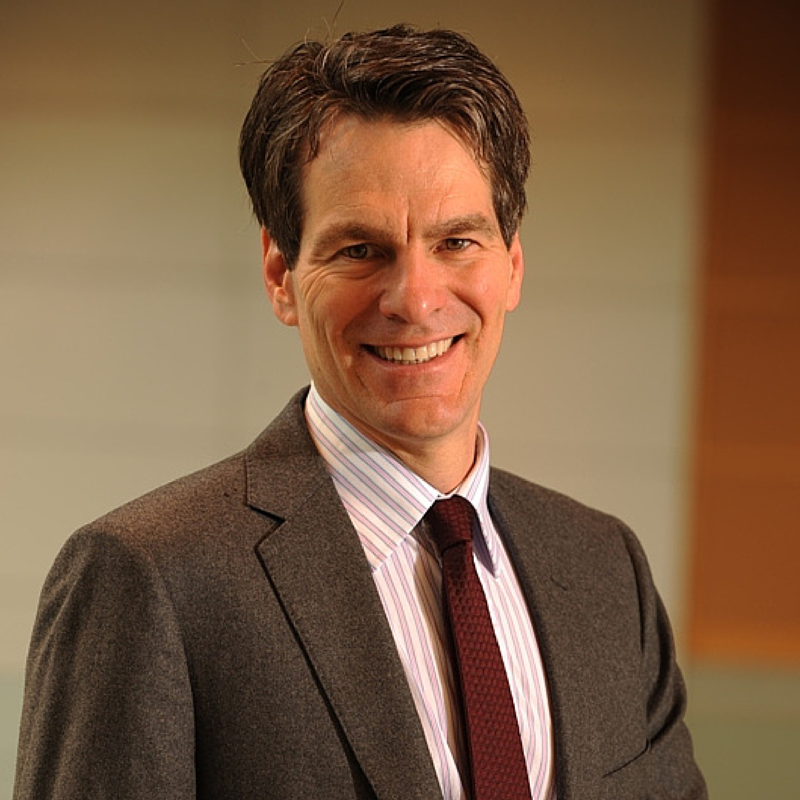
029: John Cochrane on the Future of Finance, MOOC Education, Regulation and the Case for Free Markets

John Cochrane is the AQR Capital Management Distinguished Service Professor of Finance at the University of Chicago Booth School of Business and is currently Senior Fellow at the Hoover Institution.

Professor Cochrane is a Research Associate of the National Bureau of Economic Research and past director of its asset pricing program, and an Adjunct Scholar of the CATO institute.

John is past President and Fellow of the American Finance Association, and a Fellow of the Econometric Society. He has been an Editor of the Journal of Political Economy, and associate editor of several journals including the Journal of Monetary Economics.

John’s is the author of 3 books including the book Asset Pricing. Other  finance publications include articles on stock and bond markets, exchange rates, interest rates, liquidity premiums and option pricing.

John’s monetary economics publications include articles on the relationship between deficits and inflation, the effects of monetary policy, and on the fiscal theory of the price level.

John currently teaches the MBA class Advanced Investments and a variety of PhD classes in Asset Pricing and Monetary Economics.

John earned a Bachelor’s degree in Physics at MIT, and earned his Ph.D. in Economics at the University of California at Berkeley.

In addition to research and teaching, John is a competitive sailplane pilot and windsurfs.

John blogs as ‘The Grumpy Economist’.

Find Out:

  • why Professor Cochrane is known as the Grumpy Economist.
  • about John’s Proposed New Structure for US Debt.
  • how to create financial stability with a currency fit for the 21st century.
  • about the advantages of government debt.
  • what happened when Ireland guaranteed the bondholders and entered into a bailout.
  • the limitations to a eurozone country when faced with a bailout.
  • why countries should be allowed to act like companies and default.
  • why Greece should have defaulted and why Ireland should not have bailed out the bondholders.
  • about Professor Cochrane competing in the World Gliding Championship for the USA.
  • why Professor Cochrane delivered his Asset Pricing PhD course as a MOOC.
  • the costs and benefits of delivering a MOOC.
  • how MOOCs will become the textbook of the future.
  • how to monetize a MOOC and which type of course would have mass market appeal.
  • Ireland’s aim to become the capital of MOOCs.
  • how to create a social environment for students using MOOCs.
  • why Professor Cochrane went from a degree in physics to a PhD in Economics.
  • why people are stuck in the welfare system.
  • about the over-regulated US economy that restricts the development of competitive markets.
  • how Uber gave supply-side competition in the US taxi market.
  • what should be done to the US healthcare industry which is protected from competition.
  • if the US Federal Reserve should end its monopoly on the dollar and allow other currencies, such as Bitcoin, compete.
  • about the unique feature of US government debt – it cannot default!
  • who are Professor Cochrane’s heroes due to their no bullshit approach to research.
  • why the the 2008 financial crisis was proof that the efficient market hypothesis works.
  • what annoys Professor Cochrane.

Influencers:

  • University of California: George Akerlof, Roger Crane, Jim Pearce and Tom Roffenburg.
  • University of Chicago: Robert Lucas, Lars Hansen, Gene Fama, Ed Prescott and Tom Sargeant.

Defining Moment

A professor was showing an economics class that John attended in which he explained, using the Budget Constraint, why people are stuck in welfare. Up to that point, John had read that it was due to people being lazy or that it was due to moral, sociology or cultural. However, the analysis showed that any normal person who was stuck below an income threshold and receiving benefits would not welcome a moderate pay rise as they would lose entitlements.

Here was a value-free, and ethics-free, a morality-free discussion of a social problem that showed exactly where it came from, exactly how to fix it, exactly how the perverse design of the well-intentioned welfare was causing people to get stuck. That was my conversion moment.

Economics:

In this interview, John mentions and discusses: Asset Pricing, unintended consequences, free markets, incentives, budget constraints, welfare, competition, supply-side competition, regulation, monopoly, natural monopoly, bitcoin, debt, default, Gold Standard, fractals and efficient market hypothesis.

Economists:

In this interview, John mentions and discusses: George Akerlof, Roger Crane, Jim Pearce, Tom Roffenburg, Robert Lucas, Lars Hansen, Eugene Fama, Ed Prescott, Tom Sargeant, Benoit Mandlebrot

“What makes free markets work is the discipline of competition, of the ability of new entrants to come in and disrupt things” – Professor Cochrane.

“Regulation is stifling the ability of  new people with great ideas, with cost control ideas to come in and make healthcare both better and a lot cheaper” – Professor Cochrane.

The Future of Finance:

Professor Cochrane likens the financial crisis as a ‘good old-fashioned’ run on the banks. Twenty years ago, the world economy developed ‘electronic interest-paying money’. Most of the financial system uses overnight repurchase agreements, money market funds and short-term government bonds. These became very liquid and have been prone to runs just like bank notes. For financial stability, the crucial thing is to get away from this run-prone system.

John proposed that governments should provide interest-paying electronic money that will not experience a run in the 21st Century. This would look something like a money-market fund. It will always be worth $1, pays interest and will always be electronically transferable. Financial stability would be achieved and we would have more efficient payments.

On Ireland Bailing Out All Depositors

Irish banks took a lot of German deposits and invested them in US sub-prime mortgages. The money passed through Ireland and it’s not quiet clear why the taxpayers of Ireland who footed the bill for that. Why couldn’t the depositors from Germany lost a little bit of their money along the way. That would have seemed to make sense. Cyprus and Iceland made their depositors take haircuts.

When you’re a small country with an open banking system, the model of the government who bails out all depositors including foreign depositors is not one that can go on. That’s a troublesome system. Ireland maybe regretting bailing out all of the depositors in the process.

Since Ireland is part of the EU and the eurozone, it cannot print money to bailout people. Government debt in that situation becomes private debt. Ireland would not be in as much trouble if it didn’t bailout the depositors in its bank.

Greece certainly should have just defaulted the way a company defaults. If a company defaults on its debt it doesn’t have to leave the eurozone, so why shouldn’t countries become like companies.

MOOCs: The Future but Not a Substitute for Formal Education

Professor Cochrane delivered his PhD class ‘Asset Pricing’ as a MOOC. He felt that such ‘cut and dry’ material would be easier to get started with, particularly when he also had a book of the same name, rather than a more discussion-based empirical class. There were numerous challenges along the way. “It turned out being a lot more work than I thought it was going to be but it also turned out very rewarding”. It allows Professor Cochrane to leverage his delivery going from teaching 20 students to upward of thousands of students.

MOOC

Like any new technology, there are lots of unanticipated ways in which it can be used, unanticipated markets that are going to find it that nobody thought about it how that was going to work out. MOOCs were originally intended to deliver ‘introductory-type’ classes which would have mass appeal. However, John believes that the way forward for MOOCs is in the delivery of ‘distinctive-type’ classes where the class is more specialised and in greater variety.

Creating a MOOC can be costly in terms of time, resources and the infrastructure that needs to be built to deliver the course. “Like all technology, if you’ve ever made a webpage, it has a high fixed cost but low marginal cost.” The secret to putting a MOOC together is it has a high fixed cost to put it together. Creating the video content for lectures is easy. It’s putting together the significant typo-free problem sets and other materials like that that’s hard. But once the MOOC is done, it is scalable in terms of multiple years and to a lot of people.

Professor Cochrane views MOOCs as a way of creating a ‘flipped classroom’. They will not be a substitute for formal education but one of the ways that MOOCs will develop into is that they will become the modern textbook. “The MOOC is a self-contained class outside the university but it’s a textbook for my classroom”. Professor Cochrane’s Asset Pricing class at Stanford is a much less formal experience due to the flipped nature of his classroom.

MOOCs have allowed his students to review the material and answer the questions in his series of videos before they arrive to class. Subsequently, Professor Cochrane can deliver more advanced material, as well as have an in-dept discussion on the material the student reviewed on his MOOC. The class becomes a much more rewarding, personal, interactive experience.

MOOCs will be beneficial to the university in so far as creating a brand so as to attract more students to attend. Being online with a MOOC will be useful for the university to connect with their alumni who may be interested in doing an executive education. The MOOC will be paid for indirectly by attracting people into the executive programmes since the flipped classroom model would work very well for this cohort of people.

The social environment of the class turns out to be very important to getting people to stick with the course on MOOC. MOOCs need to move from its current form to a version “2.0 Social Internet and to re-create that social structure that gets people going. The next round of MOOC will need to integrate social media so that the learning experience becomes part of a community of students just like it is on campus”.

How to Create a Social Environment for Students on MOOCs

  • Scheduled classes so that students attend together.
  • Discussion forums where students are encouraged to participate after the class.
  • Weekly Google Hangouts

http://youtu.be/U5CfYQw4X7k

How Similar the Study of Physics is to Economics

Physics teaches you quantitative analysis as well as modelling.

There is some truth in the physics joke: “Physics is the study of massless elephants going down a frictionless sandpaper”. You have to find the elements of a problem, simplify it down to what’s solvable and intuit how it works, not only mathematical. It’s about the intuition of seeing something work and describing it mathematically.

Economics is similar to undergraduate physics – everything before Quantum Theory. If you’re good at mechanics and electricity of magnetism, then that structure is what’s behind economics and you should be equally good at economics. You will also be good at the modelling part of economics which is all about throwing out all the real-world details that don’t really matter to a particular problem. If the mass of the elephant wasn’t particularly important to that problem, then just assume the mass of sumables. That’s the key to economics.

Economics is full of quantitative parables and you have to make them vivid by making them simple and clear. And then understanding intuitively how to put the pieces together.

On discovering economics, Professor Cochrane believed that he could use the tools of Physics to understand all the hard social problems that everybody is fighting and getting so excited about in a value-free way.

On Bitcoin:

“The design of Bitcoin is fundamentally flawed. We have lost anonymity. That worries me for political reasons as well as economic reasons”. Anything that is done electronically, then the National Security Administration knows what you bought if you use your credit card. Cash allows you to do things anonymously. “Bitcoin promised anonymity but didn’t really deliver it in the first place.”

Bitcoin is based on the Gold Standard model where we need a fixed supply of something rather than a steady price of something.

Where to Find John Cochrane:

  • Website: The Grumpy Economist
  • Faculty Page: Chicago Booth
  • MOOC: Asset Pricing

The Grumpy Economist

http://traffic.libsyn.com/economicrockstar/029_John_Cochrane_Final.mp3

Podcast: Play in new window | Download
Frank Conway

Frank Conway is founder of Economic Rockstar and lecturer of economics, finance and statistics. Read More…

View My Blog Posts

Youtube Sub

Become a Patron of the Economic Rockstar Podcast

patreon

Ireland’s Economy by the Numbers

Leaving Cert Economics: Ireland’s Economy  Click here to download a workbook on Ireland’s Economy so that you can add your own notes. [Original size] Ireland’s Economy by fconway

Categories

Subscribe and Never Miss An Episode

itunes-logo

Recent Posts

  • Ireland’s Economy by the Numbers April 8, 2019
  • 174: Wendy Carlin on The Core Project, Capitalism, Democracy and Normative Statements February 13, 2019
  • 173: Stephen Wright on Core Econ as a Learning Resource for Mainstream Economics January 28, 2019
  • 172: Best of 2018 Part 2: From the Great Depression to Futurism; Institutions, Individualism, Cooperation and Reciprocity January 22, 2019
  • 171: Best of 2018 Part 1 January 3, 2019

Copyright © 2026 · Podcast Pro Theme on Genesis Framework · WordPress · Log in

This website uses cookies to improve your experience. We'll assume you're ok with this, but you can opt-out if you wish. Accept Reject Read More
Privacy Policy

Privacy Overview

This website uses cookies to improve your experience while you navigate through the website. Out of these, the cookies that are categorized as necessary are stored on your browser as they are essential for the working of basic functionalities of the website. We also use third-party cookies that help us analyze and understand how you use this website. These cookies will be stored in your browser only with your consent. You also have the option to opt-out of these cookies. But opting out of some of these cookies may affect your browsing experience.
Necessary
Always Enabled
Necessary cookies are absolutely essential for the website to function properly. This category only includes cookies that ensures basic functionalities and security features of the website. These cookies do not store any personal information.
Non-necessary
Any cookies that may not be particularly necessary for the website to function and is used specifically to collect user personal data via analytics, ads, other embedded contents are termed as non-necessary cookies. It is mandatory to procure user consent prior to running these cookies on your website.
SAVE & ACCEPT