• ABOUT
  • RESOURCES
  • PODCAST
  • BOOKS
  • BLOG
  • SUPPORTERS
  • QFA Financial Advice
  • CONTACT

Economic Rockstar

Connecting Brilliant Minds in Economics and Finance

157: François Allisson on Value and Prices in Russian Economic Thought

September 8, 2018 by Frank

http://traffic.libsyn.com/economicrockstar/157_Francois_Allisson_Final.mp3
Play in New WindowDownload

157: François Allisson on Value and Prices in Russian Economic Thought

François Allisson is a scholar in history of economic thought and a senior lecturer at the Centre Walras-Pareto at the University of Lausanne in Switzerland.

His research interests encompass the whole history of Russian economic thought, with a special emphasis on the theories of value and prices at the end of the imperial period and the beginning of the Soviet era ( which covers the years from the 1870s to the 1920s).

Francois’s interests int the theories of value, distribution, money, crises, accumulation of capital and planning lead him to study various schools of economic thought and classical political economy as well as Marxism, and marginalism.

His book Value and Prices in Russian Economic Thought was awarded the European Society for the History of Economic Thought (ESHET) Best Book Award in 2016.

Francois is now engaged in a collective project intending towards an intellectual biography of Nikolay Ivanovich Sieber (1844–1888), a Swiss and Russian economist

His teaching activities include a course on the history of contemporary economic thought, which covers the history of macroeconomics since Keynes’s General Theory, in both mainstream and heterodox traditions.

Francois was recently elected Vice-President of the International Walras Association. Among other activities, he is General Secretary of the Association Charles Gide (the French association for history of economic thought) and a Managing Editor of Œconomia.

Talk about economic thought during the 1890s to 1920s and the Russian economists of the time.

About the classical theory of pricing based on the value of labour and how that has changed since the preferred neoclassical marginal revolution in pricing theory that we know of today.

Links:

  • François Allisson website
  • International Walras Association
  • Association Charles Gide
  • Œconomia
  •  Centre Walras-Pareto
  •  University of Lausanne

Books:

  • Value and Prices in Russian Economic Thought: A journey inside the Russian synthesis, 1890–1920 by François Allisson
  • Economics and Other Branches – In the Shade of the Oak Tree: Essays in Honour of Pascal Bridel by Roberto Baranzini and François Allisson
  • Red Star: The First Bolshevik Utopia by Alexander Bogdanov
  • Journey of My Brother Alexsey to the Land of Peasant Utopia by Alexander Chayanov

Patreon

If you’re a fan of the podcast and would like to show your support in anyway, please check out my Patreon page at www.patreon.com/economicrockstar where you can sign up for any of the awards for as little as $1 a month or you can simply follow me on Instagram the Economic Rockstar Facebook page or on Twitter or simply recommend the show to a friend, especially if they have never had the opportunity to study economics.

http://traffic.libsyn.com/economicrockstar/157_Francois_Allisson_Final.mp3

Podcast: Play in new window | Download
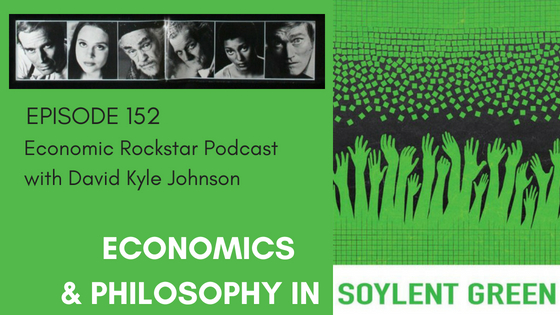
152: David Kyle Johnson on Economics and Philosophy in Soylent Green

August 10, 2018 by Frank

http://traffic.libsyn.com/economicrockstar/152_Kyle_Soylent_Green_Final.mp3
Play in New WindowDownload

152: David Kyle Johnson on Economics and Philosophy in Soylent Green

This is a 3rd instalment of my interviews with Professor David Kyle Johnson, an  Associate Professor of Philosophy at King’s College in Wilkes-Barre, Pennsylvania.

We catch up again after watching the 1973 dystopian movie ‘Soylent Green‘ and discuss some economics and philosophical themes that run through the movie.

In this Episode, we cover:

  • Scarcity
  • Choice
  • Over-population
  • Consumption
  • Inflation
  • Production
  • Automation
  • Altruism
  • Theft
  • Black market economy
  • Pricing
  • Equilibrium
  • The Invisible Hand

Social Issues Discussed Include:

  • Social class/status,
  • Feminism
  • Poverty

Philosophical Questions Addressed Include:

  • Should we resort to cannibalism to save the human race?
  • Should we have the right to die with dignity in the face of a terminal illness, the loss of hope or over our moral principles?
  • Is there a god?
  • And more.

Movies:

  • Soylent Green (1973) Directed by Richard Fleischer

Other Episodes to Check Out:

146: David Kyle Johnson on Science Fiction as Philosophy and Finding Nietzsche’s Übermensch in Economics

151: Unreleased Bonus Episode with David Kyle Johnson

Books:

  • Make Room, Make Room: The Classic Novel of an Overpopulated Future by Harry Harrison
  • The Population Bomb by Paul Erlich

Patreon

If you’re a fan of the podcast and would like to show your support in anyway, please check out my Patreon page at www.patreon.com/economicrockstar where you can sign up for any of the awards for as little as $1 a month or you can simply follow me on the Economic Rockstar Facebook page or on Twitter or simply recommend the show to a friend, especially if they have never had the opportunity to study economics.

http://traffic.libsyn.com/economicrockstar/152_Kyle_Soylent_Green_Final.mp3

Podcast: Play in new window | Download
104: Russ Roberts on How Adam Smith Can Change Your Life and the Theory of Moral Sentiments

September 19, 2016 by Frank

http://traffic.libsyn.com/economicrockstar/104_Russ_Roberts_Final.mp3
Play in New WindowDownload

104: Russ Roberts on How Adam Smith Can Change Your Life and the Theory of Moral Sentiments

Russ Roberts is Associate Editor, founder and host of the popular and much loved podcast EconTalk, russ-roberts-economic-rockstarand founding advisory board member of the Library of Economics and Liberty.

Russ is the John and Jean De Nault Research Fellow at Stanford University’s Hoover Institution.

His two rap videos on the ideas of John Maynard Keynes and F.A. Hayek, created with filmmaker John Papola, have had more than eight million views on YouTube.

Russ’ latest book How Adam Smith Can Change Your Life: An Unexpected Guide to Human Nature and Happiness takes the lessons from Adam Smith’s The Theory of Moral Sentiments and applies them to modern life.

Russ is also the author of three economic novels teaching economic lessons and ideas through fiction. The Price of Everything: A Parable of Possibility and Prosperity, The Invisible Heart: An Economic Romance and The Choice: A Fable of Free Trade and Protectionism.

Russ blogs at CafeHayek.com and archives his work at russroberts.info.

A three-time teacher of the year, Russ has taught at George Mason University, Washington University in St. Louis, the University of Rochester, Stanford University, and the University of California.

He earned his Ph.D. from the University of Chicago and his undergraduate degree in economics from the University of North Carolina at Chapel Hill.

Economists:

In this episode, Russ discusses and mentions: Adam Smith, F. A. Hayek, David Hume, Vernon Smith, Milton Friedman and Nassim Nicholas Taleb.

Economics:

In this episode, Russ discusses and mentions: Austrian economics, classical economics, spontaneous order, pricing, supply, demand, surge pricing, unintended consequences, price controls, taxes and subsidies.

In this episode, you will learn:

  • about Adam Smith and how the application of Smith’s philosophical and economic thinking can change your life.
  • what the market forces are and the positive and negative examples of the spontaneous order.
  • the invisible hand and prices.
  • what surging prices are.
  • what Smith describes as the impartial spectator and the power of our conscience.
  • Adam Smith’s advice on how to be happy.
  • two ways to get people to pay attention to you and what Smith believed is the most ethical way.
  • what Smith believed was the cultural norm to accept behaviors.

Two Ways to Get People to Pay Attention to You:

Be rich, famous and powerful. It works. But don’t be fooled. You have a natural tendency to pursue money, fame and power because it will get you attention, respect and love. But that’s the wrong way to get there.

The right way to get there is through wisdom and virtue. Understand the world and treat people well. If you do that, you’re also going to be loved, respected and praised. But you won’t be doing the things along the way that people do when they want to become rich, powerful and famous that are not so good for you that cold lead to regret, shame and misbehavior. The temptation to do the unethical thing to pursue fame, power and money is always there.

Writing Tips:

  • Write everyday.
  • The trick to being a good writer is being a good editor.

Where to Find Russ Roberts:

  • Website: russroberts.info
  • Website: econtalk.org
  • Twitter: @EconTalker
  • Medium: medium.com/@russroberts

Recommended Books:

  • How Adam Smith Can Change Your Life: An Unexpected Guide to Human Nature and Happiness by Russ Roberts
  • The Price of Everything: A Parable of Possibility and Prosperity by Russ Roberts
  • The Invisible Heart: An Economic Romance by Russ Roberts
  • The Choice: A Fable of Free Trade and Protectionism by Russ Roberts
  • The Theory of Moral Sentiments by Adam Smith
  • The Wealth of Nations by Adam Smith
  • The Fatal Conceit: The Errors of Socialism (The Collected Works of F. A. Hayek) by F. A. Hayek
  • Individualism and Economic Order by F. A. Hayek
  • Fooled by Randomness: The Hidden Role of Chance in Life and in the Markets (Incerto) by Nassim Taleb

c

http://traffic.libsyn.com/economicrockstar/104_Russ_Roberts_Final.mp3

Podcast: Play in new window | Download

050: Dan Ariely on Irrational Behavior and the Importance of Our Environment When Making Decisions

September 16, 2015 by Frank

http://traffic.libsyn.com/economicrockstar/050_Dan_Ariely_Final.mp3
Play in New WindowDownload

050: Dan Ariely on Irrational Behavior and the Importance of Our Environment When Making Decisions

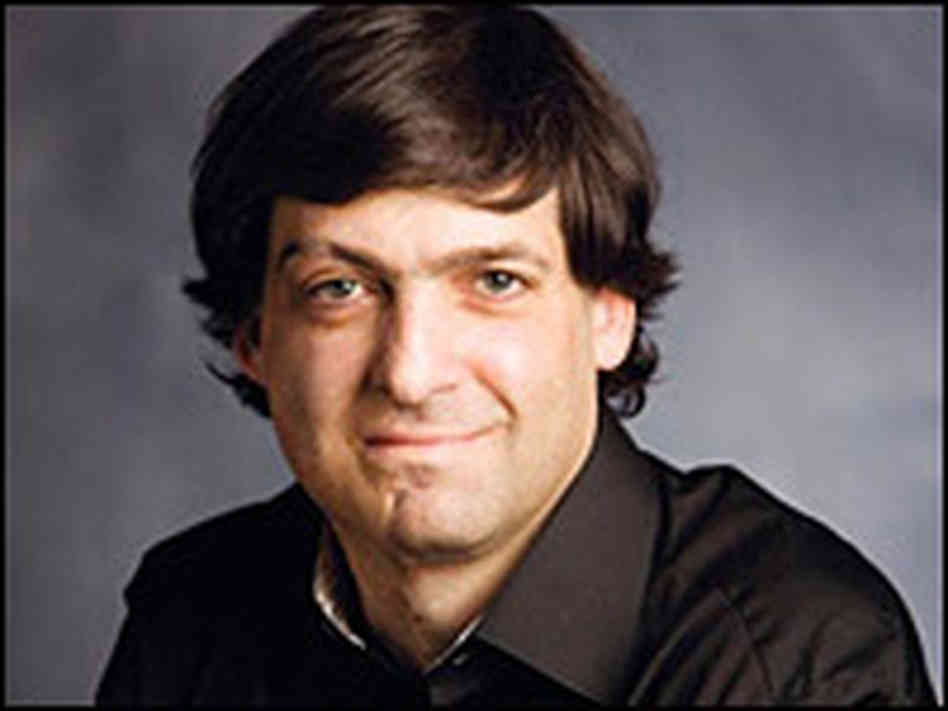
Dan Ariely is Professor of Psychology & Behavioral Economics at Duke University in North Carolina. Dan’s interests spanDan Ariely a wide range of behaviors, and his sometimes unusual experiments are consistently interesting, amusing and informative, demonstrating profound ideas that fly in the face of common wisdom.

In addition to appointments at the Fuqua School of Business, the Center for Cognitive Neuroscience, the Department of Economics, and the School of Medicine at Duke University, Dan is also a founding member of the Center for Advanced Hindsight.

Dan is the author of the New York Times bestsellers Predictably Irrational, The Upside of Irrationality, and The Honest Truth About Dishonesty and his latest book Irrationally Yours is now available.

Dan has received numerous honors and awards in medicine, psychology and economics.

Dan received a B.A in Psychology from Tel Aviv University, an M.A and PhD in Cognitive Psychology from University of North Carolina and another PhD in Business Administration from Duke University.

Influencer:

Professor Hanan Frenk, Tel Aviv University

Economists:

In this interview, Dan mentions: Brian Wansink. 

Psychologists:

In this interview, Dan mentions: Mike Norton and Elizabeth Dunn.

Economics:

In this interview, Dan mentions and discusses: Tragedy of the Commons, behavioral economics, public goods, pricing, decision-making, choice architecture, Ulysses Contract, happiness, asymmetric dominance effect and choice.

Takeaway:

“Think about your environment and always experiment” – Dan Ariely

Click To Tweet

In this episode, you will learn:

  • about Dan Ariely’s traumatic experience resulting in severe burns.
  • how Dan Ariely found his love for psychology and behavioral economics.
  • why Dan will not be teaching his Irrational Behavior course on Coursera.
  • the problems with MOOCs like Coursera and why it is making the wrong choice regarding its open platform system.
  • why Dan was turned down for his first book – a cookbook and what advice he was given by a publisher.
  • why we as humans make very costly mistakes and what we can do about it.
  • how people eat more than they realise and how experiments in economics have shown this.
  • why we are bad at doing things that makes us happy.
  • the most common mistake companies make when making decisions or processing information.
  • how companies can avoid making mistakes.
  • if anger is a good or bad emotion.
  • the most surprising finding from Dan Ariely’s research.
  • the most surprising question put to Ask Ariely.
  • how to get poor people in Kenya to save.
  • how your environment matters when making decisions.

Quotes by Dan Ariely in Episode 50 of the Economic Rockstar Podcast:

“Choice architecture is this idea that our environment influences how we make decisions” – Dan Ariely

Click To Tweet

“In the process of trying to not make any mistakes, companies create environments that punish risk and therefore punish ingenuity and growth” – Dan Ariely

“Tim is a very interesting character and he is experimenting on himself. We have to realize that his experiments have the validity that they work very well for him” – Dan Ariely

On Coursera:

“I think we do need rules for trolls. I think that pricing is a very good mechanism for some things and I’m not sure it’s a mechanism for all for all things like this. The reality is that Coursera probably over samples from the people on the tail of the distribution in terms of mental stability.” – Dan Ariely

Books:

  • Predictably Irrational by Dan Ariely
  • The Upside of Irrationality by Dan Ariely
  • The Honest Truth About Dishonesty by Dan Ariely
  • Irrationally Yours by Dan Ariely
  • The 4 Hour Chef by Tim Ferriss
  • Happy Money: The Science of Smarter Spending by Elizabeth Dunn and Michael Norton

Resources Mentioned by Dan Ariely:

  • Kitchen Safe: www.thekitchensafe.com
  • Coursera: www.coursera.org

Where to Find Dan Ariely:

  • Website: www.danariely.com
  • Twitter: @danariely
  • LinkedIn: Dan Ariely
  • Ted: www.ted.com

Transcript:

The full transcript of this episode with Dan Ariely will be available shortly.

Thanks for Listening!

Thanks so much for joining me again this week. Have some feedback you’d like to share? Leave a note in the comment section below!

If you enjoyed this episode, please share it using the social media buttons you see at the bottom of the post.

Also, please leave an honest review for the Economic Rockstar Podcast on iTunes! Ratings and reviews are extremely helpful and greatly appreciated! They do matter in the rankings of the show, and I read each and every one of them.

http://traffic.libsyn.com/economicrockstar/050_Dan_Ariely_Final.mp3

Podcast: Play in new window | Download

045: Jon Manning on the Art of Pricing and How Economic Theory Has Got Pricing All Wrong

August 13, 2015 by Frank

http://traffic.libsyn.com/economicrockstar/045_Jon_Manning_Final.mp3
Play in New WindowDownload

045: Jon Manning on the Art of Pricing and How Economic Theory Has Got Pricing All Wrong

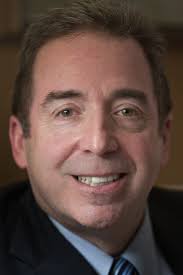
Jon Manning is the Founder and Principal Consultant of Sans Prix and has over two decades of Pricing experiencejon manning in a wide variety of industries.

Since establishing Sans Prix, Jon (and his associates) have generated millions of dollars in incremental revenue for clients in places such as the UK, USA, India, and Australia.

Increasingly in demand as both a speaker and educator, Jon has spoken at many conferences, workshops, webinars and educational institutions across the Asia-Pacific, the Middle East and the United Kingdom.

In 2011, Jon and Greg Eyres established Pricing Prophets, the world’s first and only online pricing advisory service where clients can ask a panel of global pricing experts and thought-leaders what price to charge for a product or service and why.

Jon holds a Bachelor of Business (Applied Economics) from Deakin University (Australia), a Graduate Diploma of Business (Management) from Monash University (Australia) and a Master of Arts (European Studies), from The University of West London. He is a member of the Australian Institute of Management and the Professional Pricing Society.

In this episode, you will learn:

  • why Jon believes pricing is more of an a art than a science.
  • why pricing is based on human behavior that no scientific model can predict.
  • why there’s no such thing as Adam Smith’s Invisible Hand.
  • that 70% to 80% of companies use cost-based methods to set prices and few use a value-based method.
  • why customers don’t care about companies who use cost-based pricing and prefer companies that use value-based pricing methods.
  • why the best pricing strategy for a company is a value-based method.
  • the trials and tribulations of the pricing strategy adopted by Netflix and how it affected its share price.
  • how a $40 fine for returning a DVD late led to the founding of Netflix.
  • if the best strategy for companies to announce price increases to its customers is to do so a few years in advance.
  • how behavioral economics is opening up a minefield of exploration in pricing.
  • how Apple used anchoring techniques to sell their iWatch by offering a $10,000 iWatch. It makes the mainstream iWatch appear to be value for money.
  • how a $100 omelette was used by a restaurant to act as a decoy so it can influence your decision to pay for high-end or expensive goods.
  • how Goldilock Pricing helps a company, like Starbucks and Harvey Norman, sell more of a middle tiered product as it helps customers make decisions to buy.
  • how Starbucks found the that most of their customers have inelastic demand and decided to increase prices despite a recession in the US.
  • how the internet has changed the pricing model by offering freemium products and services and 30-Day money back guarantees.
  • if there are myths to pricing for companies.
  • how companies like Apple and Amazon price discriminate in order to capture market share and drive revenues upward.
  • how more and more companies are adopting dynamic pricing when selling into different markets.
  • the education pricing model in Ireland, Australia and the US.
  • about MOOCs and how it could have an impact on the future education model.
  • about Gaelic Football and how its players do not get paid unlike other sports.
  • how football games are using dynamic pricing models to charge for tickets based on opposition and weather.
  • that a 1% improvement in price leads to a 10% improvement in operating profit.
  • about the Banksy Experiment in New York where many passers-by failed to pick up an original for $60 that would otherwise fetch for $10,000 in an auction house.
  • how classical violinist Joshua Bell earned $26 in tips playing his $3.5 million violin but played to a packed audience for $100 per ticket the night before.
  • the 2 Golden Rules to Pricing.
  • about the ‘Pay What You Want’ model as followed by Radiohead and Jon Bon Jovi’s Soul Kitchen.

Economics:

In this interview, Jon mentions and discusses: pricing, the Invisible Hand, behavioral economics, heuristics, anchoring effects, framing, Extremeness Aversion, Goldilocks Pricing, demand, elasticity, elastic demand, inelastic demand, pricing architecture, consumer surplus, monopoly, price discrimination, dynamic pricing, marginal pricing and behavioral economics.

Economists:

In this interview, Jon mentions and discusses: Adam Smith, Dan Ariely, John H. Cochrane and Paul Samuelson.

Influencers:

Behavioral economists and marketers.

Quotes by Jon Manning in Episode 045 of the Economic Rockstar Podcast:

What they teach you in economics about pricing is true in theory but it’s irrelevant in practice – Jon Manning

Click To Tweet

I know why there is interest in price elasticity but I sort of think it’s a bit like the abominable snowman – Jon Manning.

Click To Tweet

There’s no formula to calculate the consumer surplus. You hear a lot of economists talk about the consumer surplus, which in the business community is known as leaving money on the table – Jon Manning.

There’s very few revolutionary monopolies around these days – Jon Manning.

Click To Tweet

There’s one thing that’s not a myth and that is you get what you pay for – Jon Manning.

Click To Tweet

The 2 Golden Rules to Pricing:

Rule #1: All value is subjective.

Value is in the eye of the customer. No matter what price you put onto something, at the end of the day, the customer is the single point of failure and if they don’t see value at the price you’ve attached to the product, they’re not going to buy. The ‘Pay What You Want’ pricing model is the purest form of value-based pricing since the customer can decide to pay for the product or service by attaching a value to it.

Rule #2: All value is contextual.

By placing a product or service in a certain context, people’s perceptions of its value change. A product placed in a high-end, up-market setting is more likely to command a higher price, whereas the exact same product placed in a low value setting or environment may only demand a smaller price. Joshua Bell and Banksy showed this golden rule of pricing in their experiments.

Companies Mentioned in this Episode Regarding their Pricing Methods:

Ryanair, EasyJet, Amazon, Apple, Uber, Starbucks, Harvey Norman and Netflix.

Recommended Books:

  • Meatonomics by David Simon
  • Priceless: The Myth of Fair Value (and How to Take Advantage of It) by William Poundstone
  • Information Rules: A Strategic Guide to the Network Economy by Carl Shapiro and Hal Varian
  • Pricing and Revenue Optimisation by Robert Phillips
  • Misbehaving by Richard Thaler
  • Butterfly Economics: A New General Theory of Social and Economic Behavior by Paul Omerod
  • New Ideas from Dead Economists by Todd G. Buchholz
  • The CEO of the Sofa by P. J. O’Rourke
  • Eat the Rich: A Treatise on Economics by PJ O’Rourke

Internet Resource:

  • 77 Inspirational Pricing Pages

Where to Find Jon Manning:

  • Sans Prix
  • Pricing Prophets
  • Twitter

http://traffic.libsyn.com/economicrockstar/045_Jon_Manning_Final.mp3

Podcast: Play in new window | Download

039: David Zetland on Aguanomics, Water Scarcity, Water Wars and ‘Toilet-to-Tap’

July 1, 2015 by Frank

http://traffic.libsyn.com/economicrockstar/039_David_Zetland_Final.mp3
Play in New WindowDownload

039: David Zetland on Aguanomics, Water Scarcity, Water Wars and ‘Toilet-to-Tap’

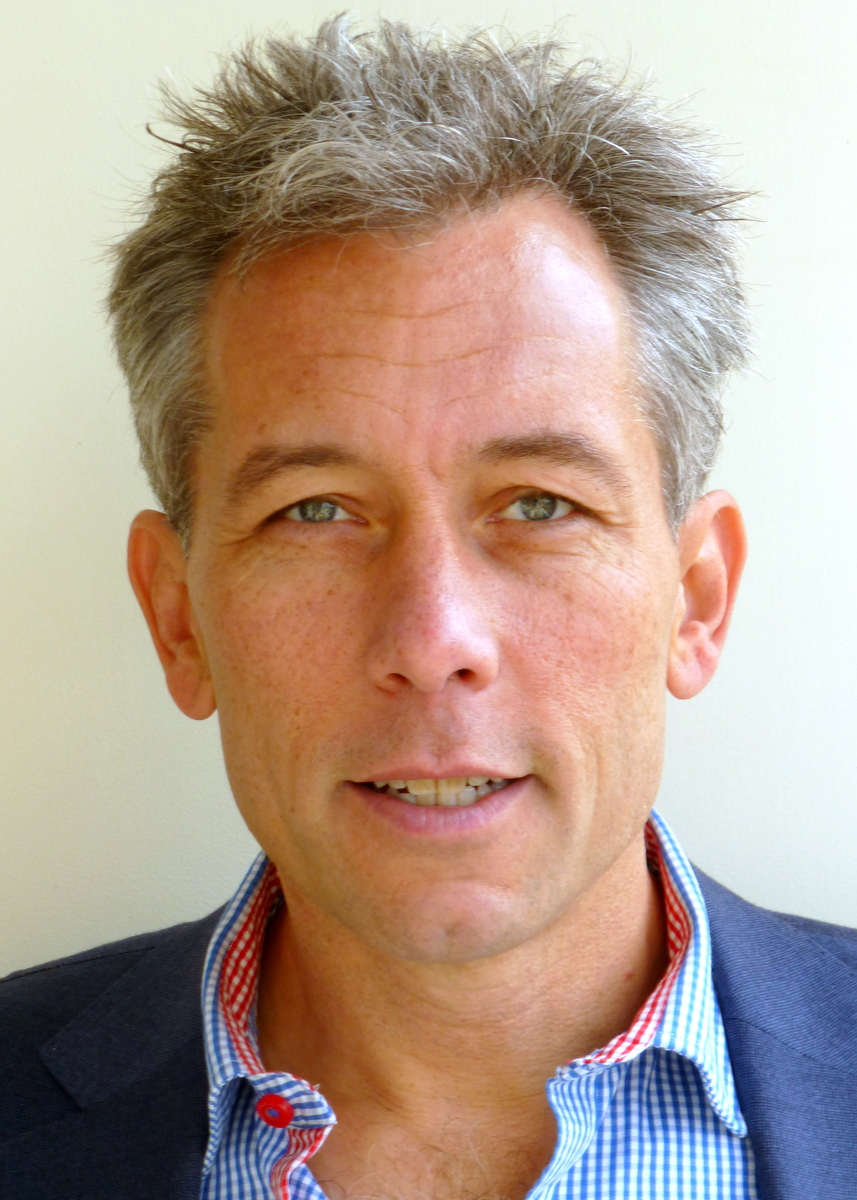
David Zetland is an assistant professor at Leiden University College, where he teaches various classes on economics. He was a PostdoctoralDavid Zetland Fellow in Natural Resource Economics and Political Economy at UC Berkeley (2008-2010) and a Senior Water Economist at Wageningen University (2011-2013). David blogs on water, economics and politics at aguanomics.com and gives many talks to public, professional and academic audiences.

David has two books The End of Abundance: economic solutions to water scarcity (2011)  and Living with Water Scarcity (2014). He received his PhD in Agricultural and Resource Economics from UC Davis in 2008. David lives in Amsterdam.

Influencers:

Adam Smith, Friedrich Hayek and Nassim Taleb.

Economics:

In this interview, David mentions and discusses: scarcity, shortage, commodity, supply, demand, marginal cost, opportunity cost, unintended consequences, monopoly, common-carrier system, the water-diamond paradox, development economics, governance, probability, fat tails, Buddhist economics, the problem of over-consumption, non-satiation assumption, GDP, pricing, fairness and efficiency.

Economists:

In this interview, David mentions and discusses: Adam Smith, Friedrich Hayek, Nassim Nicholas Taleb and Ernst Friedrich Schumacher.

The Water-Diamond Paradox (23rd minute in this Episode)

Find out:

  • if we should be worried more about a shortage of water or a scarcity of water.
  • if we should learn from the oil industry and develop the technology-equivalent of extracting oil from oil sands and desalinate the ocean water?
  • if we can tell whether we know the water footprint of a cow and if it’s different in California than Ireland.
  • why water is actually free and what you pay is for the delivery.
  • if there is an opportunity costs to acquiring water?
  • why people living in the slums of India pay up to 50 times the price for water than those who have cheaper piped water.
  • if a water monopoly is an effective market structure.
  • if price competition in the market for water would result in the over-use of water consumption.
  • about Scottish Water and how other utilities across the UK and adopting their distribution and pricing structure.
  • about the water-diamond paradox.
  • why David decided to do a PhD in economics after failing to get rich in the dotcom era.
  • how David came to get his family name ‘Zetland’.
  • about the coming ‘Water Wars’ and how it has already started.
  • about Sao Paulo’s troubled water situation and how it’s creating gang warfare on the streets.
  • who we should assign the property rights to water.
  • about Chile‘s exemplary assigning of water property rights.
  • what David proposes to be the most effective way of managing water.
  • how Singapore are becoming independent in creating their supply of water and are no longer depending on imports from Malaysia.
  • how Singapore are building technologies to recycle water from waste.
  • why the ‘toilet-to-tap’ water recycling initiative has failed in the US but is working in Singapore.
  • how marketing recycled water works in Singapore and not in the US – one known as ‘New Water’ and the other ‘Toilet-to-Tap Water’.
  • why Singapore treats water as a national security issue.
  • why it will take 20 years to build a desalination plant and why San Diego will need 15 of these plants to serve the water needs of the locals.
  • about the new Irish water utility, Irish Water, and how the management decided to ‘award’ themselves bonuses even before the Irish people payed for their water.
  • about ‘Buddhist Economics’ and the assumption of non-satiation.
  • what David would suggest if he was an Economic Advisor to any country regarding water policy.

Why David Studied Economics:

When I was between 25 and 30 years old, I travelled to 65 countries and when I came back to the States I was looking around and figuring out what to do. I tried to get rich in the dotcom era and that totally failed and I started to work with a bunch of academic mathematicians and they were really kinda cool people. But they were pretty cool and I thought ‘well this is interesting. Maybe I should go and do something academic’. I went back to grad school to get a PhD and I wanted to do development economics. My research project, which was to go and study cocaine production in South America, sounded to my advisors a littlest dangerous. Then one of my advisors said that there was this really strange case in Southern California where San Diego is in a big fight with other water utilities and maybe you should look into that. So that ended up being my dissertation – David Zetland.

David’s Advice to a Country Implementing a Water Policy:

“You have to take care of your environment. Then you have to commodify all the rest of the water. But all that revenue really should go to the citizens of that country. Other than that, I’m open to any other discussion about what’s a better system in terms of balancing between efficiency, which is pricing and fairness which is the distribution of those revenues” – David Zetland.

‘Water Water Everywhere and Not a Drop to Drink’: The Right to Water – It’s a Necessity After All

The ‘Right to Water’ is an important part of the conversation but it tends to confuse things. People need water for drinking, cleaning, washing and so on. But is there a right to water to put on your garden? Is there a right to water to wash your car? Do farmers have a right to water that goes on their fields if that means the river is going to be dry? So, there comes a point where the ‘Right to Water’ runs out and we have to start talking about water as a scarce good or an economic commodity. That’s the separation you need to start with.

Shortage is worse than scarcity because you can’t get any of what you want, even if you have time or money – David Zetland

David Zetland’s book ‘Living with Water Scarcity’ is about learning how to manage water scarcity, the same way we have learned to manage land scarcity, time scarcity and money scarcity. Water scarcity is not confined to any particular region or country. This is a global phenomenon. We can generalise water scarcity in terms of the lack of water available. But there exists specific concerns such as the scarcity of clean water, which is becoming a problem in northern European countries and eastern United States, where there’s lots of water but a lot of it is polluted.

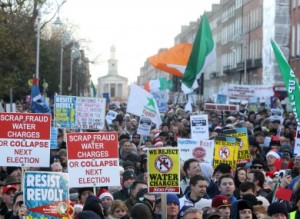
Ireland's Anti-Water Charges Protest 2014

Ireland’s Anti-Water Charges Protest 2014

The irony for people living in Ireland, for example, is that the country is surrounded by water but yet availability of fresh, clean water can be scarce in some regions. There are a few towns and villages in Ireland who have been buying bottled water or are on boiling notices due the presence of cryptosporidium in their water. Water shortages is not necessarily an immediate concern for Ireland. However, California, on the other hand, is experiencing their 4th year of drought. This is something that is being experienced in many regions around the world, but ‘California has more reporters hanging around’ and other regions’ grief remain unreported.

The ‘Water Water Everywhere and Not a Drop to Drink’ problem leads people to think that we should desalinate the ocean and get all the water that we want from the ocean. This, however, would be a great physical and expensive task to undertake and the conversation on desalination tends to stop. Should we learn from the oil industry and develop the technology-equivalent of extracting oil from oil sands and desalinate the ocean water?

Adam Smith explained the value in exchange as being determined by labor: ‘The real price of every thing, what every thing really costs to the man who wants to acquire it, is the toil and trouble of acquiring it’.

David frames this as ‘Technologies and Techniques’; techniques meaning how we use technologies and how we use water. “In the case where you have scarcity, you could say we’re going to build a desalination plant, drill a deeper well, build aqueducts, take shorter showers or stop watering our lawns. We should try and help people use as many ways as possible instead of focusing on one particular silver bullet.”

Who’s the Straw that Broke the Camels Back?

Numerous groups are pointing the finger at each other and casting blame each others way for causing pollution, drought and water scarcity. Besides the natural precipitation, farmers use half as much water as people in the city, such as industries and municipalities. In California, farmers use four times as much water as cities, say in the UK. Farmers obviously use water in various forms, but they’re not necessarily using more than the cities.

Then there’s the big discussion about who should be allowed to or who has the right to us water and that’s where the politics and mudslinging comes in. However, the level of precipitation is different in Arizona and California, as well as in Spain and Cyprus, compared to regions in Ireland and the UK.

Quotes from David in this Episode:

“These pro-poor policies can end up being so anti-poor. It’s terrible, it’s actually almost a crime” – David Zetland

Click To Tweet

on how cheap water in India results in water utilities not having the infrastructure to deliver water to the slum areas. These people end up paying up to 50 times for their water from tankards. This water is dirty and people, particularly children, queue up for hours to collect and carry this water to their homes which can often be on the 3rd or 4th floor of a building.

“The customer is vulnerable to being exploited by the monopoly and the monopoly is vulnerable to being exploited by the customer. And that’s where regulations come in” – David Zetland on the need for regulation in the market for water.

Why is water, which is something we need to live, so cheap, whereas diamonds, which are a pure frivolous luxury, so expensive? – David Zetland on the Water-Diamond Paradox.

Water Wars in Sao Paulo, Brazil

Sao Paulo’s reservoirs have fallen to such low levels that their supply fails to meet with their expected demand. There were a lot of ways in which Sao Paulo could’ve dealt with this risk, such as fixing their leaky networks. They cannot get water from somewhere else. You’ve got a limited amount of water and 10 to 20 million people who need water to drink. The utility can shut off the water supply at various locations if they like and that raises the question of rich versus poor. That kind of decision is not going to please anybody. There have been protests over this.

David’s assessment of this is that if Sao Paulo wants to avoid a war on the streets, they need to shut of everybody’s water and have tankard trucks distributing water in Jerry cans in the corners – one man, one bottle. And that’s because you’d be addressing the concern of social equality and human rights.

Israel is not going to invade Turkey for their water. You can’t win that battle. You can’t bring back the water – it’s too heavy.There won’t be wars of plunder, there’ll be just conflicts over who’s going to get the water. Water gangs will form and they will take your water.


Recommended Books:

  • The End of Abundance: economic solutions to water scarcity (2011)  by David Zetland.
  • Living with Water Scarcity (2014) by David Zetland.
  • Small is Beautiful by Ernst Friedrich Schumacher.
  • The Theory of Moral Sentiments by Adam Smith.
  • Check out David’s review of ‘Small is Beautiful’ by E. F. Schumacher.
  • Find out here why David decided to give his book away for FREE.

Where to Find David Zetland:

  • Blog: aguanomics
  • Twitter: @aguonomics
http://traffic.libsyn.com/economicrockstar/039_David_Zetland_Final.mp3

Podcast: Play in new window | Download

032: Joe Gladstone on the ‘Pay What You Want’ Pricing Model and Using Big Data to Understand You Better

May 14, 2015 by Frank

http://traffic.libsyn.com/economicrockstar/032_Joe_Gladstone_Final.mp3
Play in New WindowDownload

032: Joe Gladstone on the ‘Pay What You Want’ Pricing Model and Using Big Data to Understand You Better

Joe Gladstone is an academic researcher and consultant based at the University of Cambridge, where heJoe Gladstone applies insights from behavioral economics and psychological research to better understand consumer behaviour.

Joe partners with some of the world’s largest corporations, such as Twitter, Bupa and Visa, as well as government departments, to tackle challenges that deal with behaviour change.

Joe’s views on consumer behaviour have been featured in the BBC, Forbes, The Huffington Post and other media outlets.

Joe is founder of BE-events and BE-Recruit.  He received his Masters from Oxford University and his Phd from Cambridge University, and has been awarded a range of competitive grants and prizes.

Find Out:

  • about the link between the discipline of psychology and economics.
  • why Joe decided to do postgraduate research in behavioral economics.
  • how advances in technology, especially in social media, can help behavioral scientists understand human behaviour better.
  • why you do not know how much you spend on coffee.
  • how Joe has identified the relationship between psychology and money.
  • how Joe has used the ‘My Personality’ app to predict your personality from what you like.
  • how companies can use ‘Big Data’ to target messages directly to you.
  • why people are willing to pay for services that they could otherwise get for free.
  • if TIDAL will disrupt the online music industry by taking control of their own music.
  • if Spotify risks losing out to TIDAL.
  • how important is the price of zero?
  • how the ‘Pay What You Want’ pricing model defies classical economic theory.
  • why people pay even if they are given the option to take the product for free.
  • how Radiohead made more in sales when offering their album on a ‘Pay What You Want’ basis.
  • if the ‘Pay What You Want’ model is sustainable for a business in the long run?
  • how Jon Bon Jovi has successfully implemented the ‘Pay What You Want’ model in his Soul Kitchen restaurant in New Jersey.
  • how sitting with strangers to eat in Soul Kitchen can ‘nudge’ diners to pay more than what they were initially willing to pay.
  • about Joe’s passion for financial literacy and financial empowerment.
  • if you can become immune to nudging by having a deeper understanding of it.
  • if knowledge prevents you from being nudged.
  • about behavioral economics events that could be going on in your area with BE-events.org.
  • how Joe maximises his time by outsourcing his work on oDesk.
  • how to get girls in less-developed and poor countries to go to school.
  • how Joe built up a name for himself on LinkedIn by connecting with the main people in the banking sector and offering his services on a no cost basis.
  • what the five personality traits known as OCEAN stands for.

Economists Joe Would Love to Collaborate With:

Professor Dean Karlan of Yale University and Professor John List of University of Chicago.

Economists:

In this interview, Joe mentions: 

Daniel Kahneman, Amos Tversky, Cass Sunstein, Dean Karlan (Poverty Action), David Hagmann, George Loewenstein, Craig Fox (The Behavioral Science and Policy Association), John List and The Behavioural Insights Team in the UK.

Economics:

In this interview, Joe mentions and discusses:

Behavioral economics, experimental economics, factor analysis, microeconomics, poverty, banking, micro-finance, decision making, nudge, nudging, pricing, demand, supply, randomised control trials, field experiments and multi-variate testing.

The ‘Pay What You Want’ pricing model is a great example of where the Classical economic theory doesn’t do a great job of explaining real world behavior – Joe Gladstone.

Resources:

  • Upwork (formally oDesk)
  • Leadpages

Books:

  • The Behavioral Foundations of Public Policy by Eldar Shafir

Papers:

  • Warning: You Are About to be Nudged by David Hagmann and George Loewenstein.

Where to find Joe:

  • Website: www.joegladstone.com
  • BE-events.org
  • BE-recruit.com
  • LinkedIn: Joe Gladstone
http://traffic.libsyn.com/economicrockstar/032_Joe_Gladstone_Final.mp3

Podcast: Play in new window | Download

031: Matt Rousu on Experimental Auctions and the Need for Peer-Reviewed Economic Impact Studies.

May 6, 2015 by Frank

http://traffic.libsyn.com/economicrockstar/031_Matthew_Roussu_Final.mp3
Play in New WindowDownload

031: Matt Rousu on Experimental Auctions and the Need for Peer-Reviewed Economic Impact Studies.

Dr. Matthew Rousu is a Professor and Warehime Chair in the Department of Economics atMatthew Rousu Susquehanna University. His main teaching interests include microeconomics, political economic thought, and game theory.

Matt is an expert on experimental auction design and implementation. He uses his expertise on experimental auctions to study problems in agricultural economics, environmental economics, and public health.  He has published over 40 scholarly articles, as well as book chapters, non-technical articles and Op-eds.

Matt has been quoted widely on many issues by The Chicago Tribune, Forbes, The NY Daily News, The Philadelphia Inquirer, US News and World Report, The Washington Post, Wikipedia, and Yahoo.com.

He has also been a guest for local radio stations mainly to discuss the local, state, and national economy.

Matt runs his own blog known as paeconomist.blogspot and is founder of the Economic Impact Review. He is the author of Political Trivia.

Matt earned a Bachelor’s degree from the University of South Dakota and a Ph.D. in Economics from Iowa State University.

Find Out:

  • the benefits of lecturing at a liberal arts college – switch up your research interests.
  • about experimental auctions and their design.
  • what is consumer demand for Genetically Modified Products.
  • how demand for GMOs change due to differences in packaging.
  • how print advertisement for e-cigarettes increases their demand.
  • whether e-cigarettes are a ‘healthy’ alternative to traditional cigarettes.
  • about the impact of plain package cigarettes on consumer demand.
  • if the Irish government correct in enforcing plain packaged cigarettes.
  • how much less buyers were willing to pay for plain packaged cigarettes.
  • how a picture of smoking-related diseases on cigarette packaging decreases demand for cigarettes.
  • why Matt set up The Economic Impact Review.
  • why economic impact studies should go through a peer-review process.
  • about the lack of transparency in economic impact studies.
  • about Matt’s libertarian stance and why he’s for fracking.
  • what you get when a libertarian and socialist collaborate on an economics fracking paper.
  • about the beautiful campus of Susquehanna University.
  • why small class sizes are beneficial to both student and teacher.
  • about Matt’s exploits in the World Series of Poker.
  • how an understanding of statistics and behavioral economics can benefit a poker player.
  • how Chris Moneymaker influenced Matt’s love of poker.
  • the economics of what makes a winning poker player.
  • if poker is a game of chance or a game of skill.
  • how poker is akin to economic game theory.
  • about people’s willingness to pay for GM foods versus non-GM foods.
  • if there is a need for an independent 3rd party to disseminate information on GM foods.
  • what annoys Matt the most.
  • why Matt switched to a flipped classroom style of teaching.
  • about deceptions in economic research and why journals will not publish such research.
  • why research in psychology accepts deception of the subjects but economics does not.
  • why a lot of economics journals will not publish your work.

Economists:

In this interview, Matt mentions: Milton Friedman, Wally Huffman (Iowa State), Jason Shogren (Wyoming) and Dan Ariely.

Economics:

In this interview, Matt mentions and discusses: Consumer demand, experimental auctions, bias, incentives, pricing, demand curve, sample size, economic impact of fracking, socialism, libertarianism, microeconomics, macroeconomics, game theory, political economic thought, forensics economics, positive analysis and normative analysis.

You can disagree without being disagreeable Matt Rousu.

Click To Tweet

Are you Willing to Pay More for Genetically-Modified Foods?

The goal of experimental auction is to assess consumers demand for some particular product.

If consumers receive information from a group, such as Green Peace, who were against GM foods, then those consumers were willing to pay up to 50% less for foods that were genetically modified compared to a plain-labelled product.

If consumers got information from an agri-business company, such as Monsanto, about the benefits of GM foods, then they would pay just as much for these foods as conventional food products.

What would the impact be on consumer’s willingness to pay if there were scientific information or, what Professor Rousu called ‘Objective Verifiable Information’ available in the decision-making process? The objective information ‘dampened’ the effects on either side.

Where to find Matt:

  • Website: Economic Impact Review
  • Blog: paeconomist
  • YouTube: Matthew’s Channel
  • Twitter: @matthewrousu
  • Research: What Makes a Winning Poker Player? Evidence From Online Poker. Gaming Law Review and Economics, 14 (9), Pages 677-683. (2010). With M. Smith.
  • Other Research Papers: http://www.susqu.edu/facstaff/r/rousu/research

http://traffic.libsyn.com/economicrockstar/031_Matthew_Roussu_Final.mp3

Podcast: Play in new window | Download

Frank Conway

Frank Conway is founder of Economic Rockstar and lecturer of economics, finance and statistics. Read More…

View My Blog Posts

Youtube Sub

Become a Patron of the Economic Rockstar Podcast

patreon

Ireland’s Economy by the Numbers

Leaving Cert Economics: Ireland’s Economy  Click here to download a workbook on Ireland’s Economy so that you can add your own notes. [Original size] Ireland’s Economy by fconway
Categories

Subscribe and Never Miss An Episode

itunes-logo

Recent Posts

  • Ireland’s Economy by the Numbers April 8, 2019
  • 174: Wendy Carlin on The Core Project, Capitalism, Democracy and Normative Statements February 13, 2019
  • 173: Stephen Wright on Core Econ as a Learning Resource for Mainstream Economics January 28, 2019
  • 172: Best of 2018 Part 2: From the Great Depression to Futurism; Institutions, Individualism, Cooperation and Reciprocity January 22, 2019
  • 171: Best of 2018 Part 1 January 3, 2019

Copyright © 2026 · Podcast Pro Theme on Genesis Framework · WordPress · Log in

This website uses cookies to improve your experience. We'll assume you're ok with this, but you can opt-out if you wish. Accept Reject Read More

Privacy Policy

Privacy Overview

This website uses cookies to improve your experience while you navigate through the website. Out of these, the cookies that are categorized as necessary are stored on your browser as they are essential for the working of basic functionalities of the website. We also use third-party cookies that help us analyze and understand how you use this website. These cookies will be stored in your browser only with your consent. You also have the option to opt-out of these cookies. But opting out of some of these cookies may affect your browsing experience.

Necessary
Always Enabled
Necessary cookies are absolutely essential for the website to function properly. This category only includes cookies that ensures basic functionalities and security features of the website. These cookies do not store any personal information.
Non-necessary
Any cookies that may not be particularly necessary for the website to function and is used specifically to collect user personal data via analytics, ads, other embedded contents are termed as non-necessary cookies. It is mandatory to procure user consent prior to running these cookies on your website.
SAVE & ACCEPT