• ABOUT
  • RESOURCES
  • PODCAST
  • BOOKS
  • BLOG
  • SUPPORTERS
  • QFA Financial Advice
  • CONTACT

Economic Rockstar

Connecting Brilliant Minds in Economics and Finance

057: Alvin Roth on Match-Making, Repugnant Markets and Market Design

November 5, 2015 by Frank

http://traffic.libsyn.com/economicrockstar/057_Alvin_Roth_Final.mp3
Play in New WindowDownload

057: Alvin Roth on Match-Making, Repugnant Markets and Market Design

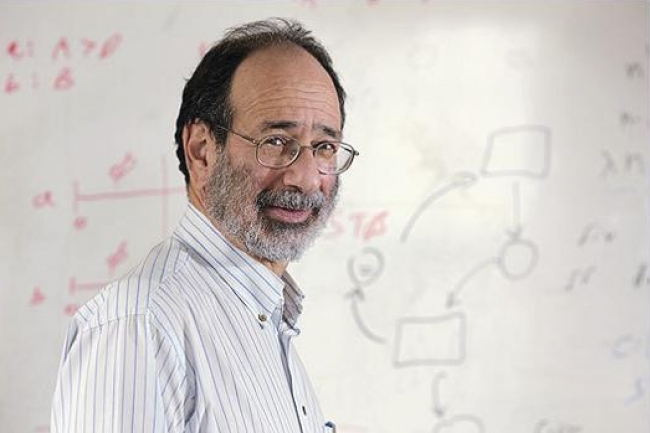
Alvin Roth is the Craig and Susan McCaw Professor of Economics at Stanford University.Alvin Roth
Professor Roth has made significant contributions to the fields of game theory, experimental economics and market design and is known for his emphasis on applying economic theory to solutions for “real-world” problems.

In 2012, Alvin won the Nobel Memorial Prize in Economic Sciences jointly with Lloyd Shapley “for the theory of stable allocations and the practice of market design.”

Alvin Roth has a B.S form Columbia University,  and earned his MS and Ph.D. from Stanford University.

Alvin’s latest book Who Gets What and Why: The New Economics of Matchmaking and Market Design is now available on Amazon.

Economics:

In this interview, Alvin mentions: money, barter, matching markets, supply, demand, price discovery, labor markets, marriage markets, market design, double coincidence of wants, property rights and game theory.

Economists:

In this interview, Alvin mentions: Gary Becker, Christien Exley, Lloyd Shapley, David Gayle, Herb Scarf, Hal R. Varian,  Preston McAfee, Fuhito Kojima, Muriel Niederle, Paul Milgrom, John Levin, Ilya Segal and Oskar Morgenstern.

In this episode you will learn:

  • what economics is and if we need money to allow a market to operate efficiently.
  • about the price discovery process in economics.
  • what is match-making markets and how similar the labor market is to the dating market.
  • what is market design and why it is important.
  • how entrepreneurs and start-ups, like Airbnb and Uber, use market failure to solve a problem.
  • what is a repugnant market.
  • the difference between a thick and a thin market.
  • what makes a market thick.
  • about the black market for kidneys.
  • how kidney exchange works.
  • about the double coincidence of wants in the kidney exchange market.
  • about the problem in the market for water in California.
  • some of the unintended consequences from the war on drugs.

Books:

  • Who Gets What and Why: The New Economics of Matchmaking and Market Design by Alvin Roth
  • Thinking, Fast and Slow by Daniel Kahneman
  • Theory of Games in Economic Behaviour by John von Neumann and Oskar Morgenstern

Papers:

  • Gayle, D. and L. Shapley (1962). College Admissions and the Stability of Marriage, The American Mathematical Monthly, Vol. 69, No. 1, pp: 9 – 15.  
  • Scarf, H. and L. Shapley. (1974). On Cores and Indivisibility. Journal of Mathematical Economics 1: 23-37.

Websites Mentioned in this Episode:

  • Market Design: Alvin Roth’s blog
  • Angel Flight: People Helping People in Need
http://traffic.libsyn.com/economicrockstar/057_Alvin_Roth_Final.mp3

Podcast: Play in new window | Download
048: Steve Hanke on Currency Boards, Moral Hazard and the Benefits of Privatization

September 3, 2015 by Frank

http://traffic.libsyn.com/economicrockstar/048_Steve_Hanke_Final.mp3
Play in New WindowDownload

048: Steve Hanke on Currency Boards, Moral Hazard and the Benefits of Privatization

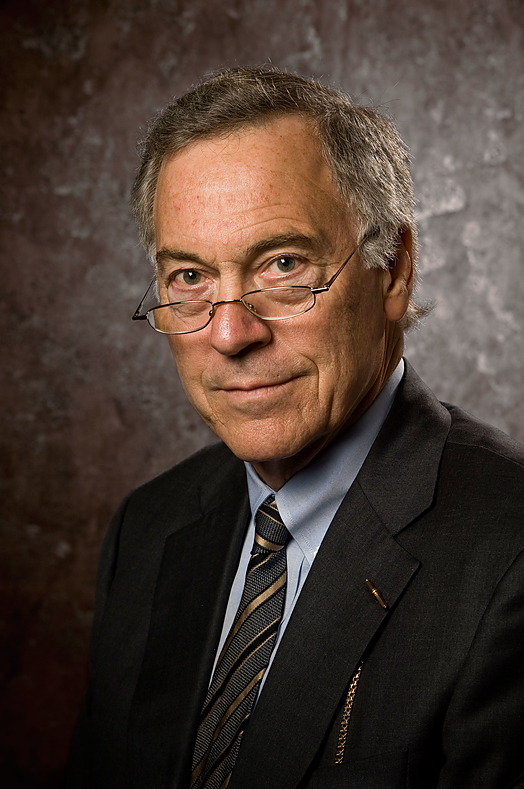
Steve Hanke is a Professor of Applied Economics, specializing in currency boards. He is Co-Director of the Institutesteve hanke for Applied Economics, Global Health, and the Study of Business Enterprise at The Johns Hopkins University in Baltimore.

Steve is a Senior Fellow and Director of the Troubled Currencies Project at the Cato Institute in Washington, D.C. and a member of the Charter Council of the Society of Economic Measurement and the Financial Advisory Council of the United Arab Emirates.

Previously, Professor Hanke was a Senior Economist on President Reagan’s Council of Economic Advisers and was also an Advisor to the Presidents of Bulgaria, Venezuela, and Indonesia.

He played an important role in establishing new currency regimes in Argentina, Estonia, Bulgaria, Bosnia-Herzegovina, Ecuador, Lithuania, and Montenegro. Professor Hanke has also advised the governments of many other countries, including Albania, Kazakhstan and Yugoslavia.

In 1998, Steve was named one of the twenty-five most influential people in the world by World Trade Magazine.

Professor Hanke is a well-known currency and commodity trader and serves as Chairman of Hanke-Guttridge Capital Management, LLC.

Steve Hanke’s most recent books are Zimbabwe: Hyperinflation to Growth (2008) and A Blueprint for a Safe, Sound Georgian Lari (2010).

Influencers:

Friedrich Hayek, Kenneth Boulding of the University of Colorado  and Bob Mundell

Economics:

In this interview, Steve mentions and discusses: currency boards, monetary policy, inflation, hyper-inflation, interest rates, currency reserves, optimum currency area, common currency, fiscal policy, moral hazard, eurozone, ECB, the World Bank, property rights, investment, central bank, dollarisation, interventionist policy, privatisation, hedging, Chicago Mercantile Exchange, futures contract and bitcoin.

Economists:

In this interview, Steve mentions and discusses: Kirk Schuller, Milton Friedman, Friedrich Hayek, Adam Smith, Robert Mundell and Kenneth Boulding.

There have only been 56 hyper-inflations in world history and I think I’ve stopped more of them than any living economist – Professor Steve Hanke

In this episode, you will learn:

  • what is a currency board and the reason why a country should resort to one.
  • about Bulgaria’s currency crisis in 1997, how hyper-inflation hit 142 percent per month and what Steve Hanke did to solve the problem.
  • the successful use of currency boards in Bulgaria in 1997 to significantly reduce inflation and interest rates.
  • why Bulgaria has one of the lowest fiscal deficits of any country.
  • about Yugoslavia’s hyper-inflation of 313 million percent in 1994.
  • why Montenegro dumped the Yugolsav Dinar for the Deutschmark during Slobodan Milosevic’s presidency of Yugoslavia.
  • how Montenegro will join the euro currency without having to do a currency changeover.
  • if it makes sense to leave a currency board to join a monetary union and giving up fiscal autonomy.
  • why it’s best for Bulgaria to stay outside the eurozone due to the issue of moral hazard.
  • why Greece ran up a fiscal deficit of 12.7% of GDP when the Maastricht Treaty stated a strict adherence to a maximum level of 3%.
  • about the Greek bailout of $472 billion and how it amounts to almost $43,000 for every man, woman and child in Greece.
  • how a currency board removes the moral hazard of a unified currency area by financing spending with current taxes or the private bond market.
  • if Greece should abandon the euro and set up a currency board and pegging their currency with the euro.
  • how a Greek currency board would operate if Greece left the eurozone.
  • about the success of the Hong Kong currency board and how it operates without a central bank.
  • if we are heading toward a one world currency.
  • why most small countries should abandon their currency and anchor it to the euro, dollar, yen or yuan.
  • whether Greece should sell off its ports, lands and other property to private investors just as Hayek proposed and Ronald Reagan did in the US in the 1980s.
  • about Ronald Reagan’s privatisation programme in the US in the early 1980s.
  • about the Bureaucratic Rule of Two and why privatisation is an optimal outcome for government, enterprise and society.
  • what Hayek was like as a person and what he thought of Ronald Reagan, The Intellectual.
  • about candling in the old days when grading eggs for futures contracts.

On Currency Boards:

A currency board system is a system in which you issue a domestic currency, which is anchored to a sound currency at a fixed exchange rate that’s fully convertible. The local currency is backed up with a 100% anchor currency’s reserves. So the local currency really becomes a clone of whatever the anchor currency happens to be.

The currency board is not allowed to emit credit to the government. If the government needs money for fiscal expansion, the only way to get this finance (in the form of your local currency) is to take hard currency in (like the euro) and exchange it for the local currency. Bulgaria has been doing this since 1997. The government cannot sell bonds to raise finance. They convert the euro (previously the Deutschmark) into their local currency, the lev, and can then carry out fiscal stimulus. Consequently, Bulgaria has one of the lowest fiscal deficits in Europe.

On Bulgaria and Why It Should Not Join the Eurozone:

“With the currency board, they (Bulgaria) ‘clone’ the euro, so they’re in a unified currency area with the eurozone but they’re not formally part of the eurozone itself. I’ve counselled the Bulgarians, and the best thing to do is to stay with that arrangement. And the reason why is that the eurozone, the common currency area, has a huge moral hazard associated with it. That is, something that creates bad behaviour encourages bad behaviour and Greece is a perfect example.” – Professor Steve Hanke

On the Greek Deceit and Its Fiscal Deficit:

“Greece entered the eurozone in 2001 on false pretences. They cooked the books and got in. They were allowed in the club even though the club knew the Greeks were lying in terms of their economics statistics.”

“The Greeks calculated that they could spend like drunken sailors, which they did and ran a completely irresponsible fiscal operation.”

“The moral hazard is you join a club and if you think the club won’t enforce its rules and won’t force you to tow the line, you will just go on your merry way spending and deficit spending and knowing, or at least thinking that, in this case the eurozone, would bail you out.”

Greece ranks 151 out of 189 countries for the ability of doing business. If you make a contract in Greece, the probability of having that contract enforced is very low by international standards. It’s like being in Zimbabwe. Greece is supposed to be part of the European Union and a modern country but it isn’t.

Greece should leave the eurozone, set up a currency board and re-introduce the Drachma. This would create fiscal discipline just like the situation in Bulgaria.

Quotes by Steve Hanke in Episode 048 of the Economic Rockstar Podcast:

I was hedging and trading when I was 14 years of age. I was trading with my grandfather – @steve_hanke

Click To Tweet

Hong Kong was aways a unilateralist free trader. That encourages competition, entrepreneurship and productivity. The countries with open trade tend to be more free market in general and they grow more rapidly. – Steve Hanke

“About 90 Central Banks should just be done away with completely and either a currency board be put in or a stronger foreign currency like the dollar, the euro or the yen.” – Steve Hanke

“If you want lower fiscal deficits, lower inflation and higher rates of growth you adopt with a currency board system or dollarize” – Steve Hanke

If you want to reduce corruption you privatise. But the potential gains in terms of economic prosperity are enormous – @steve_hanke

Click To Tweet

Europe’s lands are “a mere waste and loss of country in respect both of produce and population.” – Adam Smith

Click To Tweet

Bitcoin has a unit of account problem – @steve_hanke

Click To Tweet

On Hayek:

“He was delightful and charming and very interesting, particularly for Mrs Hanke and myself. One of Mrs Hanke’s Great Aunts was one of Hayek’s earlier loves of his life.”

Recommended Books:

  • Zimbabwe: Hyperinflation to Growth by Steve Hanke (Free download)
  • The Wealth of Nations by Adam Smith
  • Reagan, In His Own Hand by Ronald Reagan, edited by Marty Andersson et al.
  • The Advanced Introduction To The Austrian School of Economics by Randall Holcombe
  • The Essential Hayek by Donald Boudreaux (Free Kindle download)

Resources:

  • Case Studies written by Steve Hanke
  • Troubled Currencies Project
  • The Hanke-Krus Hyperinflation Index
  • http://econographic.com/hyperinflation
  • On the Measurement of Zimbabwe’s Hyperinflation by S. Hanke and A. Kwok
  • Friedman: Float or Fix? by Steve H. Hanke
  • Reflections on Currency Reform and the Euro by Steve H. Hanke
  • The Privatization Debate: An Insider’s View by Steve H. Hanke
  • Could Greece Adopt the Dollar? by Steve H. Hanke
  • Reflections on Reagan the Intellectual by Steve H. Hanke
  • On the Fall of the Rupiah and Suharto by Steve H. Hanke
  • Doing Business 2015 Report by The World Bank

Where to Find Steve Hanke:

  • Cato Institute: http://www.cato.org/people/steve-hanke
  • Johns Hopkins Institute: http://krieger.jhu.edu/iae/co-directors
  • Twitter: @steve_hanke
http://traffic.libsyn.com/economicrockstar/048_Steve_Hanke_Final.mp3

Podcast: Play in new window | Download
042: Parviz Parvizi on Clammr, Coffee, Coase and the Economy of Iran

July 23, 2015 by Frank

http://traffic.libsyn.com/economicrockstar/042_Parviz_Parvizi_Final.mp3
Play in New WindowDownload

042: Parviz Parvizi on Clammr, Coffee, Coase and the Economy of Iran

Parviz Parvizi is co-founder of Clammr, a mobile app and platform making audio more social and viral. Users areParviz Parvizi on the Economic Rockstar podcast calling Clammr, which features snack-sized audio clips of 18 seconds or less, the “Instagram of Audio” and “Audio Twitter”.

Previously, Parviz worked at McKinsey & Company, Goldman Sachs, the Federal Communications Commission, and O’Melveny & Myers.

He has advised top 5 global media companies and mobile carriers on strategy and growth. He was a founder of McKinsey’s iConsumer research initiative on digital consumer behavior, authoring 3 of the firm’s 10 most-downloaded media sector knowledge documents.

Parviz was a Olin Law & Economics Fellow at Yale Law School. At Cornell he majored in economics and served as President of the Cornell Economics Society while an undergraduate.

Parviz holds a JD from Yale Law School and AB from Cornell.

Economics:

In this interview, Parviz mentions and discusses: development economics, poverty, transitional economies, microeconomics, exports, auction markets, transaction costs, fair trade, taxes, theory of specialisation, Coase theorem, theory of the firm, property rights, bargaining power, market prices, transaction costs, fair trade, economic growth, consumption, productivity, autarky,

Economists

In this interview, Parviz mentions and discusses: Friedrich Hayek, Adam Smith,David Ricardo, Ronald Coase and Steven Dubnar, 

Favorite Economists:

  • Adam Smith and Ronald Coase

Clammr as featured on Economic Rockstar

Find Out:

  • about Clammr, the amazingly new app that shares an 18-second audio clip just like an audio tweet.
  • about Parviz Parvizi’s journey from Iran to the US.
  • how Parviz Parvizi got his name.
  • how there are 4 hours of audio-only time each day for people and how Clammr can accommodate your needs.
  • about the motivation behind the creation of Clammr and how Parviz and his co-founder solved a problem.
  • how Clammr was built up from the beginning at zero cost.
  • what Clammr found out about podcasting.
  • the difficulties of growing and monetising a podcast and how Clammr is helping podcasters to solve these challenges.
  • about the social aspect of Clammr and how you can share audio snippets to your friends, colleagues and audience.
  • if Clammr will adopt a monetization model similar to YouTube.
  • how Clammr’s ‘Hear More’ button can potentially lead to a paid transaction for users.
  • about the opportunities that exist for users of Clammr in the education sector.
  • how teachers can use Clammr in assessments and how students can collaborate to give their audio response in a mashup-like answer.
  • how Clammr could be the new route for a musician to become known, just like the way Justin Bieber made it using YouTube.
  • how being an early adopter of a new platform can lead to a large following.
  • about the sensation that is PewDiePie on YouTube and his degree in Industrial Economics.
  • about Parviz’s work in the Tanzania and Ethiopia coffee trade market.
  • about the challenges faced by African coffee growers and how Parviz solved this problem.
  • Parviz’s views on the recent US-Iran deal.
  • how the US-Iran deal may have economic limitations due to Iran’s economy being 70% state-dominated.
  • about the benefits of an export-oriented market economy.
  • about the benefits of a knowledge economy.
  • how democracy and economic growth could improve if marginalised groups in society are helped.

Quotes by Parviz in Episode 042 of the Economic Rockstar Podcast:

  • Clammr is really trying to address the challenge of discovery and social sharing in audio – Parviz Parvizi

    Click To Tweet

  • You build a more sustainable business if the way you get paid is a way in which all parties involved actually get value – Parviz Parvizi

Advice:

  • Don’t sell yourself short in terms of where you’re aiming and don’t think that your starting point has to define your ending point – Parviz Parvizi

  • Even if you’re aren’t getting access to the very best schools, it doesn’t actually take that much time to catch up with hard work – Parviz Parvizi

  • Aim high and exposing yourself to people, institutions and places of incredibly high standards is a great way to push yourself even if initially you’re kind of a failure”– Parviz Parvizi

  • Entrepreneuship is a constant battle of wills – Parviz Parvizi

    Click To Tweet

Recommended Books:

  • The Elements of Style by Strunk and White
  • Wealth of Nations by Adam Smith
  • The Holy Bible

The Next Decade of Podcasting:

  • What’s in store for the next decade of podcasting and radio? Check out this great post.
  • Clammr releases Future Podcasting 2015 Report on SlideShare.
  • The Future of Podcasting by Parviz Parvizi.

Where to Find Parviz Parvizi:

  • Twitter: @ClammrClammr App on Economic Rockstar
  • Clammr: @Parviz
  • Facebook: Clammr

Links for the Clammr App:

  • Download Clammr for iPhone/iPad in the App Store or by visiting Clammr.
  • For Android use the web-based publisher to upload files and for a basic listening experience.
  • Workshop and update videos.
http://traffic.libsyn.com/economicrockstar/042_Parviz_Parvizi_Final.mp3

Podcast: Play in new window | Download

041: Dermot Hayes on Comparative Advantage, Feeding the Chinese and the Malthusian Catastrophe

July 16, 2015 by Frank

http://traffic.libsyn.com/economicrockstar/041_Dermot_Hayes_Final.mp3
Play in New WindowDownload

041: Dermot Hayes on Comparative Advantage, Feeding the Chinese and the Malthusian Catastrophe

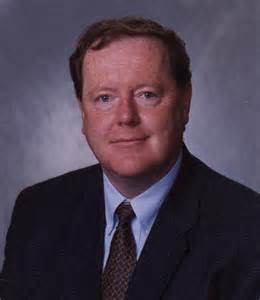
Dermot Hayes is the Pioneer Chair of Agribusiness, professor of economics, and professor of finance at Iowa State University. He heads theDermot Hayes 2 Trade and Agricultural Policy Division at CARD, a position he also held from 1990 through 1998.

He is co-director of the Food and Agricultural Policy Research Institute, a research center dually administered through the Centre for Agricultural and Rural Development (CARD) at Iowa State and at the University of Missouri at Columbia. He is also a leader of the Policy Task Force of the Plant Science Institute at Iowa State.

A native of the Republic of Ireland, Dermot obtained his degree in agriculture science from University College, Dublin and his Ph.D. from University of California, Berkeley with a major in international trade.

Dermot has distinguished himself with many awards at the college and university levels for his work as a teacher and researcher.

In 2006 he received a Publication of Enduring Quality award from the American Agricultural Economics Association, who subsequently named him a Fellow in 2007.

Besides his analysis of U.S. farm policy and international agricultural trade, Dermot’s other research interests include food safety, livestock modelling, demand analysis, and commodity markets.

Economics:

In this interview, Dermot mentions and discusses: market inefficiencies, government intervention, agricultural economics, property rights, comparative advantage, autarky, incentives, scarcity, Malthusian Catastrophe, free-trade, unemployment, subsidies and taxes.

Economists:

In this interview, Dermot mentions and discusses: Jason Shogren, Paul Dolan, David Zetland, David Simon, Adam Smith, Thomas Malthus, David Zilberman, Milton Friedman and Josh Angrist.

Influencer:

Milton Firedman

“Whenever prices rise, farmers and technology companies have an incentive to work harder to take advantage of high prices. And of course they do that by producing more and that brings prices back down again.” – Dermot Hayes

“Malthus was wrong. He was a negative person. But having said that, with more people and less efficient use of land, we are going to have to bring more land into cultivation – this is devastating to the environment.” – Dermot Hayes

In this episode, you will learn:

  • how China is finding ways to feed its people and how self-sufficiency no longer works.
  • about China’s ever-increasing demands for soybeans, sugar, wine, etc and how this is putting demands on the global agricultural industry.
  • how Ireland lost its comparative advantage in milk production by joining the EU.
  • about Kerrygold Irish grass-fed butter and Bullet-proof coffee.
  • why Kerry Group are only ‘scratching the surface’ in the US market.
  • what high-value, labor-intensive products China should concentrate on producing in order to feed their population and trade with other countries.
  • about if the Chinese government owns much of the land and property rights in China.
  • ‘terminator seeds’ and how private companies could be incentivised to manufacture them.
  • about the use of beta agonists, such as ractopomine, in the use of animal food production.
  • why Europe’s method of testing agricultural technologies frustrates Dermot.
  • about Dermot’s work on free-trade agreements between countries.
  • about Dermot’s ‘controversial’ ethanol research paper.
  • why Dermot created a formula that allowed the price of corn to track crude oil prices and how he bought agricultural land based on his findings.
  • how academic research can open up hatred and attacks amongst your peers and the industry to which you maybe researching.
  • what advice Dermot would give a government regarding the taxing and subsidies of goods and services for the purpose of trade.

Takeaway:

“If you haven’t travelled to strange places like Burma or Uruguay, find a way to do so and you’l come back a changed person.” – Dermot Hayes

Recommended Books:

  • Free to Choose by Milton Firedman

http://traffic.libsyn.com/economicrockstar/041_Dermot_Hayes_Final.mp3

Podcast: Play in new window | Download
Frank Conway

Frank Conway is founder of Economic Rockstar and lecturer of economics, finance and statistics. Read More…

View My Blog Posts

Youtube Sub

Become a Patron of the Economic Rockstar Podcast

patreon

Ireland’s Economy by the Numbers

Leaving Cert Economics: Ireland’s Economy  Click here to download a workbook on Ireland’s Economy so that you can add your own notes. [Original size] Ireland’s Economy by fconway

Categories

Subscribe and Never Miss An Episode

itunes-logo

Recent Posts

  • Ireland’s Economy by the Numbers April 8, 2019
  • 174: Wendy Carlin on The Core Project, Capitalism, Democracy and Normative Statements February 13, 2019
  • 173: Stephen Wright on Core Econ as a Learning Resource for Mainstream Economics January 28, 2019
  • 172: Best of 2018 Part 2: From the Great Depression to Futurism; Institutions, Individualism, Cooperation and Reciprocity January 22, 2019
  • 171: Best of 2018 Part 1 January 3, 2019

Copyright © 2026 · Podcast Pro Theme on Genesis Framework · WordPress · Log in

This website uses cookies to improve your experience. We'll assume you're ok with this, but you can opt-out if you wish. Accept Reject Read More
Privacy Policy

Privacy Overview

This website uses cookies to improve your experience while you navigate through the website. Out of these, the cookies that are categorized as necessary are stored on your browser as they are essential for the working of basic functionalities of the website. We also use third-party cookies that help us analyze and understand how you use this website. These cookies will be stored in your browser only with your consent. You also have the option to opt-out of these cookies. But opting out of some of these cookies may affect your browsing experience.
Necessary
Always Enabled
Necessary cookies are absolutely essential for the website to function properly. This category only includes cookies that ensures basic functionalities and security features of the website. These cookies do not store any personal information.
Non-necessary
Any cookies that may not be particularly necessary for the website to function and is used specifically to collect user personal data via analytics, ads, other embedded contents are termed as non-necessary cookies. It is mandatory to procure user consent prior to running these cookies on your website.
SAVE & ACCEPT