• ABOUT
  • RESOURCES
  • PODCAST
  • BOOKS
  • BLOG
  • SUPPORTERS
  • QFA Financial Advice
  • CONTACT

Economic Rockstar

Connecting Brilliant Minds in Economics and Finance

101: Chris Coyne on the Opportunity Cost to War, Exporting Democracy and the Nirvana Fallacy

September 1, 2016 by Frank

http://traffic.libsyn.com/economicrockstar/101_Chris_Coyne_Final.mp3
Play in New WindowDownload

101: Chris Coyne on the Opportunity Cost of War, Exporting Democracy and the Nirvana Fallacy

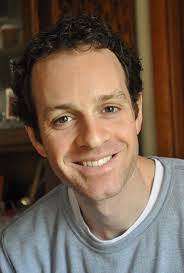
Christopher Coyne is an Associate Professor of Economics at George Mason University and the AssociateChris Coyne Economic Rockstar Director of the F. A. Hayek Program for Advanced Study in Philosophy, Politics, and Economics at the Mercatus Center.
He also serves as Director of Graduate Studies for the Department of Economics.

Professor Coyne serves as the Co-Editor of The Review of Austrian Economics, the Co-Editor of The Independent Review, the Co-Editor of Advances in Austrian Economics, and the Book Review Editor of Public Choice.

Chris has authored numerous academic articles, book chapters, and policy studies and his research interests include political economy and military intervention.

Professor Coyne is the author or co-author of numerous books including Future: Economic Peril or Prosperity? and After War: The Political Economy of Exporting Democracy.

He is also the co-editor of The Oxford Handbook of Austrian Economics and The Handbook on the Political Economy of War.

In 2016 Chris was selected as a recipient of George Mason University’s University Teaching Excellence Award.

His work can be found at www.ccoyne.com

Economics:

In this episode, Chris discusses and mentions: economics of war, the Nirvana Fallacy, incentives, knowledge constraints, unintended consequences, the Capitalist-Peace hypothesis, dependency effects, public goods, praxeology, prohibition and society.

Economists:

In this episode, Chris discusses and mentions: Ludwig von Mises, F. A. Hayek, Robert Higgs, Mike Munger, Peter Leeson, Rachel Coyne, James Buchanan, Gordon Tullock, Claude-Frédéric Bastiat and Henry Hazlitt.

Professor Coyne’s Daily Routine:

  • Everyday is the same. I wake up every morning between 5 and 6 am and work out in the garage for 1 to 2 hours. Then I eat breakfast and get to work.
  • I work in chunks – anywhere from 1 to 3 hours and I take little breaks in between.
  • When I find myself losing focus, I do little things like getting a cup of coffee or do a chore around the house or going outside for a few minutes. It resets my mind.
  • I’ll work from 8 or 9 am to lunch. I get lunch, maybe work a little more and then I shift more into administrative mode. It requires a different brain power than reading and writing.

Links:

  • Polity IV Index

Recommended Books:

Human Action by Mises: “That is an excellent book in terms of a systematic treatise on economics.” – Chris Coyne.

Crisis and Leviathan: Critical Episodes in the Growth of American Government by Robert Higgs: “It’s a wonderful treatment of how government grows through the onset of crises. He’s focused mainly on the United States. He talks about the evolution of the US government and he highlights these punctuated points of crises where government grew. Of course World War 2 and the Great Depression being among the main ones that he highlights. It’s excellent both for the history but also for the framework he lays out – called the ‘Ratchet Effect’ (how the government ratchets up in size. It’s a wonderful book that I highly recommend.” – Chris Coyne.

Papers Mentioned in the Episode:

  • Coyne, C. and Hall. A. (2014). The Political Economy of Drones, Defence and Peace Economics, 25(5): 445-460.
  • Coyne, C., Boettke, P. and Leeson, P. (2014). Earw(h)ig: I Can’t Hear You Because Your Ideas are Old, Cambridge Journal of Economics, 38(3): 531-544.
  • Coyne, C. and Coyne, R. (2014). The Identity Economics of Female Genital Mutilation,” Journal of Developing Areas, 48(2): 137-152.
  • Coyne, C., Boettke, P. and Hall, A. (2013). Keep Off the Grass: The Economics of Prohibition and U.S. Drug Policy, Oregon Law Review, 91(4): 1069-1096.
  • Coyne, C. and Leeson,P. (2012). Sassywood, Journal of Comparative Economics, 40(4): 608-620. 

Where to Find Professor Coyne:

  • Website: www.coyne.com
  • Twitter: @ccoyne1

Books:

  • Human Action by Ludwig von Mises
  • Crisis and Leviathan: Critical Episodes in the Growth of American Government by Robert Higgs
  • Future: Economic Peril or Prosperity? by Chris Coyne
  • Flaws and Ceilings: Price Controls and the Damage They Cause by Chris Coyne
  • Doing Bad by Doing Good: Why Humanitarian Action Fails by Chris Coyne
  • Media, Development and Institutional Change by Chris Coyne
  • After War: The Political Economy of Exporting Democracy by Chris Coyne
  • The Oxford Handbook of Austrian Economics
  • The Handbook on the Political Economy of War.
http://traffic.libsyn.com/economicrockstar/101_Chris_Coyne_Final.mp3

Podcast: Play in new window | Download
074: Peter Leeson on The Invisible Hook: The Hidden Economics of Pirates

February 24, 2016 by Frank

http://traffic.libsyn.com/economicrockstar/074_Peter_Leeson_.mp3
Play in New WindowDownload

074: Peter Leeson on The Invisible Hook: The Hidden Economics of Pirates

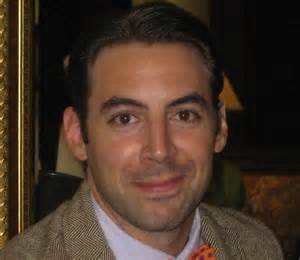
Peter T. Leeson is Duncan Black Professor of Economics and Law at George Mason University.Peter Leeson

He is also a Senior Fellow at the F.A. Hayek Program for the Advanced Study of Philosophy, Politics, and Economics as well as the North American Editor of Public Choice.

Formerly, Peter was Visiting Professor of Economics at the University of Chicago, Visiting Fellow in Political Economy and Government at Harvard University, and F.A. Hayek Fellow at the London School of Economics.

Peter is author of The Invisible Hook: The Hidden Economics of Pirates and Anarchy Unbound: Why Self-Governance Works Better Than You Think.

Peter can be found at PeterLeeson.com.

Economists:

In this episode, Peter mentions and discusses: Ludwig von Miss, F. A. Hayek, Gary Becker, Karl Menger, Steven Levitt, Robin Hanson, Karl Marx, Adam Smith and Peter Boettke.

Economics:

In this episode, Peter mentions and discusses: price theory, human behaviour, Austrian Economics, Chicago School of Economics, economics of self-governance, rational thinking, profit maximisation, incentives, social insurance, externalities, unemployment, governance, self-governance, public goods and rational choice theory.

Pirates were economic actors but they were criminals. Criminal behaviour, as some had suggested, is not very amenable to the economic way of thinking.But Gary Becker pioneered research demonstrating that that wasn’t so.

In this episode you will learn:

  • about the similarities and differences between Austrian Economics and Becker’s thinking in the Chicago School of Economics.
  • why Peter decided to study the economics of pirates.
  • about the scientific approach to economic thinking.
  • how limitations to data restrict analytical research and how historical economic thinking can be used as a form of empirical analysis.
  • how using the economic narrative is just as effective as the mathematical regressions to explain theoretical concepts.
  • the similarities between The Invisible Hand and The Invisible Hook.
  • how pirates were rational thinkers and social revolutionaries.
  • how a hierarchy was established on a pirate ship using the Pirate Code.
  • how the Pirate Code created a social order that was economically beneficial to the crew.
  • about the constitutional democracy that pirates established onboard their ship and the misperceptions we had of an autocratic captain.
  • about some rules, codes of conduct and dispute resolution mechanisms that existed on a pirate ship.
  • how pirates were incentivised to engage in battle with a social fund (moral hazard) that was a predecessor to today’s social insurance policy.
  • how the pirate code minimised or eliminated the impact of a negative externality on a crew member or the whole crew.
  • how Peter’s book dedication, in the form of a marriage proposal, worked out.
  • when did piracy at sea begin and when did the romanticised period of piracy, as we know it, occur.
  • how are the pirates of the early 18th Century, such as Captain Blackbeard, so different to the pirates of today, such as the Somali pirates.
  • how sailors found solace and refuge as buccaneers and pirates after wars, such as the War of the Spanish Succession.
  • why unemployed sailors became buccaneers and pirates.
  • the risk-reward ratio of becoming a pirate.
  • whether pirates actually buried their treasure.
  • how an enterprising society was established at the land bases of pirates.
  • what pirates spent their spoils and treasures on.
  • the signalling effect of the Jolly Roger flag and why pirates used it as they approached a merchant ship.
  • how an ‘honor among thieves’ and collusive agreements between pirate groups allowed them to avoid attacking each other.
  • how coast guards, who were legally allowed to plunder merchant ships, often used the Jolly Roger flag as a signal to deceive their subjects into thinking they were pirates for the purpose of avoiding a bloody battle.
  • why coast guards used the Jolly Roger flag to cash in on the reputation of pirates.
  • if self-governance is effective and more successful that government.
  • whether the free-rider problem would exist in a self-governed economy regarding public goods.

Links:

  • Gary Becker’s Centre on Chicago Price Theory
  • Becker Friedman Institute for Research in Economics: The University of Chicago
  • Episode 072: F. A. Hayek
  • Episode 073: Robin Hanson
  • Episode 055: David Skarbek
  • Journal of Political Economy

Papers:

  • The Invisible Hook: The Law and Economics of Pirate Tolerance by Peter T. Leeson
  • Human Sacrifice by Peter T. Leeson in Review of Behavioral Economics. 

Books:

  • The Invisible Hook by Peter Leeson
  • Anarchy Unbound by Peter Leeson
  • Living Economics by Peter Boettke
  • Economic Approach to Human Behaviour by Gary Becker
  • Human Action: A Treatise on Economics by Ludwig von Mises
http://traffic.libsyn.com/economicrockstar/074_Peter_Leeson_.mp3

Podcast: Play in new window | Download
060: Manu Saadia on Trekonomics – The Economics of Star Trek: Scarcity, Productivity and Public Goods

November 26, 2015 by Frank

http://traffic.libsyn.com/economicrockstar/Manu_Saadia_Final.mp3
Play in New WindowDownload

060: Manu Saadia on Trekonomics – The Economics of Star Trek: Scarcity, Productivity and Public Goods

Manu Saadia fell into science fiction and Star Trek fandom at the age of eight, back in Paris, France, where he was born and raised.Manu Saadia

Manu  studied history of science and economic history in Paris and Chicago. After many happy years in the Ivory Tower, he yielded to his childhood passion for the future.

Manu embarked on his continuing mission to explore strange new worlds by boldly going where many have gone before: Los Angeles, CA, where he advise and (occasionally) builds tech companies.

Manu received the 2005 Wayne C. Booth Graduate Student Prize for Excellence in Teaching at the University of Chicago.

His book, Trekonomics, is currently available for pre-order at www.inkshares.com and will be released in 2016.

Star Trek offers much more detail about its own world and the way its economics actually works – like the plumbing so to speak. So that’s what I wanted to do. Go into the plumbing of Star Trek. – Manu Saadia

Economics:

In this interview, Manu mentions:  trekonomics, crowd funding, labor, economic history, trade, robots, capitalism, comparative advantage, currency, money, Gold-Pressed Latinum, public goods, conspicuous consumption, scarcity, peak oil, productivity and opportunity costs.

Economists:

In this interview, Manu mentions: Brad DeLong, Felix Salmon, Adam Smith, Thomas Malthus, Hubbert, Paul Ehrlich, Julian Simon, Romer, Larry Summers, John Maynard Keynes and Angus Deaton,

In this episode you will learn:

  • why Manu Saadia wrote Trekonomics.
  • about the Star Trek Economics panel at Comic Con.
  • why economists love Star Trek.
  • about inkshares and how it can help authors publish their book.
  • how traditional media rather than social media boosted pre-order sales of Trekonomics – an ironic outcome.
  • when Manu’s interested in economics and Star Trek collided.
  • about the work of Isaac Asimov and how his stories are a discourse on economics.
  • how the stories of robots and the future by Asimov influenced and shaped the storyline in Star Trek.
  • about the replicators in Star Trek and how they solve the problem of economic scarcity.
  • about the Ferengi’s and how they represent capitalism and trade.
  • why The Federation or the humans in Star Trek do not use money but have a foreign account to trade with the Ferengi’s.
  • about the Ferengi’s currency, Gold-Pressed Latinum, which cannot be replicable.
  • why owning a replicator is a ‘pain in the ass’.
  • how things that cannot be replicated has value but those that can be replicated has no value.
  • if Keynes’ The Economic Possibilities of Our Grand Children is a rebuttal of the writings of H. G. Wells.
  • about GPS being a public good and the benefits it has brought to the public.
  • why making GPS a public good in 1983 was one of the best decisions Ronald Reagan made as US President.
  • Manu’s favourite Star Trek episode is Lower Decks (The Next Generation).

Quotes by Manu Saadia in Episode 60 of the Economic Rockstar Podcast:

Trekonomics got a lot of support and very nice feedback from a lot of economists – Manu Saadia

Click To Tweet

“It always baffles me when you have these very famous and serious economic thinkers were in fact  total Star Trek nerds. I was on a panel at New York Comic Con with Brad DeLong, Paul Krugman and Annalen Newitz from i09. There was Chris Black as well and Felix Salmon.” – Manu Saadia

Brad DeLong came to the panel with a Star Trek hoodie. – Manu Saadia

Click To Tweet

On Isaac Asimov: “All of his work is a long meditation on economics, either foundation where there is this science called psychohistory which is in fact a fictional mathematical modelling of human behaviours on the scale of societies on a galactic scale.” – Manu Saadia

“One of the reasons why I wanted to study economics was that I was fascinated by and really wanted to understand the transformation of humanity’s relation to its own labor. This is one of the great questions of political economy because it determines a lot of things when it comes to the shape society and the role of the state and how behaviors are determined and constructed over time. But it’s also the key to understanding where we’re going”. – Manu Saadia

“I would say the replicators are more of a metaphor. If you look at their status in the series, they do not help move the narratives forward. They’re just there to signify that there’s no need to work. They’re a little bit like robots in Asimov. They have the same narrative function, which is to show and demonstrate that post-scarcity does exist and is based on automation and artificial intelligence.” – Manu Saadia

The Ferengi’s are the capitalist, merchant traders of the galaxy – Manu Saadia

Click To Tweet

Most of the stuff in Star Trek is basically a public good – Manu Saadia

Click To Tweet

I think Star Trek is very much what Keynes described in The Economic Possibilities of Our Grand Children – Manu Saadia

Click To Tweet

Books:

  • Scatter, Adapt, and Remember by Annalen Newitz 
  • Isaac Asimov
  • Frankenstein by Mary Shelly
  • The Economic Possibilities of Our Grand Children by John Maynard Keynes

Papers:

  • Romer (1990) Productivity Gains

Links:

  • What I Learned Crowdfunding Trekonomics  by Manu Saadia
  • Trekonomics The economics of Star Trek: how does it work, and how do we get there?  by Manu Saadia
  • View the transcript to The Amazing Economics of Star Trek at New York Comic Con
  • www.i09.com 
  • www.inkshares.com
  • What the economics of Star Trek can teach us about the real world by Brian Fung, Andrea Peterson and Hayley Tsukayama Washington Post 
  • The Live Long and Prosper Edition Slate Money 
  • Club of Rome 

Manu’s Favorite Star Trek Epsiodes:

  • City on the Edge of Forever
  • Arena

Where to Find Manu:

  • inkshares.com
  • fusion.net

Music:

  • Star Trek Episode Amok Time
http://traffic.libsyn.com/economicrockstar/Manu_Saadia_Final.mp3

Podcast: Play in new window | Download

052: Alex Tabarrok on Globalisation, Bounty Hunters and Leveraging Online Education

October 1, 2015 by Frank

http://traffic.libsyn.com/economicrockstar/Alex_Tabbarrok__Final.mp3
Play in New WindowDownload

052: Alex Tabarrok on Globalisation, Bounty Hunters and Leveraging Online Education

Alex Tabarrok is Associate Professor of Economics at George Mason University and co-founder (with Tyler Cowen) of Marginal Revolution University, an online platform for learning economics.Alex Tabarrok

Alex is Senior Fellow and former Research Director for The Independent Institute, Assistant Editor of The Independent Review, Bartley J. Madden Chair in Economics at the Mercatus Center and Director of the Center for Study of Public Choice.

Alex is the author or editor of a number of books including the introductory economics textbooks, Modern Principles, The Voluntary City and Changing the Guard: Private Prisons and the Control of Crime.

Alex is a TED speaker with over 640,000 views of his TED talk, How Ideas Trump Crises.

Alex received his Ph.D. in economics from George Mason University, and he has taught at the University of Virginia and Ball State University.

“I hope to be teaching long after I’m dead” – Alex Tabarrok

Click To Tweet

In this episode, you will learn:

  • how to ensure that criminals turn up of trial and to reduce the possibility of them becoming a fugitive.
  • how bounty hunters are more successful than the police in catching criminals.
  • why bounty hunters and bail bondsmen are the most best for the taxpayer.
  • why bounty hunters invited Alex Tabarrok to join them in a bounty hunting.
  • why a mother’s signature on a bail bond is the most effective way of making sure a criminal repays its  due.
  • how effective are the police in deterring crime.
  • how a police strike in Montreal in 1967 resulted in an spike in crime.
  • how the terror alert level results in an increase in police presence and results in a decrease in local crime.
  • whether we should reward the police for reducing crime and the problems that could arise from this reward system.
  • about the use of value-added tests for identifying teacher quality.
  • whether the best teachers have a positive impact on the future earnings of their students.
  • if a country can have a welfare state and open borders.
  • how the next generation of immigrants revert to the average of their adopted country including crime.
  • why immigrants to the United States are the most entrepreneurial.
  • why Alex co-founded Marginal Revolution University.
  • what Marginal Revolution University is about and who it’s for.
  • how to leverage the best teachers and leverage their experience.
  • how teaching will evolve into a format that’s similar to how plays evolved into movies with leading actors being paid millions of dollars and the production being created just once.
  • how artificial intelligence and computer adaptive learning programmes will be the next wave of teaching and learning.
  • what is the ideal length for a recorded educational video.
  • why universities will have to adapt to online technologies.
  • why parents and politicians want colleges to use online technologies.

Immigrants have lower crime rates, but the children of immigrants have about average crime rates. It’s unfortunate that the immigrants adopt our ways. They assimilate to American crime rates – Alex Tabarrok

Personal Habits:

I love doing what I do and that removes a lot of barriers. It gets you up in the mornings – Alex Tabarrok

Takeaway:

“Economics is fun. Economics brings in these world histories, things about climate, geography and history” – Alex Tabarrok

Economics:

In this interview, Alex mentions: crime, incentives, causality, elasticity, Baumol’s Cost Disease, rewards, redistribution, welfare, taxes, entrepreneurship, human capital, globalisation, public goods, free trade, structural unemployment and trade.

Economists:

In this interview, Alex mentions: Tyler Cowen, Greg Mankiw, Paul Krugman, Eric Callan, John Click, Milton Freidamn, John Nash, Bryan Caplan, Robin Hanson, Joseph Schumpeter, Adam Smith, David Hume and Richard Cantillon.

“This is a cliche, but Adam Smith really is great” – Alex Tabarrok

Click To Tweet

Ted:

  • How Ideas Trump Crises by Alex Tabarrok
  • Comment: Solving Crises Through Innovation and Ideas or Creating Problems Through Marginalisation and Displacement by Frank Conway

My TED talk is 75% of my entire teaching. So that 15 minute talk has been seen by so many people that that’s the majority – the big majority of all my teaching in my life. – Alex Tabarrok

Podcasts:

  • EconPop

Books:

  • Economics in One Lesson by Henry Hazlitt
  • The Armchair Economist by Stephen Lansberg
  • Freakonomics by Steven  D. Levitt and Stephen J. Dubnar
  • An Economist Gets Lunch: New Rules for Everyday Foodies by Tyler Cowen
  • The Undercover Economist by Tim Hartford
  • The Undercover Economist Strikes Back by Tim Hartford
  • The Case Against Education by Bryan Caplan (coming soon)
  • The Age of Em by Robin Hanson 
  • Trekonomics by Manu Saadia

    http://traffic.libsyn.com/economicrockstar/Alex_Tabbarrok__Final.mp3

    Podcast: Play in new window | Download
    050: Dan Ariely on Irrational Behavior and the Importance of Our Environment When Making Decisions

    September 16, 2015 by Frank

    http://traffic.libsyn.com/economicrockstar/050_Dan_Ariely_Final.mp3
    Play in New WindowDownload

    050: Dan Ariely on Irrational Behavior and the Importance of Our Environment When Making Decisions

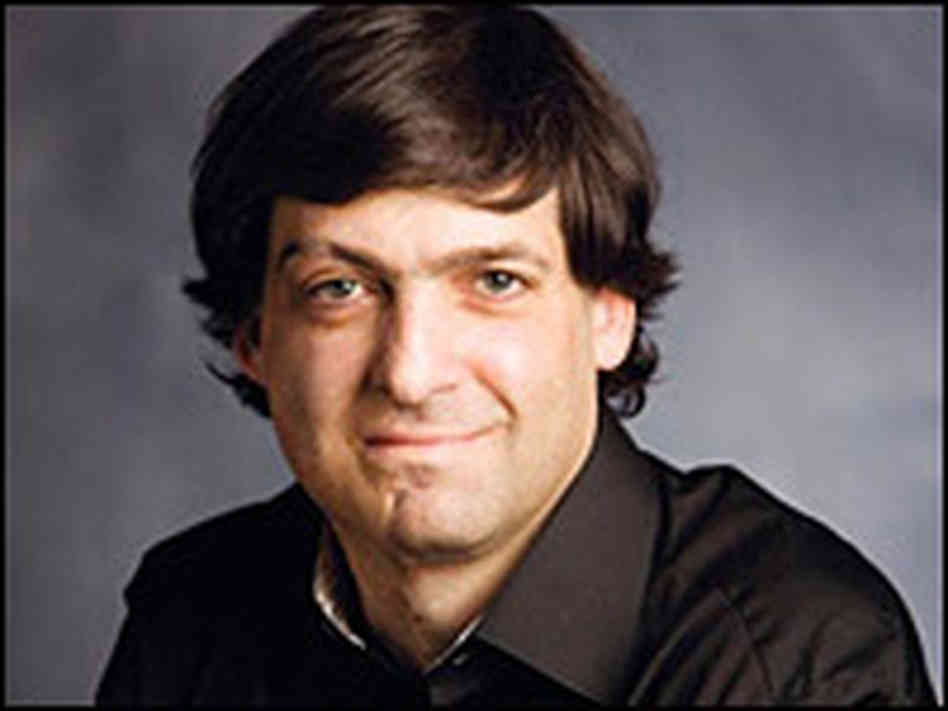
    Dan Ariely is Professor of Psychology & Behavioral Economics at Duke University in North Carolina. Dan’s interests spanDan Ariely a wide range of behaviors, and his sometimes unusual experiments are consistently interesting, amusing and informative, demonstrating profound ideas that fly in the face of common wisdom.

    In addition to appointments at the Fuqua School of Business, the Center for Cognitive Neuroscience, the Department of Economics, and the School of Medicine at Duke University, Dan is also a founding member of the Center for Advanced Hindsight.

    Dan is the author of the New York Times bestsellers Predictably Irrational, The Upside of Irrationality, and The Honest Truth About Dishonesty and his latest book Irrationally Yours is now available.

    Dan has received numerous honors and awards in medicine, psychology and economics.

    Dan received a B.A in Psychology from Tel Aviv University, an M.A and PhD in Cognitive Psychology from University of North Carolina and another PhD in Business Administration from Duke University.

    Influencer:

    Professor Hanan Frenk, Tel Aviv University

    Economists:

    In this interview, Dan mentions: Brian Wansink. 

    Psychologists:

    In this interview, Dan mentions: Mike Norton and Elizabeth Dunn.

    Economics:

    In this interview, Dan mentions and discusses: Tragedy of the Commons, behavioral economics, public goods, pricing, decision-making, choice architecture, Ulysses Contract, happiness, asymmetric dominance effect and choice.

    Takeaway:

    “Think about your environment and always experiment” – Dan Ariely

    Click To Tweet

    In this episode, you will learn:

    • about Dan Ariely’s traumatic experience resulting in severe burns.
    • how Dan Ariely found his love for psychology and behavioral economics.
    • why Dan will not be teaching his Irrational Behavior course on Coursera.
    • the problems with MOOCs like Coursera and why it is making the wrong choice regarding its open platform system.
    • why Dan was turned down for his first book – a cookbook and what advice he was given by a publisher.
    • why we as humans make very costly mistakes and what we can do about it.
    • how people eat more than they realise and how experiments in economics have shown this.
    • why we are bad at doing things that makes us happy.
    • the most common mistake companies make when making decisions or processing information.
    • how companies can avoid making mistakes.
    • if anger is a good or bad emotion.
    • the most surprising finding from Dan Ariely’s research.
    • the most surprising question put to Ask Ariely.
    • how to get poor people in Kenya to save.
    • how your environment matters when making decisions.

    Quotes by Dan Ariely in Episode 50 of the Economic Rockstar Podcast:

    “Choice architecture is this idea that our environment influences how we make decisions” – Dan Ariely

    Click To Tweet

    “In the process of trying to not make any mistakes, companies create environments that punish risk and therefore punish ingenuity and growth” – Dan Ariely

    “Tim is a very interesting character and he is experimenting on himself. We have to realize that his experiments have the validity that they work very well for him” – Dan Ariely

    On Coursera:

    “I think we do need rules for trolls. I think that pricing is a very good mechanism for some things and I’m not sure it’s a mechanism for all for all things like this. The reality is that Coursera probably over samples from the people on the tail of the distribution in terms of mental stability.” – Dan Ariely

    Books:

    • Predictably Irrational by Dan Ariely
    • The Upside of Irrationality by Dan Ariely
    • The Honest Truth About Dishonesty by Dan Ariely
    • Irrationally Yours by Dan Ariely
    • The 4 Hour Chef by Tim Ferriss
    • Happy Money: The Science of Smarter Spending by Elizabeth Dunn and Michael Norton

    Resources Mentioned by Dan Ariely:

    • Kitchen Safe: www.thekitchensafe.com
    • Coursera: www.coursera.org

    Where to Find Dan Ariely:

    • Website: www.danariely.com
    • Twitter: @danariely
    • LinkedIn: Dan Ariely
    • Ted: www.ted.com

    Transcript:

    The full transcript of this episode with Dan Ariely will be available shortly.

    Thanks for Listening!

    Thanks so much for joining me again this week. Have some feedback you’d like to share? Leave a note in the comment section below!

    If you enjoyed this episode, please share it using the social media buttons you see at the bottom of the post.

    Also, please leave an honest review for the Economic Rockstar Podcast on iTunes! Ratings and reviews are extremely helpful and greatly appreciated! They do matter in the rankings of the show, and I read each and every one of them.

    http://traffic.libsyn.com/economicrockstar/050_Dan_Ariely_Final.mp3

    Podcast: Play in new window | Download
    046: Shanta Devarajan on The World Bank, Quiet Corruption, Government Failure and Comparative Advantage in the MENA Region

    August 20, 2015 by Frank

    http://traffic.libsyn.com/economicrockstar/046_Shanta_Devarajan_Final.mp3
    Play in New WindowDownload

    046: Shanta Devarajan on The World Bank, Quiet Corruption, Government Failure and Comparative Advantage

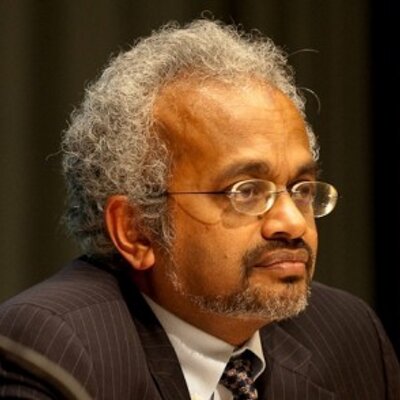
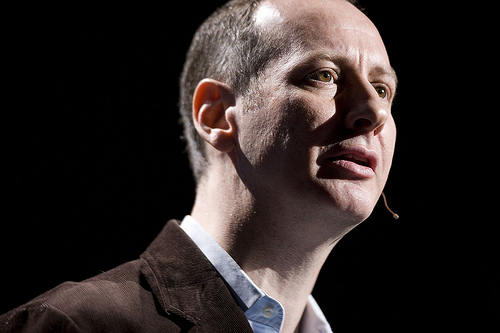
    Shantayanan Devarajan is the former Chief Economist of the World Banshanta devarajank’s Middle East and North Africa Region. Since joining the World Bank in 1991, he has been a Principal Economist and Research Manager for Public Economics in the Development Research Group, and the Chief Economist of the Human Development Network, South Asia, and Africa Region.

    Shanta was the director of the World Development Report 2004, ‘Making Services Work for Poor People’. Before 1991, he was on the faculty of Harvard University’s John F. Kennedy School of Government.

    Shanta is the author and co-author of over 100 publications, with his research covering public economics, trade policy, natural resources and the environment, and general equilibrium modeling of developing countries.

    Born in Sri Lanka, Shanta received his B.A. in Mathematics from Princeton University and his Ph.D. in Economics from University of California, Berkeley.

    People care so much about education. They will not eat if they can send their kid to a better school – Shanta Devarajan

    In this episode, you will learn:

    • why Shanta decided to take a sabbatical from lecturing and never went back.
    • about Shanta’s passion to end world poverty.
    • how experiencing living on a $1 a day with a poor family made Shanta realize that the failure lies with government.
    • how empowering people in poverty-stricken countries with information could be the catalyst to end poverty.
    • the huge government failures and market distortions threatening the economy in India.
    • why teachers and doctors in India are absent from work 25% and 40% of the time respectively and how this is affecting progress.
    • how the powerful medical union in India are making healthcare inaccessible to the poor.
    • why poor people in India think that the reason why doctors do not show up at clinics is because ‘the rain didn’t come’.
    • why politicians in India do not have an incentive to fix the problem of doctor absenteeism.
    • what the solutions to corruption in India.
    • about unemployment being the biggest problem in the Middle East and North Africa.
    • that the reason why unemployment is so high in the MENA region is due the industrial sector being highly monopolised.
    • about how crony capitalism is preventing SMEs from growing in the MENA region.
    • why Tunisia has failed to develop into an export-oriented economy due the legacy of the Ben Ali family and their connections to firms operating in heavily protected markets.
    • that the failure for governments to continue with social contracts due to high deficits triggered the Arab Spring.
    • about Colonel Gaddafi’s regime and how he managed to keep peace between tribes.
    • how water subsidies and water-intensive crops are depleting water resources in Yemen.
    • why the addictive habit of chewing qat or khat in Yemen is causing water shortages.
    • why Yemen, who doesn’t have a comparative advantage in qat, continues to use resources to produce the commodity.
    • what is the main purpose of the World Bank and how different is it to the IMF.
    • where the World Bank gets its finance from and how much interest they charge.
    • how the money trickles down to the unbanked people in low and middle-income countries.
    • about biometric identification smart cards and how the unbanked in low-income countries can access capital.

    Takeaway:

    The problems of poor people are man-made and we as economists can actually help solve them. The way in which we can solve them is by carrying our work toward empowering them. The reason they’re man-made is that poor people lack political power. We can actually strengthen their clout, their political power, by providing economic analysis and making it accessible to them – Shanta Devarajan

    Economics:

    In this interview, Shanta mentions and discusses: poverty, development, capital markets, government failure, policy distortion, structural adjustment, debt crisis, macroeconomic environment, incentives, quiet corruption, unemployment, monopoly, social contracts, crowding out, finance capital, subsidies, water subsidies, energy subsidies, comparative advantage, imports, exports, budget expenditures, IMF, the World Bank, MENA, public goods, leakages, multiple effect, dynamic stochastic general equilibrium model, savings, investments, sovereign wealth funds and consumption.

    Economists:

    In this interview, Shanta mentions and discusses: Chris Blattman, Gerard Debreu , Joseph Stiglitz, Sherman Robinson and Paul Collier 

    Influencers:

    Gerard Debreu , Joseph Stiglitz, Sherman Robinson , Paul Collier 

    Quotes by Shanta Devarajan in Episode 046 of the Economic Rockstar Podcast:

    The marginal product of writing an additional paper was lower than my actually trying to go out there and apply what I know to reduce poverty. I became quite passionate about this quest to reduce this poverty. – Shanta Devarajan

    The problems of poverty under development are problems of government failure. The problem of government failure is because the political system is one where poor people don’t have sufficient voice and sufficient ability to make sure that politicians take decisions in their interest. – Shanta Devarajan

    “The World Banks’ mission is a world free of poverty” – Shanta Devarajan

    Click To Tweet

    On the changing views of The World Bank:

    The traditional view of development in the 1950s and 60s was a belief that it was a market failure. Their capital markets weren’t working. Poor countries didn’t have access to capital and so the World Bank had to provide capital. However, in the 1970s and 80s there was a realisation that the problem was not the result of a lack of capital. There  were policy distortions in these countries that made this capital unproductive. The challenge became trying to remove these policy distortions or try to improve these policies so that capital could be productive. – Shanta Devarajan

    On Quite Corruption in India:

    Quite corruption in India is a deep political problem. There is nothing illegal about this corruption. It is a failure of the system. The political system is geared so that it creates this kind of corruption. – Shanta Devarajan

    On Crony Capitalism in Tunisia:

    It’s a little bit of a puzzle why Tunisia, which has a very highly educated population, a very nice location right across from Europe and a pretty good infrastructure, hasn’t been able to be a manufacturing, export-driven power-house. The reason is the industrial structure is being monopolised by the cronies of the political elite. – Shanta Devarajan

    On Tunisia: “We must protect this economy from elite capture” – Shanta Devarajan

    Click To Tweet

    On Capital Leakages in Chad:

    The leakages are higher in resource-rich countries. For instance in Chad, the money that was intended for public primary clinics, that actually arrives at the clinic is 1%. So the leakage is 99%. Chad is an oil-rich country. The reason for that is there is very little accountability – Shanta Devarajan

    Reasons Why Yemen is Producing Khat (Qat) Inefficiently

    Yemen produces its own qat despite not having a comparative advantage in the commodity. Factors of production, such as land, labor and capital, are used inefficiently to produce khat. So, the question remains as to why Yemen does not import qat. There are two main reasons why the continue to produce it domestically.

    The first is that qat is consumed fresh. Domestic production allows qat to be distributed and sold throughout Yemen once it is picked. Freshness is required and it is expected that any imported khat could reduce its quality.

    The second reason is that the president’s wife manages the qat monopoly and made a lot of money from it. Any imports would be competition. Given that khat is an addictive substance, the revenue made by this monopoly would have been so large that using resources inefficiently, particularly water, outweighed the costs.

    The Difference Between the World Bank and the IMF

    • The World Bank only works on developing countries and the IMF works on all countries.
    • The IMF is concerned with short-term macroeconomic development, whereas the World Bank is concerned about long-term development.
    • Anything that is in the order of one to two years is when the IMF will become involved in order to solve a macroeconomic crisis.  Whereas, if it’s a question of building a road or a bridge or educating children, that’s when the World Bank comes in. Both  the IMF and the World Bank, because they’re across the street from each other in Washington DC, communicate quite intensively.
    • In the past, it may have been viewed that the IMF, because it is more macro-focused, was more interested in the aggregate budget rather than the composition of the budget. In the late 1990s, there were many countries that had fiscal crises. The IMF insisted that they cut their budget in order to maintain fiscal balance. However, just cutting the budget rather than cutting wasteful expenditures and protecting some valuable expenditures makes a big difference.
    • It got to the stage where the World Bank would come in and look at the composition of the budget and suggest where it’s better to cut rather than simply take the targets that the IMF had set.
    • Both institutions have evolved quite a bit since the 1990s. The IMF now looks quite closely at the composition of budget expenditures and the World Bank worries a lot about macroeconomic stability.

    How The World Bank Funds its Operations

    • The finance that the World Bank accumulates is obtained by World Bank bonds.
    • The World Bank uses the ‘paid-in capital’ which the original members of the World Bank pledged back in 1947. This has now grown to about $300 billion.
    • This capital is used as collateral to float bonds and because of this capital, the World Bank can get bonds at three-quarters of a percent below the market rate.
    • This capital is then lent to middle-income countries at about half to a quarter of a precent below the market rate. The difference between these rates is what pays the salaries of those working for the World Bank.
    • For low-income countries, mostly in Sub-Saharan Africa, there is a separate window called the International Development Association (IDA) where concessional loans are offered. These loans are pledged every three years by donor countries. The World Bank collects this IDA money, which is about $50 billion, and lends it to these low-income countries at virtually zero percent interest with a 35 year grace period.

    Recommended Resource:

    The World Bank Database

    Recommended Book:

    • Dubliners by James Joyce

    Where to Find Shanta Devarajan:

    • Blog: Future Development
    • Twitter: @Shanta_WB
    • Email: sd294 [at] georgetown [dot] edu

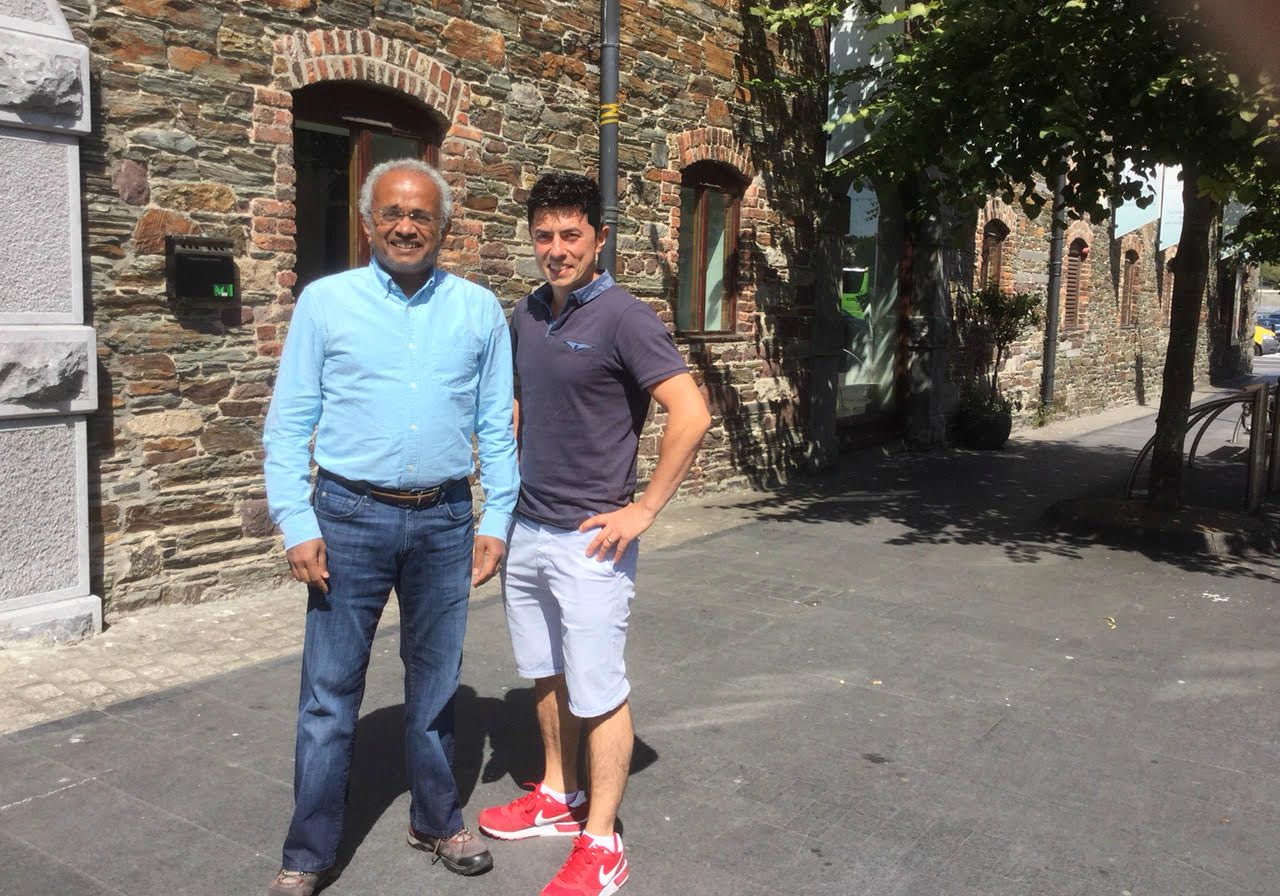
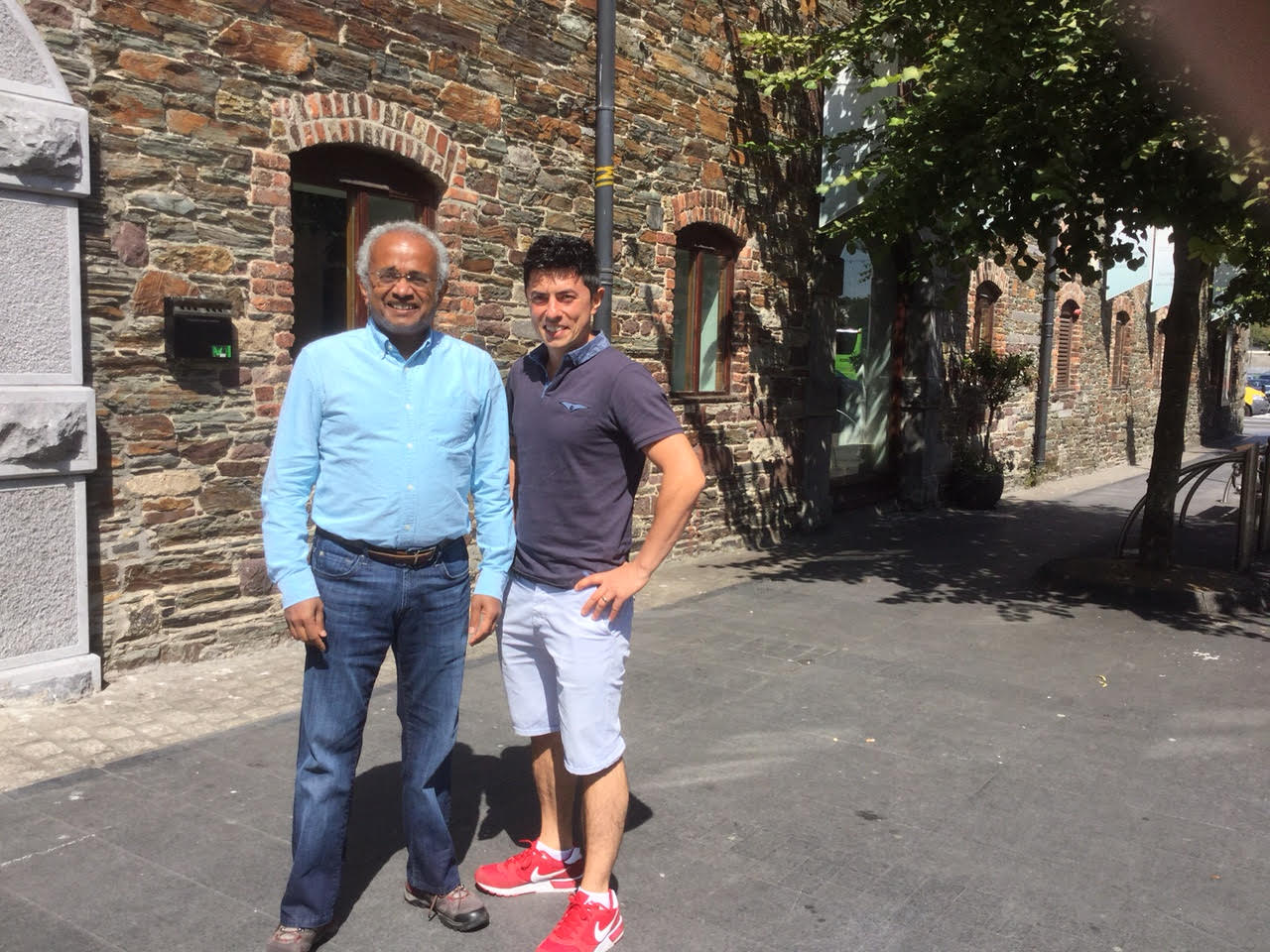
    Meeting Up With Shanta in Waterford City, Ireland (August, 2015):

    Since our conversation in episode 046 of the Economic Rockstar podcast, myself and Shanta met up for a brief period in Waterford City, Ireland. Shanta was on a visit form Washington DC (not work-related, just in case you think the The World Bank are coming in to Ireland!). Check back for a new blog post on what we chatted about.


    Frank and Shanta

    http://traffic.libsyn.com/economicrockstar/046_Shanta_Devarajan_Final.mp3

    Podcast: Play in new window | Download
    Frank Conway

    Frank Conway is founder of Economic Rockstar and lecturer of economics, finance and statistics. Read More…

    View My Blog Posts

    Youtube Sub

    Become a Patron of the Economic Rockstar Podcast

    patreon

    Ireland’s Economy by the Numbers

    Leaving Cert Economics: Ireland’s Economy  Click here to download a workbook on Ireland’s Economy so that you can add your own notes. [Original size] Ireland’s Economy by fconway

    Categories

    Subscribe and Never Miss An Episode

    itunes-logo

    Recent Posts

    • Ireland’s Economy by the Numbers April 8, 2019
    • 174: Wendy Carlin on The Core Project, Capitalism, Democracy and Normative Statements February 13, 2019
    • 173: Stephen Wright on Core Econ as a Learning Resource for Mainstream Economics January 28, 2019
    • 172: Best of 2018 Part 2: From the Great Depression to Futurism; Institutions, Individualism, Cooperation and Reciprocity January 22, 2019
    • 171: Best of 2018 Part 1 January 3, 2019

    Copyright © 2026 · Podcast Pro Theme on Genesis Framework · WordPress · Log in

    This website uses cookies to improve your experience. We'll assume you're ok with this, but you can opt-out if you wish. Accept Reject Read More
    Privacy Policy

    Privacy Overview

    This website uses cookies to improve your experience while you navigate through the website. Out of these, the cookies that are categorized as necessary are stored on your browser as they are essential for the working of basic functionalities of the website. We also use third-party cookies that help us analyze and understand how you use this website. These cookies will be stored in your browser only with your consent. You also have the option to opt-out of these cookies. But opting out of some of these cookies may affect your browsing experience.
    Necessary
    Always Enabled
    Necessary cookies are absolutely essential for the website to function properly. This category only includes cookies that ensures basic functionalities and security features of the website. These cookies do not store any personal information.
    Non-necessary
    Any cookies that may not be particularly necessary for the website to function and is used specifically to collect user personal data via analytics, ads, other embedded contents are termed as non-necessary cookies. It is mandatory to procure user consent prior to running these cookies on your website.
    SAVE & ACCEPT