• ABOUT
  • RESOURCES
  • PODCAST
  • BOOKS
  • BLOG
  • SUPPORTERS
  • QFA Financial Advice
  • CONTACT

Economic Rockstar

Connecting Brilliant Minds in Economics and Finance

040: Rebecca Harding on Trade Finance and How Delta Economics Can Help Identify Growth Opportunities World-wide

July 8, 2015 by Frank

http://traffic.libsyn.com/economicrockstar/040_Rebecca_Harding_Final.mp3
Play in New WindowDownload

040: Rebecca Harding on Trade Finance and How Delta Economics Can Help Identify Growth Opportunities World-wide

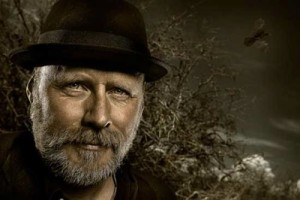
Dr Rebecca Harding is CEO of Delta Economics, which specialises in the area of Trade Finance. Rebecca is an independent economistRebecca Harding with an extensive background in modelling economic growth, trade, productivity, innovation and enterprise.

Rebecca is the author of nine books and has written over 250 articles on economic issues. She has held senior positions in leading academic, think-tank and corporate organisations, including roles at the London Business School, Deloitte and the Work Foundation.

Rebecca has advised the European Union and regional governments and agencies in the UK and Germany on innovation and enterprise policy.

Rebecca is a Board Member of the Society of Business Economists and a Board Member and Trustee of the German British Forum. In 2013, she was elected as a national representative of the European Movement UK.

Rebecca holds a BA in Economics and German and an MSc and PhD in the economics of Science and Innovation from the University of Sussex and writes on her blog rebeccanomics.com.

How Rebecca First Discovered Economics:

Rebecca was taught economics as a kid by her father who was a sociologist. “An economist who’s taught by a sociologist is quite an unusual thing. He started off with the fundamental principle that economics is wrong because people aren’t rational. So the first lesson in economics I had was my father telling me that the subject was wrong”.

I have a very eclectic background. I was taught by a sociologist. Some of my big influences when I was in university were in geopolitics and international relations. I’ve done a lot of political science and a lot of philosophy as well. And then, of course, I have an economics, mathematics and language background. So I’m a bit weird. I call myself a hybrid.

Find Out:

  • about Dr Harding’s company DeltaEconomics.
  • about the data used by DeltaEconomics and why it has developed its database of statistics.
  • what is Trade Finance and how it has experienced phenomenal growth in recent years.
  • how companies bridge the finance gap between the time they export goods to the time they receive payment.
  • what the challenges are with long-term growth in trade.
  • if there are inherent risks associated with the trade finance market as more sophisticated derivative and credit markets emerge.
  • about the inherent risks that may appear in the derivatives markets for trade finance.
  • if a market collapse could be the outcome of a non-compliant and unregulated trade finance securities market.
  • if could an implosion in trade finance is possible with large defaults in payments due mainly to the development of a derivatives and securities market.
  • if sovereign risk will become prominent if trade finance risk increases.
  • if enough data exists for trade finance to allow it to mature into a fully functioning wholesale and derivatives market.
  • about some risks to the global supply chain.
  • about the pioneers of innovation and productivity in economic theory.
  • how productivity and trade finance could be correlated.

Economics:

In this interview, Rebecca mentions and discusses: trade finance, credit, exports, growth, derivatives, securitisation, risk aversion, sovereign risk, business risk, contagion, commodities, inflation, fiscal policy, monetary policy, foreign direct investment, demographics, innovation and total factor productivity.

Economists:

In this interview, Rebecca mentions and discusses: Joseph Schumpeter, Christopher Freeman, Carlota Perez, J. K. Galbraith and Frances Coppola.

Influencers:

Karl Marx, Christopher Freeman, Carlota Perez, Joseph Schumpeter, J. K. Galbraith,

On Delta Economics:

“For trade data, it’s the best platform in the world – it’s corrected, it’s clean, it’s comprehensive and it covers continents like Africa all on one platform. It gives clients information on what the trading opportunities are” – Rebecca Harding, CEO of Delta Economics.

“We view the world from a trade perspective. Trade is important because it’s how businesses interact with one another.”

Delta Economics – It’s macroeconomic big data! – Rebecca Harding

Click To Tweet

What we’ve done is pioneer the way in which big data is used in economics – Rebecca Harding

Click To Tweet

What is Trade Finance?

Trade Finance is everything that drives trade itself. From a financial perspective, if you look at the value of world trade, about 80% of that is financed by banks or backed up by big insurance companies or finance through export credit agencies. It’s a huge market and grew very quickly in the from 2000 to 2007. The reason being was due to emerging markets entering into global trade in a very much aggressive way. Banks saw huge opportunities for financing trade.

Essentially, if you are trading with another company in another country, then what you need is some kind of bridging finance between the gap from when you put your goods onto a ship or an aeroplane and when it’s received by the person in the other country and paid for. So what this company needs is some kind of financing gap between those two points. That’s what trade finance is.

By including trade finance data into forecasting, you get much more accurate forecasts as to what’s going to happen to trade. In 2007, there was a tightening of credit available to businesses since the credit in the financial markets of developed countries had locked up. Subsequently, much of the trade finance went to emerging Asia and emerging Latin America and financed huge growth there.

The whole Trade Finance market is largely driven through very large finance houses such as JP Morgan, HSBC, Barclays, Bank of America, Merrill Lynch and BNP Paribas. These very big global banks are the ones that are involved on a day-to-day basis with the trade-receivables, the credit lines, the letters of credit, the open account and the working capital.

What’s also interesting about Trade Finance is that you also have quasi-government agencies and export credit agencies, which are part of the private sector and which are sometimes supported by the public sector. There is also a massive insurance market and legal sector attached to it. With such growth in the Trade Finance market, there is interest now coming from private sector private equity companies who see an opportunity to buy the debt and securitise it and actually use it as an asset class. What Delta Economics also do is it allows the data user to understand trade finance as an asset class. Companies can securitise the debt and trade that securitisation. The derivatives market will be an important component of this.

The Trade Finance market is estimated to be worth $7.4 trillion annually. There are many companies , like Lloyds, who will be putting security behind the money they are backing up.

It was seen as a way of fuelling long-term economic growth through trade.

Data Sources Mentioned in this Episode:

  • Delta Economics
  • UN Comtrade
  • IMF Direction of Trade Statistics

Recommended Books:

  • As Time Goes by: From the Industrial Revolutions to the Information Revolution by Christopher Freeman

Where to Find Rebecca Harding:

  • Twitter: @RebeccaDelta
  • LinkedIn: Rebecca Harding
  • Blog: www.rebeccanomics.com
  • Website: www.deltaeconomics.com
http://traffic.libsyn.com/economicrockstar/040_Rebecca_Harding_Final.mp3

Podcast: Play in new window | Download
036: Jason Shogren on Music and Endogenous Risk and Rationality in the Environmental Goods Market

June 11, 2015 by Frank

http://traffic.libsyn.com/economicrockstar/Jason_Shogren_Final.mp3
Play in New WindowDownload

036: Jason Shogren on Music and Endogenous Risk and Rationality in the Environmental Goods Market

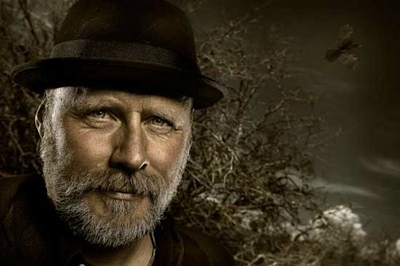
Jason Shogren is the Stroock Professor of Natural Resource Conservation and Management and Chair of the Department of Economics and Finance at the University of Wyoming.Jason Shogren

Professor Shogren’s background and research interests include the economics of environmental and natural resource policy, experimental methods; endangered species; invasive species; climate change; agricultural and forest management; energy; health; regulation; and paleoeconomics.

Jason has been named a fellow of the Association of Environmental and Resource Economists (AERE), the nation’s pre-eminent professional society for environmental economists and policy.

Jason served as professor to Sweden’s King Carl Gustaf XVI in 2012 and is a 2007 Nobel Peace Prize winner (shared with Al Gore) as a member of the United Nations team working on climate change.

He has also served as a senior economist on the Council of Economic Advisers in the White House under the Clinton Administration.

Professor Shogren’s teaching include Global Economic Issues, Natural Resource and Environmental Economics, Environmental Risk and Conflict and Experimental Economics.

Jason is well published with over 200 articles and is the author and editor-in-chief of numerous books including Encyclopedia on Resource, Environmental, and Energy Economics, Experimental Auctions and Fat Economics: Nutrition, Health, and Economic Policy

Jason loves fishing and music. He spends his time composing acoustic roots songs that he describes as catawampus Americana music, has five albums and will be touring this summer.

Economists:

In this interview, Jason mentions and discusses:

Janet Yellen, Thomas Sowell, Daniel Kahneman, Amos Tversky, Gary Becker, Isaac Ehrlich, Ralph C. D’Arge, Tom Crocker, Peter Baum, Karl-Göran Mäler, Vernon Smith and Charlie Plott.

Economic Themes:

In this interview, Jason mentions and discusses:

Carbon tax, cap and trade market, the Coase Theorem, probability, general equilibrium models, expected utility, nudge, rationality, irrationality, risk aversion, loss aversion, homo economicus, soft paternalism, trade-off, scarcity, endogenous risk and extreme tail-end events.

“I spent most of my life before becoming a PhD economist as a musician” -Jason Shogren.

Click To Tweet

“I like to think of economics as applied philosophy”- Jason Shogren.

Click To Tweet

Find Out:

  • about the Cap and Trade Market for carbon emissions is a failure and would only work in a micro-management setting.
  • why its best to implement a carbon tax.
  • the difference between luxury emissions and survival emissions and why it maybe difficult for China and India to reduce their carbon.
  • how Jason’s depiction of a low probability-high severity event influenced Janet Yellen to take action on climate change.
  • if we are acting rationally or irrationally toward the environment.
  • how we can exploit rationality ‘for the good’.
  • how, over the last 30 years, we have become averse to just about everything.
  • how we can take advantage of peoples’ status quo to increase their contribution of paying a carbon tax.
  • how designing the right system can nudge people to do the right thing – just like soft paternalism.
  • how Jason sought inspiration about rationality from other disciplines, such as English literature and music composition, rather than from economics.
  • how Jason uses music as a form of escapism.
  • about the inspiration Jason gets for writing songs from economics.
  • who the talented people are behind the creation of Jason’s amazing artwork and photography.
  • about the concerts that Jason Shogren will be playing at each year.
  • about Jason’s hitch-hiking experience in Ireland in 1985 from the Giants Causeway and down along the West Coast (now known as the Wild Atlantic Way).
  • about Jason theoretical thought process regarding endogenous risk and  how he applies it to different environmental risks.
  • what Jason would do if he was once again Economic Advisor to the US government.
  • a little about the Endangered Species Act.
  • what I saw on Professor Shogren’s whiteboard when I spoke to him on Skype. Hint: It’s his next economic model.
  • about the 25% chance you have in meeting Jason in Centennial, Wyoming – it involves the population and the number of pubs!
  • about Jason’s plastic Nobel Prize keychain and where he hangs it.

Jason Shogren band

Influencers:

Ralph C. D’Arge, Tom Crocker (Wyoming), Peter Baum (University of Stockholm) , Karl-Göran Mäler, Vernon Smith  and Charlie Plott.

An Economic Theory that Influenced Jason Shogren:

A paper by Ehrlich and Becker on self-protection and self-insurance, i.e. endogenous risk, where people invest to change the lottery they face in life, influenced Professor Shogren’s theoretical approach to economics. Once Jason started looking at economics from that perspective, he began to see a lot of models in which the states of nature where independent. To Jason, that seemed too fatalistic for how we spend our resources and how we invest. Most environmental policies are a lottery because we can’t guarantee that somebody’s going to live or not get sick based on exposure (to environmental risk).

We have an estimate and ‘safe’ minimum standards, but there’s no guarantee. So we’re really talking about policies at a collective level that are moving probabilities and damages around. We also have investment at a private level in which we’re doing the same thing – Jason Shogren

What, therefore, struck Jason was asking people about their value of reducing risk and they giving him a value of zero. He questioned people’s decision of applying a value of zero to reducing risk. The reason was that they valued the ‘collective’ reduction as zero and not their ‘individual’ reduction because they took care of the risk themselves.

Applying this theoretical thought process to climate change, endangered species, health risks, pandemics, invasive species or any other problem, will most likely have some element of endogenous risk. Once you add that element to it, the model gets a little richer and once the model gets a little richer, then you can explain a little more behaviour. By adding the behavioural element to the model, the question is ‘What drives things more? Technology of reducing risk? Tastes? How do they work together or how they work apart?’.

“If you can strip it down to that level, then you can really look at a lot of different problems using that type of kit”– Jason Shogren. It can become very flexible as a theoretical framework and model, that it is the reason why Jason, his peers and his students were able to look at a lot of different problems in terms of endogenous risk. It allows for focus on a particular research topic, otherwise it would be too scattered.

Jason on Carbon Emissions:

“We still have to figure out a Plan B, because there is no Planet B” – Jason Shogren.

Click To Tweet

Putting a price on carbon has been the way to reduce carbon emissions. Trying to set up cap and trade markets has been too hard. The cap and trade market has allowed the supply to increase – Jason Shogren.

“If you’re waiting for people to do the right thing for the right reason, you can wait a long time. We’ve seen that throughout history. Economists would say that ‘if you want to do the right thing at the right time, let’s get the prices right and then people will make their own choices’. But if you get prices to reflect true costs and reveal hidden costs that are being imposed on others, then hopefully we don’t have to job-own them and nudge them. Maybe we have to nudge people and get the price right. Both theoretical aspects of economics should be complementary and we should not substitute one for the other” – Jason Shogren.

Before we start calling it nudging, there was a saying “The target is the target and the costs are regrettable but not really decisive” – Thomas Sowell.

Rationality in the Environmental Goods Market:

Rationality in psychology is very different to rationality in economics, in that when we think about rationality in economics we think about a social construct. People are making choices within an active exchange institution like a market and if they start making their emotions run wild, then there are people to arbitrage them. Either they like less money to more or they adjust and they start looking for opportunities themselves. It’s not that we all have to be 100% rational. As long as the folks at the margin who are making those trades pay attention, the market is powerful enough to move it along as if everybody was rational. But they don’t have to be.

The problem with environmental goods is that we don’t have markets like that. So now we have to figure out the problem of how to aggregate up in a way that would incorporate both economic monetary decisions and economic non-monetary decisions. That becomes trickier. Up to quite recently, the only thing economists were dealing with in terms of aversion was risk aversion. Typically it was believed that risk was the only thing that people were averse of. And then Kahneman and Tversky came along and we were now averse to losses and we treated gains and losses differently.

Over the last 30 years, we have become averse to just about everything – ambiguity, inflation aversion, equity aversion, disappointment aversion, envy aversion, lying aversion, guilt aversion. And so by adding all of these emotions into our typical economic model, the question is ‘How and when do we stop?’. Do we add all 40 emotions into our models? And now how do we sort out cross-partial derivatives between equity and envy and disappointment and suspicion and regret? And those are jobs that economists have not been typically trained to deal with – assigning complementarities or substitutabilities between different emotional factors.

So part of this working on nudges is trying to understand that if we tweak the models so that we can take advantage of how people feel guilty about this or how they opt-in or opt-out about different things, we can exploit that irrationality ‘for the good’. For example, people like status quo, so let’s take advantage of that. So instead of buying an airline ticket, nowadays you have to opt-in to add in a carbon price or you can buy a carbon off-set. What we should do is get all the airlines to opt out of buying that carbon off-set. And giving our tendencies not to want to opt out of things, we would probably buy a whole lot more carbon off-sets.

If we can exploit those at the same time as having an active market for those off-sets and a price, then it’s not irrational or rational. It’s understanding that there is some instinctual behaviour that people at a ground level will stick with. That’s the whole soft paternalism idea that we know that you know what’s right and we’re just designing the system to help you get there as opposed to us telling you what’s right.

It is extremely difficult to single out one emotion and to identify it as the one emotion that is driving homo economicus away from our rational base-line. It’s going to take us a while to say ‘Here are the ten big emotions that we can live with and let’s just work on those’.

On Human Behavior:

“If I really want to understand human behaviour, who should I read – Shakespeare or Gary Becker?” – Jason Shogren.

Click To Tweet

If we really want to study emotions we should study literature. If you really want to be economical about how people think, then you should study poetry. Then if you want to convey all of that in a compact form that people will pay attention to then you add music. Now you’ve got a melody and lyrics  and you have a path where essentially you are projecting what you are considering to be an important story to tell. Song writing has its structures and its forms that you can easily translate into guidelines and rules and math models, just like we do in economics. To me, arts and science – I don’t know if they’re ying and yang – to me they go parallel and spillover all over each other – Jason Shogren.

What Professor Shogren Would Do Today as Economic Advisor to the US Government:

  1. Figure out a way to introduce a carbon tax but difficulty would lie with the Senate and the House of Representatives since they are essentially run by the Republicans.
  1. Take on the Endangered Species Act because it’s being waiting to be revised for almost 22 years. The way that it is written is that any species has to be protected at any cost. That type pf pressure can’t hold without the economy bursting at the seams. It would be worth going through this Act and add safety valves in a systematic and coherent way. It’s too important for this Act to just sit idly by when people using discretion as to when it holds and when it doesn’t.

josh shogren

Takeaway:

As a younger man, everybody sort of hits that wall of maturity that you don’t really want to go through. Sometime you get forced through it and sometimes you walk through it and sometimes you fall through it. Once you get there and you decide you can’t control the universe, that’s a good place to be – Jason Shogren.

At the same time, you take care of what you can’t control. You know, it’s the oldest story in the book. Once you come to the realisation and you find that balance, things are just way more interesting, way easier to deal with and just, in general, happier. Being a good Scandinavian doesn’t mean I have my gloomy dark moments – Jason Shogren.

Songs Mentioned and Played in this Episode:

  • Works by Jason Shogren
  • Exit In Flames by Jason Shogren
  • Broken Every Vow by Jason Shogren
  • Me and Genghis Khan by Jason Shogren

Concerts Where You Can See Jason Shogren:

  • WHAT fest
  • Nowoodstock
  • Snowy Range

On Ireland:

“I spent a month hitch-hiking in Ireland way back in ’85. I started up in Larne, went up through the Causeway, then all the way down the West coast. It was a great month of hitch-hiking, Guinness, rain, people and adventure. So, yeah, I’m ready to come again” – Jason Shogren.

On Conferences:

“It’s supposed to be fun. You’re supposed to live and learn and try to pass on something better. Sometimes it’s ideas and sometimes it’s ideas through songs” – Jason Shogren.

Musicians Mentioned in this Episode:

  • Mumford and Sons
  • Gordon Barry

Recommended Book:

  • What Work Is by Philip Levine (Poet) 

Where to Find Jason Shogren:

  • Website: www.jshogren.com
  • CDBaby
http://traffic.libsyn.com/economicrockstar/Jason_Shogren_Final.mp3

Podcast: Play in new window | Download
006: Andrew Heaton on Using Comedy to Explain Economic Concepts

November 20, 2014 by Frank

http://traffic.libsyn.com/economicrockstar/006_Andrew_Heaton.mp3
Play in New WindowDownload

006: Andrew Heaton on Using Comedy to Explain Economic Concepts

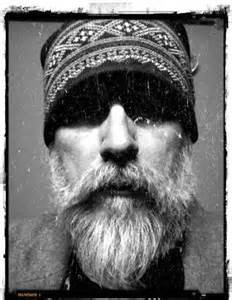
Andrew Heaton

Andrew Heaton is a comedian, writer and political satirist. He is the presenter of the witty and entertaining economics podcast, EconPop and has a Masters degree in International Politics. Andrew has been featured in a Bollywood movie, plays a lead role in the sitcom Cap South and has been voted best new comedian of 2013 in New York. Andrew hails from Oklahoma, is an Officer to a Prince and plays the Ukelele to enhance the mood of his friends’ amorous endeavors.

Economic Themes:

In this interview, Andrew mentions and discusses: wheat quotas, comparative advantage, protectionism, relative and actual growth, free markets and limited government, Austrian Theory of Monetary Creation, supply and demand, signalling, subjective value, negative externalities, tariffs and import duty, protectionism, corporation tax, scarce resources, population, abundance of resources, the Great Depression, US deficit, unintended consequences, behavioral economics and risk aversion.

Economists and Economic Schools:

In this interview, Andrew mentions: the Chicago School, the Austrian School, Libertarianism, Adam Smith, Milton Friedman, Freidrich Hayek, John Maynard Keynes, Murray Rothbard, Frédéric Bastiat, Thomas Malthus, Gene Epstein, Steven Horwitz,

Andrew’s Influencers:

Gene Epstein and Milton Friedman.

Podcasts:

EconPop is hosted by Andrew, who is joined by economist Steven Horwitz and professor of literature Paul Cantor.

In this episode, you will learn:

  • how Andrew became interested in economics while studying abroad in Scotland.
  • what parallels Andrew draws between politics, economics and comedy.
  • what economists and school of thought Andrew draws inspiration from to carve out his own views.
  • where and from whom Andrew gets his inspiration for his anecdotal writings on economics concepts.
  • how economic concepts is in abundance in life and can be found in the many movies we may have watched.
  • what qualities Andrew believes makes a successful person.
  • about Andrew being an Officer to Prince Leonard of Hutt River.
  • what comparative advantage is and how Andrew explains it in an unusual but light-hearted way.
  • why Andrew believes we will never run out of resources and why we should not worry about scarcity.

Advice:

‘If you’re gonna have a lot of activities that you are doing, you need to be mentally organised and very good at prioritising.’

‘To supercharge your day, when you are getting to your tasks, do the one you hate most first… the rest of your day is a cinch.’

‘With books, the trick is you just write a thousand words a night… your subconscious mind works on it and when you sit down the following night it’s a little bit easier.  You have a full novel in two and half months.’

Personal Habits:

  • Andrew works extremely hard to get things done. He has blended comedy with economics to allow this dismal science to become enjoyable or entertaining.
  • Andrew believes that having the right mentor is hugely beneficial and such a relationship allows him to learn and focus on reaching small milestones. This has worked out favorably well for Andrew in the field of economics where he developed a strong set of opinions on some theoretical aspects of economics. By expanding his knowledge-base through economics books and the many discussions with his mentor, Gene Epstein, Andrew has opened new doors and created new opportunities that otherwise may not have been attainable. His love of economics, particularly the Austrian and Chicago Schools and libertarianism, has given Andrew a lot of material to work on for his comedic performances onstage, online and in books.
  • Andrew writes quite frequently and believes that constant writing will have a payoff in terms of the publication of a book.
  • Andrew writes ‘common sense economics for people who need to learn about common sense economics’ – Gene Epstein

    Click To Tweet

  • Andrew plays the ukelele but, unfortunately, it wasn’t ‘tuned’ correctly for him to give us a treat on this podcast. So, as an homage to Andrew, I changed the outro music theme of Economic Rockstar to one that uses a ukelele. I hope you enjoy it!

Takeaway:

On Economics and Comedy:

Economics is a dismal science, so if you can make it funny it sweetens it – Andrew Heaton

Click To Tweet

On Humor and Economic Differences:

‘When you start arguing with somebody your adrenaline level shoots up.  Just on a biochemical level, you become much less able to hear what they are saying because you are taking a defensive posture.  Conversely, when you’re laughing, you produce endorphins.  And, if I can make you laugh, for a moment you are willing to listen to me – just for a moment.’

On Human Innovation Outpacing Declining Resources:

“We didn’t end the Stone Age because we ran out of stones”. – Andrew Heaton

Click To Tweet

Recommended Books:

  • Laughter Is Better Than Communism by Andrew Heaton
  • Frank Got Abducted by Andrew Heaton
  • Re-Boot Grandpa by Andrew Heaton (coming soon in 2016)
  • Speech Trap Werewolf by Andrew Heaton (coming soon)
  • The Conscience of a Conservative by Barry Goldwater
  • Parliament of Whores: A Lone Humorist Attempts to Explain the Entire U.S.  Government by P.J. O’Rourke
  • Free To Choose by Milton Friedman and Rose Friedman
  • Life at the Bottom: The Worldview That Makes the Underclass by Theodore Dairymple
  • Economics In One Lesson by Henry Hazlitt
  • Nudge: Improving Decisions About Health, Wealth and Happiness by Richard H. Thaler and Cass R. Sunstein

Favorite Internet Resources:

  • Evernote

Where To Find Andrew Heaton:

  • Website: MightyHeaton
  • Twitter: @MightyHeaton

Contact Andrew and start a campaign if you would like him to create a ‘Mighty Heaton’ doll!

http://traffic.libsyn.com/economicrockstar/006_Andrew_Heaton.mp3

Podcast: Play in new window | Download

Frank Conway

Frank Conway is founder of Economic Rockstar and lecturer of economics, finance and statistics. Read More…

View My Blog Posts

Youtube Sub

Become a Patron of the Economic Rockstar Podcast

patreon

Ireland’s Economy by the Numbers

Leaving Cert Economics: Ireland’s Economy  Click here to download a workbook on Ireland’s Economy so that you can add your own notes. [Original size] Ireland’s Economy by fconway

Categories

Subscribe and Never Miss An Episode

itunes-logo

Recent Posts

  • Ireland’s Economy by the Numbers April 8, 2019
  • 174: Wendy Carlin on The Core Project, Capitalism, Democracy and Normative Statements February 13, 2019
  • 173: Stephen Wright on Core Econ as a Learning Resource for Mainstream Economics January 28, 2019
  • 172: Best of 2018 Part 2: From the Great Depression to Futurism; Institutions, Individualism, Cooperation and Reciprocity January 22, 2019
  • 171: Best of 2018 Part 1 January 3, 2019

Copyright © 2026 · Podcast Pro Theme on Genesis Framework · WordPress · Log in

This website uses cookies to improve your experience. We'll assume you're ok with this, but you can opt-out if you wish. Accept Reject Read More
Privacy Policy

Privacy Overview

This website uses cookies to improve your experience while you navigate through the website. Out of these, the cookies that are categorized as necessary are stored on your browser as they are essential for the working of basic functionalities of the website. We also use third-party cookies that help us analyze and understand how you use this website. These cookies will be stored in your browser only with your consent. You also have the option to opt-out of these cookies. But opting out of some of these cookies may affect your browsing experience.
Necessary
Always Enabled
Necessary cookies are absolutely essential for the website to function properly. This category only includes cookies that ensures basic functionalities and security features of the website. These cookies do not store any personal information.
Non-necessary
Any cookies that may not be particularly necessary for the website to function and is used specifically to collect user personal data via analytics, ads, other embedded contents are termed as non-necessary cookies. It is mandatory to procure user consent prior to running these cookies on your website.
SAVE & ACCEPT