• ABOUT
  • RESOURCES
  • PODCAST
  • BOOKS
  • BLOG
  • SUPPORTERS
  • QFA Financial Advice
  • CONTACT

Economic Rockstar

Connecting Brilliant Minds in Economics and Finance

122: Robin Hanson on The Elephant In the Brain: Hidden Motives in Everyday Life
January 2, 2018 by Frank

http://traffic.libsyn.com/economicrockstar/122_Robin_Hanson_3_Final.mp3
Play in New WindowDownload

122: Robin Hanson on The Elephant In the Brain: Hidden Motives in Everyday Life


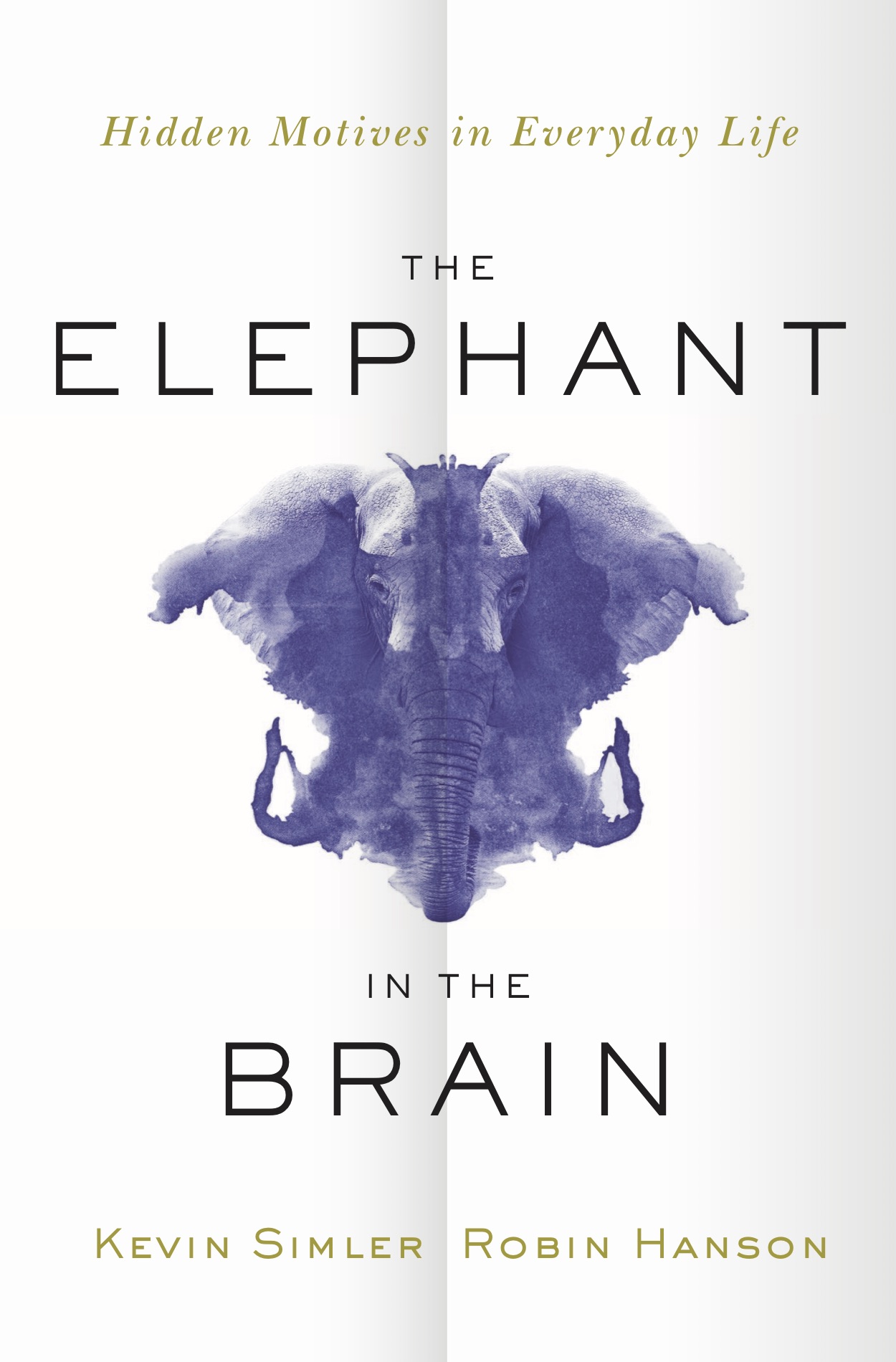
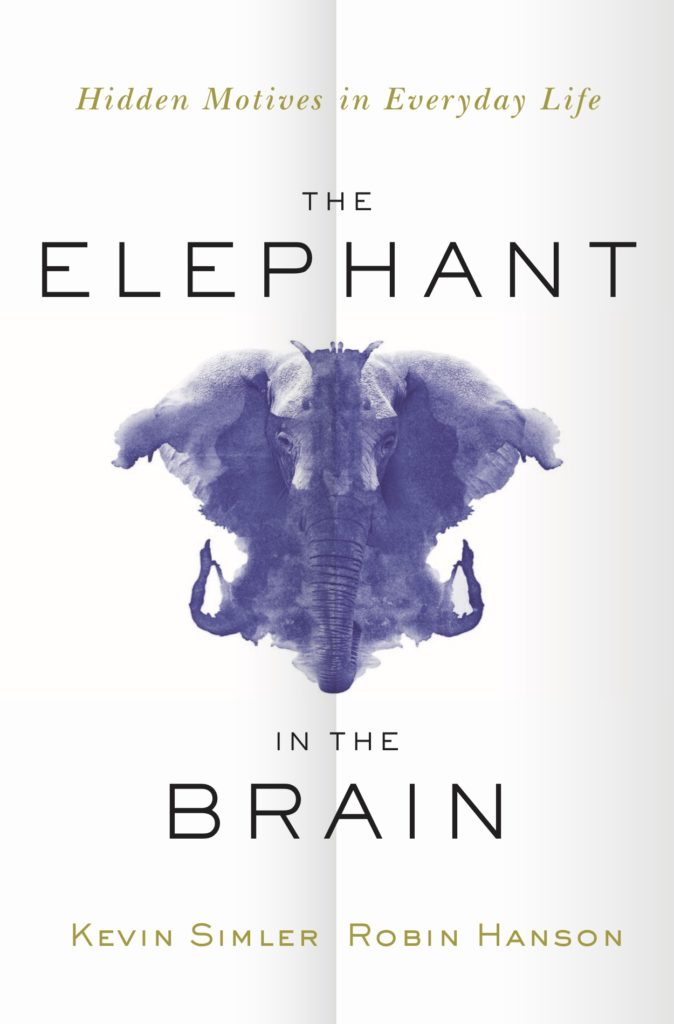
So to begin again… In this weeks episode of the economic rockstar podcast I speak to Professor Robin Hanson, associate professor of economics at George Mason University. Professor Hanson has been on the podcast on two previous occasions, episodes 73 and 91 and has kindly joined me again for a hat-trick of episodes. We talk about his new book The Elephant In the Brain: Hidden Motives in everyday life, co-authored with Kevin Simler and available to buy in all good bookstores and, of course, online through Amazon, Barnes and Noble, Book Depository and more.  Check Robin and Kevin’s website elephantintheroom.com to explore the book in finer detail as well as some great content such as interviews, reviews and a Ted talk on the subject.

You can download or stream this 122nd episode as well as find all the links mentioned above at economicrockstar.com/robinhanson3

Patreon

If you’re a fan of the podcast and would like to show your support in anyway, please check out my Patreon page at patreon.com/economicrockstar where you can sign up for any of the awards for as little as $1 a month or you can simply follow me on the Economic Rockstar Facebook page or on Twitter or simply recommend the show to a friend, especially if they have never had the opportunity to study economics.

http://traffic.libsyn.com/economicrockstar/122_Robin_Hanson_3_Final.mp3

Podcast: Play in new window | Download

091: The Age of Em by Robin Hanson

June 23, 2016 by Frank

http://traffic.libsyn.com/economicrockstar/091_Age_of_Em_Final.mp3
Play in New WindowDownload

091: The Age of Em by Robin Hanson

This is Robin Hanson’s second appearance on the Economic Rockstar podcast. I previously spoke to Robin about his work in episode 073. If you find this interview interesting, check out the other episode. You’ll love it.

This is the Book Review from Amazon:

“Robots may one day rule the world, but what is a robot-ruled Earth like?

Many think the first truly smart robots will be brain emulations or “ems.” Scan a human brain, then run a model with the same connections on a fast computer, and you have a robot brain, but recognizably human.

Train an em to do some job and copy it a million times: an army of workers is at your disposal. When they can be made cheaply, within perhaps a century, ems will displace humans in most jobs. In this new economic era, the world economy may double in size every few weeks.

Some say we can’t know the future, especially following such a disruptive new technology, but Professor Robin Hanson sets out to prove them wrong. Applying decades of expertise in physics, computer science, and economics, he uses standard theories to paint a detailed picture of a world dominated by ems.

While human lives don’t change greatly in the em era, em lives are as different from ours as our lives are from those of our farmer and forager ancestors. Ems make us question common assumptions of moral progress, because they reject many of the values we hold dear.

Read about em mind speeds, body sizes, job training and career paths, energy use and cooling infrastructure, virtual reality, aging and retirement, death and immortality, security, wealth inequality, religion, teleportation, identity, cities, politics, law, war, status, friendship and love.

This book shows you just how strange your descendants may be, though ems are no stranger than we would appear to our ancestors. To most ems, it seems good to be an em.”

Click here to win a copy of Robin Hanson’s book:

Create your own user feedback survey

Book:

The Age of Em: Work, Love and Life when Robots Rule the Earth

Links:

  • Podcast episode 073: Robin Hanson on The Age of Em and How Brain Emulations Will Double Economic Growth Every Month
  • The Age of Em
  • www.overcomingbias.com


http://traffic.libsyn.com/economicrockstar/091_Age_of_Em_Final.mp3

Podcast: Play in new window | Download

078: Arnold Kling on the Hidden Story of How Markets Work, the Mortgage Crisis and How We Pay for Health Care

March 24, 2016 by Frank

http://traffic.libsyn.com/economicrockstar/078_Arnold_Kling_.mp3
Play in New WindowDownload

078: Arnold Kling on the Hidden Story of How Markets Work, the Mortgage Crisis and How We Pay for Health Care

Arnold Kling is a Mercatus Center–affiliated senior scholar at George Mason University and a member of the arnold kling economic rockstarFinancial Markets Working Group.

Arnold specializes in housing-finance policy, financial institutions, macroeconomics, and the inside workings of America’s federal financial institutions. He also is an adjunct scholar at the Cato Institute in Washington, DC.

Arnold has testified before Congress on the collapse of Fannie Mae and Freddie Mac

He has authored five books, including Crisis of Abundance: Rethinking How We Pay for Health Care and Invisible Wealth: The Hidden Story of How Markets Work.

Arnold has published articles in the Economist, the Wall Street Journal, the New York Times, the Atlantic, and Forbes, among others, and he blogs at arnoldkling.com/blog/.

Previously, Arnold served as a senior economist at Freddie Mac and a staff economist on the Board of Governors of the Federal Reserve System.

He started Homefair, one of the first commercial websites on the Internet.

Arnold Kling received his PhD in economics from Massachusetts Institute of Technology.

“If you want to live a good lifestyle, you can find hobbies and interests that don’t cost very much. So it’s not hard to enjoy life. But if you want to make yourself miserable, watch politics.” – Arnold Kling

Economics:

In this episode, Arnold mentions and discusses: information rules, economic information, marginal cost of information, advertising, versioning, bundling, Austrian economics, risk measurement, capital, tax, mortgage-backed securities, loans, bubbles, crashes, excess leverage, marked-to-market, economics of health care, labor, capital, land, institutions.

Economists:

In this episode, Arnold mentions and discusses: Hal Varian, Carl Shapiro, Brad deLong, Tyler Cowen, Paul Krugman, Paul Volker, Douglass North, Robin Hanson, Bryan Caplan, James Buchanan, Adam Smith, F. A. Hayek and Robert Solow.

In this episode you will learn:

  • about Moore’s Law and what it means for the economy.
  • why economists are being lured into the world of start-ups and tech companies.
  • about the power of freemium and why companies need to build up trust to create a loyal customer base.
  • the difference between versioning and bundling.
  • what the future holds for the accessing information online.
  • about Arnold’s company online Homefair and how it was one of the first internet companies.
  • what really went on behind closed doors at Fannie Mae and Freddie Mac that resulted in their demise.
  • why Fannie Mae and Freddie Mac were bailed out.
  • how changing the culture at Freddie Mac caused its collapse.
  • about the state of health care in America today.
  • how Americans are to pay for the higher costs of health care.
  • about the fibre-bubble in the 1990s.
  • why we are richer today than a couple of hundred years ago.
  • why ideas are the foundation to economic growth and prosperity.
  • why nations like Cuba and North Korea are poor (bad institutions).
  • about the work being done at George Mason University.

Where to Find Arnold Kling:

  • www.arnoldkling.com/blog/

Books:

  • Crisis of Abundance: Rethinking How We Pay for Health Care by Arnold Kling
  • Invisible Wealth: The Hidden Story of How Markets Work by Arnold Kling
  • Information Rules: A Strategic Guide to the Network Economy by Carl Shapiro and Hal Varian
  • The Revolt of the Public and the Crisis of Authority in the New Millennium by Martin Gurri

Links: 

  • 23andMe: www.23andme.com
    • View reports on over 100 health conditions and traits
    • Find out about your inherited risk factors and how you might respond to certain medications
    • Discover your lineage and find DNA relatives
http://traffic.libsyn.com/economicrockstar/078_Arnold_Kling_.mp3

Podcast: Play in new window | Download

073: Robin Hanson on The Age of Em and How Brain Emulations Will Double Economic Growth Every Month

February 18, 2016 by Frank

http://traffic.libsyn.com/economicrockstar/073_Robin_Hanson.mp3
Play in New WindowDownload

073: Robin Hanson on The Age of Em and How Brain Emulations Will Double Economic Growth Every Month

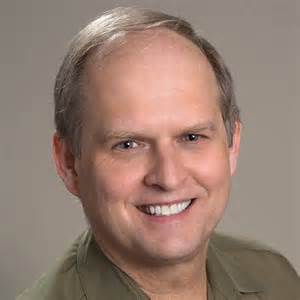
Robin Hanson is associate professor of economics at George Mason University. He is also a research associate at robin hansonOxford’s Future of Humanity Institute and chief scientist at Consensus Point.

Professor Hanson has diverse research interests, including spatial product competition, health incentive contracts, reversible computation, the origin of life, the survival of humanity, very long-term economic growth, growth given machine intelligence, and interstellar colonization

Robin has pioneered prediction markets, also known as information markets and idea futures, since 1988.

His passion is to understand everything, and to save the world. He is addicted to “viewquakes”, loves to argue one on one, and values honesty and passion. He blogs at OvercomingBias.com which has had over eight million visits.

His book The Age of Em: Work, Love and Life When Robots Rule the Earth will be available in May 2016, and The Elephant in the Brain, co-authored with Kevin Simler, in spring 2017.

Economists:

In this episode, Robin mentions and discusses: Thomas Malthus and Cass Sunstein

Economics:

In this episode, Robin mentions and discusses: emulation economy, economic growth, labor, competition, wages, subsistence economy, capital, land, slaves, supply and demand.

In this episode you will learn:

  • about Robin Hanson’s work in economics.
  • what is The Age of Em and how it could double economic growth every month rather than the current doubling of growth every 15 years.
  • what are brain emulations.
  • what is a singularity and if we will have one within the next 200 years.
  • how the workforce of the future look.
  • how humans will retire and have brain emulations do their work.
  • what will a brain emulation be like.
  • if humans will revert to subsistence levels of existence as predicted by Malthus.
  • about the labor market of the future and whether wages will be competed away with humans and ems living on the margin.
  • how Robin anticipates living in the future and how you can too.
  • why space exploration and space colonization will be delayed until after the rapid and exponential economic expansion brought about by brain emulation.
  • whether you can have a brain emulation of your own brain or whether the process will be reserved to a few hundred people who are best equipped to perform certain tasks.
  • how the relationship between humans and robots is portrayed as a dichotomy – a heaven or hell scenario – but this will not be the case with the technology available using brain emulations.
  • how you can be ‘teleported’ from one device to another without being physically affected.
  • how Robin used economic theory to explain the economy of the future where brain emulations are the drivers of growth.
  • why the Age of Em will last for about 2 years.
  • about Robin Hanson’s request to have only his head cryogenically frozen and what he hopes to achieve.

Paper:

  • Hanson, R. (1994). If Uploads Come First: The Crack of a Future Dawn 

Podcast Episodes:

  • Manu Saadia

Books:

  • The Age of Em by Robin Hanson
  • Trekonomics by Manu Saadia
  • The World According to Star Wars by Cass Sunstein

Resources:

  • The Age of Em
  • www.overcomingbias.com
  • Future of Humanity Institute
  • Consensus Point


http://traffic.libsyn.com/economicrockstar/073_Robin_Hanson.mp3

Podcast: Play in new window | Download
Frank Conway

Frank Conway is founder of Economic Rockstar and lecturer of economics, finance and statistics. Read More…

View My Blog Posts

Youtube Sub

Become a Patron of the Economic Rockstar Podcast

patreon

Ireland’s Economy by the Numbers

Leaving Cert Economics: Ireland’s Economy  Click here to download a workbook on Ireland’s Economy so that you can add your own notes. [Original size] Ireland’s Economy by fconway

Categories

Subscribe and Never Miss An Episode

itunes-logo

Recent Posts

  • Ireland’s Economy by the Numbers April 8, 2019
  • 174: Wendy Carlin on The Core Project, Capitalism, Democracy and Normative Statements February 13, 2019
  • 173: Stephen Wright on Core Econ as a Learning Resource for Mainstream Economics January 28, 2019
  • 172: Best of 2018 Part 2: From the Great Depression to Futurism; Institutions, Individualism, Cooperation and Reciprocity January 22, 2019
  • 171: Best of 2018 Part 1 January 3, 2019

Copyright © 2026 · Podcast Pro Theme on Genesis Framework · WordPress · Log in

This website uses cookies to improve your experience. We'll assume you're ok with this, but you can opt-out if you wish. Accept Reject Read More
Privacy Policy

Privacy Overview

This website uses cookies to improve your experience while you navigate through the website. Out of these, the cookies that are categorized as necessary are stored on your browser as they are essential for the working of basic functionalities of the website. We also use third-party cookies that help us analyze and understand how you use this website. These cookies will be stored in your browser only with your consent. You also have the option to opt-out of these cookies. But opting out of some of these cookies may affect your browsing experience.
Necessary
Always Enabled
Necessary cookies are absolutely essential for the website to function properly. This category only includes cookies that ensures basic functionalities and security features of the website. These cookies do not store any personal information.
Non-necessary
Any cookies that may not be particularly necessary for the website to function and is used specifically to collect user personal data via analytics, ads, other embedded contents are termed as non-necessary cookies. It is mandatory to procure user consent prior to running these cookies on your website.
SAVE & ACCEPT