• ABOUT
  • RESOURCES
  • PODCAST
  • BOOKS
  • BLOG
  • SUPPORTERS
  • QFA Financial Advice
  • CONTACT

Economic Rockstar

Connecting Brilliant Minds in Economics and Finance

095: Scott Burns on Mobile Money Banking in Africa and the Success of M-Pesa

July 20, 2016 by Frank

http://traffic.libsyn.com/economicrockstar/095_Scott_Burns_Final.mp3
Play in New WindowDownload

095: Scott Burns on Mobile Money Banking in Africa and the Success of M-Pesa

Scott Burns is a Mercatus PhD Dissertation Fellow in the Economics PhD Program at George Mason Scott Burns Economic RockstarUniversity.
Scott earned his BS in Economics from Louisiana State University where he was part of the Speech and Debate Club and the Phi Eta Sigma Honors Society.

His current publications include The War on Drugs in Afghanistan: Another Failed Experiment in Interdiction and Old (Chicago) school, new century: the link between Knight and Simons’ Chicago plan to Buchanan’s constitutional money.

Scott’s PhD dissertation topic has to do with one of the most exciting yet under-appreciated miracles of the market going on in the world today, the “mobile money revolution” in Sub-Saharan Africa.

Scott writes for the blog Alt-M, which is a blog run by free banking scholars on the theme ‘Ideas for an Alternative Monetary Future’.

Scott, along with fellow Econ PhD student at GMU, David Lucas, started a band inspired by Adam Smith called ‘The Butcher and the Baker’.

Economics:

In this episode, Scott mentions: banking, monopolies, natural monopoly, market failure, savings, investment, development economics, finance, GDP, laissez-faire, mobile money, unintended consequences, bitcoins and hyper-inflation.

Economists:

In this episode, Scott mentions: Adam Smith, Ludwig von Mises, F. A. Hayek, Joseph Schumpeter, Scott Sumner, David Beckworth, Lawrence H. White and George A. Selgin,

Links:

  • Finance for All: Kenya’s M-PESA
  • Alt-M
  • Top 12 Economics Books as Recommended by Economic Rockstar Guests
  • Monetary Workshop at Cato Institute

Papers:

  • Coyne, C., Hall-Blanco , A. and Burns, S. (2016). The War on Drugs in Afghanistan: Another Failed Experiment with Interdiction. The Independent Review.
  • Burns, S. (2016). Old (Chicago) school, new century: the link between Knight and Simons’ Chicago plan to Buchanan’s constitutional money. Constitutional Political Economy.

Articles:

  • Burns, S. (2016). The Road Less Traveled: Austrian Macro, Monetary Disequilibrium Theory, and Free Banking. Research on the History of Economic Thought and Methodology, Volume 348: pp 337 – 363.
  • Burns, S. and Michel, N. J. (2016). Choosing Your Own Money Central to Economic Freedom. Cayman Financial Review, Issue 42.

Books:

  • Economics in One Lesson by Henry Hazlitt
  • The Law by Frederic Bastiat
  • Human Action by Ludwig von Mises
  • Free Banking in Britain: Theory, Experience and Debate 1800-1845 by Lawrence H. White
  • The Theory of Free Banking by George A. Selgin


Companies Mentioned in this Episode:

  • Uber, Airbnb, Amazon and Safaricom.
http://traffic.libsyn.com/economicrockstar/095_Scott_Burns_Final.mp3

Podcast: Play in new window | Download

086: Philip Pilkington on Determinism and the Reformation in Economics

May 19, 2016 by Frank

http://traffic.libsyn.com/economicrockstar/086_Philip_Pilkington_Final.mp3
Play in New WindowDownload

086: Philip Pilkington on Determinism and the Reformation in Economics

Phillip Pilkington works in investment and has contributed to numerous online and print media philip pilkingtonoutlets as a freelance economic journalist.

Phillip ran a popular economics blog called www.fixingtheeconomists.wordpress.com and will be releasing his book The Reformation in Economics soon.

Phillip earned his B.A. in Journalism from the Independent Colleges, as well as his M.A. in Economics from Kingston University.

All views expressed by Phillip are his own and are not representative of the firm in which he works.

Economics:

In this episode, Philip mentions: utility maximizing, behavioral bias, interest rates, time preference, savings, money, comparative advantage, decision making, consumption function, marginal propensity to consume and the multiplier.

Economists:

In this episode, Philip mentions: Steve Keen, Paul Samuelson, Adam Smith, James Steuart, David Ricardo and G. L. S. Shackle.

Links:

  • Fixing the Economist – a blog by Philip Pilkington

Books:

  • The Reformation in Economics: A Deconstruction and Reconstruction of Economic Theory by Philip Pilkington
  • Foundations of Business Thought by Calvin M. Boardman
  • Market Sense and Nonsense: How the Markets Really Work (and How They Don’t) by Jack D. Schwager
  • A Treatise Concerning The Principles of Human Knowledge by George Berkley
http://traffic.libsyn.com/economicrockstar/086_Philip_Pilkington_Final.mp3

Podcast: Play in new window | Download
047: Victor Ricciardi on The Psychology of Financial Planning and Investing

August 27, 2015 by Frank

http://traffic.libsyn.com/economicrockstar/047_Victor_Ricciardi_Final.mp3
Play in New WindowDownload

047: Victor Ricciardi on The Psychology of Financial Planning and Investing

Victor Ricciardi is Finance Professor at Goucher College, Baltimore, Maryland where he teaches courses in Victor Ricciardipersonal financial planning, corporate finance, investments, behavioral finance, and the psychology of money.

Victor is the Coordinator of Behavioral & Experimental Research for the Social Science Research Network also known as SSRN.

Victor is the current Editor for seven SSRN eJournals including Behavioral & Experimental Finance, History of Finance, and Behavioral & Experimental Economics.

He received his PhD from Golden Gate University and his MBA from St. John’s University.

Victor’s current book Investor Behavior: The Psychology of Financial Planning and Investing with co-editor Kent Baker is now available and has 30 chapters on emerging research in behavioral finance.

In this episode, you will learn:

  • the difference between Behavioral Economics and Behavioral Finance.
  • the rational approach to investing and whether it exists.
  • what bounded rationality really means.
  • if companies help you make decisions for their own personal benefit.
  • how framing can be a powerful tool to help customers make decisions.
  • the importance of financial literacy at different stages of your life.
  • the similarities between behavioral economics and marketing.
  • the future of Behavioral Economics and Behavioral Finance.
  • how your mood, good or bad, can influence your buying behaviour and increase risk-taking.
  • about the importance of studying the subconscious mind in finance or neurofinance.
  • why people generally do not take losses, known as loss aversion.
  • why Victor disagreed with the traditional views of economics and decided to study behavioral finance.
  • how and why some governments are using behavioural finance and economics techniques to nudge us to make better financial decisions in our lives.
  • how status quo bias makes it harder for employees to opt out of an automatically enrolled savings retirement plan.
  • how mounting student debt and high youth unemployment in the US could make it difficult to service pensions leading to a pension ‘ponzi’ scheme or a crisis.
  • why Victor Ricciardi believes that there should have been a law designed to make retirement planning easier for the employee.
  • what you should do when investing so as to manage bull and bear market cycles.

Economics:

In this interview, Victor mentions and discusses: behavioral Economics, Behavioral Finance, rational, bounded rationality, heuristics, framing, annuity puzzle, investment, consumption, self-control bias, nudging, consumer behavior, mutual returns, savings, investments, neurofinance, risk tolerance, over-confidence, loss aversion, nudging, status quo bias, retirement planning and wage inflation.

Economists:

In this interview, Victor mentions and discusses: Richard Peterson, Douglas Rice, Daniel Kahnemann, Amos Tversky, Robert Olson, Richard Thaler and Hersh Shefrin.

Influencers:

William Sharpe, Harry Markovicz, Terence Odean, Robert Olsen, Dan Ariely, Mair Stockman, Hersch Shefrin and John Nofsinger.

Quotes by Victor Ricciardi in Episode 047 of the Economic Rockstar Podcast:

Behavioural Finance is the notion of integrating psychology with finance. So you’re looking at some major themes where people are not only rational but they make decisions based on emotions. – Victor Ricciardi

Risk tolerance is the maximum amount of risk a person is willing to take in their overall portfolio or risky asset. Typically, people are either very conservative risk-takers, they’re average or they’re very aggressive. The component of risk tolerance that’s related to it is known as ‘Risk Perception’, in which our feelings and emotions will increase or have an impact on our overall risk tolerance. – Victor Ricciardi

Takeaway:

Meet with a financial planner and get a financial plan done. In terms of investing, try to understand what type of investor you are and come with an asset allocation that you are comfortable with. Rebalance your portfolio on a year basis which allows you to stay within your risk tolerance. – Victor Ricciardi

Recommend Resources:

  • Twitter

Recommend Books:

  • Investor Behavior: The Psychology of Financial Planning and Investing by Victor Ricciardi and Kent Baker
  • The Psychology of Investing by Jon Nofsinger
  • Irrationally Yours by Dan Ariely
  • Predictably Irrational by Dan Ariely
  • Misbehaving by Richard Thaler

Where to Find Victor Ricciardi:

  • Twitter
  • Goucher College
http://traffic.libsyn.com/economicrockstar/047_Victor_Ricciardi_Final.mp3

Podcast: Play in new window | Download

046: Shanta Devarajan on The World Bank, Quiet Corruption, Government Failure and Comparative Advantage in the MENA Region

August 20, 2015 by Frank

http://traffic.libsyn.com/economicrockstar/046_Shanta_Devarajan_Final.mp3
Play in New WindowDownload

046: Shanta Devarajan on The World Bank, Quiet Corruption, Government Failure and Comparative Advantage

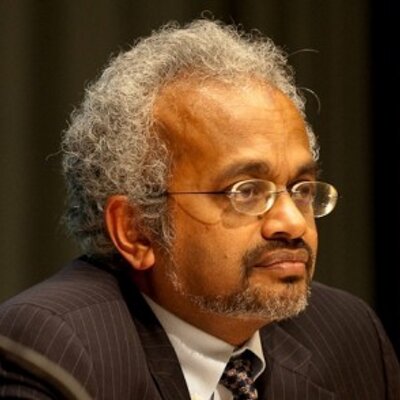
Shantayanan Devarajan is the former Chief Economist of the World Banshanta devarajank’s Middle East and North Africa Region. Since joining the World Bank in 1991, he has been a Principal Economist and Research Manager for Public Economics in the Development Research Group, and the Chief Economist of the Human Development Network, South Asia, and Africa Region.

Shanta was the director of the World Development Report 2004, ‘Making Services Work for Poor People’. Before 1991, he was on the faculty of Harvard University’s John F. Kennedy School of Government.

Shanta is the author and co-author of over 100 publications, with his research covering public economics, trade policy, natural resources and the environment, and general equilibrium modeling of developing countries.

Born in Sri Lanka, Shanta received his B.A. in Mathematics from Princeton University and his Ph.D. in Economics from University of California, Berkeley.

People care so much about education. They will not eat if they can send their kid to a better school – Shanta Devarajan

In this episode, you will learn:

  • why Shanta decided to take a sabbatical from lecturing and never went back.
  • about Shanta’s passion to end world poverty.
  • how experiencing living on a $1 a day with a poor family made Shanta realize that the failure lies with government.
  • how empowering people in poverty-stricken countries with information could be the catalyst to end poverty.
  • the huge government failures and market distortions threatening the economy in India.
  • why teachers and doctors in India are absent from work 25% and 40% of the time respectively and how this is affecting progress.
  • how the powerful medical union in India are making healthcare inaccessible to the poor.
  • why poor people in India think that the reason why doctors do not show up at clinics is because ‘the rain didn’t come’.
  • why politicians in India do not have an incentive to fix the problem of doctor absenteeism.
  • what the solutions to corruption in India.
  • about unemployment being the biggest problem in the Middle East and North Africa.
  • that the reason why unemployment is so high in the MENA region is due the industrial sector being highly monopolised.
  • about how crony capitalism is preventing SMEs from growing in the MENA region.
  • why Tunisia has failed to develop into an export-oriented economy due the legacy of the Ben Ali family and their connections to firms operating in heavily protected markets.
  • that the failure for governments to continue with social contracts due to high deficits triggered the Arab Spring.
  • about Colonel Gaddafi’s regime and how he managed to keep peace between tribes.
  • how water subsidies and water-intensive crops are depleting water resources in Yemen.
  • why the addictive habit of chewing qat or khat in Yemen is causing water shortages.
  • why Yemen, who doesn’t have a comparative advantage in qat, continues to use resources to produce the commodity.
  • what is the main purpose of the World Bank and how different is it to the IMF.
  • where the World Bank gets its finance from and how much interest they charge.
  • how the money trickles down to the unbanked people in low and middle-income countries.
  • about biometric identification smart cards and how the unbanked in low-income countries can access capital.

Takeaway:

The problems of poor people are man-made and we as economists can actually help solve them. The way in which we can solve them is by carrying our work toward empowering them. The reason they’re man-made is that poor people lack political power. We can actually strengthen their clout, their political power, by providing economic analysis and making it accessible to them – Shanta Devarajan

Economics:

In this interview, Shanta mentions and discusses: poverty, development, capital markets, government failure, policy distortion, structural adjustment, debt crisis, macroeconomic environment, incentives, quiet corruption, unemployment, monopoly, social contracts, crowding out, finance capital, subsidies, water subsidies, energy subsidies, comparative advantage, imports, exports, budget expenditures, IMF, the World Bank, MENA, public goods, leakages, multiple effect, dynamic stochastic general equilibrium model, savings, investments, sovereign wealth funds and consumption.

Economists:

In this interview, Shanta mentions and discusses: Chris Blattman, Gerard Debreu , Joseph Stiglitz, Sherman Robinson and Paul Collier 

Influencers:

Gerard Debreu , Joseph Stiglitz, Sherman Robinson , Paul Collier 

Quotes by Shanta Devarajan in Episode 046 of the Economic Rockstar Podcast:

The marginal product of writing an additional paper was lower than my actually trying to go out there and apply what I know to reduce poverty. I became quite passionate about this quest to reduce this poverty. – Shanta Devarajan

The problems of poverty under development are problems of government failure. The problem of government failure is because the political system is one where poor people don’t have sufficient voice and sufficient ability to make sure that politicians take decisions in their interest. – Shanta Devarajan

“The World Banks’ mission is a world free of poverty” – Shanta Devarajan

Click To Tweet

On the changing views of The World Bank:

The traditional view of development in the 1950s and 60s was a belief that it was a market failure. Their capital markets weren’t working. Poor countries didn’t have access to capital and so the World Bank had to provide capital. However, in the 1970s and 80s there was a realisation that the problem was not the result of a lack of capital. There  were policy distortions in these countries that made this capital unproductive. The challenge became trying to remove these policy distortions or try to improve these policies so that capital could be productive. – Shanta Devarajan

On Quite Corruption in India:

Quite corruption in India is a deep political problem. There is nothing illegal about this corruption. It is a failure of the system. The political system is geared so that it creates this kind of corruption. – Shanta Devarajan

On Crony Capitalism in Tunisia:

It’s a little bit of a puzzle why Tunisia, which has a very highly educated population, a very nice location right across from Europe and a pretty good infrastructure, hasn’t been able to be a manufacturing, export-driven power-house. The reason is the industrial structure is being monopolised by the cronies of the political elite. – Shanta Devarajan

On Tunisia: “We must protect this economy from elite capture” – Shanta Devarajan

Click To Tweet

On Capital Leakages in Chad:

The leakages are higher in resource-rich countries. For instance in Chad, the money that was intended for public primary clinics, that actually arrives at the clinic is 1%. So the leakage is 99%. Chad is an oil-rich country. The reason for that is there is very little accountability – Shanta Devarajan

Reasons Why Yemen is Producing Khat (Qat) Inefficiently

Yemen produces its own qat despite not having a comparative advantage in the commodity. Factors of production, such as land, labor and capital, are used inefficiently to produce khat. So, the question remains as to why Yemen does not import qat. There are two main reasons why the continue to produce it domestically.

The first is that qat is consumed fresh. Domestic production allows qat to be distributed and sold throughout Yemen once it is picked. Freshness is required and it is expected that any imported khat could reduce its quality.

The second reason is that the president’s wife manages the qat monopoly and made a lot of money from it. Any imports would be competition. Given that khat is an addictive substance, the revenue made by this monopoly would have been so large that using resources inefficiently, particularly water, outweighed the costs.

The Difference Between the World Bank and the IMF

  • The World Bank only works on developing countries and the IMF works on all countries.
  • The IMF is concerned with short-term macroeconomic development, whereas the World Bank is concerned about long-term development.
  • Anything that is in the order of one to two years is when the IMF will become involved in order to solve a macroeconomic crisis.  Whereas, if it’s a question of building a road or a bridge or educating children, that’s when the World Bank comes in. Both  the IMF and the World Bank, because they’re across the street from each other in Washington DC, communicate quite intensively.
  • In the past, it may have been viewed that the IMF, because it is more macro-focused, was more interested in the aggregate budget rather than the composition of the budget. In the late 1990s, there were many countries that had fiscal crises. The IMF insisted that they cut their budget in order to maintain fiscal balance. However, just cutting the budget rather than cutting wasteful expenditures and protecting some valuable expenditures makes a big difference.
  • It got to the stage where the World Bank would come in and look at the composition of the budget and suggest where it’s better to cut rather than simply take the targets that the IMF had set.
  • Both institutions have evolved quite a bit since the 1990s. The IMF now looks quite closely at the composition of budget expenditures and the World Bank worries a lot about macroeconomic stability.

How The World Bank Funds its Operations

  • The finance that the World Bank accumulates is obtained by World Bank bonds.
  • The World Bank uses the ‘paid-in capital’ which the original members of the World Bank pledged back in 1947. This has now grown to about $300 billion.
  • This capital is used as collateral to float bonds and because of this capital, the World Bank can get bonds at three-quarters of a percent below the market rate.
  • This capital is then lent to middle-income countries at about half to a quarter of a precent below the market rate. The difference between these rates is what pays the salaries of those working for the World Bank.
  • For low-income countries, mostly in Sub-Saharan Africa, there is a separate window called the International Development Association (IDA) where concessional loans are offered. These loans are pledged every three years by donor countries. The World Bank collects this IDA money, which is about $50 billion, and lends it to these low-income countries at virtually zero percent interest with a 35 year grace period.

Recommended Resource:

The World Bank Database

Recommended Book:

  • Dubliners by James Joyce

Where to Find Shanta Devarajan:

  • Blog: Future Development
  • Twitter: @Shanta_WB
  • Email: sd294 [at] georgetown [dot] edu

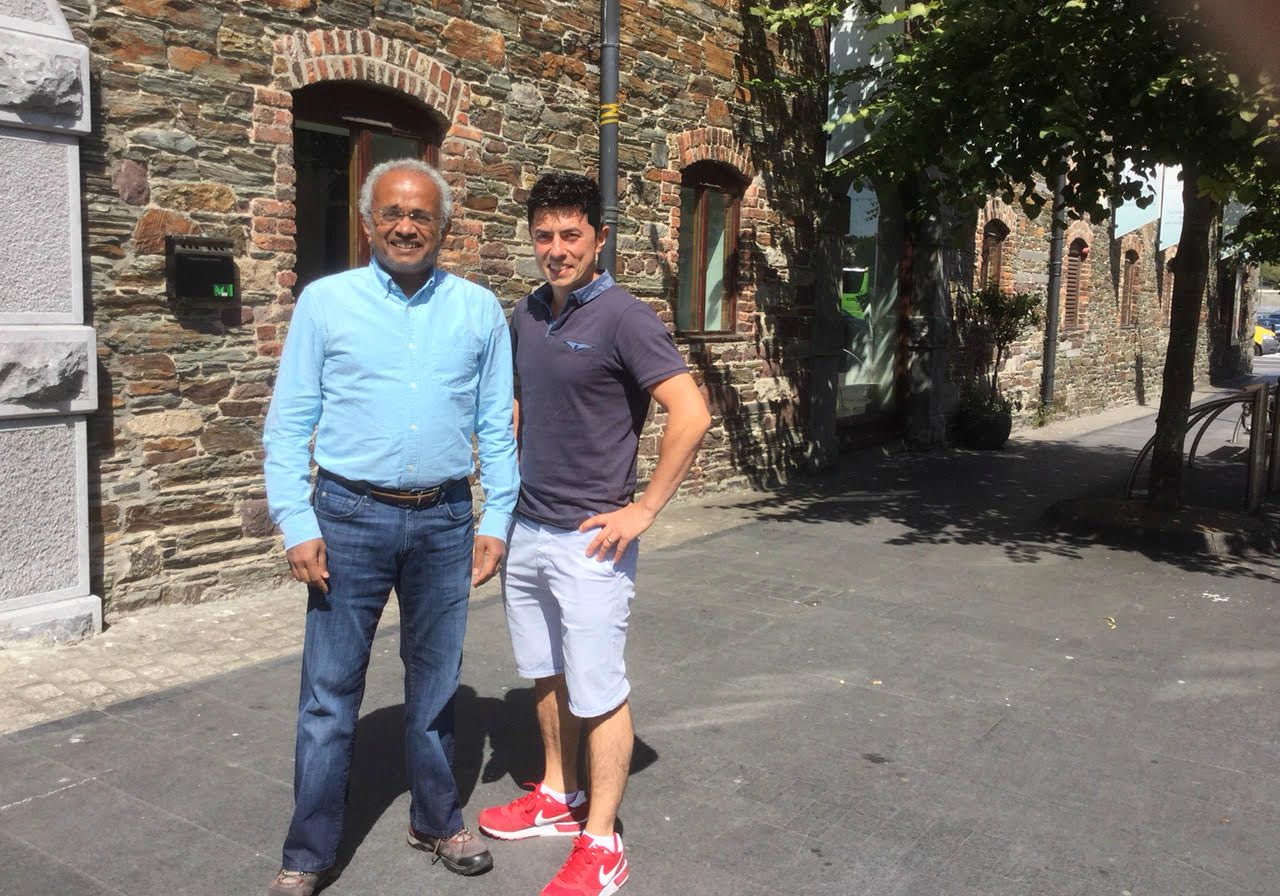
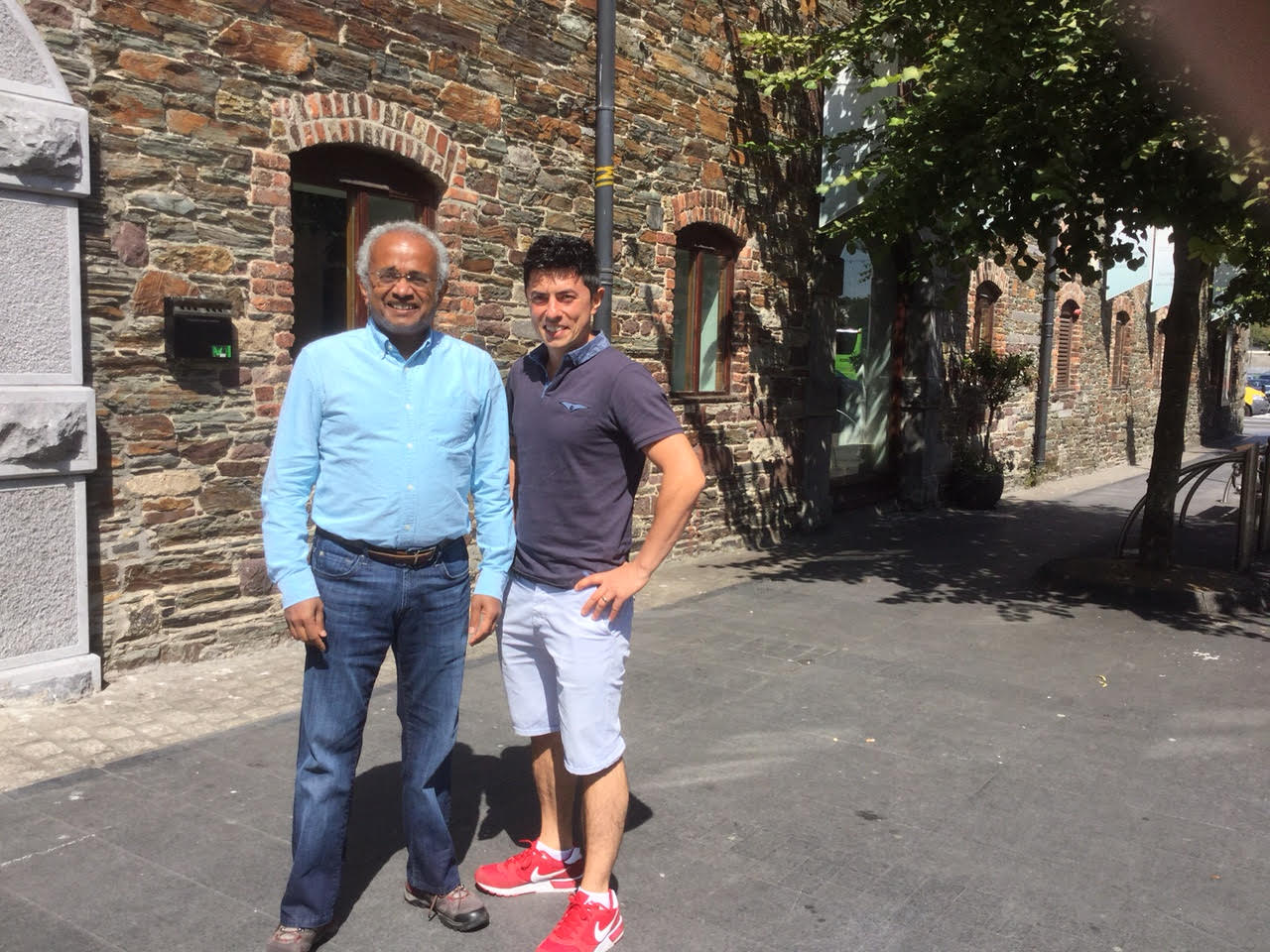
Meeting Up With Shanta in Waterford City, Ireland (August, 2015):

Since our conversation in episode 046 of the Economic Rockstar podcast, myself and Shanta met up for a brief period in Waterford City, Ireland. Shanta was on a visit form Washington DC (not work-related, just in case you think the The World Bank are coming in to Ireland!). Check back for a new blog post on what we chatted about.


Frank and Shanta

http://traffic.libsyn.com/economicrockstar/046_Shanta_Devarajan_Final.mp3

Podcast: Play in new window | Download

003: Erin Lowry on Millennials, College Debt and Asking for the Order

November 12, 2014 by Frank

http://traffic.libsyn.com/economicrockstar/003_Erin_Lowry_final.mp3
Play in New WindowDownload

Episode 003: Erin Lowry on Millennials, College Debt and Asking for the Order

Erin LowryErin Lowry is a double major in journalism and theatre and writes on finance and money related matters for the millennial generation. She lives in New York and is founder of brokemillennial.com where she is on a mission to explain financial concepts and money saving tips to her fellow Millennials using a little humor along the way. Erin is also a freelance writer for both Daily Finance and US News and World Report. Erin has deservedly been recognized for her astounding contribution to the finance and money industry, being voted ‘Top Finance Blog’ and winner of the ‘Best Personal Finance Blog for Young Adults’. Erin has also been featured on Forbes and Reuters, as well making appearances on TV, radio and other podcasts for her advice.

Economics and Finance Themes:

In this interview, Erin mentions and discusses: millennials, Generation Y, student loan debt, credit card debt, savings, habits, business startups, money, returns, net profit, incentives and perfect competition.

Erin’s Influencers: 

Her Mum and Dad, Warren Buffett, Bill Gates, Mark Cuban and Magic Johnson.

Find out:

  • how a Krispee Kreme gave Erin her biggest lesson in understanding finance, money and net profit at the tender age of seven.
  • how living in Japan and China during her childhood developed a different money mindset to her fellow consumer-led American peers.
  • how Erin left college debt-free.
  • who are millennials, if you are one and, if so, are you narcissistic and lazy?
  • about the massive student loan and credit card debt taken on by this generation and what you can do about it.
  • the money-saving tips that you can use in college or at work.
  • how saving a little, even $2, from a paycheck now will develop into a powerful life habit.
  • the importance of having a mentor in your life, particularly as a young adult.
  • the importance of networking for millennials.
  • how ‘Asking for the Order’ can help you succeed.
  • some money-saving dating tips.
  • how you can use your free-time between college classes or in the evenings to become creative and generate supplementary income.
  • how to manage your credit card and to use it to your advantage.
  • about the importance of list-making and how this can empower you.
  • about the ‘Snowball Method’ and how it can make you feel good.

Advice:

‘As soon as you get your pay cheque, the first thing you do is pay yourself’ – Erin Lowry

Click To Tweet

  • If you felt an outcome was unfair, ‘Ask for the Order’.  If you don’t tell people what you want, they can’t read your mind and the worse someone can tell you is ‘No’..
  • I find that list writing helps me organize my thoughts and then when I cross something off, it’s just such a satisfying feeling.

  • If you are having debt problems, talk about it to your loved ones, to your closest friends, to a credible financial planner or to a priest.

Personal Habits:

A respect for money was instilled in Erin at a young age by her father, which she carried right through into her adult life. As a head-strong decision-maker, Erin was faced with an ‘economic’ choice in adolescence which resulted in her finishing college debt-free! These traits, coupled with her mother’s mantra ‘Ask for the Order’ has given Erin enough social and financial clout too pursue her love of personal finance and helping fellow millennials to straighten out their finances.

‘Ask for the Order’ – Erin Lowry

Click To Tweet

Takeaway:

  • ‘Your relationship with your parents and how they treat money is huge because we started learning about money from an incredibly young age’.
  • ‘I find very fascinating… men and women that are able to go out and start their own companies and start with very little money and even not necessarily a lot of knowledge about something, and they teach themselves and they just go out and work really, really hard and I think that that’s the realization of the American dream and that it still really is possible.’
  • ‘Put yourself out there, develop contacts and network with others. You can be successful this way.’
  • ‘Never just make the minimum payment on your credit card. Pay it off in full. Banks will earn high interest on outstanding credit card debt.’

Recommended Books:

  • Personal Finance in Your 20s For Dummies by Eric Tyson
  • The Automatic Millionaire: A Powerful One-Step Plan to Live and Finish Rich by David Bach
  • The Ascent of Money by Niall Fergusan

Favourite Internet Resource:

  • Twitter

Where to Find Erin Lowry:

  • brokemillennial.com
  • magnifymoney.com
toto togel situs togel situs toto situs toto situs toto situs toto situs toto toto slot situs toto situs togel situs toto slot gacor situs toto situs togel situs toto situs toto situs togel situs toto pam4d situs toto pam4d gimbal4d pam4d gimbal4d sangkarbet sangkarbet pam4d toto slot
http://traffic.libsyn.com/economicrockstar/003_Erin_Lowry.mp3

Podcast: Play in new window | Download

Frank Conway

Frank Conway is founder of Economic Rockstar and lecturer of economics, finance and statistics. Read More…

View My Blog Posts

Youtube Sub

Become a Patron of the Economic Rockstar Podcast

patreon

Ireland’s Economy by the Numbers

Leaving Cert Economics: Ireland’s Economy  Click here to download a workbook on Ireland’s Economy so that you can add your own notes. [Original size] Ireland’s Economy by fconway

Categories

Subscribe and Never Miss An Episode

itunes-logo

Recent Posts

  • Ireland’s Economy by the Numbers April 8, 2019
  • 174: Wendy Carlin on The Core Project, Capitalism, Democracy and Normative Statements February 13, 2019
  • 173: Stephen Wright on Core Econ as a Learning Resource for Mainstream Economics January 28, 2019
  • 172: Best of 2018 Part 2: From the Great Depression to Futurism; Institutions, Individualism, Cooperation and Reciprocity January 22, 2019
  • 171: Best of 2018 Part 1 January 3, 2019

Copyright © 2026 · Podcast Pro Theme on Genesis Framework · WordPress · Log in

This website uses cookies to improve your experience. We'll assume you're ok with this, but you can opt-out if you wish. Accept Reject Read More
Privacy Policy

Privacy Overview

This website uses cookies to improve your experience while you navigate through the website. Out of these, the cookies that are categorized as necessary are stored on your browser as they are essential for the working of basic functionalities of the website. We also use third-party cookies that help us analyze and understand how you use this website. These cookies will be stored in your browser only with your consent. You also have the option to opt-out of these cookies. But opting out of some of these cookies may affect your browsing experience.
Necessary
Always Enabled
Necessary cookies are absolutely essential for the website to function properly. This category only includes cookies that ensures basic functionalities and security features of the website. These cookies do not store any personal information.
Non-necessary
Any cookies that may not be particularly necessary for the website to function and is used specifically to collect user personal data via analytics, ads, other embedded contents are termed as non-necessary cookies. It is mandatory to procure user consent prior to running these cookies on your website.
SAVE & ACCEPT