
• ABOUT
  • RESOURCES
  • PODCAST
  • BOOKS
  • BLOG
  • SUPPORTERS
  • QFA Financial Advice
  • CONTACT

Economic Rockstar

Connecting Brilliant Minds in Economics and Finance

146: David Kyle Johnson on Science Fiction as Philosophy and Finding Nietzsche’s Übermensch in Economics
June 30, 2018 by Frank

http://traffic.libsyn.com/economicrockstar/146_David_Kyle_Johnson_Final.mp3
Play in New WindowDownload

146: David Kyle Johnson on Science Fiction as Philosophy and Finding Nietzsche’s Übermensch in Economics

David Kyle Johnson is Associate Professor of Philosophy at King’s College in Wilkes-Barre, Pennsylvania. He earned a master’s degree and doctorate in philosophy from the University of Oklahoma.

At Oklahoma, he won the coveted Kenneth Merrill Graduate Teaching Award. In 2011, the American Philosophical Association’s committee on public philosophy gave him an award for his ability to make philosophy accessible to the general public.

Professor Johnson regularly teaches classes on metaphysics, philosophy of religion, philosophy of mind, and logic, as well as courses on critical thinking and scientific reasoning. He has published papers on human freedom, the problem of natural evil, the multiverse, the existence of souls, and many related topics in such journals as Religious Studies, Sophia, Philo, Philosophy and Literature, and Think. He also maintains two blogs for Psychology Today.

Professor Johnson also publishes on the intersection of pop culture and philosophy. One of his books, Inception and Philosophy: Because It’s Never Just a Dream, inspired an authors@Google talk with more than half-a-million YouTube views. He also has written numerous articles that explore the relationship between philosophical questions and such pop cultural phenomena as The Hobbit, Doctor Who, Batman, South Park, Johnny Cash, Quentin Tarantino, and Christmas.

Economics:

In this episode Kyle discusses/mentions: Mercantilism, Capitalism, Socialism, Marxism, free trade and poverty.

Economists mentioned in this Episode:

  • Adam Smith, Karl Marx and John Maynard Keynes.

Philosophers mentioned in this Episode:

  • John Locke, Nietzsche and John Rawls.

People mentioned in this Episode:

  • Bill Gates, Elon Musk, The Emperor, David X. Cohen and Christopher Nolan.

Shows/Movies mentioned in this Episode:

  • Black Mirror
  • Twilight Zone
  • Star Trek
  • Star Wars
  • Doctor Who
  • 2001: A Space Odyssey
  • Lord of the Rings
  • The Simpsons
  • Futurama

Books:

  • Inception and Philosophy by David Kyle Johnson
  • Introducing Philosophy Through Pop Culture: From Socrates to South Park, Hume to House by David Kyle Johnson
  • Heroes and Philosophy: Buy the Book, Save the World by David Kyle Johnson
  • The Wealth of Nations by Adam Smith
  • Lord of the Rings

Courses:

  • Sci-Phi: Science Fiction as Philosophy with David Kyle Johnson
  • The Big Questions of Philosophy
  • Exploring Metaphysics with David Kyle Johnson

http://traffic.libsyn.com/economicrockstar/146_David_Kyle_Johnson_Final.mp3

Podcast: Play in new window | Download
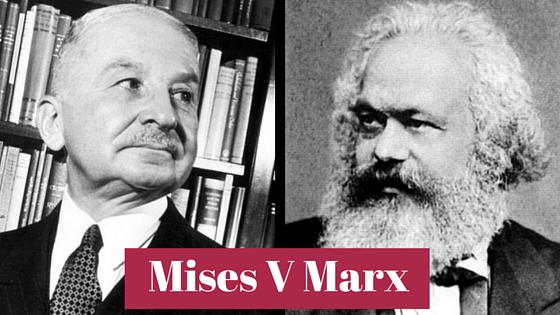
084: Mises v Marx: A Discussion with Peter Boettke

May 5, 2016 by Frank

http://traffic.libsyn.com/economicrockstar/084_Peter_Boettke_2_Final.mp3
Play in New WindowDownload

084: Mises v Marx: A Discussion with Peter Boettke

Mises V Marx

In this episode, Professor Peter Boettke, Professor of Economics and Philosophy at George Mason University, discusses the thinking of Ludwig von Mises and Karl Marx. Peter highlights the underlying theses behind both economists arguments – liberalism and socialism.

Read the first chapter to Living Economics by Peter Boettke here.

Economics:

In this episode, Peter mentions: Austrian economics, Marxism, liberalism, socialism, the Diamond-Water Paradox, instability of capitalism, private ownership, communal ownership, monopoly, financial crisis, leverage, 

Economists:

In this episode, Peter mentions: Ludwig von Mises, Karl Marx, Milton Friedman, Joan Robinson, Rosa Luxemburg, Elinor Ostrom, Adam Smith, F. A. Hayek, Milton Friedman, Paul Samuelson, John Cochrane, Paul Krugman, Joseph Stiglitz and J. K. Galbraith.

Books:

  • Living Economics: Yesterday, Today, and Tomorrow by Peter J. Boettke
  • The Communist Manifesto by Karl Marx
  • Karl Marx and the Close of His System  by Eugen von Böhm-Bawerk
  • Mises: The Last Knight of Liberalism Jörg Guido Hülsmann
  • Phishing for Phools: The Economics of Manipulation and Deception by George A. Akerlof and Robert Schiller
  • After War: The Political Economy of Exporting Democracy by Christopher J. Coyne
  • Doing Bad by Doing Good: Why Humanitarian Action Fails by Christopher J. Coyne
  • The Road to Serfdom: Text and Documents–The Definitive Edition by F. A. Hayek
  • How the Dismal Science Got Its Name: Classical Economics and the Ur-Text of Racial Politics by David M. Levy
  • The Soul of Man Under Socialism by Oscar Wilde
  • The Grapes of Wrath by John Steinbeck
http://traffic.libsyn.com/economicrockstar/084_Peter_Boettke_2_Final.mp3

Podcast: Play in new window | Download
031: Matt Rousu on Experimental Auctions and the Need for Peer-Reviewed Economic Impact Studies.

May 6, 2015 by Frank

http://traffic.libsyn.com/economicrockstar/031_Matthew_Roussu_Final.mp3
Play in New WindowDownload

031: Matt Rousu on Experimental Auctions and the Need for Peer-Reviewed Economic Impact Studies.

Dr. Matthew Rousu is a Professor and Warehime Chair in the Department of Economics atMatthew Rousu Susquehanna University. His main teaching interests include microeconomics, political economic thought, and game theory.

Matt is an expert on experimental auction design and implementation. He uses his expertise on experimental auctions to study problems in agricultural economics, environmental economics, and public health.  He has published over 40 scholarly articles, as well as book chapters, non-technical articles and Op-eds.

Matt has been quoted widely on many issues by The Chicago Tribune, Forbes, The NY Daily News, The Philadelphia Inquirer, US News and World Report, The Washington Post, Wikipedia, and Yahoo.com.

He has also been a guest for local radio stations mainly to discuss the local, state, and national economy.

Matt runs his own blog known as paeconomist.blogspot and is founder of the Economic Impact Review. He is the author of Political Trivia.

Matt earned a Bachelor’s degree from the University of South Dakota and a Ph.D. in Economics from Iowa State University.

Find Out:

  • the benefits of lecturing at a liberal arts college – switch up your research interests.
  • about experimental auctions and their design.
  • what is consumer demand for Genetically Modified Products.
  • how demand for GMOs change due to differences in packaging.
  • how print advertisement for e-cigarettes increases their demand.
  • whether e-cigarettes are a ‘healthy’ alternative to traditional cigarettes.
  • about the impact of plain package cigarettes on consumer demand.
  • if the Irish government correct in enforcing plain packaged cigarettes.
  • how much less buyers were willing to pay for plain packaged cigarettes.
  • how a picture of smoking-related diseases on cigarette packaging decreases demand for cigarettes.
  • why Matt set up The Economic Impact Review.
  • why economic impact studies should go through a peer-review process.
  • about the lack of transparency in economic impact studies.
  • about Matt’s libertarian stance and why he’s for fracking.
  • what you get when a libertarian and socialist collaborate on an economics fracking paper.
  • about the beautiful campus of Susquehanna University.
  • why small class sizes are beneficial to both student and teacher.
  • about Matt’s exploits in the World Series of Poker.
  • how an understanding of statistics and behavioral economics can benefit a poker player.
  • how Chris Moneymaker influenced Matt’s love of poker.
  • the economics of what makes a winning poker player.
  • if poker is a game of chance or a game of skill.
  • how poker is akin to economic game theory.
  • about people’s willingness to pay for GM foods versus non-GM foods.
  • if there is a need for an independent 3rd party to disseminate information on GM foods.
  • what annoys Matt the most.
  • why Matt switched to a flipped classroom style of teaching.
  • about deceptions in economic research and why journals will not publish such research.
  • why research in psychology accepts deception of the subjects but economics does not.
  • why a lot of economics journals will not publish your work.

Economists:

In this interview, Matt mentions: Milton Friedman, Wally Huffman (Iowa State), Jason Shogren (Wyoming) and Dan Ariely.

Economics:

In this interview, Matt mentions and discusses: Consumer demand, experimental auctions, bias, incentives, pricing, demand curve, sample size, economic impact of fracking, socialism, libertarianism, microeconomics, macroeconomics, game theory, political economic thought, forensics economics, positive analysis and normative analysis.

You can disagree without being disagreeable Matt Rousu.

Click To Tweet

Are you Willing to Pay More for Genetically-Modified Foods?

The goal of experimental auction is to assess consumers demand for some particular product.

If consumers receive information from a group, such as Green Peace, who were against GM foods, then those consumers were willing to pay up to 50% less for foods that were genetically modified compared to a plain-labelled product.

If consumers got information from an agri-business company, such as Monsanto, about the benefits of GM foods, then they would pay just as much for these foods as conventional food products.

What would the impact be on consumer’s willingness to pay if there were scientific information or, what Professor Rousu called ‘Objective Verifiable Information’ available in the decision-making process? The objective information ‘dampened’ the effects on either side.

Where to find Matt:

  • Website: Economic Impact Review
  • Blog: paeconomist
  • YouTube: Matthew’s Channel
  • Twitter: @matthewrousu
  • Research: What Makes a Winning Poker Player? Evidence From Online Poker. Gaming Law Review and Economics, 14 (9), Pages 677-683. (2010). With M. Smith.
  • Other Research Papers: http://www.susqu.edu/facstaff/r/rousu/research

http://traffic.libsyn.com/economicrockstar/031_Matthew_Roussu_Final.mp3

Podcast: Play in new window | Download

Frank Conway

Frank Conway is founder of Economic Rockstar and lecturer of economics, finance and statistics. Read More…

View My Blog Posts

Youtube Sub

Become a Patron of the Economic Rockstar Podcast

patreon

Ireland’s Economy by the Numbers

Leaving Cert Economics: Ireland’s Economy  Click here to download a workbook on Ireland’s Economy so that you can add your own notes. [Original size] Ireland’s Economy by fconway

Categories

Subscribe and Never Miss An Episode

itunes-logo

Recent Posts

  • Ireland’s Economy by the Numbers April 8, 2019
  • 174: Wendy Carlin on The Core Project, Capitalism, Democracy and Normative Statements February 13, 2019
  • 173: Stephen Wright on Core Econ as a Learning Resource for Mainstream Economics January 28, 2019
  • 172: Best of 2018 Part 2: From the Great Depression to Futurism; Institutions, Individualism, Cooperation and Reciprocity January 22, 2019
  • 171: Best of 2018 Part 1 January 3, 2019

Copyright © 2026 · Podcast Pro Theme on Genesis Framework · WordPress · Log in

This website uses cookies to improve your experience. We'll assume you're ok with this, but you can opt-out if you wish. Accept Reject Read More
Privacy Policy

Privacy Overview

This website uses cookies to improve your experience while you navigate through the website. Out of these, the cookies that are categorized as necessary are stored on your browser as they are essential for the working of basic functionalities of the website. We also use third-party cookies that help us analyze and understand how you use this website. These cookies will be stored in your browser only with your consent. You also have the option to opt-out of these cookies. But opting out of some of these cookies may affect your browsing experience.
Necessary
Always Enabled
Necessary cookies are absolutely essential for the website to function properly. This category only includes cookies that ensures basic functionalities and security features of the website. These cookies do not store any personal information.
Non-necessary
Any cookies that may not be particularly necessary for the website to function and is used specifically to collect user personal data via analytics, ads, other embedded contents are termed as non-necessary cookies. It is mandatory to procure user consent prior to running these cookies on your website.
SAVE & ACCEPT