• ABOUT
  • RESOURCES
  • PODCAST
  • BOOKS
  • BLOG
  • SUPPORTERS
  • QFA Financial Advice
  • CONTACT

Economic Rockstar

Connecting Brilliant Minds in Economics and Finance

125: Eugene Fama on the Efficient Market Hypothesis, the Feds Fund Rate, Bitcoin and Daily Routines

January 25, 2018 by Frank

http://traffic.libsyn.com/economicrockstar/125_Eugene_Fama__Final.mp3
Play in New WindowDownload

125: Eugene Fama on the Efficient Market Hypothesis, the Feds Fund Rate, Bitcoin and Daily Routines

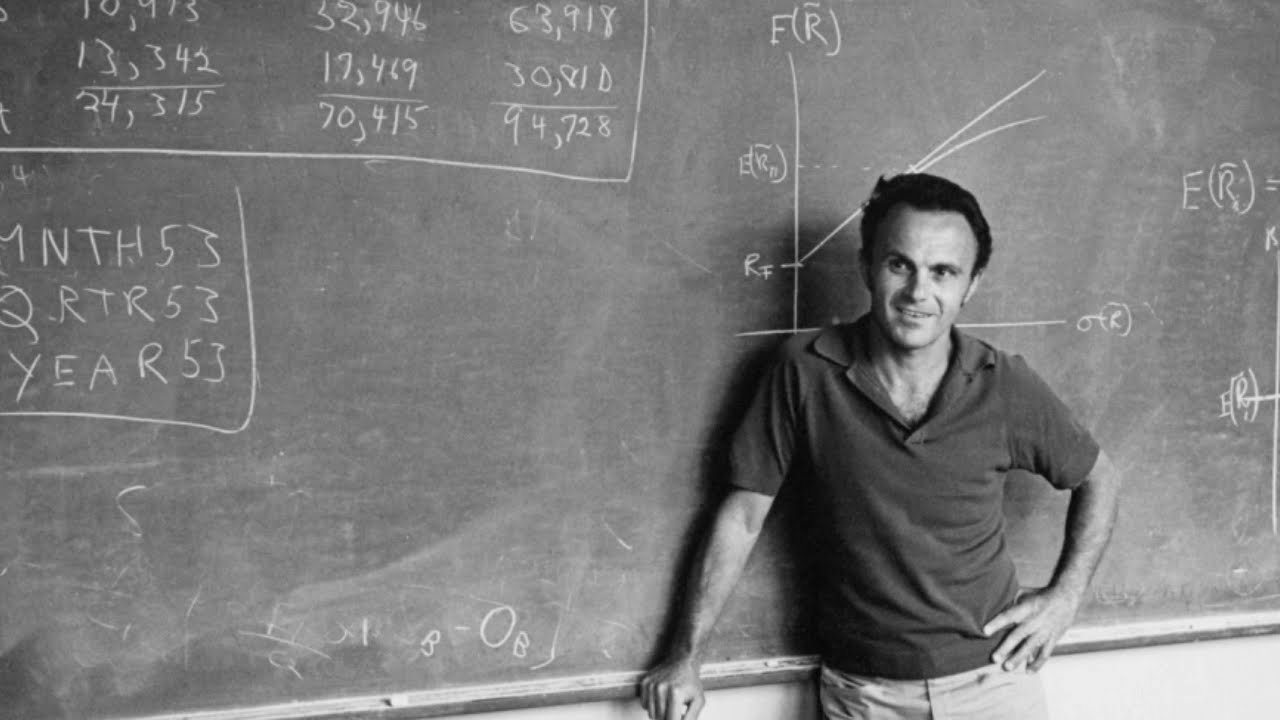
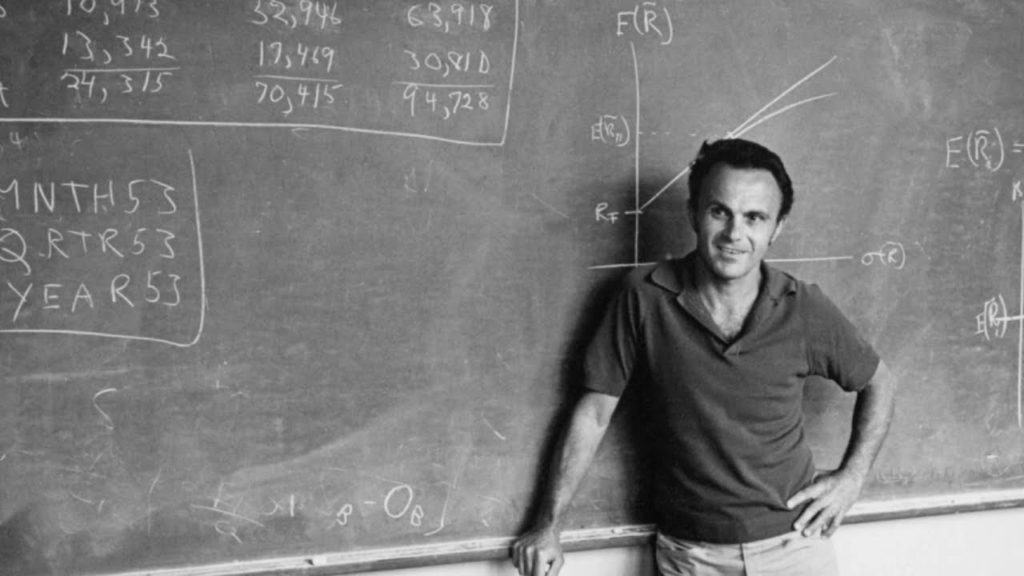
Eugene Fama Economic Rockstar

“I went into academics because I didn’t want to go into anything that would affect my sports life.” – Professor Eugene Fama

Eugene F. Fama is Professor of Finance at the University of Chicago Booth School of Business. Professor Fama was awarded the 2013 Nobel laureate in economic sciences and is widely recognized as the “father of modern finance.”

Professor Fama’s research is well known in both the academic and investment communities. He is strongly identified with research on markets, particularly the efficient markets hypothesis. He focuses much of his research on the relation between risk and expected return and its implications for portfolio management. His work has transformed the way finance is viewed and conducted.

Eugene is a prolific author, having written two books and published more than 100 articles in academic journals. He is among the most cited researchers in economics.

In addition to the Nobel Prize in Economic Sciences, Professor Fama was the first elected fellow of the American Finance Association in 2001. He is also a fellow of the Econometric Society and the American Academy of Arts and Sciences. He was the first recipient of three major prizes in finance: the Deutsche Bank Prize in Financial Economics (2005), the Morgan Stanley American Finance Association Award for Excellence in Finance (2007), and the Onassis Prize in finance (2009).

Professor Fama was awarded doctor of law degrees by the University of Rochester and DePaul University, a doctor honoris causa by the Catholic University of Leuven, Belgium, and a doctor of science honoris causa by Tufts University.

Eugene is chairman of the Center for Research in Security Prices at Chicago Booth, which was founded 40 years ago to create the finest tools for tracking, measuring, and analyzing securities data. He is also an advisory editor of the Journal of Financial Economics.

Professor Fama earned a bachelor’s degree from Tufts University in 1960, followed by an MBA and PhD from the University of Chicago Graduate School of Business (now the Booth School) in 1964. He joined the GSB faculty in 1963.

Economists:

In this episode, Professor Fama mentions: Gary Becker, Vernon Smith, John Cochrane,Robert Shiller, Campbell Harvey,  John Campbell, Narasimhan Jagadeesh, Sheridan Titman, Cliff Asness, Louis Bachlier, Paul Samuelson, Benoit Mandlebrot, Robert C. Merton, Fischer Black, Myron Scholes, Merton Miller, Harry Roberts and Kenneth French.

Economics:

In this episode, Professor Fama mentions: EMH, anomalies, Momentum Effect, January Effect, Options Pricing Model, Price Earnings Ratio, Federal Reserve, Fed Funds Rate, reserves, reserve requirements, lending mechanism, quantitative easing, economic activity, bitcoin, speculation, medium of exchange, Ripple and blockchain.

Professor Fama’s Mentors:

  • Merton Miller, Harry Roberts and Benoit Mandelbrot.

Individuals were very important to me especially Merton Miller and Harry Roberts. And Benoit too. – Professor Fama

Find out:

  • How studying economics in the 1960s differs to present day.
  • What is EMH and how it relates to the random walk and the submartingale process.
  • The beginning of mathematics in economics in the 1960s.
  • Independent, identically distributed  – a more restrictive view of EMH.
  • How prices and returns are so noisy that it is difficult to identify stock-picking skills.
  • About stock market anomalies.
  • What is the problem in academics?
  • About the Federal Funds Rate.
  • Does the Federal Reserve Bank or the market control the Fed Funds Rate?
  • If there is a lending channel.
  • Do we need a Federal Reserve bank?
  • About Professor Fama’s views on Quantitative Easing (QE).
  • About Professor Fama’s hobbies and how he uses them to regain balance in his life as an economist.
  • Why Eugene Fama went into academics.
  • Find out about Eugene’s daily routines.
  • About Bitcoin.

On the Problem in Academics:

“There is a problem in academics. Everybody wants to publish papers. That’s the way they advance and get tenure and get higher salaries. They also get noticed on Wall Street for doing it. So there’s an incentive to dredge the data and come with things that will be attention-grabbing but won’t necessarily be there in new data and aren’t the basis for new strategies.” – Professor Fama

Eugene Fama Economic Rockstar
On Theoretical Models

“Robustness is the name of the game. All scientific theories have anomalies otherwise they’re not theories, they’re reality.”

“All science is you propose models, you test them and you come up with some stuff that says that says this works pretty well and then you come with other stuff that says well it doesn’t work very well on this particular so called anomaly. And so you either tweak the model to incorporate that or you just accept it as one of the shortcomings of the model. That’s why you called them models.”

“You have to be careful. It has to be systematic empirical work. You can’t just go work with anecdotes. Anecdotes are not empirical work.”

On the Fed:

“What goes on when you go to work for the Fed or you get onto the Board or whatever, it’s the invasion of the Body Snatchers. Whatever you thought before becomes irrelevant and you buy the party line or you buy the line that says they have a lot of power.”

“I don’t there ever was a lending channel but there certainly isn’t one now.”

“The main job of the Fed is to control inflation. Unfortunately, in the current regime they can’t do that.”

On Bitcoin:

  • I’m suspicious about it as a unit of account because it has such an uncertain value. Monetary theory basically says that you want a unit of account that has a certain value.
  • It’s just like paper currency. If no body is willing to use it, it becomes valueless.

Thanks to Conor Murray for the question on Bitcoin!

On Writing:

  1. There’s no easy way to do it. I do a lot of writing with Kenneth French. We always re-write these papers that we put out at least twenty or thirty times front to back. And you struggle over every word and you try to say stuff as simply as possible because by saying it simply you reach more people than saying it in a more complex way.
  2. Work on it. Really read it. Get other people to read it and get their reactions.
  3. Organize how you present stuff. You want a brief introduction. Most papers tend to have long introductions. Get right into the guts and keep it as simple as possible for as long as possible so that you lose the fewest number of people.

Movies:

  • Invasion of the Body Snatchers
  • Equilibrium


Patreon

If you’re a fan of the podcast and would like to show your support in anyway, please check out my Patreon page at patreon.com/economicrockstar where you can sign up for any of the awards for as little as $1 a month or you can simply follow me on the Economic Rockstar Facebook page or on Twitter or simply recommend the show to a friend, especially if they have never had the opportunity to study economics.


http://traffic.libsyn.com/economicrockstar/125_Eugene_Fama__Final.mp3

Podcast: Play in new window | Download

025: Dan Hamermesh on the Economics of Beauty: Attractive People Are More Successful

March 26, 2015 by Frank

http://traffic.libsyn.com/economicrockstar/025_Dan_Hamermesh.mp3
Play in New WindowDownload

025: Dan Hamermesh on the Economics of Beauty: Attractive People Are More Successful 

Dan Hamermesh is Professor in Economics at the Royal Holloway University of London and at thePortraitHamermeshwithoutJacket University of Texas at Austin. Dan researches the economics of beauty. He received his Ph.D. from Yale and has since taught at Princeton, at Michigan State, and at Texas. He has held visiting professorships at universities in North America, Europe, Australia and Asia, and lectured at almost 250 universities in 48 states and 33 foreign countries. His research, published in nearly 100 refereed papers in scholarly journals, has concentrated on time use, labor demand, discrimination, academic labor markets and unusual applications of labor economics (to beauty, sleep and suicide).

Professor Hamermesh has received many notable and distinguished honors and awards in recognition for his contribution to the field of economics. These include the Mincer Award and the IZA Prize in Labor Economics, the John R. Commons Award, as well as many teaching of excellence awards.

Daniel’s teaching include Microeconomics; Macroeconomics; Econometrics; Economics of Labor and Economics of Life.

Daniel is the author of many books including Demand for Labor: The Neglected Side of the Market, Beauty Pays: Why Attractive People Are More Successful, The Economics of Time Use and Economics Is Everywhere. He is also a regular contributor to the Freakonomics blog and podcast.

Economic Themes:

In this interview, Dan mentions and discusses:

Speculation, inter-temporal maximisation, labor economics, incentives, wages, welfare payments, comparative advantage and externalities.

Economists:

In this interview, Dan mentions:

 John Maynard Keynes, Gary Becker, Gregg Lewis, Robert Lucas and Michael Lewis.

Influencers:

Gary Becker and Gregg Lewis

A lot of my stuff is the weird kind of stuff that Becker pioneered – Dan Hamermesh.

Click To Tweet

Gregg Lewis had a concern about data – about doing it right, making sure you were right. That’s a crucial thing. One has to take data seriously – Dan Hamermesh.

Advice:

Do what you think you’ll enjoy, because if you think you’ll enjoy it the odds are pretty good you’ll do well at it. You’ll be motivated to work hard and to succeed – Dan Hamermesh

Find out:

  • how economics can be used beyond the theoretical framework we see in textbooks.
  • why we should think about economics in things we see or do in the real world.
  • how students of economics can inspire their professors in a two-way mutual learning process.
  • how economics is everywhere – we just need to think, see and interpret.
  • how economics is enjoying a revival in reaching to mass audiences.
  • the benefits of economics books like Freakonomics, Beauty Pays, Dollars and Sex and Happiness By Design.
  • why we should read interesting books on economics.
  • if happiness is related to how beautiful or attractive you are.
  • why better-looking men are happier.
  • how to recognise if you are beautiful.
  • what good-looking attorneys, prostitutes, politicians and NFL quarter-backs have in common.
  • if economists should be studying the effects of being attractive and ugly.
  • if people have an increased need to become beautiful.
  • whether increased spending on cosmetics, hair and clothing by women will have a pay-off in the labor market.
  • if plastic surgery to alter beauty results in higher earnings.
  • about the disability benefits available to obese people.
  • if an obese person is perceived to be less beautiful than a slim person.
  • if there is a relationship between ugliness and where a person lives.
  • why Dan was interested in studying the economic impact of beauty.
  • which economic markets show evidence of the impact of beauty.
  • how Dan first met his wife of 42 years.
  • what Dan thinks of Abercrombie and Fitch’s ‘six-pack’ hiring policy.
  • if being attractive prohibits opportunities in the labor market.
  • if you should work in the private or public sector if you are good-looking.
  • how to identify an externality on the side-walk.
  • why you should do what you’ll enjoy rather than chasing the money.

Why Attractive People Are Happier and Economically Better-Off.

Attractive people have been found to be happier than not-so-good-looking people. Better-looking men receive higher incomes, which make them happier overall. Attractive women are also happier, but their happiness is more direct in that their happiness is the result of knowing that they are good-looking. Attractive women do receive higher incomes but this is not a direct link to their happiness as it is for men.

“The beauty itself is directly more salient to them than it was for men, even though the overall effect was identical for both genders” – Dan Hamermesh.

How someone realises if they are attractive or not is due to the reinforcement by other people in making you aware whether you are good-looking or ugly. “Better-looking babies are treated better by their parents and by other people. Better-looking 5 year olds are treated better in kindergarten than ugly ones. When you’re chosen for teams or go out in High School, the better-looking people do better. And they also, given even the amount of education they attained, they’ll do better in the labor market. They’ll get better jobs, make higher pay, even within the same occupation” (Dan Hamermesh). Good-looking attorneys, prostitutes, politicians and National Football League quarter-backs make higher pay than their uglier colleagues.

In the labor market, the top one-third of people who are considered good-looking will earn 10 to 12% more in income independent of any differences that might exist between them and those not considered good-looking.

A woman’s increased spending on cosmetics, hair and clothing will not increase her perceived beauty and will also have a minimal pay-off on the labor market for her. Plastic surgery for cosmetic reasons does not have a benefit in terms of increasing earnings in the labor market. You do it to feel good. It’s not an economic investment, it’s a feel-good investment.

“Unless a person is morbidly obese, people do not view him or her as being any uglier than anybody else, all things taking together” – Dan Hammermesh.

Does Location Determine Whether You Are Beautiful or Ugly?

I ask Dan whether a person’s good looks are determined by the area in which they live. The reason I ask this is based on our earlier discussion on why attractive people typically earn a higher income. It can be fair to suggest that cities or regions that pay more would consequently attract good-looking people.

Dan states that “if you’re a good-looking person, you’re going to flock to an area where your looks pay off more. And if you’re a bad-looking person, you might want to go away from an area where looks pay off. In the UK, where people who were born in Scotland and Wales, if they’re good-looking, are more likely to migrate to South-East England (London) than other people”.

Also, “people who were born in South-East England (London) who are bad-looking appear to move to outlying areas where their looks aren’t so important”.

“Looks not only affects where we live in terms of what we make, but where we choose to live in terms of where we spend out adult lives. You’ll go where you get the biggest bang for your buck or, in this case, the biggest pounds for your beauty.”

Economic Markets Where Beauty and Attractiveness Are Present:

  1. Labor Markets: Higher wages and better conditions.
  2. Marriage Markets: A good-looking woman will attract a man who earns more.
  3. Market on Unsecured Loans: Attractive people are more likely to get a loan and on better terms.

Recommended Books:

  • Beauty Pays: Why Attractive People Are More Successful by Dan Hamermesh.
  • Economics Is Everywhere by Dan Hamermesh.
  • The Worldly Philosophers: The Lives, Times And Ideas Of The Great Economic Thinkers by Robert L. Heilbroner.
  • Moneyball by Michael Lewis.

Where To Find Dan Hamermesh:

  • Facebook: BeautyPays
http://traffic.libsyn.com/economicrockstar/025_Dan_Hamermesh.mp3

Podcast: Play in new window | Download
Frank Conway

Frank Conway is founder of Economic Rockstar and lecturer of economics, finance and statistics. Read More…

View My Blog Posts

Youtube Sub

Become a Patron of the Economic Rockstar Podcast

patreon

Ireland’s Economy by the Numbers

Leaving Cert Economics: Ireland’s Economy  Click here to download a workbook on Ireland’s Economy so that you can add your own notes. [Original size] Ireland’s Economy by fconway

Categories

Subscribe and Never Miss An Episode

itunes-logo

Recent Posts

  • Ireland’s Economy by the Numbers April 8, 2019
  • 174: Wendy Carlin on The Core Project, Capitalism, Democracy and Normative Statements February 13, 2019
  • 173: Stephen Wright on Core Econ as a Learning Resource for Mainstream Economics January 28, 2019
  • 172: Best of 2018 Part 2: From the Great Depression to Futurism; Institutions, Individualism, Cooperation and Reciprocity January 22, 2019
  • 171: Best of 2018 Part 1 January 3, 2019

Copyright © 2026 · Podcast Pro Theme on Genesis Framework · WordPress · Log in

This website uses cookies to improve your experience. We'll assume you're ok with this, but you can opt-out if you wish. Accept Reject Read More
Privacy Policy

Privacy Overview

This website uses cookies to improve your experience while you navigate through the website. Out of these, the cookies that are categorized as necessary are stored on your browser as they are essential for the working of basic functionalities of the website. We also use third-party cookies that help us analyze and understand how you use this website. These cookies will be stored in your browser only with your consent. You also have the option to opt-out of these cookies. But opting out of some of these cookies may affect your browsing experience.
Necessary
Always Enabled
Necessary cookies are absolutely essential for the website to function properly. This category only includes cookies that ensures basic functionalities and security features of the website. These cookies do not store any personal information.
Non-necessary
Any cookies that may not be particularly necessary for the website to function and is used specifically to collect user personal data via analytics, ads, other embedded contents are termed as non-necessary cookies. It is mandatory to procure user consent prior to running these cookies on your website.
SAVE & ACCEPT