• ABOUT
  • RESOURCES
  • PODCAST
  • BOOKS
  • BLOG
  • SUPPORTERS
  • QFA Financial Advice
  • CONTACT

Economic Rockstar

Connecting Brilliant Minds in Economics and Finance

144: Donald Boudreaux on International Trade, Tariffs and Protectionism
June 15, 2018 by Frank

http://traffic.libsyn.com/economicrockstar/144_Donald_Boudreaux_Final.mp3
Play in New WindowDownload

144: Donald Boudreaux on International Trade, Tariffs and Protectionism

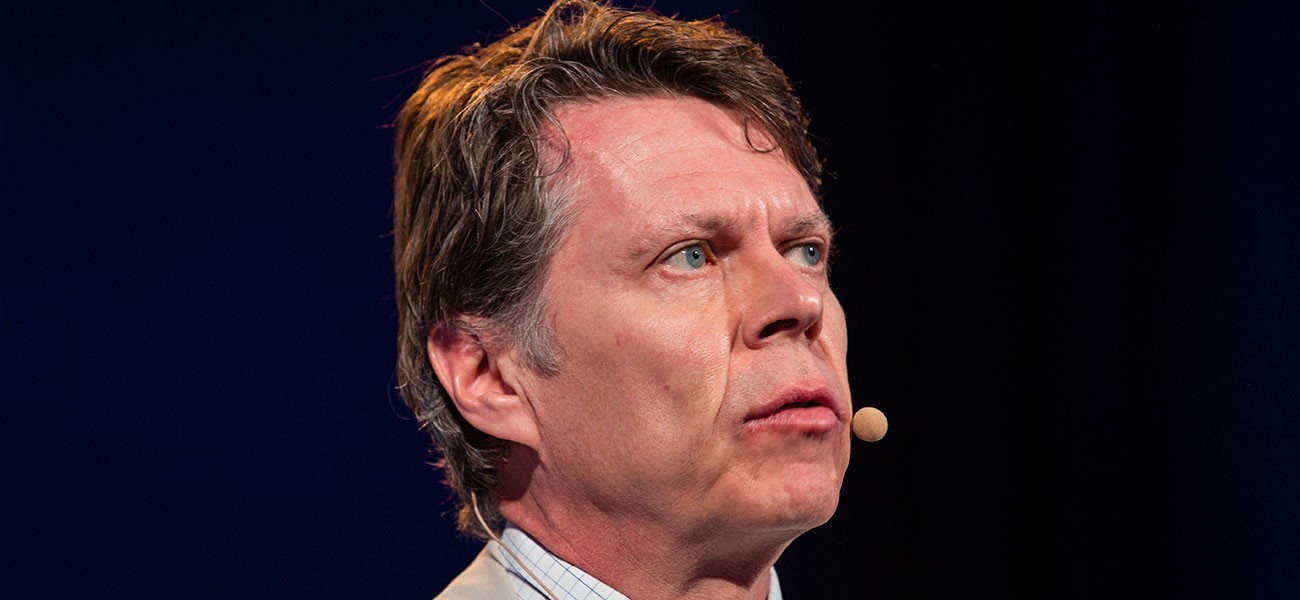
Donald Boudreaux is an American economist, author, professor, and co-director of the Program on the American Economy and Globalization at the Mercatus Center at George Mason University in Fairfax, Virginia.

He is the author of the 2007 and 2012 books Globalization and Hypocrites and Half-Wits, respectively.

He contributes a column twice a month to the Pittsburgh Tribune-Review and contributes to the Cafe Hayek blog.

Economists mentioned in the Episode:

David Ricardo, Adam Smith, John Maynard Keynes, James Buchanan, Russ Roberts, Hecksher-Ohlin, Daniel Ikenson.

In this Episode, you will learn:

  • Why we should look at Ricardo’s model of comparative advantage at an individual level rather than at a country level.
  • Why Krispy Kreme had to close some of its stores.
  • Is French Bourdeaux wine really all French or does the global supply chain have some hidden origins to this grape?
  • Does globalisation facilitate material prosperity?
  • Is there a race to the bottom?
  • Is globalisation facilitating our human needs for increased leisure time?
  • Is globalisation good for us?
  • Protectionism and what it means for US jobs.
  • Will car manufacturing jobs come back to Detroit?
  • Are restrictions to trade a contributor to poor economic growth?
  • Does trade promote diplomacy and reduce military intervention?
  • Did the 1930 Smoot-Hawley tariff on US imports worsen the Great Depression?
  • and much more.

People mentioned in this Episode:

  • Katharine Graham CEO of The Washington Post in the 1970s.
  • Warren Buffett
  • H. L. Mencken (journalist 19 – 20th century)

Where to find Donald J. Boudreaux:

  • Cafe Hayek
  • www.donaldjboudreaux.com

Readings:

  • Economic Possibilities for our Grandchildren by John Maynard Keynes (1930)   

Books:

  • Hypocrites and Half-Wits: A Daily Dose of Sanity from Cafe Hayek by Donald Boudreaux
  • Globalization by Donald Boudreaux
  • An Enquiry into the Nature and Causes of the Wealth of Nations by Adam Smith
  • Perennial Seller by Ryan Holiday

Patreon

If you’re a fan of the podcast and would like to show your support in anyway, please check out my Patreon page at www.patreon.com/economicrockstar where you can sign up for any of the awards for as little as $1 a month or you can simply follow me on the Economic Rockstar Facebook page or on Twitter or simply recommend the show to a friend, especially if they have never had the opportunity to study economics.

http://traffic.libsyn.com/economicrockstar/144_Donald_Boudreaux_Final.mp3

Podcast: Play in new window | Download
104: Russ Roberts on How Adam Smith Can Change Your Life and the Theory of Moral Sentiments

September 19, 2016 by Frank

http://traffic.libsyn.com/economicrockstar/104_Russ_Roberts_Final.mp3
Play in New WindowDownload

104: Russ Roberts on How Adam Smith Can Change Your Life and the Theory of Moral Sentiments

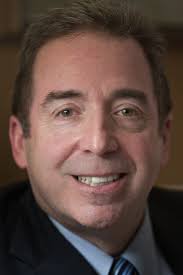
Russ Roberts is Associate Editor, founder and host of the popular and much loved podcast EconTalk, russ-roberts-economic-rockstarand founding advisory board member of the Library of Economics and Liberty.

Russ is the John and Jean De Nault Research Fellow at Stanford University’s Hoover Institution.

His two rap videos on the ideas of John Maynard Keynes and F.A. Hayek, created with filmmaker John Papola, have had more than eight million views on YouTube.

Russ’ latest book How Adam Smith Can Change Your Life: An Unexpected Guide to Human Nature and Happiness takes the lessons from Adam Smith’s The Theory of Moral Sentiments and applies them to modern life.

Russ is also the author of three economic novels teaching economic lessons and ideas through fiction. The Price of Everything: A Parable of Possibility and Prosperity, The Invisible Heart: An Economic Romance and The Choice: A Fable of Free Trade and Protectionism.

Russ blogs at CafeHayek.com and archives his work at russroberts.info.

A three-time teacher of the year, Russ has taught at George Mason University, Washington University in St. Louis, the University of Rochester, Stanford University, and the University of California.

He earned his Ph.D. from the University of Chicago and his undergraduate degree in economics from the University of North Carolina at Chapel Hill.

Economists:

In this episode, Russ discusses and mentions: Adam Smith, F. A. Hayek, David Hume, Vernon Smith, Milton Friedman and Nassim Nicholas Taleb.

Economics:

In this episode, Russ discusses and mentions: Austrian economics, classical economics, spontaneous order, pricing, supply, demand, surge pricing, unintended consequences, price controls, taxes and subsidies.

In this episode, you will learn:

  • about Adam Smith and how the application of Smith’s philosophical and economic thinking can change your life.
  • what the market forces are and the positive and negative examples of the spontaneous order.
  • the invisible hand and prices.
  • what surging prices are.
  • what Smith describes as the impartial spectator and the power of our conscience.
  • Adam Smith’s advice on how to be happy.
  • two ways to get people to pay attention to you and what Smith believed is the most ethical way.
  • what Smith believed was the cultural norm to accept behaviors.

Two Ways to Get People to Pay Attention to You:

Be rich, famous and powerful. It works. But don’t be fooled. You have a natural tendency to pursue money, fame and power because it will get you attention, respect and love. But that’s the wrong way to get there.

The right way to get there is through wisdom and virtue. Understand the world and treat people well. If you do that, you’re also going to be loved, respected and praised. But you won’t be doing the things along the way that people do when they want to become rich, powerful and famous that are not so good for you that cold lead to regret, shame and misbehavior. The temptation to do the unethical thing to pursue fame, power and money is always there.

Writing Tips:

  • Write everyday.
  • The trick to being a good writer is being a good editor.

Where to Find Russ Roberts:

  • Website: russroberts.info
  • Website: econtalk.org
  • Twitter: @EconTalker
  • Medium: medium.com/@russroberts

Recommended Books:

  • How Adam Smith Can Change Your Life: An Unexpected Guide to Human Nature and Happiness by Russ Roberts
  • The Price of Everything: A Parable of Possibility and Prosperity by Russ Roberts
  • The Invisible Heart: An Economic Romance by Russ Roberts
  • The Choice: A Fable of Free Trade and Protectionism by Russ Roberts
  • The Theory of Moral Sentiments by Adam Smith
  • The Wealth of Nations by Adam Smith
  • The Fatal Conceit: The Errors of Socialism (The Collected Works of F. A. Hayek) by F. A. Hayek
  • Individualism and Economic Order by F. A. Hayek
  • Fooled by Randomness: The Hidden Role of Chance in Life and in the Markets (Incerto) by Nassim Taleb

c

http://traffic.libsyn.com/economicrockstar/104_Russ_Roberts_Final.mp3

Podcast: Play in new window | Download
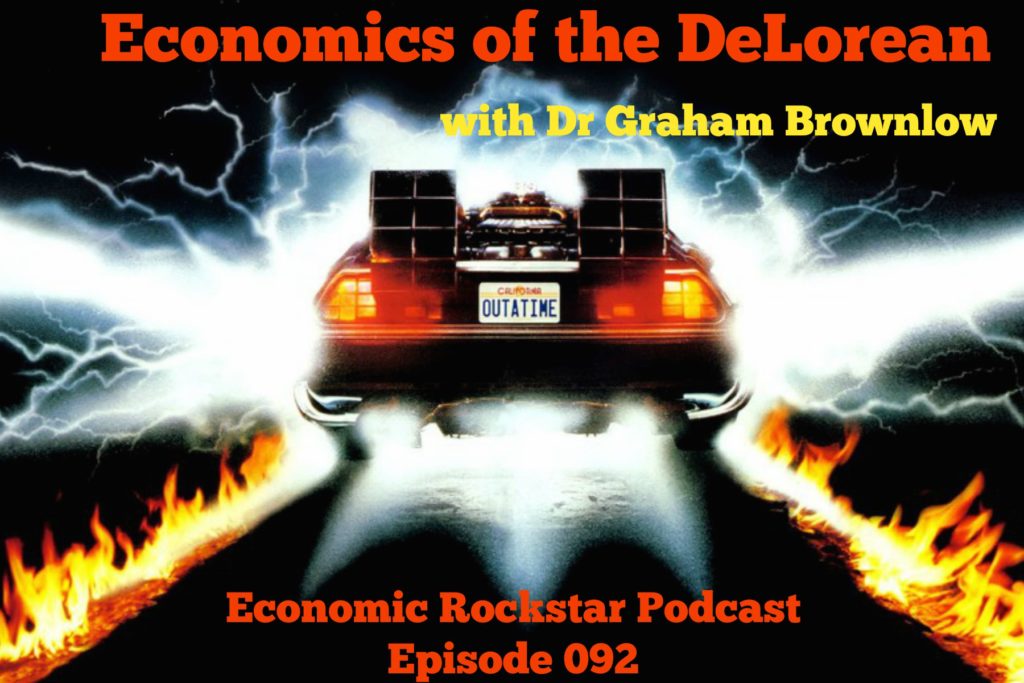
092: Graham Brownlow on Rent Seeking, Cliometrics and the Economics of the DeLorean

June 30, 2016 by Frank

http://traffic.libsyn.com/economicrockstar/092_Graham_Brownlow_Final.mp3
Play in New WindowDownload

092: Graham Brownlow on Rent Seeking, Cliometrics and the Economics of the DeLorean

Dr. Graham Brownlow (PhD, QUB) is a Lecturer in Economics at Queen’s University in Belfast, Northern Ireland.Graham Brownlow Economic Rockstar

Dr. Brownlow’s research focuses primarily on economic history and institutions, evolutionary economics, Irish economic and business performance and violence. He also has an interest in methodology in economic and business history.

Graham edits the journal Irish Economic and Social History.

I’m very eclectic and pragmatic – Dr. Graham Brownlow

Economics:

In this episode, Graham mentions: rent seeking, cliometrics, inefficiency, corruption, institutions, subsidies, Brexit, monopolies, sharing economy, fast money, game theory, bargaining, public choice, regional economics and economic history. 

Economists:

In this episode, Graham mentions: Peter Boettke, Peter Leeson, Gary Becker, William Baumal, Douglass North, Robert Hamilton, Eli Hecksher, Adam Smith, John Maynard Keynes, Joseph Schumpeter, Friedrich Hayek, Milton Friedman, George Duncan, Tim Harford, Steven Landsburg and G. L. S. Shackle.

Using Analytic Narratives in Economic Research

Looking to balance the details of fact and yet keep the rigour of an economic model – Graham Brownlow

  1. Identify the problem or puzzle.
  2. Immerse yourself in the topic or resources.
  3. Move to more formal aspects.
  4. Don’t start with the model and then use it to explain your findings.
  5. You actually first look at the historical issue under investigation and then apply it to the model.

Links:

  • Mont Pelerin Society

Research by Dr. Graham Brownlow:

  • Back to the Failure: An Analytic Narrative of the De Lorean Debacle (2015).
  • Soft Budget Constraints and Regional Industrial Policy: Reinterpreting the Rise and Fall of De Lorean (2015).
  • ‘Review of Cullen Economy, Trade and Irish Merchants at Home and Abroad, 1600-1988’ (2013).
  • How do we Ensure a Useful Future for Irish Cliometrics? (2012).
  • A complete list of Graham’s research can be found here.

Economics of the DeLorean Economic Rockstar

Where to Find Graham:

  • Queen’s University, Belfast, Northern Ireland
  • Twitter: @GrahamBrownlow

Books:

  • The Undercover Economist by Tim Harford
  • The Undercover Economist Strikes Back: How to Run – or Ruin – an Economy by Tim Harford
  • The Undercover Economist, Revised and Updated Edition: Exposing Why the Rich Are Rich, the Poor Are Poor – and Why You Can Never Buy a Decent Used Car! by Tim Harford
  • The Logic of Life: The Rational Economics of an Irrational World by Tim Harford
  • Adapt: Why Success Always Starts with Failure by Tim Harford
  • Messy: The Power of Disorder to Transform Our Lives by Tim Harford
  • The Armchair Economist: Economics and Everyday Life by Steven Landsburg
  • Economics for Pleasure by G. L. S. Shackle
  • The New Geography of Jobs by Enrico Moretti


http://traffic.libsyn.com/economicrockstar/092_Graham_Brownlow_Final.mp3

Podcast: Play in new window | Download

053: Helena Norberg-Hodge on Localisation, Trade Treaties and the Economics of Happiness

October 8, 2015 by Frank

http://traffic.libsyn.com/economicrockstar/Helena_Norberg_Hodge_Final.mp3
Play in New WindowDownload

053: Helena Norberg-Hodge on Localisation, Trade Treaties and the Economics of Happiness

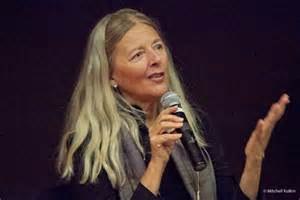
Helena Norberg-Hodge is the founder and director of Local Futures. A pioneer of the ‘new economy’ movement, she has been promoting an economics of personal, social and ecological well-being for more than 30 years.Helena Norberg Hodge

Helena is the producer and co-director of the award-winning documentary The Economics of Happiness, and is the author of Ancient Futures: Learning from Ladakh, described as “an inspirational classic”.

Helena has given public lectures in seven languages, and has appeared in broadcast, print, and online media worldwide.

She was honored with the Right Livelihood Award (or ‘Alternative Nobel Prize’) for her groundbreaking work in Ladakh, and received the 2012 Goi Peace Prize for contributing to “the revitalization of cultural and biological diversity, and the strengthening of local communities and economies worldwide”.

Economics:

In this interview, Helena mentions: localisation, globalisation, deregulation, finance, banking, money, real economy, price, demand, subsidies, tax, business alliances, lobbying, competition, trade treaties, unemployment, poverty, natural environment, growth, climate, energy consumption, comparative advantage and GDP.

Economists:

In this interview, Helena mentions: Alex Tabarrok, Adam Smith, David Riccardo,

In this episode you will learn:

  • how and why Helena decided to advocate for and promote localisation.
  • about Ladakh and how it was removed from the rest of the world.
  • how the global market was very destructive to the local market in Ladakh.
  • how globalisation destroyed the livelihood of farms and local businesses and created unemployment.
  • how the happiness and high self-esteem among the people of Ladakh was destroyed after a decade of economic development.
  • why extreme tensions between buddhists and muslims erupted after living in peace for over 500 years in Ladakh.
  • about Ladakh, where the Dalai Lama is the spiritual head.
  • how Ladakh has become a case study on how a local economy has been quickly affected by globalisation.
  • about the phenomenal work Helena is doing to highlight the changing lives and economy of Ladakh and other regions.
  • about the true meaning of the real economy and how cheap money and speculation is destroying it.
  • why the earth is so precious and must be protected before we see irreversible and horrific damage.
  • about the terrific work being undertaken by Local Futures to highlight the need for economic change to protect our earth.
  • why we need to make the local food market a global initiative.
  • how small towns and villages are taking initiatives to feed their community with fresh, organic foods.
  • how schools are integrating nature into their infrastructure to increase the well-being of staff and pupils.
  • how nature provides profound and important psychological healing benefits.
  • how diversifying and staying local can provide more diversified foods per unit of land and water than the large monocultures.
  • why farmers prefer to work closely with the customer than with large-scale supermarkets.
  • whether small farmers and businesses should create a group to represent the their interests and to lobby governments in much the same way as large companies like Volkswagen and Monsanto.
  • how to make small and local businesses more visible.
  • about Helena’s mantra for resistance and renewal – resisting trade treaties and renewing localisation.
  • about the law that was passed in Sweden to have trade treaties to be discussed in secret.
  • how, under the new trade agreements, multinational corporations can sue governments if they inhibit their profit-making ability of that governments country.
  • whether GDP is a good measure of progress and how Helena interprets its true meaning.

Quotes by Helena on the Economic Rockstar Podcast:

“The EU is essentially an economic union and it’s bringing with it a centralised bureaucracy” – Helena Norberg-Hodge

About Earth Being Our Only Economy:

“The earth is our only economy. There’s nothing we use that doesn’t come from the earth. Nothing, nothing. Every iPad, every shoe, every television. And that economy, the real economy, is diversity. It requires and can only continue to live by respecting the uniqueness of every leaf, of every human being. Everything that lives is unique and is changing from moment to moment.” – Helena Norberg-Hodge

“I describe Nature as the economy, but it’s also our Mother. It’s our spiritual home” – Helena Norberg-Hodge

Click To Tweet

“Usually when people talk about the economy, they’re just thinking about paper money. They don’t think about culture and farming as having anything to do with the economy.” – Helena Norberg-Hodge

“The global food economy, from beginning to end, is the biggest contributor to CO2 emissions, and it’s not just because of the factory farming with animals. It’s across the board.” – Helena Norberg-Hodge

About the Stock Market and Cheap Money:

“The market is really young lads sitting in front of computers speculating with huge amounts of money. And they inevitably have to and do favour the giant. They’re betting on the giants ‘horses’ like Monsanto, McDonalds and Walmart. And so this connection between that flood of cheap money created out of thin air, now has become a sort of a ‘blind machinery’ that is eating up the real economy, the earth, extremely rapidly and we’re going to see more horrific examples.” – Helena Norberg-Hodge

Other Quotes:

There is a growing local food market that is going global – Helena Norberg-Hodge

Click To Tweet

GDP is an outrageous measure of progress. It is simply a measure of commercialisation – Helena Norberg-Hodge

With Riccardo and the notion of comparative advantage, it sounds good on the surface. But let’s remember it was brought in in a time of slavery – Helena Norberg-Hodge

Where to Find Helena:

  • Local Futures: www.localfutures.org
  • Economics of Happiness
http://traffic.libsyn.com/economicrockstar/Helena_Norberg_Hodge_Final.mp3

Podcast: Play in new window | Download

046: Shanta Devarajan on The World Bank, Quiet Corruption, Government Failure and Comparative Advantage in the MENA Region

August 20, 2015 by Frank

http://traffic.libsyn.com/economicrockstar/046_Shanta_Devarajan_Final.mp3
Play in New WindowDownload

046: Shanta Devarajan on The World Bank, Quiet Corruption, Government Failure and Comparative Advantage

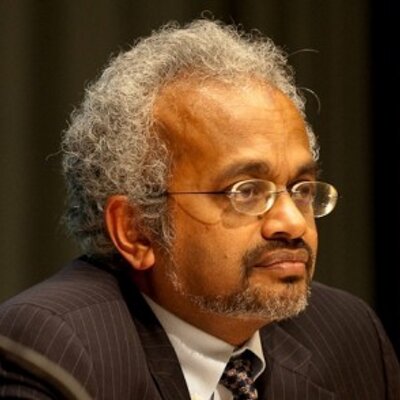
Shantayanan Devarajan is the former Chief Economist of the World Banshanta devarajank’s Middle East and North Africa Region. Since joining the World Bank in 1991, he has been a Principal Economist and Research Manager for Public Economics in the Development Research Group, and the Chief Economist of the Human Development Network, South Asia, and Africa Region.

Shanta was the director of the World Development Report 2004, ‘Making Services Work for Poor People’. Before 1991, he was on the faculty of Harvard University’s John F. Kennedy School of Government.

Shanta is the author and co-author of over 100 publications, with his research covering public economics, trade policy, natural resources and the environment, and general equilibrium modeling of developing countries.

Born in Sri Lanka, Shanta received his B.A. in Mathematics from Princeton University and his Ph.D. in Economics from University of California, Berkeley.

People care so much about education. They will not eat if they can send their kid to a better school – Shanta Devarajan

In this episode, you will learn:

  • why Shanta decided to take a sabbatical from lecturing and never went back.
  • about Shanta’s passion to end world poverty.
  • how experiencing living on a $1 a day with a poor family made Shanta realize that the failure lies with government.
  • how empowering people in poverty-stricken countries with information could be the catalyst to end poverty.
  • the huge government failures and market distortions threatening the economy in India.
  • why teachers and doctors in India are absent from work 25% and 40% of the time respectively and how this is affecting progress.
  • how the powerful medical union in India are making healthcare inaccessible to the poor.
  • why poor people in India think that the reason why doctors do not show up at clinics is because ‘the rain didn’t come’.
  • why politicians in India do not have an incentive to fix the problem of doctor absenteeism.
  • what the solutions to corruption in India.
  • about unemployment being the biggest problem in the Middle East and North Africa.
  • that the reason why unemployment is so high in the MENA region is due the industrial sector being highly monopolised.
  • about how crony capitalism is preventing SMEs from growing in the MENA region.
  • why Tunisia has failed to develop into an export-oriented economy due the legacy of the Ben Ali family and their connections to firms operating in heavily protected markets.
  • that the failure for governments to continue with social contracts due to high deficits triggered the Arab Spring.
  • about Colonel Gaddafi’s regime and how he managed to keep peace between tribes.
  • how water subsidies and water-intensive crops are depleting water resources in Yemen.
  • why the addictive habit of chewing qat or khat in Yemen is causing water shortages.
  • why Yemen, who doesn’t have a comparative advantage in qat, continues to use resources to produce the commodity.
  • what is the main purpose of the World Bank and how different is it to the IMF.
  • where the World Bank gets its finance from and how much interest they charge.
  • how the money trickles down to the unbanked people in low and middle-income countries.
  • about biometric identification smart cards and how the unbanked in low-income countries can access capital.

Takeaway:

The problems of poor people are man-made and we as economists can actually help solve them. The way in which we can solve them is by carrying our work toward empowering them. The reason they’re man-made is that poor people lack political power. We can actually strengthen their clout, their political power, by providing economic analysis and making it accessible to them – Shanta Devarajan

Economics:

In this interview, Shanta mentions and discusses: poverty, development, capital markets, government failure, policy distortion, structural adjustment, debt crisis, macroeconomic environment, incentives, quiet corruption, unemployment, monopoly, social contracts, crowding out, finance capital, subsidies, water subsidies, energy subsidies, comparative advantage, imports, exports, budget expenditures, IMF, the World Bank, MENA, public goods, leakages, multiple effect, dynamic stochastic general equilibrium model, savings, investments, sovereign wealth funds and consumption.

Economists:

In this interview, Shanta mentions and discusses: Chris Blattman, Gerard Debreu , Joseph Stiglitz, Sherman Robinson and Paul Collier 

Influencers:

Gerard Debreu , Joseph Stiglitz, Sherman Robinson , Paul Collier 

Quotes by Shanta Devarajan in Episode 046 of the Economic Rockstar Podcast:

The marginal product of writing an additional paper was lower than my actually trying to go out there and apply what I know to reduce poverty. I became quite passionate about this quest to reduce this poverty. – Shanta Devarajan

The problems of poverty under development are problems of government failure. The problem of government failure is because the political system is one where poor people don’t have sufficient voice and sufficient ability to make sure that politicians take decisions in their interest. – Shanta Devarajan

“The World Banks’ mission is a world free of poverty” – Shanta Devarajan

Click To Tweet

On the changing views of The World Bank:

The traditional view of development in the 1950s and 60s was a belief that it was a market failure. Their capital markets weren’t working. Poor countries didn’t have access to capital and so the World Bank had to provide capital. However, in the 1970s and 80s there was a realisation that the problem was not the result of a lack of capital. There  were policy distortions in these countries that made this capital unproductive. The challenge became trying to remove these policy distortions or try to improve these policies so that capital could be productive. – Shanta Devarajan

On Quite Corruption in India:

Quite corruption in India is a deep political problem. There is nothing illegal about this corruption. It is a failure of the system. The political system is geared so that it creates this kind of corruption. – Shanta Devarajan

On Crony Capitalism in Tunisia:

It’s a little bit of a puzzle why Tunisia, which has a very highly educated population, a very nice location right across from Europe and a pretty good infrastructure, hasn’t been able to be a manufacturing, export-driven power-house. The reason is the industrial structure is being monopolised by the cronies of the political elite. – Shanta Devarajan

On Tunisia: “We must protect this economy from elite capture” – Shanta Devarajan

Click To Tweet

On Capital Leakages in Chad:

The leakages are higher in resource-rich countries. For instance in Chad, the money that was intended for public primary clinics, that actually arrives at the clinic is 1%. So the leakage is 99%. Chad is an oil-rich country. The reason for that is there is very little accountability – Shanta Devarajan

Reasons Why Yemen is Producing Khat (Qat) Inefficiently

Yemen produces its own qat despite not having a comparative advantage in the commodity. Factors of production, such as land, labor and capital, are used inefficiently to produce khat. So, the question remains as to why Yemen does not import qat. There are two main reasons why the continue to produce it domestically.

The first is that qat is consumed fresh. Domestic production allows qat to be distributed and sold throughout Yemen once it is picked. Freshness is required and it is expected that any imported khat could reduce its quality.

The second reason is that the president’s wife manages the qat monopoly and made a lot of money from it. Any imports would be competition. Given that khat is an addictive substance, the revenue made by this monopoly would have been so large that using resources inefficiently, particularly water, outweighed the costs.

The Difference Between the World Bank and the IMF

  • The World Bank only works on developing countries and the IMF works on all countries.
  • The IMF is concerned with short-term macroeconomic development, whereas the World Bank is concerned about long-term development.
  • Anything that is in the order of one to two years is when the IMF will become involved in order to solve a macroeconomic crisis.  Whereas, if it’s a question of building a road or a bridge or educating children, that’s when the World Bank comes in. Both  the IMF and the World Bank, because they’re across the street from each other in Washington DC, communicate quite intensively.
  • In the past, it may have been viewed that the IMF, because it is more macro-focused, was more interested in the aggregate budget rather than the composition of the budget. In the late 1990s, there were many countries that had fiscal crises. The IMF insisted that they cut their budget in order to maintain fiscal balance. However, just cutting the budget rather than cutting wasteful expenditures and protecting some valuable expenditures makes a big difference.
  • It got to the stage where the World Bank would come in and look at the composition of the budget and suggest where it’s better to cut rather than simply take the targets that the IMF had set.
  • Both institutions have evolved quite a bit since the 1990s. The IMF now looks quite closely at the composition of budget expenditures and the World Bank worries a lot about macroeconomic stability.

How The World Bank Funds its Operations

  • The finance that the World Bank accumulates is obtained by World Bank bonds.
  • The World Bank uses the ‘paid-in capital’ which the original members of the World Bank pledged back in 1947. This has now grown to about $300 billion.
  • This capital is used as collateral to float bonds and because of this capital, the World Bank can get bonds at three-quarters of a percent below the market rate.
  • This capital is then lent to middle-income countries at about half to a quarter of a precent below the market rate. The difference between these rates is what pays the salaries of those working for the World Bank.
  • For low-income countries, mostly in Sub-Saharan Africa, there is a separate window called the International Development Association (IDA) where concessional loans are offered. These loans are pledged every three years by donor countries. The World Bank collects this IDA money, which is about $50 billion, and lends it to these low-income countries at virtually zero percent interest with a 35 year grace period.

Recommended Resource:

The World Bank Database

Recommended Book:

  • Dubliners by James Joyce

Where to Find Shanta Devarajan:

  • Blog: Future Development
  • Twitter: @Shanta_WB
  • Email: sd294 [at] georgetown [dot] edu

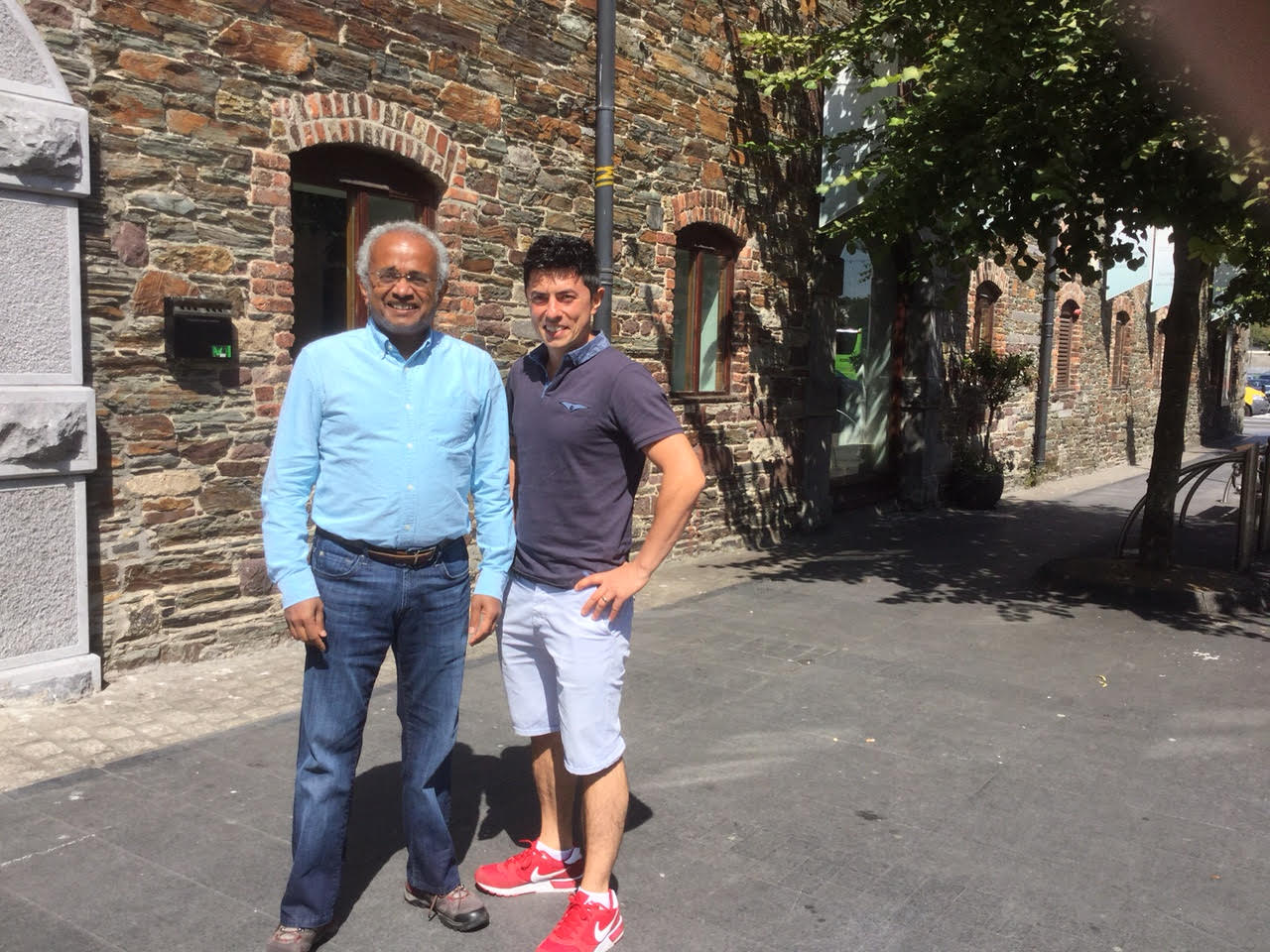
Meeting Up With Shanta in Waterford City, Ireland (August, 2015):

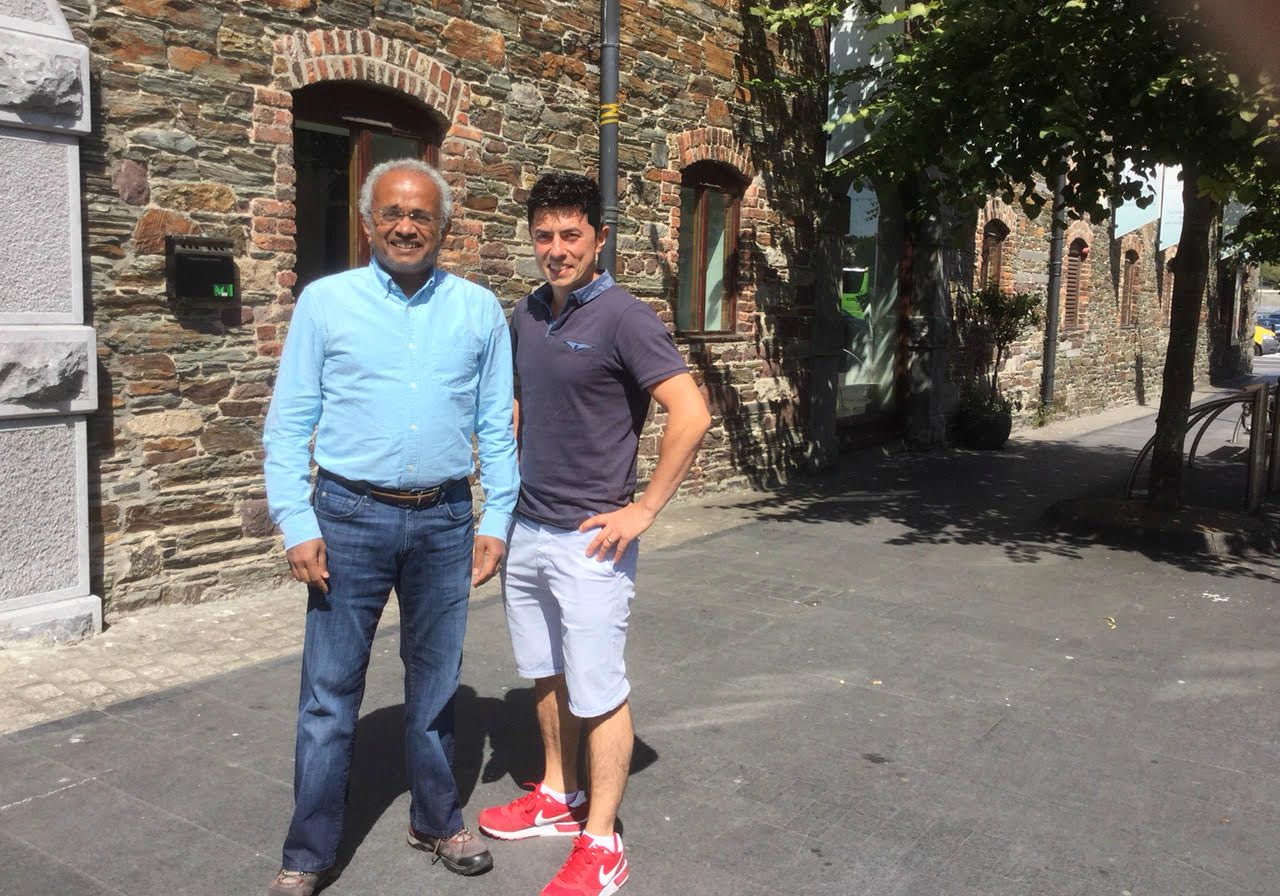
Since our conversation in episode 046 of the Economic Rockstar podcast, myself and Shanta met up for a brief period in Waterford City, Ireland. Shanta was on a visit form Washington DC (not work-related, just in case you think the The World Bank are coming in to Ireland!). Check back for a new blog post on what we chatted about.


Frank and Shanta

http://traffic.libsyn.com/economicrockstar/046_Shanta_Devarajan_Final.mp3

Podcast: Play in new window | Download

041: Dermot Hayes on Comparative Advantage, Feeding the Chinese and the Malthusian Catastrophe

July 16, 2015 by Frank

http://traffic.libsyn.com/economicrockstar/041_Dermot_Hayes_Final.mp3
Play in New WindowDownload

041: Dermot Hayes on Comparative Advantage, Feeding the Chinese and the Malthusian Catastrophe

Dermot Hayes is the Pioneer Chair of Agribusiness, professor of economics, and professor of finance at Iowa State University. He heads theDermot Hayes 2 Trade and Agricultural Policy Division at CARD, a position he also held from 1990 through 1998.

He is co-director of the Food and Agricultural Policy Research Institute, a research center dually administered through the Centre for Agricultural and Rural Development (CARD) at Iowa State and at the University of Missouri at Columbia. He is also a leader of the Policy Task Force of the Plant Science Institute at Iowa State.

A native of the Republic of Ireland, Dermot obtained his degree in agriculture science from University College, Dublin and his Ph.D. from University of California, Berkeley with a major in international trade.

Dermot has distinguished himself with many awards at the college and university levels for his work as a teacher and researcher.

In 2006 he received a Publication of Enduring Quality award from the American Agricultural Economics Association, who subsequently named him a Fellow in 2007.

Besides his analysis of U.S. farm policy and international agricultural trade, Dermot’s other research interests include food safety, livestock modelling, demand analysis, and commodity markets.

Economics:

In this interview, Dermot mentions and discusses: market inefficiencies, government intervention, agricultural economics, property rights, comparative advantage, autarky, incentives, scarcity, Malthusian Catastrophe, free-trade, unemployment, subsidies and taxes.

Economists:

In this interview, Dermot mentions and discusses: Jason Shogren, Paul Dolan, David Zetland, David Simon, Adam Smith, Thomas Malthus, David Zilberman, Milton Friedman and Josh Angrist.

Influencer:

Milton Firedman

“Whenever prices rise, farmers and technology companies have an incentive to work harder to take advantage of high prices. And of course they do that by producing more and that brings prices back down again.” – Dermot Hayes

“Malthus was wrong. He was a negative person. But having said that, with more people and less efficient use of land, we are going to have to bring more land into cultivation – this is devastating to the environment.” – Dermot Hayes

In this episode, you will learn:

  • how China is finding ways to feed its people and how self-sufficiency no longer works.
  • about China’s ever-increasing demands for soybeans, sugar, wine, etc and how this is putting demands on the global agricultural industry.
  • how Ireland lost its comparative advantage in milk production by joining the EU.
  • about Kerrygold Irish grass-fed butter and Bullet-proof coffee.
  • why Kerry Group are only ‘scratching the surface’ in the US market.
  • what high-value, labor-intensive products China should concentrate on producing in order to feed their population and trade with other countries.
  • about if the Chinese government owns much of the land and property rights in China.
  • ‘terminator seeds’ and how private companies could be incentivised to manufacture them.
  • about the use of beta agonists, such as ractopomine, in the use of animal food production.
  • why Europe’s method of testing agricultural technologies frustrates Dermot.
  • about Dermot’s work on free-trade agreements between countries.
  • about Dermot’s ‘controversial’ ethanol research paper.
  • why Dermot created a formula that allowed the price of corn to track crude oil prices and how he bought agricultural land based on his findings.
  • how academic research can open up hatred and attacks amongst your peers and the industry to which you maybe researching.
  • what advice Dermot would give a government regarding the taxing and subsidies of goods and services for the purpose of trade.

Takeaway:

“If you haven’t travelled to strange places like Burma or Uruguay, find a way to do so and you’l come back a changed person.” – Dermot Hayes

Recommended Books:

  • Free to Choose by Milton Firedman

http://traffic.libsyn.com/economicrockstar/041_Dermot_Hayes_Final.mp3

Podcast: Play in new window | Download

034: David Simon on Meatonomics and How the Meat and Dairy Industry Impose Substantial Negative Externalities on Society

May 28, 2015 by Frank

http://traffic.libsyn.com/economicrockstar/034_David_Simon_Final.mp3
Play in New WindowDownload

034: David Simon on Meatonomics and How the Meat and Dairy Industry Impose Substantial Negative Externalities on Society

David Robinson Simon is a lawyer and advocate for sustainable consumption.david simon

David works as general counsel for a healthcare company and serves on the board of the Animal Protection and Rescue League Fund, a non-profit dedicated to protecting animals.

David runs a website that keeps us up-to-date on matters arising from the farm animal industry as well as informing us of other animal-related causes.

David received his B.A. from U.C. Berkeley and his J.D. from the University of Southern California. He is the author of two books: New Millennium Law Dictionary, a full-length legal dictionary and Meatonomics.

He lives in Southern California with his partner, artist Tania Marie, and their rabbit, tortoise, and two cats.

Why David Wrote Meatonomics:

David’s reason to write ‘Meatonomics’ was the same reason why he turned vegan in the first place – the inhumane treatment of farm animals in factory farms.

150 years ago, many Western countries were agrarian-based economies. Farm animals lived on open pastures and were humanely treated. However, the transition to a factory-based system of farming resulted in these animals being removed from open farm lands and placed into a factory-type industrial environment which goes largely unnoticed by the general human population. These farm animals are treated inhumanely and are hidden from view. David wanted to share with us their story and to reveal some startling research and statistics that we must know.

“I think it is difficult to go vegan, but it’s only difficult in the same sense that it’s difficult to learn how to drive a car or ride a bike” – David Simon.

Simply changing my diet to a Vegan diet is one of the best things I’d ever done – David Robinson Simon

David Simon had a BMI that categorised him as being over-weight. He was suffering from high blood cholesterol levels that were always over 200 mg per decilitre, which is the heart-attack risk level. David also had acid reflux, also known as GERD.

When David turned vegan, it was due to his ethical concerns for the welfare of farm animals. However, the unintended consequences of transitioning to a vegan diet, showed remarkable health improvements. Soon after going vegan, David’s weight dropped by 15 pounds, his acid reflux had gone and never came back and his cholesterol has gone from 220 to as low as 140.

David also does some yoga each day to help alleviate the stresses of sitting at a desk all day. This is his way of preventing any foreseeable back and neck problems that otherwise would result from inactivity. Yoga is also a great way for David to focus and think about what was going on during his day.

Economic Themes:

In this interview, David mentions and discusses:

Negative externalities, cost-benefit analysis, supply, demand, equilibrium, prices, subsidies, quotas, consumption and the multiplier effect.

Find Out:

  • why David, a lawyer, turned to economics to explain how the meat industry is a cost to society.
  • about the lack of rights that exist for farm animals.
  • how the farming community set the standards on how farm animals are treated.
  • how the Customary Farming Extension was introduced to legally treat farm animals inhumanely.
  • about the environmental costs associated with producing animal products.
  • how to control or even reverse climate change by reducing meat consumption.
  • how taking shorter showers is not going to alleviate the drought in California.
  • what the true external cost to society is when someone consumes an animal product.
  • how deferring climate change measures today will impose greater costs on society in the future.
  • what David, who is a vegan, had for breakfast this morning.
  • the ingredients to David’s ‘power smoothie’ – a refreshing and nutrient dense meal in a glass!
  • how companies are being subsidised by government to lower the retail price of meat.
  • about the heavy subsidies being paid out to the meat industry.
  • how artificially-low meat and dairy prices are fuelled by out-of-whack farm subsidies.
  • about Ireland’s removal of milk quotas and what it means for market prices.
  • about the role of government in the promotion of milk consumption and how athletes are being used in adverts.
  • about the ubiquitous, powerful but misleading meat and dairy marketing campaigns.
  • about the causal connection between obesity and the consumption of milk, dairy and other animal products.
  • the correlation between some cancers and meat and dairy consumption.
  • why you should remove animal food products from your diet so as to remove the risk of cancer.
  • why you should switch to a plant-based diet and remove meat and dairy if you or a loved-one has cancer.
  • what the multiplier effect is for every $1 spent by government to promote dairy and meat consumption.
  • if consumers are being duped and manipulated by government into buying meat and dairy products.
  • the true cost of a Big Mac – would you pay $13 for one?
  • how the economics of institutional animal food production hold sway over our spending, eating, health, prosperity, economy, environment and longevity.
  • why David wrote his book ‘Meatonomics’.
  • where to source your protein if you decide to go vegan.
  • about Rich Roll, one of the fittest men in the US, who is vegan and lives on a plant-based diet.
  • about the largest animals on our planet – cow, gorilla, rhinoceros, giraffe and hippopotamus – that are all vegan and source there protein from plants.
  • how David changed his lifestyle to become vegan which reduced his risk of heart failure and lowered his BMI from over-weight to normal.
  • how future litigations against the meat and dairy industry could mirror the tobacco industry where once doctors advertised the health benefits of smoking tobacco.
  • about ‘Lobster Liberation’ in Ireland and how David is there to advise and help groups like these who may face criminal prosecution.
  • about David’s own successful liberation of lobsters who were unethically subjected to a vending machine claw game.

David’s ‘Power Vegan Smoothie’:

David starts his day with a raw power smoothie that is packed full of protein and anti-oxidants.

  • Fruit of the day
  • Kale
  • Flaxseed
  • Cinnamon
  • Cacao

David’s ‘Portobello Vegan Burger’:

For dinner, David recommends his ‘Portobello Vegan Burger’, an alternative to the beef burger, with no saturated fat and no cholesterol.

  • Bun of your choice – gluten-free or wholemeal
  • Portobello mushroom
  • Vegan cheese
  • Vegan bacon
  • Jalapeños
  • Tomatoes
  • Onions

Negative Externalities Associated with the Meat and Dairy Industry

Cow linkedIn

There are huge environmental costs associated with producing animal products. They include damage to soil, erosion, pesticide use, fertiliser use, pollution to eco-systems and  diminution in real estate values. Research has shown that if properties are located near factory farms, then the value of those properties fall in value.

There are also costs associated with climate change mitigation. Various studies have shown different values for the impact animal production has on climate change, with some reporting that it is responsible for up to 51% or as low as 14%. In the US alone, David has calculated that the environmental externalised cost of animal food production are about $37 billion. Who pays these costs? The farming community? No.

These costs have been externalised and society ends up paying for the damage being caused. However, David suggests that the payment of these costs are being delayed. It’s a deferred cost that is recognised in conventional economics but it’s something that will come back to ‘bite us on the nose’. For example the climate change mitigating cost is about $9 billion in the US but it is not being done right now. Because we’re not dealing with costs today, we’re allowing climate change to proceed along a path that will end up costing us a lot more in the future.

With the boom in farming and the ever increasing supply of meat products to cater for the demand, carbon emissions have soared. The cow population has grown exponentially as new markets have opened up in developing economies. Diets, such as the paleo diet, has added to this demand. The methane gas emitted from cattle is an astonishingly large contributor to green house gases. This has led to a larger carbon footprint per animal due to the associated transportation costs required to ferry these animals by land and sea. Carbon dioxide emissions also increases with the transportation of these animals.

“If we were to reduce our consumption of animal foods by say 40% to 45%, that would have the same effect on the emissions that drive climate change as if we were to garage all of our motor vehicles and motor vessels during the entire time that that reduction in consumption is in effect” (David Simon). This action alone could have a tremendous effect to control or even reverse climate change.

Negative externalities affect every living thing on the planet – humans, fish, fauna, primates, etc. You can be vegan or a herbivore. There is no way that you can avoid these costs be imposed on you. Reports have indicated that pesticides are airborne, which can be harmful to a persons health.  Our water table, our rivers and our oceans are being polluted by the slurry and manure that is being washed or dumped into these rivers. Fish are being affected with dead-zones appearing in our oceans, resulting in life being unsupported.  Plant-life, insect species and exotic animals are being displaced due to the landscape of the Amazon rainforest being forever altered to cater for cattle grazing. These are all costs borne on our society due to the serious impact it has on our environment and our planet. Much of the harm being done is irreversible. However, it can be stopped and further mistakes prevented if effective measures are introduced. Human diseases, such as MRSA, originates in livestock and spreads through the distribution of animal foods and, because of the antibiotic use in livestock, people are challenged to find antibiotics that can actually resist that disease.

Everyone is affected by current farming practices. For every $1 of animal foods sold at retail, there’s another $1.70 in externalised costs that is imposed on society. For example, for every $5 Big Mac sold by McDonalds, there’s another $8 imposed on every single person. These costs, which if absorbed by the producer, would result in higher retail prices for the consumer. To overcome these potentially high market prices, governments subsidise the meat industry. In the US alone, the government heavily subsidises the meat industry to the tune of $38 billion payments each year. To put that into perspective, that is half of what the US government pays in unemployment benefits every year to all the 320 million unemployed workers. At the moment, the fruit and vegetable industry in the US is being subsidised with only about $17 million. That’s a difference of circa $37.83 billion!

Counter-arguments by those suggesting that if these subsidies were removed from the meat industry, then higher prices would occur, followed by mass lay-offs and higher levels of unemployment. This outcome would occur due to consumers reducing their demand for animal products and getting their protein from different sources or substitutes. David foresees that if this were to occur, people would naturally transition toward a plant-based diet as a source for their protein. Consequently, plant-based agriculture would be then in a position to hire more workers and the numbers of lost jobs in the meat industry would be off-set by the levels of employment in the plant-based industry.

Why Do Animal Food Producers Receive So Much in Subsidies and Why Does the Inhumane Treatment of Animals Remain Legally Unchallenged?

The main reason why the meat production industry receives these subsidies and are allowed such farm practices is due to the powerful lobby group that represents them. In the US alone, estimated suggests that the farming lobbying group spend $100 million per year lobbying state and federal law makers. Also, some studies that examine such farming practices, as well as examining the economic and health benefits of the human consumption of meat, have been carried out or sponsored by groups that have a direct interest in the reported findings and recommendations.

The externalities that were outlined above are by no means localised. This has become a widespread phenomenon in so far as becoming a globalised concern. 90% of the planets rainforests have been removed, and flattened, with much of it being replaced with grazing pastures for cattle. David revealed a startling statistic of 3 acres per minute of rainforest being destroyed with 2 of these acres being dedicated to providing grazing land for beef cattle or for growing feed crops like soy or corn to feed beef cattle.

How ironic is it that the very trees that undergo a natural process of cleaning the air by absorbing carbon dioxide and producing oxygen is being overwhelmed by the amount of emissions from cattle. The ratio of trees to emissions is falling at an astonishing rate due to the destruction of these rainforests.

Ireland Removes its Milk Quota’s

Ireland have recently been given the go-ahead to remove the milk quota restrictions that were put in place by the EU. This is great news for Irish dairy farmers with 2 billion extra litres of milk being produced by the year 2020. To accommodate such a vast swell in milk production, 300,000 extra cows will join the national herd, resulting in a cow population of 1.3 million. Small farms will disappear resulting in large-scale farms. This will of course lead to economies of scale for these larger farms, an increase in employment, an increase in investments in new technologies, production processes and machinery and possibly better logistics and bargaining power.

A quota is essentially a tool for managing supply. Up until the 1990s, the US used supply management to stabilise prices for animal agriculture. Former President Ronald Reagan was a leading advocate for free market economics. He allowed agricultural markets to regulate themselves in the expectation that rational farmers would naturally find the market equilibrium by supplying the desired output which would lead to market equilibrium prices. However, it turned out that individual farmers think for themselves and produced at output levels that aggregated to exceedingly high levels of output at a national level. This resulted in lower prices.

This scenario could now be played out in Ireland whereby individual dairy farmers could increase their milk output levels, expecting and increase in income. However, incomes could fall if consumption or demand does not meet this new supply. Consequently, we may have a situation where farmers are being subsidised, just like in the US. Feed crops, such as corn, become heavily subsidised in order to reduce the costs to farmers.

The Role of Government in Influencing Consumer Meat and Dairy Buying Behaviors

Governments are harming the livelihood of people by promoting meat and dairy consumption. In the US alone, for every $1 spent by government there is a $9 or more multiplier effect on sales of meat and dairy. These programmes are quiet effective in the US. Most people are unaware of the ‘Check-Off Programmes’ that are overseen by the US Department of Agriculture. The average return on every $1 collected through these programmes is at least $8. In a typical year the US spent $557 million on these programmes, resulting in an increase in sales of $4.6 billion.

There is a concern that consumers are being manipulated at a subconscious level to increase their consumption of meat and dairy products. This is one of the themes of David’s book ‘Meatonomics’. Animal food producers are using their ability to deliver products at very low prices – prices that are artificially low – to manipulate consumers into buying more of these goods than they would otherwise. For example, a $5 Big Mac would cost $13 if the industry internalised all the costs associated with the production of beef. This would result in fewer Big Macs being sold.

Economists are interested in whether markets are demand-driven (by consumer traits in behaviour, by incomes or by tastes) or supply-driven (by producer behaviour and by pricing). The market for meat has grown so much in the last 100 years that consumer demand has increased from 100 pounds of meat per person per year to 200 pounds of meat per person per year. It could easily be mistaken that this increase in demand is a typical example of a demand-driven market and that producers are simply meeting that demand. However, due to agricultural subsidies and the ‘Check-Off Programmes’, farmers are able to keep prices artificially low. They are also engaging in behaviours that are diminishing the ability of consumers to actually make informed and independent decisions about how much meat and dairy to eat. This suggests that the market has become a supply-driven market.

“I just think it’s so bizarre that our governments are engaged in marketing to its own citizens to get them to buy products that the clinical research shows that are actually damaging our health” – David Simon.

Is there a Causal Link Between Obesity and Other Diseases and Animal Meat and Dairy Consumption?

Studies exist that show a worrying causal trend between obesity and animal food consumption. Due to over-supply and lower prices, we have increased our consumption of animal-related foods such as milk, dairy and beef. The World Health Organisation has recognised this link and it is only recently that the FDA has recommended a change in the Food Pyramid to accommodate an increase in the consumption of plant-based foods and to reduce the intake of animal-related foods in our diets. David Simon created the Meatonomics Index of 40 Numbers that Tell a Story and within this Index, I was startled to find the following statistics: the “factor by which US per-capita consumption of chicken and other meat exceeds world average is 3 and the factor by which US incidence of cancer exceeds world average is [also] 3”.

One must be careful with spurious relationships where correlation does not mean causation. However, these statistics cannot be ignored and US dependence on animal food products, and the widespread consumption and promotion of meat and dairy at a national level, corresponds to a trend in health-related problems. Clinical studies have shown that up to 1/3 of cancers, particularly in the West, can be attributable to a diet that is high in meat and dairy.

doctor smokes camel

Meat and dairy is being advertised both by local government and at a national level as being a healthy choice. Such promotion continues irrespective of the health risks associated with meat and dairy consumption, particularly when people over-consume. Parallels can be drawn between the animal food industry today and the tobacco industry prior to the 1960s. Old adverts show doctors smoking Camel cigarettes and claiming the health benefits of smoking. Clinical research has shown the health risks to smoking and subsequently litigations followed where the tobacco industry has been sued. Plaintiffs have been able to recover damage awards against tobacco companies. In the US alone, over the last several decades, Big Tobacco has paid more than $400 billion to States Attorney General who have sued them over medical costs. Over the next several decades, David foresees a similar action being taken against the animal food industry for medical costs associated with eating meat and dairy products.

Takeaway:

Think about what you’re putting into your body and don’t take for granted that certain foods are good for you just because the government is telling you that.

Recommended Books:

  • Meatonomics by David Robinson Simon

Receive your FREE copy of Meatonomics. For being an Economic Rockstar listener, you can get an audio copy of Meatonomics by David Simon for FREE. Just click on this link and you’ll be re-directed to Audiobooks.com.

  • The China Study by Colin Campbell

The China Study is the leading piece of clinical information on the differences between an animal-based diet and a plant-based diet. He has found that when you feed animal protein to an animal or a person, and if they had tumours, then those tumours will continue to grow. Conversely, if you take them off the animal food diet and put them on a plant-based diet, those tumours are likely to shrink.

Where to Find David Simon:

  • Website: meatonomics.com
  • Twitter: @meatonomics
http://traffic.libsyn.com/economicrockstar/034_David_Simon_Final.mp3

Podcast: Play in new window | Download

Frank Conway

Frank Conway is founder of Economic Rockstar and lecturer of economics, finance and statistics. Read More…

View My Blog Posts

Youtube Sub

Become a Patron of the Economic Rockstar Podcast

patreon

Ireland’s Economy by the Numbers

Leaving Cert Economics: Ireland’s Economy  Click here to download a workbook on Ireland’s Economy so that you can add your own notes. [Original size] Ireland’s Economy by fconway

Categories

Subscribe and Never Miss An Episode

itunes-logo

Recent Posts

  • Ireland’s Economy by the Numbers April 8, 2019
  • 174: Wendy Carlin on The Core Project, Capitalism, Democracy and Normative Statements February 13, 2019
  • 173: Stephen Wright on Core Econ as a Learning Resource for Mainstream Economics January 28, 2019
  • 172: Best of 2018 Part 2: From the Great Depression to Futurism; Institutions, Individualism, Cooperation and Reciprocity January 22, 2019
  • 171: Best of 2018 Part 1 January 3, 2019

Copyright © 2026 · Podcast Pro Theme on Genesis Framework · WordPress · Log in

This website uses cookies to improve your experience. We'll assume you're ok with this, but you can opt-out if you wish. Accept Reject Read More
Privacy Policy

Privacy Overview

This website uses cookies to improve your experience while you navigate through the website. Out of these, the cookies that are categorized as necessary are stored on your browser as they are essential for the working of basic functionalities of the website. We also use third-party cookies that help us analyze and understand how you use this website. These cookies will be stored in your browser only with your consent. You also have the option to opt-out of these cookies. But opting out of some of these cookies may affect your browsing experience.
Necessary
Always Enabled
Necessary cookies are absolutely essential for the website to function properly. This category only includes cookies that ensures basic functionalities and security features of the website. These cookies do not store any personal information.
Non-necessary
Any cookies that may not be particularly necessary for the website to function and is used specifically to collect user personal data via analytics, ads, other embedded contents are termed as non-necessary cookies. It is mandatory to procure user consent prior to running these cookies on your website.
SAVE & ACCEPT