• ABOUT
  • RESOURCES
  • PODCAST
  • BOOKS
  • BLOG
  • SUPPORTERS
  • QFA Financial Advice
  • CONTACT

Economic Rockstar

Connecting Brilliant Minds in Economics and Finance

104: Russ Roberts on How Adam Smith Can Change Your Life and the Theory of Moral Sentiments

September 19, 2016 by Frank

http://traffic.libsyn.com/economicrockstar/104_Russ_Roberts_Final.mp3
Play in New WindowDownload

104: Russ Roberts on How Adam Smith Can Change Your Life and the Theory of Moral Sentiments

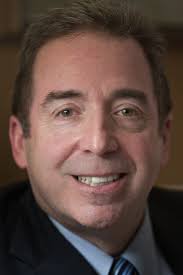
Russ Roberts is Associate Editor, founder and host of the popular and much loved podcast EconTalk, russ-roberts-economic-rockstarand founding advisory board member of the Library of Economics and Liberty.
Russ is the John and Jean De Nault Research Fellow at Stanford University’s Hoover Institution.

His two rap videos on the ideas of John Maynard Keynes and F.A. Hayek, created with filmmaker John Papola, have had more than eight million views on YouTube.

Russ’ latest book How Adam Smith Can Change Your Life: An Unexpected Guide to Human Nature and Happiness takes the lessons from Adam Smith’s The Theory of Moral Sentiments and applies them to modern life.

Russ is also the author of three economic novels teaching economic lessons and ideas through fiction. The Price of Everything: A Parable of Possibility and Prosperity, The Invisible Heart: An Economic Romance and The Choice: A Fable of Free Trade and Protectionism.

Russ blogs at CafeHayek.com and archives his work at russroberts.info.

A three-time teacher of the year, Russ has taught at George Mason University, Washington University in St. Louis, the University of Rochester, Stanford University, and the University of California.

He earned his Ph.D. from the University of Chicago and his undergraduate degree in economics from the University of North Carolina at Chapel Hill.

Economists:

In this episode, Russ discusses and mentions: Adam Smith, F. A. Hayek, David Hume, Vernon Smith, Milton Friedman and Nassim Nicholas Taleb.

Economics:

In this episode, Russ discusses and mentions: Austrian economics, classical economics, spontaneous order, pricing, supply, demand, surge pricing, unintended consequences, price controls, taxes and subsidies.

In this episode, you will learn:

  • about Adam Smith and how the application of Smith’s philosophical and economic thinking can change your life.
  • what the market forces are and the positive and negative examples of the spontaneous order.
  • the invisible hand and prices.
  • what surging prices are.
  • what Smith describes as the impartial spectator and the power of our conscience.
  • Adam Smith’s advice on how to be happy.
  • two ways to get people to pay attention to you and what Smith believed is the most ethical way.
  • what Smith believed was the cultural norm to accept behaviors.

Two Ways to Get People to Pay Attention to You:

Be rich, famous and powerful. It works. But don’t be fooled. You have a natural tendency to pursue money, fame and power because it will get you attention, respect and love. But that’s the wrong way to get there.

The right way to get there is through wisdom and virtue. Understand the world and treat people well. If you do that, you’re also going to be loved, respected and praised. But you won’t be doing the things along the way that people do when they want to become rich, powerful and famous that are not so good for you that cold lead to regret, shame and misbehavior. The temptation to do the unethical thing to pursue fame, power and money is always there.

Writing Tips:

  • Write everyday.
  • The trick to being a good writer is being a good editor.

Where to Find Russ Roberts:

  • Website: russroberts.info
  • Website: econtalk.org
  • Twitter: @EconTalker
  • Medium: medium.com/@russroberts

Recommended Books:

  • How Adam Smith Can Change Your Life: An Unexpected Guide to Human Nature and Happiness by Russ Roberts
  • The Price of Everything: A Parable of Possibility and Prosperity by Russ Roberts
  • The Invisible Heart: An Economic Romance by Russ Roberts
  • The Choice: A Fable of Free Trade and Protectionism by Russ Roberts
  • The Theory of Moral Sentiments by Adam Smith
  • The Wealth of Nations by Adam Smith
  • The Fatal Conceit: The Errors of Socialism (The Collected Works of F. A. Hayek) by F. A. Hayek
  • Individualism and Economic Order by F. A. Hayek
  • Fooled by Randomness: The Hidden Role of Chance in Life and in the Markets (Incerto) by Nassim Taleb

c

http://traffic.libsyn.com/economicrockstar/104_Russ_Roberts_Final.mp3

Podcast: Play in new window | Download
073: Robin Hanson on The Age of Em and How Brain Emulations Will Double Economic Growth Every Month

February 18, 2016 by Frank

http://traffic.libsyn.com/economicrockstar/073_Robin_Hanson.mp3
Play in New WindowDownload

073: Robin Hanson on The Age of Em and How Brain Emulations Will Double Economic Growth Every Month

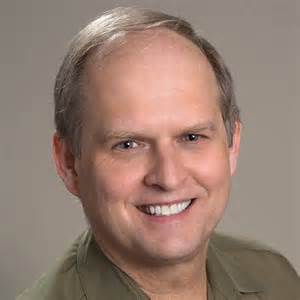
Robin Hanson is associate professor of economics at George Mason University. He is also a research associate at robin hansonOxford’s Future of Humanity Institute and chief scientist at Consensus Point.

Professor Hanson has diverse research interests, including spatial product competition, health incentive contracts, reversible computation, the origin of life, the survival of humanity, very long-term economic growth, growth given machine intelligence, and interstellar colonization

Robin has pioneered prediction markets, also known as information markets and idea futures, since 1988.

His passion is to understand everything, and to save the world. He is addicted to “viewquakes”, loves to argue one on one, and values honesty and passion. He blogs at OvercomingBias.com which has had over eight million visits.

His book The Age of Em: Work, Love and Life When Robots Rule the Earth will be available in May 2016, and The Elephant in the Brain, co-authored with Kevin Simler, in spring 2017.

Economists:

In this episode, Robin mentions and discusses: Thomas Malthus and Cass Sunstein

Economics:

In this episode, Robin mentions and discusses: emulation economy, economic growth, labor, competition, wages, subsistence economy, capital, land, slaves, supply and demand.

In this episode you will learn:

  • about Robin Hanson’s work in economics.
  • what is The Age of Em and how it could double economic growth every month rather than the current doubling of growth every 15 years.
  • what are brain emulations.
  • what is a singularity and if we will have one within the next 200 years.
  • how the workforce of the future look.
  • how humans will retire and have brain emulations do their work.
  • what will a brain emulation be like.
  • if humans will revert to subsistence levels of existence as predicted by Malthus.
  • about the labor market of the future and whether wages will be competed away with humans and ems living on the margin.
  • how Robin anticipates living in the future and how you can too.
  • why space exploration and space colonization will be delayed until after the rapid and exponential economic expansion brought about by brain emulation.
  • whether you can have a brain emulation of your own brain or whether the process will be reserved to a few hundred people who are best equipped to perform certain tasks.
  • how the relationship between humans and robots is portrayed as a dichotomy – a heaven or hell scenario – but this will not be the case with the technology available using brain emulations.
  • how you can be ‘teleported’ from one device to another without being physically affected.
  • how Robin used economic theory to explain the economy of the future where brain emulations are the drivers of growth.
  • why the Age of Em will last for about 2 years.
  • about Robin Hanson’s request to have only his head cryogenically frozen and what he hopes to achieve.

Paper:

  • Hanson, R. (1994). If Uploads Come First: The Crack of a Future Dawn 

Podcast Episodes:

  • Manu Saadia

Books:

  • The Age of Em by Robin Hanson
  • Trekonomics by Manu Saadia
  • The World According to Star Wars by Cass Sunstein

Resources:

  • The Age of Em
  • www.overcomingbias.com
  • Future of Humanity Institute
  • Consensus Point


http://traffic.libsyn.com/economicrockstar/073_Robin_Hanson.mp3

Podcast: Play in new window | Download
057: Alvin Roth on Match-Making, Repugnant Markets and Market Design

November 5, 2015 by Frank

http://traffic.libsyn.com/economicrockstar/057_Alvin_Roth_Final.mp3
Play in New WindowDownload

057: Alvin Roth on Match-Making, Repugnant Markets and Market Design

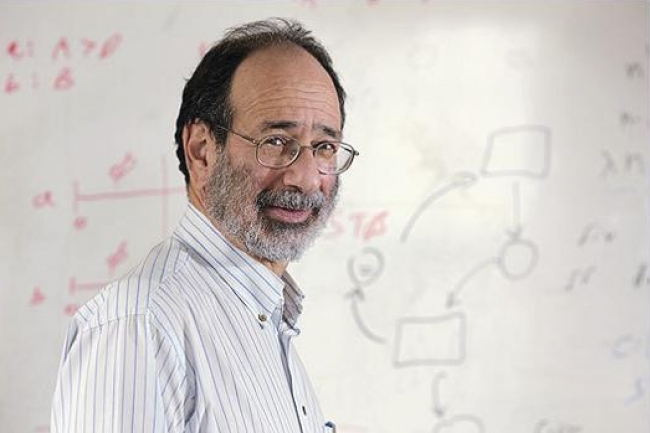
Alvin Roth is the Craig and Susan McCaw Professor of Economics at Stanford University.Alvin Roth

Professor Roth has made significant contributions to the fields of game theory, experimental economics and market design and is known for his emphasis on applying economic theory to solutions for “real-world” problems.

In 2012, Alvin won the Nobel Memorial Prize in Economic Sciences jointly with Lloyd Shapley “for the theory of stable allocations and the practice of market design.”

Alvin Roth has a B.S form Columbia University,  and earned his MS and Ph.D. from Stanford University.

Alvin’s latest book Who Gets What and Why: The New Economics of Matchmaking and Market Design is now available on Amazon.

Economics:

In this interview, Alvin mentions: money, barter, matching markets, supply, demand, price discovery, labor markets, marriage markets, market design, double coincidence of wants, property rights and game theory.

Economists:

In this interview, Alvin mentions: Gary Becker, Christien Exley, Lloyd Shapley, David Gayle, Herb Scarf, Hal R. Varian,  Preston McAfee, Fuhito Kojima, Muriel Niederle, Paul Milgrom, John Levin, Ilya Segal and Oskar Morgenstern.

In this episode you will learn:

  • what economics is and if we need money to allow a market to operate efficiently.
  • about the price discovery process in economics.
  • what is match-making markets and how similar the labor market is to the dating market.
  • what is market design and why it is important.
  • how entrepreneurs and start-ups, like Airbnb and Uber, use market failure to solve a problem.
  • what is a repugnant market.
  • the difference between a thick and a thin market.
  • what makes a market thick.
  • about the black market for kidneys.
  • how kidney exchange works.
  • about the double coincidence of wants in the kidney exchange market.
  • about the problem in the market for water in California.
  • some of the unintended consequences from the war on drugs.

Books:

  • Who Gets What and Why: The New Economics of Matchmaking and Market Design by Alvin Roth
  • Thinking, Fast and Slow by Daniel Kahneman
  • Theory of Games in Economic Behaviour by John von Neumann and Oskar Morgenstern

Papers:

  • Gayle, D. and L. Shapley (1962). College Admissions and the Stability of Marriage, The American Mathematical Monthly, Vol. 69, No. 1, pp: 9 – 15.  
  • Scarf, H. and L. Shapley. (1974). On Cores and Indivisibility. Journal of Mathematical Economics 1: 23-37.

Websites Mentioned in this Episode:

  • Market Design: Alvin Roth’s blog
  • Angel Flight: People Helping People in Need
http://traffic.libsyn.com/economicrockstar/057_Alvin_Roth_Final.mp3

Podcast: Play in new window | Download
054: Christine Exley on the Economics of Volunteering, Market Failure in the Homeless Dog Market and Wagaroo

October 15, 2015 by Frank

http://traffic.libsyn.com/economicrockstar/054_Christine_Exley_Final.mp3
Play in New WindowDownload

054: Christine Exley on the Economics of Volunteering, Market Failure in the Homeless Dog Market and Wagaroo

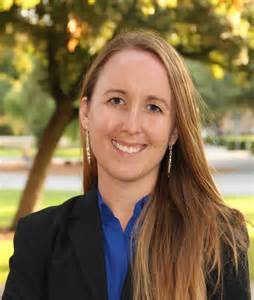
Christine Exley is Professor of Business Administration at Harvard Business School. Christine is also Co-founder and Christine ExleyChief of Research at Wagaroo – an organisation dedicated to re-house homeless dogs to responsible and loving families.

Wagaroo was founded to bring a simple principle to life: When it comes to getting a pet, it’s time to make it easier for people to do the right thing! No puppy mills. No backyard breeders. Just owners, rescues, responsible breeders, and shelters working together to find great homes for dogs who need them. Find out more at wagaroo.com.

This episode is dedicated to Pepper, Christine’s family pet dog who recently passed away. Pepper is the Pit Bull that Christine mentions in this episode whom she rescued from a dog shelter.

Economics:

In this interview, Christine mentions: gender differences, labor markets, incentives, market failure, search costs, information asymmetry, supply, demand, thick and thin markets, labor markets and wage elasticities.

Economists:

In this interview, Christine mentions: Al Roth, Dan Ariely, Shawn Humphrey, Doug Bernstein, Charlie Springer and Stephen Terry.

In this episode you will learn:

  • the use of assumptions in economic models for testing.
  • how to encourage volunteering and whether monetary incentives work.
  • how a trip to Honduras changed Christine’s academic path from mathematics to economics.
  • how a story about an individuals’ plight can be a powerful message to have people react in a charitable manner, while the plight of millions with no media coverage of a personal story of suffering could become less powerful.
  • about Wagaroo and why Christine set it up to help save dogs from puppy mills.
  • what are thick and thin markets.
  • how to spot an irresponsible dog breeder.
  • about the family2family programme run by Wagaroo.
  • how localised knowledge is key to separate the responsible dog breeder from the irresponsible breeder.
  • why more must be done to regulate and protect animals.
  • how Christine saved a pups life from a dog shelter when she was 17 and became her family pet.
  • why people put in less effort once they hit a target.
  • about the motivating benefits of rewarding volunteers with gift cards rather than a cash equivalent.
  • how virtual rewards, like stickers and badges, can incentivise people to rmeet targets.
  • how people’s perceptions of Pit Bull are an Econ 101 thing!

Quotes by Christine in Episode 54 of the Economic Rockstar Podcast:

“Your population of volunteers really matters” – Christine Exley

Click To Tweet

On Al Roth – “He’s someone who always encourages you to dream bigger” – Christine Exley

Click To Tweet

On the successful family2family programme run by Wagaroo: “As an economist I’m very pleased with how clean and, in a sense, compatible that is” – Christine Exley

Market Failure in the Market for Homeless Pets

“I think there’s every market failure in the book in the market for homeless pets” – Christine Exley

Click To Tweet

Two of the biggest ones arise from search costs. It’s really hard to find the dog you’re looking for. There are thousands of organisations globally that have dogs. There are thousands, if not millions, of families each year that need to re-home dogs.

The heterogeneity in types of dogs – different sizes, ages, breeds and personalities. The inventory is not always up-to-date. It’s hard to coordinate among multiple actors. It’s a disaster. Trying to find out all of that information is challenging.

Information asymmetry is another market failure. Often people on the other side have more information about the dog than you do. Sometimes no one has information on the dog. Maybe the dog was found on the street and we have no idea what’s this dogs history is or how this dog would interact in different environments.

There are many fundamental challenges that really make it a tricky market.

There’s actually about 2 million dogs and cats every year that are killed because they don’t find homes. So there’s certainly a surplus so to speak of dogs and cats.

Up to 23 million people are interested in acquiring a pet for their family in any given year. The vast majority are open to multiple sources – adoption, buying from a breeder.

It’s very easy for bad actors to imitate good actors – Christine Exley

Personal Habits:

  • Getting up at 5:45 am and Running

Takeaway:

  • Get a dog. Particularly get a Pit Bull – Christine Exley

    Click To Tweet

Internet Resource:

  • Wagaroo
  • Al Roth’s blog: marketdesigner
  • LaTex

Contact: spot@wagaroo.com

Where to Find Christine:

  • wagaroo.com
  • wagaroo.com/app
http://traffic.libsyn.com/economicrockstar/054_Christine_Exley_Final.mp3

Podcast: Play in new window | Download
039: David Zetland on Aguanomics, Water Scarcity, Water Wars and ‘Toilet-to-Tap’

July 1, 2015 by Frank

http://traffic.libsyn.com/economicrockstar/039_David_Zetland_Final.mp3
Play in New WindowDownload

039: David Zetland on Aguanomics, Water Scarcity, Water Wars and ‘Toilet-to-Tap’

David Zetland is an assistant professor at Leiden University College, where he teaches various classes on economics. He was a PostdoctoralDavid Zetland Fellow in Natural Resource Economics and Political Economy at UC Berkeley (2008-2010) and a Senior Water Economist at Wageningen University (2011-2013). David blogs on water, economics and politics at aguanomics.com and gives many talks to public, professional and academic audiences.

David has two books The End of Abundance: economic solutions to water scarcity (2011)  and Living with Water Scarcity (2014). He received his PhD in Agricultural and Resource Economics from UC Davis in 2008. David lives in Amsterdam.

Influencers:

Adam Smith, Friedrich Hayek and Nassim Taleb.

Economics:

In this interview, David mentions and discusses: scarcity, shortage, commodity, supply, demand, marginal cost, opportunity cost, unintended consequences, monopoly, common-carrier system, the water-diamond paradox, development economics, governance, probability, fat tails, Buddhist economics, the problem of over-consumption, non-satiation assumption, GDP, pricing, fairness and efficiency.

Economists:

In this interview, David mentions and discusses: Adam Smith, Friedrich Hayek, Nassim Nicholas Taleb and Ernst Friedrich Schumacher.

The Water-Diamond Paradox (23rd minute in this Episode)

Find out:

  • if we should be worried more about a shortage of water or a scarcity of water.
  • if we should learn from the oil industry and develop the technology-equivalent of extracting oil from oil sands and desalinate the ocean water?
  • if we can tell whether we know the water footprint of a cow and if it’s different in California than Ireland.
  • why water is actually free and what you pay is for the delivery.
  • if there is an opportunity costs to acquiring water?
  • why people living in the slums of India pay up to 50 times the price for water than those who have cheaper piped water.
  • if a water monopoly is an effective market structure.
  • if price competition in the market for water would result in the over-use of water consumption.
  • about Scottish Water and how other utilities across the UK and adopting their distribution and pricing structure.
  • about the water-diamond paradox.
  • why David decided to do a PhD in economics after failing to get rich in the dotcom era.
  • how David came to get his family name ‘Zetland’.
  • about the coming ‘Water Wars’ and how it has already started.
  • about Sao Paulo’s troubled water situation and how it’s creating gang warfare on the streets.
  • who we should assign the property rights to water.
  • about Chile‘s exemplary assigning of water property rights.
  • what David proposes to be the most effective way of managing water.
  • how Singapore are becoming independent in creating their supply of water and are no longer depending on imports from Malaysia.
  • how Singapore are building technologies to recycle water from waste.
  • why the ‘toilet-to-tap’ water recycling initiative has failed in the US but is working in Singapore.
  • how marketing recycled water works in Singapore and not in the US – one known as ‘New Water’ and the other ‘Toilet-to-Tap Water’.
  • why Singapore treats water as a national security issue.
  • why it will take 20 years to build a desalination plant and why San Diego will need 15 of these plants to serve the water needs of the locals.
  • about the new Irish water utility, Irish Water, and how the management decided to ‘award’ themselves bonuses even before the Irish people payed for their water.
  • about ‘Buddhist Economics’ and the assumption of non-satiation.
  • what David would suggest if he was an Economic Advisor to any country regarding water policy.

Why David Studied Economics:

When I was between 25 and 30 years old, I travelled to 65 countries and when I came back to the States I was looking around and figuring out what to do. I tried to get rich in the dotcom era and that totally failed and I started to work with a bunch of academic mathematicians and they were really kinda cool people. But they were pretty cool and I thought ‘well this is interesting. Maybe I should go and do something academic’. I went back to grad school to get a PhD and I wanted to do development economics. My research project, which was to go and study cocaine production in South America, sounded to my advisors a littlest dangerous. Then one of my advisors said that there was this really strange case in Southern California where San Diego is in a big fight with other water utilities and maybe you should look into that. So that ended up being my dissertation – David Zetland.

David’s Advice to a Country Implementing a Water Policy:

“You have to take care of your environment. Then you have to commodify all the rest of the water. But all that revenue really should go to the citizens of that country. Other than that, I’m open to any other discussion about what’s a better system in terms of balancing between efficiency, which is pricing and fairness which is the distribution of those revenues” – David Zetland.

‘Water Water Everywhere and Not a Drop to Drink’: The Right to Water – It’s a Necessity After All

The ‘Right to Water’ is an important part of the conversation but it tends to confuse things. People need water for drinking, cleaning, washing and so on. But is there a right to water to put on your garden? Is there a right to water to wash your car? Do farmers have a right to water that goes on their fields if that means the river is going to be dry? So, there comes a point where the ‘Right to Water’ runs out and we have to start talking about water as a scarce good or an economic commodity. That’s the separation you need to start with.

Shortage is worse than scarcity because you can’t get any of what you want, even if you have time or money – David Zetland

David Zetland’s book ‘Living with Water Scarcity’ is about learning how to manage water scarcity, the same way we have learned to manage land scarcity, time scarcity and money scarcity. Water scarcity is not confined to any particular region or country. This is a global phenomenon. We can generalise water scarcity in terms of the lack of water available. But there exists specific concerns such as the scarcity of clean water, which is becoming a problem in northern European countries and eastern United States, where there’s lots of water but a lot of it is polluted.

Ireland's Anti-Water Charges Protest 2014

Ireland’s Anti-Water Charges Protest 2014

The irony for people living in Ireland, for example, is that the country is surrounded by water but yet availability of fresh, clean water can be scarce in some regions. There are a few towns and villages in Ireland who have been buying bottled water or are on boiling notices due the presence of cryptosporidium in their water. Water shortages is not necessarily an immediate concern for Ireland. However, California, on the other hand, is experiencing their 4th year of drought. This is something that is being experienced in many regions around the world, but ‘California has more reporters hanging around’ and other regions’ grief remain unreported.

The ‘Water Water Everywhere and Not a Drop to Drink’ problem leads people to think that we should desalinate the ocean and get all the water that we want from the ocean. This, however, would be a great physical and expensive task to undertake and the conversation on desalination tends to stop. Should we learn from the oil industry and develop the technology-equivalent of extracting oil from oil sands and desalinate the ocean water?

Adam Smith explained the value in exchange as being determined by labor: ‘The real price of every thing, what every thing really costs to the man who wants to acquire it, is the toil and trouble of acquiring it’.

David frames this as ‘Technologies and Techniques’; techniques meaning how we use technologies and how we use water. “In the case where you have scarcity, you could say we’re going to build a desalination plant, drill a deeper well, build aqueducts, take shorter showers or stop watering our lawns. We should try and help people use as many ways as possible instead of focusing on one particular silver bullet.”

Who’s the Straw that Broke the Camels Back?

Numerous groups are pointing the finger at each other and casting blame each others way for causing pollution, drought and water scarcity. Besides the natural precipitation, farmers use half as much water as people in the city, such as industries and municipalities. In California, farmers use four times as much water as cities, say in the UK. Farmers obviously use water in various forms, but they’re not necessarily using more than the cities.

Then there’s the big discussion about who should be allowed to or who has the right to us water and that’s where the politics and mudslinging comes in. However, the level of precipitation is different in Arizona and California, as well as in Spain and Cyprus, compared to regions in Ireland and the UK.

Quotes from David in this Episode:

“These pro-poor policies can end up being so anti-poor. It’s terrible, it’s actually almost a crime” – David Zetland

Click To Tweet

on how cheap water in India results in water utilities not having the infrastructure to deliver water to the slum areas. These people end up paying up to 50 times for their water from tankards. This water is dirty and people, particularly children, queue up for hours to collect and carry this water to their homes which can often be on the 3rd or 4th floor of a building.

“The customer is vulnerable to being exploited by the monopoly and the monopoly is vulnerable to being exploited by the customer. And that’s where regulations come in” – David Zetland on the need for regulation in the market for water.

Why is water, which is something we need to live, so cheap, whereas diamonds, which are a pure frivolous luxury, so expensive? – David Zetland on the Water-Diamond Paradox.

Water Wars in Sao Paulo, Brazil

Sao Paulo’s reservoirs have fallen to such low levels that their supply fails to meet with their expected demand. There were a lot of ways in which Sao Paulo could’ve dealt with this risk, such as fixing their leaky networks. They cannot get water from somewhere else. You’ve got a limited amount of water and 10 to 20 million people who need water to drink. The utility can shut off the water supply at various locations if they like and that raises the question of rich versus poor. That kind of decision is not going to please anybody. There have been protests over this.

David’s assessment of this is that if Sao Paulo wants to avoid a war on the streets, they need to shut of everybody’s water and have tankard trucks distributing water in Jerry cans in the corners – one man, one bottle. And that’s because you’d be addressing the concern of social equality and human rights.

Israel is not going to invade Turkey for their water. You can’t win that battle. You can’t bring back the water – it’s too heavy.There won’t be wars of plunder, there’ll be just conflicts over who’s going to get the water. Water gangs will form and they will take your water.


Recommended Books:

  • The End of Abundance: economic solutions to water scarcity (2011)  by David Zetland.
  • Living with Water Scarcity (2014) by David Zetland.
  • Small is Beautiful by Ernst Friedrich Schumacher.
  • The Theory of Moral Sentiments by Adam Smith.
  • Check out David’s review of ‘Small is Beautiful’ by E. F. Schumacher.
  • Find out here why David decided to give his book away for FREE.

Where to Find David Zetland:

  • Blog: aguanomics
  • Twitter: @aguonomics
http://traffic.libsyn.com/economicrockstar/039_David_Zetland_Final.mp3

Podcast: Play in new window | Download
037: Noah Smith on Austrian Theory Being a ‘Bad Joke’, Heterodox Models and Efficient Markets

June 18, 2015 by Frank

http://traffic.libsyn.com/economicrockstar/037_Noah_Smith.mp3
Play in New WindowDownload

037: Noah Smith on Austrian Theory Being a ‘Bad Joke’, Heterodox Models and Efficient Markets

Noah Smith is Assistant Professor of Finance at Stony Brook University, New York where he is also a member of the Center for Behavioral Noah SmithFinance research team. Noah’s research Interests include Experimental Finance, Behavioral Finance and Macroeconomics Noah was panel discussant for the Institute for New Economic Thinking Task Force and has received numerous research awards and fellowships. 

Noah is a regular contributor to Bloomberg View where he writes extensively on economics and finance related topics. He also writes at his fantastic economics blog Noahpinion.

Noah received his PhD in economics from the University of Michigan, graduating in 2012. His dissertation examined expectation formation in financial markets. Noah majored in physics as an undergraduate at Stanford University, and spent three years working in Japan, where he still returns from time to time to do research.

Everyone who meets in the public sphere, unless you’re extremely dry and technical, is going to piss people off. Econ is one of those fields where everyone has their own opinion and position and their models that they like. Traditionally, it was this very closed discipline. Econ was for economists and they didn’t often interface with the outside world except through official policy advice and the occasional op-ed. People start talking in the public sphere and I think that disturbs a lot of people. So all the blogs are bad boys really – Noah Smith.

Economics:

GDP, inflation, Central Bank, consumption, microeconomics, macroeconomics, behavioral economics, DSGE, game theory, decision theory, supply, demand, time series, interest rates, linear regression, forecasting, Quantitative Easing, money, gold, Federal Reserve, efficient markets hypothesis, extrapolative expectations, hedge funds, adverse selection, random walk, fat tails and volatility.

Economists:

Paul Samuelson, Brad DeLong, Steve Keen, Greg Mankiw, John H. Cochrane, Jack Schwager, Josh Angrist, Steve Pischke, Ed Phelps, Robert Lucas, Ed Prescott, Paul Volcker, Ludwig von Mises, Friedrich Hayek, Hyman Minsky, Andrei Schleifer, Alok Kumar, Kelly Schuh,  Jonathan Burke, Burton Malkiel, Marcus Brunnermeier, Mark Thoma, Tyler Cowen and Alex Tabarrok.

Find out:

  • whether economists suffer from ‘Physics Envy’.
  • if we should remove mathematics from economics.
  • how math took over economics.
  • if there is a connection between economics and physics.
  • how economics is becoming a more data-driven field.
  • about the micro foundations to macro theory and why these models don’t work.
  • why theory and math-focused economics papers are waning in the academic publishing field.
  • how to approach teaching micro and macro when the theoretical models may not explain much.
  • about whether Economics is moving away from the orthodox method of teaching toward a heterodox method.
  • about the difference between Heterodox and Orthodox teaching in Economics.
  • why Noah considers Austrian Economics to be a bad joke.
  • where Noah falls within the economic spectrum.
  • why Noah believes that heterodox economics is not the future.
  • Noah’s recommended economics blogs to follow.
  • why the Efficient Market Hypothesis is a good starting model for finance students to understand.
  • and much much more

Physics Envy and the Mathematisation of Economics:

At one point economics was a literary discipline. It was philosophical. It was people writing down verbal description of how they thought things worked. Then people started writing down equations. At first it was just a couple of people doing it who were obscure and then, with Paul Samuelson, they really started putting everything in terms of equations and mathematising everything. It was at that point people started to mention that economists had ‘Physics Envy’ because physicists write everything in equations. Maybe that was true as Samuelson had also studied Physics. This was probably a misnomer.

There were new mathematical tools and people were just trying to apply them to things. Math really took over economics and the style of math they did was sometimes similar to physics. Mathematicians are very rigorous. They start with axioms and they have this really formal proof structure. A physicists approach to working with equations is a lot more ad hoc and informal. So in economics, you see both styles. Noah doesn’t think there’s a lot of connection between economics and physics. He also doesn’t believe there is any particular pieces of math in economics that were inspired by physics.

Math helps you organise your thoughts. It makes your economic theory more internally consistent because math always has to work out perfectly and all the logic has to work out. But in practice it rarely does that. What usually happens is that people usually end up sticking in the assumptions they need to get the conclusions they want to see in the theories. So there’s essentially no discipline provided by math on theory, but math is useful when you want to get actual numbers.

Economics is becoming a more and more data-driven field. Now that we have information technology, we have so much data. We have macro data and industry-level data that we can keep track of with electronic records. Government can easily keep track of statistics on all kinds of variables on the economy. We have a lot more financial data. It is easier to get people surveyed so you have a lot more survey data. So you have huge amounts of data that is easily transferable and easily manipulatable in statistics programs. Economists are basically rolling in data. What we’ve seen from that is that data and empirics has become so much central  to the economics field in recent years. The number of published papers that are data and empiric-focused has soared, whereas the percent that is just theory and math-focused has gone down in the last twenty years.

On Teaching Micro and Macro When Theoretical Models Fail:

Economics is not data-free. You can use data to help you teach. But in terms of giving students a hands-on thing where they can predict some outcome something, well for lower-level students, there’s not much you can do. But for upper-level students there are some things you can do with linear regression that help you make a prediction or forecast. Certainly with graduate-level students you can do things with time series econometrics. Then you can have them make forecasts and see how well their forecasts come out. There’s things you can do but it doesn’t work as beautifully as it does in Physics – Noah Smith

Noah Smith on Why He Considers Austrian Economics to be a Bad Joke and Why Heterodox Economics is Not the Future:

The idea that economics is substantially divided between the orthodox and the heterodox is wrong. That’s just not the way it is. There’s only a very few people in the world who call themselves heterodox. For any science you’re going to get some people somewhere who are doing something totally different. There’s probably somebody out there using physics models that look nothing like quantum mechanics or Newton’s Laws or any of the core physics models we think of as real physics. There’s probably someone out there doing some model of a type you and I never heard of and will never hear of. And that’s basically what the heterodox economics guys are.

The people who call themselves heterodox in economics, include some people who are nakedly political. All they really are is political, well I could say hacks but they’re not paid by parties, but they’re trying to make economics into a politicised discipline. So, the most prominent group of these is people who call themselves Austrians.

There were these guys, called the Austrians, who wrote some ideas down. All of those ideas were later taken up by the mathematical economists and put into math language. Most were tested in some way. They were developed further on. But then what happened was there was a tribe of people who declared that all the mathematical economics was bullshit and that what we had to do was pay attention to the wisdom of the ‘Old Masters’. So they spend a lot of time reading the old wisdom of Mises and Hayek and those guys. And the only way this group could survive when economics itself had moved on was to take donations from political people who agree with their politics.

So they politicise themselves in order to survive. And in the wilderness where they deserve to be, their method of analysis they use are a joke. A lot of mainstream normal economics might also be a joke but the Austrian stuff is definitely a joke. And the problem is with the addition of politics to the mix, it really becomes a bad joke.

Most of what they do is advocating through their version of free markets or advocating for various conservative policies and politics. And that’s what they spend most of their time doing. It’s clear that what they really want to do is just turn economics into a mouthpiece for conservative ideas.

I haven’t spent hundreds of hours reading Mises because that would be robbing me of many many valuable hours of my life-span and I’m mortal and my life-span is ticking away and I can’t spend my time reading Mises. I’ve read a little bit. It was obviously silly. It was like reading Jacques Derrida.

It’s so dense and confusing and self-referential and full of neologisms and just, frankly, badly written that what it descends into this infinite recursion where you have people who read the ‘Old Master’ and write some interpretation of the ‘Old Master’ and then someone reads what that person wrote and mis-interprets that and then writes their own interpretation of that. Then you just have this infinite recurring commentary where nobody really knows what the hell anyone else is talking about and they all just sort of talk about their own distorted, twisted perception of what these other people talk about. It gives no insight and no understanding. People ‘parrot’ the words of the ‘Old Masters’ without understanding what the ‘Old Masters ‘ were necessarily meant or what those ideas would even imply.

If you criticise the ‘Old Masters’ or criticise this paradigm of relying on the ‘Old Masters’, They say “Oh, you have to go read everything the ‘Old Masters’ wrote before you are qualified to comment on this. How dare you comment on this when you haven’t read this and this and this. I’ve spent time reading this.” What do you say to that. That’s not scientific. That’s scholastic.

Sometimes you look at Minsky and you look at Hayek and you say these guys aren’t saying such different things after all actually. But the thing is you have the right-wingers in the modern day who think that Hayek and Mises are gods and left-wing guys who think Minsky is a god and they fight like cats and dogs.

The mere fact of these kind of battles is one thing that convinces me that so-called heterodox economics is not the future at all.

Austrians have a lot of blogs. They have a big mouth-piece; much bigger than their academic footprint. Austrians took a huge hit in 2011 and 2012. Those are absolute critical years for this sort of ‘pop-Austrianism’ that has become very popular on sites like zerohedge. All the Austrians are saying is the Fed is printing all this money doing Quantitative Easing. There’s going to be big inflation. And this never happened. That was like a thunderbolt that really discredited Austrians. They were saying things were going to happen by gold now. There was a gold bubble and gold is quite a bit off its peak. A lot of people lost some of their savings on that. People are not happy to lose their savings. If you bought gold collectibles in 2011, well you were a sad puppy when it crashed. That’s God’s punishment. That’s the market’s punishment anyway. It’s the markets punishment for making bets on silliness.

Where does Noah Fall within the Economic Spectrum:

I really don’t know. I suspect something that would look like demand is responsible for most recessions. And I suspect something that they call a limit cycle is going on where something in a boom actually causes a bust to become more likely. So booms lead to busts. Austrians said that, absolutely. The ‘Old Masters’ definitely said that and Minsky said that too – Noah Smith

Recommended Blogs:

  • Economists’ View by Mark Thoma
  • Marginal Revolution by Tyler Cowen and Alex Tabarrok
  • Grasping Reality by Brad DeLong

Recommended Book:

  • The Myth of the Rational Market by Justin Fox
http://traffic.libsyn.com/economicrockstar/037_Noah_Smith.mp3

Podcast: Play in new window | Download
034: David Simon on Meatonomics and How the Meat and Dairy Industry Impose Substantial Negative Externalities on Society

May 28, 2015 by Frank

http://traffic.libsyn.com/economicrockstar/034_David_Simon_Final.mp3
Play in New WindowDownload

034: David Simon on Meatonomics and How the Meat and Dairy Industry Impose Substantial Negative Externalities on Society

David Robinson Simon is a lawyer and advocate for sustainable consumption.david simon

David works as general counsel for a healthcare company and serves on the board of the Animal Protection and Rescue League Fund, a non-profit dedicated to protecting animals.

David runs a website that keeps us up-to-date on matters arising from the farm animal industry as well as informing us of other animal-related causes.

David received his B.A. from U.C. Berkeley and his J.D. from the University of Southern California. He is the author of two books: New Millennium Law Dictionary, a full-length legal dictionary and Meatonomics.

He lives in Southern California with his partner, artist Tania Marie, and their rabbit, tortoise, and two cats.

Why David Wrote Meatonomics:

David’s reason to write ‘Meatonomics’ was the same reason why he turned vegan in the first place – the inhumane treatment of farm animals in factory farms.

150 years ago, many Western countries were agrarian-based economies. Farm animals lived on open pastures and were humanely treated. However, the transition to a factory-based system of farming resulted in these animals being removed from open farm lands and placed into a factory-type industrial environment which goes largely unnoticed by the general human population. These farm animals are treated inhumanely and are hidden from view. David wanted to share with us their story and to reveal some startling research and statistics that we must know.

“I think it is difficult to go vegan, but it’s only difficult in the same sense that it’s difficult to learn how to drive a car or ride a bike” – David Simon.

Simply changing my diet to a Vegan diet is one of the best things I’d ever done – David Robinson Simon

David Simon had a BMI that categorised him as being over-weight. He was suffering from high blood cholesterol levels that were always over 200 mg per decilitre, which is the heart-attack risk level. David also had acid reflux, also known as GERD.

When David turned vegan, it was due to his ethical concerns for the welfare of farm animals. However, the unintended consequences of transitioning to a vegan diet, showed remarkable health improvements. Soon after going vegan, David’s weight dropped by 15 pounds, his acid reflux had gone and never came back and his cholesterol has gone from 220 to as low as 140.

David also does some yoga each day to help alleviate the stresses of sitting at a desk all day. This is his way of preventing any foreseeable back and neck problems that otherwise would result from inactivity. Yoga is also a great way for David to focus and think about what was going on during his day.

Economic Themes:

In this interview, David mentions and discusses:

Negative externalities, cost-benefit analysis, supply, demand, equilibrium, prices, subsidies, quotas, consumption and the multiplier effect.

Find Out:

  • why David, a lawyer, turned to economics to explain how the meat industry is a cost to society.
  • about the lack of rights that exist for farm animals.
  • how the farming community set the standards on how farm animals are treated.
  • how the Customary Farming Extension was introduced to legally treat farm animals inhumanely.
  • about the environmental costs associated with producing animal products.
  • how to control or even reverse climate change by reducing meat consumption.
  • how taking shorter showers is not going to alleviate the drought in California.
  • what the true external cost to society is when someone consumes an animal product.
  • how deferring climate change measures today will impose greater costs on society in the future.
  • what David, who is a vegan, had for breakfast this morning.
  • the ingredients to David’s ‘power smoothie’ – a refreshing and nutrient dense meal in a glass!
  • how companies are being subsidised by government to lower the retail price of meat.
  • about the heavy subsidies being paid out to the meat industry.
  • how artificially-low meat and dairy prices are fuelled by out-of-whack farm subsidies.
  • about Ireland’s removal of milk quotas and what it means for market prices.
  • about the role of government in the promotion of milk consumption and how athletes are being used in adverts.
  • about the ubiquitous, powerful but misleading meat and dairy marketing campaigns.
  • about the causal connection between obesity and the consumption of milk, dairy and other animal products.
  • the correlation between some cancers and meat and dairy consumption.
  • why you should remove animal food products from your diet so as to remove the risk of cancer.
  • why you should switch to a plant-based diet and remove meat and dairy if you or a loved-one has cancer.
  • what the multiplier effect is for every $1 spent by government to promote dairy and meat consumption.
  • if consumers are being duped and manipulated by government into buying meat and dairy products.
  • the true cost of a Big Mac – would you pay $13 for one?
  • how the economics of institutional animal food production hold sway over our spending, eating, health, prosperity, economy, environment and longevity.
  • why David wrote his book ‘Meatonomics’.
  • where to source your protein if you decide to go vegan.
  • about Rich Roll, one of the fittest men in the US, who is vegan and lives on a plant-based diet.
  • about the largest animals on our planet – cow, gorilla, rhinoceros, giraffe and hippopotamus – that are all vegan and source there protein from plants.
  • how David changed his lifestyle to become vegan which reduced his risk of heart failure and lowered his BMI from over-weight to normal.
  • how future litigations against the meat and dairy industry could mirror the tobacco industry where once doctors advertised the health benefits of smoking tobacco.
  • about ‘Lobster Liberation’ in Ireland and how David is there to advise and help groups like these who may face criminal prosecution.
  • about David’s own successful liberation of lobsters who were unethically subjected to a vending machine claw game.

David’s ‘Power Vegan Smoothie’:

David starts his day with a raw power smoothie that is packed full of protein and anti-oxidants.

  • Fruit of the day
  • Kale
  • Flaxseed
  • Cinnamon
  • Cacao

David’s ‘Portobello Vegan Burger’:

For dinner, David recommends his ‘Portobello Vegan Burger’, an alternative to the beef burger, with no saturated fat and no cholesterol.

  • Bun of your choice – gluten-free or wholemeal
  • Portobello mushroom
  • Vegan cheese
  • Vegan bacon
  • Jalapeños
  • Tomatoes
  • Onions

Negative Externalities Associated with the Meat and Dairy Industry

Cow linkedIn

There are huge environmental costs associated with producing animal products. They include damage to soil, erosion, pesticide use, fertiliser use, pollution to eco-systems and  diminution in real estate values. Research has shown that if properties are located near factory farms, then the value of those properties fall in value.

There are also costs associated with climate change mitigation. Various studies have shown different values for the impact animal production has on climate change, with some reporting that it is responsible for up to 51% or as low as 14%. In the US alone, David has calculated that the environmental externalised cost of animal food production are about $37 billion. Who pays these costs? The farming community? No.

These costs have been externalised and society ends up paying for the damage being caused. However, David suggests that the payment of these costs are being delayed. It’s a deferred cost that is recognised in conventional economics but it’s something that will come back to ‘bite us on the nose’. For example the climate change mitigating cost is about $9 billion in the US but it is not being done right now. Because we’re not dealing with costs today, we’re allowing climate change to proceed along a path that will end up costing us a lot more in the future.

With the boom in farming and the ever increasing supply of meat products to cater for the demand, carbon emissions have soared. The cow population has grown exponentially as new markets have opened up in developing economies. Diets, such as the paleo diet, has added to this demand. The methane gas emitted from cattle is an astonishingly large contributor to green house gases. This has led to a larger carbon footprint per animal due to the associated transportation costs required to ferry these animals by land and sea. Carbon dioxide emissions also increases with the transportation of these animals.

“If we were to reduce our consumption of animal foods by say 40% to 45%, that would have the same effect on the emissions that drive climate change as if we were to garage all of our motor vehicles and motor vessels during the entire time that that reduction in consumption is in effect” (David Simon). This action alone could have a tremendous effect to control or even reverse climate change.

Negative externalities affect every living thing on the planet – humans, fish, fauna, primates, etc. You can be vegan or a herbivore. There is no way that you can avoid these costs be imposed on you. Reports have indicated that pesticides are airborne, which can be harmful to a persons health.  Our water table, our rivers and our oceans are being polluted by the slurry and manure that is being washed or dumped into these rivers. Fish are being affected with dead-zones appearing in our oceans, resulting in life being unsupported.  Plant-life, insect species and exotic animals are being displaced due to the landscape of the Amazon rainforest being forever altered to cater for cattle grazing. These are all costs borne on our society due to the serious impact it has on our environment and our planet. Much of the harm being done is irreversible. However, it can be stopped and further mistakes prevented if effective measures are introduced. Human diseases, such as MRSA, originates in livestock and spreads through the distribution of animal foods and, because of the antibiotic use in livestock, people are challenged to find antibiotics that can actually resist that disease.

Everyone is affected by current farming practices. For every $1 of animal foods sold at retail, there’s another $1.70 in externalised costs that is imposed on society. For example, for every $5 Big Mac sold by McDonalds, there’s another $8 imposed on every single person. These costs, which if absorbed by the producer, would result in higher retail prices for the consumer. To overcome these potentially high market prices, governments subsidise the meat industry. In the US alone, the government heavily subsidises the meat industry to the tune of $38 billion payments each year. To put that into perspective, that is half of what the US government pays in unemployment benefits every year to all the 320 million unemployed workers. At the moment, the fruit and vegetable industry in the US is being subsidised with only about $17 million. That’s a difference of circa $37.83 billion!

Counter-arguments by those suggesting that if these subsidies were removed from the meat industry, then higher prices would occur, followed by mass lay-offs and higher levels of unemployment. This outcome would occur due to consumers reducing their demand for animal products and getting their protein from different sources or substitutes. David foresees that if this were to occur, people would naturally transition toward a plant-based diet as a source for their protein. Consequently, plant-based agriculture would be then in a position to hire more workers and the numbers of lost jobs in the meat industry would be off-set by the levels of employment in the plant-based industry.

Why Do Animal Food Producers Receive So Much in Subsidies and Why Does the Inhumane Treatment of Animals Remain Legally Unchallenged?

The main reason why the meat production industry receives these subsidies and are allowed such farm practices is due to the powerful lobby group that represents them. In the US alone, estimated suggests that the farming lobbying group spend $100 million per year lobbying state and federal law makers. Also, some studies that examine such farming practices, as well as examining the economic and health benefits of the human consumption of meat, have been carried out or sponsored by groups that have a direct interest in the reported findings and recommendations.

The externalities that were outlined above are by no means localised. This has become a widespread phenomenon in so far as becoming a globalised concern. 90% of the planets rainforests have been removed, and flattened, with much of it being replaced with grazing pastures for cattle. David revealed a startling statistic of 3 acres per minute of rainforest being destroyed with 2 of these acres being dedicated to providing grazing land for beef cattle or for growing feed crops like soy or corn to feed beef cattle.

How ironic is it that the very trees that undergo a natural process of cleaning the air by absorbing carbon dioxide and producing oxygen is being overwhelmed by the amount of emissions from cattle. The ratio of trees to emissions is falling at an astonishing rate due to the destruction of these rainforests.

Ireland Removes its Milk Quota’s

Ireland have recently been given the go-ahead to remove the milk quota restrictions that were put in place by the EU. This is great news for Irish dairy farmers with 2 billion extra litres of milk being produced by the year 2020. To accommodate such a vast swell in milk production, 300,000 extra cows will join the national herd, resulting in a cow population of 1.3 million. Small farms will disappear resulting in large-scale farms. This will of course lead to economies of scale for these larger farms, an increase in employment, an increase in investments in new technologies, production processes and machinery and possibly better logistics and bargaining power.

A quota is essentially a tool for managing supply. Up until the 1990s, the US used supply management to stabilise prices for animal agriculture. Former President Ronald Reagan was a leading advocate for free market economics. He allowed agricultural markets to regulate themselves in the expectation that rational farmers would naturally find the market equilibrium by supplying the desired output which would lead to market equilibrium prices. However, it turned out that individual farmers think for themselves and produced at output levels that aggregated to exceedingly high levels of output at a national level. This resulted in lower prices.

This scenario could now be played out in Ireland whereby individual dairy farmers could increase their milk output levels, expecting and increase in income. However, incomes could fall if consumption or demand does not meet this new supply. Consequently, we may have a situation where farmers are being subsidised, just like in the US. Feed crops, such as corn, become heavily subsidised in order to reduce the costs to farmers.

The Role of Government in Influencing Consumer Meat and Dairy Buying Behaviors

Governments are harming the livelihood of people by promoting meat and dairy consumption. In the US alone, for every $1 spent by government there is a $9 or more multiplier effect on sales of meat and dairy. These programmes are quiet effective in the US. Most people are unaware of the ‘Check-Off Programmes’ that are overseen by the US Department of Agriculture. The average return on every $1 collected through these programmes is at least $8. In a typical year the US spent $557 million on these programmes, resulting in an increase in sales of $4.6 billion.

There is a concern that consumers are being manipulated at a subconscious level to increase their consumption of meat and dairy products. This is one of the themes of David’s book ‘Meatonomics’. Animal food producers are using their ability to deliver products at very low prices – prices that are artificially low – to manipulate consumers into buying more of these goods than they would otherwise. For example, a $5 Big Mac would cost $13 if the industry internalised all the costs associated with the production of beef. This would result in fewer Big Macs being sold.

Economists are interested in whether markets are demand-driven (by consumer traits in behaviour, by incomes or by tastes) or supply-driven (by producer behaviour and by pricing). The market for meat has grown so much in the last 100 years that consumer demand has increased from 100 pounds of meat per person per year to 200 pounds of meat per person per year. It could easily be mistaken that this increase in demand is a typical example of a demand-driven market and that producers are simply meeting that demand. However, due to agricultural subsidies and the ‘Check-Off Programmes’, farmers are able to keep prices artificially low. They are also engaging in behaviours that are diminishing the ability of consumers to actually make informed and independent decisions about how much meat and dairy to eat. This suggests that the market has become a supply-driven market.

“I just think it’s so bizarre that our governments are engaged in marketing to its own citizens to get them to buy products that the clinical research shows that are actually damaging our health” – David Simon.

Is there a Causal Link Between Obesity and Other Diseases and Animal Meat and Dairy Consumption?

Studies exist that show a worrying causal trend between obesity and animal food consumption. Due to over-supply and lower prices, we have increased our consumption of animal-related foods such as milk, dairy and beef. The World Health Organisation has recognised this link and it is only recently that the FDA has recommended a change in the Food Pyramid to accommodate an increase in the consumption of plant-based foods and to reduce the intake of animal-related foods in our diets. David Simon created the Meatonomics Index of 40 Numbers that Tell a Story and within this Index, I was startled to find the following statistics: the “factor by which US per-capita consumption of chicken and other meat exceeds world average is 3 and the factor by which US incidence of cancer exceeds world average is [also] 3”.

One must be careful with spurious relationships where correlation does not mean causation. However, these statistics cannot be ignored and US dependence on animal food products, and the widespread consumption and promotion of meat and dairy at a national level, corresponds to a trend in health-related problems. Clinical studies have shown that up to 1/3 of cancers, particularly in the West, can be attributable to a diet that is high in meat and dairy.

doctor smokes camel

Meat and dairy is being advertised both by local government and at a national level as being a healthy choice. Such promotion continues irrespective of the health risks associated with meat and dairy consumption, particularly when people over-consume. Parallels can be drawn between the animal food industry today and the tobacco industry prior to the 1960s. Old adverts show doctors smoking Camel cigarettes and claiming the health benefits of smoking. Clinical research has shown the health risks to smoking and subsequently litigations followed where the tobacco industry has been sued. Plaintiffs have been able to recover damage awards against tobacco companies. In the US alone, over the last several decades, Big Tobacco has paid more than $400 billion to States Attorney General who have sued them over medical costs. Over the next several decades, David foresees a similar action being taken against the animal food industry for medical costs associated with eating meat and dairy products.

Takeaway:

Think about what you’re putting into your body and don’t take for granted that certain foods are good for you just because the government is telling you that.

Recommended Books:

  • Meatonomics by David Robinson Simon

Receive your FREE copy of Meatonomics. For being an Economic Rockstar listener, you can get an audio copy of Meatonomics by David Simon for FREE. Just click on this link and you’ll be re-directed to Audiobooks.com.

  • The China Study by Colin Campbell

The China Study is the leading piece of clinical information on the differences between an animal-based diet and a plant-based diet. He has found that when you feed animal protein to an animal or a person, and if they had tumours, then those tumours will continue to grow. Conversely, if you take them off the animal food diet and put them on a plant-based diet, those tumours are likely to shrink.

Where to Find David Simon:

  • Website: meatonomics.com
  • Twitter: @meatonomics
http://traffic.libsyn.com/economicrockstar/034_David_Simon_Final.mp3

Podcast: Play in new window | Download
032: Joe Gladstone on the ‘Pay What You Want’ Pricing Model and Using Big Data to Understand You Better

May 14, 2015 by Frank

http://traffic.libsyn.com/economicrockstar/032_Joe_Gladstone_Final.mp3
Play in New WindowDownload

032: Joe Gladstone on the ‘Pay What You Want’ Pricing Model and Using Big Data to Understand You Better

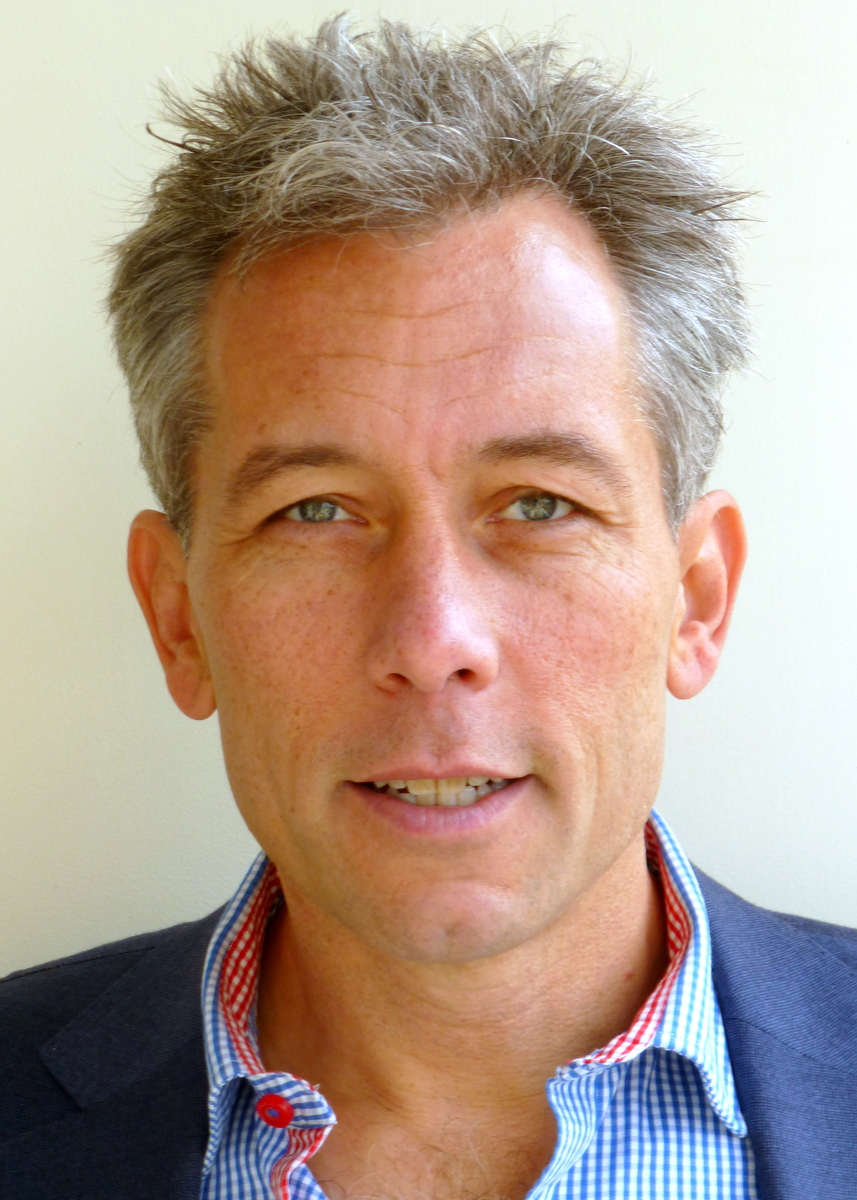
Joe Gladstone is an academic researcher and consultant based at the University of Cambridge, where heJoe Gladstone applies insights from behavioral economics and psychological research to better understand consumer behaviour.

Joe partners with some of the world’s largest corporations, such as Twitter, Bupa and Visa, as well as government departments, to tackle challenges that deal with behaviour change.

Joe’s views on consumer behaviour have been featured in the BBC, Forbes, The Huffington Post and other media outlets.

Joe is founder of BE-events and BE-Recruit.  He received his Masters from Oxford University and his Phd from Cambridge University, and has been awarded a range of competitive grants and prizes.

Find Out:

  • about the link between the discipline of psychology and economics.
  • why Joe decided to do postgraduate research in behavioral economics.
  • how advances in technology, especially in social media, can help behavioral scientists understand human behaviour better.
  • why you do not know how much you spend on coffee.
  • how Joe has identified the relationship between psychology and money.
  • how Joe has used the ‘My Personality’ app to predict your personality from what you like.
  • how companies can use ‘Big Data’ to target messages directly to you.
  • why people are willing to pay for services that they could otherwise get for free.
  • if TIDAL will disrupt the online music industry by taking control of their own music.
  • if Spotify risks losing out to TIDAL.
  • how important is the price of zero?
  • how the ‘Pay What You Want’ pricing model defies classical economic theory.
  • why people pay even if they are given the option to take the product for free.
  • how Radiohead made more in sales when offering their album on a ‘Pay What You Want’ basis.
  • if the ‘Pay What You Want’ model is sustainable for a business in the long run?
  • how Jon Bon Jovi has successfully implemented the ‘Pay What You Want’ model in his Soul Kitchen restaurant in New Jersey.
  • how sitting with strangers to eat in Soul Kitchen can ‘nudge’ diners to pay more than what they were initially willing to pay.
  • about Joe’s passion for financial literacy and financial empowerment.
  • if you can become immune to nudging by having a deeper understanding of it.
  • if knowledge prevents you from being nudged.
  • about behavioral economics events that could be going on in your area with BE-events.org.
  • how Joe maximises his time by outsourcing his work on oDesk.
  • how to get girls in less-developed and poor countries to go to school.
  • how Joe built up a name for himself on LinkedIn by connecting with the main people in the banking sector and offering his services on a no cost basis.
  • what the five personality traits known as OCEAN stands for.

Economists Joe Would Love to Collaborate With:

Professor Dean Karlan of Yale University and Professor John List of University of Chicago.

Economists:

In this interview, Joe mentions: 

Daniel Kahneman, Amos Tversky, Cass Sunstein, Dean Karlan (Poverty Action), David Hagmann, George Loewenstein, Craig Fox (The Behavioral Science and Policy Association), John List and The Behavioural Insights Team in the UK.

Economics:

In this interview, Joe mentions and discusses:

Behavioral economics, experimental economics, factor analysis, microeconomics, poverty, banking, micro-finance, decision making, nudge, nudging, pricing, demand, supply, randomised control trials, field experiments and multi-variate testing.

The ‘Pay What You Want’ pricing model is a great example of where the Classical economic theory doesn’t do a great job of explaining real world behavior – Joe Gladstone.

Resources:

  • Upwork (formally oDesk)
  • Leadpages

Books:

  • The Behavioral Foundations of Public Policy by Eldar Shafir

Papers:

  • Warning: You Are About to be Nudged by David Hagmann and George Loewenstein.

Where to find Joe:

  • Website: www.joegladstone.com
  • BE-events.org
  • BE-recruit.com
  • LinkedIn: Joe Gladstone
http://traffic.libsyn.com/economicrockstar/032_Joe_Gladstone_Final.mp3

Podcast: Play in new window | Download
017: Marina Adshade on Understanding Economics the Sexy and ‘Hard’ Way

January 29, 2015 by Frank

http://traffic.libsyn.com/economicrockstar/017_Marina_Adshade_Final.mp3
Play in New WindowDownload

017: Marina Adshade on Understanding Economics the Sexy and ‘Hard’ Way

Marina AdshadeDr. Marina Adshade, author of Dollars and Sex, engages in original economic research in the area of women in the economy. She has a Ph.D. from Queen’s University in Ontario Canada and currently teaches economics at the Vancouver School of Economics at the University of British Columbia.

In 2008, Marina developed a unique specialization in the economics of sex and love  and launched an undergraduate course titled ‘Economics of Sex and Love’, which invited her students to approach questions of sex and love through an economist’s lens. The class was an immediate hit with students and, by the time the first term started, had generated international media attention.

This culminated in the publication of her first book in 2013, ‘Dollars and Sex: How Economics Influences Sex and Love’. Marina converts economic theory into a sexy science by applying the principles of supply and demand and other market forces to matters of love, courtship, sex, intimacy, and marriage. 

Marina is a regular contributor to Canada’s national newspaper The Globe and Mail and the Canadian Business Magazine. She has written for several other publications including The Wall Street Journal, the Sunday Times and the Daily Mail in the UK, and Psychology Today. She is a sought after public speaker as well as a radio and television commentator on issues relevant to all women.

Economics Themes:

In this interview, Marina mentions and discusses: The New Household Economics, supply and demand, GDP, standard of living, bargaining power, the uncanny valley, unemployment, game theory, barter and the Big Mac Index.

Economists and Economic Schools:

In this interview, Marina mentions: Gary Becker, Shoshana Grossbard, Betsey Stevenson, Justin Wolfers, Thomas Malthus, Nathan Nunn and Jeremy Greenwood.

Influencers:

Jeremy Greenwood – Engines of Liberation, Gary Becker, Betsey Stevenson and all economists who have been brave enough to take on these topics.

When Gary Becker started on the New Household economics, he was criticised.

It takes a lot of courage to talk about new ideas and to bring new ideas into the economics fold – Marina Adshade.

One has to work very hard to maintain your creativity, to work hard to maintain a willingness to assume risks in the work that you do -Marina Adshade

Advice:

Make sure you know your value on the market – Marina Adshade

Click To Tweet

Mantra:

The idea that you can take a risk and be successful and the willingness to think creatively. Apply creative thought to the work that you do can be incredibly valuable – Marina Adshade

Personal Habits:

I spend as little time as possible within my office sitting behind my desk. I like to be out in the world. If I have something that I have to write or a talk that I have to give, a lot of the thoughts that inspire that I get from being outside walking around.

In this episode, you will learn:

  • why we should use sex and love in economics.
  • why Dr. Adshade decided to use the topic of sex in teaching economics.
  • why international media attention from Korea and Russia brought a spotlight to Marina’s Module.
  • why Malthus called economics a dismal science.
  • how sci-fi novels are better at predicting new technologies more so than social change.
  • about the future of sex with androids.
  • how the male contraceptive can increase the bargaining of power of men over women.
  • how economic growth results in liberal attitudes.
  • if there is a causal relationship between economic growth and gay marriage.
  • who makes a better saver: men or women?
  • how Orgasms can be used to explain Game Theory.

  • how the market for sex and love is like a barter economy.

  • the similarities between Economics and Biology.

  • if you met somebody that had a variety of qualities that you valued but didn’t love, would you still marry that person?

  • about the Big Mac Index and the Blow Job Index.

Dollars and Sex ‘A collection of theories and evidence that would give anyone, frankly, a hard-on for economics.’

Click To Tweet

Why Using Sex to Teach Economics Improves Student Engagement and Understanding

So much of what we do is about the fundamental unit of the household and so much of that comes form decisions that we make about sex and relationships. The reason why Marina decided on this approach to teaching economics was to simply engage with students. The material could be delivered in such a way that students could apply it to their own lives and internalise the theories that educators want them to understand.

How Sex Can Impact Our Social and Economic Environment and Vice Versa

Thomas Malthus called economics the ‘Dismal Science’ because he felt that economic theory predicts that whenever you have increases in technology, people would just increase the number of children they have in such a way that there would never be any gains in the standard of living. So, we were destined to be over-populated, over-crowded and poor.

The story of Malthus is based on our sexuality. Women couldn’t keep their knickers on as soon as national GDP went up a little bit.

I’m an Economic Historian. I spend most of my mornings thinking about the plough, the hoe and female sexual desire. We have 200 years of fertility changes. We have a hundred years of changes in sexual values. I think so much of this is rooted in our economics system. – Dr. Marina Adshade.

A small technological advance like contraceptives can have big social changes and can lead to the situation where we (US and Canada) are now. In Canada 35% of wives out-earn their husbands and that’s a remarkable change from where we were 30 or 40 years ago.

New technologies (on-line dating is now celebrating its 20-year anniversary) are arriving all the time and they are changing the way that we structure our relationships, the way that we bargain with our spouses and the way that we negotiate our lives within our relationships.

The future of sex with robots could be a reality by 2020. This will most definitely present some genuine challenges for us as a society when that becomes possible. The hypothesis of the ‘Uncanny Valley’ could present some problems for human-robot interaction, due to the possible revulsion or level of discomfort that a human has toward a robot. This problem could only be resolved if the robot improves its natural likeness and appearance as a human. Sex with robots has the potential to structure our relationships. It will have serious implications with our ethical challenges.

There are more imminent changes to our social economy. The introduction of male contraceptives into the market are only a matter of years away now, with human clinical trials taking place. This could potentially reduce the bargaining power of women regarding fertility to increasing the bargaining power of men. Handing the control of fertility to men has the potential to shift those dynamics.

Prostitution and other explicit markets have been transformed by technologies, where sex workers can advertise their services online. This movement expanded beyond the original market and has almost become normalised to the extent that other services are being provided online such as the Sugar Daddy – Sugar Baby concept.

The website SeekingArrangement.com reports year-on-year increases of female university student sign-ups to the site seeking a sugar daddy. Such increases are possibly the result of the mounting student debt faced by graduates and an arrangement with a sugar daddy could be a way of reducing this debt burden. Low wages and unemployment are also other factors that increases the willingness of students to enter such an arrangement. However, supply alone does not create a market, and the demand-side may not be as high. Therefore, the claim that the average amount in cash and gifts that a female sugar baby receives from her sugar daddy may not be as high as the $6,200 level.

The market for sex and love is like a barter economy. There is no currency that prices the supply or demand for sex. Perhaps there is an intangible currency in terms of the millions of stimuli that each person emits. The qualities that are revealed in this economy get picked on by other people.

Economic Growth Can Cause Social Attitudes Toward Sex to Change

Economic growth can change peoples attitudes, transitioning a country’s social norms from a conservative to a more liberal and open outlook. Many developed countries are debating about the right to gay marriage. Currently, Ireland will hold a referendum in May 2015 about right to gay marriage.

Marriage is an economic institution and we’d like to think that they create incentives for behaviour and they structure the way that our markets operate. But the institutions themselves is endogenous. Society chooses institutions that is optimal for them at any point in time.

The traditional marriage between a man and woman has historically been the optimal way of structuring a marriage, especially since men had the comparative advantage in work outside of the home. Men have the comparative advantage in wage labor and women has the comparative advantage in household production, particularly since the Industrial Revolution which caused a strict division between working and home. So, it made sense to structure marriage that way because of the gains from trade – men and women were so different.

This is no longer the case as the change in the nature of the market has eroded the man’s comparative advantage, particularly since it has become more skill-based and less physical. When men and women become similar with each other, then the nature of marriage changes. We no longer experience the gains from trade with marriage.

If marriage is no longer based on the gains from trade, then why limit marriage to men and women. Why not women with women and men with men. Marriage is more so based on love and companionship today and does not have the elements of the need for productivity.

Justin Wolfers and Bestey Stevenson talked about consumption compatibilities was the driving force of marriage in the modern period. It no longer makes sense to talk about the structure of marriage around the idea of production.

Economics and Biology: The Link

When we think of love as a biological response it is much easier to think of it in economic terms – the idea that we choose who we love. The heightened excitement that you get when you meet somebody that you’re attracted to is so similar to reactions to other experiences that people sometimes confuse them.

The height and adrenaline experienced by a person on a roller-coaster, can be the same heightened excitement that a person feels when attracted to someone. Perhaps the best first date could be the amusement park.

Blow Job Index

Instead of the Big Mac Index, The Economist could look at the Blow Job Index. They could look at variations in the prices of blow jobs around the world. There is an enormous amount of variation in the price of this service, which is largely a uniform service.

It is tied to opportunities for women and also for development. A blow job in Vancouver is possibly more expensive than a blow job in Bangkok. The problem is that it is incredibly difficult to get this data. There are web services that post prices but we’re not there yet.

A Big Mac is a standard product, irrespective of the country in which you buy it. In other words, a Big Mac in Canada is the same as a Big Mac in Ireland and beyond. However, prices will differ. A blow job, however, may not be the same in different countries due to the length of a penis. Should a blow job be more expensive in a country where the penis size is larger? If a Big Mac was twice as big in one country compared to another, then should you be expected to pay more?

Should the price of a blow job be correlated with the price of a penis? The Penis Size Worldwide Map, available on TargetMap.com

Recommended Books:

  • Dollars and Sex by Marina Adshade
  • Dear Committee Members by Julie Schumacher

Favourite Internet Resource:

PEW Research Centre: Pew Research Center is a nonpartisan fact tank that informs the public about the issues, attitudes and trends shaping America and the world. It conducts public opinion polling, demographic research, media content analysis and other empirical social science research.

Where To Find Marina Adshade:

  • Twitter: @dollarsandsex
  • Website: marinaadshade.com
http://traffic.libsyn.com/economicrockstar/017_Marina_Adshade_Final.mp3

Podcast: Play in new window | Download

000: About Economic Rockstar

November 10, 2014 by Frank

http://traffic.libsyn.com/economicrockstar/000_About_Economic_Rockstar.mp3
Play in New WindowDownload

Episode 000: About the Economic Rockstar Podcast

Economic RockstarEconomic Rockstar is created for you, the economist, financial analyst, teacher or student. If you are looking to expand your knowledge or awareness, Frank Conway delivers the information you just don’t want to miss. Economic Rockstar brings to you each week an economist, financial analyst or business leader who shares their experiences, research interests or ideas. Hear their views on different schools of economic thinking – Chicago, Austrian, Keynesian and Classical, behavioral economics, stock markets, and how economics and finance can be used in our lives. Economic Rockstar interviews top-level lecturers and academics from highly renowned universities, best-selling authors and bloggers, inspirational CEOs and business leaders, as well as amazing and thought-provoking people who have recently discovered economics and  finance and are carving out a career in their new-found passion. Guests in each episode gives us wonderful advice, takeaways and insights that will help you become part of the Economic Rockstar community that will be ‘Connecting Brilliant Minds in Economics and Finance’.

Why an Economics Podcast?

My name is Frank Conway and I’ve noticed a huge transitional shift in the way education is being delivered, supported by the technological advancements being made. These advancement are breaking down the barriers that once prevented many people from accessing a basic right – technology has removed geographic, demographic, cultural and wealth-related barriers, allowing a surge in the acquisition of of knowledge and education. This can be witnessed by the many excellent online educational resources such as Massive Open Online Courses or MOOCs.

The way we are sourcing this information is rapidly changing too and there is a desire for many of us to listen or watch on-the-go:

  • online video-sharing tools
  • audiobooks
  • podcasts

These mediums are experiencing a phenomenal increase in usage. So, the demand is there and, just like a true economist, this demand must be met with supply! I want to supply this information to you to embrace the changes in the habits and preferences for people like you who are hungry for knowledge and information on multiple platforms.

Mission Statement of Economic Rockstar

‘Economic Rockstar is built on the foundation that education, including self-education, is key to unlocking your minds potential’

My passion is to help you along this journey of knowledge obtainment and learning and, again, I quote Mark Twain to emphasise my mission statement:

“Anyone who stops learning is old, whether twenty or eighty. Anyone who keeps learning stays young. The greatest thing you can do is keep your mind young”
Mark Twain

Who Will Feature on the Economic Rockstar Podcast?

  • Economists
  • Teachers, Lecturers and Academics
  • Financial Analysts
  • Inspirational Business Leaders and CEOs
  • Authors
  • Bloggers

About the Economic Rockstar Logo

After a few iterations, I finally settled on a great logo with a fellow podcaster stating “I’ve instantly developed a picture about what this podcast is going to be about!”.

  • ‘Economic Rockstar’ represents the fantastic guest that will feature on each episode who are doing wonderful and amazing things in the field of economics. Economics is a social science and can be found in all aspects of our lives. The concepts, principles and practice of economics can be found in financial markets, business and our livelihoods.
  • The singular, rather than the plural, in ‘Rockstar’ is for the aesthetics, as well as it reflecting the 1 person I’ll be interviewing on each episode. Both words, ‘Economic’ and ‘Rockstar’ have 8 letters in each, allowing it to fit neatly within the circle. Also, ‘Rockstar’ begins and ends in the same letter.
  • The circle is symbolic in terms of the constant and the forever inter-connectivity of which it represents. In the case of Economic Rockstar, it represents the connections our guests have with one another and with you, with each one of us being connected by economics.
  • The red graphical line has a double entendre.  It represents the amazing information being shared by our guests, which is passing from one part of your headphones to the other . It also pays homage to the stock market, reflecting a similar pattern to the S&P500 since 1998. 

About the Economic Rockstar Tagline

Economic Rockstar – ‘Connecting Brilliant Minds in Economics and Finance’

Click To Tweet

The Economic Rockstar tagline embraces the common connectivity that we all share in our love and interest in all things economics. It is built upon the mission statement outlined above, which embraces the ideas and thoughts of Mark Twain, Seth Godin and Peter Drucker.

We have entered the initial phase of a great Connection Economy, which “builds on who you know, what you know and how that knowledge influences your connections”
Seth Godin

“The basic economic resource – the means of production – is no longer capital, nor natural resources, nor labor. It is and will be knowledge”
Peter Drucker

Economic Rockstar Blog

The blog posts found on this site embrace some of the themes discussed or mentioned by our guest in each podcast. Some posts will also reflect and summarise the webinars that I hold quite regularly. If you are interested in finding out more about my webinars, please contact me below in the comments section, like my Facebook page or sign up through the pop-up box that appears on this site (f you haven’t done so already).

toto togel situs togel situs toto situs toto situs toto situs toto situs toto toto slot situs toto situs togel situs toto slot gacor situs toto situs togel situs toto situs toto situs togel situs toto pam4d situs toto pam4d gimbal4d pam4d gimbal4d sangkarbet sangkarbet pam4d toto slot
http://traffic.libsyn.com/economicrockstar/000_About_Economic_Rockstar.mp3

Podcast: Play in new window | Download

Frank Conway

Frank Conway is founder of Economic Rockstar and lecturer of economics, finance and statistics. Read More…

View My Blog Posts

Youtube Sub

Become a Patron of the Economic Rockstar Podcast

patreon

Ireland’s Economy by the Numbers

Leaving Cert Economics: Ireland’s Economy  Click here to download a workbook on Ireland’s Economy so that you can add your own notes. [Original size] Ireland’s Economy by fconway

Categories

Subscribe and Never Miss An Episode

itunes-logo

Recent Posts

  • Ireland’s Economy by the Numbers April 8, 2019
  • 174: Wendy Carlin on The Core Project, Capitalism, Democracy and Normative Statements February 13, 2019
  • 173: Stephen Wright on Core Econ as a Learning Resource for Mainstream Economics January 28, 2019
  • 172: Best of 2018 Part 2: From the Great Depression to Futurism; Institutions, Individualism, Cooperation and Reciprocity January 22, 2019
  • 171: Best of 2018 Part 1 January 3, 2019

Copyright © 2026 · Podcast Pro Theme on Genesis Framework · WordPress · Log in

This website uses cookies to improve your experience. We'll assume you're ok with this, but you can opt-out if you wish. Accept Reject Read More
Privacy Policy

Privacy Overview

This website uses cookies to improve your experience while you navigate through the website. Out of these, the cookies that are categorized as necessary are stored on your browser as they are essential for the working of basic functionalities of the website. We also use third-party cookies that help us analyze and understand how you use this website. These cookies will be stored in your browser only with your consent. You also have the option to opt-out of these cookies. But opting out of some of these cookies may affect your browsing experience.
Necessary
Always Enabled
Necessary cookies are absolutely essential for the website to function properly. This category only includes cookies that ensures basic functionalities and security features of the website. These cookies do not store any personal information.
Non-necessary
Any cookies that may not be particularly necessary for the website to function and is used specifically to collect user personal data via analytics, ads, other embedded contents are termed as non-necessary cookies. It is mandatory to procure user consent prior to running these cookies on your website.
SAVE & ACCEPT