• ABOUT
  • RESOURCES
  • PODCAST
  • BOOKS
  • BLOG
  • SUPPORTERS
  • QFA Financial Advice
  • CONTACT

Economic Rockstar

Connecting Brilliant Minds in Economics and Finance

078: Arnold Kling on the Hidden Story of How Markets Work, the Mortgage Crisis and How We Pay for Health Care

March 24, 2016 by Frank

http://traffic.libsyn.com/economicrockstar/078_Arnold_Kling_.mp3
Play in New WindowDownload

078: Arnold Kling on the Hidden Story of How Markets Work, the Mortgage Crisis and How We Pay for Health Care

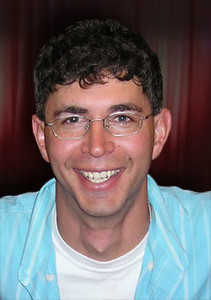
Arnold Kling is a Mercatus Center–affiliated senior scholar at George Mason University and a member of the arnold kling economic rockstarFinancial Markets Working Group.
Arnold specializes in housing-finance policy, financial institutions, macroeconomics, and the inside workings of America’s federal financial institutions. He also is an adjunct scholar at the Cato Institute in Washington, DC.

Arnold has testified before Congress on the collapse of Fannie Mae and Freddie Mac

He has authored five books, including Crisis of Abundance: Rethinking How We Pay for Health Care and Invisible Wealth: The Hidden Story of How Markets Work.

Arnold has published articles in the Economist, the Wall Street Journal, the New York Times, the Atlantic, and Forbes, among others, and he blogs at arnoldkling.com/blog/.

Previously, Arnold served as a senior economist at Freddie Mac and a staff economist on the Board of Governors of the Federal Reserve System.

He started Homefair, one of the first commercial websites on the Internet.

Arnold Kling received his PhD in economics from Massachusetts Institute of Technology.

“If you want to live a good lifestyle, you can find hobbies and interests that don’t cost very much. So it’s not hard to enjoy life. But if you want to make yourself miserable, watch politics.” – Arnold Kling

Economics:

In this episode, Arnold mentions and discusses: information rules, economic information, marginal cost of information, advertising, versioning, bundling, Austrian economics, risk measurement, capital, tax, mortgage-backed securities, loans, bubbles, crashes, excess leverage, marked-to-market, economics of health care, labor, capital, land, institutions.

Economists:

In this episode, Arnold mentions and discusses: Hal Varian, Carl Shapiro, Brad deLong, Tyler Cowen, Paul Krugman, Paul Volker, Douglass North, Robin Hanson, Bryan Caplan, James Buchanan, Adam Smith, F. A. Hayek and Robert Solow.

In this episode you will learn:

  • about Moore’s Law and what it means for the economy.
  • why economists are being lured into the world of start-ups and tech companies.
  • about the power of freemium and why companies need to build up trust to create a loyal customer base.
  • the difference between versioning and bundling.
  • what the future holds for the accessing information online.
  • about Arnold’s company online Homefair and how it was one of the first internet companies.
  • what really went on behind closed doors at Fannie Mae and Freddie Mac that resulted in their demise.
  • why Fannie Mae and Freddie Mac were bailed out.
  • how changing the culture at Freddie Mac caused its collapse.
  • about the state of health care in America today.
  • how Americans are to pay for the higher costs of health care.
  • about the fibre-bubble in the 1990s.
  • why we are richer today than a couple of hundred years ago.
  • why ideas are the foundation to economic growth and prosperity.
  • why nations like Cuba and North Korea are poor (bad institutions).
  • about the work being done at George Mason University.

Where to Find Arnold Kling:

  • www.arnoldkling.com/blog/

Books:

  • Crisis of Abundance: Rethinking How We Pay for Health Care by Arnold Kling
  • Invisible Wealth: The Hidden Story of How Markets Work by Arnold Kling
  • Information Rules: A Strategic Guide to the Network Economy by Carl Shapiro and Hal Varian
  • The Revolt of the Public and the Crisis of Authority in the New Millennium by Martin Gurri

Links: 

  • 23andMe: www.23andme.com
    • View reports on over 100 health conditions and traits
    • Find out about your inherited risk factors and how you might respond to certain medications
    • Discover your lineage and find DNA relatives
http://traffic.libsyn.com/economicrockstar/078_Arnold_Kling_.mp3

Podcast: Play in new window | Download
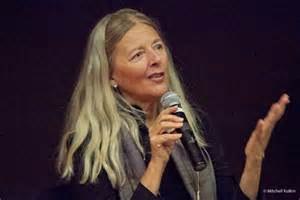
053: Helena Norberg-Hodge on Localisation, Trade Treaties and the Economics of Happiness

October 8, 2015 by Frank

http://traffic.libsyn.com/economicrockstar/Helena_Norberg_Hodge_Final.mp3
Play in New WindowDownload

053: Helena Norberg-Hodge on Localisation, Trade Treaties and the Economics of Happiness

Helena Norberg-Hodge is the founder and director of Local Futures. A pioneer of the ‘new economy’ movement, she has been promoting an economics of personal, social and ecological well-being for more than 30 years.Helena Norberg Hodge

Helena is the producer and co-director of the award-winning documentary The Economics of Happiness, and is the author of Ancient Futures: Learning from Ladakh, described as “an inspirational classic”.

Helena has given public lectures in seven languages, and has appeared in broadcast, print, and online media worldwide.

She was honored with the Right Livelihood Award (or ‘Alternative Nobel Prize’) for her groundbreaking work in Ladakh, and received the 2012 Goi Peace Prize for contributing to “the revitalization of cultural and biological diversity, and the strengthening of local communities and economies worldwide”.

Economics:

In this interview, Helena mentions: localisation, globalisation, deregulation, finance, banking, money, real economy, price, demand, subsidies, tax, business alliances, lobbying, competition, trade treaties, unemployment, poverty, natural environment, growth, climate, energy consumption, comparative advantage and GDP.

Economists:

In this interview, Helena mentions: Alex Tabarrok, Adam Smith, David Riccardo,

In this episode you will learn:

  • how and why Helena decided to advocate for and promote localisation.
  • about Ladakh and how it was removed from the rest of the world.
  • how the global market was very destructive to the local market in Ladakh.
  • how globalisation destroyed the livelihood of farms and local businesses and created unemployment.
  • how the happiness and high self-esteem among the people of Ladakh was destroyed after a decade of economic development.
  • why extreme tensions between buddhists and muslims erupted after living in peace for over 500 years in Ladakh.
  • about Ladakh, where the Dalai Lama is the spiritual head.
  • how Ladakh has become a case study on how a local economy has been quickly affected by globalisation.
  • about the phenomenal work Helena is doing to highlight the changing lives and economy of Ladakh and other regions.
  • about the true meaning of the real economy and how cheap money and speculation is destroying it.
  • why the earth is so precious and must be protected before we see irreversible and horrific damage.
  • about the terrific work being undertaken by Local Futures to highlight the need for economic change to protect our earth.
  • why we need to make the local food market a global initiative.
  • how small towns and villages are taking initiatives to feed their community with fresh, organic foods.
  • how schools are integrating nature into their infrastructure to increase the well-being of staff and pupils.
  • how nature provides profound and important psychological healing benefits.
  • how diversifying and staying local can provide more diversified foods per unit of land and water than the large monocultures.
  • why farmers prefer to work closely with the customer than with large-scale supermarkets.
  • whether small farmers and businesses should create a group to represent the their interests and to lobby governments in much the same way as large companies like Volkswagen and Monsanto.
  • how to make small and local businesses more visible.
  • about Helena’s mantra for resistance and renewal – resisting trade treaties and renewing localisation.
  • about the law that was passed in Sweden to have trade treaties to be discussed in secret.
  • how, under the new trade agreements, multinational corporations can sue governments if they inhibit their profit-making ability of that governments country.
  • whether GDP is a good measure of progress and how Helena interprets its true meaning.

Quotes by Helena on the Economic Rockstar Podcast:

“The EU is essentially an economic union and it’s bringing with it a centralised bureaucracy” – Helena Norberg-Hodge

About Earth Being Our Only Economy:

“The earth is our only economy. There’s nothing we use that doesn’t come from the earth. Nothing, nothing. Every iPad, every shoe, every television. And that economy, the real economy, is diversity. It requires and can only continue to live by respecting the uniqueness of every leaf, of every human being. Everything that lives is unique and is changing from moment to moment.” – Helena Norberg-Hodge

“I describe Nature as the economy, but it’s also our Mother. It’s our spiritual home” – Helena Norberg-Hodge

Click To Tweet

“Usually when people talk about the economy, they’re just thinking about paper money. They don’t think about culture and farming as having anything to do with the economy.” – Helena Norberg-Hodge

“The global food economy, from beginning to end, is the biggest contributor to CO2 emissions, and it’s not just because of the factory farming with animals. It’s across the board.” – Helena Norberg-Hodge

About the Stock Market and Cheap Money:

“The market is really young lads sitting in front of computers speculating with huge amounts of money. And they inevitably have to and do favour the giant. They’re betting on the giants ‘horses’ like Monsanto, McDonalds and Walmart. And so this connection between that flood of cheap money created out of thin air, now has become a sort of a ‘blind machinery’ that is eating up the real economy, the earth, extremely rapidly and we’re going to see more horrific examples.” – Helena Norberg-Hodge

Other Quotes:

There is a growing local food market that is going global – Helena Norberg-Hodge

Click To Tweet

GDP is an outrageous measure of progress. It is simply a measure of commercialisation – Helena Norberg-Hodge

With Riccardo and the notion of comparative advantage, it sounds good on the surface. But let’s remember it was brought in in a time of slavery – Helena Norberg-Hodge

Where to Find Helena:

  • Local Futures: www.localfutures.org
  • Economics of Happiness
http://traffic.libsyn.com/economicrockstar/Helena_Norberg_Hodge_Final.mp3

Podcast: Play in new window | Download
035: Stephen Young on Being Car-Free and the Behavioural Economics of Owning A Car

June 4, 2015 by Frank

http://traffic.libsyn.com/economicrockstar/035_Stephen_Young_Final.mp3
Play in New WindowDownload

035: Stephen Young on Being Car-Free and the Behavioural Economics of Owning A Car

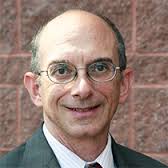
Stephen Young is a Senior Lecturer at Brighton Business School and is subject leader for behavioural economics.Stephen Young

He is also Visiting Lecturer at Brighton and Sussex Medical School, where he teaches Behavioural Economics to health professionals, including commissioners, public health practitioners and GPs.

As an independent consultant and trainer, Stephen also provides client workshops and presentations on behavioural economics and behaviour change.

Stephen is widely published and his research interests include behaviour change, climate change, health, sustainability, and Information and Communications Technology.

Stephen does not own a car and is so passionate about being car free that he writes regularly on his blog livingthecarfreelife.blogspot.com. 

Economists:

In this interview, Stephen mentions and discusses:

Paul Ormerod, Richard Thaler, Cass Sunstein, John Cochrane, Paul Dolan, Malcolm Gladwell, Phil Goodwin, Daniel Kahneman, Adam Smith, Karl Marx, Barry Schwartz, Richard Layard, Nassim Nicholas Taleb, Paul Krugman and Friedrich Hayek.

Economic Themes:

In this interview, Stephen mentions and discusses:

Bank run, financial crisis, risk, behavioural economics, nudge, rationality, incentives, tax, choice architecture, obesity, climate change, externalities, loss aversion and the endowment effect.

On Economic Theory:

“None of the models are completely perfect. None of them work to everybody’s benefit” – Stephen Young

Click To Tweet

Is behavioural economics storming the citadel or is it shoring up the ramparts? – Stephen Young

Click To Tweet

Find Out:

  • why Stephen decided to become an academic.
  • about the Northern Rock bank run in the UK in 2007.
  • why universities need to adapt or die when it comes to addressing relevant content.
  • what Stephen is doing to reduce his carbon footprint in college and how he’s responding to the digital needs of his students.
  • why health professionals are interested in behavioral economics.
  • about the Irish government’s fight against obesity.
  • how Stephen is encouraging a town in the UK to become pedestrian friendly.
  • about framing car ownership – status and perception of rank.
  • how by ditching your car you can burn calories.
  • how the average person is working two days a week to pay for their car.
  • about the emotional attachment that a car represents.
  • what major cities across Europe are doing to make them more pedestrian and bike-friendly.
  • about peak car ownership.
  • some advice from Stephen on how to give up your car and become car free.
  • about the pluralist approach to embracing economics.

“The externalities don’t work for car ownership because it’s not priced in because of the pollution emitted” – Stephen Young

Click To Tweet

You can live a better life without a car. You can be thinner. You  can be richer. You can be more sociable. You can be more flexible. You can get around just as easily – Stephen Young.

Reasons for Peak Car Ownership:

  1. The youth do not have the income to finance the ownership of a car due to the high unemployment rates.
  2. High cost of car insurance.
  3. The opportunity costs of owning the latest technology.
  4. You don’t need a car to participate in a lot of things today.

Behavior Economics in the Health Sector:

“We’re not just nudged by the other side, we’re being bombarded by the other side. There’s a lot of room to doubt the way public health policy is being transacted and implemented in a lot of economies” – Stephen Young.

Giving Up Your Car and Becoming Car Free:

  1. Try living without your car for a while before you give up.
  2. If you’re moving house, locate to an area where everything you need is close by.
  3. Don’t give up your car just because it’ll make the world a better place. Only do it to improve your own life.
  4. Take a ‘hike’ – go for a walk.
  5. Walking is a great way of forming your thoughts and ideas as it clears your head and frees your mind.
  6. Walking, rather than driving, improves your health and well-being. It connects you to where you live, to where you are.

“All truly great thoughts are conceived by walking” – Nietzcshe.

Click To Tweet

Recommended Books:

  • The Death of Economics by Paul Ormerod
  • Why Most Things Fail: Evolution, Extinction and Economics by Paul Ormerod
  • Nudge by Richard Thaler and Cass Sunstein
  • The Tipping Point by Malcolm Gladwell
  • Happiness by Design by Paul Dolan
  • Thinking, Fast and Slow by Daniel Kahneman
  • The Road to Serfdom by Friedrich Hayek
  • Capital: Volume 1 by Karl Marx
  • Misbehaving: The Making of Behavioural Economics by Richard Thaler
  • Poor Economics by Abhijit V. Banerjee and Esther Duflo
  • Scarcity by Sendil Mullainathan and Eldar Shafir
  • The Structure of Scientific Revolutions by Thomas Kuhn

Where to Find Stephen Young:

  • Website: stephenyoung.org.uk
  • Website: livingthecarfreelife.blogspot.com
  • LinkedIn: Stephen Young
  • Twitter: @stephenyounguk
  • BehaviourWorkshops Twitter: @BehaviourW
  • Behaviour Workshops Blog: http://www.behaviourworkshops.blogspot.co.uk/

Stephen Young’s Publications:

  • Young, S (2013). The Behavioural Economics of Owning A Car. eg magazine. Volume 18, Issue 5, March-April  2013. ISSN 2042-1990.
  • Other Publications.

Forthcoming

  • Young, S. and Caisey, V. Behavioral Economics and Social Marketing: Points of Contact?  Chapter in Volume II of Stewart, D. (Ed) Handbook of Persuasion and Social Marketing. NY: Praeger. 2015.
http://traffic.libsyn.com/economicrockstar/035_Stephen_Young_Final.mp3

Podcast: Play in new window | Download
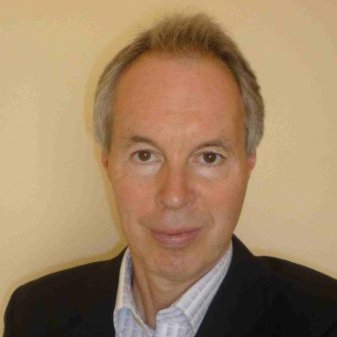
012: Yoram Bauman on Cartoons, Being a Stand-Up Economist & His Passion to Save the Environment

December 25, 2014 by Frank

http://traffic.libsyn.com/economicrockstar/012_Yoram_Bauman.mp3
Play in New WindowDownload

012: Yoram Bauman on Cartoons, Being a Stand-Up Economist & His Passion to Save the Environment 

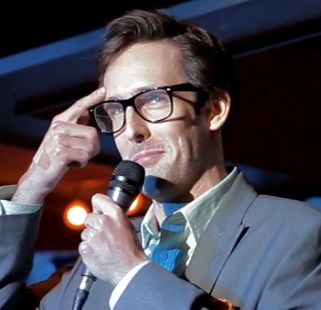
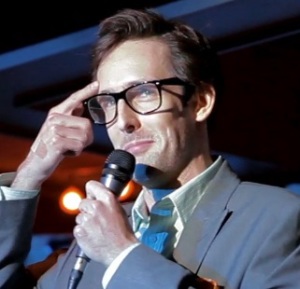
Yoram BaumanYoram Bauman is considered the world’s first and only stand-up economist and uses cartoons to explain economic concepts and theories. He has a PhD from the University of Washington and a BA in Mathematics from Reed College. Yoram lectured environmental and health economics at both Whitman College and University of Washington and was a visiting research scholar at the University of International Business and Economics in Beijing. Yoram has swapped the lecture hall for the comedy club and is on a mission to spread joy to the world and to reform economics education. Every year Yoram organizes the Humor Session at the American Economic Association annual meeting.

Yoram is an advocate for carbon pricing and other economic approaches to protecting the environment. Yoram has written extensively on these issues but has also published numerous micro and macro books with comedy and entertainment as its central theme. They include The Cartoon Introduction to Economics, The Cartoon Introduction to Climate Change and Stand-Up Economics: The Micro Textbook. Some of these books have been translated into over 10 languages.

Economic Themes:

In this interview, Yoram mentions and discusses: adverse selection, portfolio selection theory, the invisible hand, environmental economics, environmental taxes, market power, monopoly, corruption, opportunity cost, free market, revenue-neutral carbon taxes, consumption tax, tragedy of the commons, externalities, correlation, hyperinflation, population growth, economic growth, monetary base and rational expectations.

Economists and Economic Schools:

In this interview, Yoram mentions: George Akerlof, James Tobin, Adam Smith, Gregory Mankiw and Paul Krugman.

Yoram’s AH-HA HA HA HA Moment:

“I went to graduate school to work on environmental taxes and to make them a reality, so being an academic was one path to doing that. When I was in graduate school I wrote a parody of an economics textbook by Greg Mankiw just to blow off steam. It ended up getting published in a science humor journal called The Annals of Improbable Research and they run a humor session each year at the AAAS meeting. They invited me to come and I had so much fun that I got into stand-up comedy as a hobby.”

“My academic career wasn’t going as well as I hoped.”

Yoram’s Affirmations/Mantra:

  • “When I had choices in front of me, in terms of life choices, I was going to choose the path of adventure. That’s turned out to work really well for me. There’s this constant pressure in life that you’re not good enough. Maybe you have a PhD in economics but you’re not a Professor at Harvard. I’m in a position where I can take chances and I don’t have to pursue the resume builder and I don’t have to take the conventional path.”
  • “I think if a lot of people stop and look in the mirror, especially college-educated folks, I think that they are already winners. And when you’re already a winner then you can afford to take some risks and take some chances.”
When you’re already a winner you can afford to take some risks and take some chances – Yoram

Click To Tweet

Personal Habits:

  • Yoram’s 4 month old baby Zadie wakes up at 4am for a bottle feed. He feeds her, puts her back to sleep and stays up, spending 2 to 3 hours working when it’s quite.
I work pretty hard and set deadlines for myself and make them happen – Yoram Bauman

Click To Tweet

  • Yoram spends some of his time at Lighthouse Coffee in Seattle, where his child likes to nap with the comforting noise that’s there, and gets to work on his emails while off-line (there’s no wi-fi at Lighthouse Coffee). It’s a great way to clear out your inbox without fighting off all the traffic

Influencers:

  • Yoram’s father, his grandmother, Helen Winter, his godmother Betty Tansey, his professors, the Overeducated Cartoonist, Larry Gonick, Jon Stewart and John Oliver.

The longer we live, the more there is to learn and the more exciting it is to dig out the answers – Helen Winter.

Click To Tweet

In this episode, you will learn:

  • about revenue-neutral carbon taxing.
  • if we should keep economics serious or is there room for comedy?
  • why it’s important to motivate people to open a textbook and how humor and comedy can  do this.
  • how cartoons and humor can bring so much detail and understanding to economic concepts.
  • where it all began for Yoram when writing a cartoon economics textbook.
  • about the cartoon books written by Yoram that document the annals of economic theory.
  • how Yoram humorously depicts why some economists have won the Nobel Prize in Economics in a simplified and memorable manner.
  • how Adam Smith calls the winners of the Nobel Prize in Economics to interview them. Spooked? Find out how.
  • how Yoram found his true calling while reading Mankiw’s economics textbook.
  • how Yoram uses cartoons and comedy to teach us economics and to inform us of the need for environmental taxes, something he is passionate about.
  • how Yoram can use his knowledge on monopoly to maintain a lucrative career in comedy.
  • if Yoram ‘fears market failure’ (he is a monopolist after all!).
  • how the comedy club and the lecture hall are quite similar.
  • about Yoram’s passion for environmental tax reform.
  • how we can reduce the carbon impact on our environment with tax reform.
  • about the meaning of The Tragedy of the Commons.
  • about the secret to being a comedian.
  • why I think Yoram reminds me of Walter White from Breaking Bad.
  • about the connection Yoram has with Steve Jobs.
  • about the influence that the strong women in Yoram’s life had on his outlook and philosophy.
  • how having a new born baby has created a new habit for Yoram to help him get things done.
  • about Joss Paper or spirit money and how you can make your dead ancestors wealthy in the afterworld.

On Being a Monopolist:

“I’m the world’s first and only, so I have market power. Fortunately, I know a thing or two about monopoly pricing.” – Yoram Bauman

‘I’m the world’s first and only, so I have market power’ – Yoram Bauman

Click To Tweet

Yoram has over 1.7 million YouTube views – ‘That’s a lot for economics jokes’ – Yoram Bauman

On Failure:

“I’m not afraid of failure because I’m an economist. Economists are experts on failure.” – Yoram Bauman

Click To Tweet

“I’ve done my fair share of ‘bombing’. Hopefully you learn from it, you grow from it and you also realise that it’s not the end of the world and that you wake up the next morning and the sun still rises and you try again.”– Yoram Bauman

On Cartooning and The Similarities Between Teaching and Stand-Up Comedy:

  • “Anytime you can try to reach out to people and humanise the subject and humanise yourself as an instructor I think that’s helpful. Humor has a way of motivating people. Especially at college level, teachers forget how important motivation is. Try and give people an incentive to crack open a textbook other than the fact their grades depend upon it.”

‘Cartooning is an under-appreciated method of education’ – Yoram Bauman

Click To Tweet

  • “What I learned from comedy is that it’s a two-way street. You have to pay attention to where the audience is and you have to figure out ways to get feedback from them. In the comedy world that’s quite easy – people are either laughing or they’re not laughing. You get feedback pretty easily. But in the teaching world it’s a lot harder to get feedback. You have get yourself in that mindset of thinking about how is the audience viewing this and how can I figure out where they are and how can I connect with them.”

Gigging in Beijing in The Bookworm

  • There’s no censorship at The Bookworm. There’s actually quite a bit of free speech in China if you’re a Westerner speaking English.
  • They had a book on Tiananmen Square in The Bookworm.
  • There’s a lot of China that’s very laissez-faire. You think about it as a Communist state, and you think this must mean it’s like a police state like North Korea. But it’s actually a lot like the Wild West in the United States in many places.
  • If you look at the day-to-day lives of many people, it’s become more like the Wild West than the totalitarian North Korea style regime.

Environmental Tax Reform

  • If we had higher taxes on bad things like pollution, we can afford to have lower taxes on good things. That idea struck me as being intellectually beautiful and it also struck me as something that was politically a good idea that could get some bi-partisan support.
  • I decided to devote a considerable portion of my life-energy to make pollution tax a reality.
  • Economic theory and almost all economists think that revenue-neutral carbon tax is a good idea but if you look at the political system, it’s been very difficult to get environmental taxes to work in the political arena.

British Columbia Case Study on Carbon Taxing

  • British Columbia is considered to have the best climate policy in the world with its revenue-neutral carbon tax and it’s performing terrifically. But it’s one of the relatively few examples of a textbook case of environmental economics in action in terms of pollution taxes.
  • The revenue from the carbon tax in British Columbia reduces investment and corporate tax, so the overall impact on the province is its fiscal status is basically zero.
  • I’m working with a group called Carbon Washington and we’re going to reduce sales tax in the state. Households will pay a few hundred dollars more a year for fossil fuels but they’ll pay a few hundred dollars less a year for something else.

China’s Role in Environmental Reform

  • The Chinese make noise about pricing carbon. There’s a big agreement their president made with President Obama. Maybe they’re exploring the idea but I have a hard time believing that they’re fully committed to it because they don’t yet seem to be fully committed to reducing local air pollution.

Tragedy of the Commons (21:23)

The Secret To Being a Comedian

  • “Let yourself be free to explore unusual areas and hobbies. You have to give yourself permission to follow your passions to pursue something. I gave myself permission to try it (comedy) and I gave myself permission to fail, and I think with a lot of creative endeavours it’s what you  need to do.”

The Difference Between Macro Economists and Micro Economists:

“The level of vitriol in macro economics makes it especially appealing as a target. Micro economists disagree about little things, but on the big things they are all pretty much on the same page. But macro economists are really all over the map and so that opens up some opportunities for  comedy.”

Recommended Books:

  • The Cartoon Introduction to Economics: Volume One: Microeconomics by Yoram Bauman and Grady Klein
  • The Cartoon Introduction to Economics: Volume Two: Macroeconomics by Yoram Bauman and Grady Klein
  • The Cartoon Introduction to Climate Change by Yoram Bauman and Grady KleinAudible
  • Economics of the Environment: Selected Readings by Robert Stavins
  • Becoming Richard Pryor by Scott Saul
  • Andy Kaufman: The Truth, Finally by Bob Zmuda
  • Books by comedian Lenny Bruce
  • A bunch of baby books.

Favorite Internet Resources:

  • Greg Mankiw’s Blog
  • Paul Krugman’s Blog
  • Real Climate
  • Climate Progress
  • Climate Etc by Judith Curry

Where To Find Yoram Bauman:

  • Yoram’s website: www.standupeconomist.com
  • Carbon Washington: www.carbonwa.org
http://traffic.libsyn.com/economicrockstar/012_Yoram_Bauman.mp3

Podcast: Play in new window | Download

006: Andrew Heaton on Using Comedy to Explain Economic Concepts

November 20, 2014 by Frank

http://traffic.libsyn.com/economicrockstar/006_Andrew_Heaton.mp3
Play in New WindowDownload

006: Andrew Heaton on Using Comedy to Explain Economic Concepts

Andrew Heaton

Andrew Heaton is a comedian, writer and political satirist. He is the presenter of the witty and entertaining economics podcast, EconPop and has a Masters degree in International Politics. Andrew has been featured in a Bollywood movie, plays a lead role in the sitcom Cap South and has been voted best new comedian of 2013 in New York. Andrew hails from Oklahoma, is an Officer to a Prince and plays the Ukelele to enhance the mood of his friends’ amorous endeavors.

Economic Themes:

In this interview, Andrew mentions and discusses: wheat quotas, comparative advantage, protectionism, relative and actual growth, free markets and limited government, Austrian Theory of Monetary Creation, supply and demand, signalling, subjective value, negative externalities, tariffs and import duty, protectionism, corporation tax, scarce resources, population, abundance of resources, the Great Depression, US deficit, unintended consequences, behavioral economics and risk aversion.

Economists and Economic Schools:

In this interview, Andrew mentions: the Chicago School, the Austrian School, Libertarianism, Adam Smith, Milton Friedman, Freidrich Hayek, John Maynard Keynes, Murray Rothbard, Frédéric Bastiat, Thomas Malthus, Gene Epstein, Steven Horwitz,

Andrew’s Influencers:

Gene Epstein and Milton Friedman.

Podcasts:

EconPop is hosted by Andrew, who is joined by economist Steven Horwitz and professor of literature Paul Cantor.

In this episode, you will learn:

  • how Andrew became interested in economics while studying abroad in Scotland.
  • what parallels Andrew draws between politics, economics and comedy.
  • what economists and school of thought Andrew draws inspiration from to carve out his own views.
  • where and from whom Andrew gets his inspiration for his anecdotal writings on economics concepts.
  • how economic concepts is in abundance in life and can be found in the many movies we may have watched.
  • what qualities Andrew believes makes a successful person.
  • about Andrew being an Officer to Prince Leonard of Hutt River.
  • what comparative advantage is and how Andrew explains it in an unusual but light-hearted way.
  • why Andrew believes we will never run out of resources and why we should not worry about scarcity.

Advice:

‘If you’re gonna have a lot of activities that you are doing, you need to be mentally organised and very good at prioritising.’

‘To supercharge your day, when you are getting to your tasks, do the one you hate most first… the rest of your day is a cinch.’

‘With books, the trick is you just write a thousand words a night… your subconscious mind works on it and when you sit down the following night it’s a little bit easier.  You have a full novel in two and half months.’

Personal Habits:

  • Andrew works extremely hard to get things done. He has blended comedy with economics to allow this dismal science to become enjoyable or entertaining.
  • Andrew believes that having the right mentor is hugely beneficial and such a relationship allows him to learn and focus on reaching small milestones. This has worked out favorably well for Andrew in the field of economics where he developed a strong set of opinions on some theoretical aspects of economics. By expanding his knowledge-base through economics books and the many discussions with his mentor, Gene Epstein, Andrew has opened new doors and created new opportunities that otherwise may not have been attainable. His love of economics, particularly the Austrian and Chicago Schools and libertarianism, has given Andrew a lot of material to work on for his comedic performances onstage, online and in books.
  • Andrew writes quite frequently and believes that constant writing will have a payoff in terms of the publication of a book.
  • Andrew writes ‘common sense economics for people who need to learn about common sense economics’ – Gene Epstein

    Click To Tweet

  • Andrew plays the ukelele but, unfortunately, it wasn’t ‘tuned’ correctly for him to give us a treat on this podcast. So, as an homage to Andrew, I changed the outro music theme of Economic Rockstar to one that uses a ukelele. I hope you enjoy it!

Takeaway:

On Economics and Comedy:

Economics is a dismal science, so if you can make it funny it sweetens it – Andrew Heaton

Click To Tweet

On Humor and Economic Differences:

‘When you start arguing with somebody your adrenaline level shoots up.  Just on a biochemical level, you become much less able to hear what they are saying because you are taking a defensive posture.  Conversely, when you’re laughing, you produce endorphins.  And, if I can make you laugh, for a moment you are willing to listen to me – just for a moment.’

On Human Innovation Outpacing Declining Resources:

“We didn’t end the Stone Age because we ran out of stones”. – Andrew Heaton

Click To Tweet

Recommended Books:

  • Laughter Is Better Than Communism by Andrew Heaton
  • Frank Got Abducted by Andrew Heaton
  • Re-Boot Grandpa by Andrew Heaton (coming soon in 2016)
  • Speech Trap Werewolf by Andrew Heaton (coming soon)
  • The Conscience of a Conservative by Barry Goldwater
  • Parliament of Whores: A Lone Humorist Attempts to Explain the Entire U.S.  Government by P.J. O’Rourke
  • Free To Choose by Milton Friedman and Rose Friedman
  • Life at the Bottom: The Worldview That Makes the Underclass by Theodore Dairymple
  • Economics In One Lesson by Henry Hazlitt
  • Nudge: Improving Decisions About Health, Wealth and Happiness by Richard H. Thaler and Cass R. Sunstein

Favorite Internet Resources:

  • Evernote

Where To Find Andrew Heaton:

  • Website: MightyHeaton
  • Twitter: @MightyHeaton

Contact Andrew and start a campaign if you would like him to create a ‘Mighty Heaton’ doll!

http://traffic.libsyn.com/economicrockstar/006_Andrew_Heaton.mp3

Podcast: Play in new window | Download
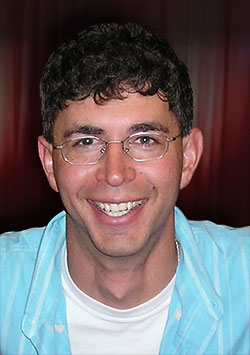
Frank Conway

Frank Conway is founder of Economic Rockstar and lecturer of economics, finance and statistics. Read More…

View My Blog Posts

Youtube Sub

Become a Patron of the Economic Rockstar Podcast

patreon

Ireland’s Economy by the Numbers

Leaving Cert Economics: Ireland’s Economy  Click here to download a workbook on Ireland’s Economy so that you can add your own notes. [Original size] Ireland’s Economy by fconway

Categories

Subscribe and Never Miss An Episode

itunes-logo

Recent Posts

  • Ireland’s Economy by the Numbers April 8, 2019
  • 174: Wendy Carlin on The Core Project, Capitalism, Democracy and Normative Statements February 13, 2019
  • 173: Stephen Wright on Core Econ as a Learning Resource for Mainstream Economics January 28, 2019
  • 172: Best of 2018 Part 2: From the Great Depression to Futurism; Institutions, Individualism, Cooperation and Reciprocity January 22, 2019
  • 171: Best of 2018 Part 1 January 3, 2019

Copyright © 2026 · Podcast Pro Theme on Genesis Framework · WordPress · Log in

This website uses cookies to improve your experience. We'll assume you're ok with this, but you can opt-out if you wish. Accept Reject Read More
Privacy Policy

Privacy Overview

This website uses cookies to improve your experience while you navigate through the website. Out of these, the cookies that are categorized as necessary are stored on your browser as they are essential for the working of basic functionalities of the website. We also use third-party cookies that help us analyze and understand how you use this website. These cookies will be stored in your browser only with your consent. You also have the option to opt-out of these cookies. But opting out of some of these cookies may affect your browsing experience.
Necessary
Always Enabled
Necessary cookies are absolutely essential for the website to function properly. This category only includes cookies that ensures basic functionalities and security features of the website. These cookies do not store any personal information.
Non-necessary
Any cookies that may not be particularly necessary for the website to function and is used specifically to collect user personal data via analytics, ads, other embedded contents are termed as non-necessary cookies. It is mandatory to procure user consent prior to running these cookies on your website.
SAVE & ACCEPT