• ABOUT
  • RESOURCES
  • PODCAST
  • BOOKS
  • BLOG
  • SUPPORTERS
  • QFA Financial Advice
  • CONTACT

Economic Rockstar

Connecting Brilliant Minds in Economics and Finance

144: Donald Boudreaux on International Trade, Tariffs and Protectionism
June 15, 2018 by Frank

http://traffic.libsyn.com/economicrockstar/144_Donald_Boudreaux_Final.mp3
Play in New WindowDownload

144: Donald Boudreaux on International Trade, Tariffs and Protectionism

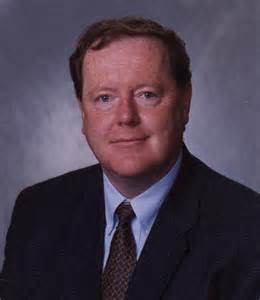
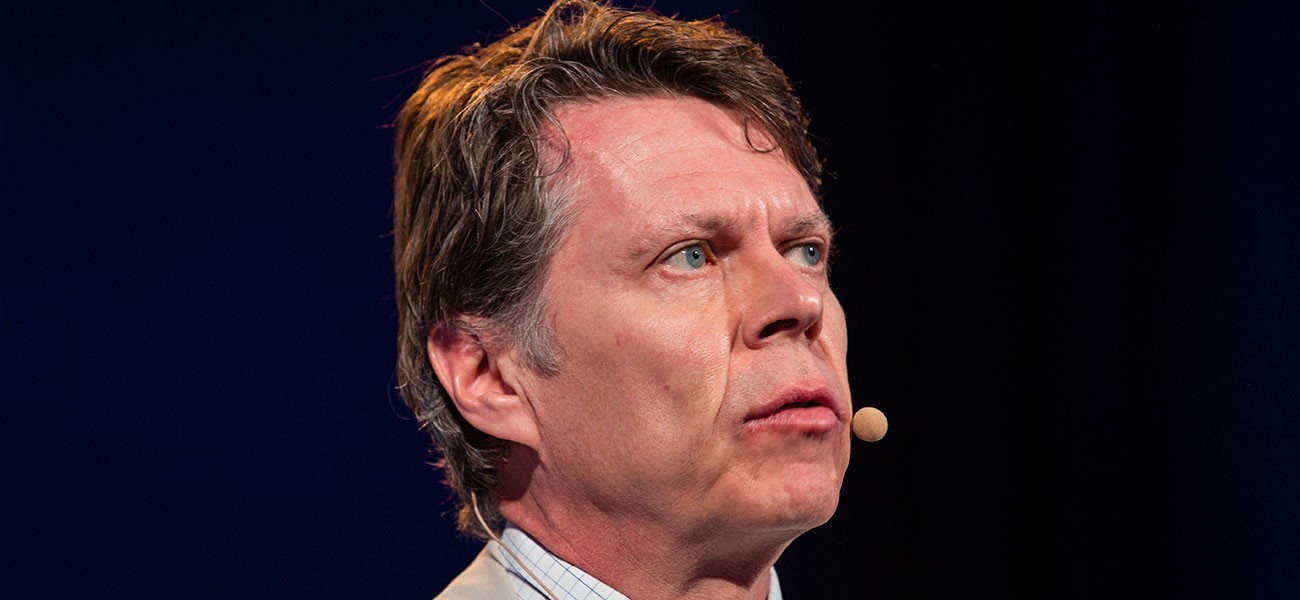
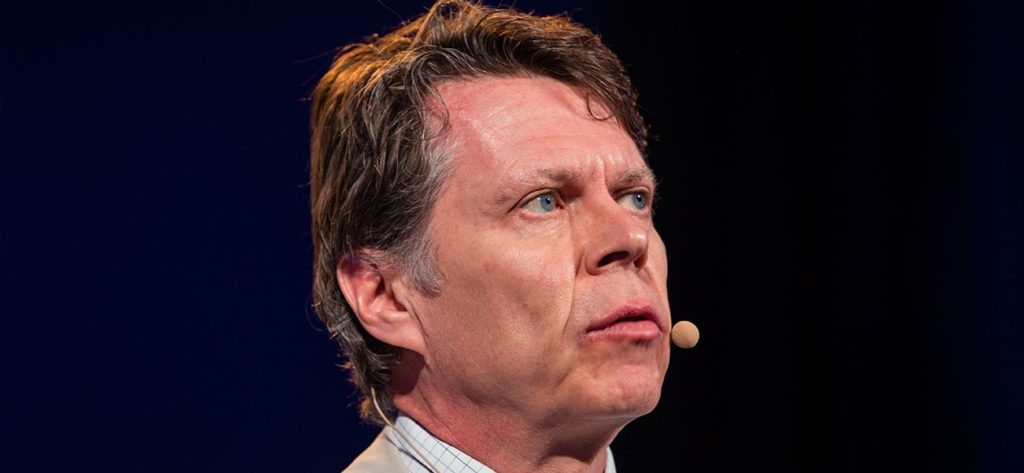
Donald Boudreaux is an American economist, author, professor, and co-director of the Program on the American Economy and Globalization at the Mercatus Center at George Mason University in Fairfax, Virginia.

He is the author of the 2007 and 2012 books Globalization and Hypocrites and Half-Wits, respectively.

He contributes a column twice a month to the Pittsburgh Tribune-Review and contributes to the Cafe Hayek blog.

Economists mentioned in the Episode:

David Ricardo, Adam Smith, John Maynard Keynes, James Buchanan, Russ Roberts, Hecksher-Ohlin, Daniel Ikenson.

In this Episode, you will learn:

  • Why we should look at Ricardo’s model of comparative advantage at an individual level rather than at a country level.
  • Why Krispy Kreme had to close some of its stores.
  • Is French Bourdeaux wine really all French or does the global supply chain have some hidden origins to this grape?
  • Does globalisation facilitate material prosperity?
  • Is there a race to the bottom?
  • Is globalisation facilitating our human needs for increased leisure time?
  • Is globalisation good for us?
  • Protectionism and what it means for US jobs.
  • Will car manufacturing jobs come back to Detroit?
  • Are restrictions to trade a contributor to poor economic growth?
  • Does trade promote diplomacy and reduce military intervention?
  • Did the 1930 Smoot-Hawley tariff on US imports worsen the Great Depression?
  • and much more.

People mentioned in this Episode:

  • Katharine Graham CEO of The Washington Post in the 1970s.
  • Warren Buffett
  • H. L. Mencken (journalist 19 – 20th century)

Where to find Donald J. Boudreaux:

  • Cafe Hayek
  • www.donaldjboudreaux.com

Readings:

  • Economic Possibilities for our Grandchildren by John Maynard Keynes (1930)   

Books:

  • Hypocrites and Half-Wits: A Daily Dose of Sanity from Cafe Hayek by Donald Boudreaux
  • Globalization by Donald Boudreaux
  • An Enquiry into the Nature and Causes of the Wealth of Nations by Adam Smith
  • Perennial Seller by Ryan Holiday

Patreon

If you’re a fan of the podcast and would like to show your support in anyway, please check out my Patreon page at www.patreon.com/economicrockstar where you can sign up for any of the awards for as little as $1 a month or you can simply follow me on the Economic Rockstar Facebook page or on Twitter or simply recommend the show to a friend, especially if they have never had the opportunity to study economics.

http://traffic.libsyn.com/economicrockstar/144_Donald_Boudreaux_Final.mp3

Podcast: Play in new window | Download
104: Russ Roberts on How Adam Smith Can Change Your Life and the Theory of Moral Sentiments

September 19, 2016 by Frank

http://traffic.libsyn.com/economicrockstar/104_Russ_Roberts_Final.mp3
Play in New WindowDownload

104: Russ Roberts on How Adam Smith Can Change Your Life and the Theory of Moral Sentiments

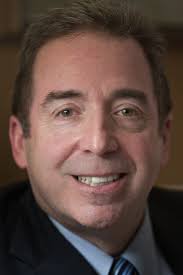
Russ Roberts is Associate Editor, founder and host of the popular and much loved podcast EconTalk, russ-roberts-economic-rockstarand founding advisory board member of the Library of Economics and Liberty.

Russ is the John and Jean De Nault Research Fellow at Stanford University’s Hoover Institution.

His two rap videos on the ideas of John Maynard Keynes and F.A. Hayek, created with filmmaker John Papola, have had more than eight million views on YouTube.

Russ’ latest book How Adam Smith Can Change Your Life: An Unexpected Guide to Human Nature and Happiness takes the lessons from Adam Smith’s The Theory of Moral Sentiments and applies them to modern life.

Russ is also the author of three economic novels teaching economic lessons and ideas through fiction. The Price of Everything: A Parable of Possibility and Prosperity, The Invisible Heart: An Economic Romance and The Choice: A Fable of Free Trade and Protectionism.

Russ blogs at CafeHayek.com and archives his work at russroberts.info.

A three-time teacher of the year, Russ has taught at George Mason University, Washington University in St. Louis, the University of Rochester, Stanford University, and the University of California.

He earned his Ph.D. from the University of Chicago and his undergraduate degree in economics from the University of North Carolina at Chapel Hill.

Economists:

In this episode, Russ discusses and mentions: Adam Smith, F. A. Hayek, David Hume, Vernon Smith, Milton Friedman and Nassim Nicholas Taleb.

Economics:

In this episode, Russ discusses and mentions: Austrian economics, classical economics, spontaneous order, pricing, supply, demand, surge pricing, unintended consequences, price controls, taxes and subsidies.

In this episode, you will learn:

  • about Adam Smith and how the application of Smith’s philosophical and economic thinking can change your life.
  • what the market forces are and the positive and negative examples of the spontaneous order.
  • the invisible hand and prices.
  • what surging prices are.
  • what Smith describes as the impartial spectator and the power of our conscience.
  • Adam Smith’s advice on how to be happy.
  • two ways to get people to pay attention to you and what Smith believed is the most ethical way.
  • what Smith believed was the cultural norm to accept behaviors.

Two Ways to Get People to Pay Attention to You:

Be rich, famous and powerful. It works. But don’t be fooled. You have a natural tendency to pursue money, fame and power because it will get you attention, respect and love. But that’s the wrong way to get there.

The right way to get there is through wisdom and virtue. Understand the world and treat people well. If you do that, you’re also going to be loved, respected and praised. But you won’t be doing the things along the way that people do when they want to become rich, powerful and famous that are not so good for you that cold lead to regret, shame and misbehavior. The temptation to do the unethical thing to pursue fame, power and money is always there.

Writing Tips:

  • Write everyday.
  • The trick to being a good writer is being a good editor.

Where to Find Russ Roberts:

  • Website: russroberts.info
  • Website: econtalk.org
  • Twitter: @EconTalker
  • Medium: medium.com/@russroberts

Recommended Books:

  • How Adam Smith Can Change Your Life: An Unexpected Guide to Human Nature and Happiness by Russ Roberts
  • The Price of Everything: A Parable of Possibility and Prosperity by Russ Roberts
  • The Invisible Heart: An Economic Romance by Russ Roberts
  • The Choice: A Fable of Free Trade and Protectionism by Russ Roberts
  • The Theory of Moral Sentiments by Adam Smith
  • The Wealth of Nations by Adam Smith
  • The Fatal Conceit: The Errors of Socialism (The Collected Works of F. A. Hayek) by F. A. Hayek
  • Individualism and Economic Order by F. A. Hayek
  • Fooled by Randomness: The Hidden Role of Chance in Life and in the Markets (Incerto) by Nassim Taleb

c

http://traffic.libsyn.com/economicrockstar/104_Russ_Roberts_Final.mp3

Podcast: Play in new window | Download
083: Stephen Kinsella on Stock Flow Models, Rent Controls and Being the Green Lantern of Economics

April 28, 2016 by Frank

http://traffic.libsyn.com/economicrockstar/083_Stephen_Kinsella.mp3
Play in New WindowDownload

083: Stephen Kinsella on Stock Flow Models, Rent Controls and Being the Green Lantern of Economics

Stephen Kinsella is a Senior Lecturer in Economics at the Kemmy Business School, the University of Stephen KinsellaLimerick in Ireland and a Research Fellow at the Geary Institute at University College Dublin. He is currently visiting Professor of Economics at Université Paris.

Stephen has two PhD’s, is well published in many Economics Journals and has won several grants worth around 1.5 million Euro.

Stephen’s area of expertise is in the study of the Irish and European economies.

He has written 4 books:

  • Ireland in 2050: How we will be Living
  • Understanding Ireland’s Economic Crisis: Prospects for Recovery
  • QuickWin Economics and
  • Computable Economics.

Stephen is a weekly columnist for the Sunday Business Post newspaper and he also has his own website stephenkinsella.net which is amazingly rich in content, covering issues on the Irish and European economy as well as material he covers in his lectures.

Economics:

In this episode, Stephen mentions: stock flow consistent models, rent controls, GDP, wealth, consumption, government expenditure, investment, net exports, debt-to-GDP, stock of unemployed-to-flow of the labor force, taxes, austerity, QE, pro-cyclical policy, unemployment, automatic stabilizers, Brexit, foreign direct investment, hyperinflation, purchasing power of money, housing, pricing mechanism and money supply.

Economists:

In this episode, Stephen mentions: Wynne Godley, Lance Taylor, Marc Lavoie, Kevin O’Rourke, Philip Lane, Dermot McAleese, Edward Nell, Carmen M. Reinhart, Kenneth S. Rogoff and Joseph Stiglitz.

In this episode you will learn:

  • how and why Stephen completed two PhD’s and how he completed his first within 12 months.
  • about stock flow consistent models.
  • about the features of a stock flow model.
  • why the Irish government bailed out the banks.
  • how Ireland received ‘help’ from international economies, particularly the US and the UK, to quickly move out of a recession since the Great Financial Crisis.
  • whether Ireland will suffer if the UK left the EU in the so-called Brexit.
  • how rent controls lead to an inefficient market outcome.

Links:

  • Institute of New Economic Thinking

Papers:

  • Stephen Kinsella (2001). Hedgehog Logic – the Problems of Econometrics Today. Student Economic Review.
  • Stephen Kinsella (2007). Logarithms: A Tutorial.

Books: 

  • QuickWin Economics-Answers to Your Top 100 Economics Questions by Stephen Kinsella
  • Ireland in 2050: How we will be Living by Stephen Kinsella
  • Understanding Ireland’s Economic Crisis: Prospects for Recovery by Stephen Kinsella
  • Monetary Economics An Integrated Approach to Credit, Money, Income, Production and Wealth by Wynne Godley and Marc Lavoie
  • Swimming with Sharks: My Journey into the World of the Bankers by Joris Luyendijk
  • This Time Is Different: Eight Centuries of Financial Folly by Carmen M. Reinhart and Kenneth S. Rogoff
  • Seeing Like a State: How Certain Schemes to Improve the Human Condition Have Failed by James Scott
http://traffic.libsyn.com/economicrockstar/083_Stephen_Kinsella.mp3

Podcast: Play in new window | Download

052: Alex Tabarrok on Globalisation, Bounty Hunters and Leveraging Online Education

October 1, 2015 by Frank

http://traffic.libsyn.com/economicrockstar/Alex_Tabbarrok__Final.mp3
Play in New WindowDownload

052: Alex Tabarrok on Globalisation, Bounty Hunters and Leveraging Online Education

Alex Tabarrok is Associate Professor of Economics at George Mason University and co-founder (with Tyler Cowen) of Marginal Revolution University, an online platform for learning economics.Alex Tabarrok

Alex is Senior Fellow and former Research Director for The Independent Institute, Assistant Editor of The Independent Review, Bartley J. Madden Chair in Economics at the Mercatus Center and Director of the Center for Study of Public Choice.

Alex is the author or editor of a number of books including the introductory economics textbooks, Modern Principles, The Voluntary City and Changing the Guard: Private Prisons and the Control of Crime.

Alex is a TED speaker with over 640,000 views of his TED talk, How Ideas Trump Crises.

Alex received his Ph.D. in economics from George Mason University, and he has taught at the University of Virginia and Ball State University.

“I hope to be teaching long after I’m dead” – Alex Tabarrok

Click To Tweet

In this episode, you will learn:

  • how to ensure that criminals turn up of trial and to reduce the possibility of them becoming a fugitive.
  • how bounty hunters are more successful than the police in catching criminals.
  • why bounty hunters and bail bondsmen are the most best for the taxpayer.
  • why bounty hunters invited Alex Tabarrok to join them in a bounty hunting.
  • why a mother’s signature on a bail bond is the most effective way of making sure a criminal repays its  due.
  • how effective are the police in deterring crime.
  • how a police strike in Montreal in 1967 resulted in an spike in crime.
  • how the terror alert level results in an increase in police presence and results in a decrease in local crime.
  • whether we should reward the police for reducing crime and the problems that could arise from this reward system.
  • about the use of value-added tests for identifying teacher quality.
  • whether the best teachers have a positive impact on the future earnings of their students.
  • if a country can have a welfare state and open borders.
  • how the next generation of immigrants revert to the average of their adopted country including crime.
  • why immigrants to the United States are the most entrepreneurial.
  • why Alex co-founded Marginal Revolution University.
  • what Marginal Revolution University is about and who it’s for.
  • how to leverage the best teachers and leverage their experience.
  • how teaching will evolve into a format that’s similar to how plays evolved into movies with leading actors being paid millions of dollars and the production being created just once.
  • how artificial intelligence and computer adaptive learning programmes will be the next wave of teaching and learning.
  • what is the ideal length for a recorded educational video.
  • why universities will have to adapt to online technologies.
  • why parents and politicians want colleges to use online technologies.

Immigrants have lower crime rates, but the children of immigrants have about average crime rates. It’s unfortunate that the immigrants adopt our ways. They assimilate to American crime rates – Alex Tabarrok

Personal Habits:

I love doing what I do and that removes a lot of barriers. It gets you up in the mornings – Alex Tabarrok

Takeaway:

“Economics is fun. Economics brings in these world histories, things about climate, geography and history” – Alex Tabarrok

Economics:

In this interview, Alex mentions: crime, incentives, causality, elasticity, Baumol’s Cost Disease, rewards, redistribution, welfare, taxes, entrepreneurship, human capital, globalisation, public goods, free trade, structural unemployment and trade.

Economists:

In this interview, Alex mentions: Tyler Cowen, Greg Mankiw, Paul Krugman, Eric Callan, John Click, Milton Freidamn, John Nash, Bryan Caplan, Robin Hanson, Joseph Schumpeter, Adam Smith, David Hume and Richard Cantillon.

“This is a cliche, but Adam Smith really is great” – Alex Tabarrok

Click To Tweet

Ted:

  • How Ideas Trump Crises by Alex Tabarrok
  • Comment: Solving Crises Through Innovation and Ideas or Creating Problems Through Marginalisation and Displacement by Frank Conway

My TED talk is 75% of my entire teaching. So that 15 minute talk has been seen by so many people that that’s the majority – the big majority of all my teaching in my life. – Alex Tabarrok

Podcasts:

  • EconPop

Books:

  • Economics in One Lesson by Henry Hazlitt
  • The Armchair Economist by Stephen Lansberg
  • Freakonomics by Steven  D. Levitt and Stephen J. Dubnar
  • An Economist Gets Lunch: New Rules for Everyday Foodies by Tyler Cowen
  • The Undercover Economist by Tim Hartford
  • The Undercover Economist Strikes Back by Tim Hartford
  • The Case Against Education by Bryan Caplan (coming soon)
  • The Age of Em by Robin Hanson 
  • Trekonomics by Manu Saadia

    http://traffic.libsyn.com/economicrockstar/Alex_Tabbarrok__Final.mp3

    Podcast: Play in new window | Download

    042: Parviz Parvizi on Clammr, Coffee, Coase and the Economy of Iran

    July 23, 2015 by Frank

    http://traffic.libsyn.com/economicrockstar/042_Parviz_Parvizi_Final.mp3
    Play in New WindowDownload

    042: Parviz Parvizi on Clammr, Coffee, Coase and the Economy of Iran

    Parviz Parvizi is co-founder of Clammr, a mobile app and platform making audio more social and viral. Users areParviz Parvizi on the Economic Rockstar podcast calling Clammr, which features snack-sized audio clips of 18 seconds or less, the “Instagram of Audio” and “Audio Twitter”.

    Previously, Parviz worked at McKinsey & Company, Goldman Sachs, the Federal Communications Commission, and O’Melveny & Myers.

    He has advised top 5 global media companies and mobile carriers on strategy and growth. He was a founder of McKinsey’s iConsumer research initiative on digital consumer behavior, authoring 3 of the firm’s 10 most-downloaded media sector knowledge documents.

    Parviz was a Olin Law & Economics Fellow at Yale Law School. At Cornell he majored in economics and served as President of the Cornell Economics Society while an undergraduate.

    Parviz holds a JD from Yale Law School and AB from Cornell.

    Economics:

    In this interview, Parviz mentions and discusses: development economics, poverty, transitional economies, microeconomics, exports, auction markets, transaction costs, fair trade, taxes, theory of specialisation, Coase theorem, theory of the firm, property rights, bargaining power, market prices, transaction costs, fair trade, economic growth, consumption, productivity, autarky,

    Economists

    In this interview, Parviz mentions and discusses: Friedrich Hayek, Adam Smith,David Ricardo, Ronald Coase and Steven Dubnar, 

    Favorite Economists:

    • Adam Smith and Ronald Coase

    Clammr as featured on Economic Rockstar

    Find Out:

    • about Clammr, the amazingly new app that shares an 18-second audio clip just like an audio tweet.
    • about Parviz Parvizi’s journey from Iran to the US.
    • how Parviz Parvizi got his name.
    • how there are 4 hours of audio-only time each day for people and how Clammr can accommodate your needs.
    • about the motivation behind the creation of Clammr and how Parviz and his co-founder solved a problem.
    • how Clammr was built up from the beginning at zero cost.
    • what Clammr found out about podcasting.
    • the difficulties of growing and monetising a podcast and how Clammr is helping podcasters to solve these challenges.
    • about the social aspect of Clammr and how you can share audio snippets to your friends, colleagues and audience.
    • if Clammr will adopt a monetization model similar to YouTube.
    • how Clammr’s ‘Hear More’ button can potentially lead to a paid transaction for users.
    • about the opportunities that exist for users of Clammr in the education sector.
    • how teachers can use Clammr in assessments and how students can collaborate to give their audio response in a mashup-like answer.
    • how Clammr could be the new route for a musician to become known, just like the way Justin Bieber made it using YouTube.
    • how being an early adopter of a new platform can lead to a large following.
    • about the sensation that is PewDiePie on YouTube and his degree in Industrial Economics.
    • about Parviz’s work in the Tanzania and Ethiopia coffee trade market.
    • about the challenges faced by African coffee growers and how Parviz solved this problem.
    • Parviz’s views on the recent US-Iran deal.
    • how the US-Iran deal may have economic limitations due to Iran’s economy being 70% state-dominated.
    • about the benefits of an export-oriented market economy.
    • about the benefits of a knowledge economy.
    • how democracy and economic growth could improve if marginalised groups in society are helped.

    Quotes by Parviz in Episode 042 of the Economic Rockstar Podcast:

    • Clammr is really trying to address the challenge of discovery and social sharing in audio – Parviz Parvizi

      Click To Tweet

    • You build a more sustainable business if the way you get paid is a way in which all parties involved actually get value – Parviz Parvizi

    Advice:

    • Don’t sell yourself short in terms of where you’re aiming and don’t think that your starting point has to define your ending point – Parviz Parvizi

    • Even if you’re aren’t getting access to the very best schools, it doesn’t actually take that much time to catch up with hard work – Parviz Parvizi

    • Aim high and exposing yourself to people, institutions and places of incredibly high standards is a great way to push yourself even if initially you’re kind of a failure”– Parviz Parvizi

    • Entrepreneuship is a constant battle of wills – Parviz Parvizi

      Click To Tweet

    Recommended Books:

    • The Elements of Style by Strunk and White
    • Wealth of Nations by Adam Smith
    • The Holy Bible

    The Next Decade of Podcasting:

    • What’s in store for the next decade of podcasting and radio? Check out this great post.
    • Clammr releases Future Podcasting 2015 Report on SlideShare.
    • The Future of Podcasting by Parviz Parvizi.

    Where to Find Parviz Parvizi:

    • Twitter: @ClammrClammr App on Economic Rockstar
    • Clammr: @Parviz
    • Facebook: Clammr

    Links for the Clammr App:

    • Download Clammr for iPhone/iPad in the App Store or by visiting Clammr.
    • For Android use the web-based publisher to upload files and for a basic listening experience.
    • Workshop and update videos.
    http://traffic.libsyn.com/economicrockstar/042_Parviz_Parvizi_Final.mp3

    Podcast: Play in new window | Download

    041: Dermot Hayes on Comparative Advantage, Feeding the Chinese and the Malthusian Catastrophe

    July 16, 2015 by Frank

    http://traffic.libsyn.com/economicrockstar/041_Dermot_Hayes_Final.mp3
    Play in New WindowDownload

    041: Dermot Hayes on Comparative Advantage, Feeding the Chinese and the Malthusian Catastrophe

    Dermot Hayes is the Pioneer Chair of Agribusiness, professor of economics, and professor of finance at Iowa State University. He heads theDermot Hayes 2 Trade and Agricultural Policy Division at CARD, a position he also held from 1990 through 1998.

    He is co-director of the Food and Agricultural Policy Research Institute, a research center dually administered through the Centre for Agricultural and Rural Development (CARD) at Iowa State and at the University of Missouri at Columbia. He is also a leader of the Policy Task Force of the Plant Science Institute at Iowa State.

    A native of the Republic of Ireland, Dermot obtained his degree in agriculture science from University College, Dublin and his Ph.D. from University of California, Berkeley with a major in international trade.

    Dermot has distinguished himself with many awards at the college and university levels for his work as a teacher and researcher.

    In 2006 he received a Publication of Enduring Quality award from the American Agricultural Economics Association, who subsequently named him a Fellow in 2007.

    Besides his analysis of U.S. farm policy and international agricultural trade, Dermot’s other research interests include food safety, livestock modelling, demand analysis, and commodity markets.

    Economics:

    In this interview, Dermot mentions and discusses: market inefficiencies, government intervention, agricultural economics, property rights, comparative advantage, autarky, incentives, scarcity, Malthusian Catastrophe, free-trade, unemployment, subsidies and taxes.

    Economists:

    In this interview, Dermot mentions and discusses: Jason Shogren, Paul Dolan, David Zetland, David Simon, Adam Smith, Thomas Malthus, David Zilberman, Milton Friedman and Josh Angrist.

    Influencer:

    Milton Firedman

    “Whenever prices rise, farmers and technology companies have an incentive to work harder to take advantage of high prices. And of course they do that by producing more and that brings prices back down again.” – Dermot Hayes

    “Malthus was wrong. He was a negative person. But having said that, with more people and less efficient use of land, we are going to have to bring more land into cultivation – this is devastating to the environment.” – Dermot Hayes

    In this episode, you will learn:

    • how China is finding ways to feed its people and how self-sufficiency no longer works.
    • about China’s ever-increasing demands for soybeans, sugar, wine, etc and how this is putting demands on the global agricultural industry.
    • how Ireland lost its comparative advantage in milk production by joining the EU.
    • about Kerrygold Irish grass-fed butter and Bullet-proof coffee.
    • why Kerry Group are only ‘scratching the surface’ in the US market.
    • what high-value, labor-intensive products China should concentrate on producing in order to feed their population and trade with other countries.
    • about if the Chinese government owns much of the land and property rights in China.
    • ‘terminator seeds’ and how private companies could be incentivised to manufacture them.
    • about the use of beta agonists, such as ractopomine, in the use of animal food production.
    • why Europe’s method of testing agricultural technologies frustrates Dermot.
    • about Dermot’s work on free-trade agreements between countries.
    • about Dermot’s ‘controversial’ ethanol research paper.
    • why Dermot created a formula that allowed the price of corn to track crude oil prices and how he bought agricultural land based on his findings.
    • how academic research can open up hatred and attacks amongst your peers and the industry to which you maybe researching.
    • what advice Dermot would give a government regarding the taxing and subsidies of goods and services for the purpose of trade.

    Takeaway:

    “If you haven’t travelled to strange places like Burma or Uruguay, find a way to do so and you’l come back a changed person.” – Dermot Hayes

    Recommended Books:

    • Free to Choose by Milton Firedman

    http://traffic.libsyn.com/economicrockstar/041_Dermot_Hayes_Final.mp3

    Podcast: Play in new window | Download

    Frank Conway

    Frank Conway is founder of Economic Rockstar and lecturer of economics, finance and statistics. Read More…

    View My Blog Posts

    Youtube Sub

    Become a Patron of the Economic Rockstar Podcast

    patreon

    Ireland’s Economy by the Numbers

    Leaving Cert Economics: Ireland’s Economy  Click here to download a workbook on Ireland’s Economy so that you can add your own notes. [Original size] Ireland’s Economy by fconway

    Categories

    Subscribe and Never Miss An Episode

    itunes-logo

    Recent Posts

    • Ireland’s Economy by the Numbers April 8, 2019
    • 174: Wendy Carlin on The Core Project, Capitalism, Democracy and Normative Statements February 13, 2019
    • 173: Stephen Wright on Core Econ as a Learning Resource for Mainstream Economics January 28, 2019
    • 172: Best of 2018 Part 2: From the Great Depression to Futurism; Institutions, Individualism, Cooperation and Reciprocity January 22, 2019
    • 171: Best of 2018 Part 1 January 3, 2019

    Copyright © 2026 · Podcast Pro Theme on Genesis Framework · WordPress · Log in

    This website uses cookies to improve your experience. We'll assume you're ok with this, but you can opt-out if you wish. Accept Reject Read More
    Privacy Policy

    Privacy Overview

    This website uses cookies to improve your experience while you navigate through the website. Out of these, the cookies that are categorized as necessary are stored on your browser as they are essential for the working of basic functionalities of the website. We also use third-party cookies that help us analyze and understand how you use this website. These cookies will be stored in your browser only with your consent. You also have the option to opt-out of these cookies. But opting out of some of these cookies may affect your browsing experience.
    Necessary
    Always Enabled
    Necessary cookies are absolutely essential for the website to function properly. This category only includes cookies that ensures basic functionalities and security features of the website. These cookies do not store any personal information.
    Non-necessary
    Any cookies that may not be particularly necessary for the website to function and is used specifically to collect user personal data via analytics, ads, other embedded contents are termed as non-necessary cookies. It is mandatory to procure user consent prior to running these cookies on your website.
    SAVE & ACCEPT